On the surface, hotwife vs cuckold looks like the same thing. A wife has sex with other men. Her husband knows about it. Same picture, right?
Underneath, they are not even close. Hotwifing runs on shared power and pride. Cuckolding runs on power surrender and, often, degradation. One is a joint adventure. The other is a consensual exchange of control. Knowing which is which matters, because confusing them is how couples get hurt.
That is what this piece unpacks: the seven dimensions where these two dynamics actually diverge, so you can name what you want and skip what you do not.
The Core Difference at a Glance
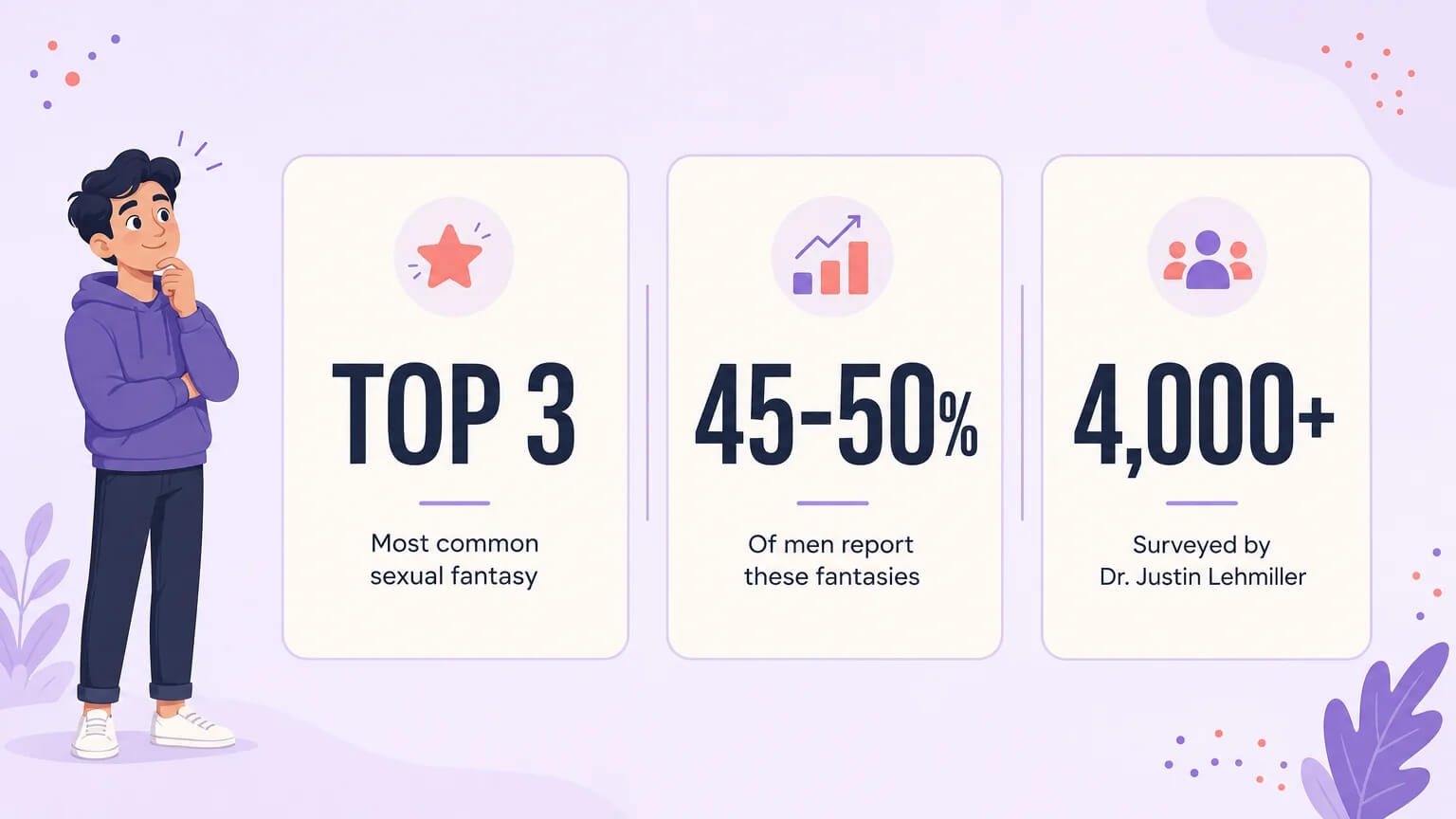
Before the definitions: this matters. Dr. Justin Lehmiller’s survey of over 4,000 people found that cuckolding-related fantasies rank among the top three most common sexual fantasies. Research consistently shows roughly 45 to 50 percent of men have been aroused by some form of this. Cuckolding-related porn ranks among the most popular categories across major platforms. If you have been carrying the belief that your curiosity is rare or strange, it is not. You are in the majority that does not talk about it.
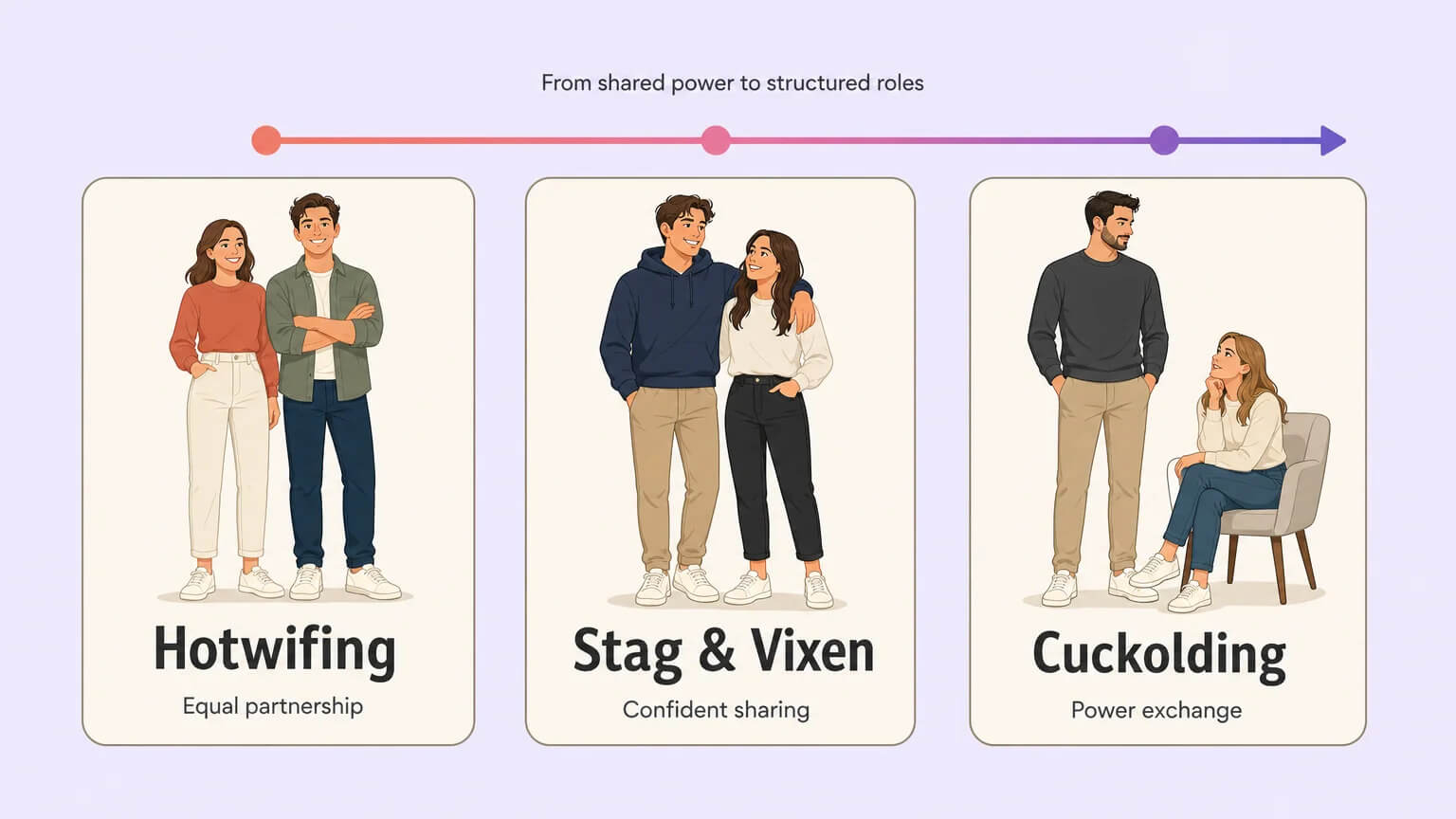
Now to the framework. Sexual acts alone do not define which dynamic you are in. The same surface behaviors, watching, sharing, threesomes, can appear across hotwifing, stag/vixen, and cuckolding. What differentiates them is who holds the sexual power and whether humiliation is a core ingredient. Relationship educator Michael C. from the Keys and Anklets Podcast puts it bluntly: who is driving the car?
Here is the landscape at a glance:
| Dimension | Hotwifing | Cuckolding |
|---|---|---|
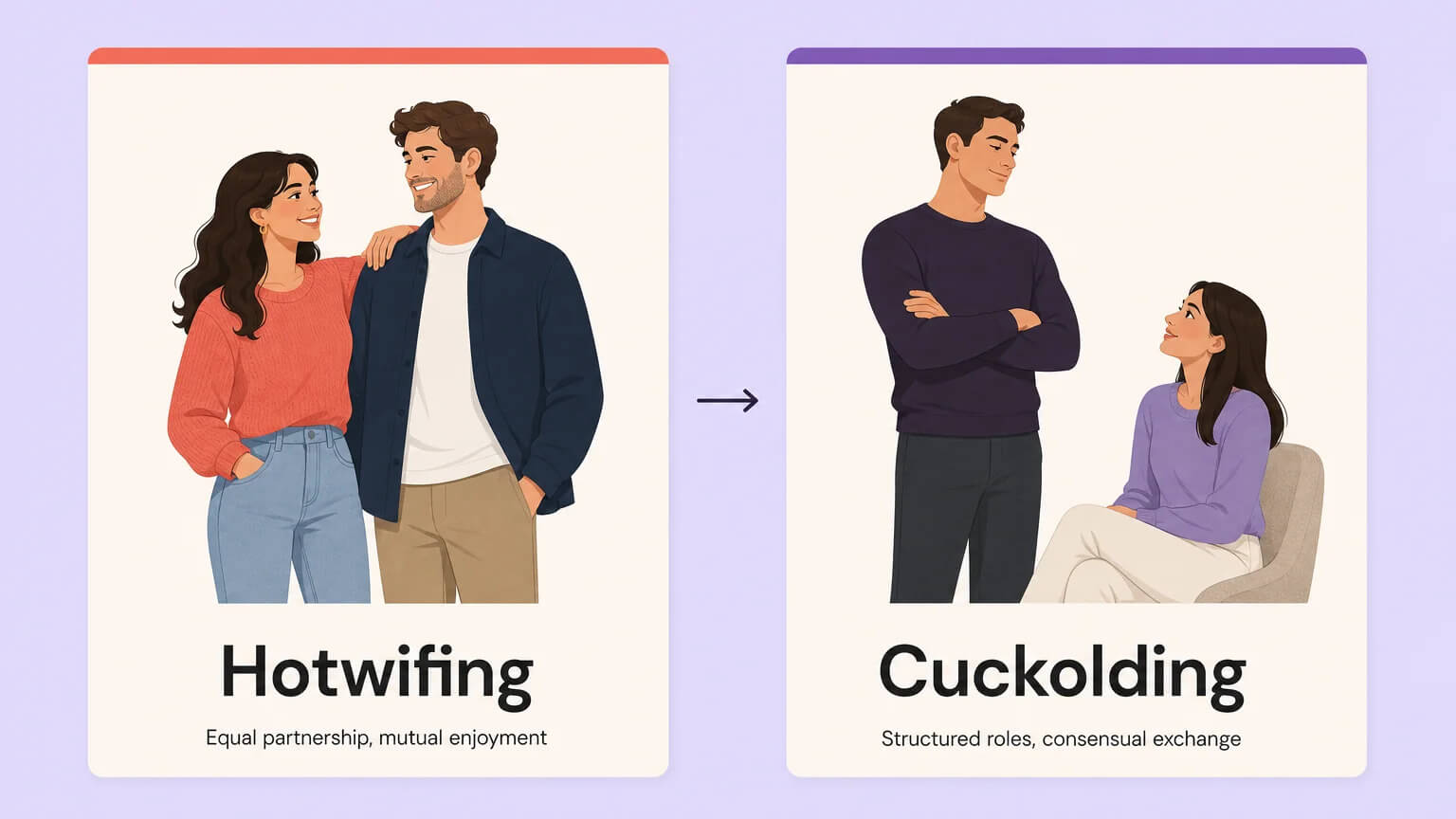
| Power dynamic | Shared, equal partnership | Female-led, hierarchical |
| Humiliation | Absent | Often central |
| Husband’s role | Proud supporter, participant | Submissive observer |
| Wife’s archetype | Freedom: “I am free” | Control: “I am in control” |
| Primary emotional engine | Compersion, pride, reclamation | Submission, taboo, surrender |
Stag and vixen deserves a quick mention here. It is a related dynamic where the husband (stag) is confident, sometimes dominant, and there is zero humiliation. The stag may also play with others, serving as a bull for other couples. It sits closer to hotwifing territory, and the label emerged specifically as a non-derogatory identity for men who wanted wife-sharing without the cuckold label.
What follows compares hotwifing and cuckolding across every dimension that matters. By the end, you will know which label fits what you actually want.
1. Power Dynamics: Who Is in Control?
Who holds the sexual power? That question separates these two dynamics more cleanly than any definition. Your answer tells you which camp you are in.
In hotwifing, power is shared. The wife has sexual freedom, but the relationship stays equal. Both partners have agency. She is not in charge of him; he is not loaning her out. They are two people in an equal partnership, exploring non-monogamy together. The husband’s consent and encouragement matter. He is not a passive participant, even when he is not in the room. As Dr. David Ley notes, in hotwifing the men are equal partners and there is no humiliation involved.
Think of it as a joint venture. Two people who built something strong, now choosing to expand it together. The foundation is the same partnership that already works. The hotwife dynamic sits on top of that foundation; it does not replace it.
In cuckolding, power flows to the wife. She leads; he follows. She sets the rules and parameters. He may be denied sex with her while she is freely sexual with others. The power imbalance is not a side effect of the arrangement. It is the arrangement. The cuckold’s arousal comes specifically from this surrender of control.
For many cuckolds, this is the entire point. Heather Shannon, certified sex therapist and host of the Sex For Couples Podcast, describes clients who run companies, manage teams, make decisions all day. For them, cuckolding functions as an off switch. The psychological relief of being told what to do, of surrendering authority in the one room where they do not have to be in charge, is what makes the dynamic work.
A husband tells his wife he wants her to sleep with another man. In a hotwife arrangement, they pick the man together, set shared boundaries, and reconnect as equals after. The husband’s voice carries equal weight every step of the way. In a cuckold arrangement, the wife selects the man. She sets the rules. The husband’s input may be minimal or absent. Same starting conversation, two entirely different experiences, depending on who holds the power.
So: do you want to share an adventure as equals, or surrender control as part of the turn-on? Neither answer is wrong. Confusing one for the other will create pain.
2. The Role of Humiliation: Present or Absent?
If you take one thing from this article, take this: hotwifing does not involve humiliation. Cuckolding often does. This single distinction is why the two terms exist separately, and confusing them is how couples get hurt.
In hotwifing, the husband’s arousal comes from pride. He is turned on because his wife is desirable, because other people want what he has, because her pleasure reflects well on him. The emotional tone is celebratory. He may watch. He may join. He may hear about it afterward. In every scenario, he is a confident participant, not the target of mockery.
Shane, who identifies as a stag, describes it plainly: “There is no humiliation or denial involved. Watching my wife with another man is a big turn on for me. It is like foreplay.” He cannot wait for the other man to leave so he can ravish his wife himself. That is the hotwife mindset: pride, not degradation.
In cuckolding, the husband’s arousal comes, at least in part, from being made to feel lesser. He may be verbally humiliated, compared unfavorably to the bull, denied participation, made to wait outside the room, or told he cannot satisfy his wife. The degradation is not a bug. It is the feature.
Dr. David Ley, who initially assumed these dynamics reflected unhealthy relationships, found through research that participants were healthy people, exploring sexual desires and confronting taboo and shame. The key is consent. The cuckold wants this. His submission is the turn-on.
Some couples blur this line. A husband who does not want outright humiliation may still enjoy a mild power imbalance: being told to wait, being the one who prepares his wife for her date. The spectrum is real. Individual kinks, chastity, voyeurism, denial, act as buffet items anyone can select. The power framework and emotional intent determine the dynamic type, not the specific acts.
Heather Shannon emphasizes that the kink itself does not determine whether the experience bonds or destabilizes a couple. “Your ability to understand the kink, to relate to it well, and to communicate is what determines whether this becomes a bonding experience or a destabilizing experience.” The polarity stays clear: if humiliation is present, it is cuckolding. If it is absent, it is hotwifing.
Ask yourself: does the idea of being humiliated, degraded, or made to feel lesser arouse you? Hard no? You are looking for hotwifing. Yes, even a little, even in specific scenarios? Cuckolding is worth understanding better.
3. The Husband’s Experience: Pride vs. Submission
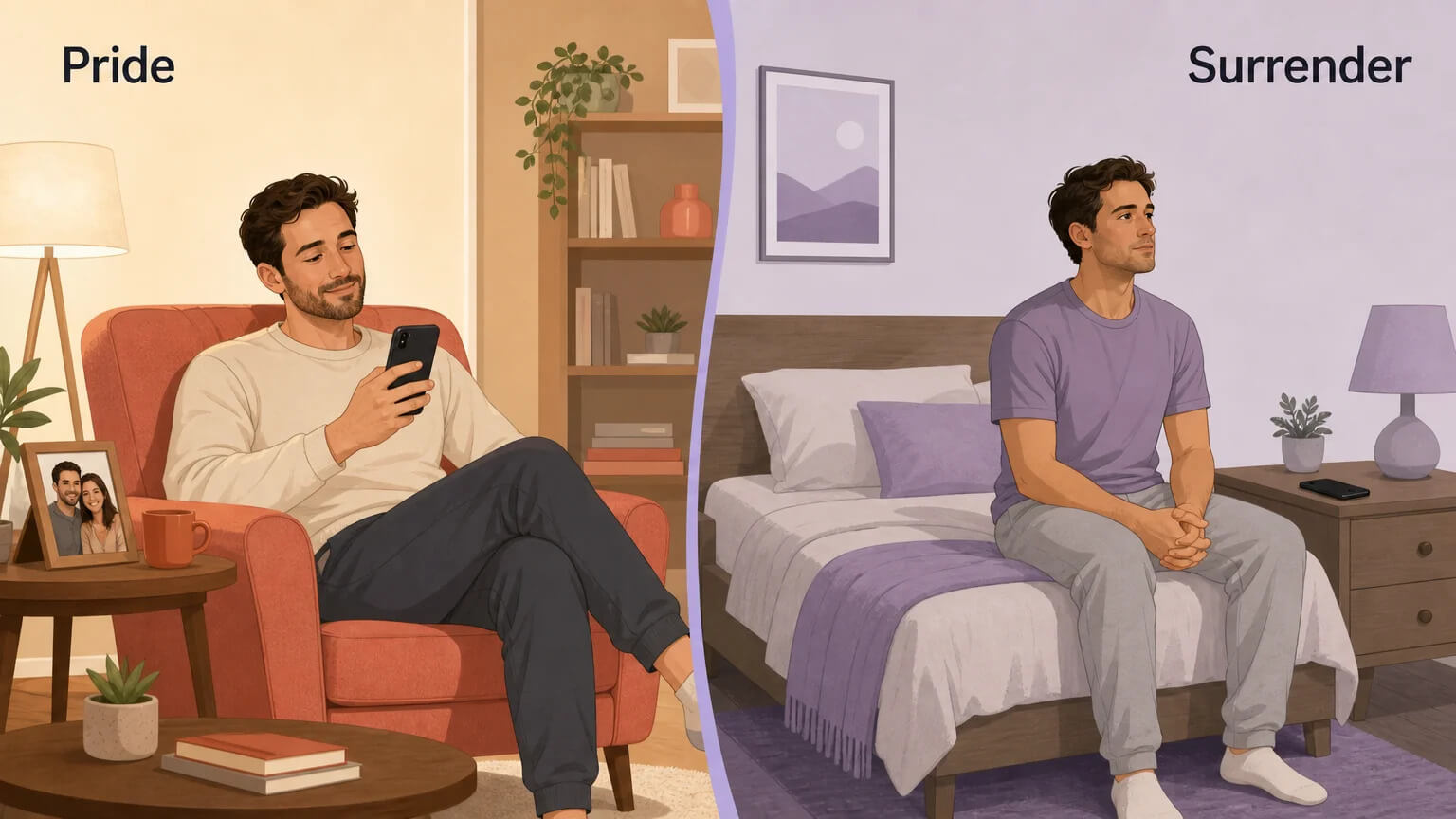
This section is for the husband: the man who has sat with this question, trying to figure out which box he fits into.
The hotwife husband, sometimes called a stag, is excited by his wife’s desirability. Not threatened. When other men look at her, he feels pride, not panic. When she flirts, he is turned on. After she has been with someone else, what he feels is intensity, not jealousy. The reclaiming sex is the point. He is the one she comes home to.
He may participate, watch, or simply enjoy the anticipation of hearing the details afterward. A confident man sharing something extraordinary with his wife. His identity: I have something others want, and I am secure enough to share it.
The cuckold husband is aroused by surrender. The thought of being made to wait outside. Being told the bull is bigger or better. Being compared and found wanting. These are not side effects he tolerates. They are the point.
For many cuckolds, submission provides psychological release from lives where they are constantly in charge. Heather Shannon describes men who run companies and manage teams. Men who make decisions all day. They find relief in being told what to do in the bedroom. His identity: I am giving up control, and that surrender is the hottest thing I have ever felt.
The aftermath differs too. After a hotwife encounter, the couple reconnects through reclaiming sex that is often more intense than before. The husband’s role in that moment is proud, passionate. After a cuckold encounter, the husband may be denied that reclamation entirely, or it may take a form that reinforces the submission. In some dynamics, he is not allowed to have sex with her at all. Know which version you are signing up for.
If the stag description felt like recognition, you are in hotwife territory. If the cuckold description felt exposing, in a good way, you are in cuckold territory. If both felt partially true, you are on a spectrum. The next step is figuring out where on it.
4. The Wife’s Role: Freedom or Control?
Every section so far has centered on the husband. His experience. His arousal. His role. But the woman at the center is not a prop. She has her own identity to sort out, her own desires to name, her own emotional weight to carry. The distinction between a hotwife and a cuckoldress matters as much as the one between a stag and a cuck.
Adreena Winters, sex educator and content creator, draws the line with precision. A hotwife embodies sexual freedom inside an equal partnership. Her erotic charge comes from openness, trust, and the shared rebellion against monogamous norms. As Winters puts it: “The hotwife says I am free.” It celebrates her power within herself. She is not in charge of her husband; she is free alongside him.
A cuckoldress embodies control through intentional power imbalance. Her sexuality is wielded, not just expressed. “The cuckoldress says I am in control.” She may use chastity, denial, rules, and ritual as tools of devotion. Her arousal comes from the hierarchy. She leads. He follows. Both know it.
The diagnostic question for women is simple: freedom or control? Autonomy or authority? Share power, or hold it?
These are not abstract distinctions. The wrong answer can leave you feeling like a performer in your own fantasy. One anonymous wife, speaking on the Taboo Talk channel after nine years of marriage, described the hollow aftermath of getting what she asked for when she had not sorted out which archetype fit:
“I got everything I asked for. That is the part I did not know how to say for a long time. Because when you get everything you asked for and something is still wrong, there is no clean story to tell.”
She wanted to be desired by someone who only knew the surface of her, not the ordinary woman her husband saw every day. The experience did not land. Picking the wrong archetype can leave you standing in that same silence.

If you are a woman considering either dynamic, sit with the question before you involve anyone else: freedom or control? Your answer shapes everything that follows.
5. The Psychology: Why Each Dynamic Appeals to Different People
These fantasies are common. Top three, per Lehmiller’s research. But common does not mean uniform. The same surface desire, my partner with someone else, can be powered by completely different psychological engines. Which engine is yours? That tells you which dynamic to pursue.
The hotwifing psychology runs on compersion and pride. Compersion is joy in your partner’s pleasure. The husband is aroused because she is aroused. Her excitement is his excitement. Couple that with pride: other people want what he has. Instead of feeling threatened, he feels validated.
Add the voyeuristic thrill of seeing his partner as a sexual star. Watching her through fresh eyes, outside the familiarity of a long-term partnership. And reclamation, the sex after she returns that says she is still his. These drivers point toward hotwifing because none of them need submission or degradation to work.
The cuckolding psychology runs on submission, taboo, and release. Submission is the driver, but the flavor varies. For some, it is eroticized inadequacy: getting off on being told they are not enough. For others, it is psychological release: Heather Shannon’s off switch. For others still, it is pure taboo, the forbidden amplifying the arousal.
The evolutionary psychology angle is worth acknowledging, then setting aside. Some argue men should instinctively hate being cucked because of reproductive competition. Other researchers counter that men evolved as cooperative group members, not purely individual competitors. The practical takeaway: cuckolding desires are not an evolutionary glitch. They are a documented, common, psychologically coherent part of human sexuality.
Knowing your driver is the most practical information here. Compersion-driven? Hotwifing. Submission-driven? Cuckolding. Somewhere in the middle? That middle exists, and you define it. The label serves you, not the other way around.
Getting Started: How Each Dynamic Typically Begins
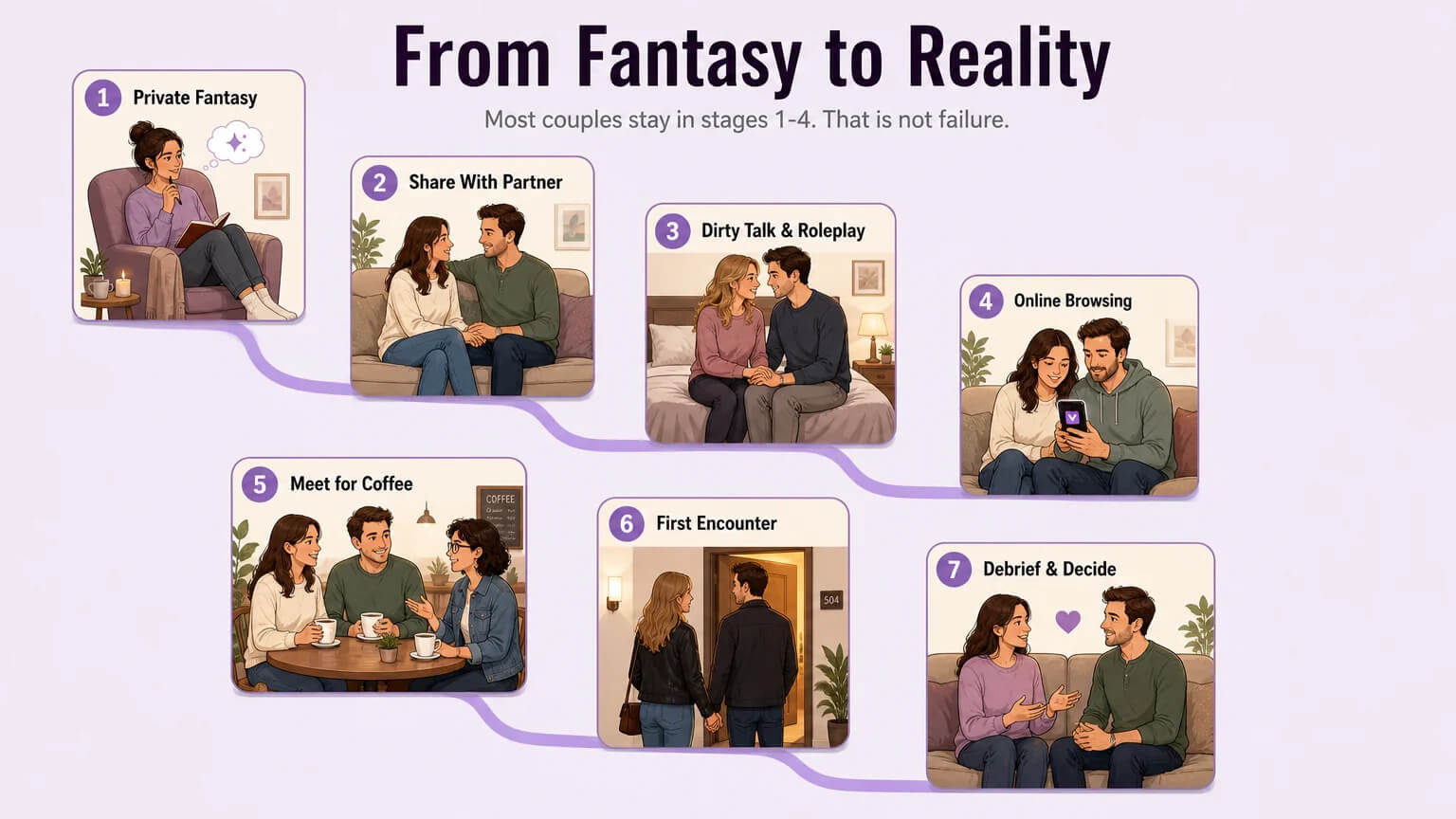
You have read thousands of words. You might even know which dynamic fits. But knowing and doing are separated by the hardest part: the first real conversation. Here is how each typically begins, and the graduated pathway that keeps both of you safe.
Getting started with hotwifing follows a softer arc. The typical entry: a husband who admits, first to himself, then to his wife, that he is turned on by the idea of her with another man. The conversation is often easier because hotwifing lacks the stigma of submission. “I think it would be hot to see you desired by someone else.”
The first step is fantasy and roleplay. Dirty talk during sex. Imagined scenarios. No third parties, no risk. From there, couples may move to online browsing: creating a profile on a purpose-built app like 3Fun, looking at potential thirds together, watching each other’s reactions. The progression: dirty talk, online browsing, meeting someone for coffee, a first encounter with full boundaries, then debrief and decide.
Getting started with cuckolding follows the same pathway, but the conversation is harder because of shame. Many cuckolds sit with the desire for months or years before saying a word. Heather Shannon describes men it “eats them up inside on a day-to-day basis” who never share it.
The softened startup is critical: “I have a fantasy I have been thinking about, and I would love to tell you about it. I am not saying we need to act on it. I just want to let you in.” The emotional stakes are higher because the dynamic involves submission. The wife needs to know what she is being asked to be. Free (hotwife) or in control (cuckoldress)? Adreena Winters’ question applies here too. She needs to know her answer.
The shared principle: the fantasy is a valid endpoint. Most couples never move past dirty talk and online browsing. That is not failure. The honesty, the shared exploration, the deepened trust: those are the benefit, whether a third person ever enters the picture or not. As Heather Shannon frames it, the real win is a relationship where fantasies can be discussed without panic.
What Can Go Wrong: Risks Specific to Each Dynamic
Every expert whose work informed this piece, therapists, researchers, experienced participants, agrees: these dynamics can strengthen a relationship or destabilize it. The outcome depends on preparation, communication, and whether both partners genuinely want the same thing. Here is what can go wrong, and which risks belong to which dynamic.
Hotwifing risks start with mismatched expectations. The husband expects a stag/vixen dynamic with mutual play. The wife expects solo freedom. Neither realizes they are reading from different scripts. The fantasy-to-reality gap is real: what feels effortless in your head requires negotiation, recovery, and emotional management in reality.
The performance trap is another common pitfall. The wife feels pressure to be the endlessly enthusiastic hotwife while navigating her own complex emotions. Jealousy surfaces despite preparation. A 2007 study in the British Journal of Social Psychology found that swinging couples used jealousy to increase sexual excitement, but that skill takes practice. Jealousy is not a sign the dynamic is wrong. It is a signal to tune boundaries and communication.
Cuckolding risks carry a different weight. Shame and internalized stigma are the heaviest. The word “cuckold” still functions as an insult, and many cuckolds struggle to separate their consensual kink from cultural messaging that says they are pathetic.
The wife may feel pressured into a dominant role she never asked for: being cast as a cuckoldress when she is a hotwife by nature. And real emotional harm is possible if the humiliation crosses from erotic play into genuine degradation without aftercare. The anonymous wife’s story captures this: getting everything you asked for and finding it emptier than you expected. This risk belongs to cuckolding specifically because the dynamic involves power surrender. Getting what you wanted does not mean it will feel the way you imagined.
Shared risks apply. STI and physical safety with third parties: testing and protection protocols are non-negotiable. Social and professional consequences if the dynamic becomes public. The strain of managing a private life in a culture not ready for these conversations.
The risks are not a reason to stay away. They are the reason to go slow, to start with fantasy and conversation, to use the graduated pathway. They are manageable when you see them coming.
The Bottom Line: How to Know Which One Is Yours
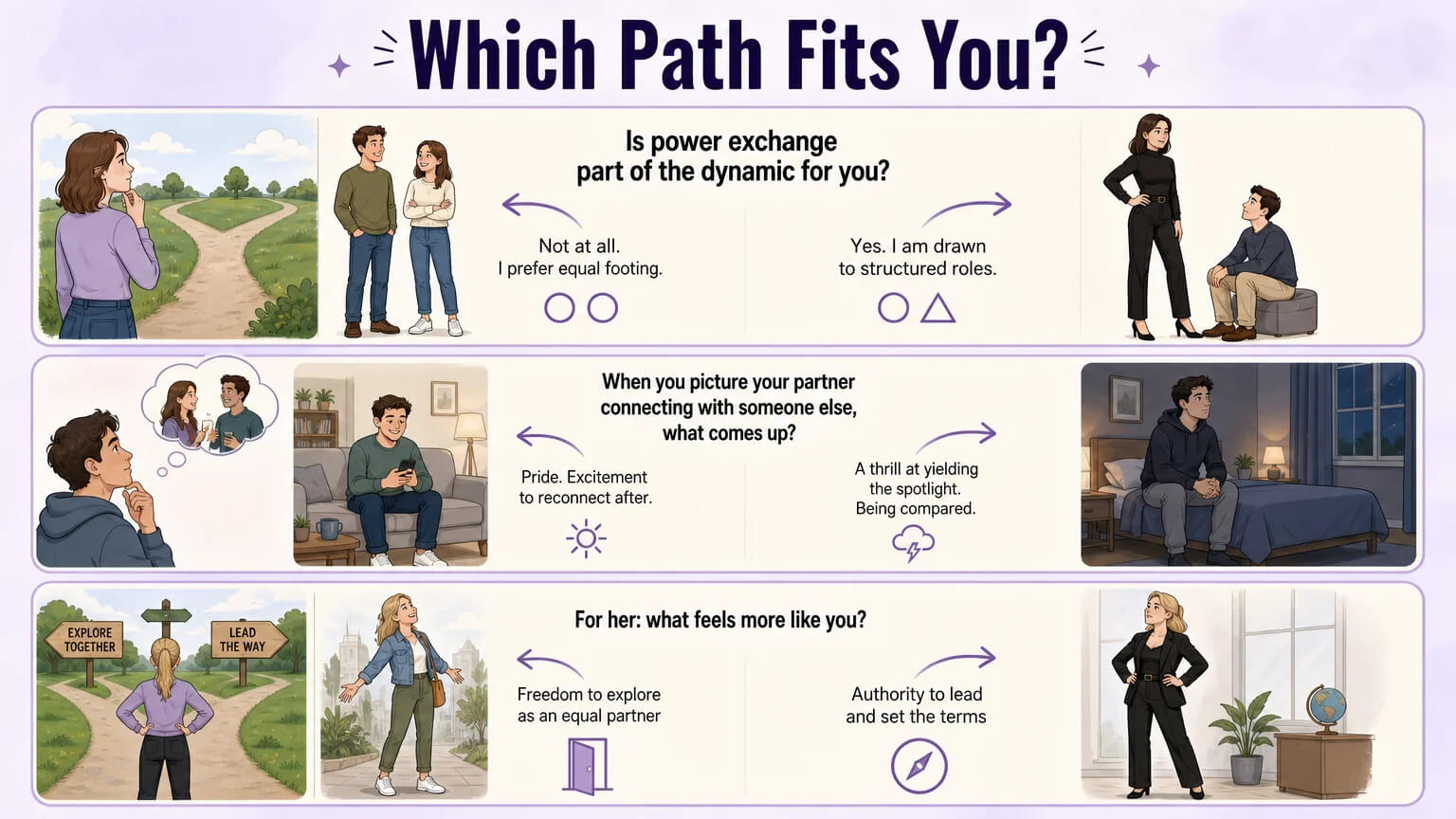
Hotwifing is shared adventure. Cuckolding is consensual power surrender. Neither is more evolved, more healthy, or more legitimate. The only question that matters: which one matches what you actually want?
Three diagnostic questions. Sit with them honestly.
First: is humiliation or submission part of the turn-on? Yes, even a little, in specific scenarios? Cuckolding. Hard no? Hotwifing.
Second: when you imagine your partner with someone else, what do you feel? Pride that she is desired, excitement to reclaim her after? Hotwifing. Arousal at being made to wait, at being compared, at surrendering control? Cuckolding.
Third, for the woman: freedom to explore as an equal, or control to lead as the authority? Freedom equals hotwife. Control equals cuckoldress.
Start with fantasy and conversation, not action. The graduated pathway exists for a reason. Couples who skip steps usually end up managing damage instead of building something together. Staying in fantasy is a complete and valid outcome.
If you are ready to explore, apps like 3Fun, Feeld, and SDC let couples browse and connect with people who already understand these dynamics. No awkward explanations, no mismatched expectations. Whatever you choose, the win is a relationship where fantasies can be discussed without panic. That version of your relationship is available whether you ever involve a third person or not.
FAQ
What is the simplest way to tell hotwifing and cuckolding apart?
Is humiliation or submission part of the turn-on? Yes: cuckolding. No: hotwifing. In hotwifing, the husband runs on pride. In cuckolding, arousal comes from surrender and often degradation. Same surface, different engine.
Can the same couple do both?
Yes. Many couples move along a spectrum depending on mood and context. Labels are conversation starters, not rigid boxes. What matters: both partners knowing which dynamic they are in during any given encounter.
What is stag/vixen and where does it fit?
A related dynamic where the husband (stag) is confident, sometimes dominant, the wife (vixen) plays with others, and humiliation is zero. Closer to hotwifing territory. Created for men who wanted wife-sharing without the cuckold label.
Is it normal to be into this?
Yes. Lehmiller’s survey of 4,000-plus people ranked these fantasies among the top three. Over 45 percent of men report arousal. The curiosity is mainstream. The silence around it is the outlier.
Can this ruin my relationship?
It can strengthen or destabilize depending on communication and mutual desire. Couples who set clear boundaries, use safe words, practice aftercare, and start with fantasy before reality often report increased intimacy. Start slow. Fantasy is a valid endpoint.
What apps or platforms help find compatible partners?
3Fun, Feeld, and SDC let couples create linked profiles and match with people who already understand these dynamics. Browse and chat together before any in-person meetings.