
You notice it at a dinner party. A thin gold chain with a tiny charm resting against a woman’s ankle. You glance at it, wonder if it means something, and say nothing.
Maybe the anklet carries private meaning between two people. Maybe it is just jewelry. The only certainty is that anklets mean different things to different people, and one of those meanings has quietly grown into a recognized symbol within a community of millions.
A hotwife anklet is not a secret code. It is not a rulebook written by some authority. It is a couple’s private language worn in public, and understanding it does not require membership in any club. You do not need to be in the lifestyle to get it. You just need to be curious. This article is for anyone who has glanced at an ankle and wondered.
We will walk through what the symbol means, where the association came from, what those little charms communicate, and how real couples use the anklet, without assuming you already speak the language.
What Is a Hotwife Anklet?
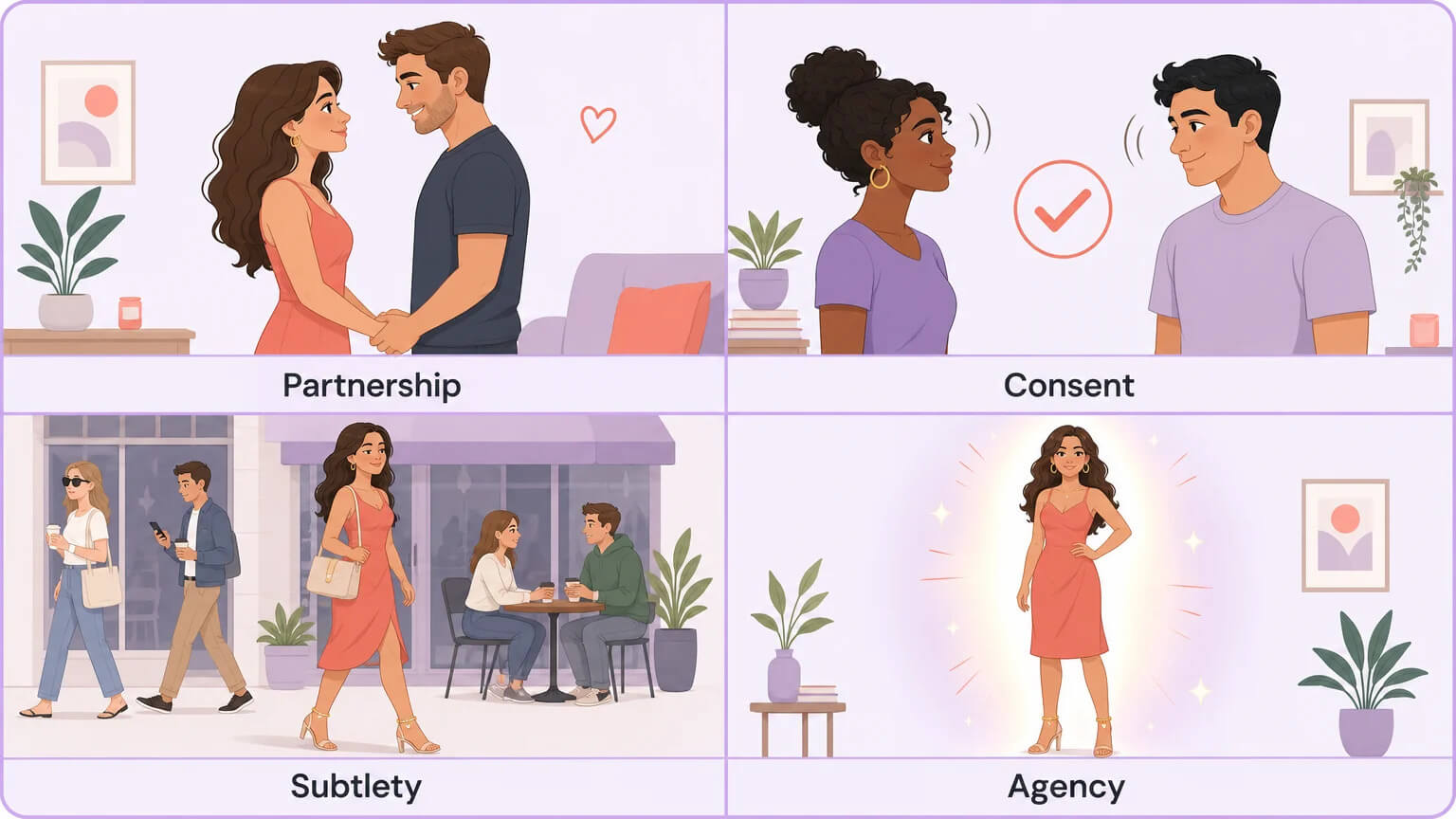
A hotwife anklet is an ankle bracelet worn by a married or committed woman as a subtle symbol indicating she participates in consensual non-monogamy with her partner’s full knowledge and encouragement.
The partnership comes first. This exists inside a committed relationship, which is what separates it from casual non-monogamy. The hotwife dynamic is not a loophole. It is an agreement.
The consent is the foundation. Her partner knows. Her partner encourages. This is the opposite of infidelity. The entire structure is built on transparency. The anklet is not a cover story. It is a shared symbol of an arrangement both people chose.
The subtlety is the point. To almost everyone who sees it, the anklet reads as ordinary jewelry. The 1990s and early 2000s brought anklets back as boho-chic beachwear, completely independent of any lifestyle signaling. That mainstream revival created the plausible deniability that makes the symbol work. Your coworker sees an accessory. Your partner sees a promise.
The agency belongs to her. The term “hotwife” centers the woman’s autonomy, appeal, and active role in her own desire. She is not being lent out. She is the protagonist.
A quick distinction: hotwife differs from cuckold dynamics. In hotwife arrangements, the wife plays with others with her husband’s encouragement, typically without humiliation or power exchange. In cuckold dynamics, sexual power tilts toward the wife, often including denial, chastity, or degradation. As the Keys and Anklets Podcast puts it: the acts people enjoy do not define them; the power structure does.
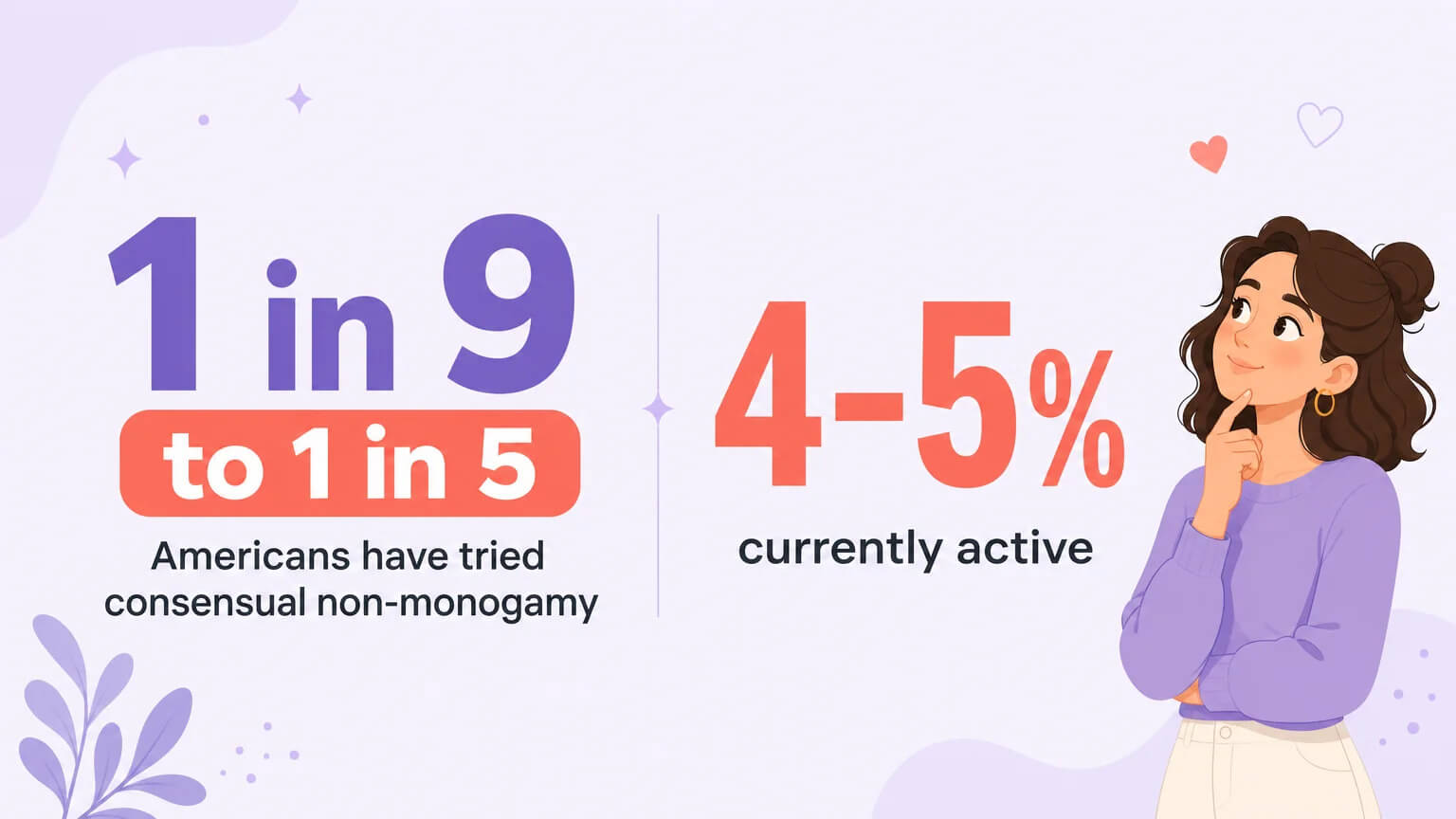
For scale: approximately 1 in 9 to 1 in 5 Americans have tried some form of consensual non-monogamy, and 4 to 5 percent are currently active in a CNM relationship. This is not a fringe subculture. It is millions of people, most of whom you would never identify on the street.
The anklet’s meaning is intensely private, a shared secret between two people, but the object itself is public, jewelry anyone can see. That tension powers every practical question about wearing one.
The hotwife anklet is one piece of a wider set of symbols. Necklaces, bracelets, rings, and day collars all play similar roles. But the ankle carries its own history, and the next section explains why.
How Anklets Became a Secret Handshake
There is no founder. No founding date. No single moment this began.
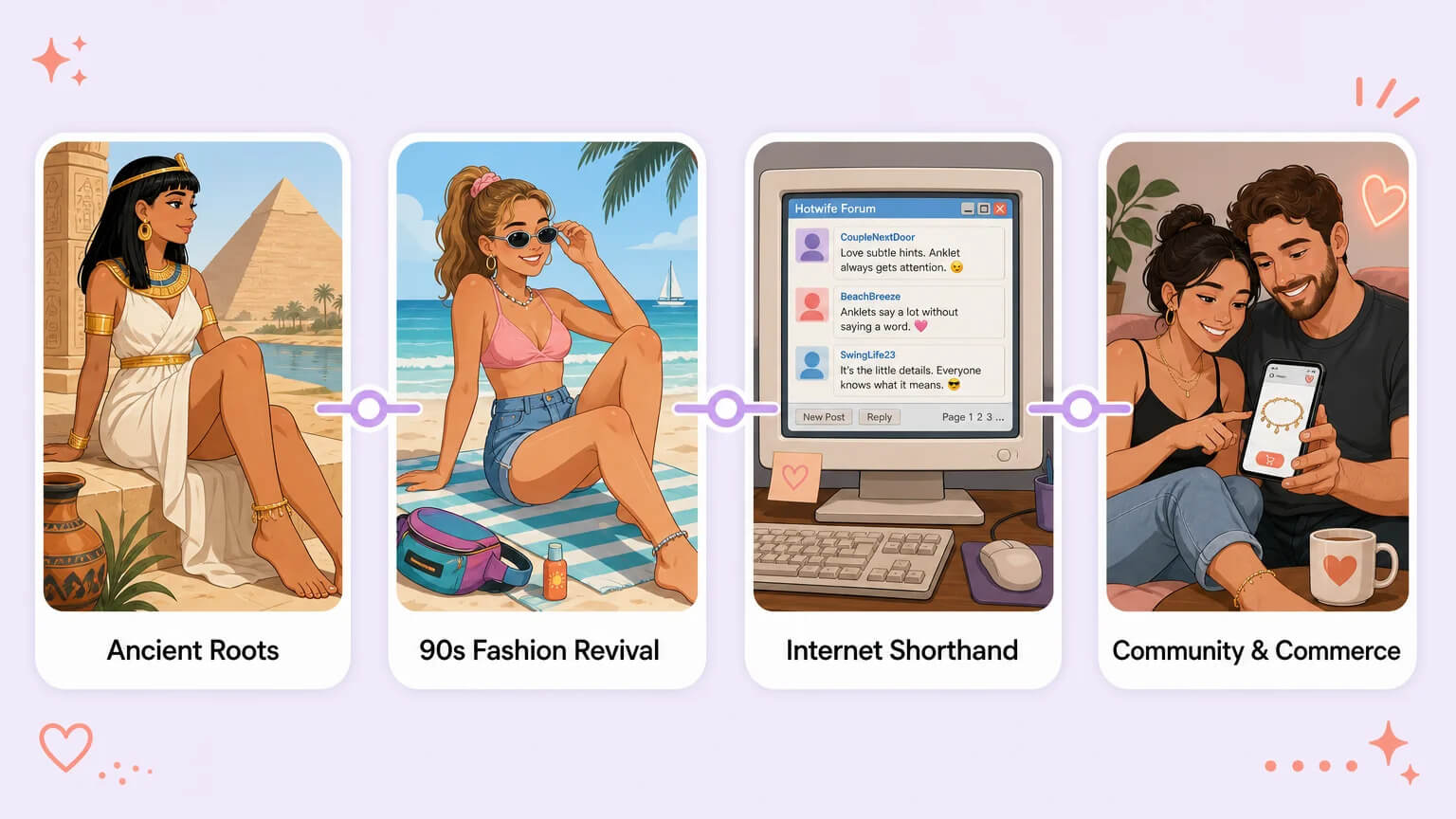
If you are looking for the person who invented the hotwife anklet, you will not find them. What you will find instead is more interesting: four cultural layers that converged without anyone coordinating them. This was built, couple by couple, across decades and continents. That is what makes it durable.
Layer one reaches back millennia. Anklets carried meaning long before they carried this particular meaning. In Ancient Egypt, gold anklets marked royalty. In India, the payal has been worn in bridal ceremonies for over 8,000 years, signaling marital status through sound and metal. In Sub-Saharan Africa, beaded anklets communicated status and marital roles across communities. The ankle has been a site of meaning for as long as humans have worn jewelry.
Layer two arrived in the 1990s and early 2000s, when anklets surged back into Western fashion as beachwear and boho-chic accessories. This revival had nothing to do with lifestyle signaling. That is precisely what made it useful. When a fashion trend normalizes an item across the entire culture, the item becomes invisible. You can encode it with private meaning because nobody is looking for the code.
Layer three happened on the early internet. Forums and personal ads needed shorthand. Playing card symbols, including the Queen of Spades whose story arrives in the next section, and jewelry descriptions became visual language for what could not be stated plainly. The association between specific jewelry items and specific relationship dynamics grew organically, post by post, couple by couple, in spaces where people were finally finding each other.
Layer four formalized what had been informal. Lifestyle-specific vendors began producing purpose-made pieces. Podcasts like Keys and Anklets gave the community shared vocabulary. A subcultural symbol was born, but never from the top down. Nobody declared “anklets shall mean this.” People just started wearing them, and the meaning accumulated.
That organic origin is why there is so much disagreement about the details. Which ankle. Which charm. Which metal. The ambiguity is not a bug. It is the feature that protects the symbol’s privacy.
The Symbols That Speak: Charms, Meaning, and What to Skip
If desire is a language, then the anklet is punctuation: a comma inviting what-if, not a period demanding what-now.
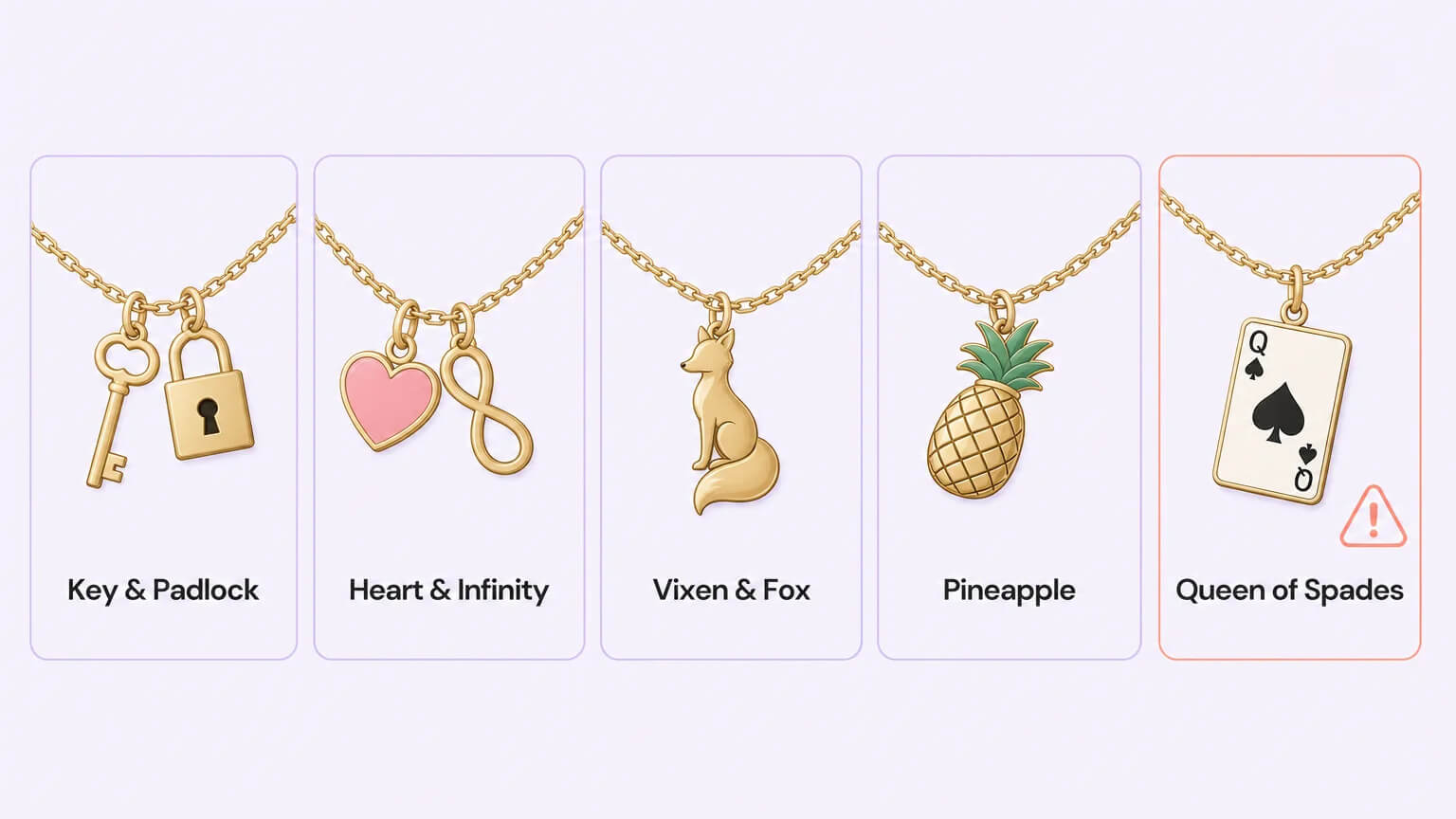
Charms are vocabulary, not contracts. You get to choose which words you speak and which ones you leave alone. Here are the most common charms, organized not by popularity but by what they communicate.
The key and padlock is the most recognized hotwife charm. It signals consent dynamics, ownership fantasy, or keyholder relationships. A wife wearing the key while her husband holds the lock is a complete sentence between two people, invisible to everyone else.
The heart or infinity symbol anchors the anklet in the primary relationship. It says “we are still us.” The outside exploration happens inside something solid, and many couples pair a heart with another charm to tell the full story in two symbols.
The vixen or fox draws from stag-and-vixen dynamics. It signals the woman’s playful, autonomous role. Less loaded than the Queen of Spades, more specific than a generic charm, it has become a quieter alternative for couples who want the signal without the baggage.
The pineapple is the most memed swinger emblem, especially upside-down. It is overused, easily misread, and so mainstreamed that pineapple decor at Target complicates the signal. Reserve it for lifestyle events where context activates the meaning. Outside those spaces, a pineapple is just a pineapple.
The Queen of Spades requires a clear look. It originated as playing-card shorthand in personal ads and early internet forums. In some hotwife and cuckold spaces, it signals an interracial preference, specifically with Black men. It is also widely criticized, both inside and outside the lifestyle, as racial fetishization. Before adopting any community symbol, research its origins. Ask whether it dehumanizes anyone. Consider personal alternatives: initials, coordinates, meaningful dates. These anchor meaning in your story rather than internet lore.
The symbol language extends well beyond anklets. Black rings worn on the right hand. Locking bracelets. Vixen necklaces with O-ring charms. Day collars that sit against the collarbone. The item type matters far less than the shared meaning behind it.
A charm you chose together for your hotwife anklet because of a private joke beats the most “correct” community symbol every time. Someone else’s charm vocabulary is a reference, not a requirement. The only symbol that matters is the one you both understand.
Which Ankle, and Why Nobody Agrees
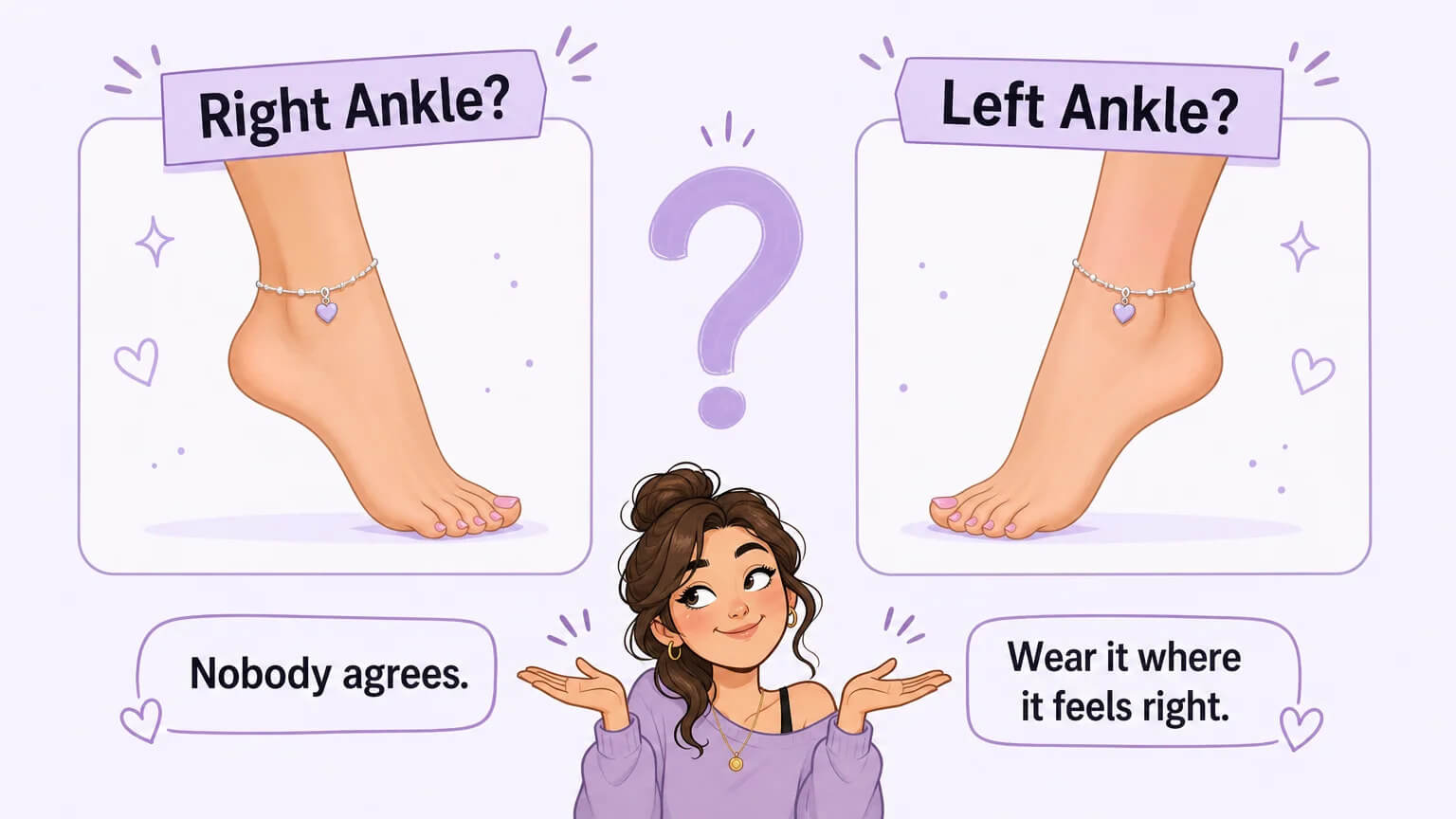
A tweet asked the question plainly: “Please clarify something for me. What is the correct ankle to wear an anklet to signal you are a Hotwife. Left or right?”
The post received 55,000 views and hundreds of engagements. The replies contradicted each other completely.
If the people inside the lifestyle cannot agree, no outsider is supposed to decode it. The ambiguity is not a failure of the community to organize itself. It is the mechanism that protects everyone’s privacy.
Some lifestyle blogs say the right ankle signals openness or availability, especially at events. Some say the left ankle signals belonging or loyalty to the primary partner. Some say the distinction is meaningless. Some say it reverses by region or community. None of these claims have a source, because there is no source to cite. No governing body. No universal code. Nobody is in charge of this.
Community forums are openly skeptical of ankle signals as reliable in the wild. A therapist cited in community guidance recommends using symbols as internal rituals and external cues only in opt-in spaces, not as a public classification system. The hotwife anklet works best when it means something specific between two people and nothing to everyone else.
If you want to know what someone’s hotwife anklet means, ask them. Respectfully. In an appropriate setting. With language that lets them choose how to answer.
“Love your anklet. Does it have a story?” is better than “What does that mean?”
And if you are the one wearing it, wear it on whichever ankle feels right. The meaning you assign it is the only meaning that counts. The ambiguity that frustrates the decoder is the same ambiguity that protects the wearer. That tradeoff is intentional, and it favors the person wearing the jewelry every time.
Wearing It in the Real World: Discretion, Work, and Family
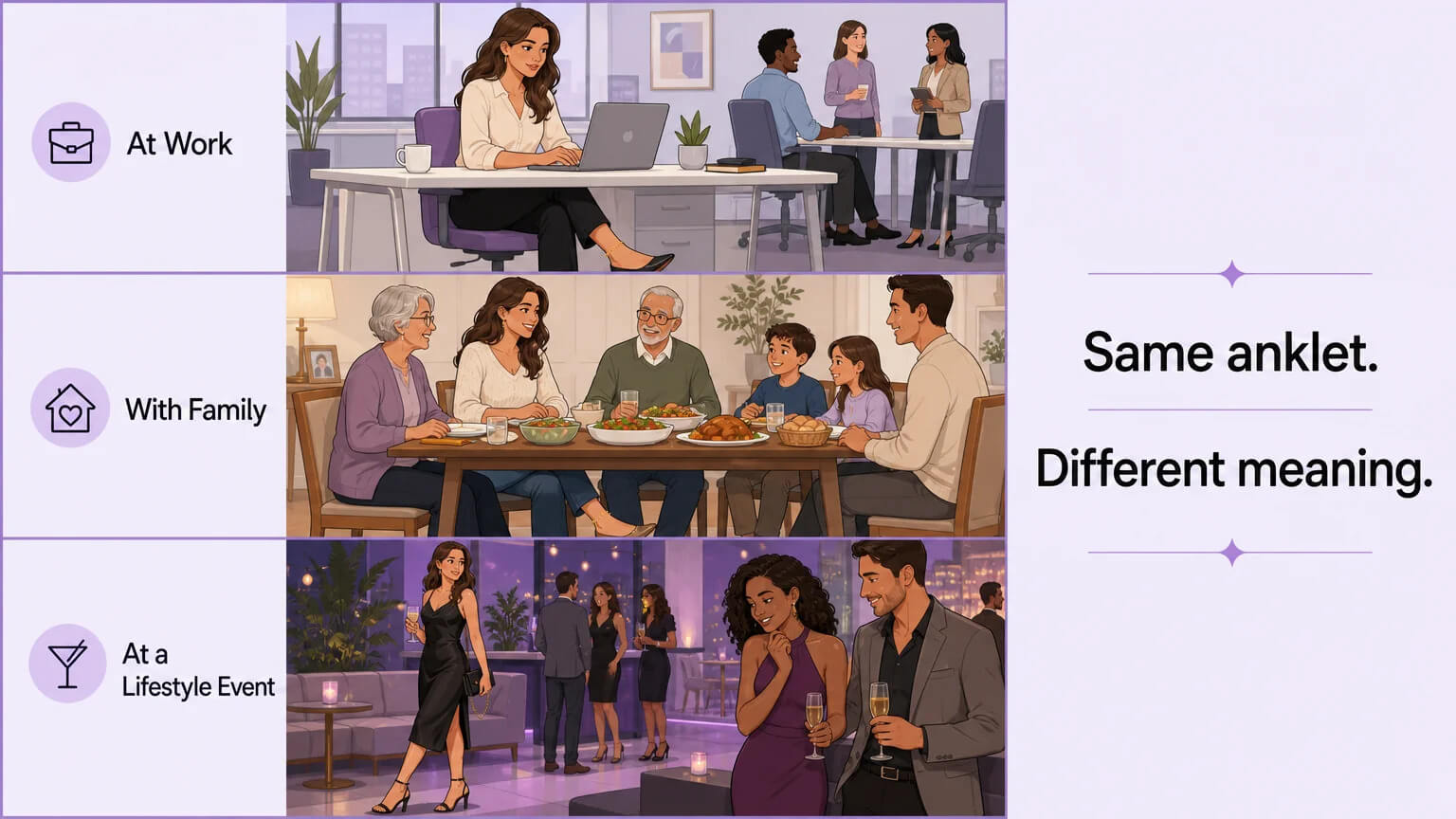
A hotwife described her anklet with a key charm “on full display this weekend with all the family around.” Parents, siblings, kids. Everyone saw it. Nobody understood it. Only she and her partner knew what the key represented. The anklet sat on her ankle like a private conversation happening in plain sight.
That is what makes the anklet work. That same piece of jewelry shifts roles depending entirely on where you are.
Professional and work environments call for minimalist designs. A thin cable chain in sterling silver or stainless steel reads as a standard fashion accessory to colleagues and clients. Anklets are unremarkable in most workplaces. Choose charm-free designs for everyday wear. Save the symbolic pieces for spaces where context activates the meaning.
Family gatherings operate on the same principle. The signal is invisible to the vanilla world. Grandparents see jewelry. Children see nothing at all. The private thrill of wearing it around people who do not know is, for many wearers, part of the appeal. A delicate chain with a small personal charm passes every family-dinner test.
Lifestyle events, clubs, and hotel takeovers flip the switch. Context activates meaning. The anklet shifts from “just jewelry” to “active signal” because the space is opt-in. Couples often agree beforehand: at the party, the anklet means we are open to conversation. Outside the event, it returns to being decorative. The same object, two different functions, separated entirely by where you are standing.
The online-to-real-life gap is worth naming. Search “hotwife anklet” on social media and you will find predominantly explicit promotional content, not educational discussion or realistic portrayals. That creates a distorted impression. In real relationships, the anklet functions privately, subtly, and on the wearer’s terms. The internet version is performance. The lived version is personal.
Assume fashion, not lifestyle, unless you are in an explicit CNM venue. Even then, ask respectfully with language that lets the wearer choose how to respond. Privacy is kindness, both to yourself and to others in the community who value theirs.
How to Choose and Buy an Anklet That Lasts
Before you open a single browser tab, ask yourself one question: what do I want this anklet to do for me?
Is it a private oath between you and your partner, worn daily, seen by no one who understands? An event signal, worn only when you are active in lifestyle spaces? A daily confidence piece, a reminder of who you are regardless of whether anyone else notices?
Let the answer guide every decision that follows. The meaning comes first. The jewelry comes second.
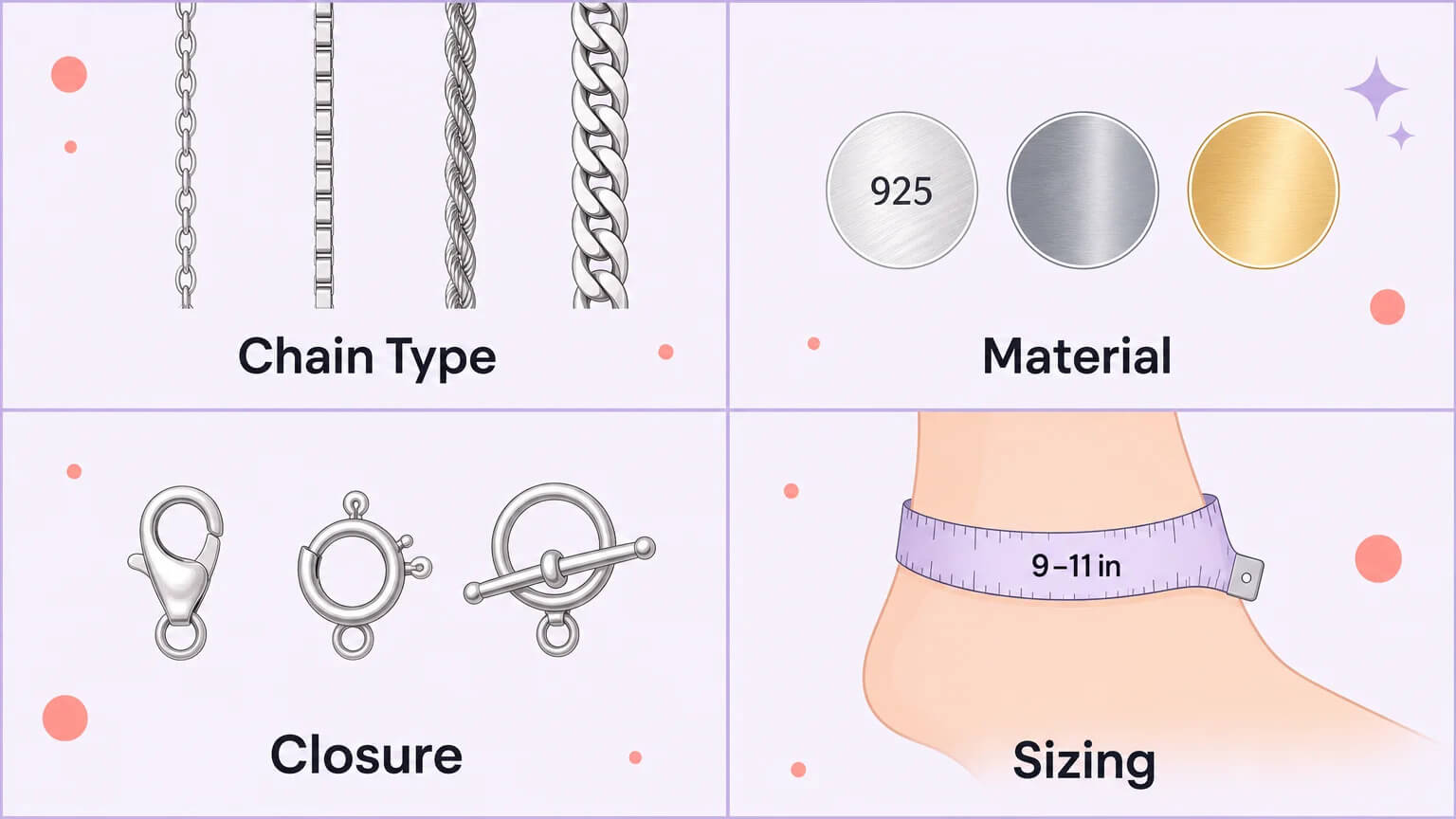
Chain types set the tone. Cable chains are the most subtle: smooth, classic, understated. Box chains catch light with geometric links without crossing into flashy. Rope chains have visible texture, better for statement pieces. Curb and Cuban chains are heavier and more durable.
Materials determine longevity. Sterling silver (marked 925) is the quality sweet spot: lasts years with basic care, affordable enough to replace. Stainless steel is best for 24/7 wear. It does not tarnish or irritate most skin, and costs less than precious metals. Gold-filled offers the look of gold with a gold layer thicker than standard plating. Gold vermeil, sterling silver with heavy gold plate, outlasts cheap gold-plated brass.
Closures determine security. Lobster clasps are most reliable, worth the extra second to fasten. Spring rings work for lighter pieces. Toggle clasps catch on clothing. A locking clasp adds permanence and symbolism.
Sizing is simple but unforgiving. Measure your ankle circumference with a soft tape. Add between half an inch and an inch and a half. The anklet should be snug enough not to slide off over your heel, loose enough to move freely. Standard lengths run 9 to 11 inches. If between sizes, size up.
Where to buy depends on what you want the design to say. Lifestyle-specific boutiques offer recognized symbols. Etsy sellers give you direct communication with the maker for custom charms. General jewelry retailers provide the most subtle path: an unbranded anklet carries zero lifestyle association until you decide it does.
The best hotwife anklet is the one whose meaning you made together before you bought it. The moment your partner fastens it, at home, before you go out, with both of you knowing what it means. That is the real purchase. The jewelry is just the vessel.
FAQ
Is a hotwife anklet always worn on the right ankle?
No. The right-ankle convention is folklore, strongest at lifestyle events, but not universal. Some say right signals availability, left signals loyalty. Others say the distinction does not matter. The consistent advice: ask the wearer. Wear yours on whichever ankle feels right.
If I see a woman wearing an anklet, does that mean she is a hotwife?
Almost certainly not. Most women wearing anklets are accessorizing. Assume fashion, not lifestyle, unless at a swinger club, hotel takeover, or private party. In those spaces, ask: “Love your anklet. Does it have a story?” and let the wearer decide.
Does wearing a hotwife anklet mean I am inviting sex?
No. A symbol is never consent. At most, the anklet is a conversation starter inside opt-in spaces. It does not replace explicit communication about boundaries, intentions, and consent. Treat an anklet as fashion unless the wearer tells you otherwise.
Can men wear hotwife anklets?
Yes. Jewelry is personal and not gender-locked. In practice, hotwife anklets are discussed as women’s jewelry because the role itself is woman centered, but men sometimes wear matching bracelets, rings, or anklets as part of the couple’s shared language.
How do I bring up the hotwife lifestyle with my partner?
Know your “why” first. Choose a calm, connected moment, never during conflict. Lead with “Can I share something I have been thinking about?” Use “I” statements. Explore fantasy before reality. Discuss boundaries before action. The goal is being known, not getting a yes.
Where can I buy a hotwife anklet?
Lifestyle boutiques for recognized designs. Etsy for custom, handmade pieces. Personalized jewelry brands for engraving. General retailers for maximum subtlety. The right channel depends on whether you want the design to speak or stay silent.
What does the Queen of Spades symbol mean?
In hotwife and cuckold subcultures, the Queen of Spades signals an interracial preference, specifically with Black men. It originated as personal-ad shorthand. Many within and outside the lifestyle criticize it as racial fetishization. If considering this symbol, research its history and consider personal alternatives: initials, dates, or coordinates that carry meaning without carrying harm.