Fifty-eight percent of men and roughly one in three women have fantasized about their partner with someone else. That finding did not come from a fetish forum. It came from the Kinsey Institute, through social psychologist Justin Lehmiller’s study of 4,175 adults across all 50 states.
Hotwife psychology is not marginal. It is mainstream desire that nobody talks about.
Hotwifing is a consensual arrangement where a woman in a committed relationship has sexual encounters outside the partnership with her partner’s full knowledge and encouragement. This article is not about logistics. It is about what the research says: why this desire exists, what happens in the brain, who thrives, who struggles, and what psychology, neuroscience, and anthropology reveal that opinion cannot. The hotwifing trend, explained through science rather than speculation.
Before We Dive In: What You Need to Know About Hotwifing
Three distinctions matter before the research.
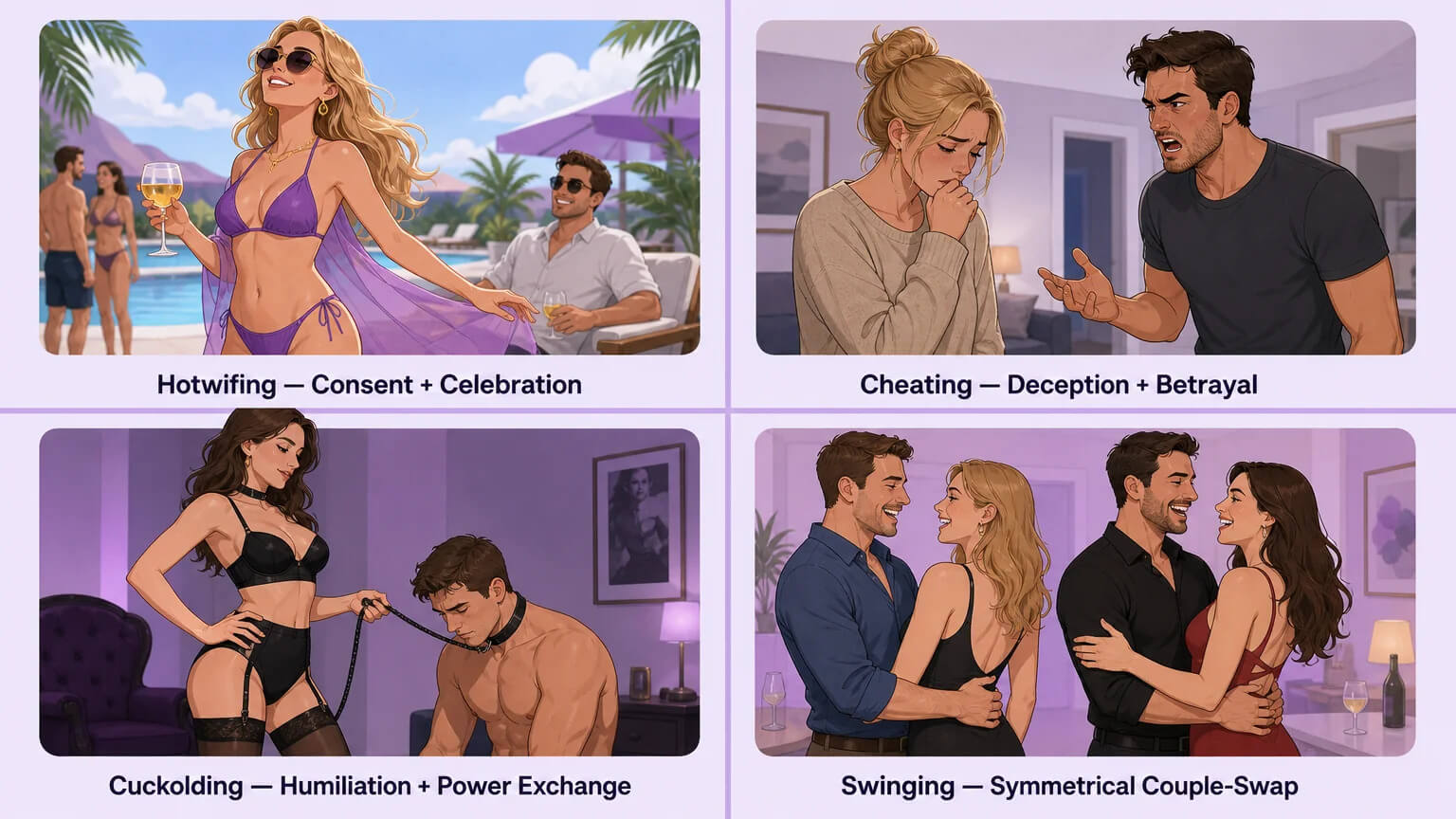
Hotwifing is not cheating. Cheating requires deception. Hotwifing operates inside full knowledge and enthusiastic consent from everyone involved. Remove consent, and you have a broken agreement, not a lifestyle. Hotwifing is not cuckolding. The husband’s arousal comes from pride and compersion, not humiliation. Where cuckolding involves degradation or submission directed at the male partner, hotwifing elevates the wife. The engine runs on celebration, not power surrender. Hotwifing is not swinging. The arrangement is wife-centric, not couple-swap symmetrical. The asymmetry is part of the structure, not a flaw in it.
For a complete beginner’s walkthrough covering definitions, terminology, the emotional journey, survey data, risks, and red flags, read our full guide to what a hotwife is. That article covers the what. This article covers the why.
The Brain Science of Hotwife Desire: What Neuroscience Reveals About Novelty and Arousal
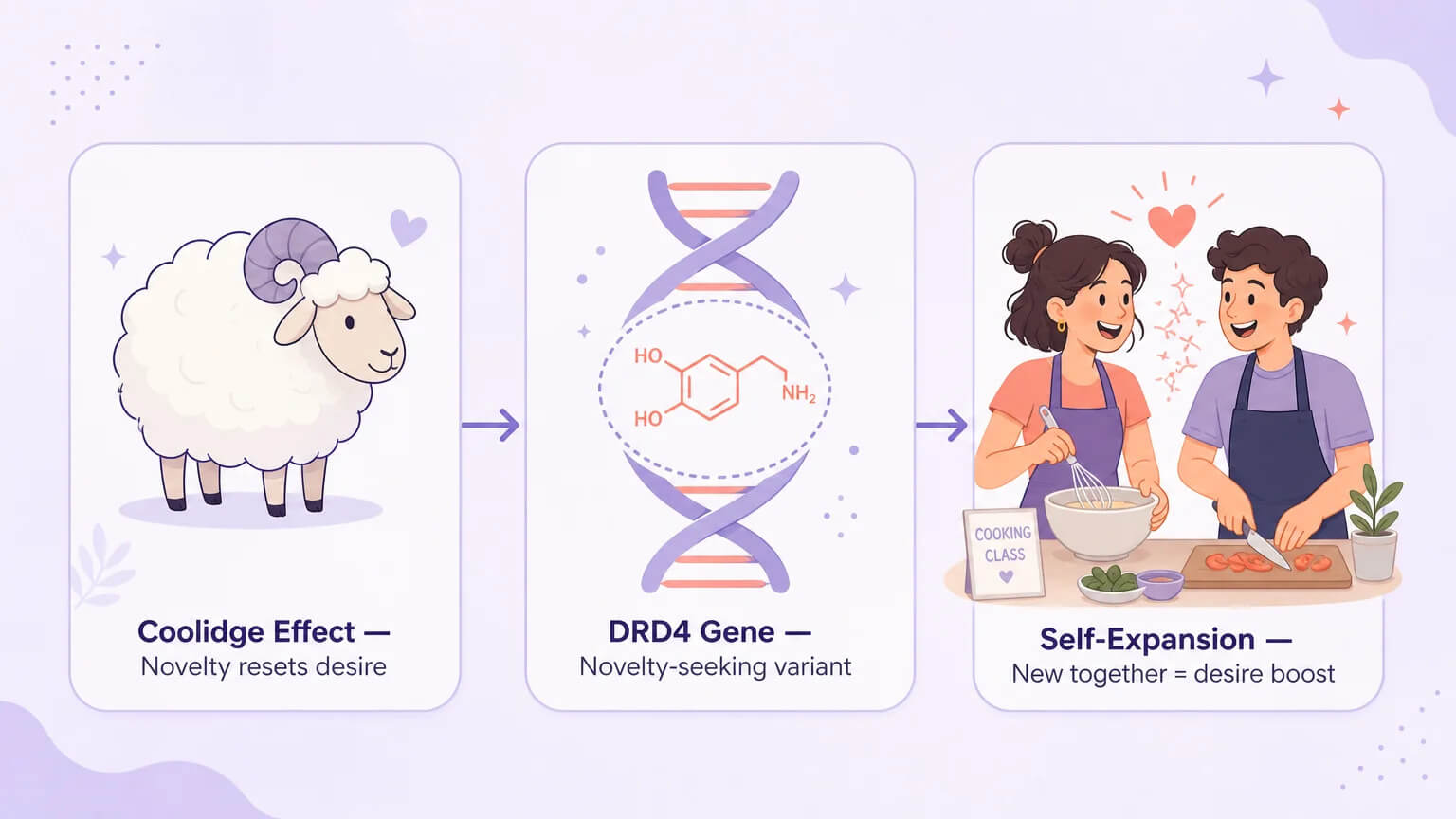
Rams refuse sex with the same ewe after repeated exposure. Introduce a novel female, and they revive instantly. This is the Coolidge Effect, documented across rodents, rams, primates, and humans. O’Donohue and Geer confirmed in 1992 that human sexual arousal declines with repeated exposure to identical erotic stimuli. Novel stimuli bring it right back.
This is not a moral failing. It is a dopamine mechanism conserved across mammals.
Justin Garcia’s Kinsey Institute research went further and identified a specific gene variant, the “long” allele of the DRD4 dopamine receptor gene, associated with heightened novelty-seeking. People with this variant were 50% more likely to report infidelity. The same variant is linked to thrill-seeking in gambling and alcohol use.
The caveat is essential. Biology creates tendencies, not destiny. Genes are one factor among many, and humans are not rams. We have a prefrontal cortex capable of choosing which biological impulses to act on and how. The DRD4 variant does not make someone non-monogamous. It makes novelty more neurologically rewarding. The rest is choice, context, and character.
Self-expansion theory, developed by Arthur Aron and colleagues, adds another layer. Couples who try novel activities together were 36 times more likely to have sex. Novelty in one domain spills into desire in another. Familiarity dampens arousal. Research suggests doing something just 4% different from the usual routine can reignite engagement. Novelty does not require a new partner. It requires a break from the predictable.
Esther Perel puts the paradox plainly. Security is what love needs. Freedom is what desire needs. These are competing drives built into the same brain, and long-term relationships must negotiate the tension between them.
For a hotwife, the arrangement delivers exactly that combination: the security of a committed marriage plus the novelty of a new partner. The outside encounter does not threaten the bond. In couples with strong communication, it reinforces it, routing novelty through consent rather than secrecy.
The desire itself is biologically unremarkable. The interesting question is why some couples channel it consensually while others suppress it, and what the brain does differently in each case.
What Women Actually Get Out of Hotwifing
The question most people silently ask when they hear about hotwifing: is she doing this for him, or for herself?
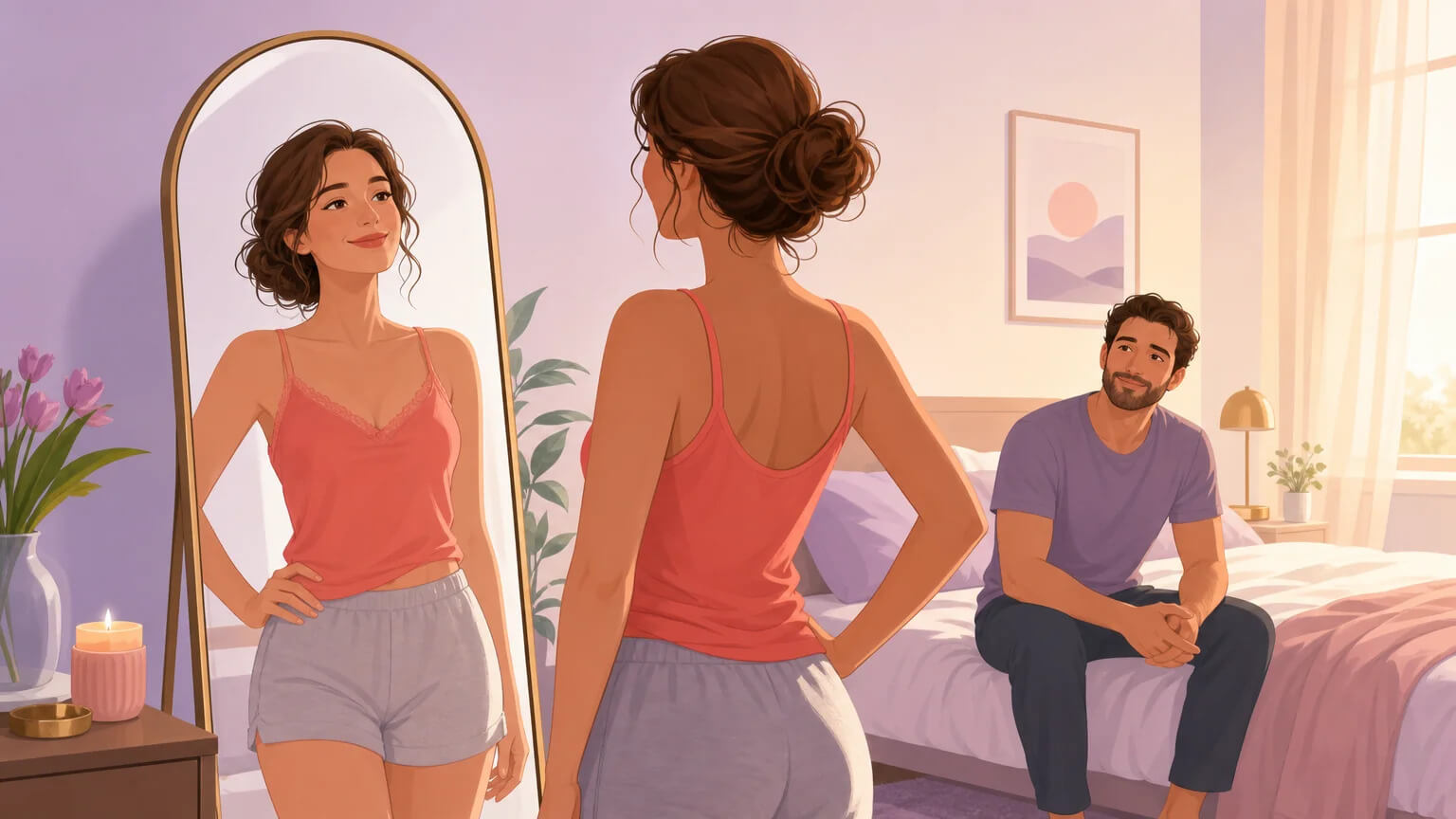
Stefani Goerlich, an AASECT-certified sex therapist, names the first motivation as agency. In a world where women are objectified without their consent, hotwifing can be a way to explore being desirable on one’s own terms and from a place of power. It is choosing to be desired rather than passively receiving objectification. Same physical experience. Completely different psychological valence.
Identity reclamation runs through the research too. Sociologist Marco Menicocci documented women describing the lifestyle as returning them to a “carefree adolescence.” After marriage had narrowed their identity to housewife, mother, and spouse, sexual exploration outside the marriage restored a dimension of self they had lost. Women in his study felt “more complete” than during monogamy and, in his words, “showed determination not to be the victim but the subject of her sexual life.” This is not accommodation. This is reclamation.
Then there is guilt-free variety. Sexologist Gloria Brame identifies three drivers: mismatched libidos, sexual curiosity, and reclaiming pre-marital exploration. The absence of the guilt that would accompany an affair is central to the appeal. Kink educator Amanda Dames puts the point directly: the consent framework transforms the same physical act from shame-inducing to empowering. The behavior is the same. The meaning is opposite.
Justin Lehmiller found that the taboo quality itself, defying what women are “supposed” to do, is psychologically arousing for both partners. Transgression, when consensual and contained, produces a charge that propriety cannot match. Sexologist Jess O’Reilly identifies a related dynamic: the power of knowing your partner is desired by others and still chooses you. That knowledge creates an erotic charge monogamy’s default assumptions rarely generate.
There is a deeper biological context underneath all of this. Primatologist Sarah Blaffer Hrdy’s foundational research showed that the “coy female” of early Darwinian thinking never existed in primate evolution. Female primates are sexually assertive, competitive, and engage in multi-mate mating when it provides advantage. The idea that women are naturally more monogamous than men is a cultural story, not a biological fact. Female sexuality, across species, is flexible, strategic, and context-dependent.
What 10,000 Years of History Reveals About Wife-Sharing
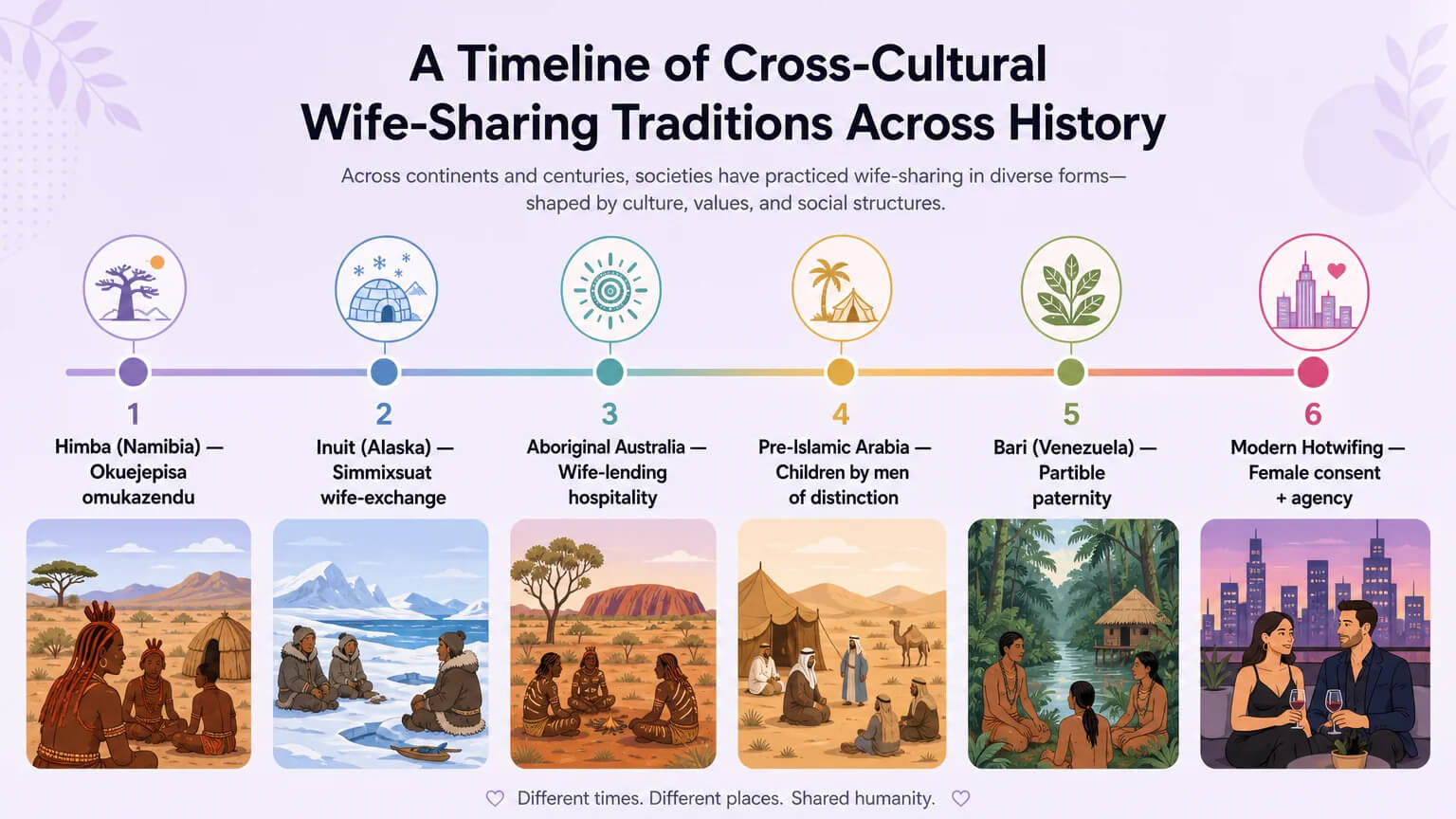
Among the Himba of Namibia, a man welcomes a male guest by offering him his wife for the night. The practice, called okujepisa omukazendu, is meant to deepen friendship and prevent jealousy. A Himba lawmaker proposed enshrining it in law as recently as 2014.
It is not an isolated case. Inuit groups in North Alaska institutionalized wife-exchange through a practice called simmixsuat. Anthropologist Arthur Rubel found in 1961 that the more vital the need for interdependence between men and the less close their kinship, the more likely they were to exchange wives. Wife-exchange was social technology. It built cooperation networks in harsh environments where survival depended on alliances outside the kin group.
Aboriginal Australian groups extended wife-lending as the ultimate expression of hospitality. Pre-Islamic Arabian husbands allowed wives to bear children by “men of distinction,” a form of social genetic selection where the husband was still considered the father. The Bari of Venezuela practice partible paternity: children with multiple recognized fathers have measurably better survival outcomes. When the primary father dies, the secondary fathers are obligated to support the child. Improved life outcomes for children with “extra” fathers. It is evolution in action.
Evolutionary psychology offers explanatory frameworks. The Dual Mating Strategy hypothesis proposes that ancestral women could have secured investment from a stable partner while obtaining genetic benefits from extra-pair partners. Strategic Pluralism theory frames female sexuality as flexible and context-dependent, not innately monogamous or promiscuous, but adaptive to circumstances. Ovulatory shift research adds biological weight: women’s mate preferences shift toward more masculine, physically attractive men during fertile windows. The capacity for dual strategy has biological underpinnings, not just cultural ones.
A critical caveat, from researchers Bachaud and Johns in 2023: these evolutionary hypotheses are frequently distorted online. They describe ancestral selection pressures operating over millennia, not conscious modern strategies. Most historical wife-sharing carried significant gender asymmetry. Women were exchanged by men, between men, for male purposes. The anthropological record is a story of male-controlled exchange.
The modern hotwife dynamic is different in one essential way. It centers enthusiastic female consent and agency in a way historical practices almost never did. This is what separates it from the anthropological record, and from coercion.
The Emotional Engine of Hotwifing: How Compersion Makes It Possible
There is a word for the feeling that makes hotwifing work, and most people may have never heard it.
Compersion: the positive emotion one gets from knowing their partner is experiencing pleasure with another person. It is the emotional engine of consensual non-monogamy, and it is not magic. It is neurology.
Here is what happens. The prefrontal cortex exerts top-down control over the amygdala’s jealousy and threat response. The same stimulus, “my partner is with someone else,” gets rerouted into the mesolimbic reward pathway instead of the fear circuitry. Mirror neuron systems allow vicarious experience of the partner’s pleasure. Oxytocin supports bonding and trust. Cortisol drops when the situation feels secure. Adrenaline gets reinterpreted as excitement rather than alarm.
None of this is passive. Compersion is a deliberate prefrontal override. A neuroplastic adaptation built through repeated, consented exposure within psychological safety. No one is born with it. Everyone who has it built it.
Flicker, Thouin-Savard and Vaughan’s 2022 research confirmed that compersion mediates the link between attachment security and relationship satisfaction. CNM participants report higher compersion and lower jealousy than monogamous individuals. What makes compersion easier to cultivate? Self-worth, communication skills, and a support network. If you do not feel good about yourself, compersion becomes nearly impossible. “If I don’t feel good about myself,” one participant told the researchers, “it’s hard to feel good about other people. It is doubly hard to feel good about your partner having a good time with someone else when you’re down.”
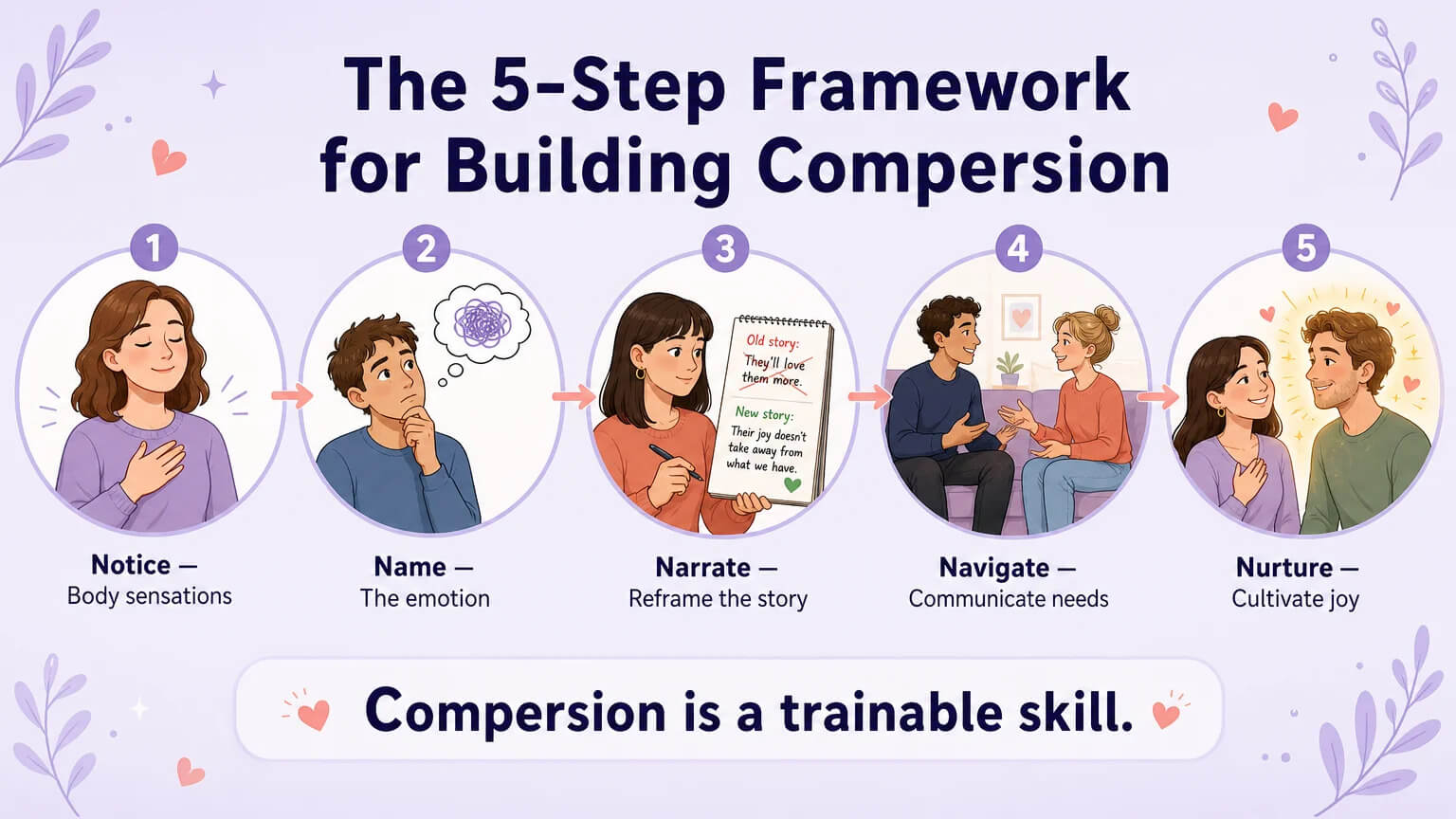
Hamilton and colleagues published a five-step clinical framework in 2023 for building exactly this capacity. Notice early body sensations before they escalate. Name the emotion without shame. Narrate a reframe that challenges catastrophic interpretations. Navigate needs through explicit communication. Nurture compersion by intentionally cultivating positive feelings for a partner’s joy.
Compersion does not mean the absence of jealousy. It means the presence of something stronger alongside it. And that something is buildable. The research is clear on this: compersion is a trainable skill, not a personality trait you either have or lack. The neurological pathway strengthens with practice, like any form of emotional regulation.
Who Thrives in Hotwifing (and Who Doesn’t): What the Personality Research Says
Who am I, psychologically, and what does the research say about people like me in arrangements like this? That question should precede any decision to explore non-monogamy.
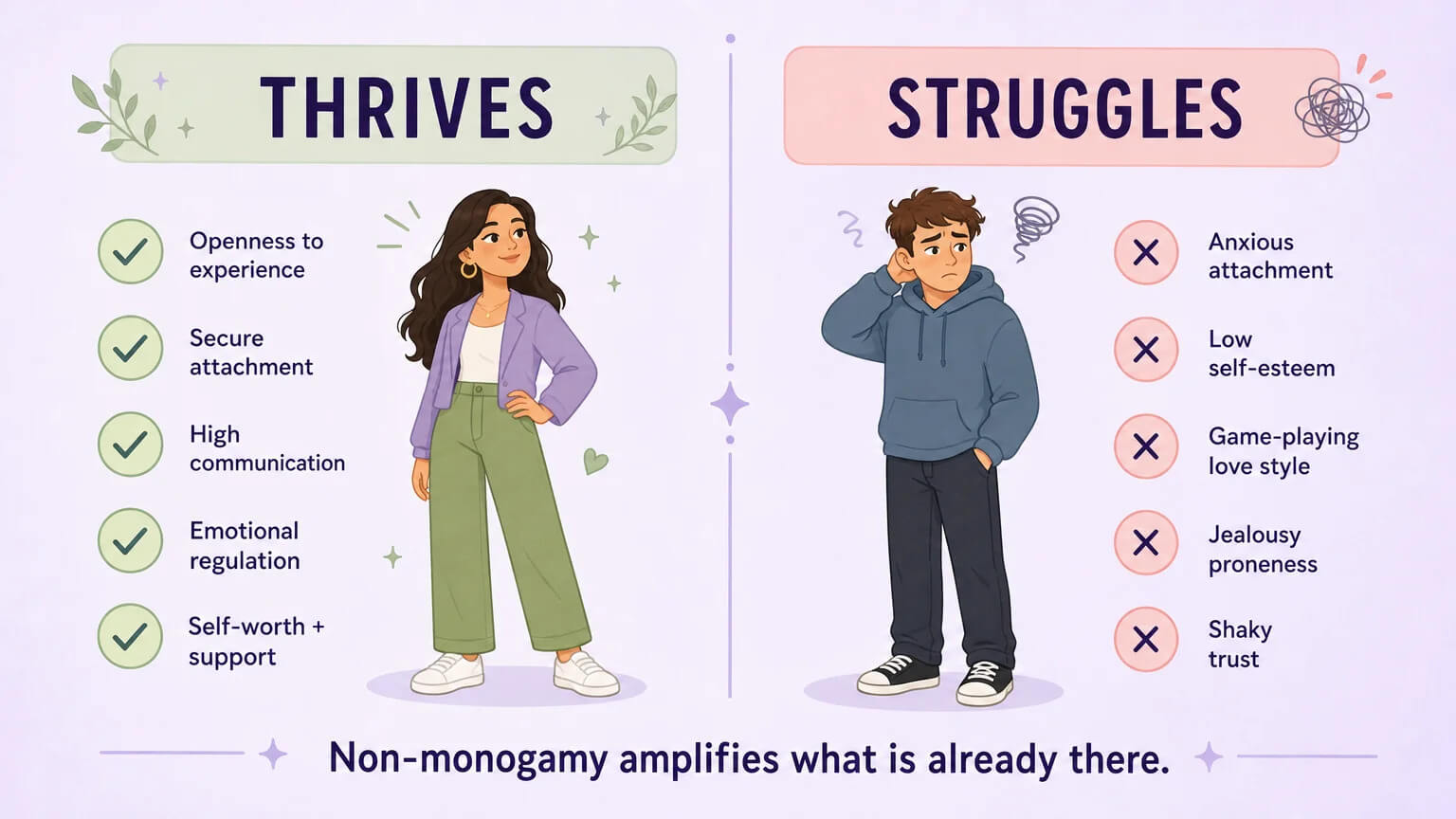
The success profile is increasingly clear. Openness to experience is the most consistent Big Five predictor of CNM interest, confirmed by Banaszkiewicz in 2024. Secure attachment predicts greater satisfaction, higher compersion, and better emotional regulation. Tatum and colleagues identified eight protective factors in 2026: openness, empathy, patience, independence, the ability to challenge mononormative assumptions, emotional regulation skills, communication skills, and prior relationship lessons. Financial privilege and access to self-help or professional resources also appeared as structural enablers, not just psychological traits. Resources matter too, not just character.
The risk profile is equally specific. Anxious attachment predicts higher jealousy and lower satisfaction. The fear of abandonment amplifies every difficult moment. Avoidant attachment shows a paradox: positive attitudes toward CNM but lower actual engagement, a gap between intellectual interest and emotional follow-through. Low conscientiousness and a Ludus, or game-playing, love style predict worse outcomes.
The most comprehensive personality study, by Moors and colleagues in 2022 with 1,831 participants, found that willingness to engage in CNM was positively predicted by a Ludus love style and negatively by Eros, passionate love, and conscientiousness. Prejudicial attitudes toward CNM, interestingly, were predicted by social conformity and a Ludus love style. The research is subtler than the stereotypes, which rarely survive contact with actual data.
The relationship-level truth is the most important one. The 2026 Journal of Sexual Medicine review concluded that non-monogamy amplifies existing dynamics. It does not fix broken ones. If trust and communication are shaky, adding external partners is gasoline, not glue. If they are already strong, the arrangement can deepen both.
A 2025 Spanish study of 815 participants found no differences in psychopathology or dark personality traits between CNM and monogamous individuals. CNM practitioners scored higher on resilience, autonomy, and personal growth. Meta-analytic findings show no significant difference in relationship satisfaction between the two groups. CNM is not better. It is not worse. It suits some people and not others. The personality research is getting steadily better at predicting which is which.
When Hotwifing Goes Wrong: The Risks No One Should Ignore
Mila Guerrerra entered the lifestyle at her husband’s urging. She found it entangled with coercion, emotional abuse, narcissistic control, and gaslighting. She wrote a memoir about it because she could not find other women’s accounts of similar experiences when she tried to make sense of what happened to her.
This is the risk that matters most: coercion disguised as consent. If a woman says yes because she fears losing her partner, that is not consent. The line is invisible from the outside. It is the difference between a shared adventure and a slow unraveling, and you cannot tell which is which until you are already inside it.
Emotional bonding is the second risk. Women may develop genuine romantic feelings for outside partners, and not every couple survives that development. The line between sexual variety and emotional infidelity blurs more easily than anyone wants to admit until they have been tested by it.
Self-esteem collapse is the third failure mode. A participant in the Flicker study put it plainly: “If I don’t feel good about myself, it’s hard to feel good about other people.” Compersion requires a floor of self-worth. When that floor is missing, every encounter becomes a comparison. The comparison always comes out wrong.
Then there is the gap between male fantasy and female emotional reality. One anonymous account describes a partner whose expectations were shaped by porn: directive, filmed, performance-focused. What she needed was intimacy, romance, and emotional comfort. The disconnect is a recurring source of distress that couples rarely anticipate. Nobody mentions that the script from the fantasy might not match what you actually feel when it happens.
Cuck angst is the post-encounter emotional crash where arousal curdles into anxiety. It needs dedicated aftercare. Physical affection. Verbal affirmation. Reconnection rituals. Couples who skip this step often unravel. The fantasy ends when the encounter does. The silence afterward is where the damage happens.
Identity splitting carries its own toll. A Toronto mother of four, writing anonymously in a published diary, described herself “splintering into two people.” One was the mom in the school pickup line. The other did things she could not mention in daylight. Managing two selves forever is a background stressor that does not go away. Fear of discovery, judgment, and professional consequences becomes ambient noise in your life.
These risks are not arguments against the lifestyle. They are arguments for the prerequisites: exceptional communication, genuine consent, solid self-worth, and the willingness to stop when it stops working. The couples who make this work do not avoid these risks. They see them coming and plan for them.
The Hotwifing Trend, Explained: Why This Is Surfacing Now
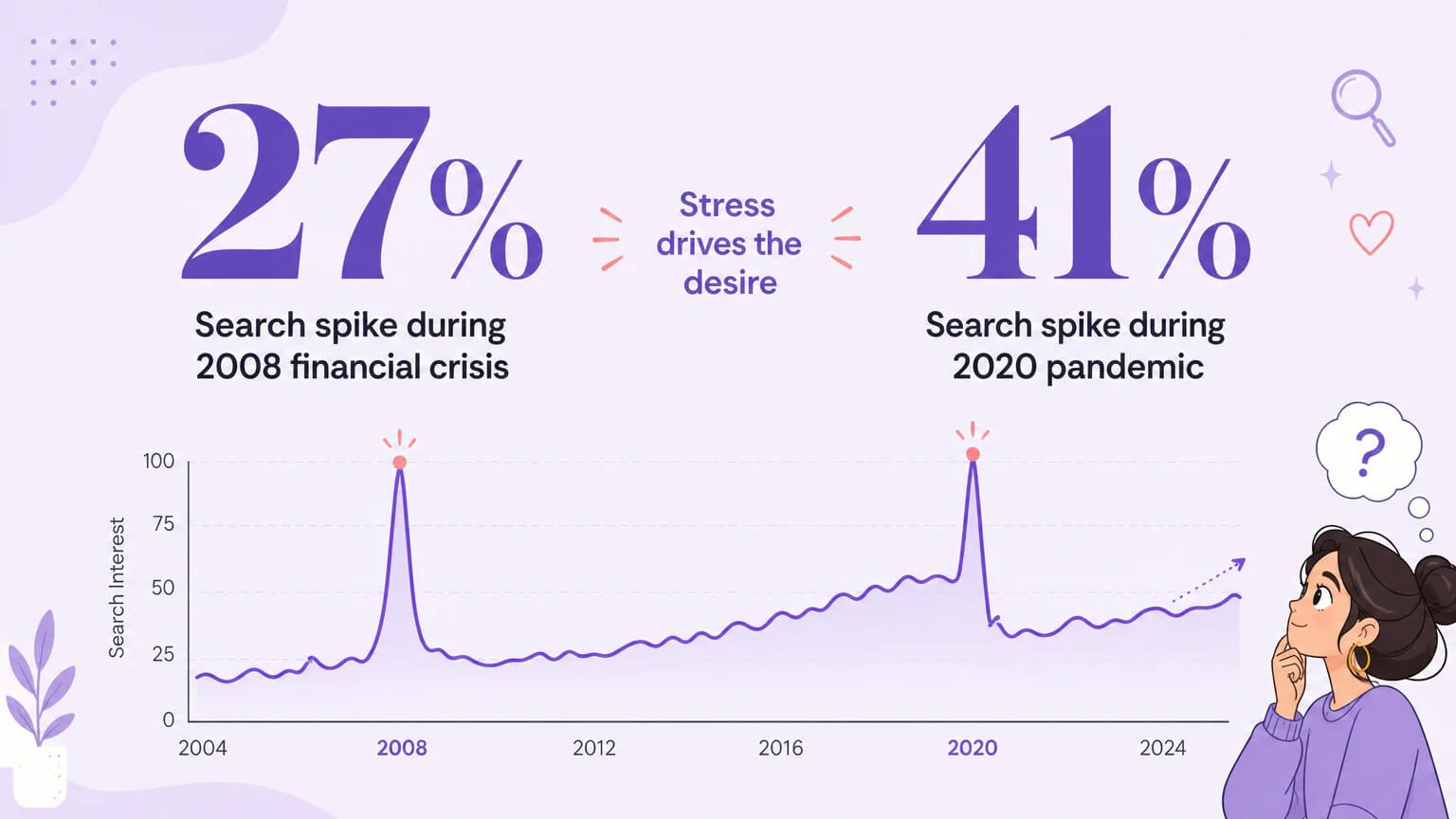
Searches for cuckold content spiked 27% during the 2008 financial crisis and 41% during the 2020 pandemic. Something about stress drives these desires.
The mechanism is straightforward. Voluntary surrender of control reduces cortisol. Eroticizing anxiety channels threat into arousal. Performance pressure shifts away from the primary partner. Dopamine-seeking under stress finds relief in complex, emotionally intense fantasy. The desire is a coping mechanism. That is why it surges when the world feels unstable.
The fantasy itself is ancient. What is new is the visibility, the vocabulary, and the cultural permission to talk about it. Mainstream outlets like CNN, Women’s Health, and Cosmopolitan UK have moved from judgment to curiosity. Social media communities and podcasts have surfaced terminology that was once confined to private forums. Esther Perel has spent a decade normalizing the conversation about desire in long-term relationships for a mass audience. David Ley’s research, covered by outlets from CNN to the Daily Mail, put clinical data into the public conversation: these are not pathological people. They are couples with strong communication who happen to have an unconventional arrangement.
The post-pandemic period brought a widespread reassessment of what people want from relationships and sex. A “life is short” reckoning made unconventional arrangements feel less reckless and more rational. When two years of isolation force everyone to sit with their own desires, the ones that survive that silence tend to get acted on.
The infrastructure has changed too. Apps built specifically for lifestyle dating mean couples no longer navigate vanilla dating platforms with coded language and the constant risk of exposure. Finding compatible outside partners is simpler, safer, and more private than it was five years ago. The friction that kept curiosity theoretical has dropped. More couples cross from fantasy into conversation, and from conversation into action.
The hotwifing trend is not about new desires being invented. The underlying psychology, novelty-seeking, compersion, identity exploration, the tension between security and freedom, has always been present. What changed is the overhead: the visibility, the language, the platforms to actually find each other. The trend is in the conversation, not the craving. The craving has been there all along.
FAQ
Isn’t this just cheating with extra steps?
No. Cheating requires deception. Hotwifing operates inside full knowledge, enthusiastic consent from everyone involved, and negotiated boundaries. Amanda Dames puts it directly: the consent framework transforms the same physical act from a relationship violation to a shared experience. The behavior may look similar from the outside. The psychological difference between betrayal and mutual exploration is the entire structure.
How is hotwifing different from cuckolding?
Hotwifing emphasizes empowerment, compersion, and celebration of the woman’s freedom. The husband’s arousal comes from pride and voyeurism. Cuckolding involves elements of humiliation or submission directed at the male partner. The “stag and vixen” dynamic describes hotwifing without any humiliation, while cuckolding runs on power surrender. Labels vary by community, but the health of any dynamic depends on mutual consent and respect, not the terminology wrapped around it.
Can this actually strengthen a marriage?
Research says it can, and also that it can damage one. David Ley’s clinical interviews found couples who reported the lifestyle strengthened their marriages. The 2018 Ley, Lehmiller, and Savage study concluded cuckolding “tends to be a positive fantasy and behavior” when practiced consensually. The key variable is pre-existing relationship health. Non-monogamy amplifies what is already there: it strengthens strong relationships and accelerates the collapse of fragile ones.
Is there something wrong with people who want this?
No, according to the best available evidence. The 2025 Spanish study of 815 participants found no differences in psychopathology between CNM and monogamous individuals. CNM practitioners scored higher on resilience, autonomy, and personal growth. The 2026 Journal of Sexual Medicine review found secure attachment patterns comparable to monogamous participants. The stigma reflects moral judgment, not clinical data.
What if I get jealous?
Expect jealousy. The question is what you do with it. Hamilton and colleagues found that successful CNM participants treat jealousy as information: an internal signal about unmet needs rather than a relationship verdict. Their five-step framework provides a concrete process. Notice body sensations early. Name the emotion without shame. Narrate a reframe that challenges catastrophic interpretations. Navigate needs through explicit communication. Nurture compersion intentionally. Compersion does not require the absence of jealousy. It requires the presence of something strong enough to coexist with it.