Fifty-two percent. That is the number of heterosexual men who have fantasized about watching their partner with someone else, according to Justin Lehmiller’s survey of 4,175 Americans. Twenty-six percent of heterosexual women say the same. Those are not fringe numbers. Those are mainstream desires sitting quietly in bedrooms across the country.
Yet only about 4% of the population describes themselves as active cuckolds. The gap between the 52% who have imagined it and the 4% who live it is where cuckold psychology moves from abstract curiosity to real decision making, and where most couples get stuck.
A fantasy this common deserves better than guesswork. This article walks through what the research tells us about cuckold psychology: the experience of both partners, the jealousy question, the fantasy-versus-reality decision, and how couples who navigate this well approach it. No judgment. No sleaze. Just what the science says, framed for two people deciding together.
The Psychology Behind the Cuckold Fantasy: Why Men Develop This Desire
You built a career. You lead a team. You make decisions that other people depend on. And yet here you are, grappling with a fantasy that feels like it contradicts everything else about you.
The discomfort is not in wanting something unusual. It is in the distance between who you know yourself to be and what this fantasy seems to imply. But the research points in a different direction than the shame would have you believe.
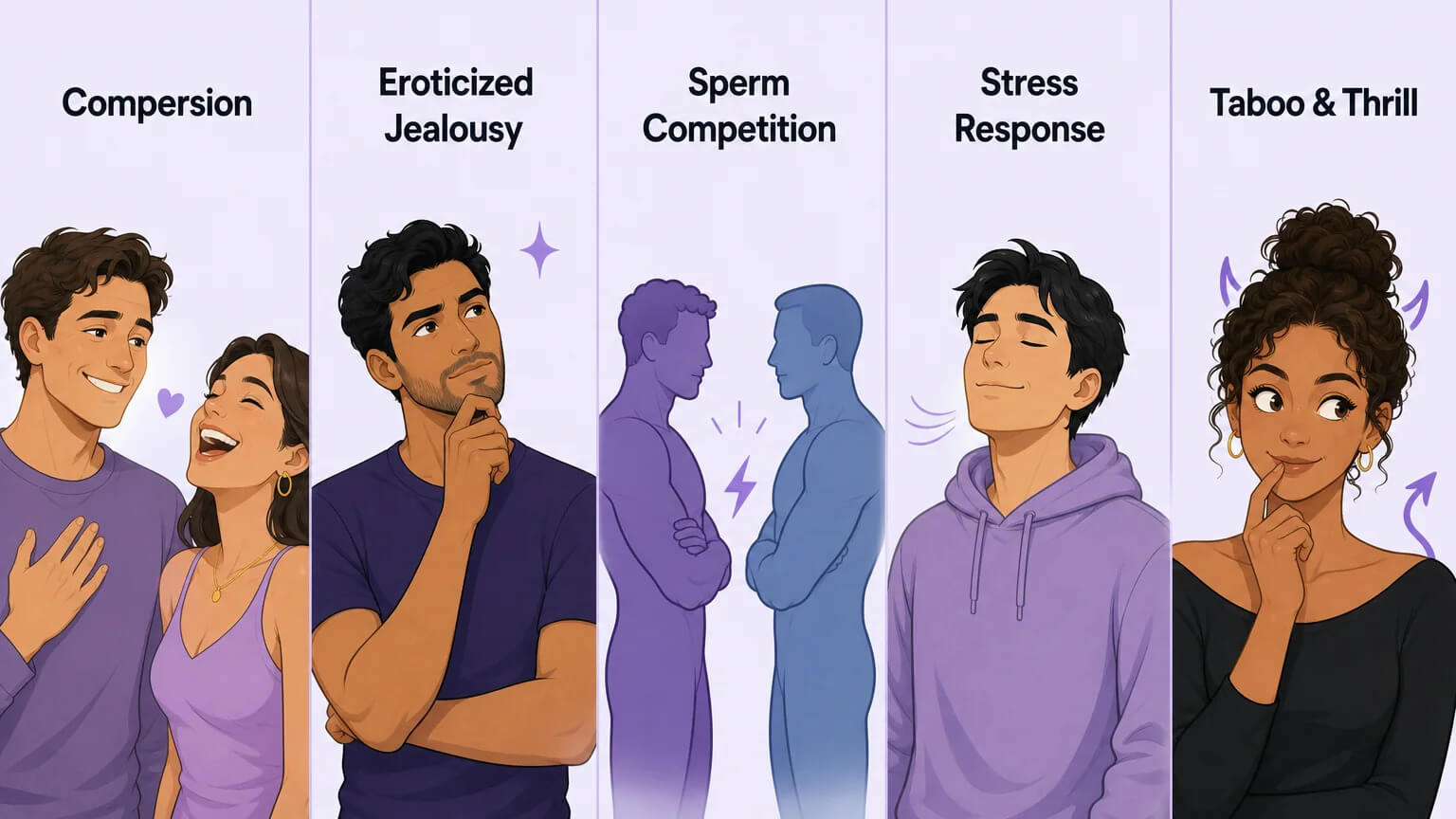
Five psychological mechanisms show up in the data. None of them suggest something is wrong with you.
Compersion. This is arousal that comes from your partner’s pleasure, not from your own. Flicker and colleagues identified it in 2024 as a recognized compersion subtype specific to cuckolding dynamics. Your brain is not wired for humiliation. It is wired to find your partner’s ecstasy intoxicating.
Eroticized jealousy. The amygdala processes fear and desire in overlapping circuits. The same neural territory that flags threat also registers arousal, and for some people, the signals bleed into each other. Jealousy does not shut down desire. It can dial it up.
Sperm competition. Cambridge researchers describe the physiological adaptations that evolved to respond to infidelity risk. In a consensual context, some men’s brains repurpose that machinery as arousal rather than distress. Your body evolved to compete. Your psychology found a way to enjoy the contest.
Stress response. Cuckolding-related searches rose 27% during the 2008 financial crisis and 41% during the 2020 pandemic. The brain eroticizes what it cannot control. When the external world feels unmanageable, surrendering control in one contained, consensual domain becomes release rather than threat.
Taboo and thrill-seeking. Lehmiller found that people higher in erotophilia and sensation-seeking were significantly more likely to report cuckolding fantasies. Breaking a powerful norm, within a container you and your partner have built together, is part of the fuel.
When clinical researcher David Ley studied couples who actually practice this, he found they were “educated, successful individuals with strong, healthy marriages who demonstrate high degrees of communication and mutual respect.” The fantasy does not mark a deficient man. The data suggests it often marks a man secure enough to name what he wants out loud.
The Female Partner’s Psychology: What She Experiences in a Cuckolding Dynamic

The conversation around cuckolding tends to focus almost entirely on the male mind. The woman in the dynamic is rarely given the same depth of attention. The data tells a different story.
The gender asymmetry runs deeper than the surface numbers. Women’s fantasies lean exhibitionistic: 40% have fantasized about being watched, compared to 26% who have fantasized about watching. Where men often consume the image, women often want to be the image. And unlike men, women’s cuckolding fantasies show no link to self-esteem or political affiliation in Lehmiller’s data. Different drivers produce different psychology. The experience is not a mirror of the male one.
Real accounts give texture to what the numbers sketch.
Sloane, the entrepreneur profiled in Lisa Taddeo’s Three Women, described being watched by her husband as feeling “completely in charge.” She called herself “like an exalted being.” That framing is about power and visibility, not submission.
K, married twenty years, spent four years discussing the possibility with her husband before either of them acted. “I expected to feel guilt,” she said, “but actually felt elated, while also being terrified at what reaction my husband might have.” The experience, she reported, “reconnected us.”
Venus described her first time with a single observation: “I really wasn’t expecting the next-level closeness that it brought me and my boyfriend.”
The through-line across these stories is not novelty or thrill. It is deepened emotional intimacy and feeling more desired by their primary partner afterward. The reclamation effect holds across accounts, and it is one of the more underdiscussed findings in the research.
This section is not a sales pitch. Some women feel guilt. Some develop unexpected attachments. Some find the emotional complexity harder than they anticipated. The point is not that every woman’s experience lands on the positive side. The point is that her experience belongs to her and needs its own framework, not one borrowed from what her partner is going through.
Jealousy, Attachment, and Compersion: The Emotional Engine of Cuckolding
You have been circling one question since the opening paragraphs: “Will this break us?”
The research has an answer. It is more specific than yes or no.
Attachment style is the strongest predictor of outcome. Lehmiller, Ley, and Savage studied 580 gay men in consensually non-monogamous relationships in 2018. Those with secure attachment reported positive outcomes. Those with anxious or avoidant attachment reported negative ones. Lehmiller put the warning directly: “For those who have a lot of relationship anxiety or abandonment issues, who lack intimacy and communication, and who aren’t careful, detail-oriented planners, acting on a consensual non-monogamy fantasy could very well be a negative experience.”
Attachment is not fixed. It can shift with work. But entering a cuckolding dynamic with unaddressed attachment wounds is like running a marathon on a sprained ankle. The ankle was already the problem. The marathon only made it harder to ignore.
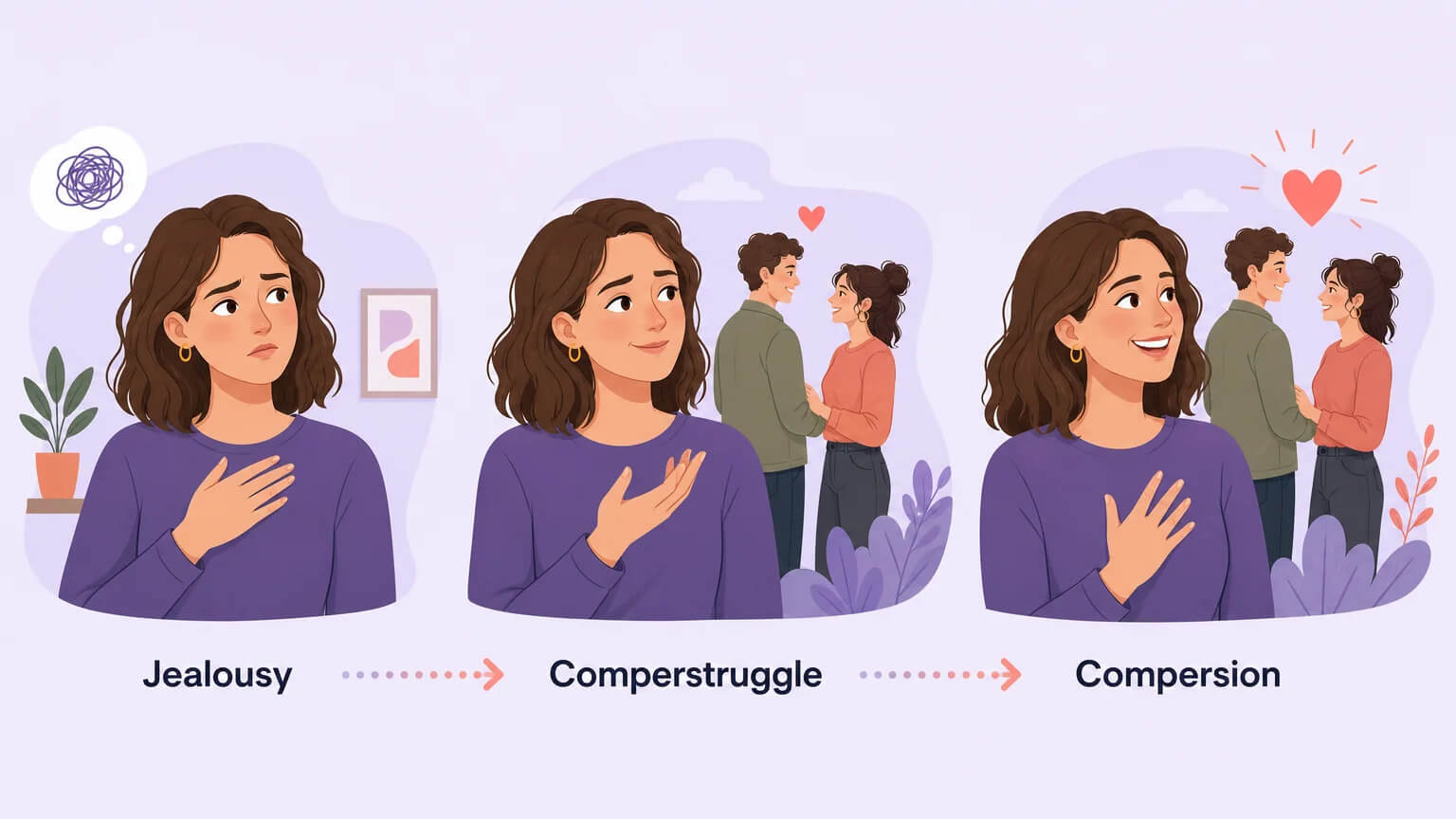
Compersion is not simply the opposite of jealousy. Marie Thouin’s 2024 research defines it as a value system, a deliberate orientation toward your partner’s joy. She distinguishes between attitudinal compersion (the intellectual choice to celebrate your partner’s pleasure) and embodied compersion (the felt experience of warmth and arousal when they experience it). Most people start with the first and gradually build toward the second.
Thouin also named something that makes the whole experience more legible: “comperstruggle.” The simultaneous experience of jealousy and compersion, feeling genuinely happy for your partner while also feeling genuinely unsteady. This is not evidence that something has gone wrong. For most people doing this work, it is the starting condition.
Balzarini and colleagues surveyed 4,888 people in 2021. Their core finding: experience predicts more compersion and less jealousy over time. Mogilski and colleagues found in 2019 that consensually non-monogamous individuals thought about their partner’s outside relationships more often but felt less distress about them. The brain adapts. The emotional immune system builds tolerance with exposure.
When jealousy surfaces, treat it as a diagnostic rather than an alarm. Is this old fear latching onto a new situation? Is this a boundary that needs clarifying? Or is this the erotic charge of the dynamic itself, the voltage that makes the whole thing work? Each answer calls for a different response.
Community wisdom puts it best: “People who are good at non-monogamy aren’t people who never feel wobbly. They’re people who know what to do when they feel wobbly.”
Fantasy vs. Reality in Cuckolding: Why Most Couples Stay on the Fantasy Side
You do not have to choose between “never mention this again” and “find someone tomorrow.” There is a continuum, and where you land on it is up to both of you.
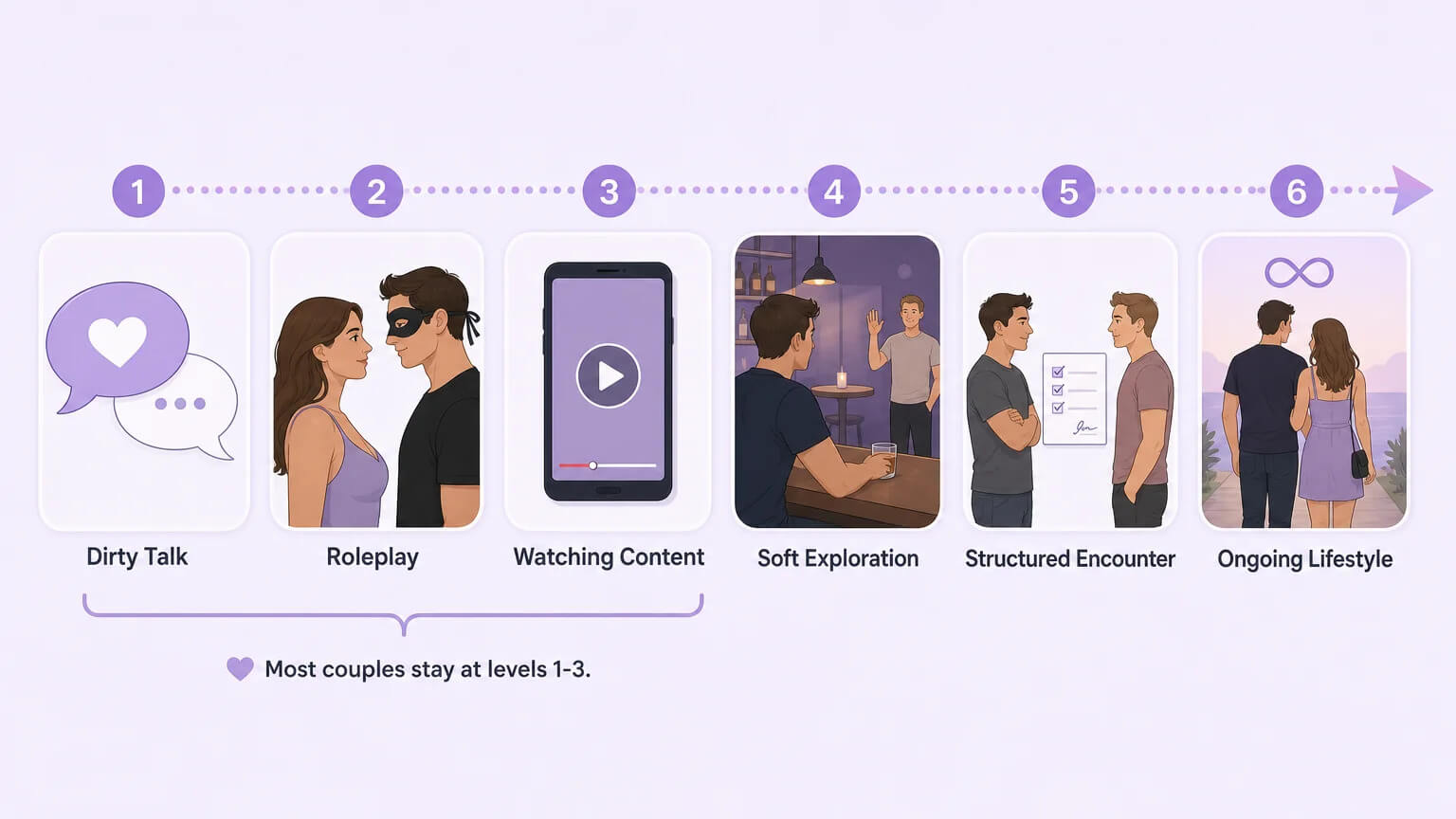
Level one is dirty talk. You bring the fantasy into conversation during sex. No third person. No logistics. Just imagination and words.
Level two is roleplay. You inhabit the scene without involving anyone else. You and your partner, playing with the idea together.
Level three is watching content. Pornography, erotica, communities where the fantasy lives as fantasy.
Level four is soft exploration. Flirting at a bar while your partner watches. Creating a profile on a lifestyle app. Dipping a toe without submerging.
Level five is a structured encounter. Boundaries negotiated in advance. Aftercare planned. A contained experience rather than an open door.
Level six is an ongoing lifestyle. The dynamic becomes part of your relationship architecture, revisited, revised, integrated.
Most couples stop at levels one through three. The gap between 52% fantasy and 4% practice is not a failure to launch. It is evidence that fantasy-only is a complete destination. You can explore this desire together for years without ever involving another person. That is not holding back. That is doing it.
John, a man who went through with it after months of discussion, described the morning after his first experience: “Fear, nausea. Genuinely, just what have I done? Why have I done this to myself? It was horrifying.” And yet: “At the absolute lowest points, I wanted to continue.”
That is the emotional whiplash that catches people off guard. The thing you desperately wanted feels like a mistake the moment it becomes real, and you still want to do it again. Both reactions are true at the same time, and neither one cancels the other.
Porn is performance. Memes are exaggeration. Real relationships involve emotions, conversations, pauses, and boundaries. They involve looking at your partner across the breakfast table the next morning with no script for what comes next.
Ask yourselves these questions honestly: What would staying at fantasy-level give us? What would crossing over give us? What might it cost? Both answers can be right answers. The only answer that matters is yours.
Healthy vs. Unhealthy Cuckolding Dynamics: Signs Your Relationship Is Ready
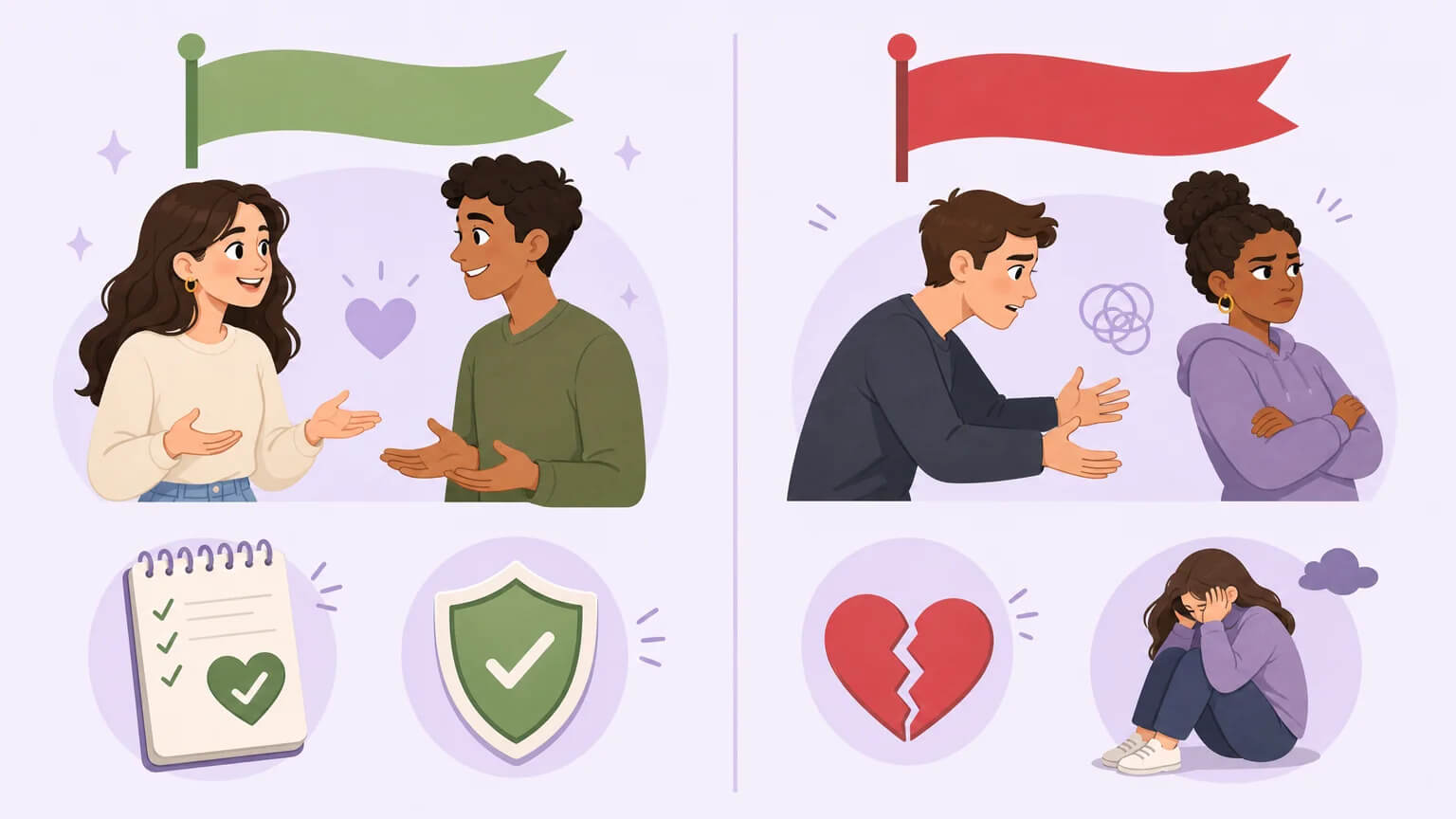
People tend to ask whether cuckolding is healthy. The better question is whether your relationship is healthy enough to explore it.
Some relationships use this dynamic and thrive. Some attempt it and fracture. The dynamic itself is rarely the difference-maker. What makes the difference is what the dynamic reveals about the relationship that was already there.
Green lights mean both of you are genuinely enthusiastic, not one enthusiastic and one going along. Communication is proactive and specific. Ley described the couples he studied as having “some of the most effective communication skills I’ve ever seen in any couple.” Boundaries are clear, specific, and understood as revisable rather than permanent. Aftercare is treated as non-negotiable. Either partner can say stop at any point, and that stop is met with gratitude rather than resentment.
Red flags need your full attention. One partner applying pressure, even gently, even lovingly. Using cuckolding to “fix” a relationship that already feels distant or disconnected. Attachment anxiety that has not been addressed. “Not saying no” being treated as the same thing as “saying yes.” Secrecy around boundaries, feelings, or what happened during an encounter.
Ley’s clinical observation: when cuckolding was attempted in relationships with pre-existing deficits, it consistently led to negative outcomes. The dynamic did not cause the problem. It revealed what was already there. And what was already there could not withstand the weight.
His blunt warning deserves to be read slowly: “I’ve seen men who try to trick their wives into cuckolding them, and this never, ever ends up well.”
This is not gatekeeping. It is a self-assessment tool. If reading this section surfaces a red flag in your relationship, recognizing it before you act is not a failure. It is an act of care. You just saved yourselves something you would have had to recover from.
Aftercare in Cuckolding: The Emotional Recovery Process After an Encounter

The most important part of a cuckolding experience is not the encounter. It is the forty-eight hours after. Most couples spend months negotiating the rules and zero minutes planning the recovery. That is the mistake.
Aftercare originated in BDSM communities, where practitioners understood that intense experiences require deliberate re-entry. Dr. Jennifer Power describes it as “about seeing or understanding your and the other person’s needs more holistically.” After an experience that stretches your emotional range, you do not simply snap back to baseline. You need a bridge.
The protocol has five components. None of them are optional.
First, immediate physical reconnection. Cuddling, skin contact, a shared shower, water, food. These boost oxytocin and restore physiological baseline. After elevated cortisol, your body needs safety signals before your mind can process anything.
Second, reclaiming rituals. Re-bonding sex or extended physical touch. The core message, communicated through action rather than words: “You are wanted. You still come home to me.” This is not about erasing what happened. It is about reaffirming what was always true.
Third, timed debriefing. Comfort comes before analysis. Do not run a courtroom transcript while someone is still tender. When you are both ready, use structured questions: What felt good? What felt hard? What would we do differently? What do you need from me right now that you might not be saying?
Fourth, a waiting period. Do not schedule the next encounter while still emotionally activated from the last one. Give it days. Let the feelings settle so the decision comes from clarity rather than momentum.
Fifth, long-term maintenance. Regular check-ins that are not triggered by problems. A standing willingness to pause or stop, framed as strength rather than retreat.
What happens without aftercare is predictable: emotional crashes, disconnection, regret. The “drop” blindsides couples who thought the hard part was the encounter itself.
Aftercare is where intimacy deepens. It is the moment when both of you look at each other across the aftermath and choose each other again, deliberately, with full knowledge of what just happened and full intention to stay.
FAQ
Is cuckold psychology evidence of a mental disorder?
No. The American Psychiatric Association does not list cuckolding as a disorder, and researchers including Ley, Lehmiller, and Savage have published extensively showing that these desires exist across psychologically healthy populations. The fantasy alone is not diagnostic of anything except being human.
How common are cuckolding fantasies?
Very. Lehmiller’s nationally representative survey of 4,175 Americans found that 52% of heterosexual men and 26% of heterosexual women have had cuckolding-related fantasies. If you have had this thought, you are in a quiet majority, not a deviant minority.
What is the difference between cuckolding and hotwifing?
The distinction centers on power (but not all of it). Cuckolding typically includes an element of power exchange or eroticized submission on the male partner’s side. Hotwifing emphasizes shared pride in the female partner’s sexual freedom. In practice, many couples borrow from both and define the terms for themselves.
Can jealousy and compersion coexist?
Yes, and they usually do. Marie Thouin coined the term “comperstruggle” to describe the simultaneous experience of genuine happiness for your partner and genuine destabilization. This co-occurrence is normal, not a sign that you are doing it wrong.
How should we approach finding and treating a third person ethically?
As a person, not a prop. Be transparent about your dynamic, your boundaries, and your intentions from the first conversation. Do not use someone as an experiment without their informed participation. They are a guest in your playground, not a toy in your toybox.
What if my partner says no?
Respect it fully, immediately, without negotiation. A no given under pressure is not consent. It is surrender. Processing time is normal. Dan Savage has observed a reliable pattern in his decades of advice work: the husband proposes it, the wife reacts strongly, and weeks, months, or years later she returns to ask if it is still on the table. Sometimes a no in year one becomes a conversation in year three. Sometimes it stays a no forever. Both outcomes are valid. What matters is that the answer, whatever it is, comes freely.