You have already had the conversation. You know what you want, why it excites you, and what it means for your relationship. Now you are staring at a screen, trying to figure out which app works and keeps you safe.
The question is not what exists. “Hotwife dating apps” means: which one works for our specific dynamic?
A quick terminology note: “hotwife” is the umbrella term for a married woman who has her partner’s consent to have sex with other men. Stag/vixen couples share power without humiliation. Cuckold dynamics involve power exchange where she holds the majority of sexual authority. The acts do not define the label. Who holds the sexual power does.
This guide covers seven platforms, three free channels, a vetting protocol, and a decision framework. The app is only half the equation. The other half is how you use it.
1. 3Fun: Built for Couples Who Explore Together
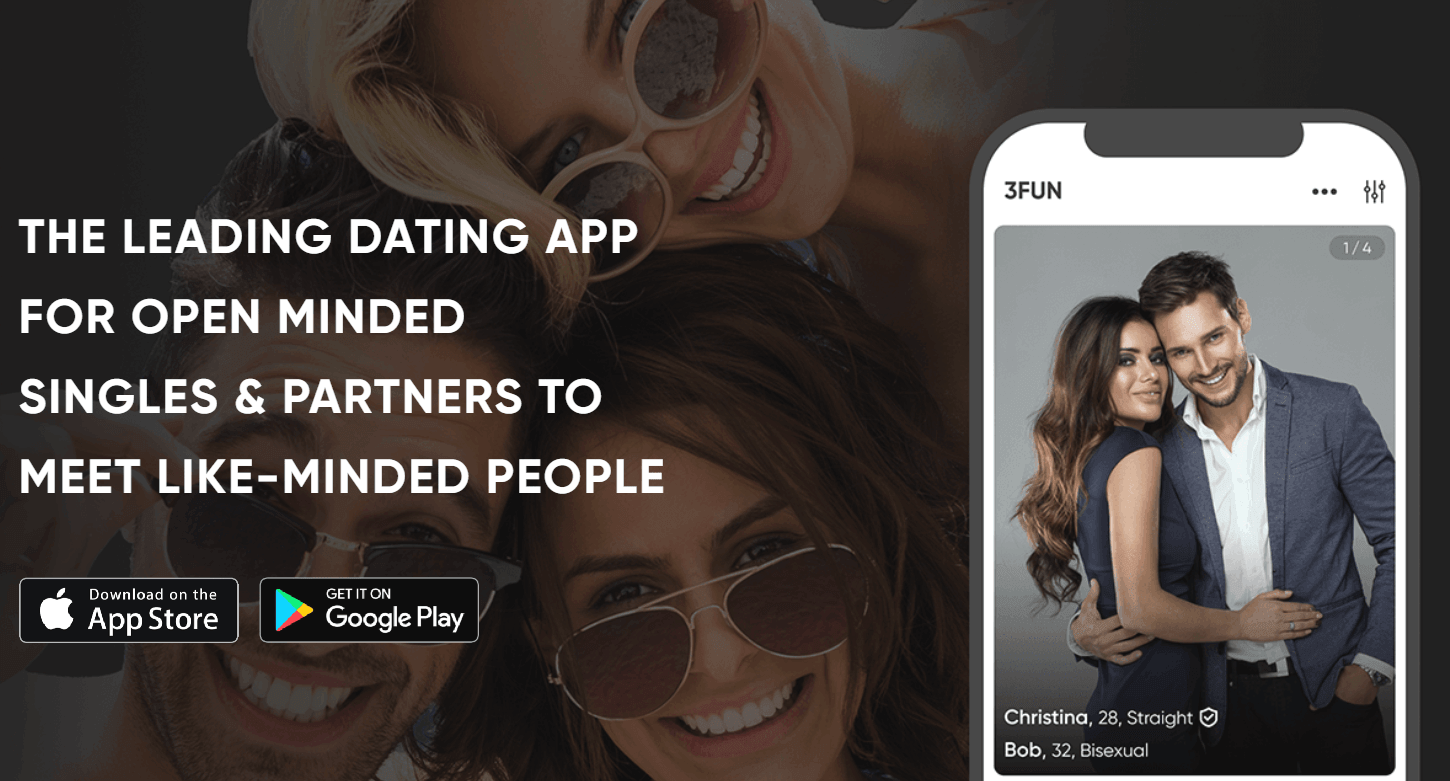
Feeld links individual profiles. 3Fun puts you in one account, together, from the start. If coordinating two separate Feeld accounts and trading screenshots of conversations sounds like project management, 3Fun is the simpler path.
The synced couple account is the headline feature. Both partners see the same matches, both can message, and group chat extends to include the third person. The platform supports 10+ sexualities and includes photo verification (some users report verified profiles with blank faces; the system works but is not flawless). Photos are secured via presigned URLs and encrypted APIs. The free tier is among the most generous in the lifestyle app space: unlimited messaging, couple accounts, group chats, and seeing who liked you all come standard. 38.4% of users had their first ENM connection on 3Fun.
VIP pricing sits at $29.99 per month, steep next to Feeld Majestic at $12 to $16. The bugs are real: multiple users report likes randomly turning into “Passed,” messages disappearing, and distance filter errors showing profiles from thousands of miles away. Not dealbreakers, but friction points you should expect. Screenshot blocking is not confirmed on 3Fun, which matters if privacy is a priority.
The core experience (synced exploring) is something no other app replicates at this price. 3Fun was built for couples and singles together, not retrofitted from an individual dating model. If browsing and chatting as a unified team from day one is what you want, and free functionality matters more to you than premium polish, start here.
The verdict: 3Fun makes the most sense for couples who want to browse and chat as a unified team. The bugs are real, but the free tier is functional enough to test the waters without commitment. Get 3Fun on Google Play or Apple Store.
2. Feeld: The ENM-Native Starting Point
Feeld does something no other mainstream-adjacent app does: ethical non-monogamy is the default, not a checkbox bolted onto a monogamous framework. For couples taking their first step, that cultural difference matters more than any feature list.
The feature that sets it apart is Constellation, Feeld’s partner-linking system. Each of you creates your own profile on your own device: your own photos, your own bio, your own chat history. Then you link up (up to five partners total), each relationship labeled spouse, play partner, dom/domme, or something custom. Your relationship network is visible to others, and they can click through to each partner’s individual profile. Transparent, not invasive.
The free tier covers more than most: swiping, matching, messaging, and screenshot protection for all users. Feeld’s 30+ Desire tags (Couples, Threesome, Kink, Open Relationship, Connection) are the real matching engine. They matter more than your bio for getting found. Two tags is the minimum for visibility. Majestic ($12 to $16 per month) unlocks Incognito Mode, Private Photos, and See Who Liked You. The Cores feature lets you teleport to 13 cities to expand your pool in smaller markets. Twenty-plus gender and sexuality options round out the platform.
A few things to know before signing up. Feeld had a security incident in 2024 that exposed private messages and photos. The bug was fixed, but couples who need absolute privacy deserve to know it happened. The platform leans heavily couple-oriented: YouTuber Jerrad Ross tested 500 swipes as a single man and got zero matches. And as WIRED documented in 2026, Feeld’s culture has broadened substantially from its early days. The signal-to-noise ratio dropped. Inactive profiles from abandoned accounts still surface in feeds.
Best for couples who want an ENM-native culture and are comfortable with individual linked profiles rather than a single shared account. Skip if you and your partner want to chat with matches simultaneously from one account. That is 3Fun’s territory.
3. Pure: When Privacy Is Non-Negotiable
One image of your conversation forwarded to the wrong person, and your privacy is gone. That is the fear that keeps teachers, doctors, public figures, and anyone with a career to protect up at night. Pure is the only dating app where taking a screenshot of your conversation is technically impossible. The software itself blocks it, at the system level. If someone tries, both participants get notified immediately.
The privacy architecture goes deeper than screenshots: conversations auto-delete after 24 hours, media self-destructs after viewing, messaging is end-to-end encrypted, and the app assigns random in-app nicknames. You never share your real name until you choose to. A 2024 Kaspersky study confirmed Pure is the only dating app that prohibits chat screenshots entirely. No other app delivers this level of privacy as a technical guarantee rather than a policy promise. Men pay $7 to $15 per month; women use it free.
The trade-off is structural. Pure is not built for couples. No linked profiles, no partner visibility, no couple account mechanics. It was designed for individual connections with maximum privacy, which means it excels at the first conversation stage: vetting someone before you bring them into your dynamic. It is not where you build an ongoing lifestyle presence. Most couples use Pure for the initial screening window, then move elsewhere once trust is established.
Direct recommendation: Use Pure for initial vetting conversations when privacy is paramount. Once you have confirmed someone is legitimate and respectful, move the conversation to Feeld, 3Fun, or text. Pure is the airlock, not the living room.
4. Quiver: The Female-Centric Alternative
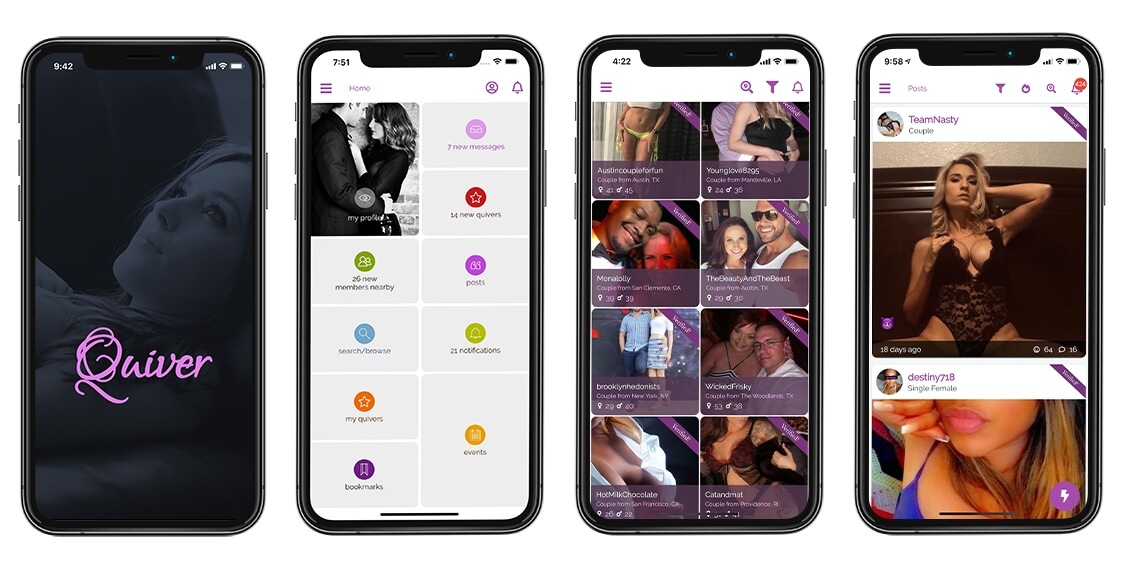
Most dating apps put women in the passenger seat: unlimited unsolicited messages, public by default, profiles built for browsing rather than safety. Quiver flips the architecture. Women control visibility. Validated members create a trust filter. Instead of open inboxes, interested members send “Quivers,” lightweight interest signals. You decide who gets a conversation.
The numbers back up the philosophy. JustUseApp analysis of 775 reviews gives Quiver a Safety Score of 100 out of 100 and a Legitimacy Score of 100 out of 100. 72.6% of users rate the app as safe. 4.4 out of 5 on the App Store. The feature set includes personal profile pages with public walls, validated member badges, swinger event listings, and a built-in blog written by lifestyle veterans rather than tech company copywriters. Topics range from first-time nerves to negotiation scripts and regional lifestyle laws.
The trade-off is size. Quiver’s user base is smaller than Feeld or 3Fun, and some features (event RSVPs) require the web version. But the safety-first architecture and female-centric design fill a genuine gap: a platform where her comfort sets the tempo. This is not a flaw in your foundation; it is an extension of your adventure. Quiver builds the container for it.
Quick comparison: Feeld wins on community size and ENM culture. 3Fun wins on synced couple functionality. Quiver wins on safety scores and female-led architecture. If safety metrics matter more to you than user volume, Quiver deserves the first download.
5. SDC: The Established Community With 3 Million Members
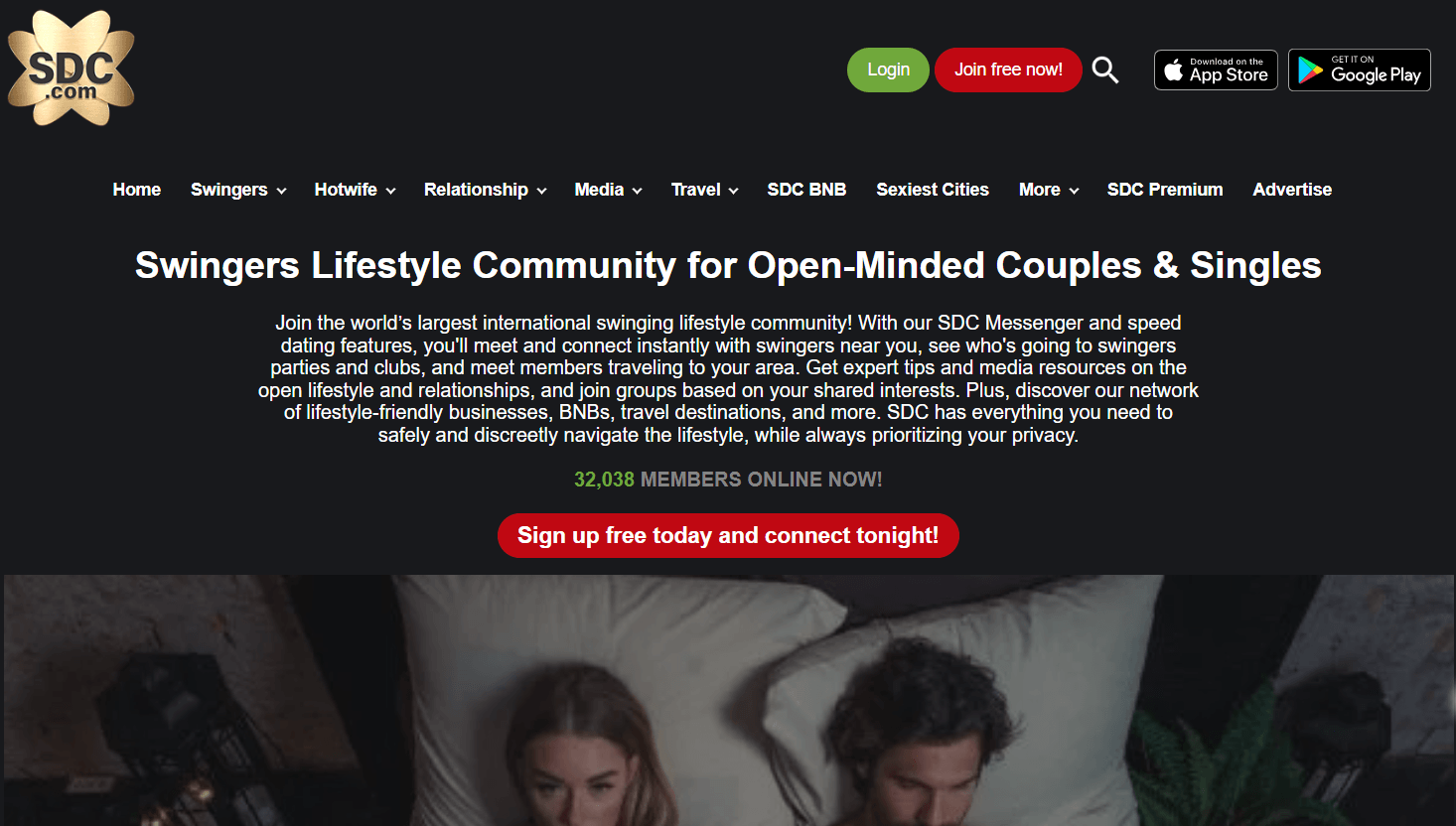
Three million members. Events in most major cities. Educational content built over two decades. SDC, short for Swingers Date Club has been operating since 1999, predating most lifestyle apps. If your priority is a proven, large-scale network of real people who attend real events, SDC’s longevity is the feature.
SDC is both a website and a mobile app (iOS and Android). Full access runs about $30 per month, with a 7-day free premium trial. The event network is the differentiator: everything from casual local meet-and-greets to large-scale hotel takeovers and international lifestyle cruises. Many members attend their first event before sending a single message, using the gathering itself as the introduction. The educational library covers consent protocols, jealousy management, first-time guides, and regional lifestyle laws. Newcomer walkthroughs cover profile setup through event etiquette.
The trade-offs: the interface feels dated next to Feeld or 3Fun. Old and abandoned accounts linger in search results. Messaging requires the paid upgrade; the free tier is a browsing window. SDC is a traditional swinger platform, not hotwife-specific, so you will be filtering through a broader pool. For context: SLS (SwingLifeStyle), founded even earlier, has roughly 450,000 members and a $149.95 lifetime membership. One payment, no monthly fees. It is the budget legacy option, but the interface is from a different era and the mobile experience is rough.
Best for couples who want community infrastructure: events, educational content, and a proven 25-year track record. Skip if you want a modern mobile experience and are interested in hotwife-specific rather than general swinger connections.
6. Kasidie: Where Social Networking Meets Lifestyle Dating
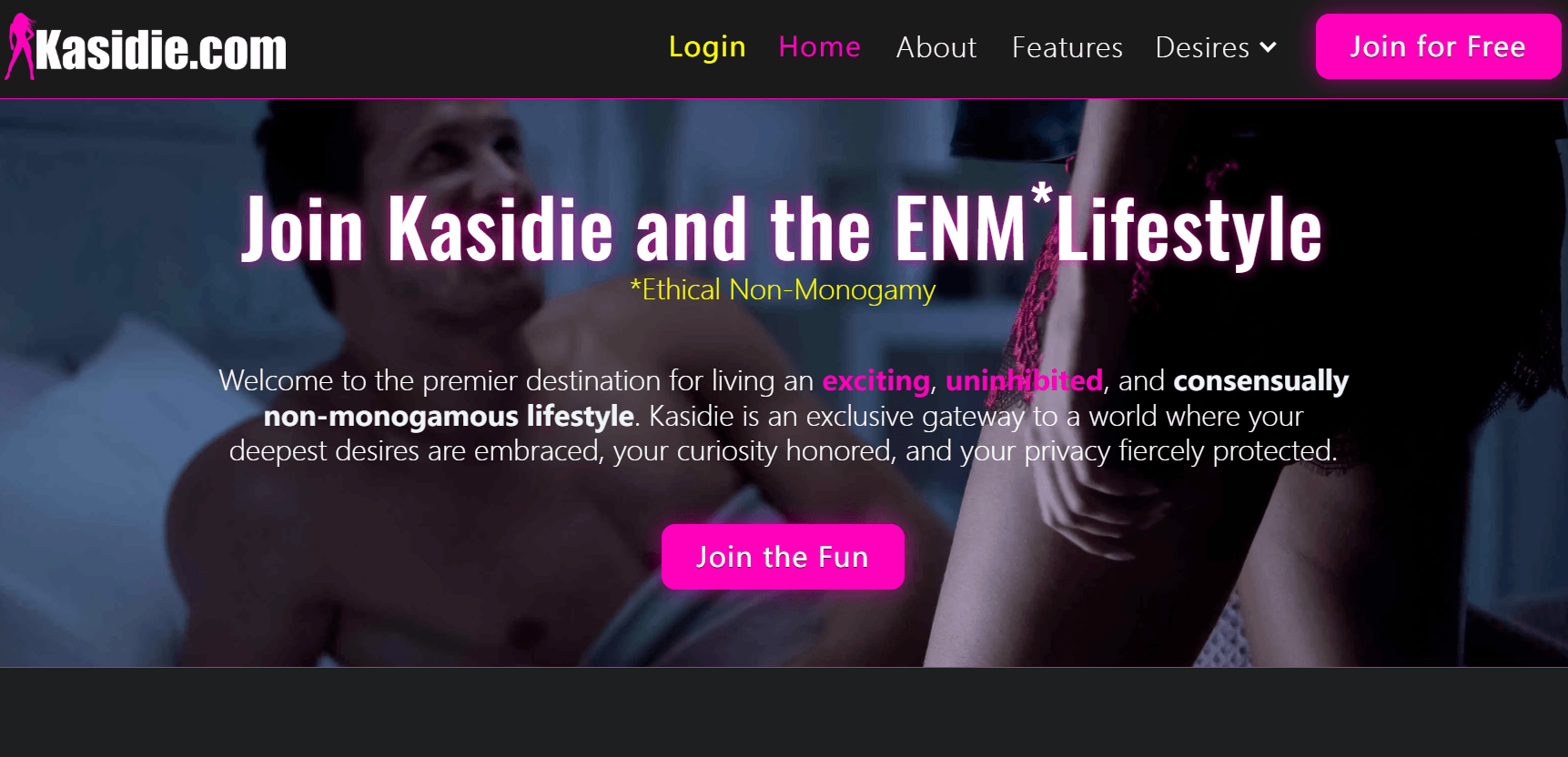
Kasidie is a members’ club with a bulletin board, event calendar, and social scene. Not just faces to swipe on. Roughly 1,500 new sign-ups per week, strong privacy controls, and a community culture that favors camaraderie over transactions.
The hybrid model sets it apart: profile matching for dating, plus forums, groups, and chat rooms for community. These are not afterthoughts. For many members, the forums and chat rooms are the main event. People swap event reviews, vet recommendations, and regional lifestyle news in threads that span years. For couples who want to understand a local scene before stepping into it, that archive is gold. Event listings cover local, national, and international gatherings. Token-based pricing lets you pay as you go: tokens start around $10 for a basic pack, spent on specific actions like sending a message or accessing an event listing. West Coast and Southwest communities are strongest.
The structural limitation: no dedicated mobile app. The web interface works on phones but is not optimized for mobile browsing, which is how most couples use dating platforms now. Free usage is limited; you will need tokens to do much. Geographic concentration is stronger in popular lifestyle regions. Couples in smaller markets may find the user pool thin.
The verdict: Kasidie makes sense for couples who want community alongside connections, and who value event discovery as much as matching. The lack of a mobile app is the biggest drawback. If you do most of your browsing on your phone, Feeld or 3Fun will feel more natural.
7. OkCupid: The Mainstream Backup Plan
The best app is useless if nobody is on it within 50 miles. For couples outside major metro areas, niche ENM apps can feel like ghost towns. OkCupid is the bridge: not purpose-built for hotwife dating, but one of the few mainstream platforms where you can be honest about your relationship structure without getting reported or banned.
OkCupid’s ENM-friendly features: relationship statuses like “seeing someone,” “married,” and “in an open relationship,” partner profile linking, and the ability to filter by body type. That last one is a feature no other mainstream app offers. Premium runs $17 to $35 per month.
The trade-offs are real. OkCupid is a general dating app with a huge user base, not a curated ENM community. New accounts often see 99+ likes immediately; most are bots or low-effort profiles. You will spend time filtering and explaining your dynamic to people who did not sign up for non-monogamy. Expect your first week to be heavy on left swipes and clarifying conversations. But the volume question matters: when Feeld shows you the same 20 profiles on repeat, OkCupid’s broader pool is the practical answer. One extra precaution for mainstream apps: strip EXIF data from your photos before uploading. GPS coordinates embedded in your images can reveal your home or workplace to anyone who downloads them.
Direct recommendation: Keep OkCupid as your backup, not your primary. Start with Feeld or 3Fun. If after two weeks you are seeing the same faces on repeat, activate OkCupid. Be explicit in your bio about your dynamic. Transparency filters out the people who would waste your time.
8. Reddit: The Community-First Free Channel
Before there were dedicated hotwife dating sites and apps, there were Reddit threads where real couples shared real experiences: the wins, the disasters, the lessons. That archive is still there, still free, and still more candid than any marketing page. For couples in the research phase, it is the best free education available.
Key subreddits: r/HotWifeLifestyle for discussion and advice, r/CuckoldPersonals and r/HotWifeRequests for personals, r/Swingers for the broader community. Many subreddits require verification (a handwritten sign with your username, date, and subreddit name). Low-tech, but it filters bots and catfish. The personals subreddits are organized by location and interests, making them functional for real connections, not just talk. Some threads span years, with couples updating their journey from first conversation to years of active lifestyle participation.
The trade-offs: no identity verification beyond subreddit-level photo checks. No privacy architecture. Everything is publicly visible by default. Anyone can browse, screenshot, or share. Never post identifying photos or use your main Reddit account. The community depth is unmatched: years of searchable advice from people who have lived the lifestyle. But Reddit is a discussion platform, not a dating platform. Connections happen here despite the architecture, not because of it.
Best for: couples in the research phase who want to learn from real experiences before committing to an app, and those comfortable managing their own privacy. Skip if you want app-level privacy protections or prefer not to sift through unscreened messages.
9. FetLife: The Events Hub for the Kink-Curious
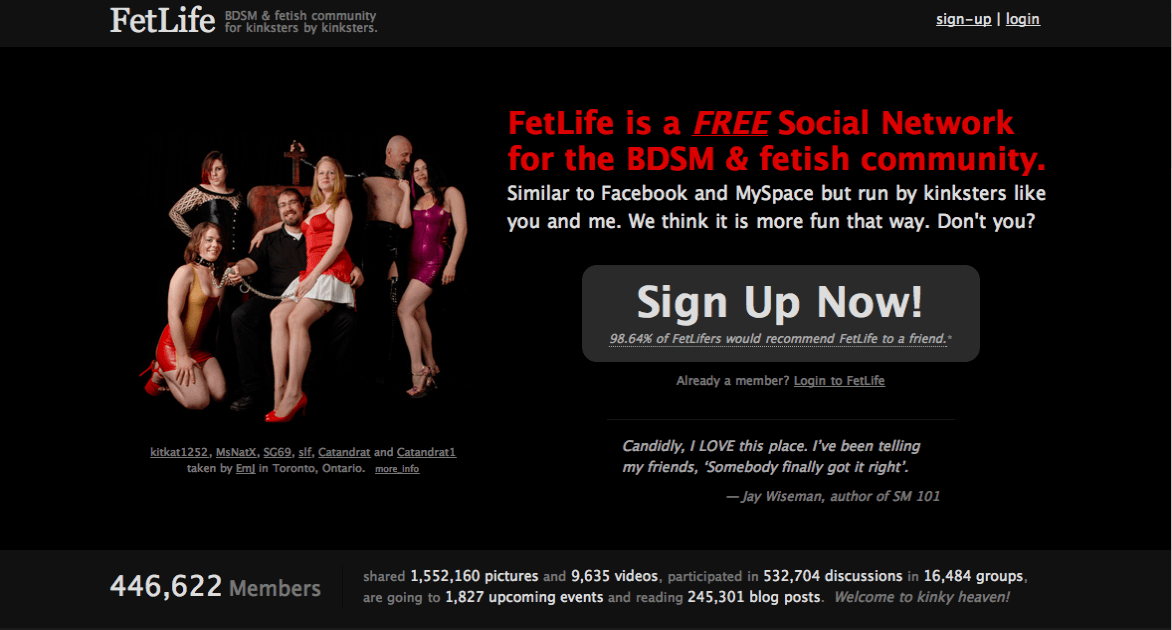
On FetLife, the profile is not the product. The event calendar is. Unlike dating apps where you match first and maybe meet later, FetLife inverts the order: find a local munch or meetup, show up in a low-pressure social setting, and connections follow from real chemistry instead of curated photos.
FetLife is a free social network, not a dating app. Profiles, groups, and forums cover the full spectrum of kink and ENM. The event discovery layer (local munches, parties, workshops) is where couples find the real value. These are public or semi-public gatherings where you meet people in the lifestyle without the pressure of a one-on-one date. Many experienced couples recommend attending events before downloading any dating app. It normalizes the lifestyle and builds a real-world safety net.
Adreena Winters, author of “So, You Want to Be a Cuckold” and creator of Cuckold Confessions, names FetLife as a current go-to but adds a caveat: the platform has “quite a lot of fantasists,” people who talk extensively online and never show up. The interface is dated. Privacy controls exist but need manual setup. The user base leans more general kink than hotwife-specific, so you will be filtering. But for couples who want to build a local network before or alongside app matching, FetLife’s event infrastructure is something no dating app replicates.
Direct recommendation: Use FetLife for event discovery and community building, not as your primary matching tool. Attend a local munch first. It costs nothing, and it is the fastest way to normalize the lifestyle and meet people who can give you local app recommendations.
10. Twitter/X: Where Reputation Drives Connection
Search “hotwife” on Twitter/X and you will find an entire ecosystem: couples sharing real experiences, bulls building reputations, community figures like @HotwifeTeaching (17,000 followers) and @thecuckin (125,000 followers) driving the conversation. The public nature that makes Twitter feel risky is also what makes it work. People with something to hide do not build public followings.
Twitter/X runs on reputation economics. Accounts that post consistently, engage authentically, and build followings over time are more verifiable than a three-photo profile on a dating app. A bull with 5,000 followers and two years of engaged posting has more to lose from bad behavior than an anonymous profile with three mirror selfies. That accountability shapes behavior in ways app-based reporting cannot replicate. Many couples use Twitter to share their journey, connect with like-minded people, and vet potential thirds through public interactions before moving to DMs. Following a few community accounts creates a flywheel: the recommendation engine surfaces related profiles, events, and conversations on its own.
The trade-offs: everything is public by default. No screenshot protection, no couple-account architecture, no privacy infrastructure. If you post identifying photos, anyone with an internet connection can access them. The lifestyle community is active but intertwined with explicit content; not every account is looking for real-world connection. The signal-to-noise ratio requires active curation. But for couples willing to maintain a lifestyle-specific account with privacy-conscious content, Twitter offers authenticity and accountability that anonymous dating apps cannot match.
Quick take: Twitter/X works best as a supplement. A place to build your lifestyle network, follow community voices, and occasionally connect. Keep your account lifestyle-specific, avoid posting identifying photos, and let reputation do the vetting.
How to Vet a Third Person (Before Anyone Takes Their Clothes Off)
“For a lot of couples, they’re just like, ‘Oh, well, let’s not try this again.'” Adreena Winters is describing what happens after one bad experience. One bad encounter can close the door on a dynamic that might have transformed your relationship. Vetting is the difference between a lifestyle and a one-time disaster.
Chat on the app first. Do not share your phone number or social media until trust is built. Someone who pushes to move off-platform right away is signaling impatience, and impatience is a red flag.
Recognize the red flags fast. Unsolicited explicit photos: number one warning sign. Refusal to discuss boundaries or sexual health. Rushing to meet without conversation. Any language that treats your partner as a prop. See any of these, unmatch and move on.
The coffee date is non-negotiable. Schedule a low-stakes public meeting (coffee, a drink, a walk) before any play. Most problems become obvious in person within 15 minutes.
Have the sexual health conversation. Discuss testing status and boundaries before anything physical. Evasiveness is a hard stop.
Trust your gut. If something feels off during the coffee date, politely decline. You do not owe anyone an explanation.
First encounter logistics. Meet at a neutral location, not your home. Have your own transportation. Tell a trusted friend where you are if privacy allows.
Debrief together afterward. Privately, before committing to a second meeting. What worked? What did not? What would you change?
The bottom line: the right third person will respect every step of this protocol. Anyone who pushes back on a coffee date, a safety conversation, or your pace is telling you exactly who they are. Listen the first time.
How to Choose: Matching the Platform to Your Dynamic
Reading about ten platforms is useful. Knowing which one fits your dynamic is what matters. The couple who browses together on the couch has different needs from the couple where she plays solo. The teacher who cannot risk being outed has different needs from the couple in a progressive city. Match the platform to your dynamic.
If you want to search and chat together as a team, start with 3Fun. The synced couple account is built for this. Both partners see every match and message.
If you each want your own profile but linked transparently, start with Feeld. Constellation makes your relationship visible without merging your identities.
If privacy is your top concern, start with Pure. The screenshot blocking alone is worth it. Graduate to Feeld or 3Fun after initial vetting.
If she wants to control the pace and visibility, start with Quiver. Female-centric architecture means her comfort sets the tempo.
If you want events and community, not just matching, start with SDC or Kasidie. Community platforms first, dating apps second.
If you are in a smaller city and niche apps show you the same faces, add OkCupid. Its broader user base fills the volume gap.
If you want to learn the culture for free before committing money, start with Reddit and Feeld’s free tier. Pay only after confirming active local users.
Most couples use two platforms: one primary, one supplement. Start with the one that matches your dynamic, test it for two weeks, add a supplement only if you need it. The goal is not to be on every app. It is to be on the right one, with the right profile, looking for the right person.
FAQ
What is the difference between hotwife, cuckold, and stag/vixen?
Hotwife is the umbrella: a married woman with her partner’s consent to have sex with other men. Stag/vixen: power is shared or male-led, no humiliation. Cuckold: power exchange with her holding majority sexual authority, often including elements of humiliation or submission. The acts do not define the label. Who holds the sexual power does.
How do couple profiles actually work on these apps?
It depends on the platform. Feeld uses Constellation: each partner creates their own profile, then links together with relationship descriptors like spouse or play partner. 3Fun uses synced couple accounts where both partners chat simultaneously. OkCupid lets you link profiles with statuses like “married” or “in an open relationship.”
Do we have to pay for these apps to get real results?
Not necessarily. Feeld and 3Fun include messaging and matching in their free tiers. Pure charges men ($7 to $15 per month) but is free for women. Privacy features like Incognito Mode live behind paywalls. Start free for two to four weeks. Upgrade only after confirming active users in your area.
Is it cheating if my partner knows and agrees?
No. Adreena Winters frames it directly: “If it’s consensual and there’s communication about it, I can’t see how it’s cheating. Cheating is doing something behind someone’s back, being deceitful, lying, or hiding things.” Informed consent from everyone involved is what separates exploration from betrayal.
What should we put in our first profile to attract the right people?
Be specific. State your dynamic, what you are looking for, whether you play together or separately, and add personality. Use Desire and Interest tags on Feeld; they matter more than bios for discovery. Include three photos: headshot, full-body, lifestyle. Avoid blank bios, graphic language, treating thirds as props, and misleading solo profiles. Balance privacy with approachability.