Fifty-eight percent of men have had this fantasy. If the question how to cuckold your husband has been living in your mind, know this: you are not alone, and you are not strange. That statistic comes from Dr. Justin Lehmiller’s national survey of thousands of Americans, the largest study of sexual fantasies ever conducted. An estimated six million active cuckold couples exist in the United States alone, roughly four million of them married.
Researching, thinking, wanting to do it right, that is what separates a relationship-strengthening experience from a damaging one. This guide walks through every stage: deciding whether this is right for you, having the first conversation, building a safety framework, testing the waters in fantasy, understanding your husband’s inner world, vetting partners safely, protecting sexual health, navigating the first encounter, managing jealousy, and reconnecting through aftercare.
No cheerleading. No shame. Just the roadmap nobody handed you.
Note: If you are the boy and want to get your wife cuckold you, please jump to this guide: How to Get My Wife to Cuckold Me: A Step by Step Guide for Husbands.
Step 1: Deciding if Cuckolding Is Right for Both of You: Fantasy vs. Reality
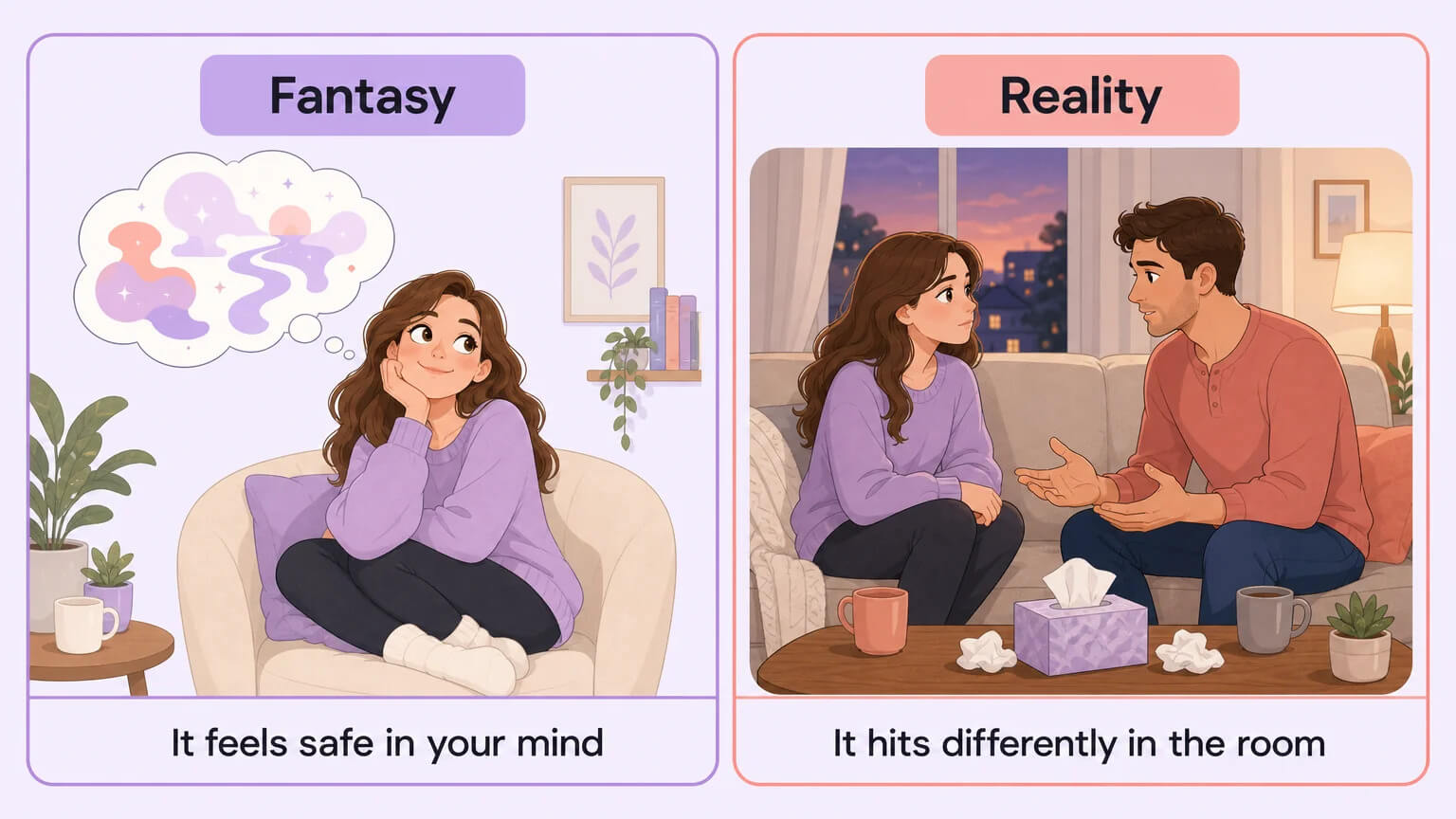
The fantasy is common. Acting on it is fundamentally different from imagining it.
Dr. Justin Lehmiller, whose Kinsey Institute survey remains the largest study of sexual fantasies in America, draws the line clearly: “For those who have a lot of relationship anxiety or abandonment issues, who lack intimacy and communication, and who aren’t careful, detail-oriented planners, acting on a consensual non-monogamy fantasy could very well be a negative experience.”
Consider John, a husband who spent over twenty years fantasizing about cuckolding. His first real encounter triggered severe depression and suicidal thoughts. His own words: “You don’t know how you’re going to feel until you do it.” Even at his lowest, he wanted to continue. Fantasy had not prepared him for reality.
The counterpoint. Dr. David Ley, clinical psychologist and co-author of the largest cuckolding study to date, found that “for the most part, cuckolding tends to be a positive fantasy and behavior. It doesn’t appear to be evidence of disturbance, of an unhealthy relationship, or of disregard for one’s partner.” The differentiator is not the fantasy itself. It is the foundation underneath it.
Run this self-assessment before moving forward. You have honest communication, not just “we get along fine.” There is no active crisis you hope this will fix. Both partners are genuinely curious, neither worn down by pressure. Either of you can hear “no” and stay connected. You are willing to plan meticulously. Venus Cuckoldress is blunt: cuckolding “will make a bad relationship worse.” The prerequisite is not desire. It is trust.
Milestone: both of you can name what excites you and what scares you, without the other person shutting down.
Step 2: Having the First Conversation

Every wife considering this fears the same thing: one wrong sentence and he hears “you are not enough.”
Choose the right moment. Calm, private, both relaxed. Never during a fight, during sex, or when either of you is stressed. This is a Saturday morning conversation over coffee, not a midnight confession.
Open with vulnerability, not persuasion. The Consent Culture community offers a tested opener: “There’s something I’ve been thinking about and I’m a little nervous to share, but I trust you.” This frames the conversation as an act of intimacy, not a demand.
Use I-statements throughout: “I’ve been curious about something,” “I read about couples who explore this and it made me think about us.” Never say “you’re not enough” or “I need something you can’t give me.” Those words embed.
Frame as exploration, not a decision. “Could we learn about this together?” lands differently than “I want to do this.” The most important phrase you can say, and mean: “This doesn’t come from a place of lack. I am incredibly into you. This is about exploring more, not replacing anything.”
He may go silent, deflect with jokes, get angry, or surprise you with enthusiasm. All are normal. If he shuts down: “I can see this landed heavy. We do not need to figure anything out tonight. I just wanted to share something true with you.” Then give him space, days or weeks if needed. Peter Saddington, a Relate counselor and sex therapist, emphasizes that “thorough conversations before any encounter” must address “all questions and awkward scenarios in advance.” This first talk is only the beginning.
Milestone: the conversation happened. He knows this is an invitation, not an ultimatum.
Step 3: Building Your Safety Framework: Boundaries, Safe Words, and Consent
Rules are not restrictions. They are the guardrails that let you explore without crashing.
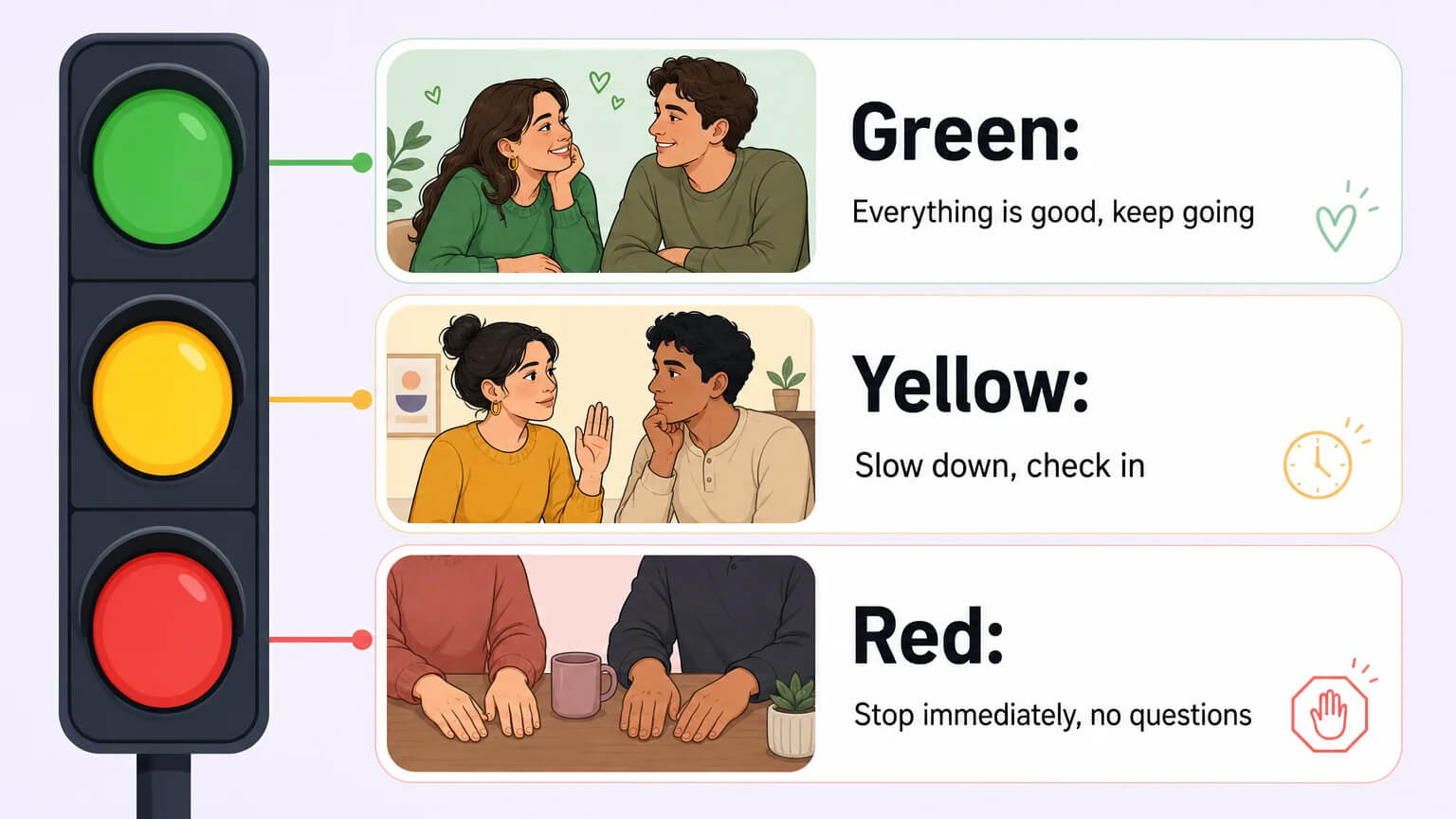
Start with the traffic light system. Green: everything is good, keep going. Yellow: slow down or check in, something feels off. Red: stop immediately, no questions, no justification. Either partner can call any color at any time, and Red is absolute.
Map out the categories you need to document together. Physical: what acts are on the table and what is off-limits. Emotional: no overnights, no “I love you,” no private communication channels that exclude the spouse. Practical: test every three months per CDC guidance, use barrier protection for all sexual contact including oral, decide who knows about the lifestyle, whether photos or video are allowed and where they live. Social: most experts advise against family disclosure and caution that friends cannot un-hear what you share.
Write it all down. A shared document both of you can reference and revise. This is not a one-time conversation. It is a living agreement that evolves as you learn.
Dr. Janet Brito, a board-certified sex therapist, adds non-negotiable safety rules: never disclose your home address or workplace to a new third party, first meetings always in public, always have independent transportation, and if one partner goes alone the other must know the exact location and expected return time.
Adreena Winters, the professional dominatrix and author who has educated thousands of couples, warns that the single biggest failure mode is not broken rules. It is the absence of ongoing, scheduled communication. The framework only works if you keep talking.
Milestone: a written boundaries document both of you can revise at any time.
Step 4: Starting in Fantasy Mode: The Zero-Risk First Stage
You do not need to involve another person to begin. In fact, you should not. The fantasy stage is where you test emotional reactions, discover what excites each of you, and build confidence with zero external risk.
Adreena Winters describes four stages of cuckold progression. Stage one is entirely psychological: no third party, no physical involvement outside the marriage. Many couples stop here because fantasy satisfies the desire completely. That is not failure. That is success.
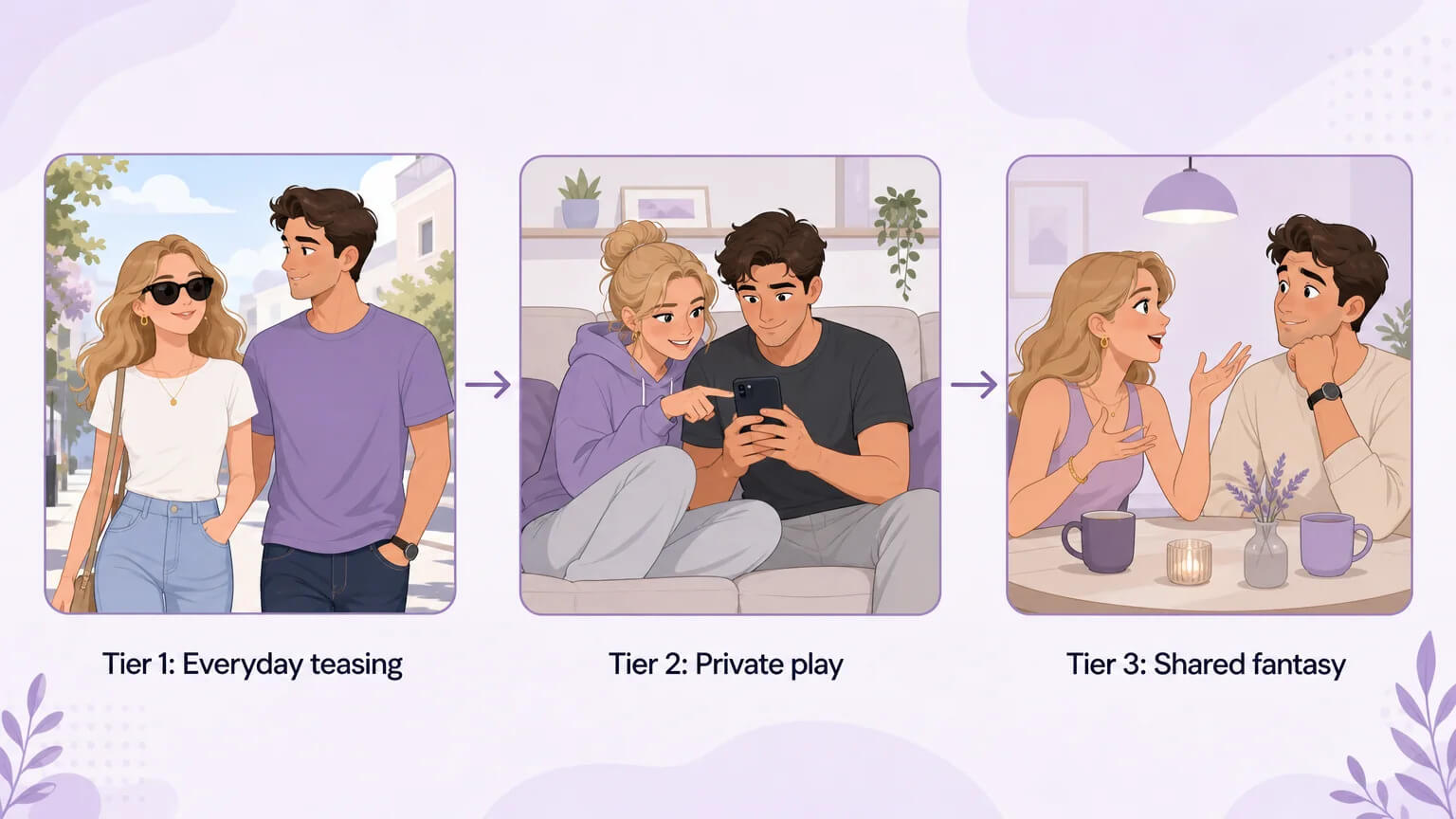
Fantasy-only exploration in escalating tiers:
Tier one. Dress a little sexier when you go out together. Point out attractive men and ask his opinion. Wear an anklet, a subtle signal in some lifestyle communities. Describe a hypothetical scenario during sex.
Tier two. Watch cuckolding-related content together and discuss what specifically appeals. Create a fictional persona for your dirty talk. Send teasing texts when you are apart.
Tier three. Role-play a scenario where you “come home” and tell him about an imaginary encounter. Let him help choose your outfit for an imagined date. Have him wait in another room while you prepare and then reunite.
After every escalation, check in. Not “did you like that?” but “how did that feel? What came up for you? Is there anything that made you uncomfortable? Do you want to go further or stay here?” The goal is data. If fantasy play triggers unexpected jealousy or emotional shutdown, that is valuable information. It tells you where the tender spots are before any real-world stakes enter.
The couple who spends six months playing in fantasy before ever contacting a third party is not being overly cautious. They are being smart.
Milestone: you have explored at least two tiers of fantasy play and had an honest check-in after each.
Step 5: Understanding Your Husband’s Inner World

A husband writing for Caveman Circus describes watching his wife with another man: “Every kiss, every sound, every moment is both pleasure and ache. There’s this rush in seeing her fully alive in someone else’s arms.” The emotional cocktail is arousal laced with vulnerability, pride tangled with pain.
Research and first-person testimony reveal what husbands commonly feel. Arousal and excitement, often more intense than anticipated. Pride in their wife’s desirability. Vulnerability and fear of being replaced, the most common undercurrent. Sexual invalidation: one husband described realizing “once your wife gets a bull that’s really good at fucking her, you realize that you’re not sexually valid in the same way anymore.” Feeling like an outsider. And paradoxically, wanting to continue even when it hurts.
What helps husbands feel secure: being involved in partner selection. Will Cornudo emphasized this to The Independent. Having a defined role during encounters, watching, listening from another room with a promised recap, helping her prepare beforehand. The husband from Caveman Circus described helping his wife choose her dress and do her hair: “I’m the one who made sure she looked irresistible. That’s its own kind of pride.” Receiving immediate reconnection afterward. Being thanked and reaffirmed: “thank you for trusting me with this,” “you are irreplaceable to me.”
The critical distinction: enthusiastic consent versus reluctant agreement. Silence is not consent. A flat “I guess so” is not consent. “I want this for you” is different from “I want this for us.” If your husband agrees but stops initiating sex, withdraws emotionally, or changes the subject whenever the topic comes up, those are yellow flags. The foundation needs more work before anyone else enters the picture.
The most attractive thing you can bring into the lifestyle is absolute clarity.
Milestone: you can describe what your husband will likely feel, and you have together designed a role that makes him feel included, not sidelined.
Step 6: Finding and Vetting the Right Third Partner
You are about to invite a stranger into the most vulnerable part of your life. Getting this right is not about being picky. It is about being safe.
Here are the best cuckold dating apps and websites landscape, with honest tradeoffs. 3Fun: purpose-built for couples and singles exploring ethical non-monogamy, with unified couple accounts and structural privacy controls, the most direct fit for couples entering the lifestyle. Feeld: the best fit for ENM couples, designed for non-monogamous dating, supports couple profiles, better privacy controls than Tinder, though its user base is smaller. FetLife: the largest kink community online with dedicated cuckolding groups and event listings, but it is a social network, not a dating app. AdultFriendFinder: large user base but high proportion of fake profiles and requires paid membership. Tinder: largest user base of any platform, but you risk being seen by colleagues. LocalCuckold: purpose-built but has a small user base. Venus Cuckoldress advises: if you live in a small town, expand your search radius and be willing to compensate for travel to attract quality partners.
The Consent Culture community provides the most thorough vetting framework. Know your desired dynamic before swiping: one-time or recurring? Solo or shared? Source through trusted channels: lifestyle parties, vetted communities, referrals. Ask specific questions: what experience with cuckolding do they have? How do they navigate consent during a scene?
Red flags: pressuring for photos or immediate meetups, refusing to speak to both members of the couple, degrading language about past partners, dismissing any boundary you state, pushing for rapid escalation. Green flags: proactive check-ins, genuine curiosity about both of your needs, comfort with going slow, celebrating consent.
The boundary test is the single most reliable vetting tool. State a clear boundary early, condom use, contact limits, the right to stop, and watch the reaction. Respectful acceptance without pushback is the minimum bar. It is better to delay a scene than to rush into one with someone you do not fully trust.
Always do at least one low-stakes public meetup with both of you present before any sexual encounter is on the table. If someone balks at meeting as a couple in public, you have your answer. They are a guest in your playground, not a toy in your toybox.
Milestone: a vetted third partner who passed the boundary test, met both of you in public, and respects your dynamic.
Step 7: Protecting Your Sexual Health: STI Safety for Non-Monogamous Couples
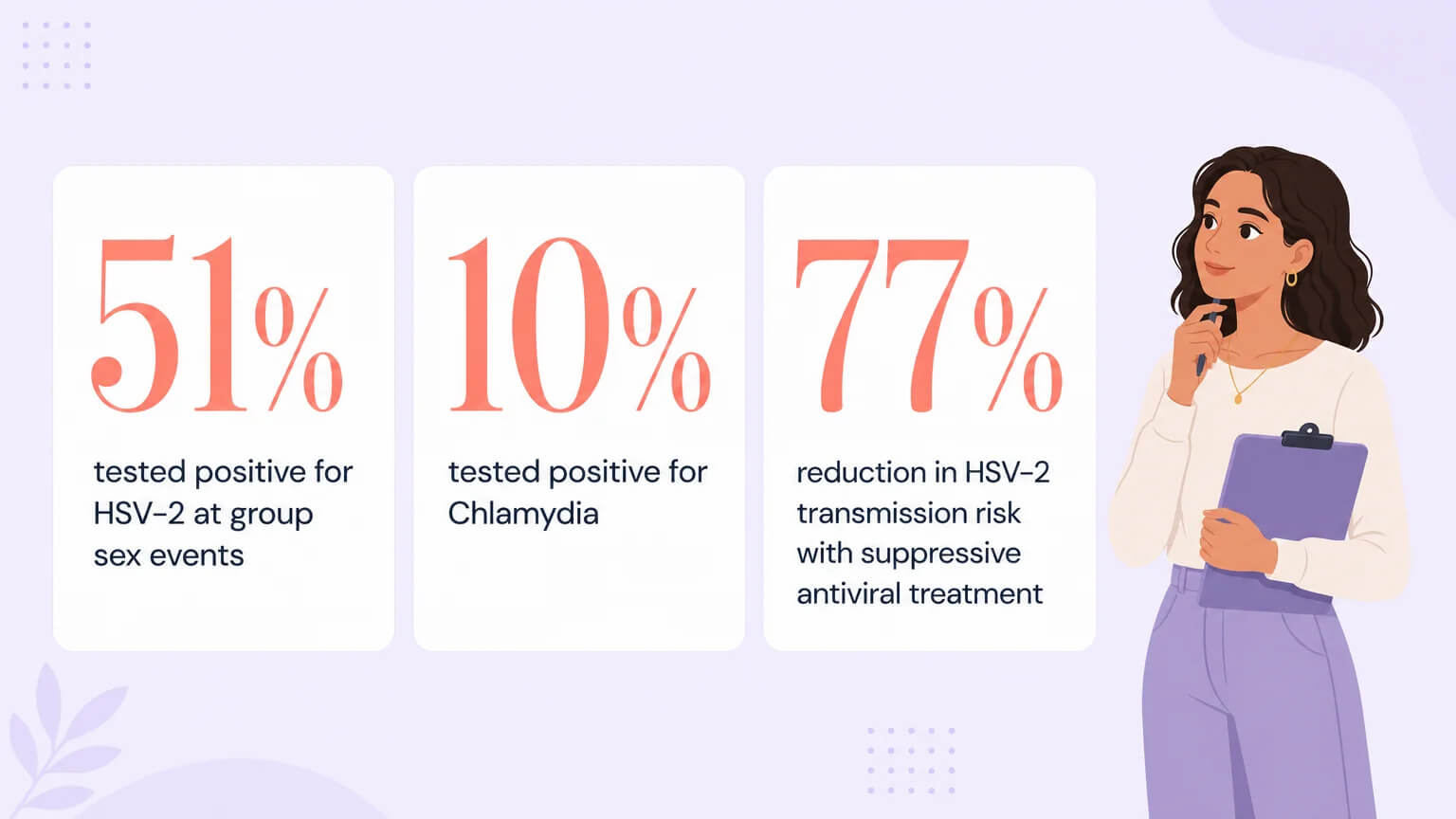
A study of attendees at group sex events found 51% tested positive for HSV-2 and 10% for Chlamydia, with documented HIV transmission within swinger communities. This is not fear-mongering. It is data you can act on.
The CDC recommends testing every three to six months for anyone with multiple partners. A standard panel covers HIV, syphilis, chlamydia, and gonorrhea. It does not include HSV-1 or HSV-2; those must be specifically requested. Over fifty million Americans carry HSV-2, most unknowingly. Condoms reduce but do not eliminate HSV and HPV transmission. Transmission risk drops 77% with suppressive antiviral treatment. The HPV vaccine (Gardasil-9) and Hepatitis A and B vaccines are recommended.
Fluid bonding, a concept from ENM communities, refers to stopping barrier methods with a specific partner. This creates a risk bubble: any STI contracted by one fluid-bonded partner spreads to everyone within that bubble. Requirements: regular testing of everyone involved, barrier use with all non-bonded partners, full transparency and multi-partner consent. No exceptions.
Here is the STI conversation script for a potential third: “Before we go further, I want to talk about health. I was last tested on [date] and my panel included [list]. I use barriers for all contact and expect the same. When were you last tested, and what did your panel cover?” Someone who balks at this conversation or cannot produce recent results is not someone you want inside your body or your marriage.
Many physicians do not classify non-monogamous people as higher-risk, so the burden of advocating for your own testing falls on you. Do not assume your doctor’s standard panel covers everything. Ask.
Milestone: both of you have had a full STI panel within three months, you know what was tested, and you have the conversation script ready.
Step 8: Preparing for Your First Real Experience
“Giddy, nervous, and excited all at once.” A first-time hotwife posted those words, and they echo what nearly every woman reports. The nerves are normal. The checklist keeps them manageable.
Emotional readiness check must happen the day of. Both partners affirm enthusiastic consent that morning. If either feels hesitation, you reschedule.
Safety logistics from Dr. Janet Brito’s guidelines: first meeting in public, a bar, a cafe, a restaurant. Never give your home address or workplace. Both of you have independent transportation. If one goes alone, the other knows the exact location, expected return time, and check-in protocol: a text at a specific time, a code word for safety, a plan if the check-in does not arrive.
Confirm each person’s role. Is your husband present and watching? Listening from another room? Waiting at home for the recap? Communicate it clearly to the third party before anything begins.
Review your traffic light system aloud. Either of you can call Red at any moment, for any reason. No debate, no apology. Knowing you have an exit makes it safer to enter.
Pack what you need: condoms, lube, phone fully charged, your own transportation. If a hotel, the room is in your name, not the third party’s.
Your first experience will not match the fantasy. It will be messier, more surreal, more emotionally complex. That is not failure. First times are data: what to adjust, what surprised you, what you want more of, what you never want to repeat. Collect the data. Process it together. Then decide.
Milestone: a written day-of checklist, consent affirmed that morning, safety logistics confirmed.
Step 9: Managing Jealousy and Repairing When Things Go Wrong
Jealousy is not evidence the lifestyle is wrong for you. It is evidence you are human, in a situation designed to trigger deeply wired attachment responses.
Dr. Justin Lehmiller’s research is clear: people with secure attachment styles and high conscientiousness tend toward positive outcomes. Those with anxious or avoidant attachment and poor communication tend to struggle. Knowing your attachment style tells you where your work will be hardest.
A practical jealousy protocol. Name the specific fear. “Jealousy” is too vague. What exactly triggered it? A specific image? A comparison? Fear of being left? Use scheduled check-ins, bi-weekly, sober, non-sexual, dedicated entirely to emotional processing. Sometimes the jealous partner does not need a solution; they need acknowledgment. The “poor baby” approach from polyamory communities, being held and heard without being fixed, is often more effective than problem-solving. Journal: externalizing the spiral reduces its power.
After intense experiences, a vulnerability hangover is normal: feeling anxious, ashamed, or exposed in the hours or days after. This is physiological, not evidence something went wrong. Manage it with self-compassion and reassurance.
Sometimes jealousy signals a real problem. Consistent dread before encounters. One partner withdrawing emotionally between experiences. Attachment forming between the wife and the third, Peter Saddington’s explicit warning. Boundary violations. One partner wanting to stop while the other wants to continue. If any of these are present, stop and address the root.
When a boundary has been crossed, use the repair protocol. Decenter yourself: focus on your partner’s experience, not your intentions. Apologize without qualifiers: no “I’m sorry, but…” Own the specific action. Describe behaviors and impact, not intent. Bring your repair ideas and ask for theirs. Reiterate commitment to safety. Take concrete action: therapy, reading, consent exercises. Reset boundaries with a Yes/No/Maybe list. The person who caused harm asks explicit permission before touching, flirting, or talking about sex until trust is rebuilt.
Adreena Winters identifies the primary failure mode: absence of ongoing, scheduled communication. The couples who survive difficult moments are not the ones who never have them. They are the ones who keep talking.
Desire does not require an apology.
Milestone: a scheduled check-in cadence, both partners know their attachment style, and you have read the repair protocol together.
Step 10: Reconnecting Through Aftercare: Coming Back Together After an Encounter

Aftercare is the emotional, psychological, and physical support provided after an intense sexual or emotional experience. The term comes from BDSM practice, where it is non-negotiable. It applies with equal force to cuckolding.
Without aftercare, the hormonal drop after an encounter can trigger post-coital blues: sadness, anxiety, emptiness, irritability that have nothing to do with regret and everything to do with neurochemistry.
Aftercare practices to build into your routine: physical reconnection, cuddling, holding, skin-to-skin contact; verbal affirmations, “you are loved,” “you are safe,” “thank you for trusting me with this,” “you are irreplaceable”; basic physical care, rehydration, snacks, warmth, the body often drops in temperature; recounting the experience together, “what felt good?”, “what felt hard?”, “what surprised you?”; gentle reconnecting sex if both genuinely want it, never as an obligation; lighthearted decompression, watching something familiar together.
Aftercare is not one-size-fits-all. Ask your partner before the encounter: “Afterwards, what will you need? Touch or space? Talking or quiet? Should I stay close or give you room?” Do not guess. Revisit the answer after real experiences, because what someone thinks they will need and what they actually need often differ.
The 24-hour rule: no big decisions about the lifestyle in the 24 hours after an encounter. Let the neurochemicals settle. If either partner still feels strongly negative after 48 hours, that signals a serious check-in.
Will Cornudo, over three years in the lifestyle, describes what happened after their first encounter: his wife came to him at 3 a.m. “She could see how proud I was of her and how happy it had made me.” That reconnection, her coming back to him, him receiving her with pride, is not incidental. It is the experience.
If it is not an enthusiastic “yes” from everyone in the room, it is a hard “no.” That applies to aftercare too.
Milestone: an aftercare plan both of you co-created, and you have agreed on the 24-hour rule.
Frequently Asked Questions About Cuckolding Your Husband
What is the difference between cuckolding and hotwifing?
Cuckolding typically includes an element of humiliation, submission, or power exchange. The husband derives arousal from the taboo. Hotwifing centers on pride and compersion, the husband feels proud of his adventurous, desirable wife. In practice, the line is blurry and many couples blend both. You do not need to pick a label. You need to pick what works for your dynamic.
Will cuckolding fix our struggling relationship?
No. Every expert agrees. Venus Cuckoldress: cuckolding “will make a bad relationship worse.” Dr. Justin Lehmiller: those with poor communication and insecure attachment are most likely to have negative outcomes. Cuckolding amplifies existing dynamics. It does not repair broken trust. Work on your relationship first.
What if my husband says yes but I can tell he is hesitant?
Hesitation is a signal to slow down, not push through. Ask directly: “What scares you most about this?” and “What would make this feel safe for you?” Stay in fantasy-only exploration until hesitation becomes genuine curiosity. As the Consent Culture community puts it: “Sometimes, not now is the most honest and hopeful answer.”
What if we try it and one of us wants to stop?
Either partner has absolute veto power at any time, for any reason. This is the single most important rule in your safety framework. If a boundary was violated, use the repair protocol from Step 9. If one of you simply discovers this is not for you, close the relationship temporarily, process together, and consider a kink-informed therapist. Stopping is not failure. It is the safety system working as designed.
Is it normal to feel aroused and terrified at the same time?
Yes. This is the most commonly reported emotional state for first-timers on both sides. What matters is distinguishing manageable excitement-terror from genuine dread. Excitement-terror responds to communication and pacing. Genuine dread, a pit in your stomach that does not ease, a feeling of being coerced, signals this dynamic is not right for you, or not right for now.
Should we tell friends or family about our lifestyle?
Most experts advise against disclosing to family. For friends, once disclosed, it cannot be undisclosed. Research on non-monogamous communities found social judgment was a key challenge, with some participants using avoidance as a coping mechanism. A safer path: connect with lifestyle communities, online forums, local meetup groups, where you can be fully open without risking your vanilla social circle. You need people who understand. They do not need to be your existing friends.