The fantasy has probably been circling your mind longer than you care to admit. Or a partner mentioned it first and now you’re tracing the line between their desire and yours. Or you landed on this hotwife guide because the question “how to be a hotwife” stopped feeling like someone else’s curiosity and started feeling like yours. However you got here, here you are.
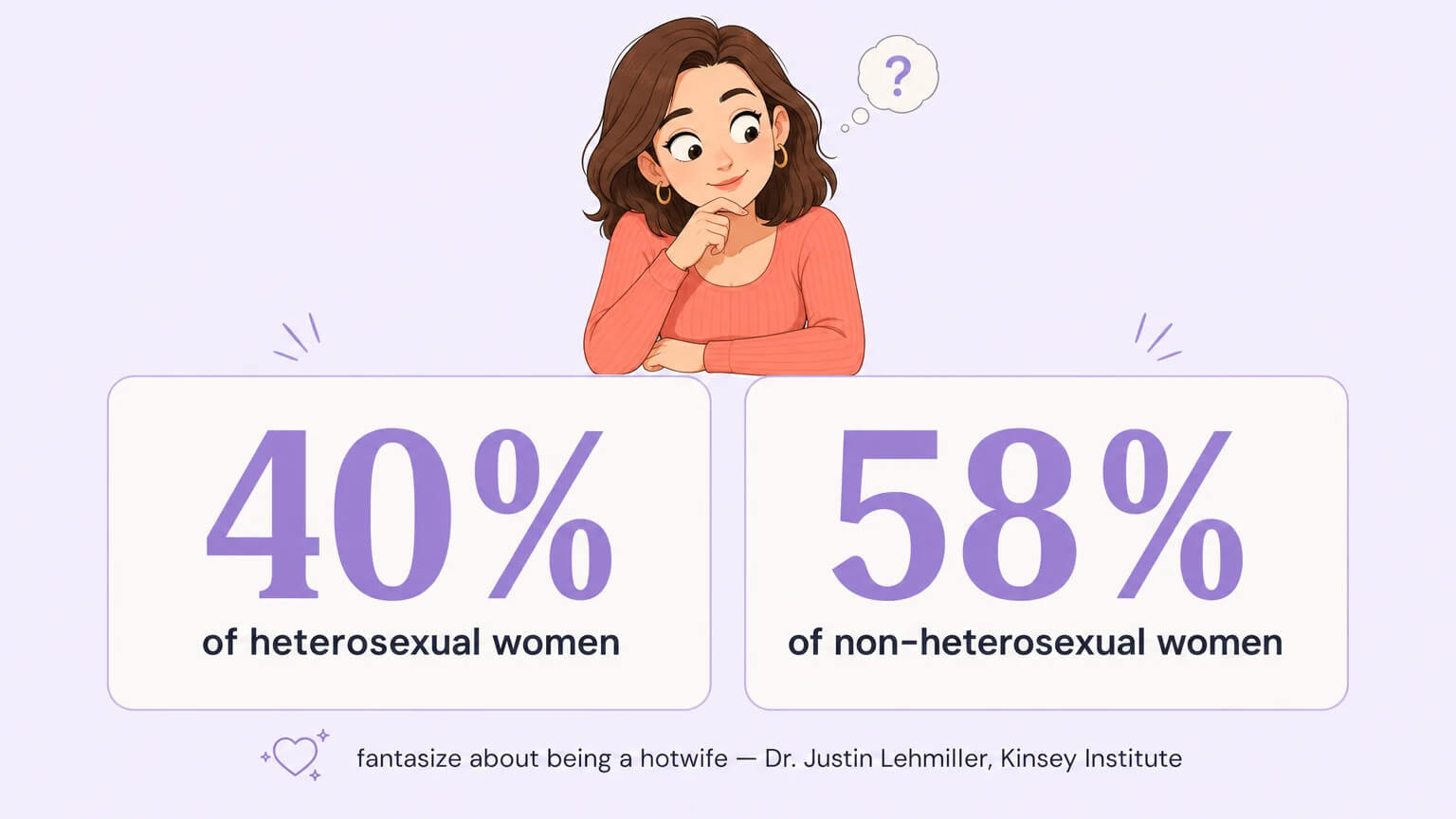
You’re far from alone. Dr. Justin Lehmiller’s research found that 40% of heterosexual women and 58% of non-heterosexual women fantasize about being a hotwife. Moms in school pickup lines. Professionals running meetings. Women in decades-long marriages. What they share isn’t brokenness. It’s a question they deserve to explore without shame and a desire far more common than our culture admits.
This guide is for you. Not your partner. Not a couple. For the woman who wants to understand her own desires before anyone else gets a vote. We’ll walk through the real journey: self-discovery, communication, boundaries, action, integration. No cheerleading. No apology. Just steady presence from someone who has seen this road before.
Step 1: Check In With Yourself First. Whose Desire Is This?
Before you say a word to anyone else, sit with one question. Is this fantasy yours, or did it arrive in your relationship wearing someone else’s name?
Everything else rests on this. Skip it and you’re the woman who finds herself in experiences she didn’t truly choose. Crystal Welch, a clinical therapist specializing in non-monogamous relationships, frames it clearly: the question isn’t “does this fulfill a male fantasy?” It’s “is this aligned with your values and capacity?” Your answer determines whether this path liberates you or quietly erodes something fragile.
Do the work alone. Grab a journal. Three questions.
One. When did this desire first appear for me, independent of anyone else’s suggestion? Trace it back. If you can’t find a thread that’s yours alone, that’s information worth having.
Two. What specifically excites me about this? Not what excites your partner. Not what seems “normal” or “adventurous.” The sexual novelty? The autonomy? Reclaiming a part of yourself that monogamous life tucked away? Be specific. Nobody’s grading.
Three. If my partner said tomorrow “actually, I’m not interested,” would I still want to understand this part of myself? An immediate yes means the desire belongs to you. Saying “I want to be a hotwife” lands differently when it rises from your own hunger instead of someone else’s suggestion. If the fantasy deflates without your partner’s enthusiasm in the room, that’s not wrong. It’s just information. Sit with it.
Dr. David Ley, a clinical psychologist who has studied consensual non-monogamy for over a decade, emphasizes that the healthiest entry starts with the woman’s own clarity, not a couple’s negotiation. Genuine erotic curiosity and the subtle pressure of wanting to be the “cool wife” feel different in your body. One comes from hunger. The other from compliance. Slow down enough and you’ll feel which is which.
Your milestone: settle into your own answer, even if that answer is “I’m not sure yet.” Certainty isn’t required. Honesty is.
Step 2: Do the Inner Work. Body Confidence, Identity, and Emotional Ground

You’ve named the desire. Now the part nobody Instagrams: preparing the person who’ll walk into those rooms.
You’re about to put yourself in situations where you’ll be seen, literally and emotionally, by new people. If you don’t feel solid in your own skin first, the experience shakes you instead of freeing you. This isn’t about fixing yourself. It’s about reclaiming comfort and presence in the body and mind you already have.
Body confidence here doesn’t mean looking like anyone else’s ideal. It means walking into a room knowing your body is yours, your pleasure matters, and attention doesn’t define your worth. The women who thrive report something counterintuitive: confidence comes first. The experiences follow.
A suburban mother of four told Toronto Life: “I could feel myself splintering into two people. The first was the same old mom in the school pickup line. The other did unspeakable things.”
That split-screen feeling is real. You don’t have to resolve it before you begin. You do have to acknowledge it.
Brooke, 30 and in the lifestyle, created the “green room” concept: a mental space where she and her partner could discuss anything without the pressure to perform. Adapt this solo before you share it. Build your own internal green room. Let discomfort, excitement, and fear coexist without needing to fix any of them.
Try these. Mirror work: get comfortable seeing yourself as a sexual being, independent of partner validation. Journal on identity: who am I when nobody’s watching? What parts of myself have I muted, and which am I ready to turn up? Somatic check-ins: when you imagine different scenarios, what does your body tell you? Your gut votes before your mind writes the press release.
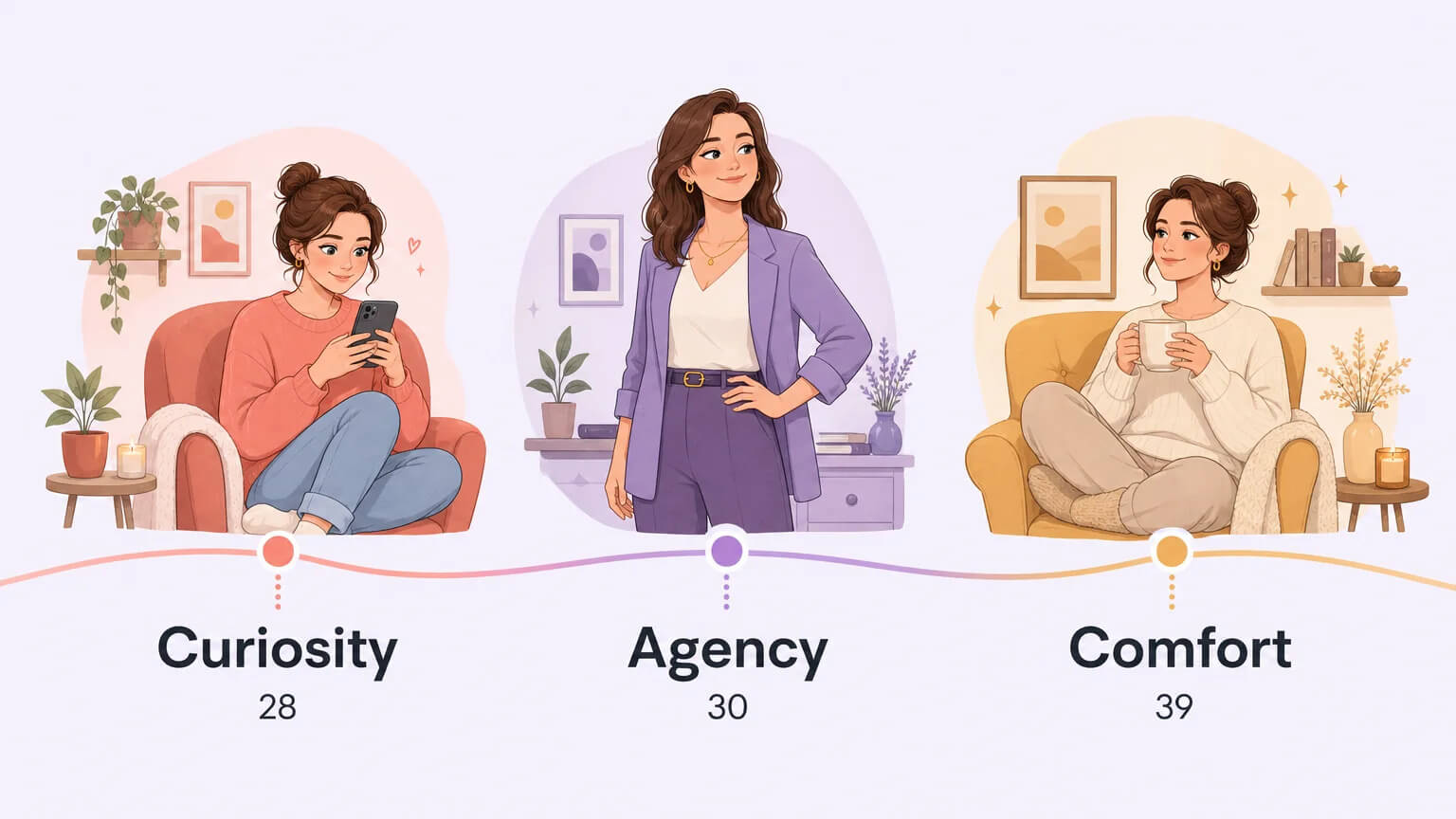
Three women, three paths. Melrose, 28, started with dirty talk and escalated over months. Brooke, 30, came from power and agency. Sofia, 39, seven years in, evolved her boundaries with every season. There is no single right starting point. Only yours.
Your milestone: you can name what you’re excited about and what you’re scared of, and neither cancels the other out.
Step 3: The Conversation. How to Talk to Your Partner Without Losing Yourself in It
This conversation can go sideways fast. Not because either of you is doing something wrong. Because it touches the deepest parts of identity, security, and desire for both of you at the same time.
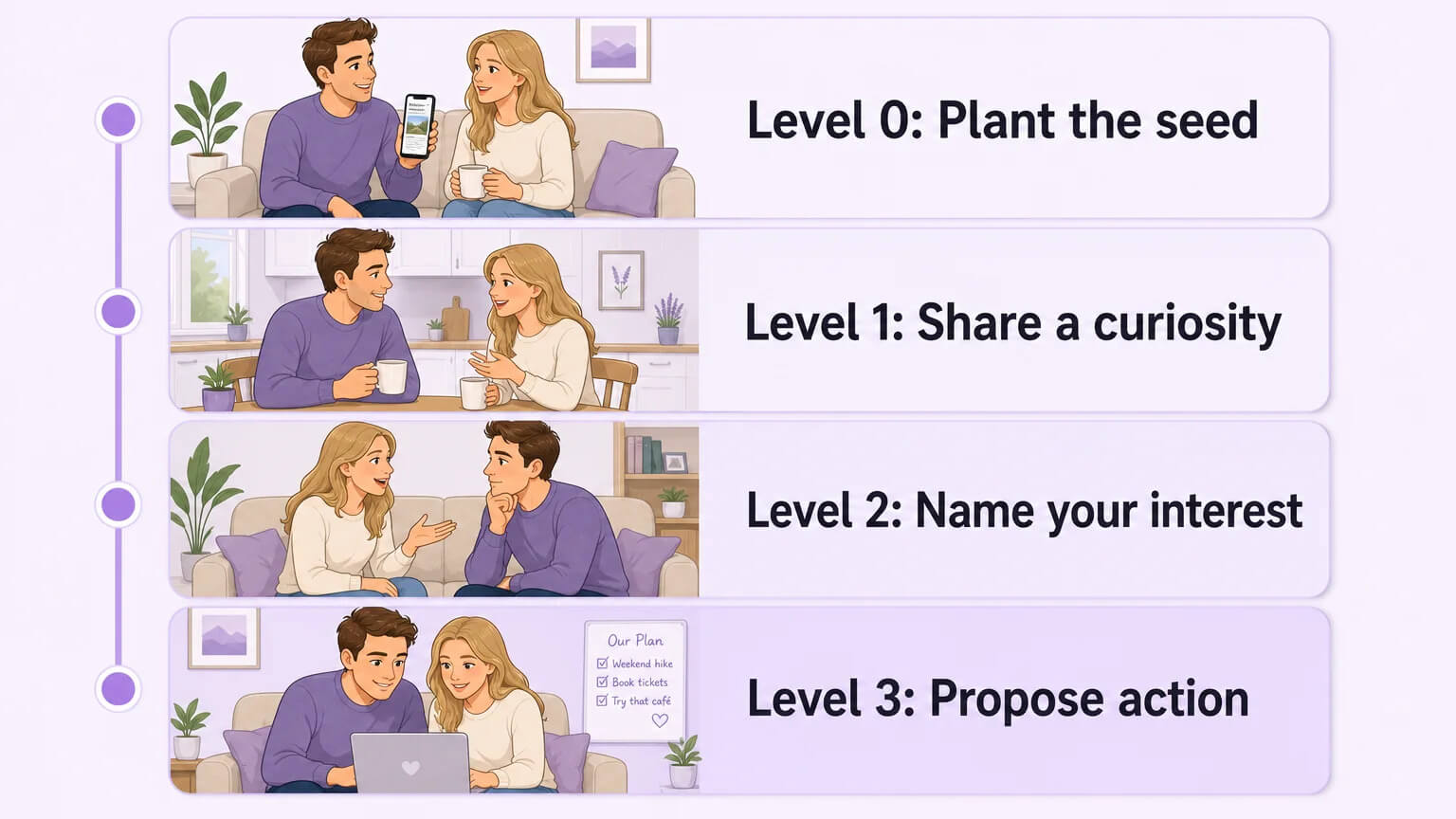
The Monogamy Experiment interviewed hundreds of couples opening their relationships and built a four-level disclosure framework. You don’t have to dump everything in one sitting.
Level 0: Plant the seed. “I read something interesting about non-monogamy today.” You’re not asking for anything. You’re testing whether the air is breathable.
Level 1: Share a general curiosity. “I’ve been thinking about what it would mean to explore desire outside our relationship.” Still no ask. Still just presence.
Level 2: Name your specific interest. “I’m curious about the hotwife dynamic and I’d like to talk about it with you.” Now you’ve named it. Notice how it lands.
Level 3: Propose action. “I’d like us to explore this together, starting with X.” Only after you’ve built enough shared understanding that the ask doesn’t land like an ambush.
You decide the pace. Some conversations pause at Level 1 for weeks. Some move from 0 to 3 in a night. Neither is wrong. What matters is not being dragged faster than you want to go.
Scripts help when words fail under pressure. If he gets excited too fast: “I love your enthusiasm, and I need us to slow down so I can stay connected to what I want.” If he shuts down: “I’m not asking for an answer tonight. I’m asking for us to be curious together.” If it becomes about his fantasy: “This is about what we might explore. I need you to see me, not the idea of me.”
Heather Shannon, LCPC, warns: “People try to bulldoze over their internal signals that something isn’t feeling right because they don’t want to lose their partner.” Don’t bulldoze yourself to keep someone else comfortable.
One principle anchors everything: the unlimited and inalienable veto. Either of you can pause or stop at any time, for any reason, without justifying it. That’s not a concession. It’s the container that makes everything else possible.
Your milestone: the conversation happened, and regardless of the immediate outcome, you kept your own voice in it.
Step 4: Build Your Boundaries Before Anyone Else Does
Boundaries aren’t restrictions on your freedom. They’re the walls that make the room safe enough to play in.
Amanda Dames, a relationship coach who works with non-monogamous couples, puts it plainly: “Before you and your partner explore hotwifing, establish firm boundaries.” Firm doesn’t mean rigid. It means clear enough that everyone knows where the edges are.
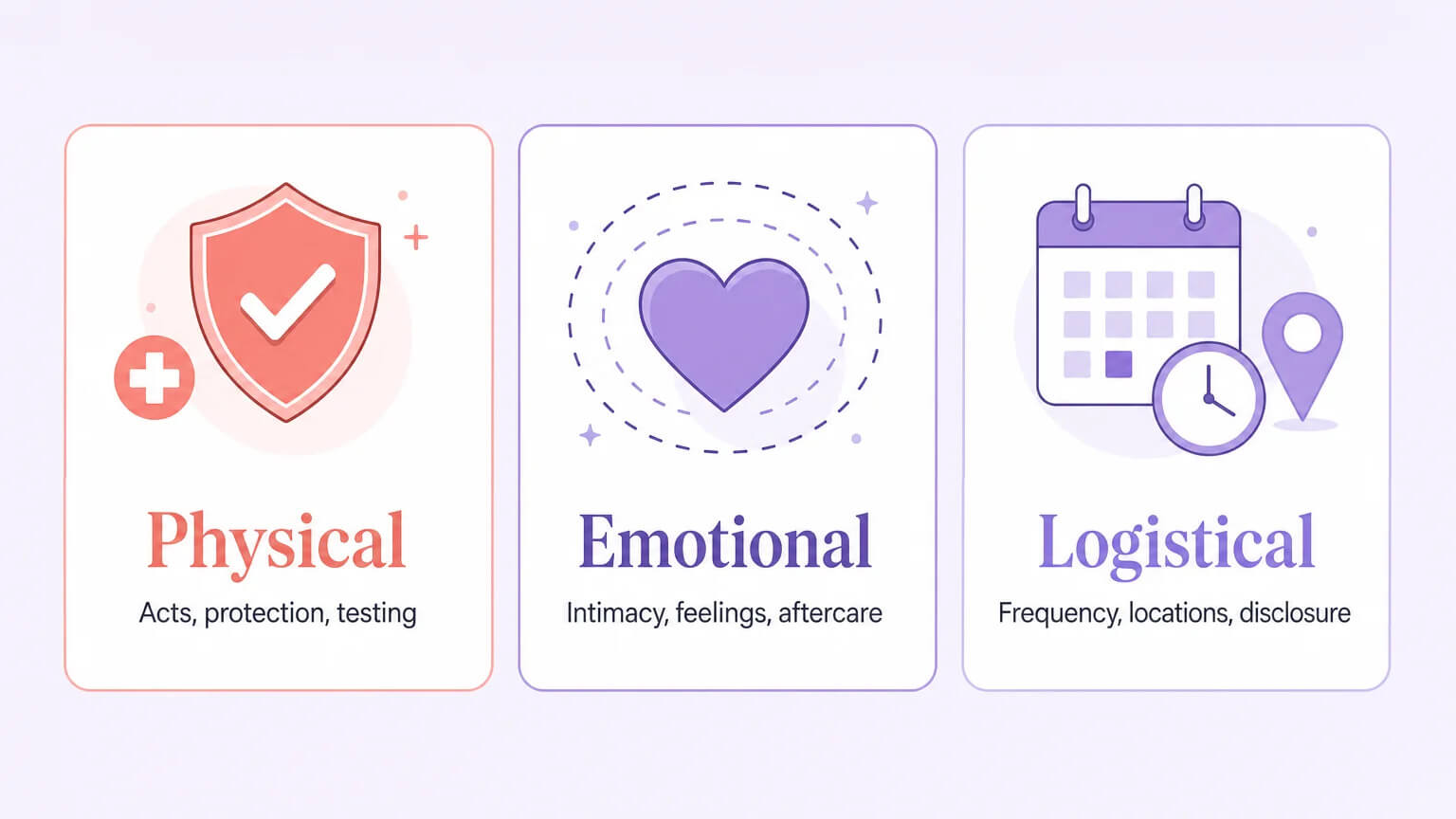
You need boundaries in three categories. Write yours alone before negotiating shared ones.
Physical boundaries. What acts are on the table and what’s firmly off? What protection is required, every time, no exceptions? What’s the testing protocol, and what happens if someone tests positive? These aren’t sexy questions. They’re the reason you can relax into the experience instead of white-knuckling through it.
Emotional boundaries. How much emotional intimacy is welcome with other partners? What happens if feelings develop? Adreena Winters, a sex educator who works extensively with lifestyle couples, observes that “the couples who handle it best are the ones who are emotionally secure and genuinely open to hearing each other, even when something feels awkward or confronting.” Pretending feelings will never develop isn’t a boundary. It’s a wish. Plan for reality.
Logistical boundaries. Frequency, locations, overnights, communication during dates, how much detail gets shared afterward. Sofia, seven years in, will tell you logistical agreements are what let erotic freedom breathe: “It’s not possible to foresee everything that might happen or how we might react beforehand.” Build agreements that can flex.
The subtler boundary: the line between what you want and what the couple agrees to. Write your own list first. Hell yes, hell no, maybe. Know which preferences are negotiable and which aren’t before you sit down to merge lists. Otherwise the negotiation quietly erases something you needed.
Your milestone: a written boundary document you could hand to a new partner and say “these are my rules. They protect me, and they protect you too.”
Step 5: Lock Down Your Privacy. The Practical Stuff Nobody Talks About
The fantasy version doesn’t include your kid’s teacher finding your profile, or a coworker screenshotting a conversation. The real version takes a few unsexy essentials.
Separate digital identity. A dedicated email not connected to your real name, workplace, or family. A Google Voice number or burner app for texting. Photos that can’t be reverse-image-searched back to your social media. Never reuse a photo posted on Instagram or LinkedIn. If someone can drag your image into a search bar and find your real name, that photo doesn’t belong in your lifestyle profile.
Encrypted messaging. Signal or Telegram with disappearing messages enabled. Never use SMS, Instagram DMs, or Facebook Messenger for hotwife conversations. Those platforms aren’t private, and they’re connected to your real identity in ways you can’t fully control.
Location sharing. Always share your live location with at least one trusted person during dates. Your partner is ideal, but a close friend who knows the situation works too. Establish check-in windows. A text at a set time. A call if the text doesn’t arrive.
Video verification before meeting. A quick live call confirms the person matches their photos and gives you a gut-check before you’re in the same room. Anyone who refuses a video call is not someone you meet in person.
Digital hygiene. No face in explicit photos if professional or family risk is a factor. A separate browser profile for lifestyle browsing. Review your social media privacy settings.
Sofia credits her longevity to “routine, unsexy privacy habits.” The tighter your privacy setup, the looser you can be in the moment, because your real life is secure.
Your milestone: separate number, encrypted app, location sharing confirmed and tested.
Step 6: Find and Vet the Right People. Scripts, Safety, and Green Flags
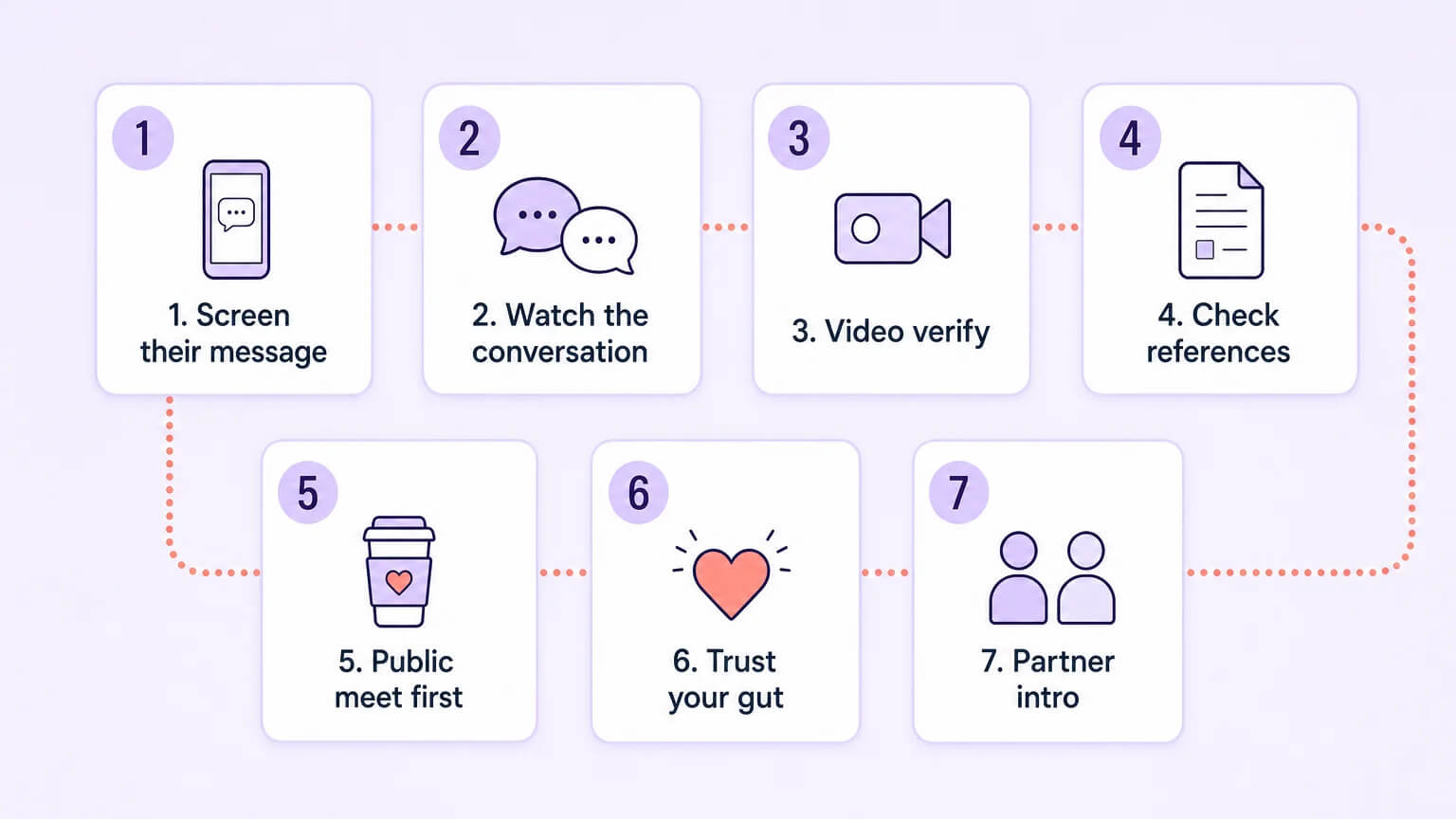
Vetting is where fantasy meets logistics. That’s a good thing. It’s not about suspicion. It’s about respecting yourself enough to be selective.
Adapt this seven-step protocol.
One: Initial screen. Does their first message show they read your profile, or is it a copy-paste? A sentence referencing something specific takes ten seconds. If they can’t spare it, they’re not serious.
Two: Conversation flow. Do they ask about your desires, limits, and comfort, or only what they want to do? A man interested in a woman asks about her. A man interested in a fantasy asks about the fantasy.
Three: Verification. Live video call within the first few days. No exceptions.
Four: References. Experienced lifestyle participants should be able to provide references from previous partners. Someone who’s done this well will have people willing to vouch.
Five: Public meet first. Coffee or a drink. No play on the first meeting. Someone who pushes to skip this step is broadcasting their priorities, and your safety isn’t one of them.
Six: Gut-check. If something feels off, it is off. No justifying. No “giving them a chance.” Your gut has been reading people since before you had words.
Seven: Your partner meets them, if that’s your agreement. Even a brief virtual intro filters out anyone who’s only interested if your partner doesn’t exist.
Use specific vetting scripts. “What’s your experience with this dynamic?” “How do you handle boundaries and consent in the moment?” “Tell me about a time something went wrong and how you handled it.” Their answers matter less than how they answer. Defensiveness, vagueness, or rushing past the question are red flags regardless of content.
The green flags: they ask about your limits before their fantasies, they volunteer their testing schedule, they treat your partner as a feature, and they never pressure you to move faster than your stated pace.
Your milestone: a shortlist of vetted potentials and a repeatable system.
Step 7: Your First Time. Start Small, Stay in Control, Let It Be Real

Your first experience won’t match the fantasy in your head. That’s not failure. It’s the difference between imagination and a real human in a real room. The goal isn’t perfection. It’s an experience you chose, navigated, and can look back on with clarity.
Start smaller than you think. Melrose’s gradual escalation model: a public meet with no physical contact counts as a first experience. A makeout session counts. A date ending at a predetermined time counts. You don’t need to go from zero to full encounter in one night, and you probably shouldn’t. Dr. Lehmiller cautions that “sometimes, the idea of hotwifing winds up being more arousing than the real thing.” Slow entry protects you from crashing through a door you weren’t ready to open.
Pre-date checklist: boundaries reviewed, privacy active, location shared, check-in set, partner informed. A personal grounding ritual. Music. A walk. Whatever centers you before you walk through the door.
During the date: stay present. Check in with your body, not your head. What does your stomach say? Your breathing? Use your pause signal if you need it. It’s a tool, not a failure. Women who normalize pausing stay in this lifestyle for years instead of burning out after one bad night.
After: give yourself a full day or two before big declarations about what it meant. The post-experience emotional wave is real. Euphoria, drop, confusion, or all three in sequence. None are emergencies. You’re integrating something new.
Sofia’s insight holds: “The first time teaches you what you actually want, which is often different from what you thought you wanted.” Let that be true. You’re not performing for a review. You’re learning.
Your milestone: you had an experience on your terms, at your pace, and you’re processing it with curiosity rather than judgment.
Step 8: Living It. Identity, Rhythm, and the Long Game
So now what? You’ve crossed the threshold. The fantasy became real. And you still have to pick up the kids, show up for work, and figure out what normal looks like now.
Identity duality isn’t a problem to solve. The Toronto Life mother described the arc: “I stopped feeling like two different people and started feeling like one person with range.” That’s the destination. Not compartments. Expansion.
Rhythm over rules. After the initial exploration, find a cadence that works. Weekly. Monthly. Once a season. What matters is that both people feel the rhythm serves the relationship rather than consuming it. Gloria Brame, PhD: “Hotwives aren’t doing it only to please their husbands; they are choosing it for themselves.” That agency has to be renewable. You choose again each time, or you don’t.
Check-in prompts: What’s working that we want to protect? What’s feeling harder than we expected? Has anything shifted in what we each want? Are we still both a full yes? Brooke’s green room isn’t just for hard conversations. It’s where couples celebrate what’s working and laugh about what was awkward. Use it for both.
What you want at 28 will differ from what you want at 42. Melrose’s curiosity, Brooke’s agency, Sofia’s seasoned comfort. None is more evolved than the others. They’re seasons. The lifestyle should flex around your life, not the other way around. That includes changing your mind, shifting your boundaries, or walking away entirely.
You came in with a quiet question. You built something that answers it, on your terms, at your pace, in your own voice.
FAQ
What if I catch feelings for someone I’m seeing?
Feelings aren’t a failure. They’re a signal. The question isn’t “did I feel something?” but “what do I do with what I feel?” Plenty of experienced hotwives develop affection for regular partners without it threatening their primary relationship. Talk to your partner before it becomes a secret. Secrets corrode. Honesty preserves.
How do I handle jealousy? Not his. Mine.
Your jealousy is valid. Sometimes it signals a crossed boundary. Sometimes it points to a need going unmet. Sometimes it echoes old stories about what a “good wife” is supposed to feel. Name it. Don’t shame it. Jealousy isn’t a stop sign. It’s a dashboard light.
What if I try it and realize it’s not for me?
Then you learned something true about yourself. That’s never a loss. Stopping isn’t failing. A full yes to exploration and a full no to continuation come from the same place: self-knowledge. Step 1 built a self strong enough to change her mind, in any direction, at any point.
How do I keep this private when I have kids, a career, and a social circle?
Compartmentalization is a skill, not a lie. The protocols in Step 5 are your infrastructure. Beyond the technical: you don’t owe anyone your sexual autobiography. “This is a private part of my life” is a complete sentence. You never need to justify, explain, or apologize for it.