You might have heard the word “polycule” at a party, in a dating app bio, or in a TikTok that left you with more questions than answers. You nodded along. You are not alone. These terms surface in social feeds, dating profiles, and casual conversation years before anyone stops to explain them. The vocabulary of non-monogamy is spreading faster than the definitions, which is how smart people end up feeling like they missed a memo. If that describes your last six months, this article is for you.
Polyamory is the practice. A polycule is the network of people connected through it. One is what you choose. The other is what forms around that choice. That distinction is not academic — it changes how you approach non-monogamy, what you expect from it, and whether the shapes you build actually fit the life you want.
Alex dates Jordan. Jordan dates Taylor. Taylor dates Morgan on weekends. Four people, three relationships, one polycule. You just visualized one without knowing the word for it. By the end, you will know the difference, which concept applies to your own relationships, and what to do next.
The Terms Made Simple: Polyamory and Polycule Explained
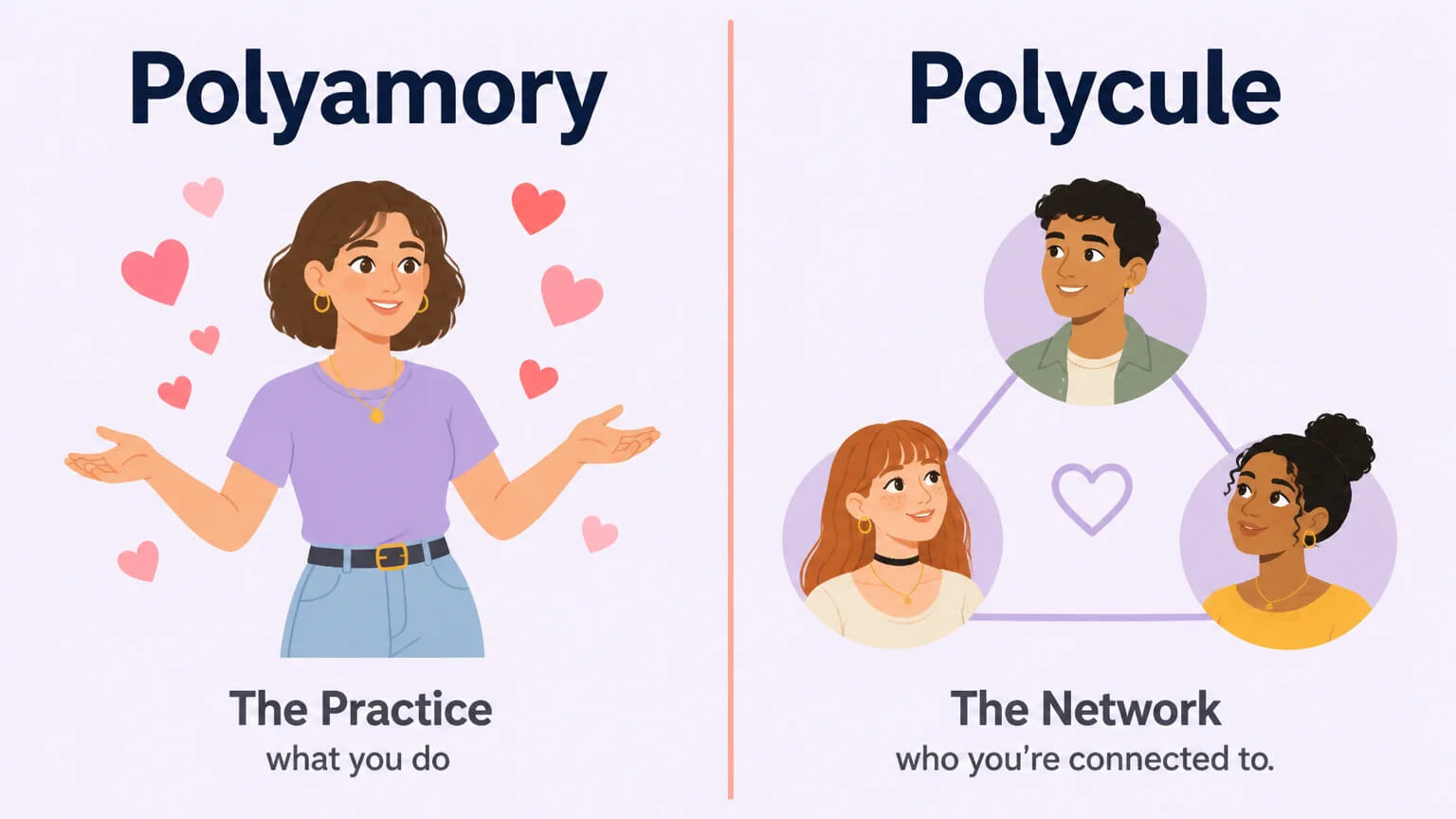
A polycule is not just “polyamory with more syllables.” The two terms describe different things, and understanding both is how you make sense of how non-monogamous relationships actually work.
Polyamory is the practice of having or being open to multiple loving, consensual relationships at the same time. The word combines the Greek “poly” (many) and Latin “amor” (love). Consent and communication are the defining features — not “sleeping around.” That is what separates polyamory from infidelity: everyone knows, everyone agrees, and everyone operates with the same information.
Alex dates Jordan and Sam. Both relationships are loving. Both partners know about each other. Alex is clear about their capacity, Jordan and Sam are clear about their needs, and communication holds the arrangement together. That is polyamory in practice.
A polycule is the network of people connected through those relationships. The word blends “polyamory” and “molecule,” coined in the late 2000s when Koe Sozuteki noticed that mapping out her family’s relationship structure looked like a ball-and-stick molecular diagram. Picture a constellation: each star is a person, every line between them is a relationship, romantic or otherwise.
Two terms will help for the rest of this article. A metamour is your partner’s partner — someone connected to you through the network but not someone you are dating yourself. Metamours might become close friends or remain complete strangers; both dynamics are normal. An anchor partner is a primary-like figure described in non-hierarchical language: the person you are most entangled with in daily life through shared housing, finances, or parenting, without the language of ranking.
One is a philosophy and practice. The other is the shape that practice creates. You can hold the philosophy without forming a network, and you can belong to a network without sharing the philosophy.
1. The Core Difference Between Polyamory and a Polycule
Polyamory is what you do. A polycule is who you are connected to while you do it.
Polyamory is the philosophy, the identity, the practice of engaging in multiple consensual romantic relationships. It lives inside you. It is your internal framework for approaching connection — what you believe about love, what you are capable of, what you consent to. A polycule is the external network that forms as a result, the web of people linked through overlapping relationships. It lives between people, not inside any one of them.
If polyamory is the language, a polycule is the conversation. You can speak the language without being in a conversation. You can be part of the team without loving the sport.
Three examples make the distinction harder to miss.
Someone newly polyamorous is dating two people who do not know each other. Polyamorous? Absolutely. Polycule? Not yet — there is no network, only two separate connections radiating out from one person. The lines do not connect.
A tight-knit group of four all date within the group in various configurations. That is a polycule. The polyamory is the practice each person brings; the polycule is the shape they create together.
A person dates one partner whose other partner dates someone else, forming a chain of four people. That is also a polycule, even though the person at one end of the chain has never met the person at the other end. They are connected through the network regardless.
Neither is better. They describe different things. Polyamory without a polycule is still polyamory — solo poly people and those between relationships live this every day. A polycule where some members do not identify as polyamorous is still a polycule. Some ENM configurations produce networks where one person practices polyamory while their metamours use different labels. The terminology describes overlapping but distinct realities. Understanding the difference lets you navigate either one intentionally instead of tripping over vocabulary everyone else seems to already know.
2. What Polycules Actually Look Like in Real Life
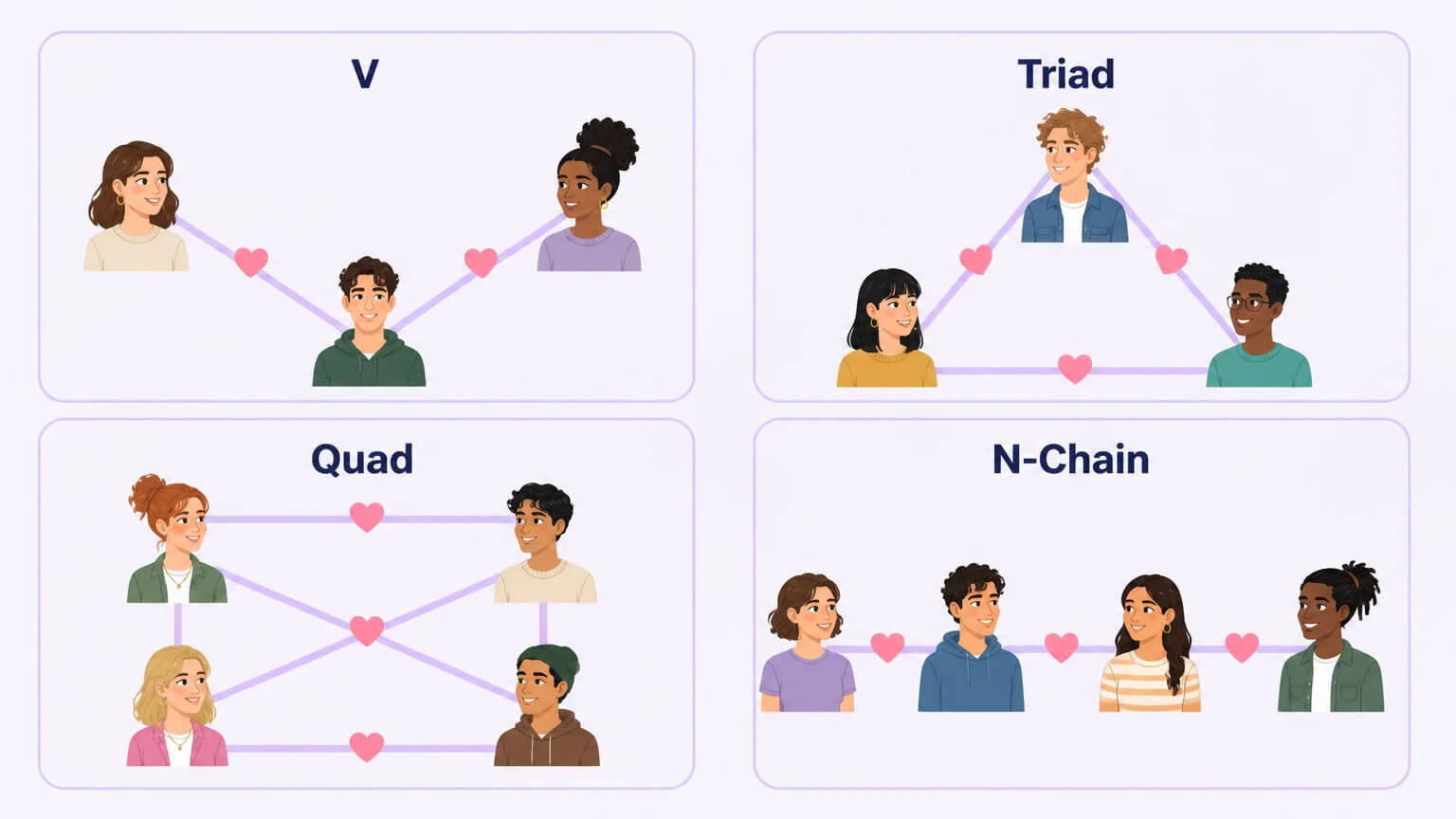
Real polycules are messier, warmer, and more varied than any tidy V-shape on a whiteboard. They are living relationship networks that come in almost infinite shapes. Most start simple and grow in ways nobody predicted.
The V is where most people start: one person dates two people who are not dating each other. That central person is called the “hinge.” The two people they date are metamours to each other. This is the most common polycule shape because it is what naturally happens when someone with two partners has partners not romantically interested in each other.
The triad is three people all dating each other. Every person connects to both of the others. This is what people picture when they hear “throuple,” and it is one of the most visible polycule structures in pop culture.
The quad is four people in various configurations: two couples dating across couple lines, or four people where some connections exist and others do not. Quads multiply communication channels quickly — four people means six potential one-on-one dynamics to manage.
The N or chain is a relationship relay: A dates B, B dates C, C dates D. A and D may never meet, yet both belong to the same network. This structure is especially common in communities where people date within overlapping social circles.
Two philosophies of polycule living shape how these structures feel day to day. Kitchen-table polyamory means everyone is comfortable sharing meals, knowing each other, existing in the same space. Parallel polyamory means metamours know of each other but do not interact. Neither is more evolved. They are preferences, not rankings.
Polycules scale further than most newcomers imagine. The New York Times profiled a 20-person polycule near Boston. TLC’s Polyfamily documented a household of four adults co-parenting four children across multiple romantic connections. These are not hypothetical arrangements.
Your polycule can be whatever configuration works for the people in it, and it will change as relationships start, end, and evolve. The polycule you have six months from now will probably look different from the one you have today. That is how networks work — not a sign that something went wrong.
3. The Emotional Side: Compersion, Jealousy, and What Nobody Warns You About

If you think joining a polycule erases jealousy, reset that expectation now. Polycules do not delete jealousy. They give you more people to work through it with.
Jealousy still shows up. It arrives at inconvenient moments, whispers old insecurities, and does not care that you have done the reading. In a healthy polycule, jealousy is information — a dashboard light, not a stop sign.
Compersion is the joy you feel when your partner experiences happiness with another partner. Beginners rarely hear about it before they are already feeling it. Your partner lights up before a date with their other partner — excited, a little nervous, fully alive — and you feel genuinely happy for them, not despite your own feelings but alongside them.
Compersion is real. Dr. Marie Thouin has documented it as a researched emotional phenomenon. But it is a bonus, not the price of admission. Some people feel it naturally, some cultivate it over years, and some never feel it and practice polyamory perfectly well. The pressure to feel compersion can itself become a source of shame — one more way to feel like you are doing non-monogamy wrong.
The common struggles deserve honest names. Jealousy fatigue means processing the same emotion over and over and wondering if it ever lets up. The comparison trap kicks in when their other partner seems more attractive, more successful, more fun, and your brain starts running a highlight reel of your own shortcomings. The communication load demands more talking, more emotional naming, more scheduled conversations than most people have ever done in any relationship. Add multi-person scheduling logistics and you have a lifestyle that rewards emotional stamina.
Healthy polycules develop rhythms. Scheduled check-ins become sacred. Agreements get made between equals — imposed frameworks breed resentment. Discomfort gets named without blame: “I am feeling insecure about X” lands differently than “you made me feel insecure by doing Y.”
Dr. Joli Hamilton, a relationship coach specializing in non-monogamy, warns about mistaking intensity for intimacy and getting locked in drama cycles because turbulence feels like depth. The goal is easeful polyamory: sustainable, grounded, built on explicit agreements rather than assumed scripts.
The emotional work is real. The payoff is a network of people who genuinely care about each other’s wellbeing — and that is what keeps people in it.
4. How to Find, Join, or Build Your First Polycule
You understand the difference. You know the shapes and the emotional terrain. The question is how to actually find your people.
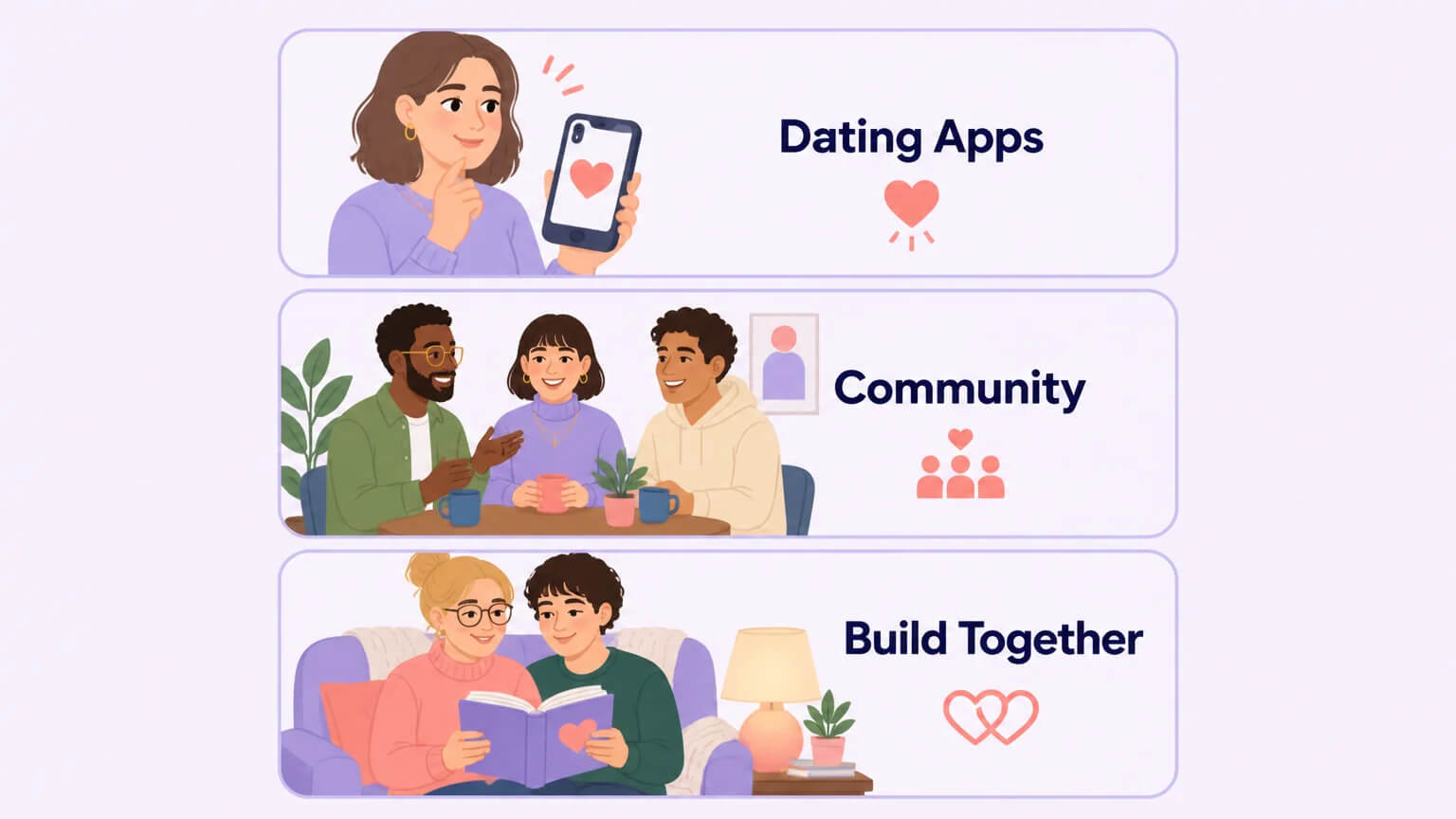
Finding a polycule is not like finding a monogamous partner. It is organic, network-driven, and usually starts with one connection that branches outward. Three paths tend to work.
Dating apps, used intentionally. 3Fun is built for ENM, threesomes, and non-monogamous connections, so you skip the vocabulary lesson entirely. Feeld offers 20+ gender identities and a Constellations feature linking up to five partner profiles so your polycule stays visibly connected. OkCupid supports non-monogamy filters. MoreThanOne is purpose-built for polyamory and open relationships, ad-free and always free. Putting “polyamorous” or “ENM” in your bio on any app saves everyone time — it filters out the people who would need it explained.
Community, online and in real life. Local polyamory meetups, Facebook groups, Discord servers. The polycule you eventually join often starts with a friend-of-a-friend at a potluck. Online communities offer perspective from people further along the path — they teach you the norms, the cautionary tales, and connect you with people who already speak the language.
Building from within an existing relationship. Go slow. Read together. “Polysecure” by Jessica Fern is the book most therapists recommend first for understanding attachment in non-monogamous relationships. “The Ethical Slut” by Dossie Easton and Janet Hardy is the classic. “Polyamory For Dummies” by Dr. Jaime M. Grant (February 2025) is the most current comprehensive introduction. Find a polyamory-informed therapist — many clinicians lack cultural competence with consensual non-monogamy and may pathologize your relationship structure. Build agreements collaboratively, not as one-sided frameworks. Your first polycule shape will probably not be your last.
Breakups deserve a note, because polycule breakups carry complexity worth naming early. When one connection ends, the rest of the network feels it. You may lose partners, metamours, shared friends, and the community built around that relationship network. Parts can dissolve while other connections remain — it is more like a network reconfiguring than a clean split. Navigating that with care for everyone involved is a skill worth developing from the start.
The throughline across all three paths: clarity about what you want, honesty about what you can offer, and patience with the process.
The Bottom Line
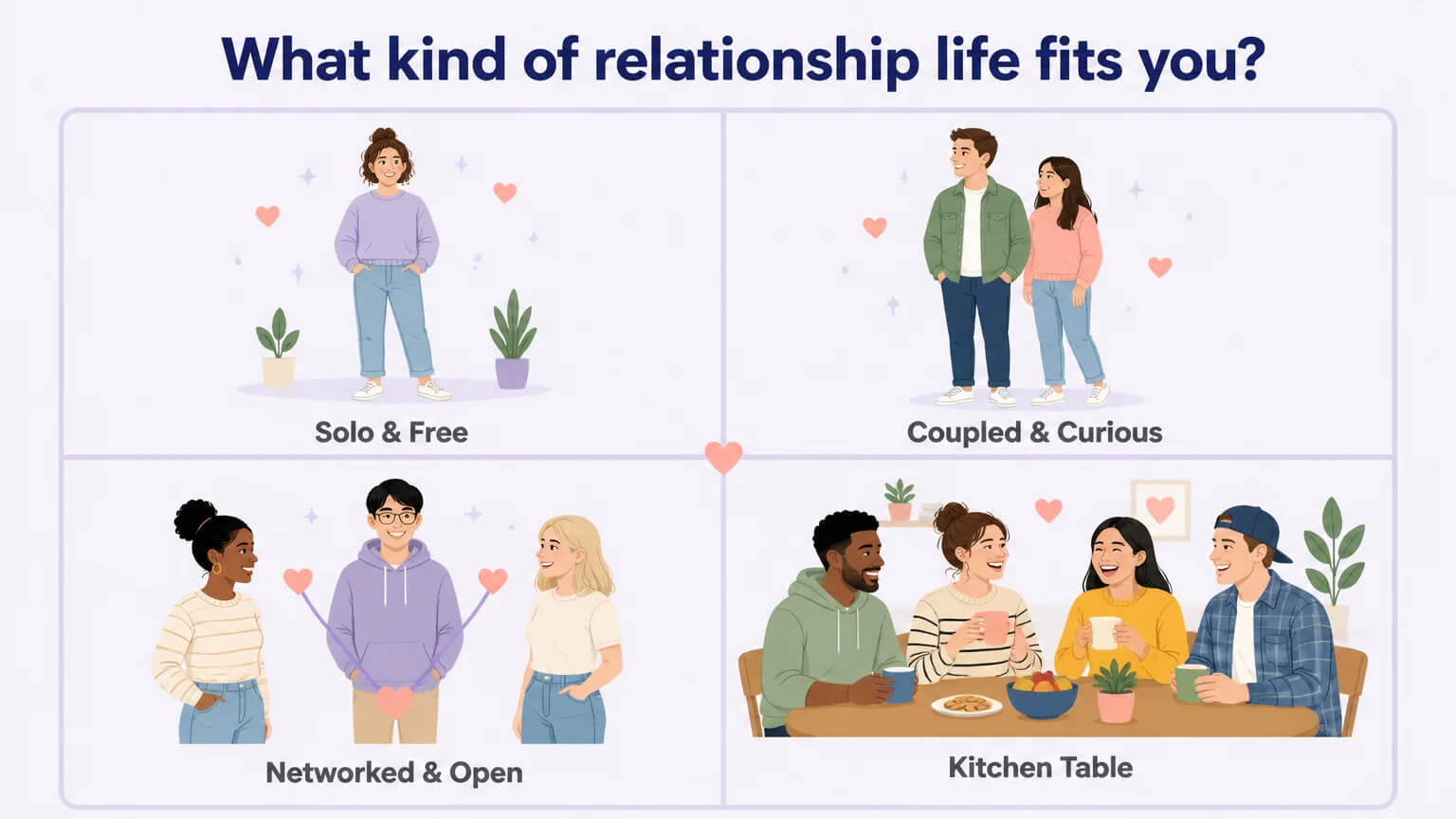
You came here wondering about the difference between a polycule and polyamory. Here is what matters.
Polyamory is the practice. A polycule is the network it creates. Understanding these as separate concepts lets you approach non-monogamy with intention rather than stumbling into shapes that do not fit.
The real decision is not which word to use. It is what kind of relationship life you want. Do you want the philosophy without the network — solo poly, casually ENM with clear agreements and low entanglement? Do you want the tight-knit kitchen-table polycule with group chats and shared Google Calendars? Something between? There is no correct answer, only the answer that works for you and the people you are in relationship with.
If you are brand new, your next move is one book and one honest conversation. Read “Polysecure.” Then sit with yourself and ask what you genuinely want — not what looks cool, not what a partner is pushing for, but what fits. That one act of self-clarity puts you ahead of most beginners.
If you are ready to explore, the apps and communities in section 4 are your next click. Start with one profile, go to one meetup, have one conversation.
The fact that you sought this information out tells you something about yourself. Intentionality is the difference between a polycule that works and one that hurts people. You have the map. What you do with it is the next chapter.
FAQ
Can I be polyamorous without being in a polycule?
Yes. Solo poly people and those between relationships are polyamorous without being in an active polycule. Polyamory is your identity and practice; a polycule is the current network you are connected to. One does not require the other.
How many people are usually in a polycule?
Anywhere from three to over twenty. Most polycules are three to six people. The New York Times profiled a 20-person polycule near Boston. Practical constraints like scheduling and communication complexity create natural ceilings — beyond a certain size, coordination becomes a part-time job.
Is a polycule the same as a throuple or triad?
A triad is one type of polycule, not the whole category. A triad means three people all dating each other. A polycule could be a V, a quad, an N-chain, or any other configuration. Triads are simply the most visible shape in pop culture.
What happens when a polycule breaks up?
Parts can dissolve while other connections remain. It is more like a network reconfiguring than a clean split. When one relationship ends, the rest of the polycule feels ripple effects. Clear post-breakup agreements about communication, shared spaces, and community events stabilize the network through the transition.
Do I have to be friends with my metamours?
No. Parallel polyamory — where metamours know of each other but do not interact — is a valid and common approach. Kitchen-table polyamory is a preference, not a requirement. What matters is that everyone affected by a decision has a voice in it.
What is compersion and do I need to feel it?
Compersion is the feeling of joy when your partner experiences happiness with another partner. It is a bonus, not a requirement. Plenty of people practice healthy non-monogamy without ever feeling it. Jealousy and compersion can coexist. Handling jealousy with emotional honesty matters more than whether you feel compersion.