For roughly five hundred years, the word gay meant happy. Not as a slang aside, but as the only thing it meant in English: joyful, merry, carefree, light-hearted. It came to describe same-sex attraction within the last century, and both meanings still sit in the dictionary. That is why a question as simple as what is gay has more than one answer.
The short one: gay describes a person who is romantically and/or sexually attracted to people of the same gender. It is an adjective rather than a noun, it describes one part of a person rather than the whole of them, and it is not complicated.
The longer answer is worth having. This guide covers what the word means now, where it came from and why it once meant something else, how it sits alongside lesbian, bisexual, pansexual and queer, how many people it describes, and what all of it looks like in day-to-day dating.
A definition is the easy part. Most people come to this question with something more specific behind it: a word they are trying on, a person they want to understand, or a part of themselves they are still working out.
What Does Gay Mean? The Plain-Language Definition
Gay describes a person who is romantically and/or sexually attracted to people of the same gender. That sentence is the whole answer.
It is an adjective, not a noun. You say “gay man” or “gay woman,” not “a gay.” GLAAD’s guidance is explicit on this, and it explains why “a gay” lands badly even when the speaker means no harm.
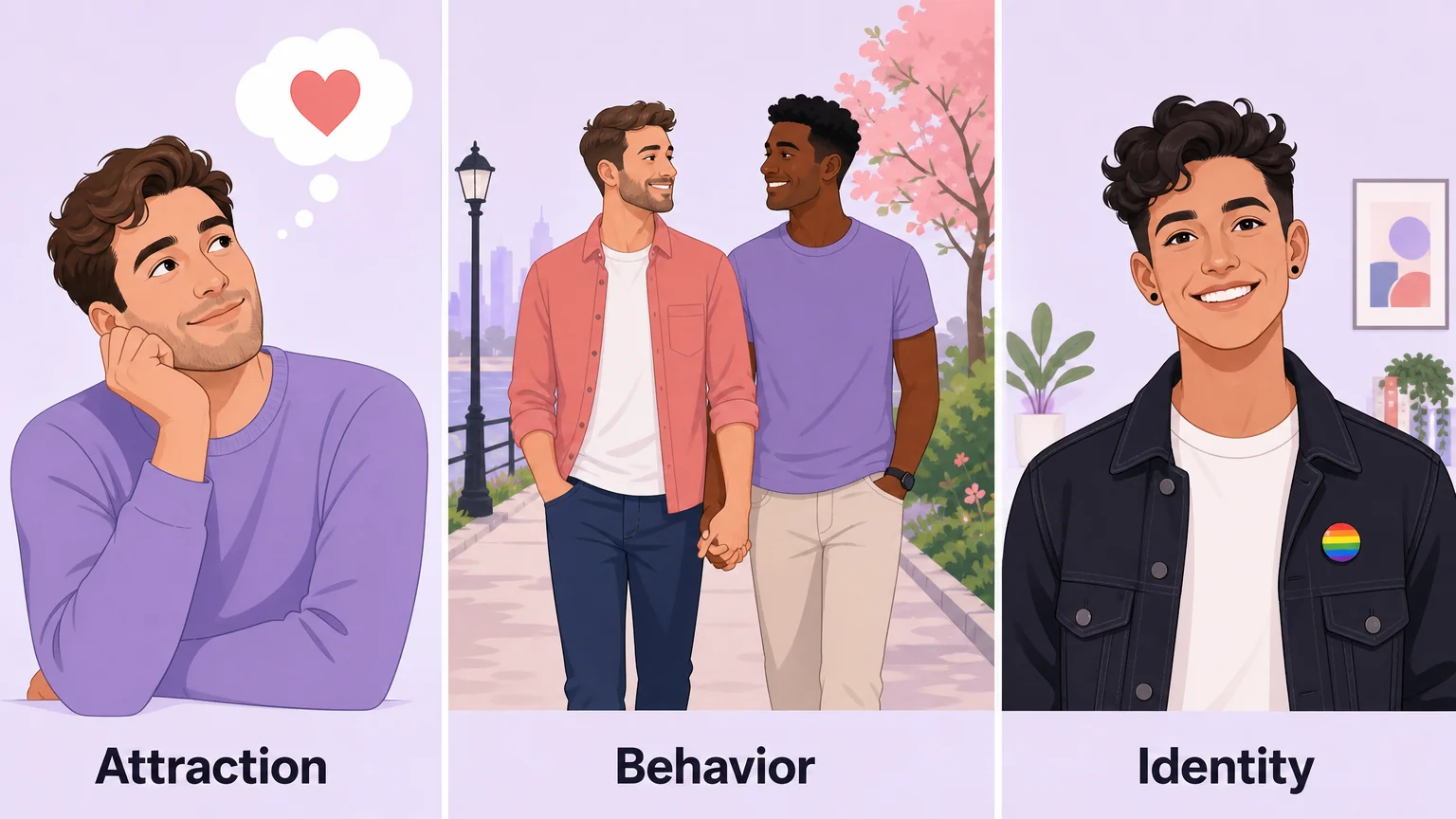
Attraction, behavior and identity are three separate things. You can be attracted to someone, act on it or not, and name it or not. Those three do not have to line up, and a mismatch is not confusion. Someone can feel the attraction and never say a word; someone else can take the label before anything has happened.
The right word is “orientation,” not “preference.” The American Psychological Association prefers “sexual orientation” because “preference” implies a choice someone is making. The APA defines it as the sexual and emotional attraction a person feels toward another person, plus the behavior and social affiliation that may follow.
Is being gay a choice? No. The APA’s line is the cleanest one: all people choose their partners regardless of their sexual orientation, however the orientation itself is not a choice. For most people, it notes, orientation emerges in early adolescence, before any sexual experience.
Orientation is not ideology. Being gay is a fact about who someone is drawn to, not a set of beliefs or a lifestyle someone adopts.
One mix-up worth clearing: being gay is about who you are attracted to, not about your gender. The word is used most often of men, but it is not limited to them.
Where the Word Gay Came From, and Why It Once Meant Happy
Yes, it once meant happy. For roughly five hundred years that was its only meaning, and the cheerful sense is still in the dictionary.
Borrowed from French. “Gay” comes from Old French “gai”: joyful, merry, carefree, light-hearted, also pleasant and agreeably charming. It appears as a surname as early as the late 12th century, as “Philippus de Gay.”
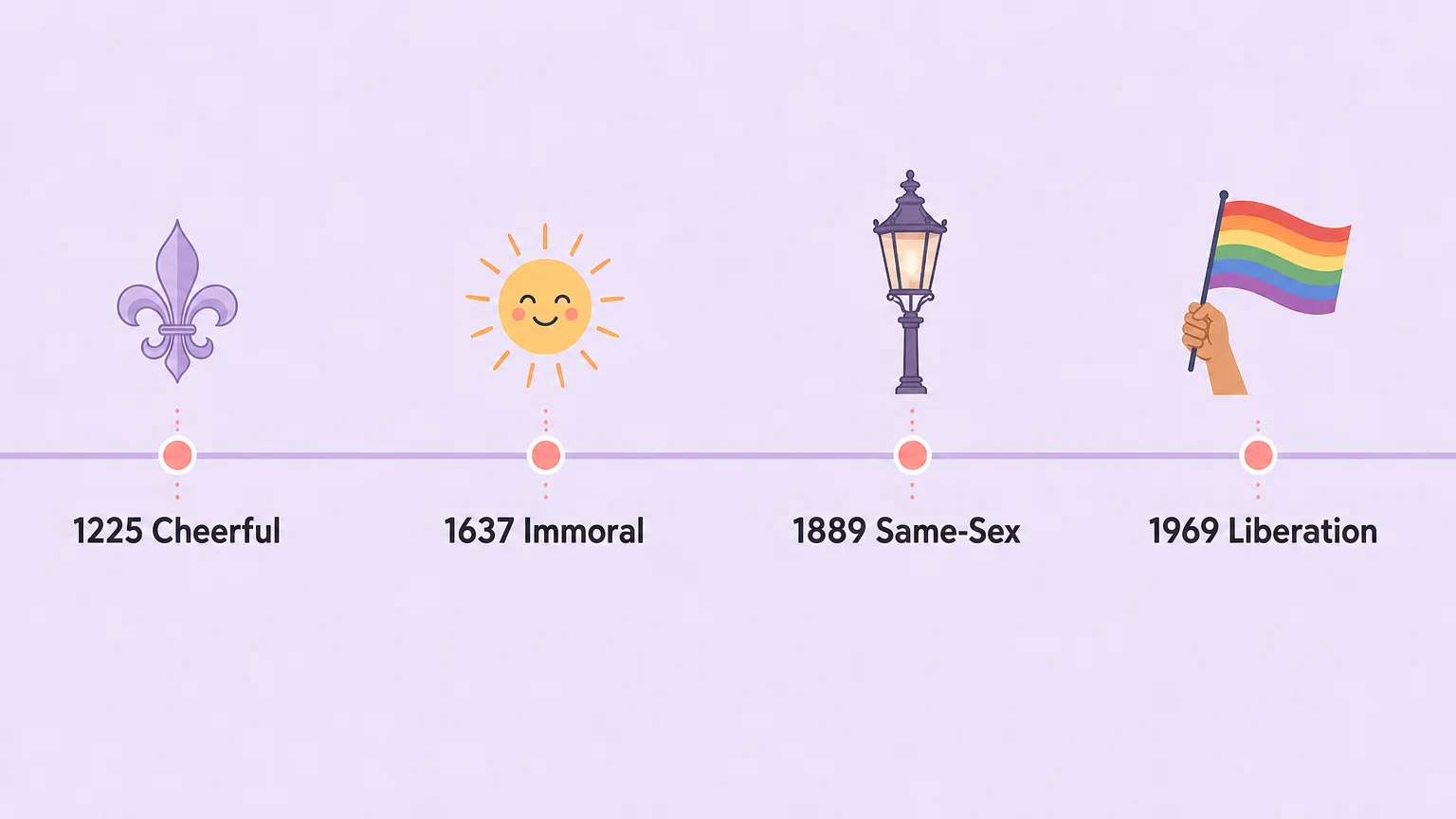
It enters English. The OED’s earliest evidence is around 1225, in Ancrene Riwle. Etymonline dates the adjective to the late 14th century, meaning full of joy, merry, carefree. Both are correct: the dictionaries measure different things.
The deeper root is unsettled. Two hypotheses compete, Old High German “gahi,” meaning quick or daring, and “wahi,” meaning shining or beautiful. Anatoly Liberman, at the University of Minnesota, notes the path from either one to “merry” is hard to reconstruct.
It spreads outward, 14th century. “Gay” also came to cover brightness and appearance: bright, showy, stately, splendidly dressed. Liberman confirms both senses, joyous and bright-or-showy, were in use by the 1300s, and that appearance thread is the bridge to its later life.
The moral turn, 1637. Carefree became uninhibited by moral constraints. Dictionaries record the new definition by that year: addicted to social pleasures and dissipations. Before 1637, the OED has no attestations of “gay” meaning immoral.
Then the irony that carries the story. For two centuries after 1637, the immoral sense belonged to heterosexual promiscuity, not homosexuality. A “gay man” was a womanizer; a “gay house” was a brothel; and “gay woman” was a euphemism for a prostitute, a usage Liberman finds in print by 1825. In an 1857 Punch cartoon, one woman asks another “How long have you been gay?” and the meaning reads as code for prostitution.
Does “gay” mean happy, then? The word never meant only one thing, and the meaning it carried before it named a sexual orientation was not a compliment.
How it crossed over. The same-sex sense surfaced in the same marginal world where prostitutes, criminals and other outcasts shared a scene. Rawson places a male prostitute using “gay” for male homosexuals in London’s Cleveland Street Scandal of 1889, the Dictionary of American Slang reports homosexuals using it among themselves since at least 1920, and Liberman dates the same-sex sense to the 1930s.
Why “gay” won. Mid-century it was the preferred self-description because “queer” was then plainly derogatory and “homosexual” was excessively clinical, having been a mental-illness diagnosis in the DSM. That still shows: Merriam-Webster labels “homosexual” as sometimes disparaging, and GLAAD advises avoiding it outside direct quotes.
The mainstream shift. Wikipedia dates the transition in the word’s dominant meaning, from carefree to homosexual, to the 1960s. Jeffrey Weeks, in The Languages of Sexuality, ties widespread use to the gay liberation movement that began in 1969, which adopted “gay” deliberately. The noun form settles by 1971.
The insult. From the late 1970s, and commonly from the 1980s and especially the late 1990s, “gay” also became a generic term of disparagement among young people. A 2006 BBC ruling advised caution on its use.
Cheer, defiance, insult, self-definition. The layer people chose for themselves is the most recent one.
Gay, Lesbian, Bisexual, Pansexual, Queer, Questioning: How the Words Differ
Labels are tools for describing something, not tests anyone has to pass. One person describes growing up thinking there were only three categories, gay, bisexual and straight, with lesbian folded into gay.
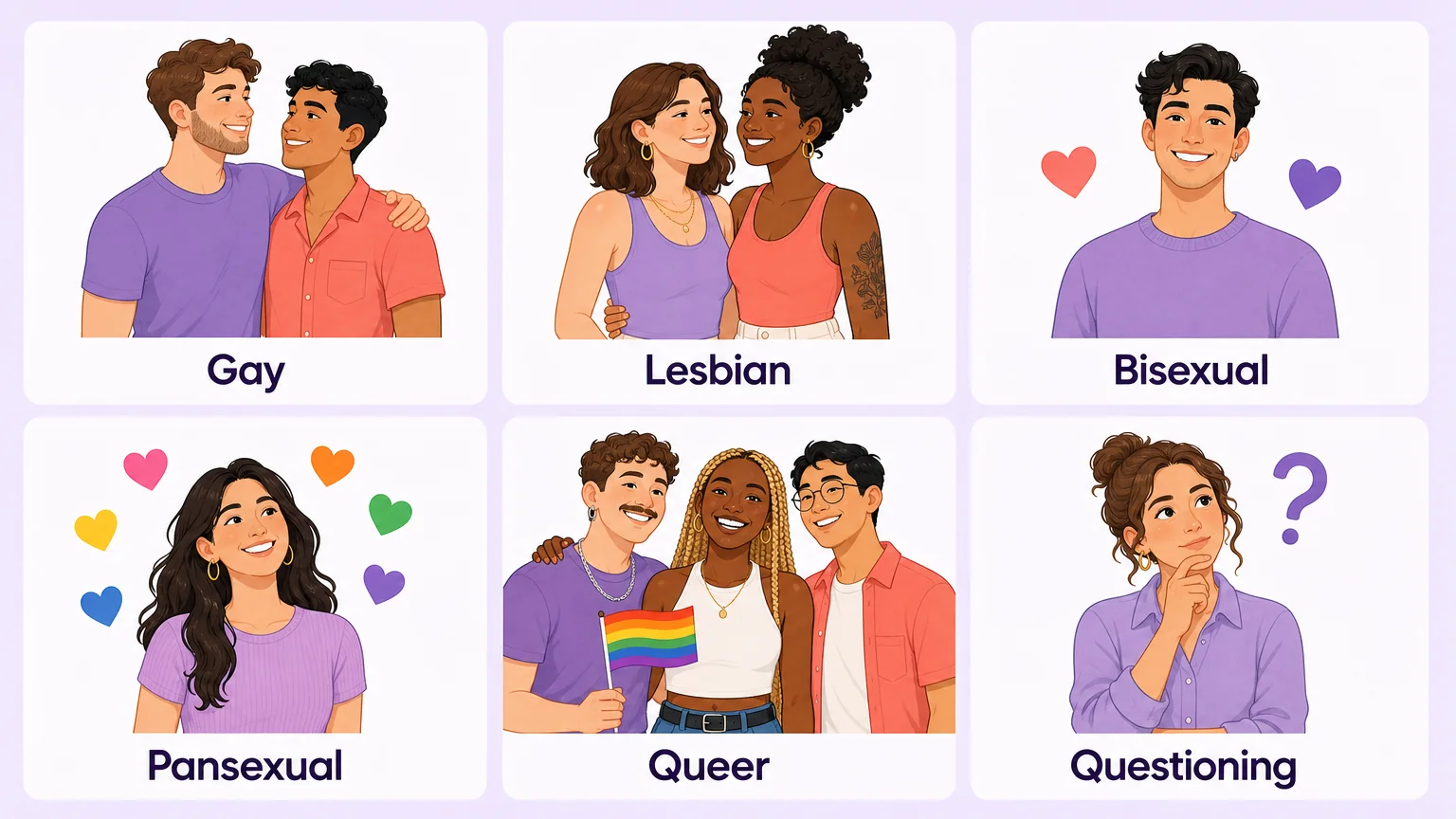
Gay. A person attracted to others of the same gender. Used most often of men, not restricted to them, and workable as a broad term for same-gender attraction. It is an adjective, so “gay man” or “gay woman,” not “a gay.” Some people object to “gay” being stretched into an umbrella term; others object to being folded under broader labels.
Lesbian. The specific noun for a woman attracted to women, and GLAAD’s preferred noun usage for women. Both directions of preference are documented, and neither is a mistake: some women choose it for its specificity, while others avoid it as a word that still sounds to them like an insult.
Bisexual. Attraction to people of more than one gender, and the largest single group in the data: 56 percent of LGBTQ+ adults and 5.2 percent of all U.S. adults in Gallup’s 2024 survey. Biphobia is a documented double discrimination, and GLAAD notes stereotypes that falsely tie bisexuality to infidelity, promiscuity and STI transmission.
Pansexual. GLAAD defines it as the capacity to form enduring attractions to any person regardless of gender identity, and files it under the bi+ umbrella. People who use the term often draw that distinction against bisexual, and those who use both do not fully agree on where the line sits.
Queer. An umbrella term covering sexual orientation, gender identity and/or gender expression outside cisgender-heterosexual norms. It offers flexibility for people who don’t want one label, and it is not universally accepted inside the LGBTQ+ community. Older generations in particular may remember it primarily as a slur. The practical rule: don’t assume someone identifies as queer unless they use the term for themselves.
Questioning. The other meaning of the Q, used less often than queer. It legitimizes not knowing yet, and it frequently gets left out of acronym expansions, which can leave people still figuring things out feeling unrepresented.
Two boundaries here are genuinely unsettled: bisexual versus pansexual is not resolved in the reference literature, and “queer” is contested inside the community. The liberating part is that interactional and context-dependent. People don’t stick to one label even when their experience of their sexuality stays largely the same. If the word that fits today changes later, that is normal rather than a failure of self-knowledge.
Many people prefer describing over labeling. Saying “I like women” is easier than choosing a word for it, and a quiet apologetic feeling about whichever term you land on is common. That feeling is not evidence that you chose wrong.
The word someone uses for themselves is the right word for them. Mirror what a person has already used, and if you genuinely don’t know, ask once and then use their answer.
Can a Woman Be Gay? How the Word Works Across Genders
Yes. The word is not restricted to men, and in ordinary use it covers women as well. If that feels less settled than it should, the awkwardness is documented.
The friction is on the record. In formal UK Office for National Statistics focus groups, women objected to the phrase “gay or lesbian” because the word “or” implied a person could not be both, and some suggested replacing “or” with a forward slash. Participants also felt the ordering debate was an issue for men, since gay men did not recognize “gay” as a word that describes women.
Both preferences are documented. Some women choose “lesbian” for its specificity, one participant saying she uses it because she likes to be specific while another called gender-neutral terms too broad to tell her anything. Other women avoid it entirely, describing it as something that sounds almost like a slang word or an insult, with one saying she never wants to identify with a term that carries a negative connotation.
Researchers connect that to lesbian invisibility, and neither group is doing it wrong.
The grammar explains a common instinct. “Gay” is less accepted as a noun than “lesbian” is, which is why “a lesbian” sounds natural while “a gay” does not.
What dissolves the whole question. The same person may choose a different word depending on who is asking. The label is not a permanent record of them.
Research on self-labeling finds a quietly apologetic attitude about whatever word gets chosen, and “I like women” often comes easier than the label.
Use the word someone uses for themselves, and mirror what they have already said.
How Many People Are Gay? What the Numbers Show
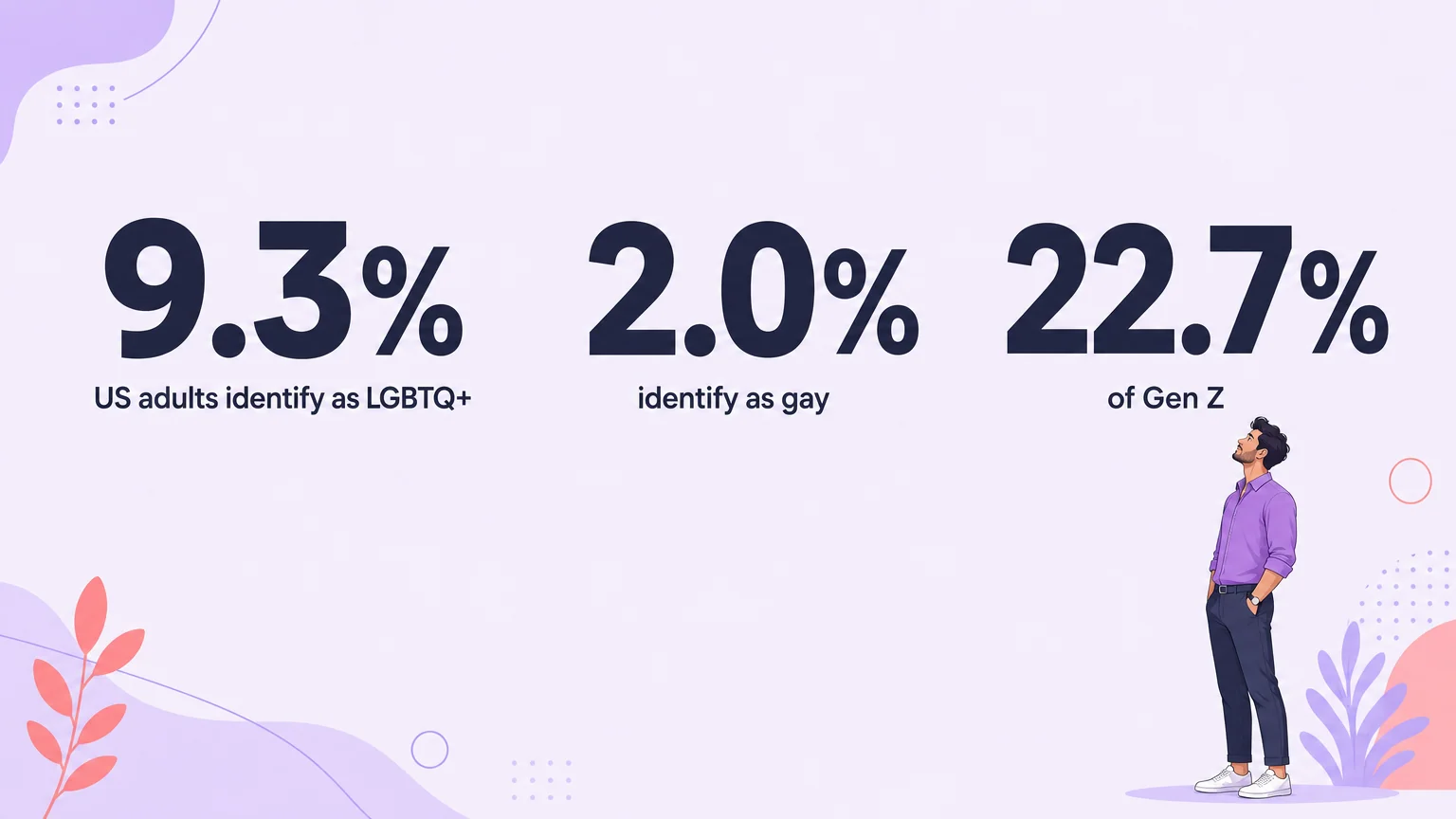
Two in every hundred American adults identify as gay. That comes from Gallup’s 2024 survey, which interviewed 14,162 U.S. adults, including 899 LGBTQ+ adults, with a margin of error of plus or minus 1 percentage point for the total sample and 4 points for LGBTQ+ adults.
The breakdown among all adults: bisexual 5.2 percent, gay 2.0 percent, lesbian 1.4 percent, transgender 1.3 percent, and 5 percent who declined to answer. Overall, 9.3 percent identified as LGBTQ+, up from 7.6 percent in 2023 and more than double the 3.5 percent Gallup first recorded in 2012.
The gap between 2.0 and 9.3 surprises people, and it has a clean explanation. Among LGBTQ+ adults, bisexual is 56 percent, gay 21 percent, lesbian 15 percent, and transgender 14 percent. Those sum past 100 because respondents could report more than one identity, while the 9.3 percent headline counts each person once. Bisexuality, not gay identity, is the largest subgroup, which is why the LGBTQ+ figure runs roughly five times the gay figure.
The generational split is the part that moves. Using Gallup’s two-year averages: Generation Z 22.7 percent, Millennials 12.0 percent, Generation X 4.8 percent, and the Silent Generation, born before 1946, 1.8 percent. Each generation is roughly half the previous one.
A second estimate from the Williams Institute puts LGBT identification at 5.5 percent of U.S. adults, about 13.9 million people, based on a 2023 analysis of 2020 and 2021 data. It sits lower than Gallup’s because it uses older data years and a different methodology, not because one of the two is wrong.
Coming Out Today: Earlier Than Ever, and Still Yours to Decide
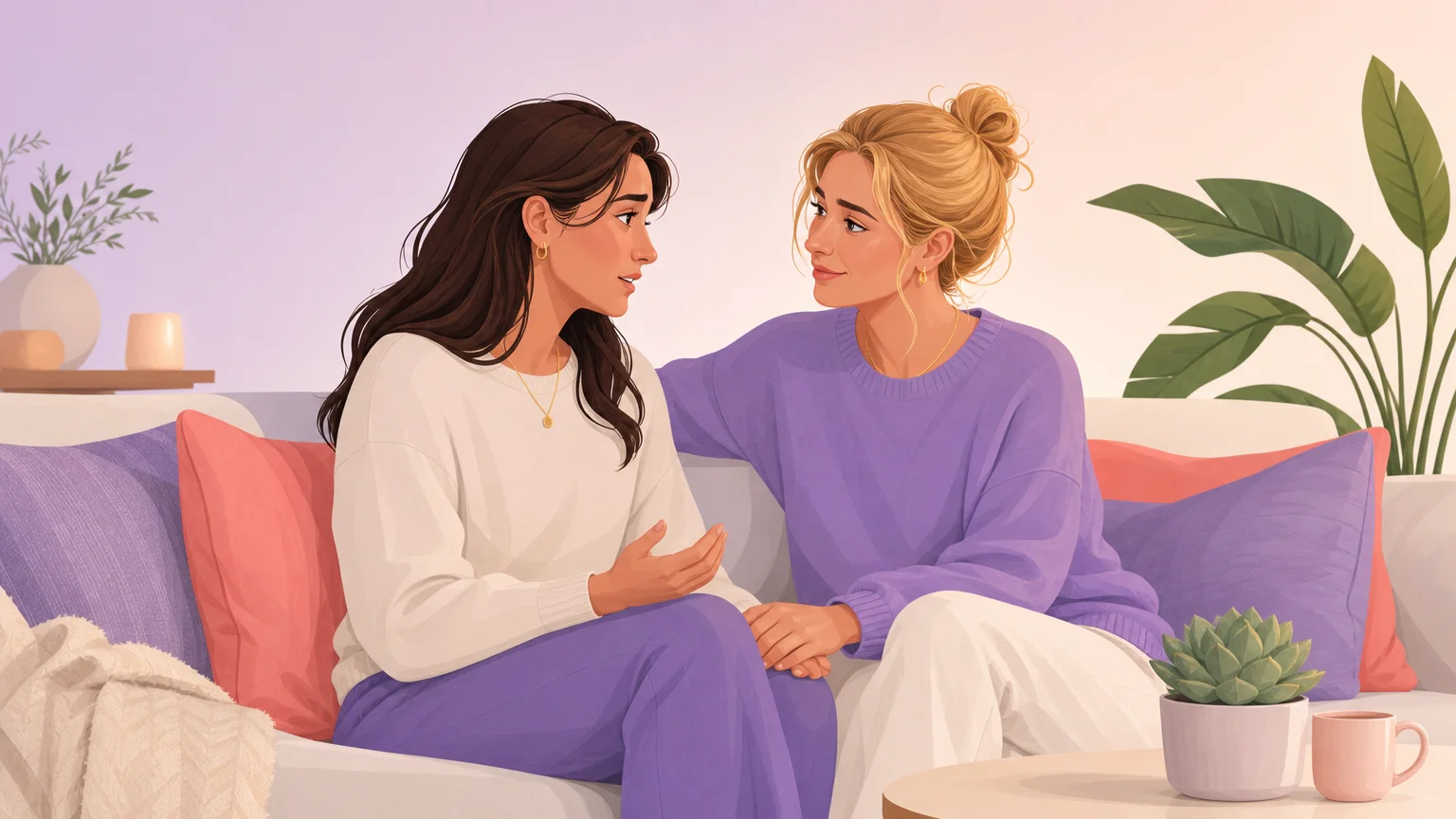
Most people know years before they tell anyone, and that gap is not a delay. It is the normal shape of the thing, and it is shrinking fast.
Pew Research, 2025. Among gay and lesbian adults aged 18 to 29, two-thirds told someone before turning 18, including 31 percent at 13 or younger. Among those 60 and older, only 24 percent did.
The knowing-versus-telling gap matters more than the milestone. Many people knew by age 14, including 71 percent of gay and lesbian adults and 50 percent of bisexual adults, but far fewer had told anyone. Gallup puts the median coming-out age at 22, and the age of first recognizing their own identity at 14 for today’s young adults. That gap runs 3 years for young adults and 10 years for people 65 and older.
Coming out is neither a one-time event nor an obligation. Telling no one, one person, or everyone are all legitimate, and choosing privacy is a decision rather than a delay.
If you do decide to tell someone, settle what you want to say and to whom. Choose your method, in person, in writing or by phone, since no method is more real than another. Predict how this person is likely to respond from how they have handled LGBTQ+ topics, and have a safety plan: somewhere to go, someone to call.
For support, The Trevor Project is at 1-866-488-7386, the 988 Suicide and Crisis Lifeline is at 988, and the LGBT National Help Center is at 888-843-4564.
One person described growing up believing being gay would be devastating and would control their entire identity, then finding that soft, casual coming-out scenes could be meaningful anyway.
The Gay Community and Chosen Family
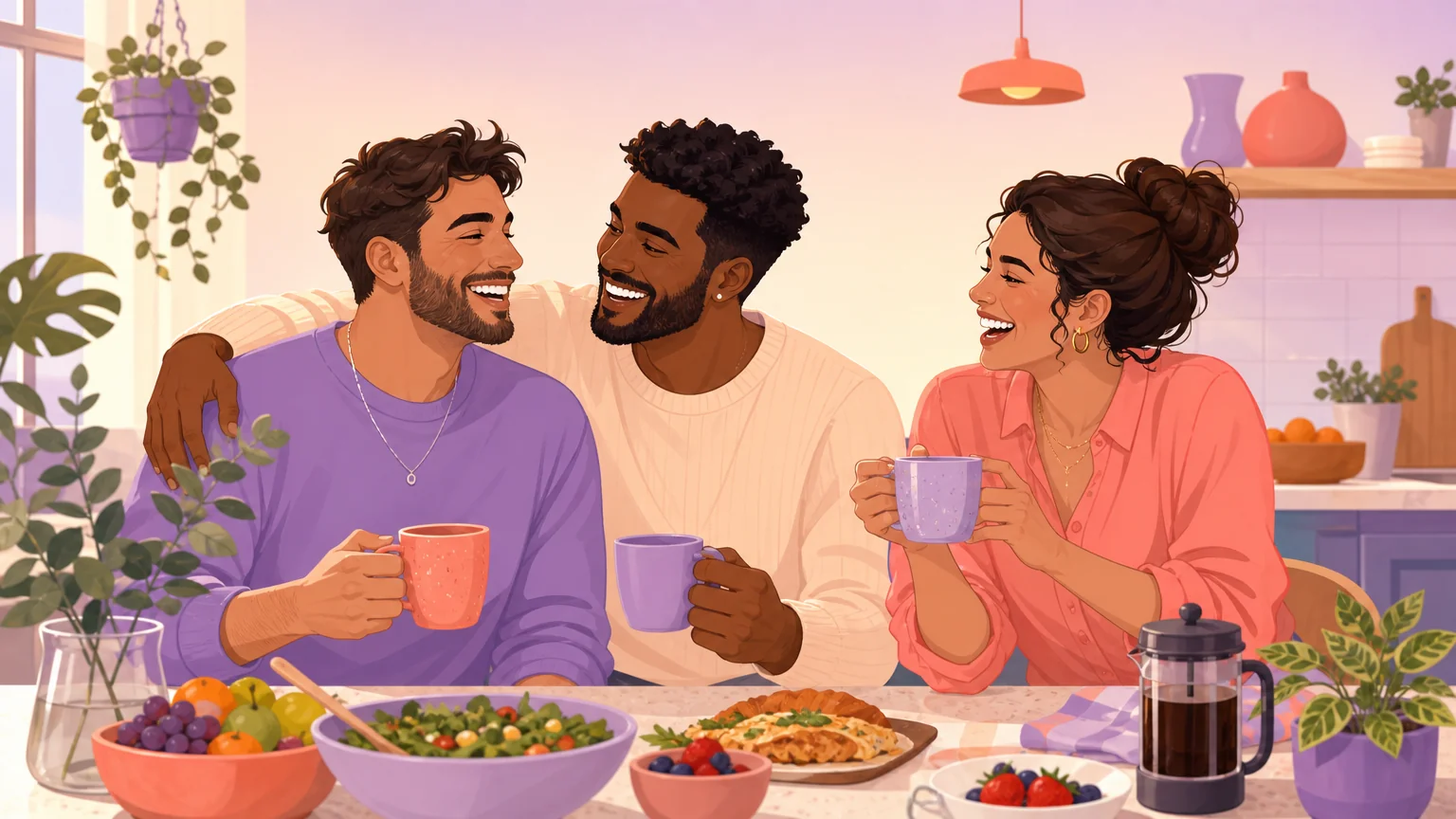
The community that raised you can feel like it has expectations you never agreed to, and the family you were born into may not show up.
There is no single gay community. Gallup’s data shows identification far higher among women than men, and a political spread from about 14 percent among Democrats to about 3 percent among Republicans. A Chicago study found a well-known gay neighborhood safe but not always inclusive for Black and Latino young men.
The institutions are changing, and both directions are true. Boston and Cambridge had sixteen gay bars in 1993 and 1994; by 2007 fewer than half remained. The documented causes are mundane: mainstream acceptance letting younger LGBTQ+ people socialize in mixed spaces, dating apps partly replacing physical venues, gentrification, and an aging clientele. But gentrification also made those neighborhoods sought-after, and Montreal’s Gay Village staged a comeback.
For some people, being gay is now one identity among many, and one receding in its centrality. That is a claim about a label, not about people.
Chosen family. Networks of non-biological relatives who care for each other as if they are family, described in research as a signature of the queer experience and grounded in Kath Weston’s Families We Choose. A scoping review documents what they provide: unconditional acceptance, validation of identity, healing after family rejection, material support including housing, and help navigating health services.
A study of 34 queer Australians found people blurring the boundary between family of origin and chosen family rather than swapping one for the other.
Richie Jackson, who wrote a book as a letter to his gay son, describes his son coming out at 15 and saying being gay was not a big deal to his generation. Jackson’s own 1983 move to New York at the height of the AIDS epidemic is why he thought otherwise: being gay is harrowing sometimes, and still the best thing about him.
What Being Gay Means for Dating and Relationships

A Tuesday night trying to meet someone is where all of this stops being theory.
How people meet. Dating apps let gay people find each other well outside the traditional gay centers concentrated in major cities. Proximity is uneven, though: research on Grindr and center-periphery dynamics found profiles thin out rapidly away from urban cores. Two people on the same app can have completely different experiences of it.
The rural picture is part of the story. In a 2023 UK study, hook-up apps were for some rural participants the only source of local queer connection. The same study found apps can reduce isolation and also contribute to it, since users are drawn to them precisely when they are lonely. It distinguishes dense urban settings, where proximity produces spontaneous encounters, from rural ones, where apps connect distant people.
Visibility is harder in rural areas. People who are only partially out find the demands difficult, and some fear public encounters with other users because of homophobia.
App couples aren’t shallower. A 2024 study of 113 queer adults compared people who met partners through dating apps with people who met in person and found no statistically significant differences in relationship satisfaction, commitment, or relationship quality. Communication quality predicted outcomes, accounting for 35 to 47 percent of the variance.
Roughly 40 to 50 percent of partnered gay men are consensually non-monogamous.
The Gay Couples Study followed 566 male couples for three years and found 47 percent had open agreements, with another 8 percent reporting discrepant ones. A UK survey of 1,006 gay men found 41 percent had been in, or were in, an open relationship. A study of sexual minority men in China found that among those with a partner, 44 percent had a monogamous sexual agreement and 24.6 percent an open one, so this is not a Western artifact.
The baseline that gives those numbers meaning. Roughly one in five American adults report consensual non-monogamy at some point (Haupert et al., 2017). Without that comparison, 40 to 50 percent is just a number. With it, you see that this is more common among partnered gay men, and also an ordinary pattern.
Sexual agreements run on a continuum, not two categories. Hoff and Beougher (2010) describe open agreements, closed agreements and discrepant agreements, where partners believe they agreed to different things. Discrepant agreements are a communication failure rather than a structural one, so the conversation protects the relationship, not the rule.
Being gay is more than two people of the same sex liking each other, one first-person account argues. It is two people who love each other enough to live authentically and keep choosing each other.
If you are gay and non-monogamous, or curious about it, the practical question is where to meet people who understand both halves of that. 3Fun is a dating app built for exactly that, for couples and singles of every orientation, where openness is the starting assumption rather than something you have to explain.
Sexual Fluidity: When Attraction Does Not Stay in One Lane
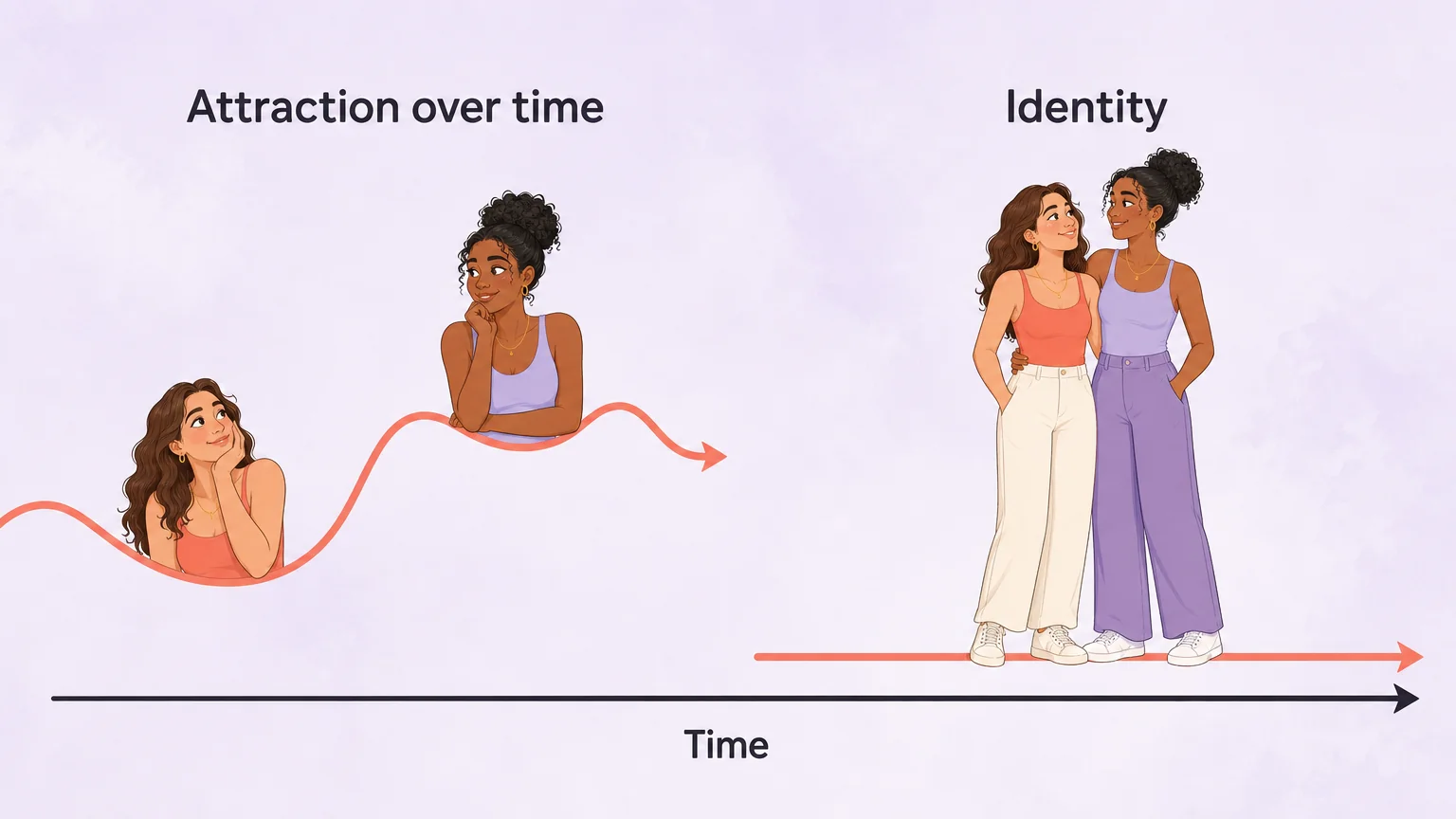
The people most likely to report shifts in attraction over time are not the ones with the loosest labels. They are among the most firmly identified.
What fluidity is. Researcher Lisa Diamond defines sexual fluidity as situation-dependent flexibility, and she argues that all people have the potential for it. It describes how attraction behaves over time, not what a person is. Someone can be fluid and still be gay.
The headline finding. Katz-Wise (2014) found 52 percent of men reported sexual fluidity in their attractions. Sexually fluid men were most likely to identify as completely homosexual or gay. That cuts against the assumption that fluidity belongs to weaker identities.
The second study, for precision. Diamond and colleagues (2017), in Archives of Sexual Behavior, followed 294 heterosexual, lesbian, gay and bisexual men and women, and found that gender and bisexuality independently influence fluidity. It also asked gay-identified participants about attraction to other genders, and they reported it.
What the research does not say. Attraction can shift or broaden over a lifetime. That is the finding. It does not follow that someone was straight all along, and it does not make any identity provisional.
The distinction the question usually misses. Loving someone and being sexually attracted to them are not the same thing, and the common version of this question merges the two. You can love a woman deeply and have that change nothing about what you are.
A single experience is not a verdict, and change over time is common rather than a sign of confusion. If a label stops fitting, changing it is allowed. So is keeping it.
Stereotypes About Gay People, and What’s Actually True
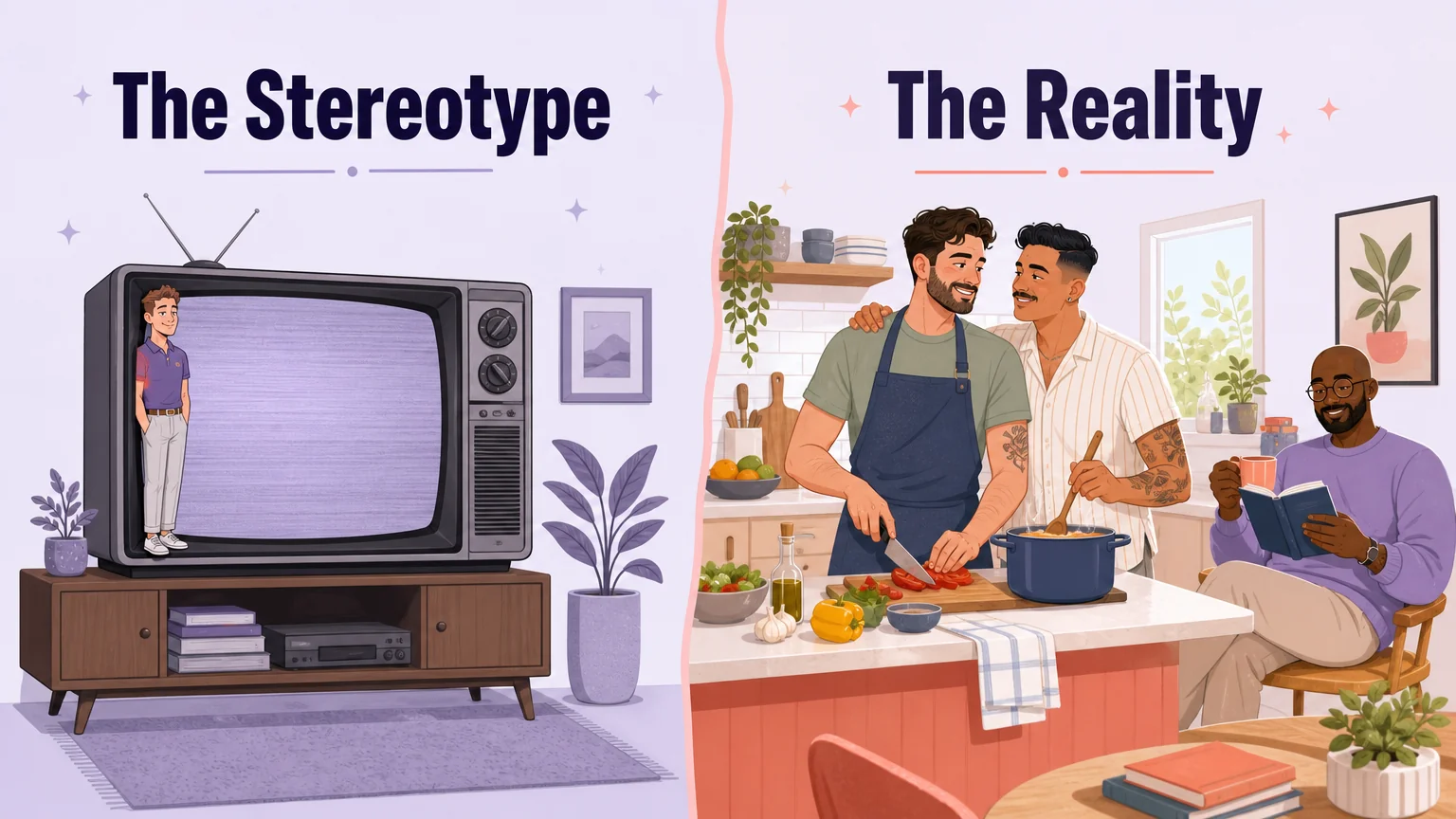
The assumptions people carry are flattering half the time and insulting the other half, and both put a person in a box.
There is no one way to be gay. The media version is the safe gay character: funny, sexless, loyal, and crafted to support his straight friends’ stories. The internal version is worse: if you don’t match the script, someone says you are not really gay. Against both, people describe themselves as one adjective among many.
LGB+ people do not gravitate to certain jobs by nature. Census data from 2021 for England and Wales shows real concentration among LGB+ workers: airline crew at 13.7 percent and entertainers at 12.3 percent, against roofers at 0.5 percent. That reflects which spaces people feel welcomed into rather than aptitude, and self-disclosure bias likely undercounts LGB+ people in blue-collar trades.
Being out at work is not a settled question. A 2022 workplace study found that among people publicly out at work, 46.4 percent of bisexual men and 42.7 percent of gay men reported not being hired or fired because of their sexuality. About 60 percent of lesbian, gay and bisexual employees avoided social events or personal topics at work to reduce the risk. One person described keeping so much of life private eight hours a day.
Institutions reverse position faster than you would think. Eisenhower’s 1953 executive order made “sexual perversion” grounds for removing federal employees, effectively barring gay men and lesbians from federal service. An estimated 5,000 to 10,000 lost their jobs, most by resignation rather than dismissal. Don’t Ask Don’t Tell was signed into law in November 1993 and took effect in 1994. The American Psychological Association now states that homosexuality is a normal expression of human sexuality and that efforts to change orientation are contraindicated.
It is not contagious. Sexuality and gender identity are not catching, and someone being gay does not turn anyone else gay.
FAQ
What does it mean if someone is gay?
A person who is romantically and/or sexually attracted to people of the same gender. It is one thing about them, not the whole of them, and it is an adjective rather than a noun. Attraction, behavior and identity do not have to line up.
Does gay mean happy?
It did, and for about five hundred years that was its only meaning. The word came from Old French “gai,” meaning joyful and carefree, and entered English with that sense around 1225. The moral sense arrives in 1637, and the same-sex meaning is far more recent.
Can a gay guy love a girl?
The research does not treat this as impossible. Katz-Wise (2014) found 52 percent of men reported changes in their attractions over time. That supports attraction broadening, not a person having been straight all along. Loving someone and being attracted to them are not the same.
Can a gay become a father?
Yes. Gay men become parents through adoption, fostering, surrogacy and donor conception, and same-sex parents raise children in many countries. The producer and author Richie Jackson, who wrote Gay Like Me as a letter to his gay son, and his husband have two children.
Is being gay a choice?
No. The American Psychological Association states that all people choose their partners regardless of their sexual orientation, however the orientation itself is not a choice. For most people, it emerges in early adolescence. The APA notes that efforts to change it are contraindicated. Whether being gay is hereditary turns out to be a more interesting question than the debate allows.
What is the difference between gay and queer?
Gay is specific: attraction to people of the same gender. Queer is a broader umbrella covering orientation, gender identity and expression outside cisgender-heterosexual norms. It is not universally accepted even inside the community, so use it only for people who use it for themselves.
Can a woman be gay?
Yes. The word is not restricted to men. Some women prefer “lesbian” for its specificity, others avoid it because it persists as a stigmatized word, and many use gay, queer, bi or pan instead. Label choice can shift by context for the same person.
How many people are actually gay?
In the U.S., 2.0 percent of adults identify as gay and 1.4 percent as lesbian, while 9.3 percent identify as LGBTQ+ overall (Gallup, 2024, 14,162 surveyed). The LGBTQ+ figure is larger because bisexuality is the biggest subgroup, at 56 percent.
What age do people come out?
The median is about 22 across LGBTQ+ adults (Gallup, 2024), but it varies by generation: 17 for ages 18 to 29 and 26 for those 65 and older. People usually know before they tell: first recognition comes at 14 for today’s young adults.
How common are open relationships among gay couples?
More common than in the general population. The Gay Couples Study followed 566 male couples for three years and found 47 percent had open agreements. General-population consensual non-monogamy is estimated at roughly one in five.
Does GAY stand for “Good As You”?
No. It is a backronym, a phrase built backwards from the letters, with no evidence behind it. The word derives from Old French “gai,” meaning joyful or carefree, and entered English around 1225, centuries before any acronym reading could have existed.
Is it OK to say “that’s so gay”?
That usage emerged in the late 1970s and became a common generic insult from the 1980s onward, widely criticized as homophobic. The word still means a sexual orientation to the people it describes, so using it to mean bad lands on them either way.
What is “chosen family”?
Networks of non-biological relatives who care for one another as if they are family, grounded in Kath Weston’s Families We Choose (1997). They provide emotional validation, material support and help with medical systems, and they usually overlap with family of origin rather than replace it. If you want people who understand both your identity and an open structure, 3Fun is built for that.