There is a question people tend to ask themselves late at night, with the lights off and no one else in the room. It is not quite “what am I.” It is closer to “what do I call it.”
Here is the short answer to the difference between queer and gay. They are not two names for one thing, and they are not opposites. One names a specific attraction. The other names a direction. Plenty of people are both, and plenty are one and not the other.
Here is what this piece will not do: tell you what you are. The queer vs. gay question is yours to answer, and what follows is what you need to answer it.
And if the difference between gay and queer still feels like an open question for you, that is allowed to take time.
The Difference, in Plain Language
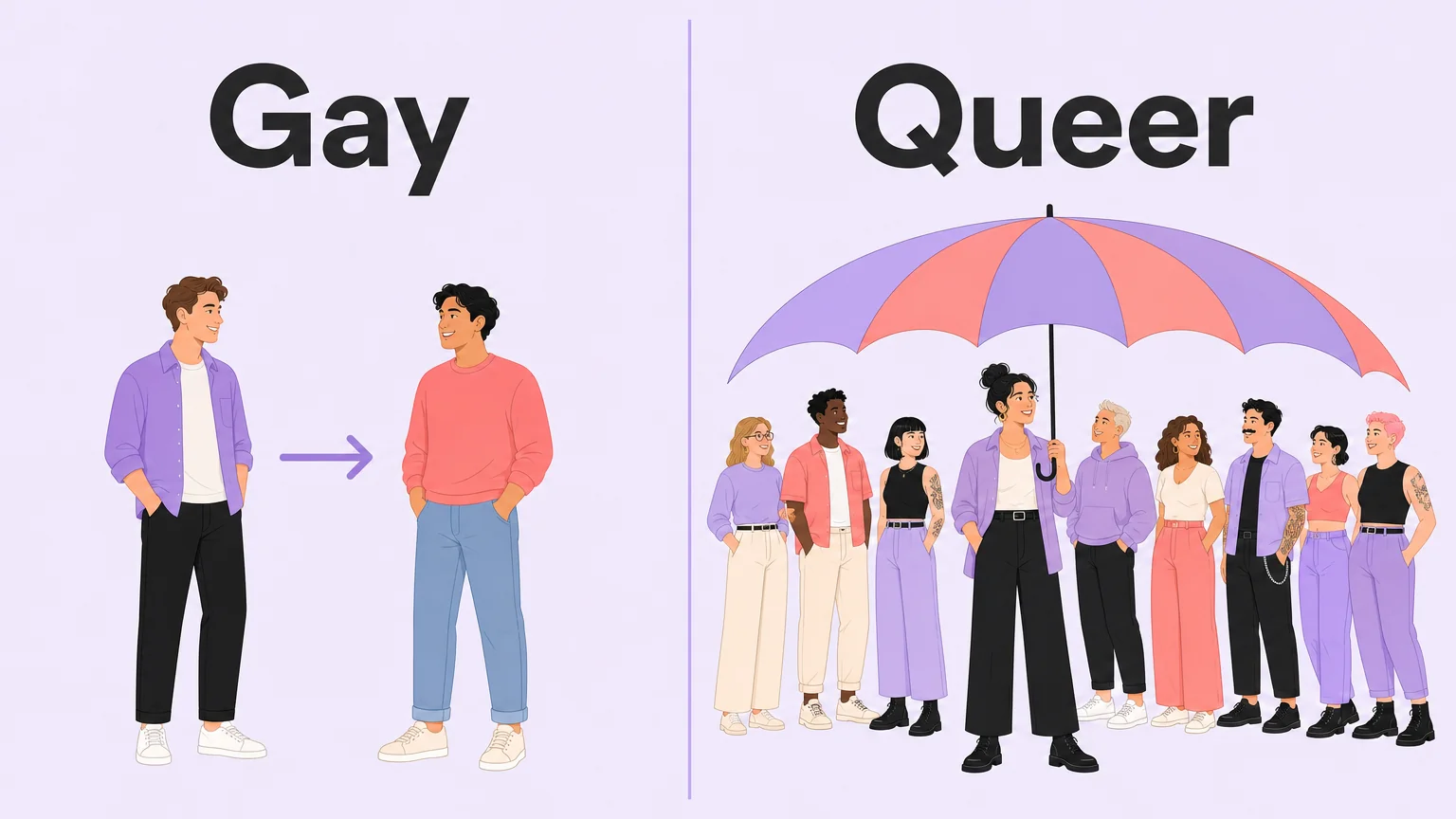
“Gay” names an attraction. Stonewall defines it as a man who has an emotional, romantic or sexual orientation towards men, and also as a general term for lesbian and gay sexuality. The word does two jobs, which is where the confusion starts.
“Queer” is the broad one: it gathers people who are not straight, not cisgender, or both. It comes from the German “quer,” meaning across, and it entered English in the 16th century meaning strange or odd. Even then it meant crosswise, at an angle to the grid.
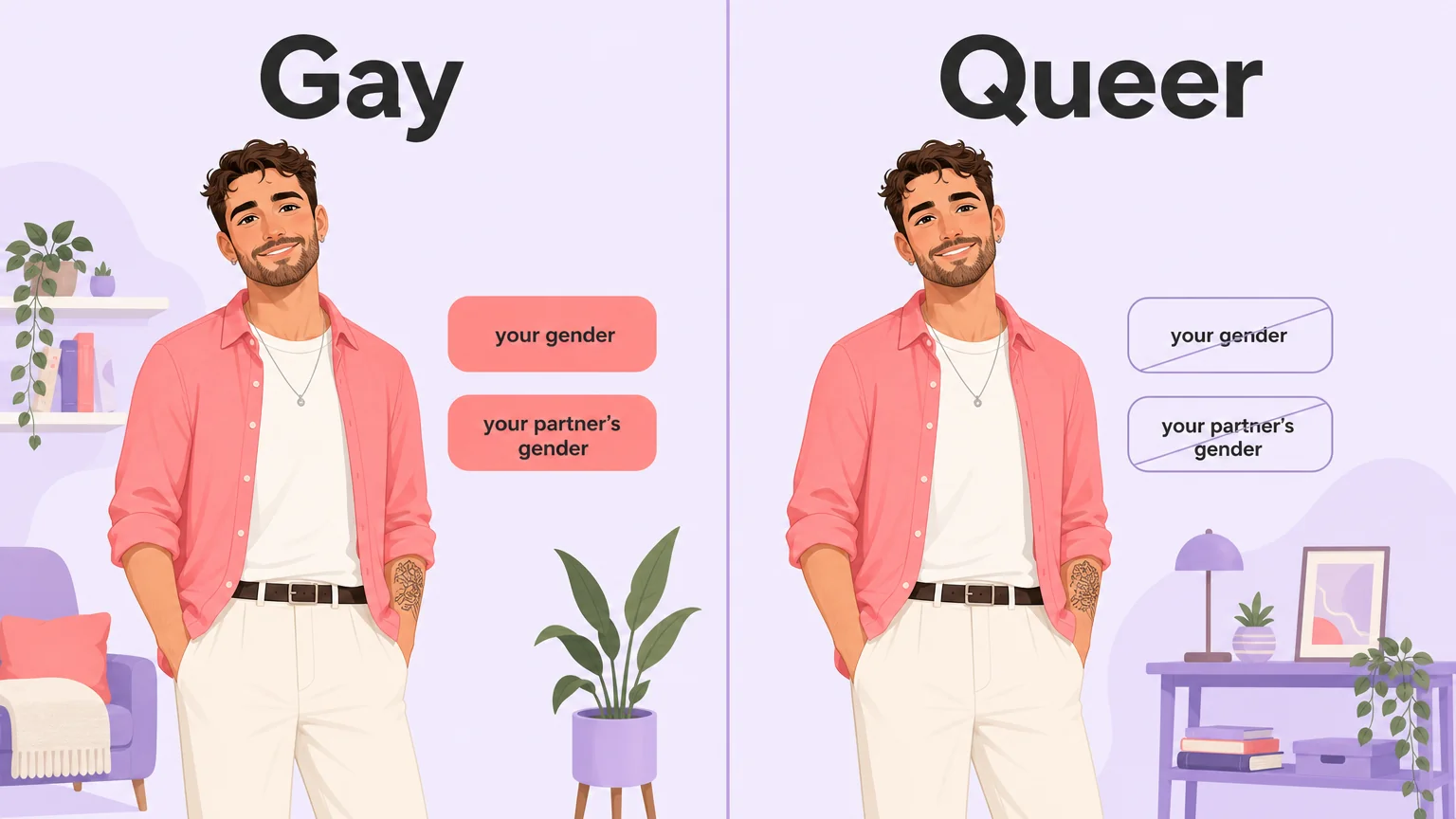
Now the practical line, the one to remember. Queer does not tell anyone your gender or the gender of your partner. Gay does.
Stonewall notes that queer has been reclaimed especially by young people who do not identify with traditional categories around gender and sexuality, while some still hear it as an insult. PFLAG treats that as a question about feelings, not correctness.
Those are the differences that matter: how specific each word is, where it came from, whose word it is, and what a relationship does to it.
1. How Specific Each Word Is and Why Vaguer Can Be Safer
Less information sounds like a weaker answer. Here it is the stronger one.
Queer says less about you than gay does, and what it leaves out is specific: it does not name your gender, or the gender of the person you are with.
Think about what that buys. If you are in a room where naming those things would change how you get treated, the broader word lets you say something true without handing over the rest. That is not hiding. It is choosing how far to open the door.
Precision buys something too: gay, lesbian and bisexual each name a specific attraction, and some people want exactly that said on purpose.
The clearest reason the broad word exists sits in one number. 82% of transgender adults also think of themselves as queer, the highest rate of any group measured. For someone whose gender and orientation do not collapse into a single letter, queer holds both at once instead of asking one to sit behind the other.
There is a real cost: queer says less about the specifics, and some people want the specifics named out loud. That is a trade, not a misunderstanding.
Neither word is more honest than the other. One is a close-up and one is a wide shot, and you are the one holding the camera.
2. The History Behind Both Words
Start with gay, because gay got there first. It comes from the Old French “gai,” meaning joyful or carefree, and it spent centuries being harmless before sliding, by the 17th century, into meaning someone addicted to pleasures and dissipations. Only in the late 19th century did it settle into a euphemism for homosexual. Gay was respectability-anxious long before it was respectable, and there is no single villain here.
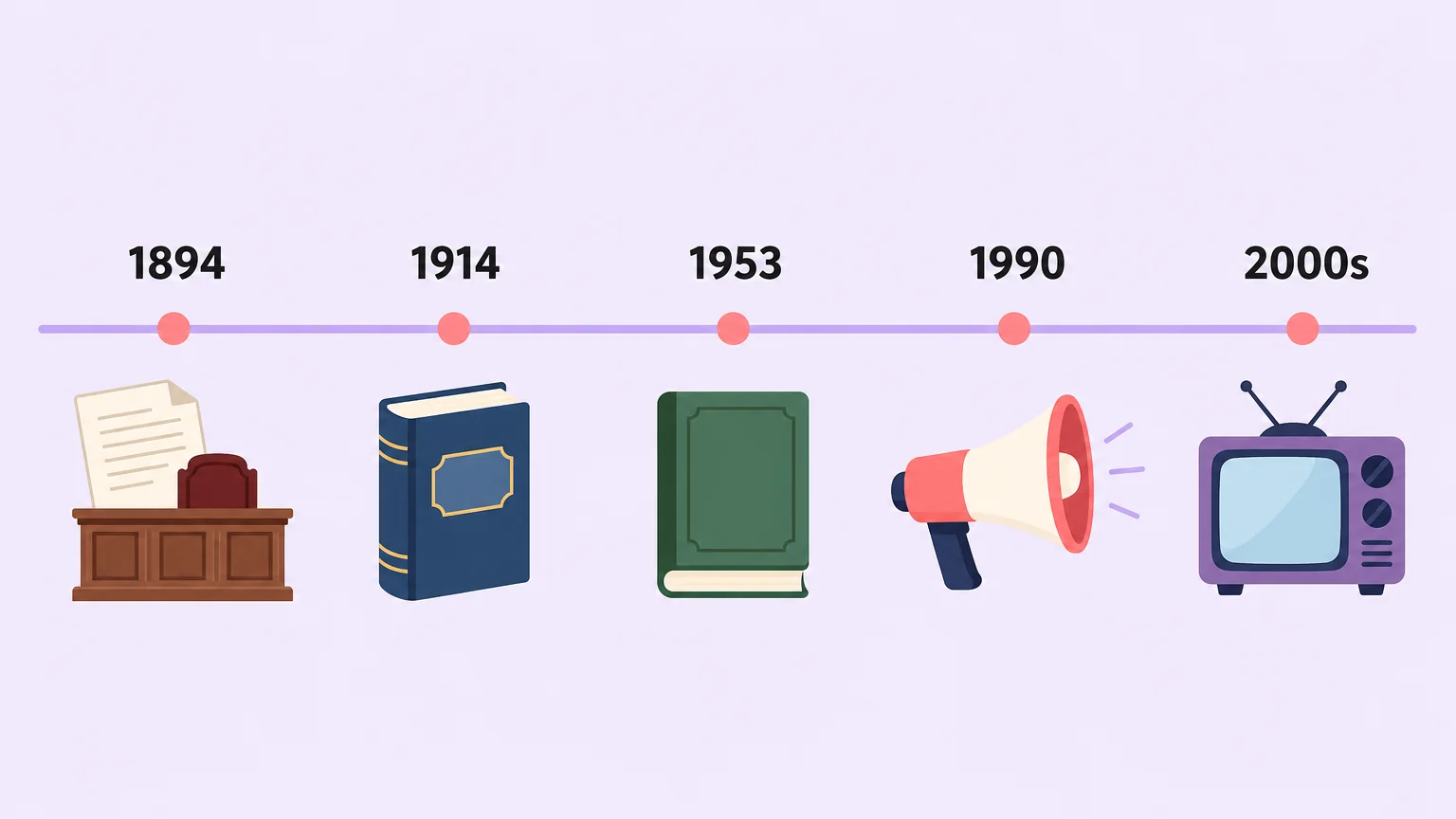
The uglier chapter has a date on it. In 1894 the Marquess of Queensberry wrote a letter calling Oscar Wilde and other homosexual men “snob queers,” and it was read aloud in court during Wilde’s 1895 trial. After that the insult took hold. William S. Burroughs wrote a novel called Queer in 1953 that stayed unpublished until 1985.
By 1914, a slang dictionary held in the National Archives already recorded the word as describing someone homosexual, noting it was “only derogatory when used by those who are not.” The in-group rule that modern style guides still repeat was written down a century ago.
Then came the reclaiming. Queer Nation was founded in New York City in March 1990 by AIDS activists from ACT UP, and all four founders had been victims of anti-gay violence. Their chant was blunt: We’re here. We’re queer. Get used to it.
They did not pick the word because it was softer. They picked it as reverse fire, with a manifesto handed out that year calling queer “a sly and ironic weapon we can steal from the homophobe’s hands and use against him.” By the 2000s, television had domesticated it into something ordinary enough for a sitcom.
Historian Lillian Faderman described queer as “the last word that gay men heard before their heads hit the pavement.”
That is why an older reader flinches. It is not stubbornness, and it is not being out of date.
Queer has traveled from weapon to ordinary, and whether that journey is over depends on who you ask.
3. The Word for a Crowd vs. the Word for You
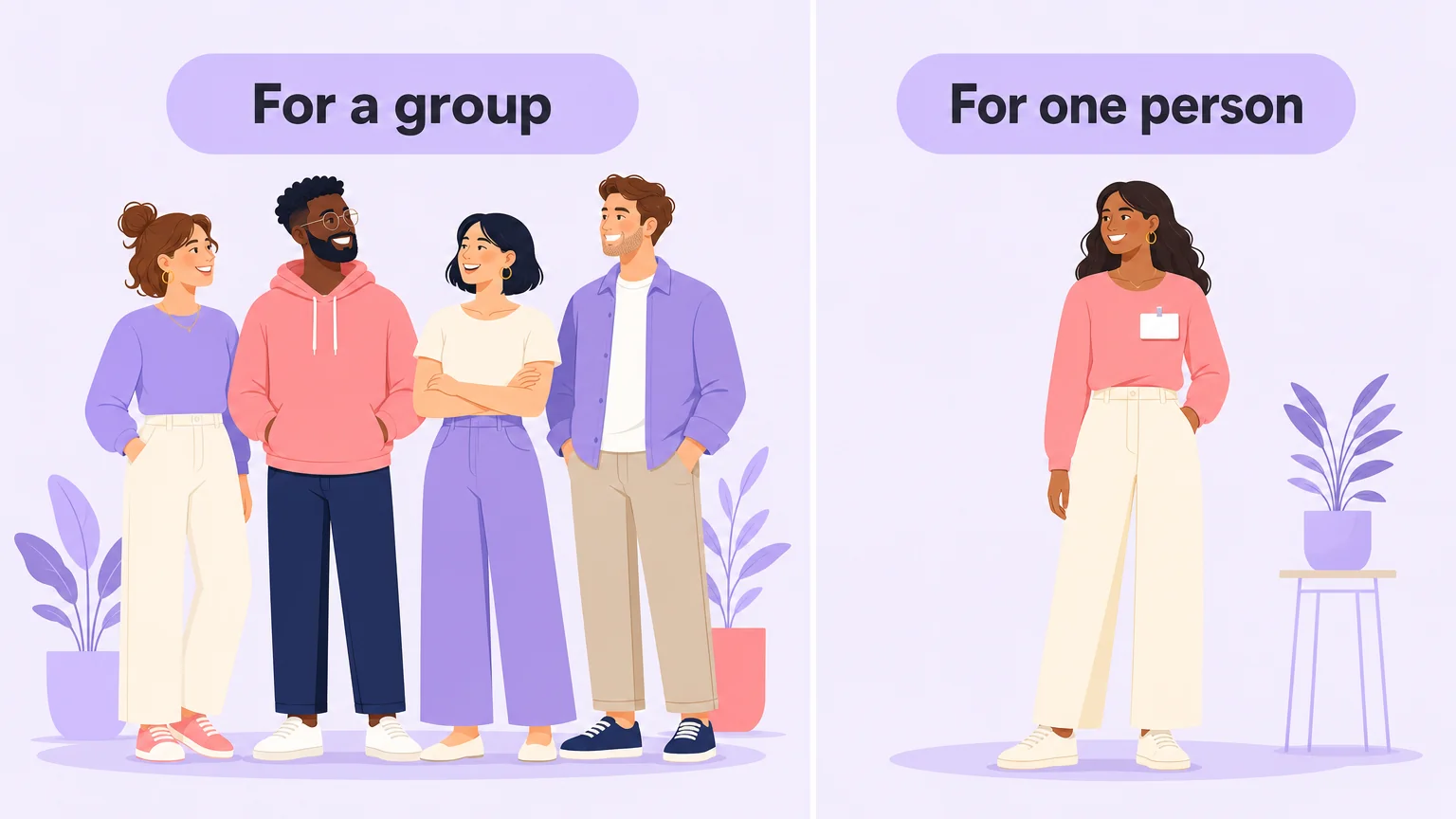
You have probably noticed this and never had it explained. Queer is everywhere as a word for a group, and still up for debate as a word for one person.
As a word for a crowd, queer is settled. Queer community, queer spaces, queer rights: all ordinary ways to name a group without listing everyone inside it. Gay does the same work at the group level, and nobody finds that suspicious.
As a personal label, the picture splits. Gallup found that only about 0.5% of US adults pick a queer-adjacent box on a form, while Pew found 48% of LGBTQ adults would accept it as a description of themselves. Both can be true at once: accepting a word and choosing it as your box are not the same act.
You can feel the difference in a room. One person describes gay clubs and queer raves as not feeling the same to the people in them. Another puts it as the gap between taking part in queer culture and simply being gay.
So you can be part of a queer community without queer being the word for you. You are allowed to answer those two questions differently.
4. Who Belongs, and the “Am I Queer Enough” Question
Start with the feeling, because you have probably already decided the answer is no.
It sounds like this. Straight people find you too queer, and gay people find you too straight. You are somehow both, depending on who is measuring.
Being caught in the middle is not evidence of anything about you. It comes from a community that ranks its identities, treating some as the real thing and others as a phase.
One person put it this way: “I’m bi, so I’m less of a gay but still less of a straight.” Nobody hands out that ranking in writing. It gets handed out anyway.
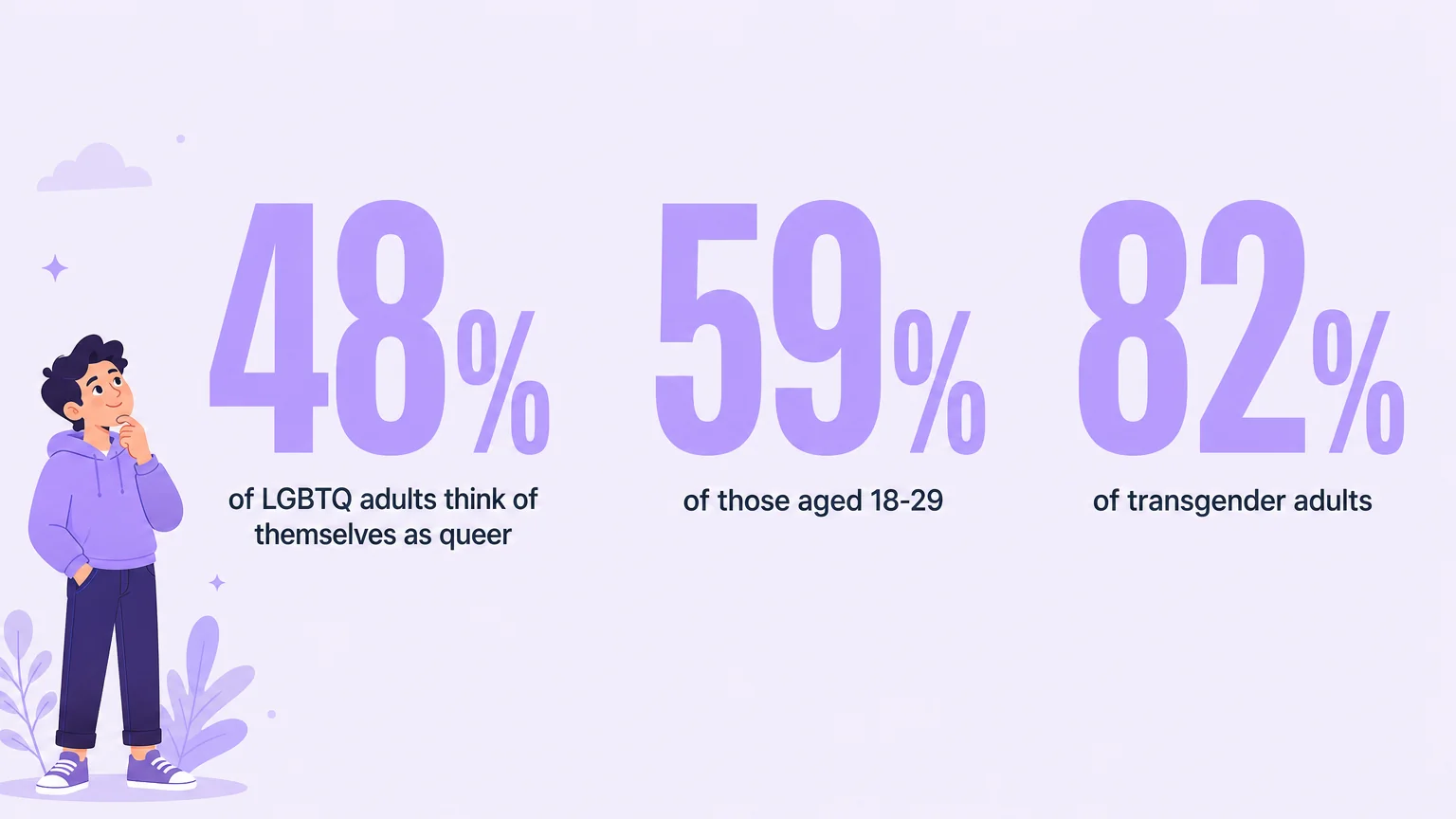
Now the numbers, because they say what the feeling cannot. About 48% of LGBTQ adults think of themselves as queer. Among 18 to 29 year olds it is 59%, and among transgender adults, 82%.
And 55% of LGBTQ adults describe themselves as bisexual. Sit with that one, because it answers the accusation directly. The group most often told it is not queer enough is the largest group in the community, and it is not on the edges. It is the middle.
That is also why bisexual people so often get read as straight. 88% of partnered bisexual people are with someone of a different gender. That is a fact about who people meet and who they build a life with, not a flaw in anyone’s identity.
People often reach for the word for a reason that has nothing to do with vagueness. They choose queer because it carries the least resistance, the least pushback and the least gatekeeping. It ends arguments you did not start. The trade is real, though: when the broad word covers for the specific one, the specific one can stop being visible.
You are queer enough to belong to this community if you want that. It is also not obligatory.
Not everyone wants the word. Some gay men reject queer outright because it defines a person by what they are not, and they would rather have a word for what they are. Pew’s 44% who do not think of themselves as queer are not mistaken. Two people can want different things from one word and both be right.
If you are using the word for someone else, the rule is short: use what they use for themselves, and check before you use queer for anyone you have not heard use it.
5. Saying It Out Loud, and Being Called the Wrong Word
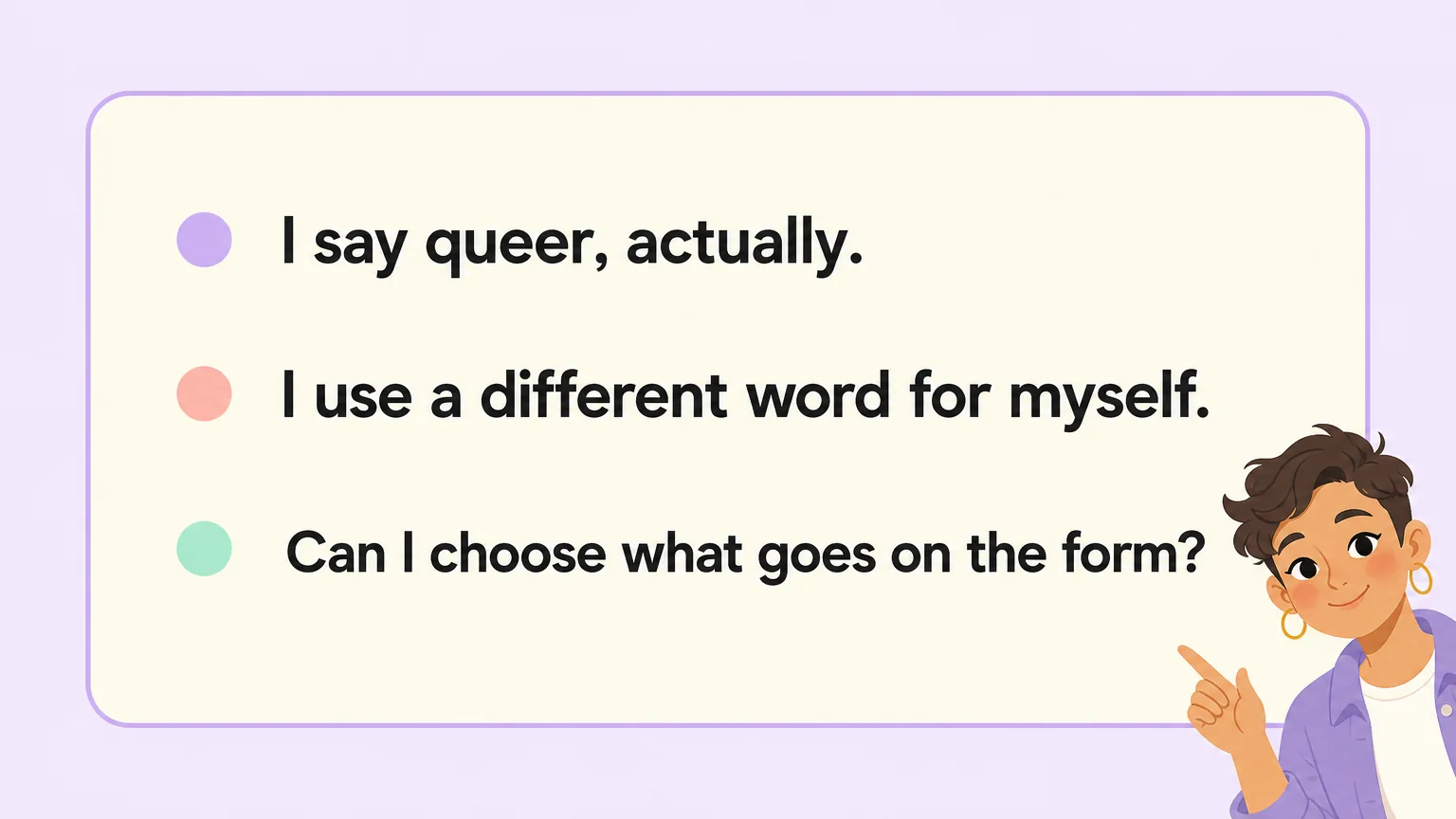
A handful of sentences will do most of the work here.
When someone lands on the wrong word for you, lead with the one you use instead of the one they got wrong. “I say queer, actually” lands differently from “I’m not gay.” The second version turns a small correction into an argument about what you are.
Add a reason only if you want to; nobody is owed the story behind your word. Decide first whether this correction is worth the energy today.
People correct, then correct again, then stop: not because it stopped mattering, but because defending something invisible all day wears you down. That is protecting your energy, not defeat.
If the wrong word came off a form, a roster or a clinician’s intake sheet, ask what options exist instead of arguing with the paper. Some settings offer a Q-card, where you can note your name, pronouns and orientation quietly, without announcing anything.
The self-identification rule runs both directions: do not use a word for someone who has not used it for themselves, and do not correct an older person’s word for themselves either. That reaction is rooted in lived experience, not in being out of touch.
If you are not out, the principle is short: representation matters, but it is not more important than safety and privacy. You can hold a word privately as long as you like before saying it out loud. Nothing here obliges you to announce anything.
6. Does Your Relationship Change Any of This?

Does a partner change any of this? No. It keeps coming up anyway, which is reason enough to answer it.
Monogamy does not cancel bisexuality, and non-monogamy does not prove it. Too often people confuse who you are attracted to with how you have agreed to run your relationship. Those are two separate things, and mixing them up causes most of the bad assumptions.
Which brings back the fact from the first section: queer does not name your partner’s gender. That is why it holds up for someone whose relationship would not match a narrower word. A word that says nothing about who you are with cannot be contradicted by who you are with.
One thing worth saying once and moving past: polyamory is not specific to queer people, and it is not evidence of anything about anyone’s orientation.
Labels move, and that is ordinary. JoJo Siwa came out as pansexual, later used gay, and in 2025 said she was switching to queer, calling it “really cool.” Nobody’s earlier word was a lie. It was simply the word that fit.
The one place this touches your label is communication. When the agreements inside a relationship stay unspoken, question marks pile up. That is not a vocabulary problem, and it is worth clearing up.
The Bottom Line
Gay names a specific attraction. Queer names a direction, gathers more people under it, and says less about your gender and your partner’s. Both are correct. They are not rivals, and neither is more evolved.
The whole queer vs. gay question comes down to what you need the word to do. If it needs to name a specific attraction, gay, lesbian or bisexual does that. If it needs to hold your gender and your orientation together, or leave your partner’s gender out, queer was built for that.
You can use one word for yourself and not the other, and you can change your mind later.
Whether you belong was never in question. You are welcome in the community these words describe, and you are not required to take any of them on.
If you want a place where none of this needs explaining, 3Fun is full of people who already speak the language.
FAQ
Can a straight person say “queer”?
Not as an identity. Every glossary makes queer the umbrella for anyone not straight, not cisgender, or both, and puts ally in a separate category that includes straight and cisgender people. Saying the word is a different question: be thoughtful and check comfort first. The strictest guidance says avoid it unless you know it is acceptable to the person you are talking to. The objection underneath is fair: it can look like taking the cultural cache without the lived experience.
Can someone be gay but not queer?
Yes, and plenty of people say so out loud. Pew found that 44% of LGBTQ adults do not think of themselves as queer, and they are not confused about what the word means. The reason usually given is a preference for a word that describes what you are over one that describes what you are not. That is a real answer to a different question.
Can a queer woman have a boyfriend?
Yes. Queer does not name your partner’s gender, which is its defining difference from lesbian. In practice, 88% of partnered bisexual people are with someone of a different gender, so the situation is closer to the norm than to the exception. The companion principle matters just as much: monogamy does not cancel bisexuality, and non-monogamy does not prove it.
What is the difference between “queer” and “questioning”?
They are the two jobs the single letter Q is doing. Questioning describes someone still working it out, and it is explicitly not a final destination. Queer describes an identity someone has arrived at, however loosely they hold it. If you are in the first group, nothing here requires you to move to the second. Staying inside the question is a legitimate place to be.
Should I refer to all young people as queer?
No. The self-identification rule applies to young people exactly as it applies to anyone else: use the word a person uses for themselves. It is true that 59% of LGBTQ adults aged 18 to 29 think of themselves as queer, which makes it a reasonable guess and still not a license to assign it to someone. Guess about a generation. Ask about a person.
I’m not out to my family. Should I use the word at all?
That is a safety decision, and it is yours alone to make. The principle is that representation matters, but it is not more important than safety and privacy. Graduated disclosure is common rather than a failure of nerve: in a 2023 survey in China, about 42% of respondents had been out inside their family but not publicly. You can hold a word privately for as long as you need to. Nothing requires you to say it to anyone.
Is “queer” still a slur?
Both things are true, and it depends on who is saying it and who is hearing it. A 1914 slang dictionary already recorded it as derogatory only when used by those who are not. It was reclaimed on purpose from Queer Nation’s founding in March 1990 onward, and Stonewall still concedes that some people hear it as an insult. The history section above tells that story in full. The short version: listen for who is speaking.