A twink is a young, slim, boyish gay man. If you are asking what is twink death, it is the point at which someone who was read as a twink no longer is, whether through ordinary aging, gaining muscle, or masculinization.
The twink death meaning runs two ways now. Inside the gay community it names the loss of the neoteny or androgyny that made a man read as a twink to begin with: the soft jaw, the slim frame, the boyish face a fast metabolism did the work for. Since the term broke containment, it has loosened into something broader, any man judged to have lost a boyish look to age. It went viral in February 2023 and resurfaced in 2025 as “global twink death,” now attaching to men who never called themselves twinks.
That stretch is why the phrase stays so slippery: a joke in one mouth, a verdict in another, hard to tell apart from the outside.
What follows is what the term means, whether it works as an insult, who the category leaves out, and why the people who use it disagree about what it does.
The One-Way Rule: Twink, Twunk, Jock, Otter
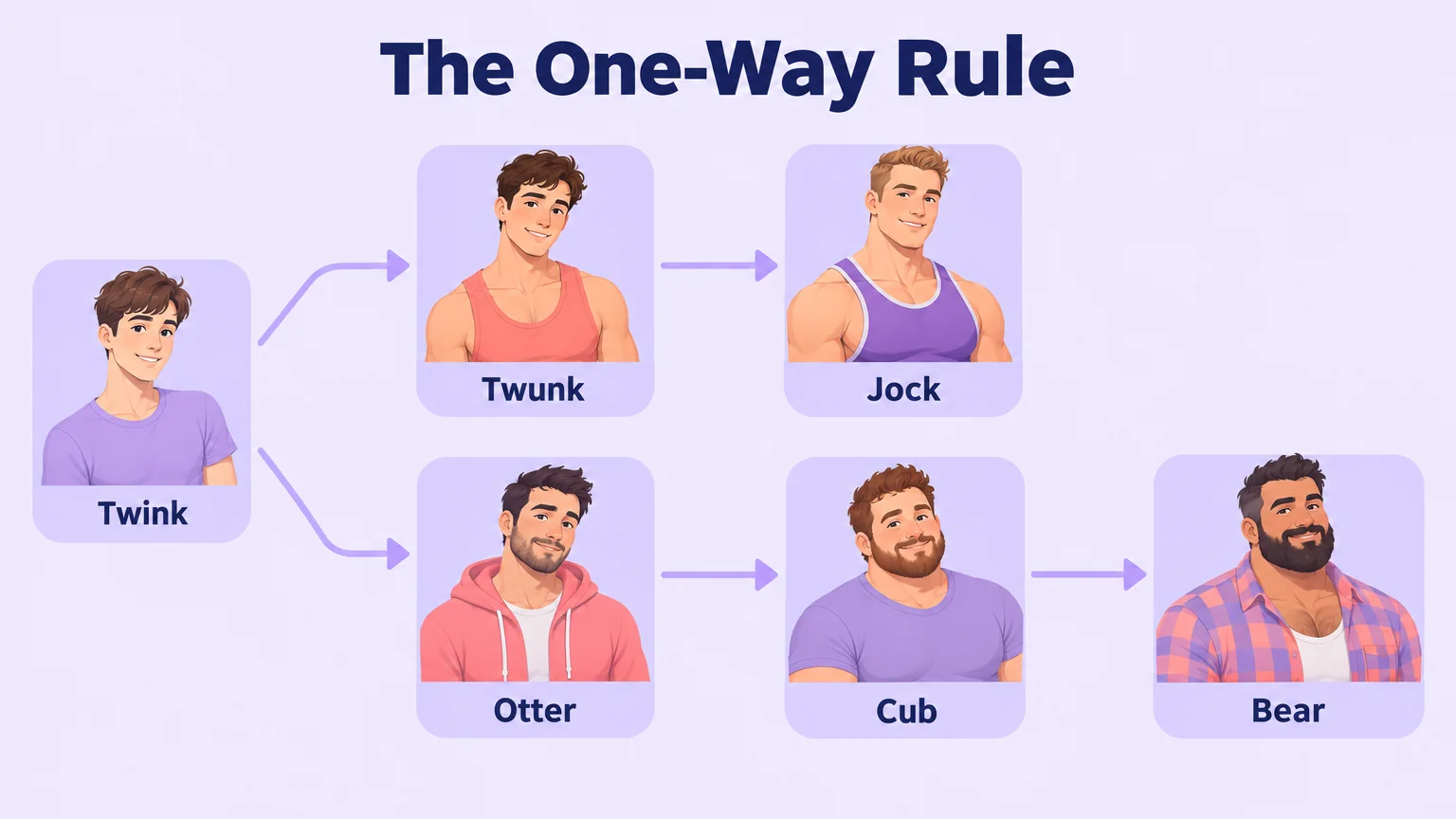
Twink is one position on a board that only moves forward, and that is why the phrase “twink death” exists at all.
A twink who starts lifting and keeps manscaping becomes a twunk: still lean, still boyish, now with shoulders. If he keeps going, he moves again, into jock.
The other path runs differently: a twink who grows out his body hair and fills out instead reads as an otter, then a cub, then a bear.
Because the route runs one way, the exit is final. Someone who did not start as a twink cannot become one later: leaving is a one-way trip, not a sideways move.
Viveros, in an explainer with more than 100,000 views, compares the archetype to Eevee, the Pokémon that can evolve several directions. The difference: the twink version runs on a metabolism with a ticking clock. A twink cannot stay one by deciding to; eventually his body chooses an exit for him.
The boundaries are looser than the system makes them sound, matched by eye rather than by rule. The age cutoffs are conventions too, anywhere from the mid-twenties to 30 depending on who is drawing the line. Plenty of men fit none of the labels, a group Viveros calls factionless, too many to make the map complete.
The two words get used interchangeably. Twink is a body type; femboy is closer to a style.
A femboy can be a twink, but a twink is not automatically a femboy. The Daily Dot’s Aimée Lutkin put it this way: “The twink may die, but the femboy lives on.”
Slur, Joke, or Shorthand: Why Direction Matters
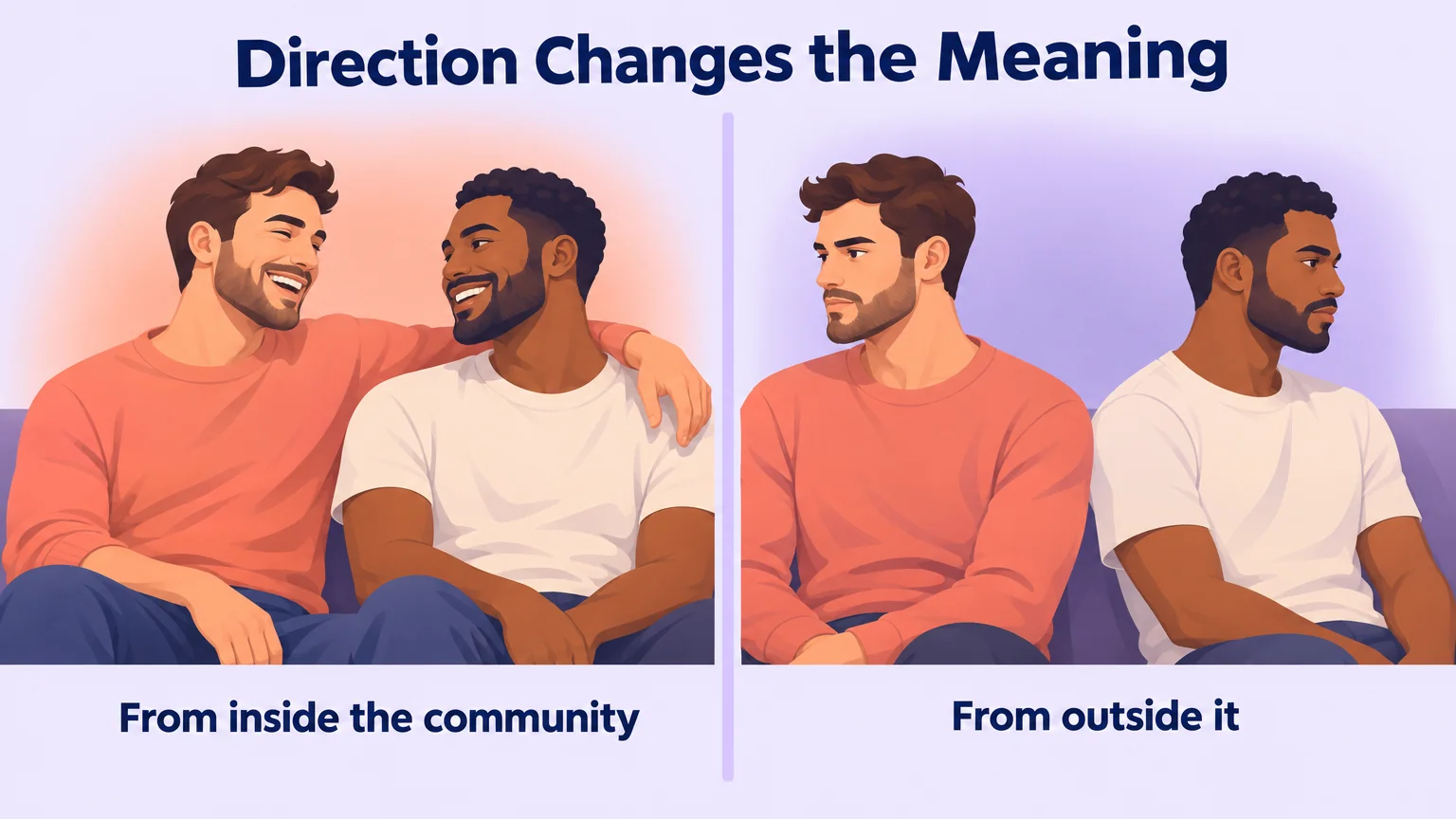
Two men can use the same two words and mean opposite things. What decides which meaning lands is not the words themselves. It is direction.
In most queer usage, twink death is a descriptor or a self-deprecating joke, not a slur. It is a word the community uses on itself, and Viveros gives the general rule: such a term changes meaning once the group outside adopts it and aims it back.
Thomas Rogers made that argument in 2013, in “What Comes After The Twink?” for The Awl: calling a man a twink, he wrote, has been a status move, a way to prove you are manlier, smarter, or more tasteful than the man you describe.
Troye Sivan’s rule is the practical version: if you reach for “twink” when you meant something worse, he said on TikTok, it is still a slur, not straight people’s word to use. GQ España reached the same conclusion from the other end: not a homophobic insult, but a phrase that can still be used inappropriately.
The argument runs the other way too. Leo Grand, a 32-year-old OnlyFans creator with 750,000 followers on X, told Queerty that “twink death” is “a term invented by tops who are aging like sour milk,” adding that gravity gets everyone, but it will hit them harder.
The sharpest test of who owns the term came when it reached straight men. Out’s Mey Rude traced the backlash to a tweet from Jes Tom: “I feel like people are forgetting that a main quality of a twink is being gay.” Out’s reply was blunt: skinny straight men are not and will never be twinks, and it proposed “cloud cakes” for the attractive slim ones.
The Measuring Stick Was Built Narrow
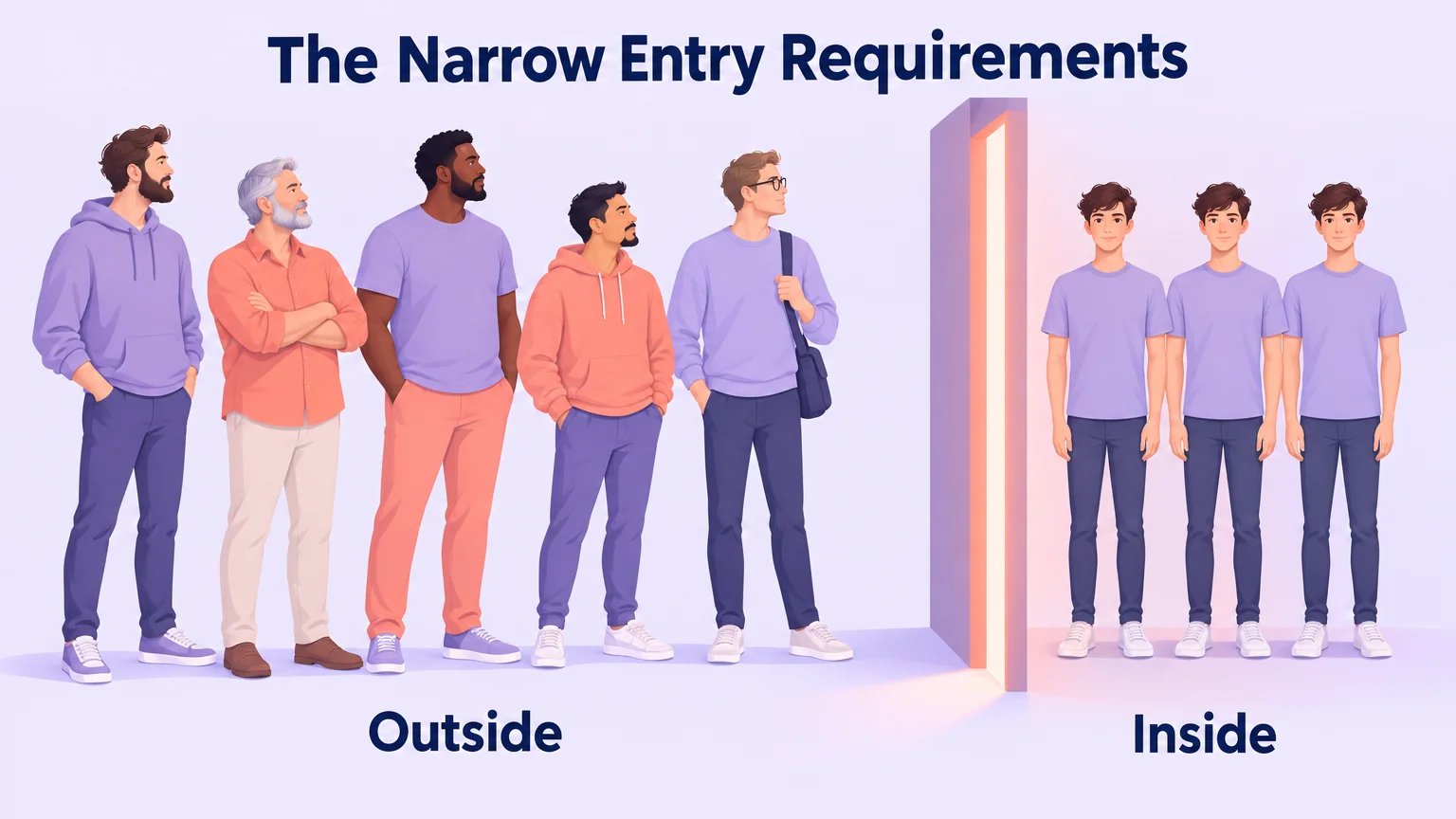
Was the twink ideal built narrow? Yes, and the narrowness starts earlier than age. The entry requirements were the real problem, more than the deadline that “twink death” names.
The asymmetry its siblings do not share comes first: bear, jock and otter are conceptually open to any race, while twink, Viveros argues, has always carried a connotation of whiteness, exalted on white bodies as its sisters never were.
PinkNews said the same in 2018, in an explainer by Danny Polaris. The definition, the piece argued, is “extremely narrow,” and it “leaves out people of colour, bigger guys and anyone over 25.” Some called the twink genre racist and ageist, the piece added, with good cause.
The same year, i-D’s André-Naquian Wheeler asked why Black men cannot be twinks, after a New York Times T Magazine feature on “The Age of the Twink” put 11 white men forward as twinks and one Black man. The piece quoted Aaron Barksdale, then 27: he “never got the same praise as my white peers who share the same twink characteristics,” and felt undesirable and overlooked for his lack of muscle and body hair. GQ España said it plainly in 2024: cis, gay, white twinks have long been the beauty standard among gay men.
That standard shows in the culture’s output. The 2017 #GayMediaSoWhite campaign took aim at the whiteness of gay media, and criticism of Troye Sivan’s “Rush” video pressed the body-diversity case. One complaint: “There’s not a single fat person in the whole video. Only white twinks and chiseled bodies.”
None of that makes the word unfair on its own. It makes the measuring stick narrow. Opening the category to more people means opening its qualifiers too: the markers that read as twink are not the same across races.
Ageist, or Just Camp? Where the Community Actually Splits
The fight over twink death is about what the term does rather than what it means, and it is not settled.
One camp hears ordinary ageism with a funnier name, fatphobia included: the Daily Dot’s framing. Grindr’s blog makes the narrower point: the phrase often lands on men who simply gained weight, and calling that bad implies thinness is better.
The other camp hears camp, which is self-aware. LGBTQ Nation’s John Russell covered the February 2023 wave under a headline calling it “mostly not as awful as it sounds.” The actor Miss Benny told Them the meme is “a way to poke fun at and demystify” a gender conversation people avoid, and the writer Alaska Riley adds that joking about growing into the person you want to be eases the pressure to figure it out now.
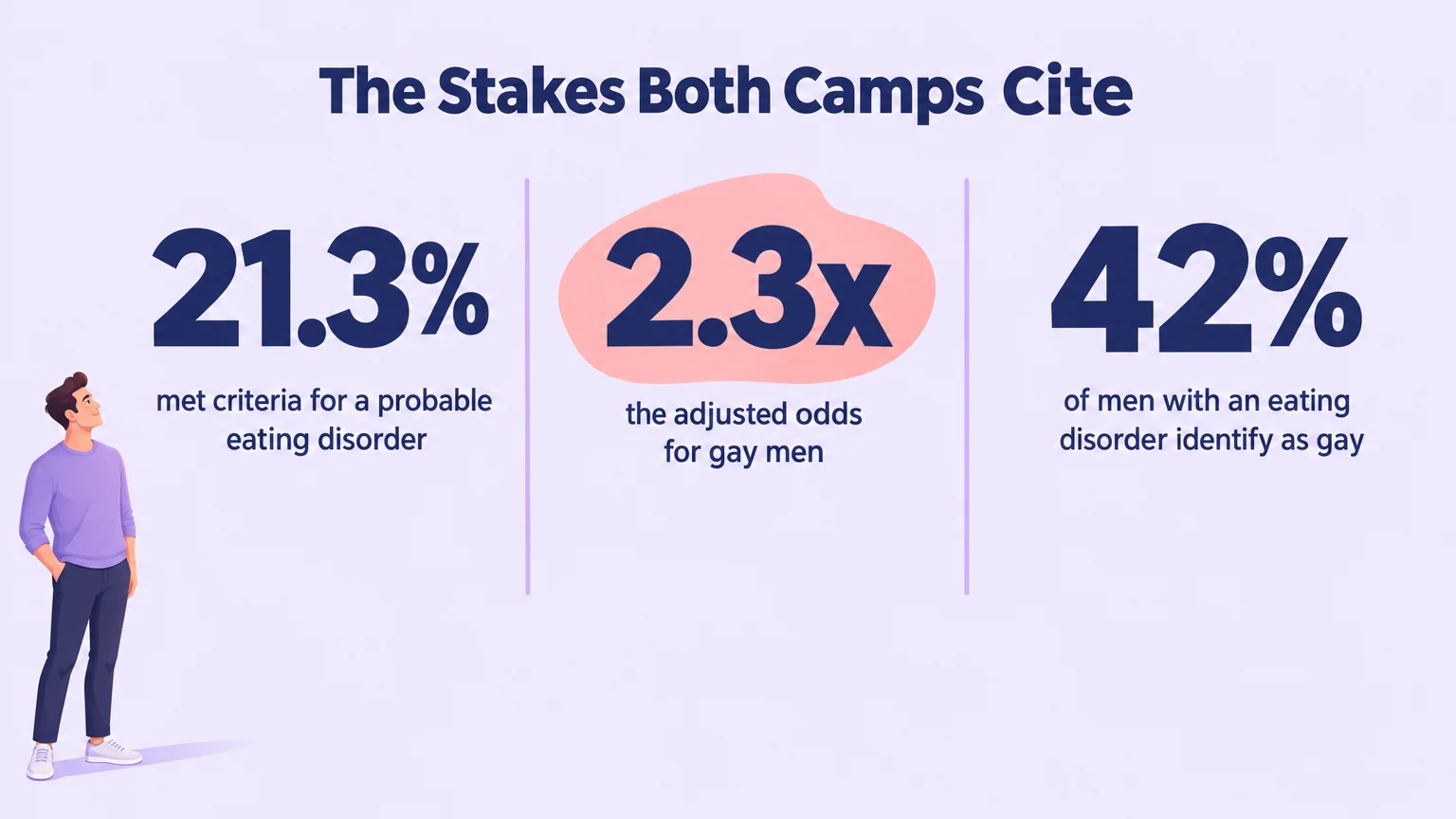
Both camps cite the same stakes, and neither owns them. A 2025 study in Eating Behaviors led by Kyle T. Ganson surveyed 1,553 boys and men aged 15 to 35 and found 21.3% met criteria for a probable eating disorder, with gay men at more than double the adjusted odds.
Denver Health’s ACUTE program puts the worry in its most-quoted form: gay men are about 5% of the male population and up to 42% of men with an eating disorder.
Then there is a person. Troye Sivan was told by a doctor’s TikTok in January 2026 that he was going through twink death, and wrote about the aftermath: the swing between “feeling like I’m aging in a good way” and “feeling like Gollum’s very close pop-singing relative,” and feeling “somehow both skinny and fat at the same time.”
The one worry both camps treat as real is the fork the meme calls the wig or the weights. Griffin Maxwell-Brooks, a queer commentator quoted by Them, described its logic: “Some people, especially gay men, truly feel like being jacked is a necessity of the high-value male,” leaving only two options, dive in or swing to the opposite extreme. His answer: “Who says I can’t be jacked in a miniskirt?”
‘Gay Death’ Came First: The Anxiety Older Than the Slang
Twink death has a predecessor term, and the anxiety underneath it is older than either phrase.
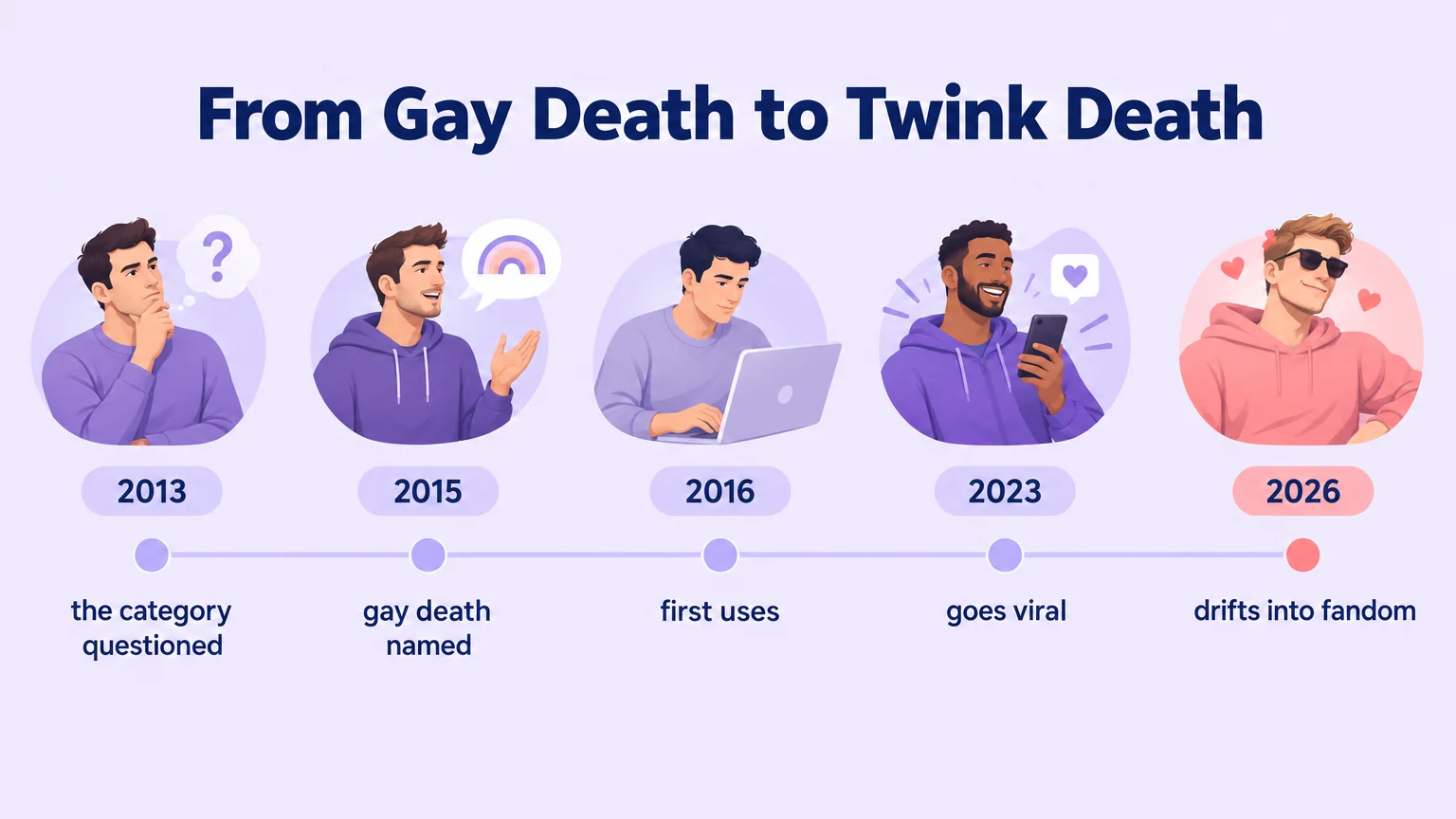
The predecessor is “gay death.” Wiktionary dates the citable version to a 2015 Sydney Morning Herald piece by Michael Koziol and defines it as the point a gay man is judged to have aged past his attractiveness, usually placed at 25 or 30. Koziol’s own line is the one worth keeping: “gay death cuts to the fear of ageing that festers somewhere in all of us.”
The dread shows up long before either label. Thomas Rogers wrote “What Comes After The Twink?” for The Awl in July 2013. His argument was that “twink” is the vaguest and most stigmatized of the gay labels, a catch-all applied to anyone read as girly, and that applying it is a way to place yourself above the person you are describing.
Why would that fear run hotter for gay men than for anyone else who ages? The recurring in-community answer is historical. A Jaded Gay traces it to the AIDS crisis, when youthful, muscular bodies read as visible signals of health, proof of being HIV-negative or simply well. The psychotherapist Silva Neves, cited by Next Gay Thing, supplies the other half: younger gay men are missing a generation of older men who could have been mentors, which leaves few working models of what gay aging looks like.
The two labels are not the same threat either. Gay death pointed at gay men generally; twink death narrows the same deadline to a single body type, which is why Next Gay Thing notes the death now seems to threaten only twinks.
What ‘Twink Death’ Means Now, and What to Do With It
By 2025 and 2026, the term’s biggest uses were coming from outside the community that coined it. The biggest instance is a July 2026 post reading “Timothee Chalamet is going thru twink death,” which drew 25,000 likes and 7.3 million views. Most high-volume traffic follows the same shape: K-pop and anime fandoms applying the term to boy-band members and fictional characters.
That drift is what in-group users complain about most. A term built to name one community’s anxiety has become general internet slang for any young man losing a boyish look, and the original stakes went with it.
The vocabulary has grown siblings too: alongside twink death there is “bear birth,” “dilf rebirth,” and “trade death,” pairings that treat the transition as rebirth rather than loss. Ricky Dillon titled a January 2026 video “TWINK DEATH or BEAR BIRTH,” and Oxford’s Internet Institute hosted a 2026 Pride Lecture on it by Dr Ewan Soubutts.
The counter-narrative is not a consolation prize either. Fans celebrated the BTS member Jimin for “still beating twink death” at 31, and posts call Troye Sivan still twiggy at the same age. Others reach for metamorphosis: “twink death is a caterpillar turning into a butterfly.”
For anyone who does feel the dread, A Jaded Gay sets out practices worth having.
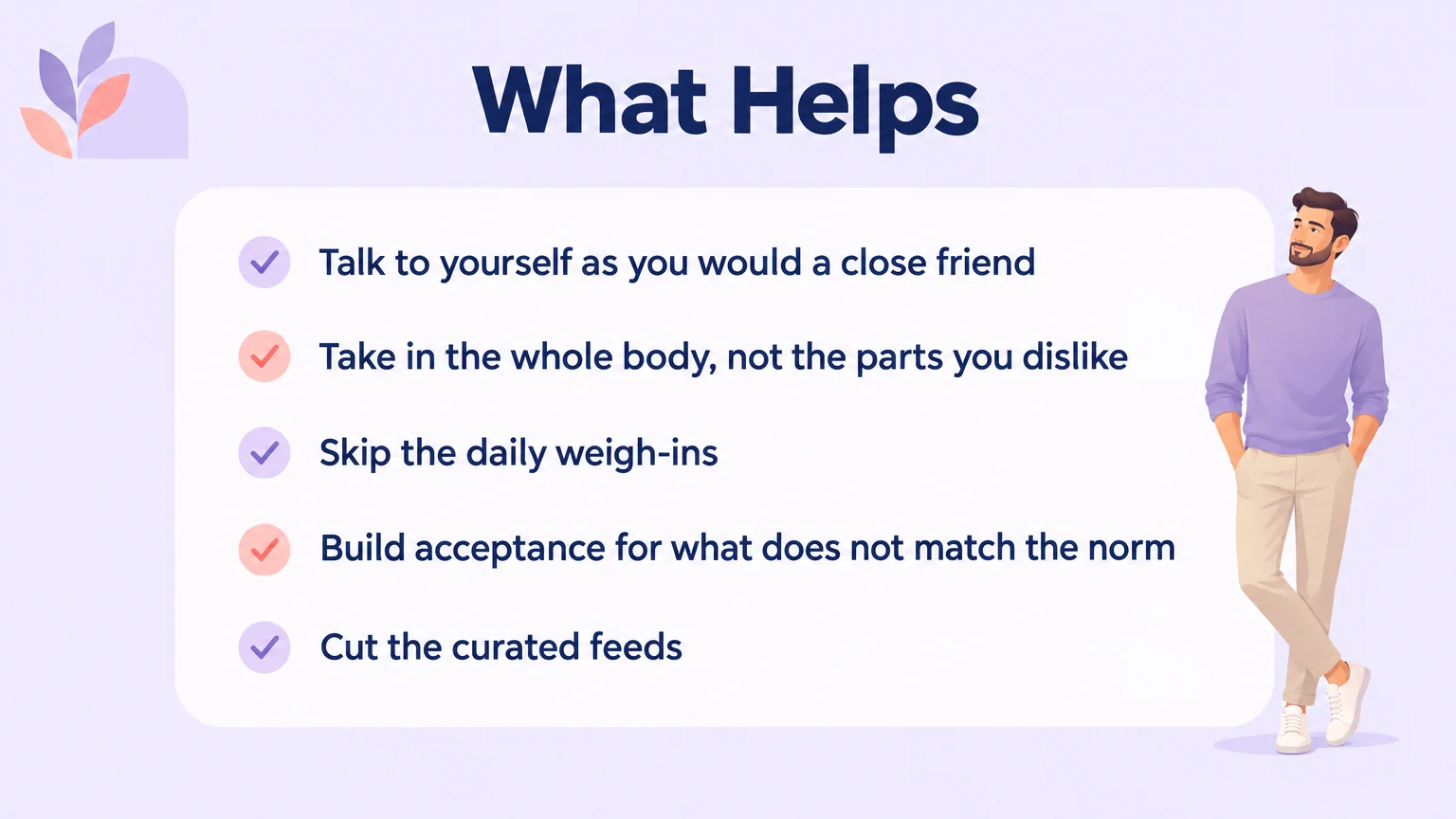
Talk to yourself the way you would talk to a close friend, and drop the harshest self-criticism. Take in the whole body rather than fixating on disliked parts, and notice which bring strength or joy. Skip the daily weigh-ins and obsessive routines that reinforce the bad read, and put the attention elsewhere: art, music, community.
Build acceptance for the parts that do not match the beauty norm. Cut the filtered, curated feeds, unfollow what fuels self-doubt, and follow voices that affirm instead.
Twink death names a door closing, not a decline in worth. Only you decide which of these labels, if any, is yours; choosing none is a real answer.
If the next step is meeting people, 3Fun is a place to start.
Twink Death: Frequently Asked Questions
Is ‘twink death’ a slur, or is it okay to say?
Not in most queer usage, though it can land as one depending on the speaker. GQ España judged it not a homophobic insult, though it can be used inappropriately. Troye Sivan’s rule is stricter: if you meant something worse, it is still a slur, and not straight people’s word.
Is twink death real, or is it just aging?
Mostly the latter. The Daily Dot reduces it to “regular old ageism with a funnier name,” and the rebuttals Know Your Meme collects answer “it’s called aging lol.” Grindr’s blog splits the difference: the anxiety is real for many self-identified twinks, but a faded boyish look is not a crisis.
Can twink death happen by gaining muscle, not just by aging?
Yes, and the muscle route is the premise of the 2025 “global twink death” panic. INTO reported on Noah Miller’s TikTok, quoting his line that “the skinniest and most frail of gay men are trying to put on weight in the gym.” INTO notes it has largely meant aging out, but also covers body type change.
At what age is a twink ‘dead’?
There is no fixed age; every cutoff is a convention. Pride pegs twinkdom at 18 to 25, or 18 to 29 depending on who you ask. An early post Know Your Meme cites says it “usually sets in around early to mid-late 20s.” PinkNews calls the bracket daft, since people look older or younger than they are.
Where did ‘twink death’ come from, and how old is it?
The earliest documented uses are 4chan /lgbt/ posts, per Know Your Meme: a December 10, 2016 thread about medication to “push off twink death,” and a November 23, 2018 post treating it as real. Traffic rose in 2020, reached Reddit and Twitter in 2022, and spiked in 2023. The looser mid-2010s claim is not well supported; Wiktionary’s earliest print quotation is May 2023.
Is it only about gay men?
It began that way and is drifting. The largest instance in 2026 was a post about Timothée Chalamet, and much of the highest-engagement traffic is K-pop and anime fandom discussing boy-band members and characters. It now works as general slang for a young man losing a boyish look, the drift in-group users complain about.