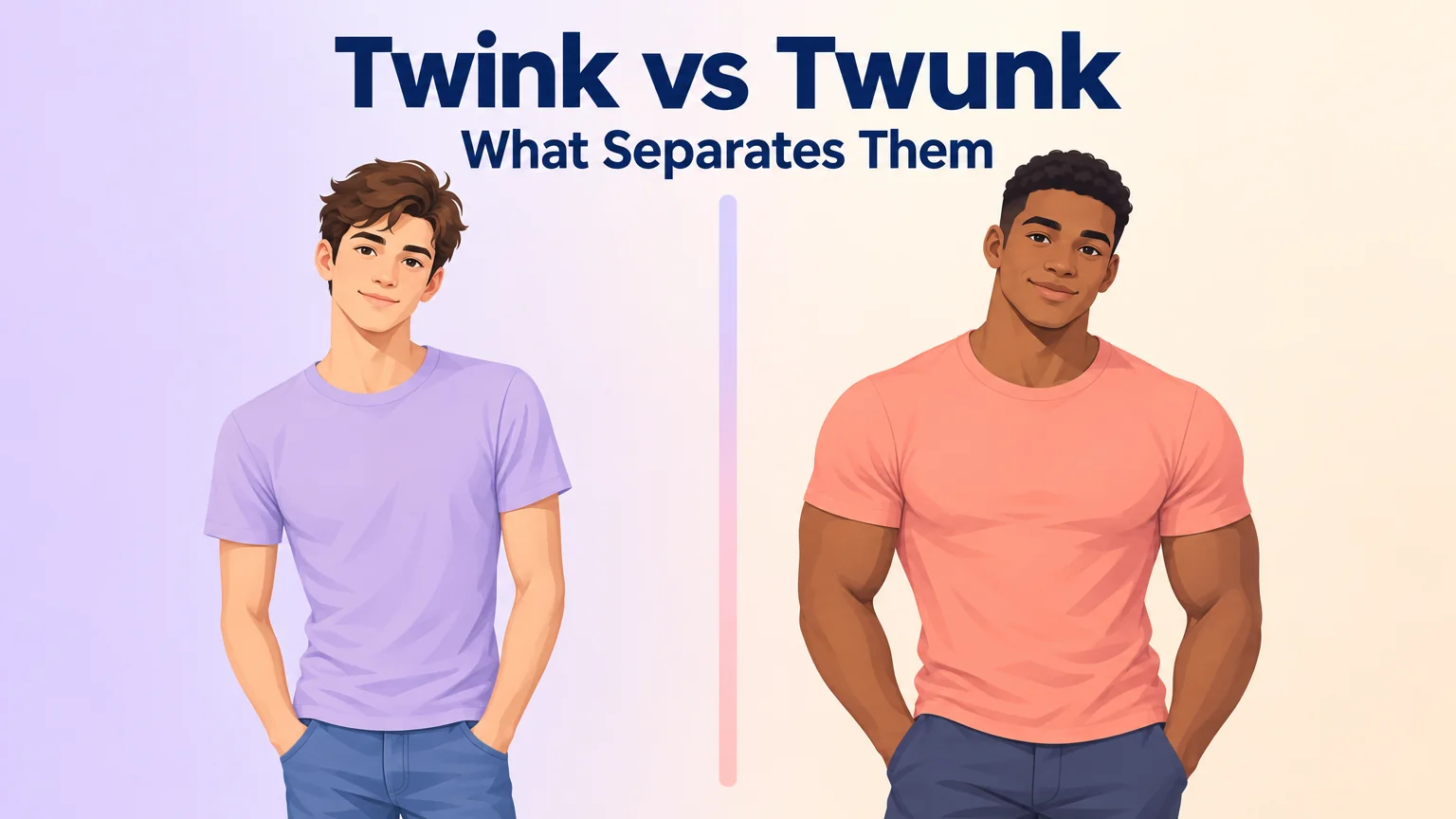
Ask ten people the difference between a twink and a twunk and the answers cancel each other out. You get 18 to 22 from Instinct Magazine, 18 to 25 from Pride with an 18 to 29 alternate “depending on who you ask,” and 18 to 25 for twinks from the LGBTQ+ educator NV Gay. The two words turn up as if they are interchangeable and as if they are opposites, sometimes in the same thread, and every explanation ends with a shrug.
The twink vs twunk question has a single rule that takes about five seconds to apply, and none of the three age brackets are part of it. What flips the word is something you can see in a short-sleeved shirt.
One part of the argument has no answer yet, and no definition can supply one.
Start with the definitions, because that part is the easiest and the least contested.
Twink and Twunk Defined: Two Plain Meanings and Where the Words Came From
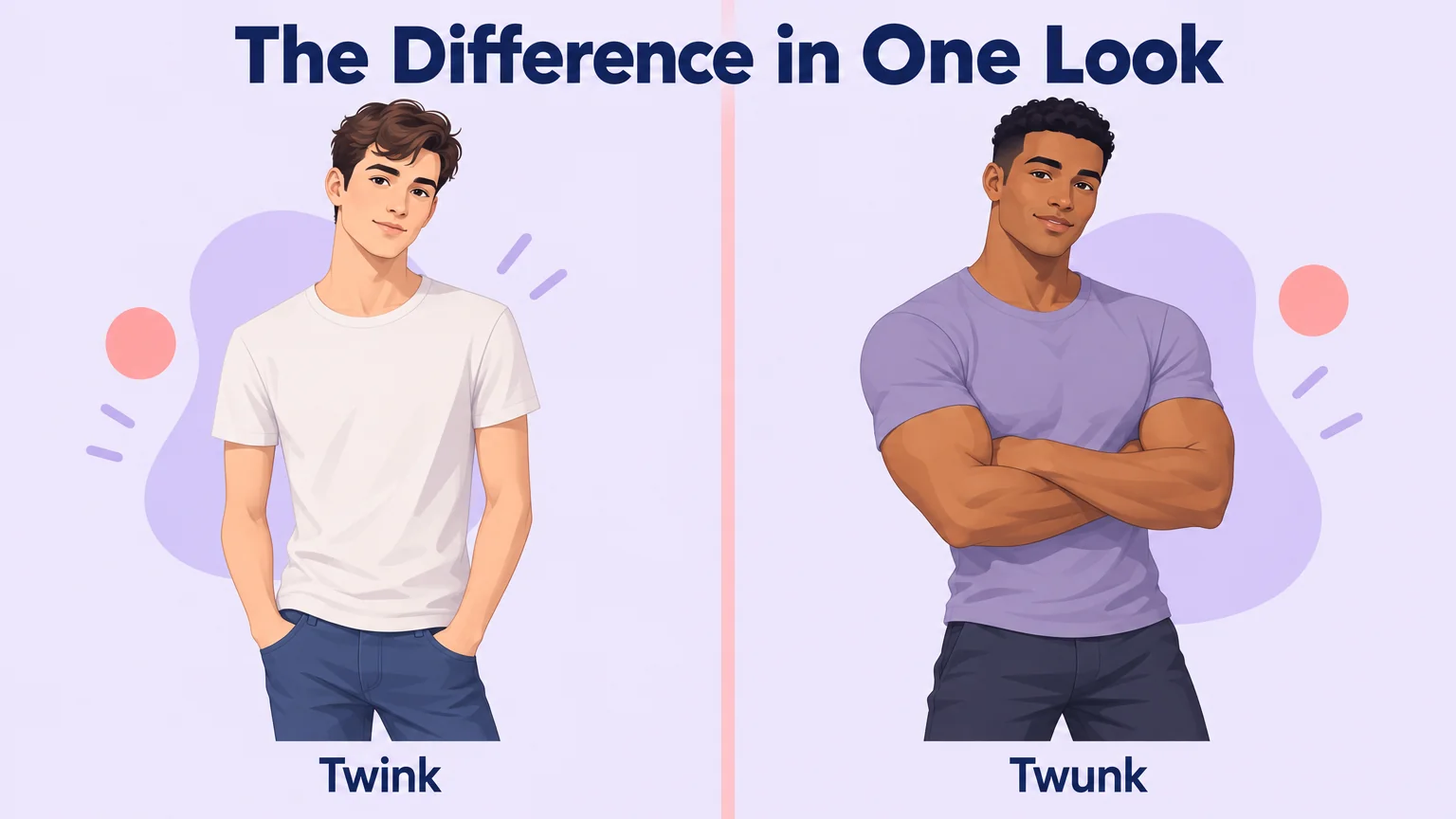
Twink. A guy who is young, or just young-looking, slim, somewhat effeminate, and petite, with low body fat and little or no body hair.
Twunk. The same young, smooth, boyish look with visible trained muscle on it. The word is a portmanteau of twink and hunk. Men’s Health calls him “a muscle twink.”
NV Gay, author of The Queer Allies Bible, describes a young gay man who is slim and lean yet toned and muscular, typically in his twenties, with a youthful boyish face.
Both describe a youthful-looking man with little body hair, and that overlap keeps the comparison narrow. The whole difference has to sit in the frame and the muscle.
Where the words came from
The Oxford English Dictionary dates twink to 1953, in the writing of M. Chase. Hunk is older, a 1940s word for a handsome, well-built man. Twunk is the newest and the only one whose origin is not disputed, because it is built from two words already in plain sight.
The explanations for twink are another matter. Instinct Magazine presents the T.W.I.N.K. acronym, Teenage, White, Into No Kink, as a theory you would “have to argue” with. The Twinkie snack cake origin circulates too, and LGBTQ Nation notes most linguists find it skeptical.
The same piece records an older candidate, twank, twentieth-century British slang for gay male prostitutes and one proposed origin of twink itself. Nineteenth-century English used “mollies” and German used “knabes” for young hairless men.
The words went wide in 2018 with Nick Haramis’ New York Times article “Welcome to the Age of the Twink.”
The questions this piece works through
What flips the word? Is age even the axis? What are the face and the hair doing? Is this a stage or a category? Where do the neighboring labels sit? Was the category’s ideal built narrow? And who gets to use any of it?
Build comes first, because it is where the definitions separate.
1. The One Difference That Counts: Muscle on an Unchanged Frame
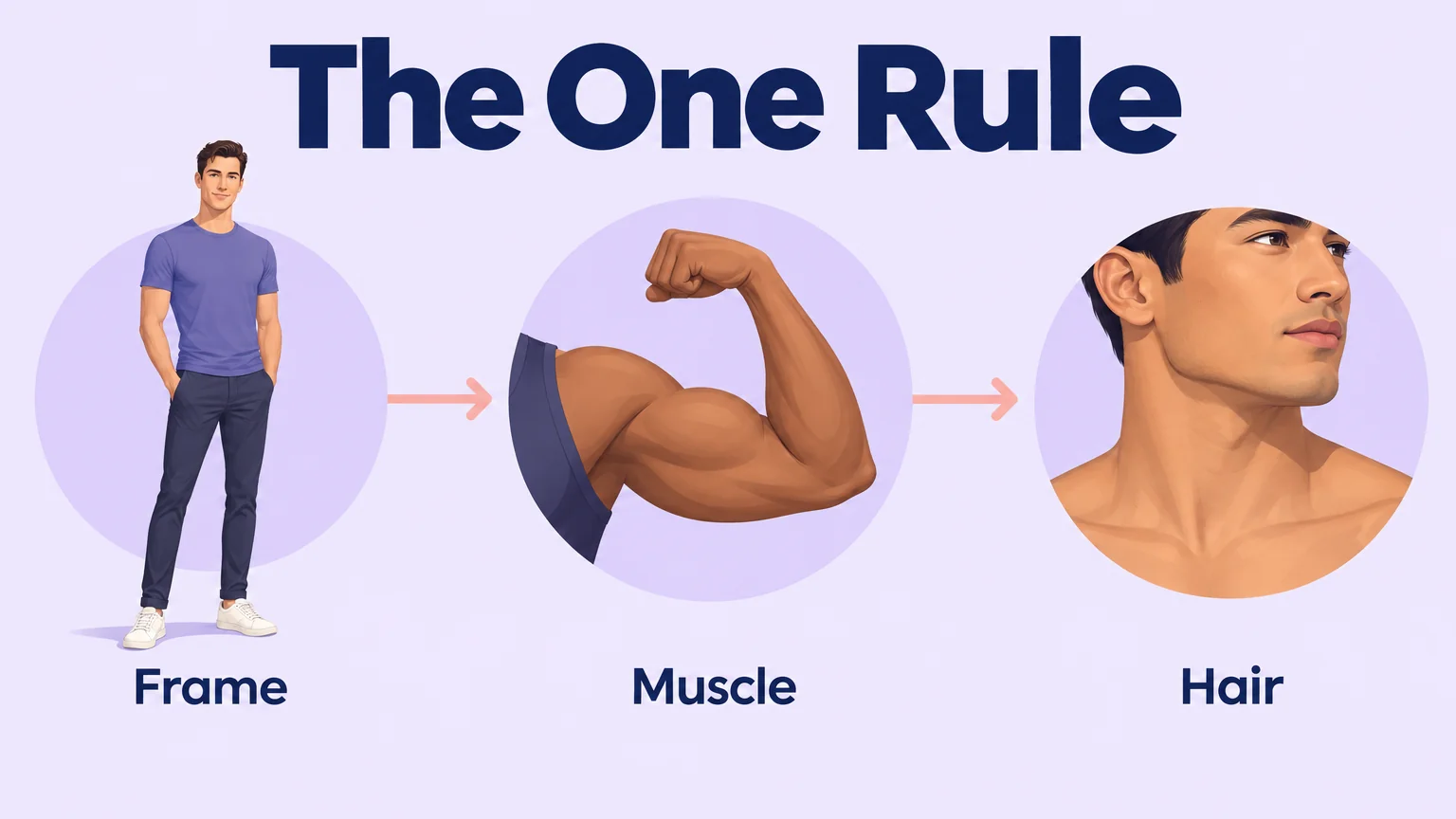
The usual explanations hand you four variables treated as equally important: age, build, hair, face. Only one flips the word.
A twunk is a twink with muscle added and nothing else changed. Same youthful face, same smoothness, more visible mass. The tightest version is on screen in It’s Always Sunny in Philadelphia: “Twink and a hunk. A twink with muscles, but still hairless.”
NV Gay draws the line at the frame: a twink has a slender frame and little body fat, while a twunk is still young but carries an athletic frame built by weight lifting. Instinct Magazine puts it as the face of a twink on the body of a hunk: a favorite twink discovering creatine and progressive overload.
He is more muscular than a twink, but stops short of the mass that reads as a bodybuilder or a hunk.
Since no threshold exists, the practical test is the arms. If someone looks like a twink but has biceps poking out of a short sleeve, he is probably a twunk.
Kit Connor breaks the age story on his own. He is called a twunk routinely, dated to when he bulked up at 18, years before the later twenties the stage story predicts. Men’s Health names Tom Holland and Harris Dickinson; Troye Sivan self-identifies as a twunk.
The rule says nothing about how long the label lasts, because it tracks what a body looks like now.
Add muscle without changing the face and the hair, and the word moves with you. Change nothing, and no birthday will do it for you.
2. Twink Age Limits: Why 18-22, 18-25, and 18-29 All Fail the Same Test
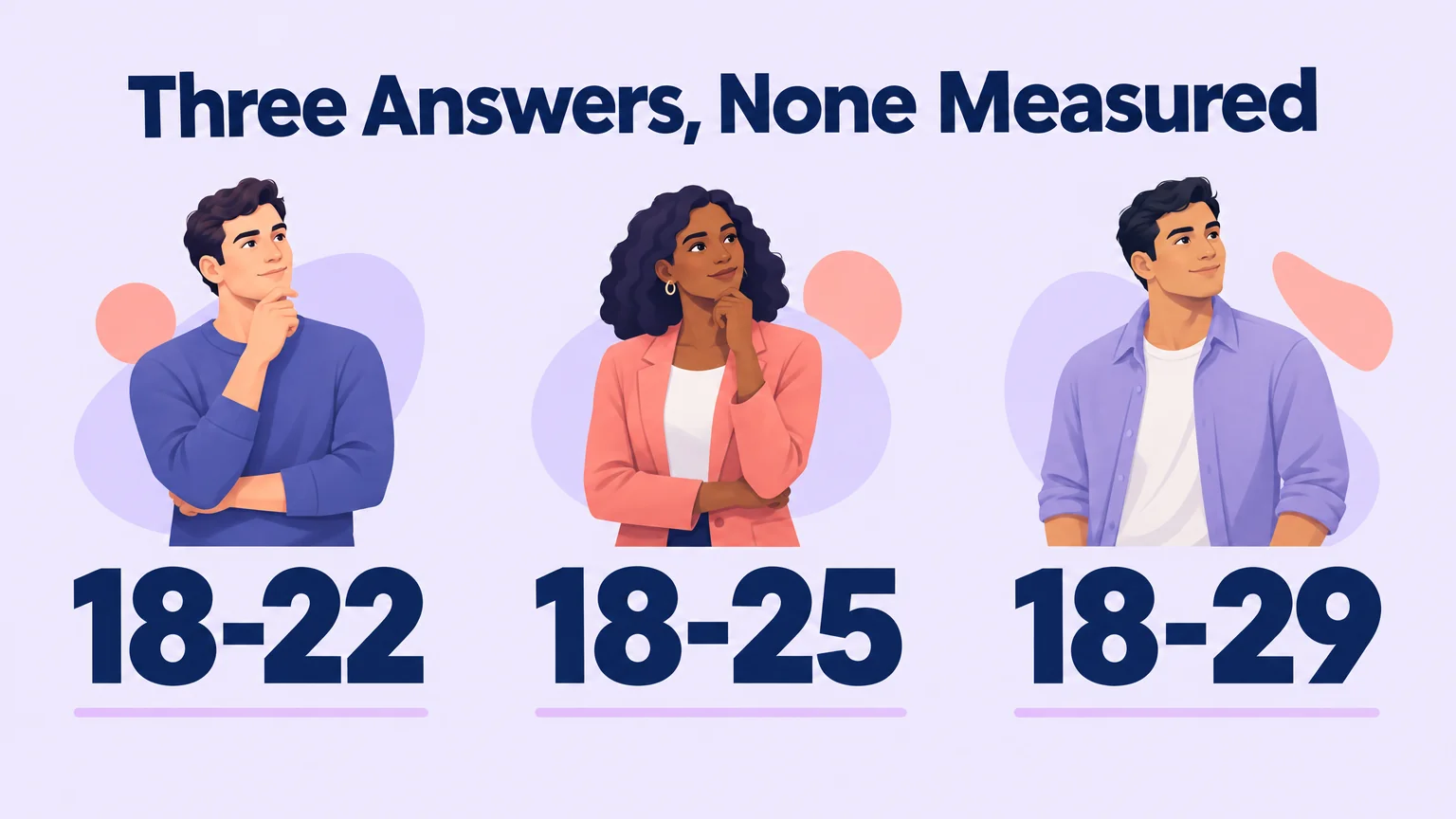
Three different age numbers are in circulation, and none answers the question you asked.
Instinct Magazine puts the stereotype at 18 to 22. Pride says 18 to 25, then offers 18 to 29 depending on who you ask. NV Gay puts twinks at 18 to 25 and twunks often in their later twenties.
None of those is a rule, because none was measured. Every cutoff is a convention, and each describes something slightly different. Age on its own does not flip the word.
Pride’s own sentence shows the tangle: a twunk appears when a twink “bulks up a bit, ages out of the 18-25 range, or both.” That folds a body change and a birthday into one event. They are different axes, and the body is the one these words track.
The ceiling gets flouted constantly. Instinct Magazine notes thirty-something twinks who will twink till the day they die, and an Instinct commenter reports a 65-year-old husband who is a twink.
An age range is easier to repeat than a description, which is why three are still going. The version that holds up is plainer: if the frame, the smoothness, and the muscle are there, the word applies and the birthday is beside the point.
Age is a real axis in this vocabulary, just not this word. Daddy is where age and masculine authority are the point, and the popular arc runs twink to twunk to daddy. If what you are describing is how old someone is, twunk is the wrong word.
3. Face, Hair, and Grooming: The Half of the Look That Sets the Ceiling
Most people sizing up this pair decide the muscle is the whole story and the face does nothing. The face does the harder job.
Both words share a base, which is the youthful, slim, smooth look outlined above.
The face is the ceiling. Face and hair are what separate a muscular man from a hunk or wolf. That is why the on-screen definition in It’s Always Sunny insists on “but still hairless.”
Watch the same muscle produce two words. A smooth-faced man with defined arms gets called a twunk. A bearded man with the same arms and chest gets sent toward wolf or bear, since those labels run on hair.
Grooming belongs inside the look, not beside it. Instinct notes the hairlessness is often voluntary or genetic, so for plenty of people this half is maintained rather than inherited, making the label as much about upkeep as luck.
The face and hair have the least room to change, which is why the word can feel fixed in a way the muscle never is.
Best for a man whose visible muscle comes with a smooth, boyish face, which is the whole twunk recipe. Skip it if the beard is as prominent as the muscle, because he lands on wolf or bear instead.
4. Stage or Category: The Twink to Twunk Question Nobody Has Settled
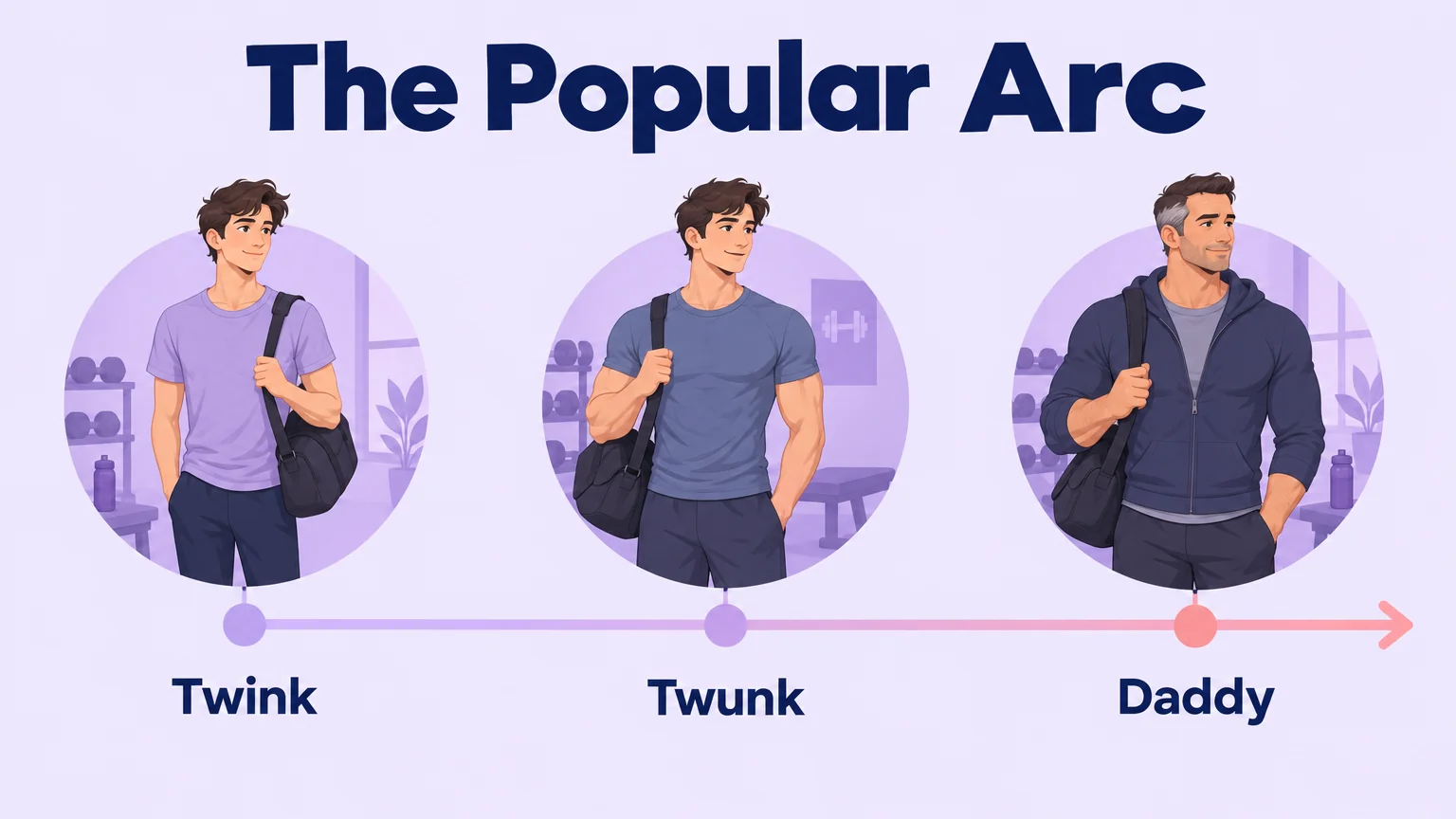
Is twunk a level you have to reach?
NV Gay writes that twunks are “sometimes seen as the next stage of twinks, often being in their later 20s.” Instinct Magazine calls the arc the gay version of Pokemon evolution, twink to twunk to daddy.
An Instinct commenter takes the other side: “Twunks traditionally were the same age, not the next evolution of twinks,” adding that some men work hard to keep claiming it past its sell-by date.
The evidence settles the definitional half: a stage story predicts you age into the word, yet men get called twunks the moment they add muscle. Kit Connor was called one at 18. Twinks and twunks exist at the same ages. The words describe a body state, not a timeline, so the word can move either direction.
What the change means is a separate question, and it stays unsettled. On one side it is good news, as in Out Magazine’s gallery of twink to twunk transformations. On the other, the vocabulary of loss is just as widespread.
Twink death is where age or added masculinity stops the word applying, coined on 4chan’s /lgbt/ board and mainstreamed on Twitter in December 2022. Zach Noe Towers opened a comedy special on the night he realized he was no longer one. Dean Modah puts it flatly: being a twink is fleeting, his own version ended at 30.
A glow-up, a loss. The disagreement is real and unsettled, and either way the words describe a body, not a life stage.
5. Hunk, Jock, Otter, Bear, and Twank: Where the Labels Stop Blurring
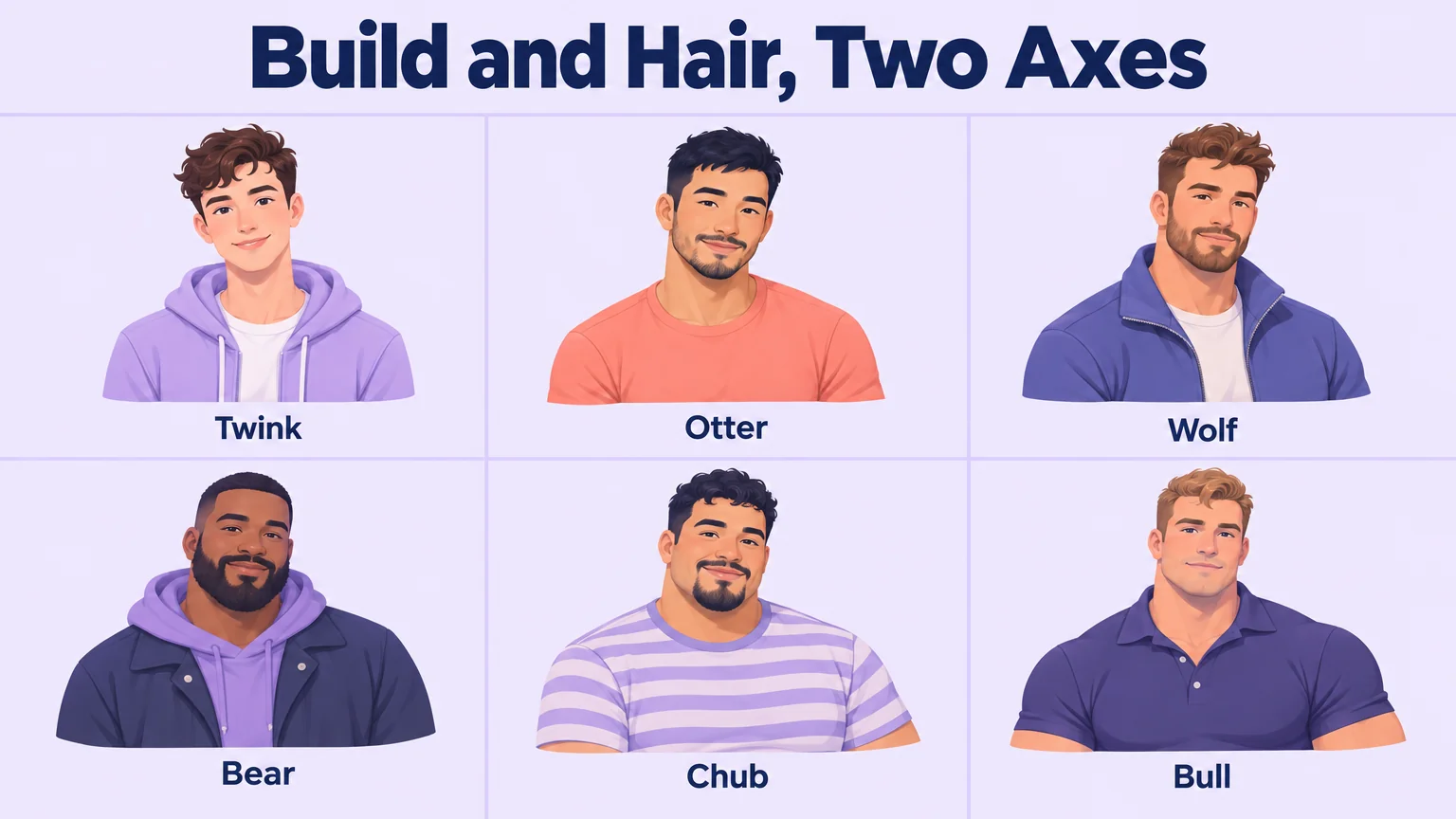
Go down a list of gay body-type labels and the problem shows up fast. Four read like the same man described four ways, and one resolves into nothing at all.
The rule underneath the field pairs build with hair: thin and hairless is a twink, trim and sorta hairy an otter, muscled and hairy a wolf, chubby and hairy a bear, chubby and hairless a chub, and muscled and less hairy a bull. Two axes, build and hair, which is why twunk sits at one intersection rather than somewhere along a line.
Hunk is build alone, the mass a twunk stops short of, a 1940s word silent on age and hair. Otter is hair more than muscle, lean but hairy, which is why it overlaps twunk for a muscular hairy man. Wolf is the muscled, hairy cell, touching twunk only where youth and hairlessness separate them. Bull is the mass end of that axis, roughly 200 to 300 pounds of all-muscle man.
Jock runs on sports culture and disposition, not the face, age, and hairlessness mix. Cub is a younger or thicker bear, typically under 40, so another word’s age defines it. Bear is twink’s opposite, big-bodied and hairy, an umbrella with named sub-identities.
Gym rat, gym bunny, and Muscle Mary name the behavior that produces a twunk, not a body type, and the last two sting because they imply training to hold onto a youthful look. Daddy sits on the age axis instead.
Twank needs its own space. Three things wear the spelling. The first is a joke, from the It’s Always Sunny scene, where a twank is “a twink and a skank,” “a rag doll just being passed around from twink to twink to bear to otter.” The second is an aging in-between stage, where a twink showing signs of aging became a twank. The third is much older: twentieth-century British slang used twank for gay male prostitutes, one proposed origin of twink itself.
So if twank turns up online, it is usually the joke. The aging-stage reading rests on one remembered account, and the British slang shares only a spelling.
The two-axis chart resolves every blur on this list. Twank is the one entry it cannot.
6. Whiteness, Youth, and the Twink Look: Who the Ideal Was Built For
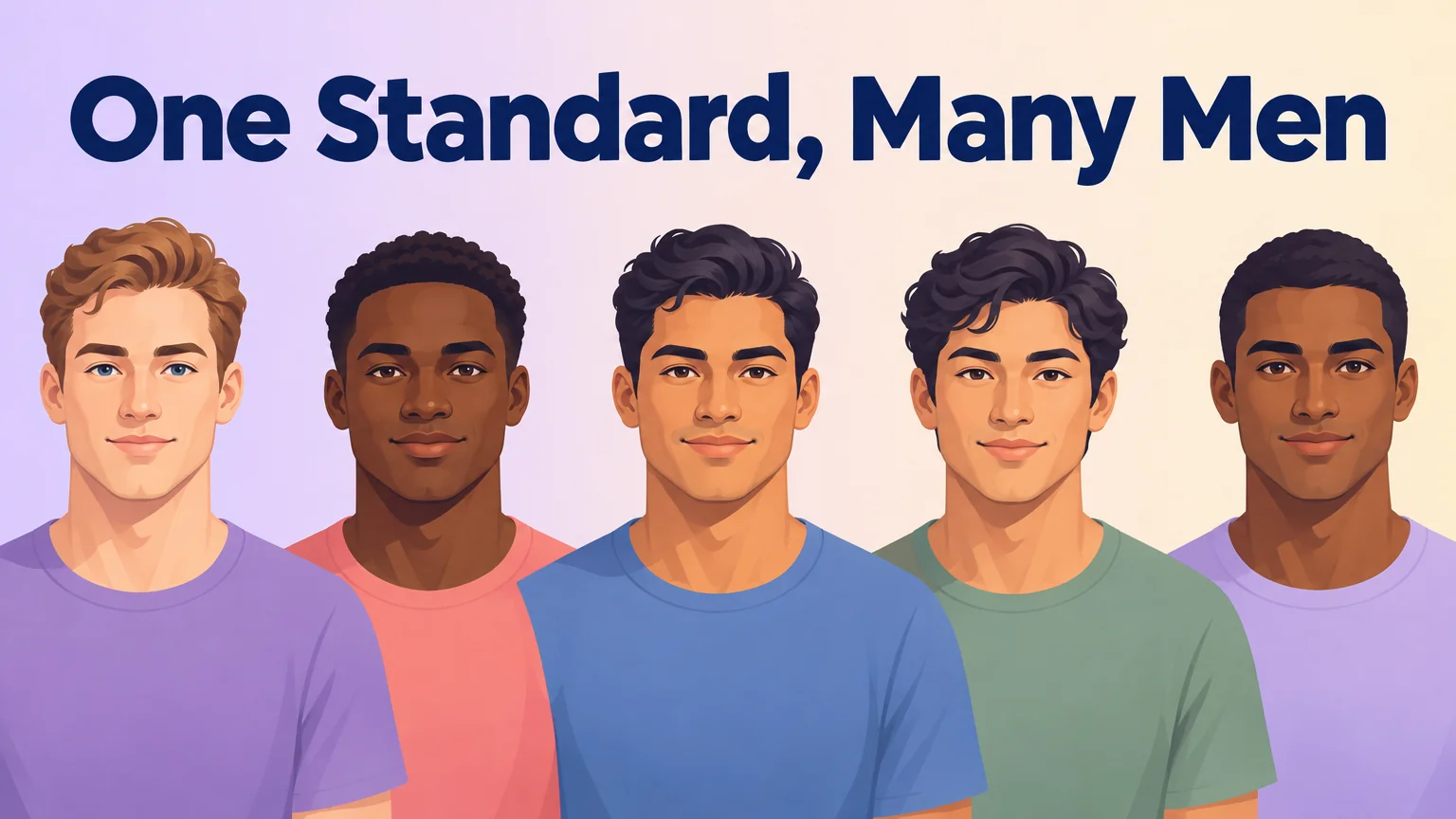
The twink look reads as a plain description of a body. It is a standard with a shape.
Was that shape set narrow? Young, thin, and smooth are the markers, and the images that circulate most are white.
Zeb J. Tortorici, an academic and former gay porn performer, makes the case. To Men’s Health, he says the popularity of the twink physique “normalizes both whiteness and youth through what are ultimately racist and ageist tropes.”
His essay “Queering Pornography” adds that “age and race are fetishized in complementary ways to convey a particular type of desirable masculinity.” The two biases are doing the same job together.
LGBTQ Nation sees the same narrowness in practice. Twinks present primarily as white in porn, playing to damaging racist tropes, and the term ties to Eurocentric beauty standards, fatphobia, and ageism.
Then the cost. LGBTQ Nation writes that the twink subculture “can play to normative and unrealistic beauty standards,” putting vulnerable gay men at greater risk of body dysmorphia. Men’s Health says the same from the other side: treating youth, thinness, and frequently whiteness as the new masculine idyll is just as conducive to body image issues in men who do not fit.
The practical consequence is that the markers reading as a twink differ across races.
None of that makes the words unfair. These types help people find identity and community inside a broader queer umbrella, and they get applied loosely besides, often to anyone slim and famous. The labels do real work, and the measuring stick inside was built narrow.
Read it as information about a standard rather than a verdict, and treat the words as a description you can claim or decline.
7. Who Gets to Say Twunk: Whose Words These Are and When to Ask

Almost nobody asks whether these words are yours to use at all. They carry a referent you may not be part of.
These are community words before they are body words, representing experiences rather than traits. A straight man who calls himself a twink or a bear should expect gay men to assume he is one of them.
Dean Modah, a queer linguistics educator, argues that a non-queer person cannot be a twink by definition. Timothee Chalamet is his example, and Out applies the same rule to Oscar Isaac and James McAvoy.
Whether the words stretch to closeted public figures, bisexual men, trans men, and non-binary people is unsettled. The decision goes to the person.
The slur question is the same one from the other side. Pride says flatly that “Twunk is not a slur.” Vogue’s Jose Criales-Unzueta says twink now means any thin white man, and that “something changes when those outside of the community adopt it as a lazy shorthand or, worse, a punchline.”
Troye Sivan is sharper: “If you say twink when you meant to say faggot, that’s still a slur. That’s our word, I don’t think straight people should be using that.” LGBTQ Nation finds twink not widely considered an anti-gay slur, and neither word is one in queer usage; the harm travels with the speaker, not the word.
The etiquette is straightforward. Use twunk for a queer man who is muscular but slim; ask before applying it, because these terms have been used derogatorily; take no for an answer; never use one to insult anyone.
One moment shows why. A street-interview clip: a man is told he is a twunk, guesses twink plus hunk, and hears it is more like a bigger twink, then asks himself why he asked.
Jax explains why the same word lands differently: twinks sit “at the top of the hierarchy, but they’re also at the bottom,” prized for youth and thinness and dismissed for the same things.
Ask before you label someone else, and if someone labels you, you need not take it, even as a compliment.
The Bottom Line: One Rule, Two Words, No Guessing
Here is the whole thing in two sentences. A twink is young-looking, slim, and smooth. A twunk is the same look with trained muscle on it, and the word follows the body rather than the birthday.
Apply it in order. The frame first, then the muscle, then the hair.
Frame and hair decide whether either word is in play at all. Muscle decides which of the two it is. Age decides nothing on its own.
One part stays open. Whether the move from twink to twunk is a glow-up to celebrate or a loss to mourn is a disagreement about values, and no definition can settle it.
The next time the labels come up, run the three checks before you reach for a word. If the frame and the hair fit and the muscle is there, the word is twunk. If the muscle is not, it is twink. If the beard is doing more work than the muscle, this vocabulary hands you a different word entirely.
That is all these two words owe you. Leaving the rest alone is a complete answer, not a dodge.
Twink vs Twunk: Your Questions, Answered
What is the difference between a twink and a twunk?
A twunk is a more muscular version of a twink. The face, the smoothness, and the age range all stay roughly the same, and visible trained muscle is the single thing that changes the word.
Do you have to be gay to be a twink or a twunk?
The words come out of queer usage and carry a queer referent, which is why a straight man calling himself a twink will usually be read as queer by gay men. Whether any specific person counts is that person’s call.
What age does a twink stop being a twink?
Nobody has measured it. Instinct Magazine says 18 to 22, Pride says 18 to 25, and NV Gay says 18 to 25, which is the sign of a convention rather than a rule. Adding muscle moves the word to twunk. A birthday does not.
How much muscle makes someone a twunk?
No published threshold exists. The practical read is visible definition at the arms and a little more mass without bulk, so the line gets judged by eye rather than by any number, and that is why two people can disagree about the same body.
Is twunk a slur?
No. Pride says so outright, though any of these words can still be turned into an insult. Twink is the more contested of the two, especially when it comes from outside the community and lands as a punchline.
What is a twank?
Usually a joke. In the It’s Always Sunny in Philadelphia scene it blends twink and skank. A second reading describes an aging stage before twunk, and a much older British slang sense for a male prostitute shares the spelling without the meaning.
What is twink death?
The point where age or added masculinity stops the word twink applying. It was coined on 4chan’s /lgbt/ board in the mid-2010s and mainstreamed on Twitter in late 2022. Zach Noe Towers calls it the moment a twink realizes he is no longer one.