What is a cub in the gay community? A cub is a younger, or younger-looking, bear, often though not always with a smaller frame. That holds up as far as it goes, and the easy part ends there: some cubs are 22 and 300 pounds, others 45 and only read young, and the word behaves differently depending on who is using it.
Two questions matter, and both come after the definition: whether it describes you, and what to do when someone else puts it on you. The first is a matter of fit. The second is a matter of standing, and it belongs to you.
A Cub, Defined: A Younger Bear, and Often a Smaller One
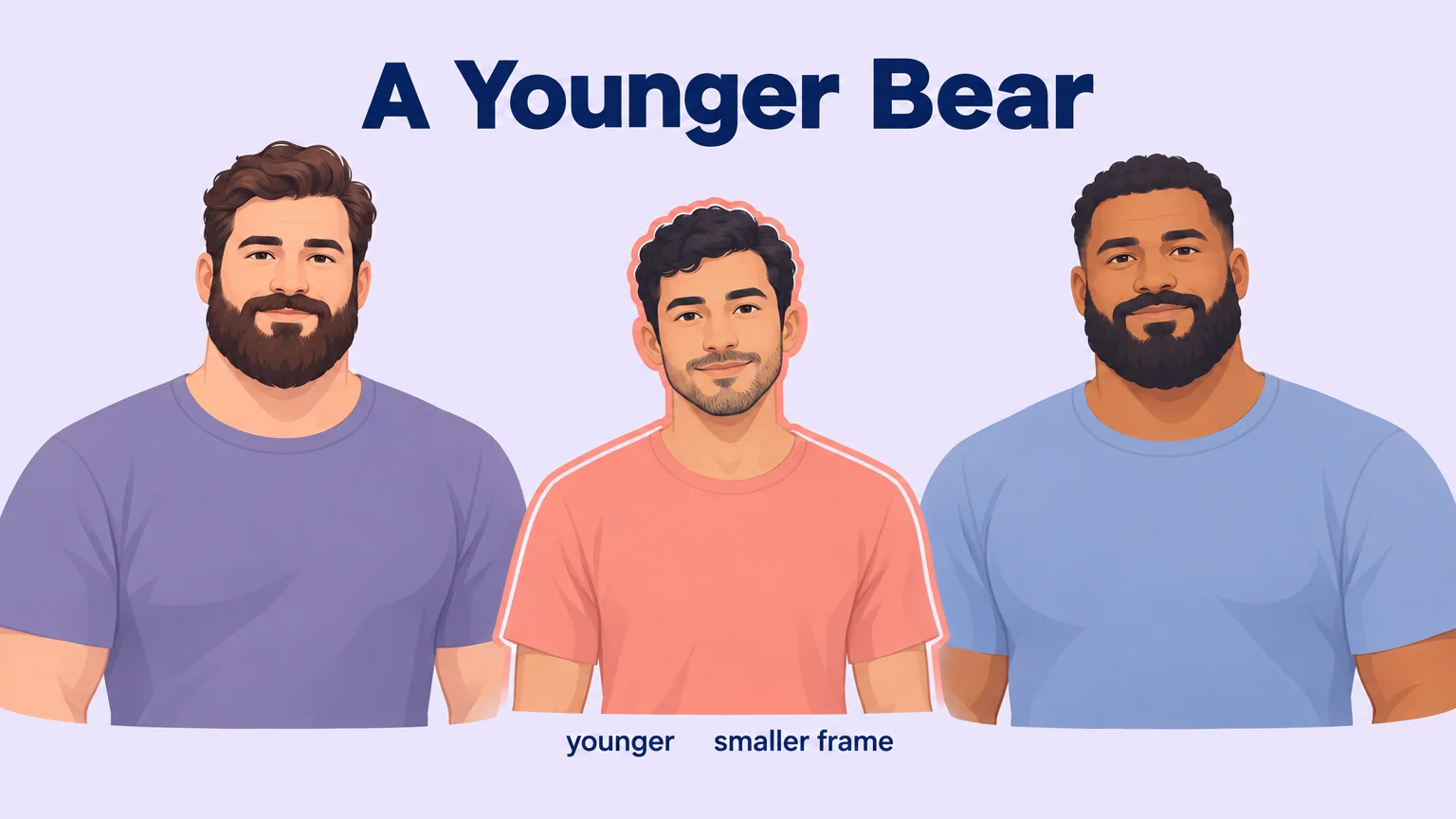
A cub is a younger bear, or a bear who reads younger, and often a smaller one, though not reliably.
Wikipedia’s terminology list puts it as “a younger (or younger-looking) bear, sometimes (but not always) with a smaller frame.” Pride.com calls a cub “a baby bear” and spells it out: “Large, hairy guys in their teens and 20s who are on their way to becoming a bear.” The Village Voice compressed it into five words: “Cubs are basically young bears.”
All three land in the same place. The cub gay term does two jobs at once. It names an age relative to the bear category, and it names an aspiration, since the category it points at is one you grow into.
What “younger” is relative to. The bear category skews older, which is what makes “younger” mean anything. Mike Sullivan, co-owner of The SoFo Tap in Chicago, told the Chicago Tribune that bears “tend to be in their 30s or 40s or older, so a cub is just a younger version of a bear.”
Pride.com’s phrase lands on something men say themselves. A cub is a bear who has not finished arriving, which is why the label tends to be held young and set down later. Brad Fisher, writing in the Star Observer in 2009, remembered the scene’s youngest tier as settled: “The more youthful among us we called Cubs, some of them barely even able to grow facial hair.”
Where the word sits. Cub is one of the bear community’s own terms, alongside otter, chub and wolf. It is a descriptor, not a slur, and not a separate community.
Age or Body Type? How the Cub Label Actually Works
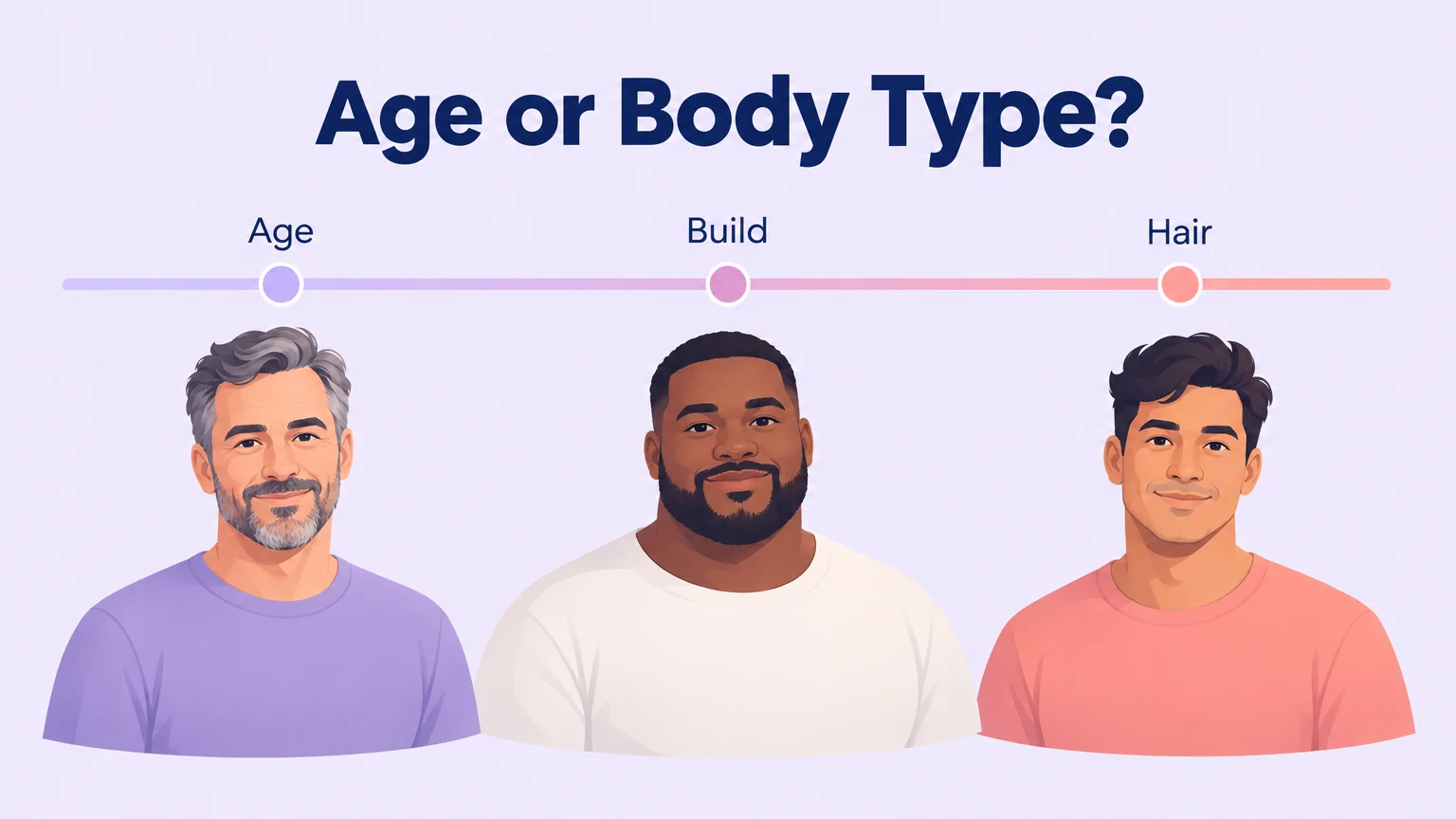
“Younger” is doing two jobs in one word, and that is where the confusion starts.
One job is about time, the other about appearance. Younger-looking is not the same as young. Age and build usually point the same direction. When they do not, the label gets slippery.
Age is the steadiest marker. Pride.com ties cub to being younger than a bear, and the Chicago Tribune anchors it to a band: “Bears tend to be in their 30s or 40s or older, so a cub is just a younger version of a bear.”
Build and hair carry weight too, and they do not always agree with age. Wikipedia hedges its own size clause: a cub is “sometimes (but not always) with a smaller frame.” Simple English Wikipedia leans further toward appearance, describing cubs as “often younger or less mature or masculine-looking.”
The “smaller” reading is not settled, though. A widely watched YouTube short, “The Rise of the Bear Community,” describes a cub as “a big guy who’s young,” tying build and age together, against the idea that a cub is the smaller man.
When the signals disagree, there is no rule to appeal to. Picture a 45-year-old who reads young and a 24-year-old who is 280 pounds and hairy. Both have a claim; neither has a decisive one.
Men treat the picture as a scale rather than a set of boxes, and they slide along it as build, hair and age pull against one another. One man, stuck between categories, was “too heavy to be a twink” and lacked “the height or weight to be a bear,” then asked, half seriously, whether that made him a cub.
No one has measured any of this. Every cutoff between cub and bear, or cub and otter, is a convention rather than a measurement, settled by repeated use and decided nowhere.
Cub vs. Otter vs. Twink: How to Tell the Three Apart
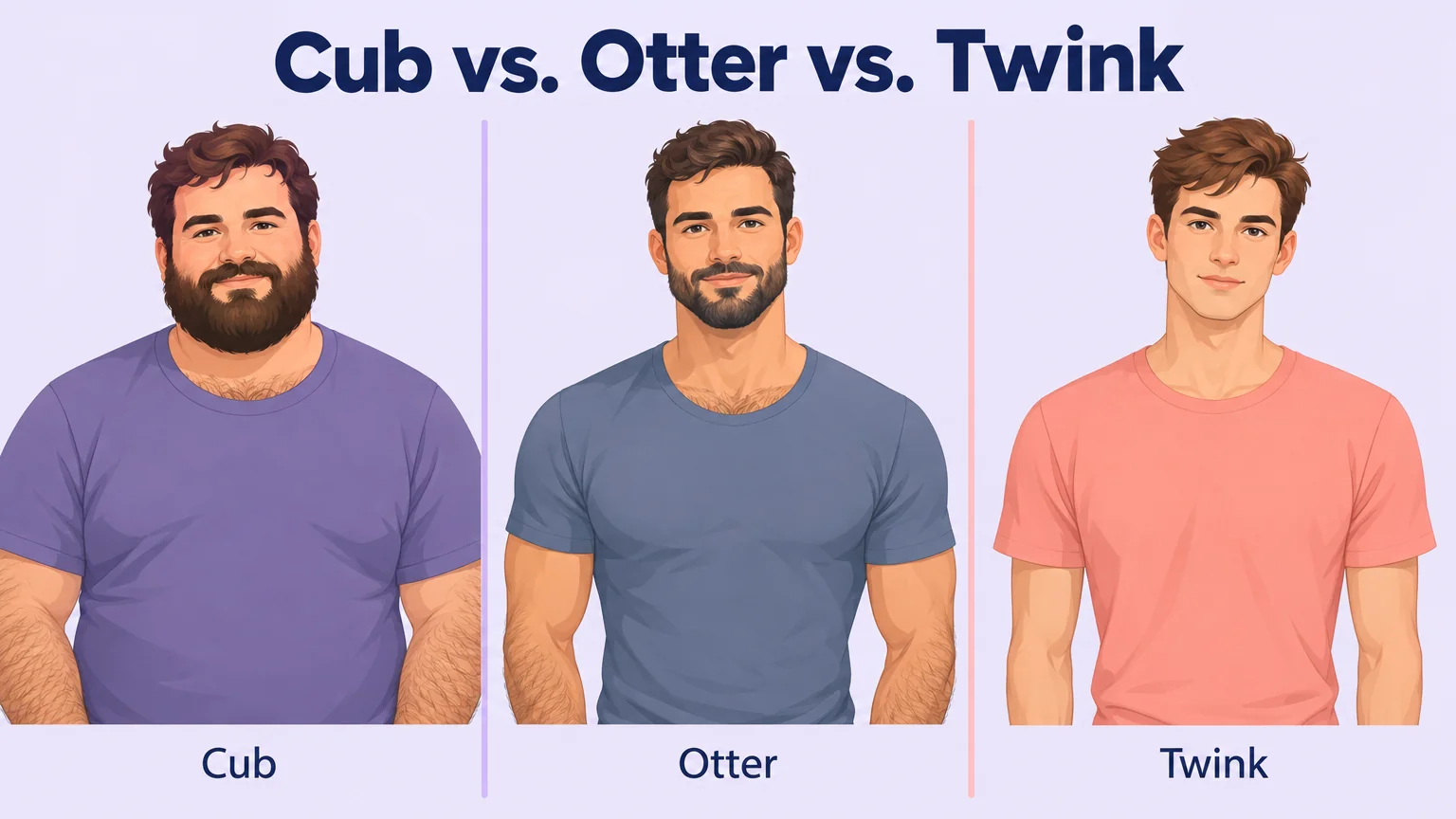
Three words doing overlapping work, with no agreed way to separate them. Here is the cleanest split available.
Cub: a younger, or younger-looking, bear, often though not always smaller-framed.
Otter: a leaner or less hairy man than a bear, but still with plenty of body and facial hair. Gay-Location.com’s bear guide calls it “somewhere between a twink and a bear.” The Chicago Tribune’s glossary says the same in fewer words: an otter “has the facial hair of the bear, but is slighter in build.”
Twink: young and slim, with little or no body or facial hair.
The axis that separates them is hair and build, not age. Two of the three sit close together on the age line, so a cub and a twink can be the same age and the same weight and still land in different categories because of how much hair they carry.
They behave as a scale rather than as boxes. One post runs the whole chain: twink, otter, wolf, cub, daddy. Read it that way and the categories stop looking like rooms with doors and start looking like marks on a dial, where build, hair and age trade off against each other.
Plenty of men fit none of them. One user listed himself out of the whole set: “not hairy enough as a bear, cub, or otter,” too old for a twink, not big enough for a bull or chub. Another said he had been “rejected by EVERY gay clique” for sitting inside every category’s parameters and outside all of them at once. The labels are matched by eye, not by rule, and a lot of people stand somewhere the rules do not reach.
Where the Cub Gay Term Came From
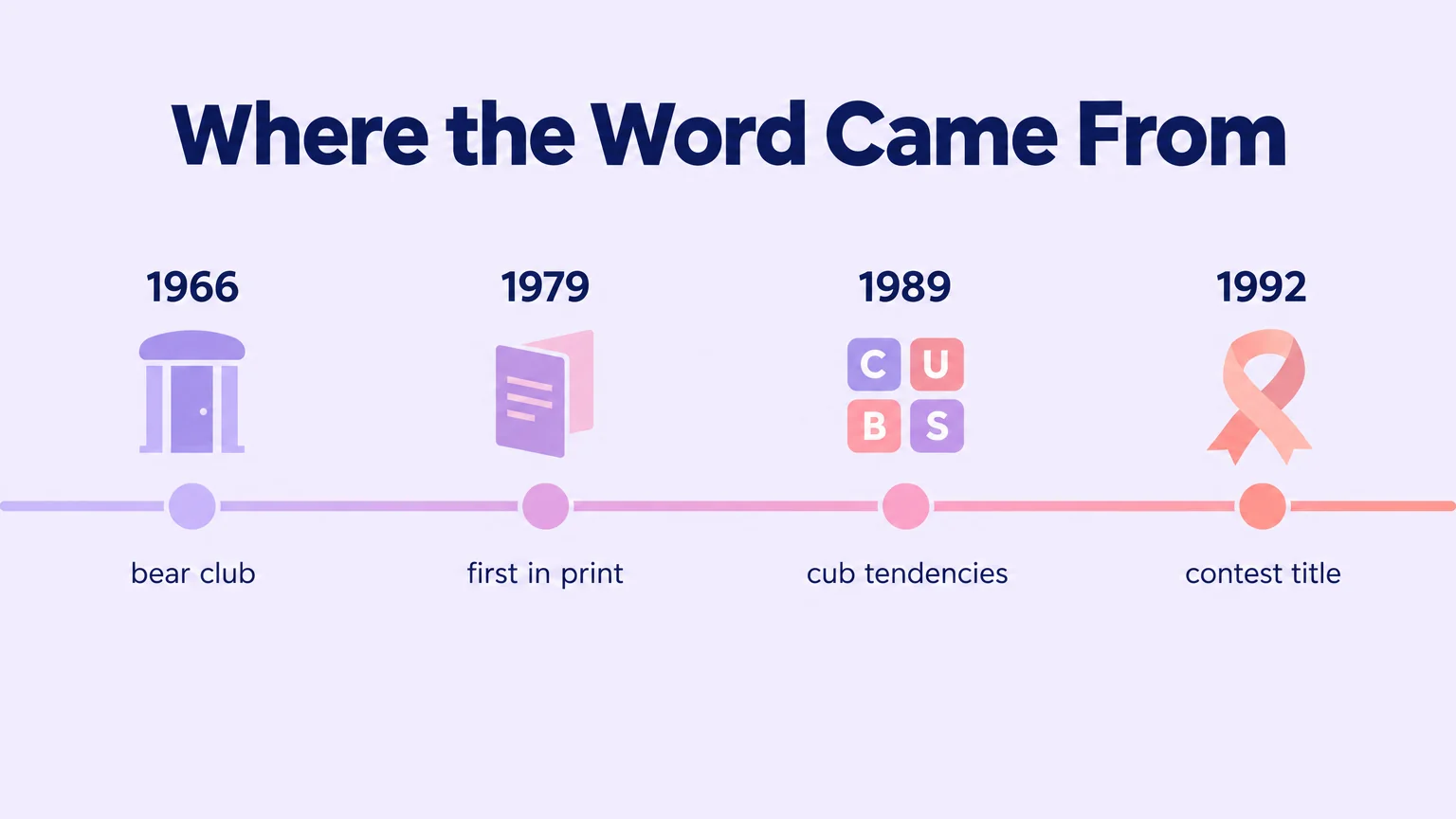
The oldest hard evidence for the cub gay term is a string of letters from 1989.
The letters sit in a coding system called the Natural Bears Classification System, created that year by Bob Donahue and Jeff Stoner and modeled on how star and galaxy classification systems work. Alongside markers for beard, fur, height, weight, daddy factor, kink and muscle, it carried an explicit marker for “cub tendencies,” which its own worked example decoded in part as “cub tendencies, definite Daddy.” It is the earliest document that names cub as something a man would declare about himself.
The bear half of the pair is easy to date. The cub half is not. The first written use of “bear” for gay men appears in the 1966 meeting minutes of a Los Angeles dance hall, which described a “bear club.” The first published use is credited to George Mazzei’s 1979 article “Who’s Who in the Zoo?” in The Advocate, which sorted gay men into seven animal types. No equivalent first-use citation exists for cub, and the likely reason is that the word was already circulating in clubs and contests before anyone wrote it down.
By the 1990s, cub was a title, not just a word. The International Mr Bear contest ran at San Francisco’s International Bear Rendezvous from 1992 to 2011, awarding Bear, Daddy, Cub and Grizzly titles. The formal result survives in a photograph caption: Mr. DC Bear Cub 2006.
One dictionary records a narrower, regional sense. Green’s Dictionary of Slang files a separate entry marked as South African gay slang, defined as “a young homosexual man who associates with a bear.” Its 2003 citation describes “a younger, and perhaps smaller man, who enjoys the company of bears”: companionship rather than physical type. The one dictionary that records cub at all records it as regional.
What is missing matters as much as what is documented. No source pins a first-use date for cub the way bear’s is pinned. The word moved through bars, clubs and contests before the paper trail begins. This vocabulary was spoken long before it was cataloged.
Does ‘Cub’ Mean the Passive Partner? An Unresolved Claim
You will run into the claim sooner or later. In the form it circulates, calling a man a cub implies something about his role in bed.
Simple English Wikipedia states it directly: “The term is sometimes used to imply the passive partner in a relationship.” That is a plain sentence, delivered without qualification, and it is the clearest statement of the claim.
It is also, as far as this piece could establish, unexamined. Behind that one line there is no account of where the implication came from, no measure of how common it is, and no record of whether cubs themselves accept it.
So the position the evidence supports is not a verdict either way. Some people do use the word with a role attached. The word itself does not carry that meaning on its own. The community has not settled the question, and nothing outside it will.
The practical answer is smaller and more useful than the argument. If someone uses “cub” to say something about your role, that is their use of the word, not the word’s meaning. You are not bound by it, and you do not have to argue the point. You can simply not take it.
Is ‘Cub’ a Compliment, a Descriptor, or a Slight?

A word can be meant kindly and still land as a comment on your body. Both can be true at once, and that is the whole difficulty.
Used neutrally, it is a descriptor. The Chicago Tribune’s source classed the animal terms as generally positive among the people who use them, while noting the pushback: “some people think it’s sort of over-labeling.” Plenty of men use “cub” the way they use “tall” or “bearded,” as a fact about appearance with nothing loaded on top of it.
Received, it can be something else. The clearest documented case is a letter to Out’s “Hola Papi” column. A man wrote in after a hookup started calling him a “sexy little cub” in bed. He described his mind revolting at it, because it read as a remark about his size.
Columnist John Paul Brammer’s answer was direct: “you get to determine what people call you in bed… It’s a respect thing, and you should feel empowered to set those boundaries.” He added that the animal lexicon is “made up and often exclusionary” while body shaming is “very much real,” and that discomfort at being grouped with heavier men is worth examining.
So there are two answers, and they do not contradict each other. You need not accept a label because someone meant it kindly: meaning it as a compliment does not make it one. Used neutrally, the word is just a descriptor.
On 3Fun, what you call yourself is something you write into your own profile rather than something someone else applies to you.
The line is yours to hold. You can say you do not want to be called something, and you can decide you like it.
What ‘Cub’ Means on a Dating Profile and at a Bear Run

When you see “cub” on a profile, it is doing one of three things: signaling on a personal bio, sorting in a hashtag, or naming a group in a room.
On a profile, it signals age and build together, with an implied tie to the bear scene underneath. It tells a reader what to expect before either of you has said a word. That is what makes it useful shorthand, and also what makes the same word feel like a verdict when it was applied to you rather than chosen by you.
As a tag, it does two jobs at once. On X, #cub travels in bios and captions alongside #gay, #bear, #gaybear, #chub and #daddy. Ordinary users put it there to describe themselves; adult-content accounts put it there to be found.
That double use matters, because the volume on a hashtag is not a count of how many men identify as cubs. Activity on a tag measures posting, not people.
In real-world spaces, cub is a named constituency rather than a personal label. Urban Bear NYC describes “hundreds of bears, cubs, otter, and their admirers” gathering for a weekend. Bear contests once formalized the same idea, with separate titles by type: International Mr Bear ran Bear, Daddy, Cub and Grizzly categories, and one photograph is captioned Mr. DC Bear Cub 2006.
Naming yourself “cub” in a dating profile is what the profile field is for, and on 3Fun it is the same plain act: you type the word that fits.
If you are walking into a bear space for the first time, the practical route is a local bear club or a bear night at an existing venue. The atmosphere is generally low-key, with no strict dress code. The vocabulary is shorthand, not a gate.
The Label Backlash: Over-Labeling, Gatekeeping, and Who Gets Left Out
The bear scene describes itself in terms of acceptance; some of its members describe something narrower. Both are on the record, and the gap between them is the subject.
The stated value is inclusivity. Chris Taute, who created Bearfest SA, told HuffPost UK that bear culture “generally tends to place little or no value on social stature or conforming to the latest magazine looks and styles.” Thatho Maseko, a Mr Bearfest SA finalist, put it plainly: anyone who shares the community’s values is welcome “regardless of appearance.”
The reported experience is more mixed. The “My Kind of Bear” panel asked directly whether anyone had been told he was not bear enough. One go-go bear said the harder part was personal: after everything he had done, people still did not see him as part of the bear community. “That’s what really hurts sometimes.”
A second complaint is over-application. The Chicago Tribune’s source said “some people think it’s sort of over-labeling.” Men on X describe the same fatigue, giving up on a category and settling on a state of mind instead.
A third is that the categories were built narrow. A Black gay man posting about the animal terms called them half the reason Black gay men so often do not engage with the vocabulary the way other races do. The critique reaches the bear level too: Simple English Wikipedia records that hairiness as the standard of attractiveness “genetically favours white men,” and that some bears have not welcomed chubs at their events.
None of this stops at bear. Cub’s markers are the bear markers read young, so the same measuring stick carries down the ladder: a tight definition of what a bear looks like produces a tight definition of what a cub looks like, and the men it leaves out are the same men both times.
Where the community genuinely disagrees is what to do about it: widen the definitions, drop the labels, or keep them and police them less. That argument is live, and it belongs to the people having it.
Cub Gay Term FAQ
What is a cub in the gay community?
A cub is a younger, or younger-looking, bear, often though not always of smaller frame, and usually understood as bear-adjacent rather than a separate category. Pride.com describes cubs as “large, hairy guys in their teens and 20s who are on their way to becoming a bear.” The label carries relative youth first and body type second.
What do cub, otter and wolf mean, and how are they different?
Cub is a younger, or younger-looking, bear. Otter is a leaner or less hairy man who still has plenty of body and facial hair, described by Gay-Location.com as “somewhere between a twink and a bear.” Wolf is a leaner, more muscular, more groomed type. These are community shorthand built for describing attraction and style, not fixed categories, and the boundaries between them stay loose.
Is a cub about age or body type?
Age is the most consistent marker. Bears tend to be older, so a cub is younger than a bear. Build and hair matter too, and Wikipedia qualifies its size clause as “sometimes (but not always) with a smaller frame.” When age and build disagree, no settled rule applies. Men tend to treat the categories as a scale they slide along rather than boxes they fit.
Is ‘cub’ a compliment, a neutral descriptor, or an insult?
Meant as neutral or affectionate, received inconsistently. Used plainly, it is a descriptor. In bed it can land as a remark about your body, and Out’s “Hola Papi” column is direct on the remedy: “you get to determine what people call you in bed… It’s a respect thing.” You are not obliged to accept a label because it was meant well.
Do I have to be a bear to go to bear events or use the community?
No. Gay-Location.com describes bear bars and events as “traditionally low key and welcoming,” and chasers are explicitly part of the community. A 2009 Star Observer piece lists Bear Admirers and Chubby Chasers among the groups the scene absorbed. You do not need to fit a category to show up, and the scene has a long record of taking in people who did not.
Where did bear culture itself start?
San Francisco, in the late 1970s and 1980s. Men who did not fit the era’s slim, clean-shaven, gym-toned gay look gathered at the Lone Star Saloon, usually credited as the place where they found each other. Photographer Chris Nelson and his partner Richard Bulger turned a friend’s zine into BEAR magazine in 1987. The first International Bear Rendezvous followed in 1992, and Craig Byrnes designed the International Bear Brotherhood Flag in 1995.