A 20 year old woman matched with “Laura” on Hinge. The date was going well. Then she saw a photo on Laura’s lock screen: a man kissing her cheek. Laura revealed it was her boyfriend. They were looking for a unicorn. The woman walked out mid-dinner.
She did the right thing. Not because a threesome is wrong. Because a bait and switch is wrong. And that scene plays out every day on mainstream apps: a couple springs the truth on a single person who showed up expecting something else. The couple gets reported. Or worse, the single person goes along with it and leaves feeling used.
There is a better way. Actually, there are several. The best unicorn dating app won’t save you if your approach is broken. But the right platform with the right mindset changes everything.
What follows is seven apps with verified pricing and real user experiences, plus an ethical framework. Because the app matters less than how you show up on it.
This is not about finding a unicorn. It is about creating the kind of dynamic where the right person actually wants to show up.
1. 3Fun: Purpose Built for Couples Who Explore Together
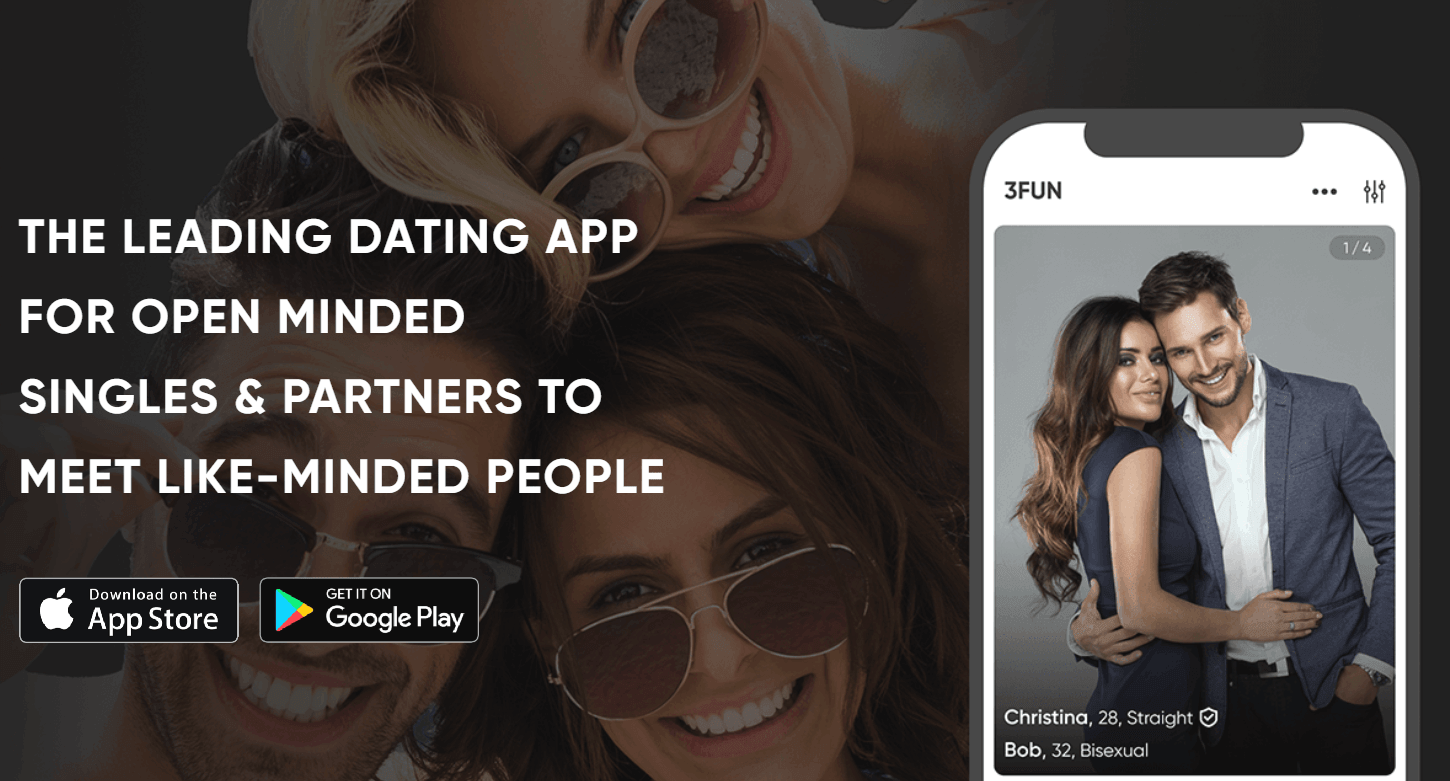
3Fun knows what it is, and that clarity matters. It is a couples-and-threesome dating app, purpose built for two people exploring as a team. Not a general ENM platform. Not a community hub.
The scale: 10 million plus downloads, three million active members, roughly one million messages exchanged per day.
The headline differentiator is free unlimited private messaging. Feeld, BiCupid, and OkCupid all gate messaging behind premium tiers or mutual-match requirements. 3Fun lets you have full private conversations without paying. If messaging is where trust gets built, and it is, removing that paywall is a genuine advantage.
The couple-specific features follow from that logic. Synced couple accounts show both partners from the jump. Group chat supports three-way conversations so everyone stays on the same thread. There are ten plus sexuality options. Privacy controls include incognito mode, hidden distance, private photos, and both AI and manual photo verification. App store ratings sit at 4.4 on iOS and 4.6 on Google Play, among the highest in the category.
VIP pricing runs $19.99 to $49.99 per month depending on region, with three months at $44.99 to $59.99 and annual at roughly $99.99 per year. That is pricier than Feeld Majestic, but the free tier is more generous where it counts.
On the privacy front, 3Fun has invested heavily in getting this right. Incognito mode lets you browse without appearing in anyone’s stack until you decide to engage. Private photos stay locked behind permission gates. Distance hiding keeps your location approximate rather than precise. AI plus manual photo verification means fewer catfish and bots in your feed.
The user ratio is worth acknowledging honestly. Like every app in this space, couples outnumber single women. The LA Times documented users who found themselves swimming in couple profiles with fewer solo matches than they hoped for. That supply-demand reality is not unique to 3Fun. It is the shape of the entire category. What 3Fun does better than most is make the couple experience smooth enough that the singles who are here tend to be active and responsive, not dormant accounts.
The verdict: 3Fun is the best-designed app for couples seeking a third, with the most generous free tier in the category. Best for couples who want free messaging, synced profiles, and a couple-first experience from signup to match. Get 3Fun on Google Play or Apple Store. Skip if you are a solo user seeking other solos rather than couples, or if you want the largest possible user pool rather than the most focused one.

2. Feeld: The ENM Powerhouse, for Better and Worse
Feeld was not supposed to become this big. It launched in 2014 as “3nder,” a Tinder-for-threesomes pun that earned a swift trademark lawsuit and a forced rebrand. What came out the other side was larger: the default ENM dating platform for a generation.
Feeld grew 368 percent from 2021 to 2025, pulled in $65 million in revenue in 2024, and now holds over two million members worldwide. Its headline feature, Constellations, lets you link up to five partner profiles while keeping individual identities intact. The identity infrastructure: 20 plus gender identities, 20 plus sexuality options, and a matching system that treats those labels as architecture, not decoration.
Majestic membership runs $12 to $16 per month, or $72 to $125 yearly. The free tier is genuinely functional: swiping, matching, and messaging cost nothing. That is rare in this space.
Now the part Feeld would rather you skip.
In September 2024, security researchers at Fortbridge disclosed eight critical vulnerabilities. Attackers could read any user’s private messages. Explicit photos, including “disappearing” media meant to vanish after viewing, were permanently accessible through direct Cloudinary URLs. Feeld fixed the issues by May 2024 but never notified users. For anyone in a country where non-traditional relationships are criminalized, that silence carries real consequences.
The user experience is the same story. Feeld scores 4.3 stars on the App Store. On Trustpilot, it earns a 1.1 out of 5. Support tickets go unanswered for three weeks. Accounts get banned with no human review. The app crashes. Messages vanish mid-conversation.
And then there is the culture shift. WIRED documented what longtime users call “normie hell.” Seventy-four percent of Feeld users now identify as straight. “Heteroflexible” grew 193 percent year over year. About 60 percent of users sign up as couples, which means solo bisexual women’s inboxes run roughly 80 percent couples. The app that once felt like a refuge now feels, to many, like Tinder with extra steps.
The verdict: Feeld is the biggest tent in ENM dating. Best for couples in major metros who want the largest possible pool and can live with the bugs. Skip if you need reliable support, ironclad privacy, or a genuinely queer-centered community.
3. OkCupid: The Mainstream App That Actually Gets ENM
Feeld is only viable in cities of half a million people or more. In a mid-sized city, you open Feeld and see nine profiles, three of which are bots. In a rural area, you see zero.
OkCupid solves that problem with roughly 50 million total users. That number dwarfs every dedicated ENM app combined, and it makes OkCupid the only realistic option for anyone outside a major metro.
But the user count is not the interesting part. The interesting part is that non-monogamy is built into OkCupid’s architecture, not bolted on after a marketing meeting. You can set your relationship style to non-monogamous, open relationship, or polyamorous. The algorithm respects those settings. There are 22 gender identities, 12 sexual orientation options, and couple profile linking built into the matching system. Decades of ENM-specific matching questions sit in the database, letting you filter for people who have already thought through the dynamics you are navigating.
Pricing is reasonable. Basic runs from $19.99 per month monthly down to about $10 per month on a six-month plan. Premium goes from $34.99 monthly down to roughly $17. The Incognito add-on is $19.99 per month. The free tier includes full messaging on mutual matches, which is all most beginners need.
The trade-offs are real. This is not an ENM-only community. You will still match with monogamous people. You will still explain your relationship structure. The algorithm increasingly favors engagement over compatibility since the Match Group acquisition, which means more noise and less signal. Free users get ten likes per day, which feels tight once you are actively searching.
A newly open couple in a mid-sized city where Feeld shows zero nearby users will find OkCupid the only functional choice. It is not the most exciting recommendation, but it is often the correct one.
Best for: Beginners, small-city residents, and anyone who wants ENM features without the lifestyle-app identity. Skip if: You want a guaranteed ENM-literate match pool or cutting-edge couple-profile features. OkCupid is what works when nothing else does.
4. BiCupid: Where Bisexual Dating Takes Center Stage
On Feeld, 74 percent of users now identify as straight. On OkCupid, bi users filter through a majority-monogamous pool. Neither platform was designed around bisexuality as the default. BiCupid was.
That distinction matters. There is a specific exhaustion that comes from being treated as a checkbox, a fantasy, or an “other” category on apps that were not built for you. BiCupid inverts that dynamic. Bisexuality is the baseline here, not a buried filter option.
The platform counts roughly four million users globally and supports polyamory, throuple arrangements, couples and singles, plus video and voice chat. It is not trying to be everything. It is trying to be the right thing for a specific community.
Pricing is where this gets real. One week runs $24.99. One month costs $33.99. Three months at $69.99, six at $109.99, and a full year at $139.99. Those numbers are higher per month than Feeld or OkCupid. More importantly, free users cannot initiate new conversations. You need Premium to send the first message. You can browse, you can respond, but you cannot start. That is a significant paywall in a category where 3Fun gives away unlimited messaging and Feeld lets the free tier function.
The gender balance skews male, consistent with most dating apps. Some heterosexual users are present despite the bi focus. The global distribution is uneven: active communities exist in multiple regions, but the user base is thinner in Asian and African markets. There is no lifetime membership option despite the high annual price. For bi women specifically, the platform reports a meaningfully higher proportion of female-identifying users than general ENM apps.
Direct recommendation: BiCupid is the right pick if your primary identity filter is bisexuality and you want a community where that is the starting assumption, not an afterthought. The paywall on initiating messages is steep. Factor that in. If you are a couple seeking a bi woman specifically, the pool is more targeted here than on general ENM apps, though smaller overall.
5. SwingHub: The New Standard for Safety and Verification
Safety is the unspoken anxiety in lifestyle dating. Everyone thinks about it. Nobody wants to lead with it. Feeld had eight critical vulnerabilities disclosed in 2024. Most lifestyle apps, including the major players, do not mandate verification for all users.
SwingHub was built to close that gap.
Founded by a UK couple in 2023, SwingHub grew to nearly 50,000 users by mid-2025 with zero paid marketing. The growth is organic, driven entirely by safety reputation. Every profile goes through verification. No exceptions. In a category where catfish and bots are background noise, that alone changes the experience. Here is why.
Mandatory AI-powered verification applies to every single profile. No verification, no access. Integrated sex offender registry screening is unique in the lifestyle app space. Blackout Protection blocks screenshots of private content, which means photos and conversations stay where they belong. Teleport Mode lets you browse other cities before traveling. Useful for event planning and vetting communities before you commit to a trip.
On top of that safety foundation sit the community features: Events and Clubs integration with ticketing, social-media-style feeds, modern UX that feels less like a dating app and more like a lifestyle platform. The app also supports detailed privacy toggles so users control exactly what is visible and to whom.
The limitations are predictable for a two-year-old app. Fifty thousand users is tiny compared to Feeld’s two million plus. The user base is heavily UK-focused with limited US presence. Sign-up issues are common: AI verification glitches, verification codes that never arrive. Chat messages sometimes do not send. Friend requests bug out. GPS shows events in wrong locations. The App Store rating hovers around 2.4 stars, dragged down by the friction that verification-first inevitably creates.
Best for: Safety-first users who will trade pool size for verified identity, and UK-based swingers attending lifestyle events. Skip if: You are outside the UK, need a large dating pool, or want a frictionless signup experience.
6. #open: Built by the Poly Community, for the Poly Community
Feeld is becoming the new Tinder. #Open is what Feeld used to be.
The difference is architectural. #open replaces blind swiping with hashtag-based search. You find people through identity labels the community actually uses: #kitchentable, #relationshipanarchy, #solopoly, #polyfidelity. This is not a coat of paint on a Tinder clone. It is a different discovery model, built by polyamorous community members who designed it from the inside.
Features include partner-linked profiles with real-life cross-verification, private event integration with QR code check-ins, incognito browsing, and no social media required. Educational resources on boundaries and consent are built into the platform. Supporting Membership costs $9.99 to $14.99 per month, the most affordable premium tier in the dedicated ENM space. The hashtag system also serves as a self-filtering mechanism: users who do not know the terminology self-select out.
And now the honest part.
#open has an estimated 210,000 to 320,000 total profiles. Monthly active users: roughly 2,100 to 5,100 globally. That is an order of magnitude smaller than Feeld. The app is essentially unusable outside major metro areas. The Google Play rating sits at 1.79 out of 5 from over 1,100 ratings. Glitchy performance, location bugs, old locations showing after moving, and support response times of roughly one week are the norm.
The company practices what it preaches. Its own blog published a guide on how to avoid being a unicorn hunter. That kind of institutional self-awareness is rare. But philosophical alignment does not fix push notifications that do not arrive or matches that disappear when you change cities.
Quick comparison: If Feeld is the big-tent ENM festival where anyone can buy a ticket, #open is the intimate house show where everyone actually knows the host. The community authenticity is real, the user base is tiny, and the bugs are frustrating. Best for philosophically aligned poly people in major metros. Skip if you need a working app with a discoverable user base today.
7. MoreThanOne: The 100% Free Alternative Worth Watching
Every app in this category eventually puts core features behind a paywall. Feeld charges for incognito mode. BiCupid charges to send the first message. 3Fun charges for VIP. That is the business model.
MoreThanOne is the exception. Completely free. No ads. No locked features. No paywalls. Nobody else in this category has tried this. It has been the standard playbook for years, and MoreThanOne is the first app to tear it up. Linked profiles for couples and polycules, advanced search filters by orientation and relationship style and gender, public and private profile modes, group chat, direct messaging. All of it, available without payment. That is the most generous free tier in the entire ENM app ecosystem.
So how does this stay alive? Nobody seems to know. The developers have not published a sustainability plan. There is no clear business model. The app is Android-only, Google Play only, no iOS. Nearly no independent reviews or third-party coverage exist beyond the Google Play listing. The user base is very small. This is a newer app with uncertain longevity, and “free forever” is a promise that costs money to keep.
MoreThanOne claims data is encrypted, not shared with third parties, and moderated against inappropriate conduct. That is the right language. Whether the infrastructure backs it up is harder to verify without independent review. The feature set, on paper, rivals paid competitors. Advanced filters, linked profiles, and group chat are all present and functional.
MoreThanOne is either the future of accessible ENM dating or a well-intentioned project that will not survive without revenue. Either way, it costs nothing to try. For couples on a tight budget or Android users in polycules, it is worth downloading as a secondary option even if your primary app is Feeld or 3Fun.
Best for: Budget-conscious users who want full features without payment costs, especially Android users in polycules who need linked profiles. Skip if: You need iOS access, a large user base, or confidence that the platform will still exist in two years.
How to Choose the Right App, and How to Do This Ethically
You have read about seven apps. Now you need to pick one. And there is a bigger question: the app you choose will not matter if your approach is predatory.
The Decision Framework
- Casual threesome or one-time encounter: Feeld (largest user base) or 3Fun (couple-first design, free group chat).
- Ongoing polyamorous relationship or triad: OkCupid (compatibility matching, decades of ENM questions) or #open (hashtag discovery, community authenticity).
- Swinging and lifestyle events: SwingHub (AI verification, event integration) or FetLife (local munches and parties).
- Maximum privacy: Pure (ephemeral profiles, auto-delete) or WAX (biometric verification, anti-screenshot).
- Zero budget: MoreThanOne (all features free) or OkCupid free tier.
- Small town or rural area: OkCupid is the only viable option. Dedicated ENM apps show zero to ten nearby users.
- Gay or bi male couples seeking a third: Grindr with incognito on XTRA or Unlimited, or Sniffies for location-based cruising.
- Queer-focused poly dating: #open (most authentic community) or Lex (text-based queer personal ads).
These are starting points. Many people use two or three apps.
The Ethical Framework
Unicorn hunting has a bad reputation for a reason. When a couple sets all the terms and the third just has to follow them, that is not exploration. That is predation with a better vocabulary.
One. Both partners are visible from the start. No bait and switch. No surprises.
Two. The third person participates in setting boundaries. They are not handed predefined agreements written without them. If that makes you uncomfortable, you are not ready.
Three. Check in with the third as often as you check in with each other. Jess O’Reilly identifies the most common failure: couples ask “Are you okay?” only to each other.
Four. The third has full agency to say no, change their mind, or leave. No guilt. No pressure.
Five. Do the internal work before you open the app. Hayley Folk: “The apps are tools, not teachers.” Have the hard conversations about jealousy and what happens if one of you wants to stop.
Dedeker Winston, co-host of the Multiamory podcast, describes what unicorns actually experience: being expected to provide free childcare, to disappear when family visits, to serve as a disposable fantasy object.
These principles will filter out some matches. That is the point. The goal is not maximum volume. It is the right match with the right dynamic.
Before you download anything, answer these three questions with your partner: Whose idea was this? What happens if one of us wants to stop? What does the third person get out of this experience that is genuinely about them, not us?
FAQ
Which app is best for couples seeking a unicorn?
Feeld has the largest ENM-specific user base and the Constellations feature for linking partner profiles, making it the most popular starting point. 3Fun is the stronger choice if free messaging and couple-first design matter more to you than sheer user numbers. Expect a supply-demand imbalance on every platform: single bisexual women are dramatically outnumbered by couples. See sections 1 and 2 for the full comparison.
Are unicorn dating apps safe?
It depends on the app and your practices. Feeld had eight critical vulnerabilities disclosed in 2024 — private messages and photos were accessible to attackers. SwingHub leads on proactive safety with mandatory AI verification and sex offender screening. Regardless of platform, use pseudonyms, avoid sharing identifying photos until trust is established, meet in public first, and prefer apps with photo verification. In conservative regions where exposure carries legal risk, these precautions are not optional. If you travel to such regions, disable location services and use incognito mode. See section 5 for a deeper safety discussion.
What is the difference between unicorn hunting and ethical unicorn dating?
Unicorn hunting is predatory. The couple controls every condition, expects the third to have no needs, and discards them when inconvenient. Ethical unicorn dating treats the third as an equal partner who participates in boundary-setting, gets checked on as often as the couple does, and has full agency to stop, change course, or leave at any point without pressure. The distinction is whether the third person has power or is just following someone else’s script. See section 8 for the full ethical framework.
The right app matters. The right approach matters more. Start with how you show up, then choose the platform that fits.