You open a mainstream dating app, type “I’m polyamorous and happily partnered” into your bio, and within 48 hours the app flags your profile or you collect an inbox full of people asking whether you’re being unfaithful. You either hide who you are or you risk getting reported for telling the truth.
That has changed. Roughly one in four Americans has tried consensual non-monogamy, and the apps have noticed. Gen Z and millennial daters in particular are driving demand for platforms that treat alternative relationship styles as legitimate choices, not afterthoughts. There are now apps built for people who do not fit the monogamy default. Some are dedicated ENM platforms. Some are mainstream apps that got smart about inclusivity. All of them mean you no longer have to choose between honesty and getting matches. The only question is which one fits your life.
These are the eight best dating apps for polyamory worth your time in 2026: what they actually deliver, what they cost, and which one fits your dynamic.
1. Feeld: The ENM Heavyweight (With Some Bruises)
Feeld built the vocabulary for ENM dating. Desires tags, partner linking, 22+ gender options, and a cultural footprint that put non-monogamy on the map. Over 3 million members globally, 368% growth from 2021 to 2025. It also holds a 1.1 out of 5 Trustpilot rating from a community that coined “normie hell” to describe what happened when 3 million people showed up.
What Feeld gets right. You’ll find people here, especially in major metros. Identity options are broad: 22+ sexualities, 20+ genders, and Desires tags that signal what you want without a paragraph. Partner-linked profiles and group chat let couples communicate in one thread. Incognito mode keeps your profile visible only to people you like first. The Reflections tool (late 2025) is a 30-minute survey on desires, boundaries, and relationship preferences. 71% of members view alternative relationship styles as normal. You won’t be the odd one out.
Where Feeld stumbles hard. The bugs are not minor. Notifications won’t appear until you restart the app. The screen freezes for 5 to 10 seconds after every action. Opening the app kills music and podcasts. Login loops trap you in verification-email cycles. Photos fail to upload. Blind and screen-reader users report the app is basically unusable. Majestic ($20 to $30 per month) is nearly mandatory since the free tier hides who liked you and limits messaging, yet paid features like Pings malfunction anyway. Inactive profiles clutter the feed; in major metros, filtering to “recently active” sometimes surfaces only a handful of users. Customer support is a chatbot. Users who reported safety incidents received no response.
Pricing. Majestic: $20 to $29.99 per month, or roughly $100 per year with a 7-day free trial. Prices jumped significantly in 2025; some annual subscribers saw costs leap from roughly $270 to $410.
Who thrives here. Daters in major metros who want the largest ENM-specific pool, can afford premium, and have patience for technical flaws. Kink-active poly people find community here. Couples dating together appreciate the partner linking and group chat.
Who should look elsewhere. You’re in a smaller city, you need screen-reader accessibility, or your budget is tight and you refuse to pay for a buggy experience. Check local activity before subscribing; Feeld’s reach thins fast outside major metros.
2. OKCupid: The Best Free Option With a Massive Pool
While Feeld grabs the headlines, OkCupid has been quietly building the most functional poly dating experience on any mainstream platform. It was the first major app to add a “non-monogamous” relationship status, and unlike most “firsts,” it actually followed through.
What OKCupid gets right. The free tier includes full messaging and matching. No other poly-friendly app offers this. You can genuinely use OKCupid without paying a cent, and that matters when you’re already budgeting for dates. The “non-monogamous” relationship status filters out the monogamous-only crowd at the matching level. Partner profile linking lets you connect your profile to your partner’s, making transparency built-in rather than awkwardly disclosed mid-chat. Over a decade of ENM-specific compatibility questions feed into the matching algorithm. The app doesn’t just tolerate polyamory; it actively matches on it. The user base is massive across most regions. Even in smaller cities where Feeld or #open have zero profiles, OKCupid has people. Detailed profiles with long bios and Q&A sections mean less swiping fatigue and more meaningful matches. You filter for compatibility before the first message.
Where OKCupid stumbles. The user base is predominantly monogamous. You’ll encounter people who didn’t read your profile or don’t understand what “non-monogamous” means. The interface feels dated; OKCupid’s UX hasn’t had a major refresh in years, and it shows. Premium pricing has crept up: $34.99 per month for a single month, roughly $23 per month for three months, roughly $17 per month for six months. The Basic tier is being phased out in 2026.
Pricing. Free: full messaging, matching, ENM compatibility. Premium: $17 to $35 per month depending on plan length. Premium Plus (new in 2026) adds Priority Likes, unlimited read receipts, 15 weekly SuperLikes, and one monthly Rush Hour Boost.
The right fit. Poly daters who want the largest possible pool without paying. Solo poly people who value compatibility matching over community vibe. Anyone outside major metro areas where niche ENM apps have no critical mass. Analytical daters who prefer detailed profiles over rapid swiping.
Not your match if. You’re exclusively looking for ENM community (most users are monogamous), you want a modern app experience, or you need an app designed specifically for couples dating together.
3. 3Fun: Built for Couples Who Explore Together
Most poly dating apps treat couples as an afterthought: two individual profiles loosely stitched together. 3Fun started from the opposite end of the room. The couple is the unit. Every feature flows from that assumption.
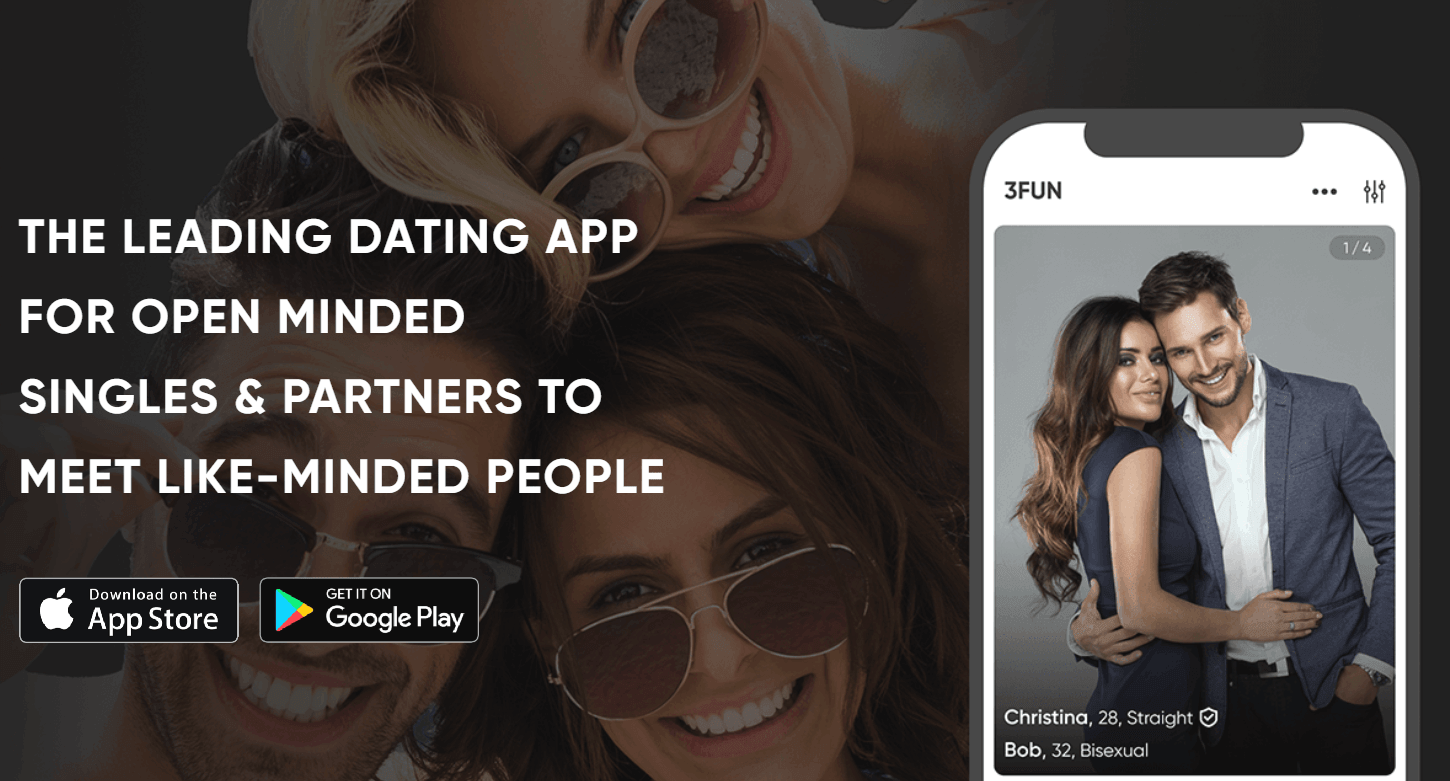
What 3Fun gets right. Free unlimited messaging for all users. Feeld limits free messaging; OKCupid’s free tier sits inside a monogamous-majority pool. 3Fun gives you full communication at zero cost. Couple accounts with sync chat and group messaging let both partners talk to a match in one thread. No screenshots, no relaying messages. Photo verification reduces fake profiles and catfishing, a persistent problem on Feeld where bots and abandoned profiles clutter feeds. Over 1 million members globally: smaller than Feeld or OKCupid, but enough for critical mass in mid-sized cities and above. VIP starts at $15 to $20 per month, cheaper than Feeld Majestic ($20 to $30) and OKCupid Premium ($35). The 12-month plan at $99.99 is the best annual value in the ENM space. Privacy is solid: dedicated email sign-up, profile visibility controls, no social media linking required.
Where 3Fun stumbles. The app leans hard toward threesomes and swinging rather than solo poly dating. If you’re a solo poly person seeking individual romantic connections, the couple-first design can feel like the wrong room. The user base is smaller than Feeld or OKCupid, which means limited coverage outside major cities. Fewer identity and orientation options than Feeld’s broad 22+ categories. Some poly circles dismiss the app for its focus on physical connection, though this says more about respectability politics than the app’s actual functionality.
Pricing. Free: unlimited messaging, basic matching, photo verification. VIP: $14.99 to $19.99 per month; three months $39.99 to $44.99; six months $59.99 to $69.99; twelve months $99.99. Priority Messages add-on: $9.99 to $29.99.
Thrives here. Couples exploring together, especially those new to ENM who want a low-risk, affordable starting point. Threesome-focused daters who want free messaging and photo verification. Anyone tired of paying $30 per month just to have a conversation on other apps. Get 3Fun on Google Play or Apple Store.
Look elsewhere if. You’re a solo poly person seeking primarily romantic connections (OKCupid or #open will serve you better), or you’re looking for an exclusively polyamory-focused community rather than the broader ENM and swinging spectrum.
4. #open: The ENM-Only Community, No Translation Required
#open is the one app where you never have to explain what ENM stands for. “I have a partner” is met with “me too” instead of “so you’re being unfaithful?” That is the entire premise. For people who have been the designated poly ambassador on every other platform, the relief is real.
What #open gets right. Every single user on #open has opted into non-monogamy. No filtering, no explaining, no defending. The app was built by the poly community, so the design decisions come from people who actually use it, not a product team guessing at what ENM daters need. Hashtag-based search replaces the swipe-and-hope model: search for #kitchentable, #relationshipanarchy, #kinkpositive, or #solopoly and find people who use the same language you do. Solo and couple profiles are both supported, with relationship structure labels that are specific rather than vague. The privacy architecture is community-minded: verified members, QR code check-ins for events, and no requirement to link social media. An estimated 320,000-plus users means a small pool compared to Feeld, but every single one of them is ENM.
Where #open stumbles. The user base is genuinely small. Outside major progressive cities (NYC, SF, LA, Portland, Seattle, Austin, London, Berlin), you may find very few active profiles. The UX is less polished than well-funded competitors: Feeld raised significant venture capital; #open is community-built, and it shows in the interface. Premium pricing structure is less transparent than competitors. Tier details aren’t as clearly documented as Feeld or OKCupid. Limited to no presence in more conservative regions is a structural problem for any ENM-only app.
Pricing. Premium tier available but pricing varies and is less transparent than competitors. Core functionality is accessible on the free tier.
The right fit. ENM daters who want a fully non-monogamous space and are in or near a major progressive city. Queer poly people who want to search by identity and community tags. Anyone whose primary frustration with other apps is having to educate every match about what polyamory means.
Not your match if. You’re in a smaller city or rural area (check local activity before investing time), you want a polished premium UX, or you’re looking primarily for casual encounters rather than community connection.
5. Pure: Privacy Above Everything
Most dating apps treat your data as an asset. Pure treats it as a liability. Profiles self-destruct, photos vanish, and your presence on the platform is designed to leave no trace. For poly daters who aren’t out at work, in their family, or in their community, that’s not a gimmick. It’s the entire reason to use the app.
What Pure gets right. Time-limited profiles auto-delete. Your data doesn’t sit on a server indefinitely; it evaporates. Photos shared in chats disappear after viewing. You stay anonymous by design: no social media linking, phone number only, pseudonyms encouraged. For poly daters in conservative regions, high-visibility professions, or situations where being outed carries real consequences, Pure’s privacy architecture solves a problem the other apps on this list don’t even acknowledge. A teacher in a small town can explore ENM without their profile surfacing on a parent’s phone. A lawyer at a conservative firm can date outside their marriage structure without professional risk. Pure’s vanishing-act design makes that possible.
Where Pure stumbles. Pure is not designed for polyamory. It’s a casual-dating app with privacy features. There are no ENM relationship labels, no partner linking, no community infrastructure. The time-pressure model (matches expire, profiles self-destruct) rewards fast decision-making, which works against the intentional communication that healthy ENM requires. The free tier is very limited; you’ll need to pay to get meaningful functionality, and what you’re paying for is privacy, not poly-specific features. The user base is small compared to mainstream apps. The anonymity model means less network effect and fewer people to match with.
Pricing. Free tier is extremely limited. Paid subscriptions unlock core functionality. Pricing structure emphasizes short-term access over monthly subscriptions.
Who thrives here. Poly daters with high privacy risk: public figures, professionals in conservative industries, people not out to family or colleagues. Those who value digital anonymity above community features or match volume.
Who should look elsewhere. You want a poly dating experience with community, labels, and relationship tools (use Feeld, OKCupid, or #open instead). You’re looking for ongoing relationships rather than time-boxed encounters. You want a usable free tier.
6. Grindr: The Unexpected Poly Player
Grindr never set out to be a polyamory app. But when you have tens of millions of queer users, broad geographic coverage, and a community where non-monogamy has been the quiet norm for decades, you end up being one of the most practical poly dating tools available, even if nobody calls it that.
What Grindr gets right for poly daters. The user base is massive and spans virtually every city and town. No other app on this list comes close to Grindr’s geographic reach. Non-monogamy is just how things work on the platform. Disclosing a partner doesn’t generate confusion or judgment; many users are in open relationships themselves. The free tier is genuinely functional: messaging, profile browsing, and location-based discovery all work without paying. If you’re looking for volume and variety within queer male spaces, Grindr outperforms every ENM-specific app combined. This isn’t an accident. Queer communities built non-monogamous norms long before apps existed. Grindr didn’t create that culture. It gave it infrastructure.
Where Grindr stumbles for poly daters. It’s designed for gay, bi, and queer men. Not relevant for straight couples, women, or non-binary people who aren’t in queer male spaces. Casual-encounter culture dominates the platform; finding relationship-oriented connections requires active filtering and clear communication. There are no ENM-specific features: no partner linking, no relationship structure labels, no poly identity options. The privacy model is location-based, which can be a concern for closeted users, though Incognito mode is available on the XTRA tier.
Pricing. Free: messaging, browsing, basic filters. XTRA: roughly $19.99 per month. Unlimited: roughly $39.99 per month (adds incognito mode, unlimited profiles, advanced filters).
The right fit. Gay, bi, and queer men who are poly or in open relationships and want the largest possible dating pool with zero ENM education required. Anyone who values geographic reach and a user base that already understands non-monogamy.
Not your match if. You’re not a man seeking men. You want poly-specific features like partner linking. You’re looking for community and relationship infrastructure rather than direct connection.
7. Bumble: Mainstream Muscle With ENM Awareness
Bumble wasn’t built for polyamory, but it’s been renovating. The app now includes non-monogamy relationship options, and its women-first messaging model has a side benefit for ENM: it filters out some of the low-effort noise that plagues other mainstream platforms. The question is whether the renovations are enough.
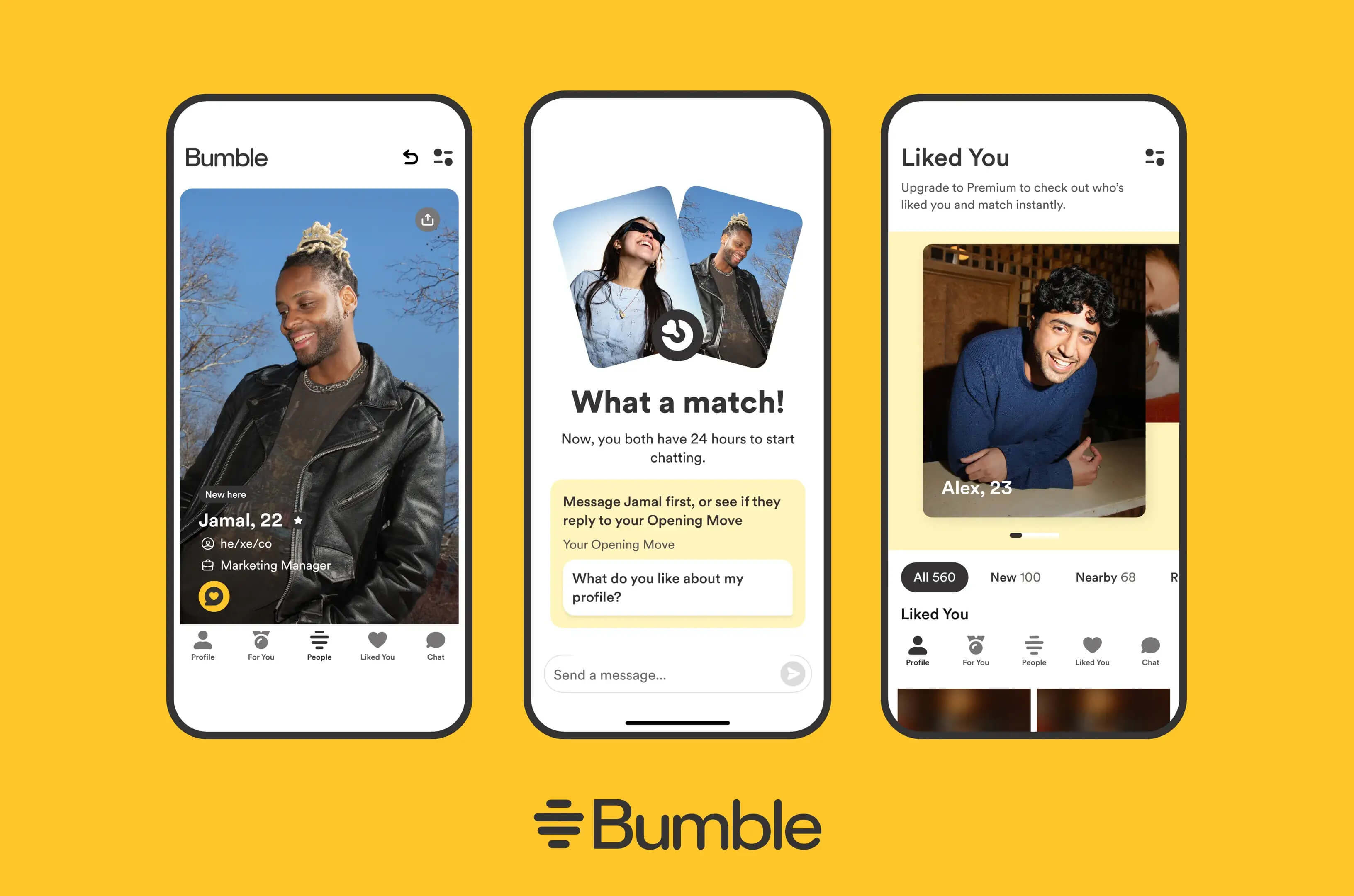
What Bumble gets right for poly daters. The user base is enormous: 50 million-plus users means active profiles in cities where dedicated ENM apps have zero presence. The non-monogamy relationship type option is visible on your profile, not buried in settings. Women message first, which shifts some of the power dynamic that can make ENM dating feel lopsided for women and couples. Incognito mode (a Premium feature) lets you control who sees your profile, which is useful if you’re not out as poly in your professional network. BFF and Bizz modes are separate from dating, so your profile doesn’t bleed into professional contexts.
Where Bumble stumbles for poly daters. The user base is overwhelmingly monogamous. You’ll spend significant energy explaining your relationship structure to people who swiped right without reading your profile. Some poly users report being flagged or having profiles removed for mentioning non-monogamy; enforcement is inconsistent. There’s no partner linking, no ENM-specific matching, no community features. Bumble acknowledges non-monogamy exists; it doesn’t build for it. The 24-hour message window creates pressure that works against the slower, more intentional pace that healthy ENM communication requires.
Pricing. Free: basic matching, messaging (within the 24-hour window). Premium: roughly $39.99 per month (one month), roughly $26.99 per month (three months), roughly $19.99 per month (lifetime option available).
Thrives here. Poly daters in smaller cities or rural areas who need a mainstream app with actual local users. Women who want to control the initial contact. People who are comfortable being upfront about non-monogamy and have the bandwidth to filter out mismatches.
Look elsewhere if. You want to avoid explaining non-monogamy to strangers (use Feeld, OKCupid, or #open). You’re looking for couple-friendly features like partner-linked profiles. You’re concerned about being reported or banned for disclosing your relationship structure.
8. MoreThanOne: The Completely Free Poly App
Every app on this list has a free tier. Most of those free tiers are barely functional: limited messaging, hidden likes, filters locked behind paywalls. MoreThanOne took a different approach. Everything is free, no ads, no locked features. The trade-off is a smaller user base, but for people who refuse to pay for dating apps on principle, it is the only option.
What MoreThanOne gets right. Completely free. No subscription tiers, no locked features, no ads. Every function (matching, messaging, filters, profile customization) is available to everyone. Linked profiles support couples and polycules. Unlike Feeld’s two-person partner linking, MoreThanOne is designed for multi-partner relationship structures. A polycule of four can link all profiles together rather than pairing off in twos. Advanced filters for relationship preferences are more granular than most paid apps offer. Data is encrypted in transit, and the privacy architecture is decent for a free app. The design is transparency-focused: the app is upfront about what it is and what it isn’t.
Where MoreThanOne stumbles. Very small user base. This is a newer app without the marketing budget of Feeld or the brand recognition of OKCupid. Limited geographic coverage means sparse activity outside major progressive metros. Fewer features than established competitors; what’s there works, but the depth isn’t comparable to Feeld or OKCupid. Nobody knows if the app will still be here in two years. A completely free model with no ads makes the math hard to figure.
Pricing. Free. All features, no exceptions.
The right fit. Poly daters on a budget, students, or anyone who refuses to pay for dating apps. People in polycules who want multi-partner profile linking. Anyone curious about poly dating who wants to try without financial commitment.
Not your match if. You need a large, active user base (start with OKCupid’s free tier instead). You want polished UX and regular feature updates. You’re concerned about an app’s long-term viability.
FAQ
What is the best dating app for polyamory?
Feeld has the largest ENM user base (3 million-plus members) and the most inclusive identity options. But “best” depends on what you need. OKCupid wins for free users and compatibility matching. 3Fun is strongest for couples exploring together. #open delivers ENM-only community. Your location, budget, and relationship style matter more than any ranking.
Do I have to pay for poly dating apps?
No, but free tiers vary dramatically. OKCupid’s free tier includes full messaging and matching. MoreThanOne is entirely free. 3Fun offers free unlimited messaging. Feeld’s free tier is restrictive: you can’t see who liked you, and messaging is limited. Most premium tiers run $15 to $35 per month. Start free. Upgrade only if the app proves useful in your area.
Can I use Tinder or Bumble if I’m polyamorous?
Yes, but expect more filtering and explaining than on ENM-specific apps. Both now include non-monogamy relationship types, but most users are monogamous. Some poly users get reported. State your relationship style clearly in your first bio line. Bumble’s women-first model adds a layer of control for women and couples. OKCupid remains the strongest mainstream option for poly dating.
Is Feeld worth paying for?
It depends on your tolerance for bugs. Majestic ($20 to $30 per month) unlocks seeing likes, incognito mode, and advanced filters. But paid features are frequently buggy, customer support is nearly nonexistent, and many users report buyer’s remorse. Try the 7-day free trial first. Check whether there are active users in your area before subscribing.
What’s the difference between polyamory and open relationships on dating apps?
Polyamory involves multiple loving relationships with full knowledge and consent. Open relationships typically mean sexual non-exclusivity within a committed partnership. Swinging is couple-to-couple or group exploration. Most apps let you specify which style you practice. Be honest about what you’re offering. Mislabeling wastes everyone’s time. For more details about how they differ from each other, check this guide >>
How do I stay safe and protect my privacy on poly dating apps?
Use a dedicated email for dating accounts. Don’t link social media. Enable incognito mode where available (Feeld, Bumble). Move conversations to Signal before sharing personal details. Feeld’s incognito mode, 3Fun’s photo verification, and Bumble’s private mode protect you from being visible to colleagues or family. Scrub location data from photos before sharing. Delete dormant accounts rather than abandoning them.
What are the biggest red flags on poly dating apps?
Profiles using “we” language that treats a third person as an accessory. People who are “just exploring” without ethical grounding. Hidden partners who don’t know about you. Refusal to discuss safer sex practices. Trust your instincts. A profile that makes you feel like an accessory is probably signaling exactly what the experience will be. Clear, specific profiles are the green flags to pursue.
How do I write a good poly dating profile?
Lead with confidence, not apology. State your relationship style in the first two lines. Be specific about what you’re offering and what you have capacity for. Use “I” statements: speak for yourself, not your partner or partners. Include four or more varied photos (solo portrait, candid, activity, full-body). Avoid jargon overload and language that treats singles as accessories. Your profile should answer one question: what would dating you actually look like?