What is SOGI? It stands for sexual orientation and gender identity. It is not a group you join, and it is not a synonym for LGBTQ. These are two separate attributes everyone has, and they apply to you whether or not you are trans or non-binary.
It turns up in laws, survey questions, and intake forms, usually with no explanation. What it means in practice is more precise than the acronym suggests.
This piece settles five things: what each word covers, why the acronym exists, what the longer versions add, where intersex sits, and where you will meet the term. The two words come first, because everything else follows from keeping them apart.
Sexual Orientation vs Gender Identity: What Each Word Means
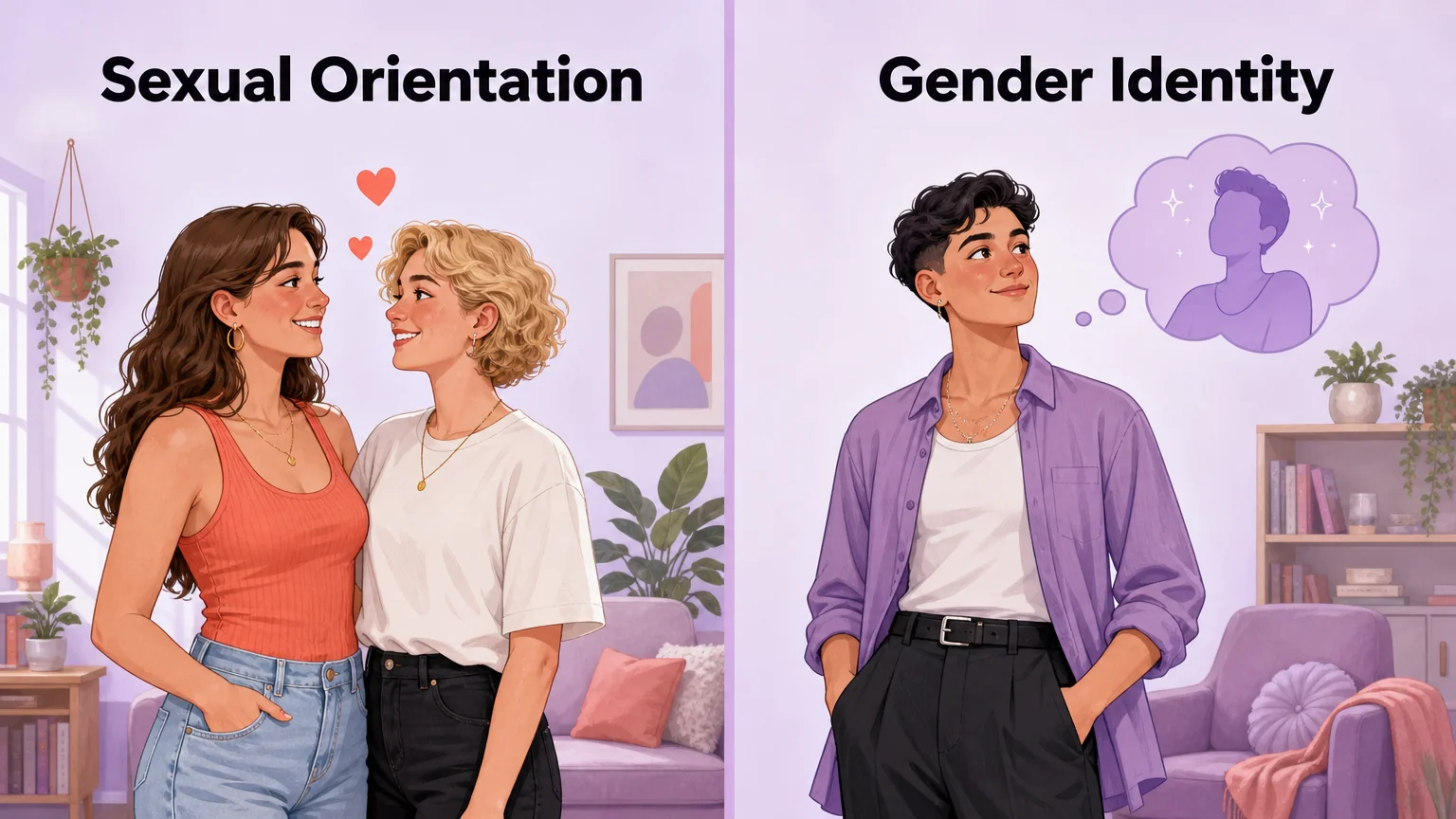
Knowing someone is a trans woman tells you nothing about who she is attracted to. A trans woman attracted only to women would usually call herself a lesbian. Gender and attraction sit on separate axes, which is why SOGI has two words in it.
Sexual orientation is who someone is drawn to: romantic and emotional attraction, not only sexual attraction. The APA Dictionary of Psychology defines it as “a person’s sexual and emotional attraction to another person and the behavior and/or social affiliation that may result from this attraction.” The entry’s examples are lesbian, gay, heterosexual, straight, asexual, bisexual, queer, polysexual, and pansexual (also called multisexual and omnisexual). Straight and asexual belong on that list because an orientation is not a minority trait.
The definition carries two corrections. You can know your orientation without ever having had a sexual experience, and sexual preference is the wrong phrase, because preference implies a choice.
Gender identity is the internal sense of being a man, a woman, non-binary, or something else. The APA’s entry, revised in March 2026, describes “a person’s psychological sense of self in relation to their gender,” which may or may not match the sex assigned at birth.
Keep the two apart and the terms stop colliding. A trans man can be gay, straight, bisexual, or asexual. His identity says nothing about his attraction, and his attraction says nothing about his identity. Cisgender people carry both attributes too.
Answer who am I drawn to and what is my gender as two separate questions. If both come without confusion, you already have the distinction that matters.
Why Say SOGI Instead of LGBTQ?
If LGBTQ already exists, why did anyone need a second acronym?
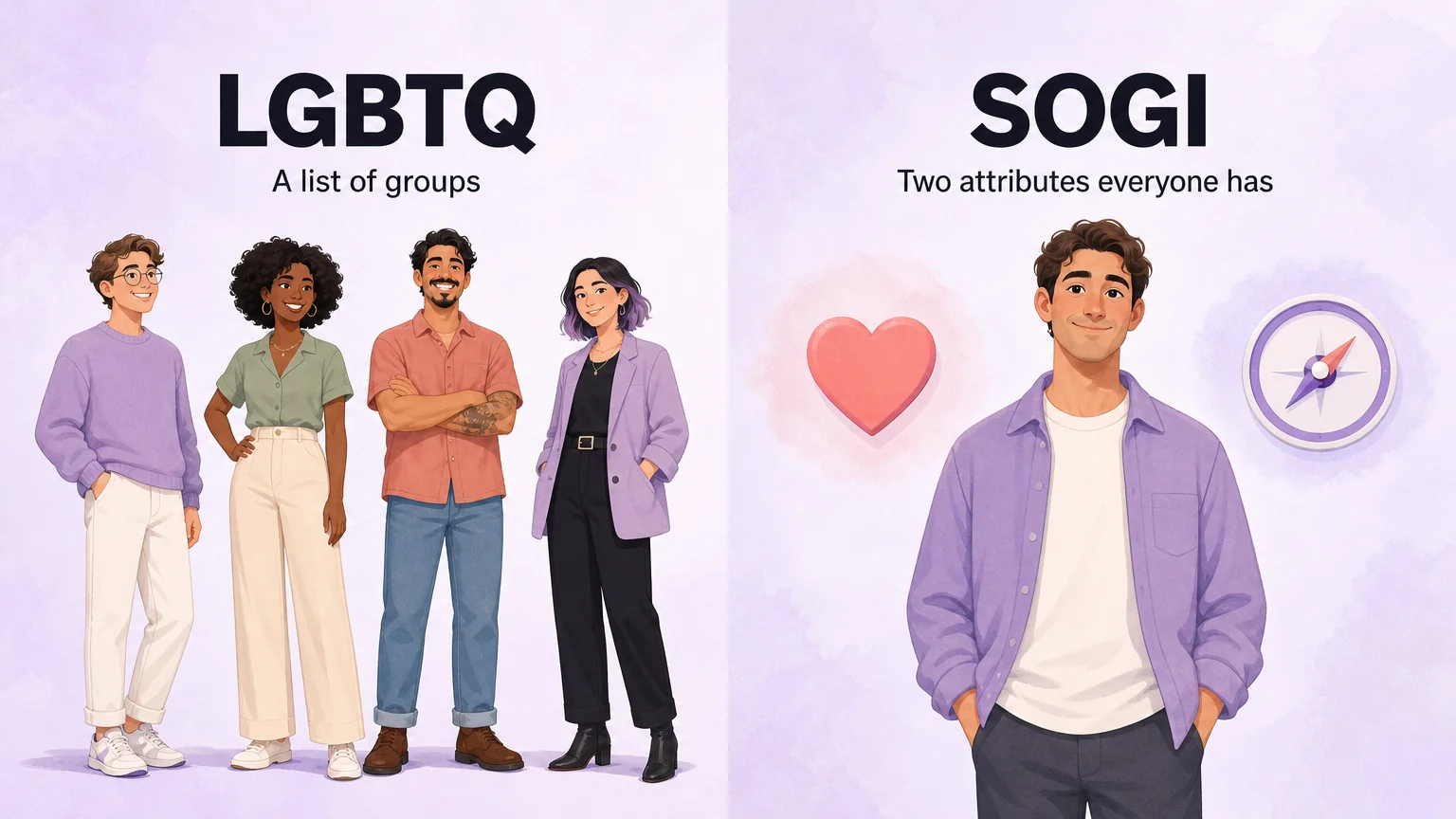
Because the two do different jobs. LGBTQ is a list of specific communities, each with its own history and its own priorities. SOGI names two attributes that every person has. GLAAD puts it in one sentence: “The acronym refers to all humans with sexual orientations and gender identities, including cisgender and straight people.”
That is what makes it usable in law and statistics. A discrimination rule has to apply to a whole population, and a survey question has to be answerable by everyone who receives it. A list of groups cannot be written as a rule that covers everyone. A pair of attributes can, which is where the phrase SOGI-based discrimination comes from.
The framing entered international human rights law through the Yogyakarta Principles, adopted at a meeting of 29 experts from 25 countries in Yogyakarta in November 2006. In June 2016, the UN Human Rights Council created an Independent Expert on sexual orientation and gender identity.
There is a limit. A term that covers everyone cannot do the work of naming a specific group. GLAAD makes the same point: when the people you are writing about have marginalized identities, also name the specific groups you mean. That is why one document often uses both words.
Universality is a tool for writing a rule that applies to everyone. It is not a claim that everyone’s experience is the same.
SOGI vs SOGIE vs SOGIESC: What the Extra Letters Add
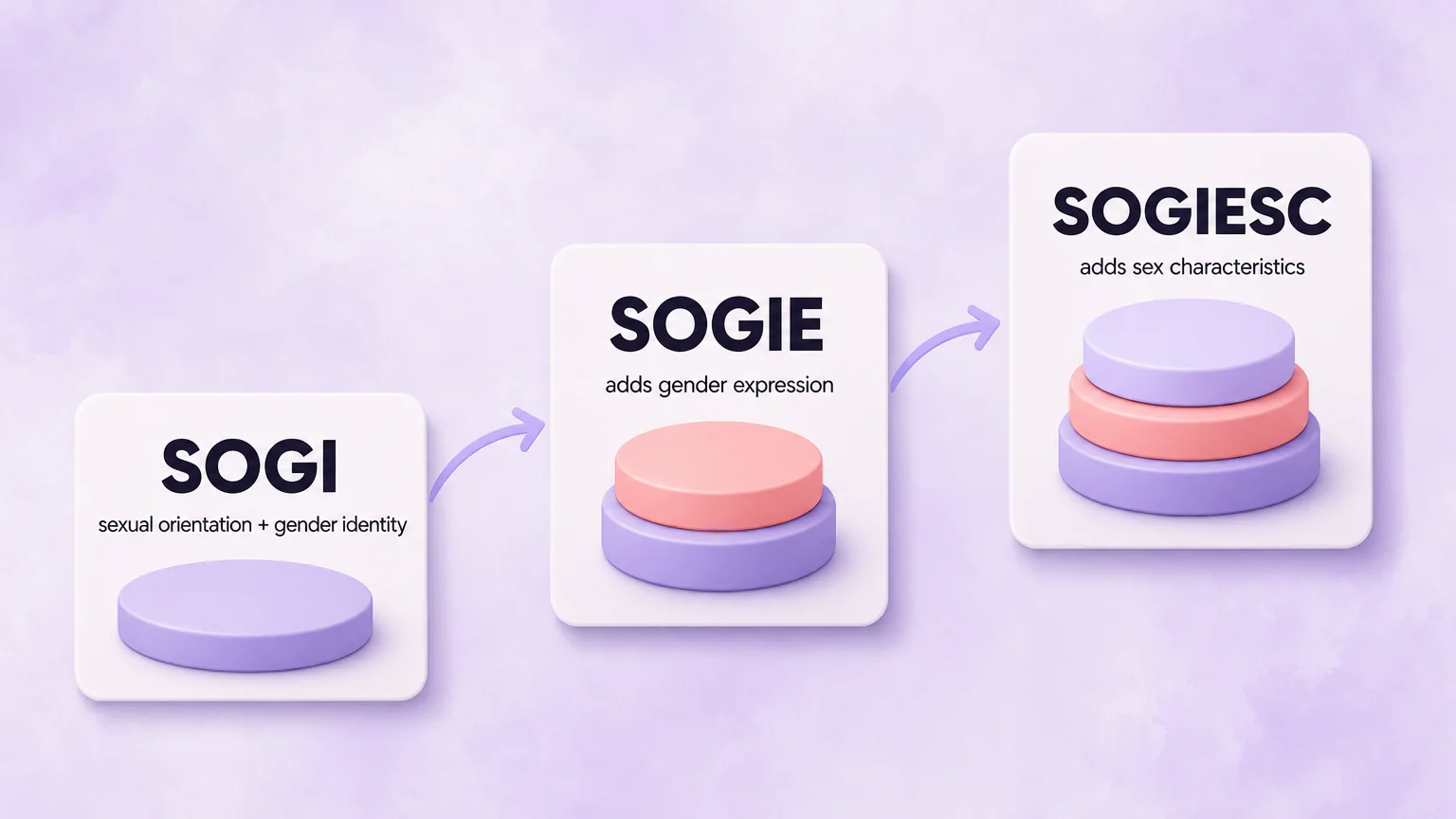
The versions are not competing spellings. Each one adds a piece, and a ten-second read tells you which one a document uses.
SOGI is sexual orientation and gender identity. SOGIE adds gender expression, meaning how someone outwardly presents gender in clothing, voice, and manner. Presentation is not a reliable signal of identity, which is why it gets its own letter. SOGIESC adds sex characteristics, meaning the body: chromosomes, hormones, anatomy, and pubertal features.
The letters were added for a reason, and the reason has a date. The original framing was SOGI. The Yogyakarta Principles plus 10, adopted on 10 November 2017, recognized gender expression and sex characteristics as distinct grounds. That is when the longer acronym became standard in international human rights work, and it explains why an older document says SOGI while a newer one says SOGIESC.
SOGIESC is more common outside the United States. In practice the short form has drifted: some major institutions use SOGI as a label while defining it to cover all four, so a document saying SOGI may mean the long version.
That gives you a working rule. If the policy around the word covers bodies and presentation, it is SOGIESC under a shorter name. If it covers only attraction and identity, the shorter word is accurate and incomplete.
Use the word the document uses, and know what it is carrying.
Is Intersex Part of SOGI? Sex Characteristics Explained
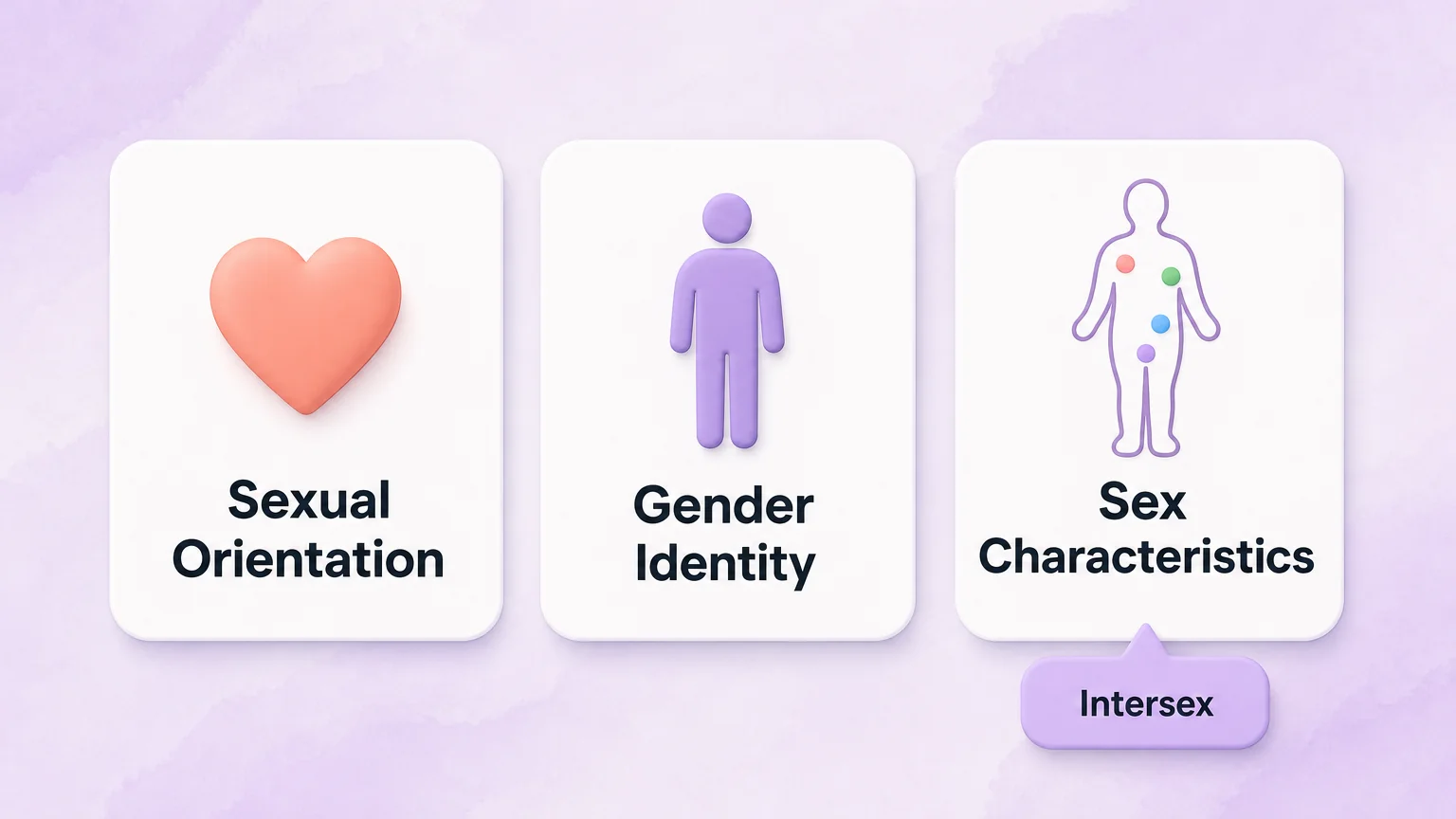
Intersex describes people born with sex characteristics, meaning genitals, internal reproductive organs, chromosomes, hormones, or pubertal features, that fall outside typical male or female bodies. It is about the body, not about attraction and not about gender. GLAAD’s guidance is blunt: do not confuse having an intersex trait with being transgender.
So intersex is neither a sexual orientation nor a gender identity. Intersex Human Rights Australia states: “Intersex is about sex characteristics. It is distinct from legal sex, sexual orientation and gender identity, and not contained within LGBT.” Intersex people hold the same range of orientations as anyone else. In a study of 272 intersex Australians, reported at a UN consultation in 2017, 48% described themselves as heterosexual.
SOGIESC exists because SOGI leaves bodies out. That argument came from intersex organizations, and it is the reason the letters keep changing. The intersex movement has a rule for initialisms: “don’t add the I if you don’t include intersex in your policy.”
Identity language has a limit here. IHRA notes that identity frameworks sit awkwardly on intersex people, because a rights violation can arrive before a person is in any position to express an identity at all.
If someone says SOGI covers intersex, the accurate answer is that it does not. SOGIESC is the version that does.
Where You Meet SOGI: Forms, Surveys, and Discrimination Law

SOGI turns up on surveys, in bias-reporting categories, and in anti-discrimination statutes.
Forms ask for the parts separately, never as one question. The pattern is a two-step gender item, sex assigned at birth and then current gender, plus a separate sexual orientation question. The US Census Bureau’s American Community Survey tests exactly this design, and it tested a separate intersex item reading “Were you born with a variation in your physical sex characteristics?” rather than folding intersex into gender identity. The rule that follows: ask the components separately, and never answer for someone else.
The phrases matter. SOGI data is the set of answers collected. SOGI-based discrimination means being treated worse because of either attribute, and it takes two forms: direct, where someone is turned away for who they are, and indirect, where a neutral rule excludes people in effect. SOGI-inclusive describes a policy written so that it does not exclude.
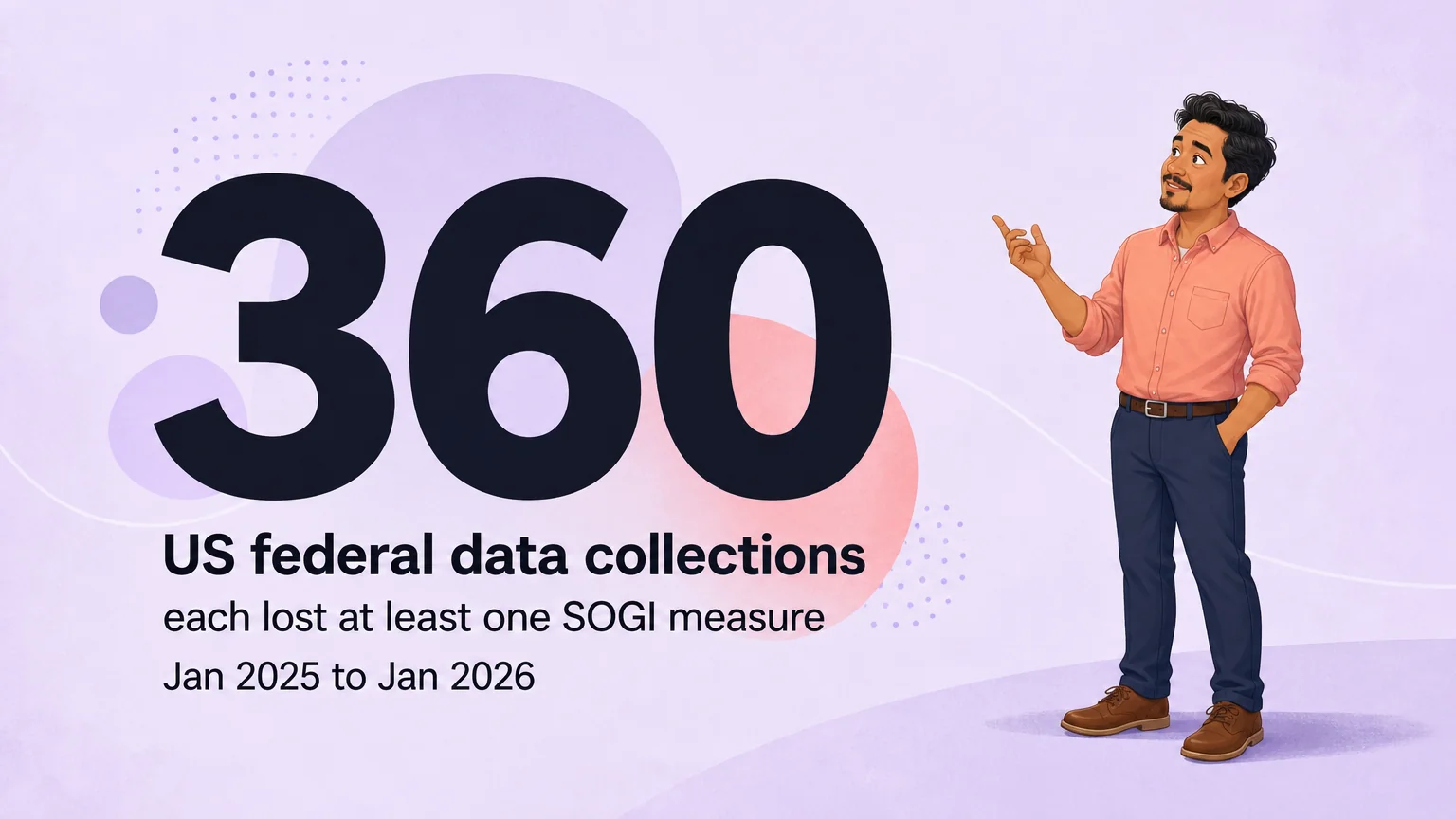
The Williams Institute counts roughly 360 US federal data collections that each lost at least one SOGI measure between January 2025 and January 2026.
When the word appears on a form, it is asking for two separate things. When it appears in a law, it is naming two grounds.
Frequently Asked Questions About SOGI
What does SOGI stand for?
SOGI stands for sexual orientation and gender identity. They are two independent attributes that every person has, which is why the term covers straight and cisgender people and is not a synonym for LGBTQ. Knowing one tells you nothing about the other.
What is the difference between SOGI, SOGIE, and SOGIESC?
SOGI is the baseline: sexual orientation and gender identity. SOGIE adds gender expression, meaning how someone presents. SOGIESC adds sex characteristics, meaning the body. The longer form is more common outside the United States and became standard after the 2017 Yogyakarta update.
Is intersex a sexual orientation or a gender identity?
Neither. Intersex describes sex characteristics, so intersex people hold the same range of orientations and identities as anyone else. Intersex Human Rights Australia describes it as distinct from orientation and identity, and not contained within LGBT. Sex characteristics are a separate measurement from both.
Are asexual people covered by SOGI?
Yes. Asexual is an orientation, not the absence of one. GLAAD lists it alongside heterosexual, lesbian, gay, and bisexual. Aromantic is a separate axis about romantic attraction, so the two can occur together or independently.
Can you tell someone’s SOGI by looking?
No. Presentation is not identity, and it is not a reliable signal of orientation either. In survey and intake practice the rule is that only the person can say, so everyone else should ask. The question to ask is how someone describes themselves.