There are no ready-made role models for gay life. Nobody explains what it is like to be gay, so the question of how to be gay often gets answered the hard way: alone, later than expected, with no one to compare notes with. This guide is that map.
It is not one skill, and it is not a test you pass. If you are asking yourself “am I gay,” or if you already know and want the practical version of what comes next, this guide serves you either way. Being gay is easy to treat as a single announcement you make. It is closer to a life you build, in stages, at your own speed.
Three ground rules before we start. There is no test and no gay card, no set of tastes or milestones to collect first. Coming out is a decision, not a duty, and your safety comes before anyone else’s comfort. This guide is for adults. If you are a teenager, The Trevor Project (1-866-488-7386, or text START to 678-678), the LGBT National Youth TalkLine (800-246-7743) and Q Chat Space (qchatspace.org) are there for you, whether or not it is safe to be out at home.
Step 1: Work Out What You’re Actually Feeling
Learning how to be gay starts with a question you can sit with, not a certainty that never fully arrives. Ask yourself “am I gay,” and let the answer be provisional.
There is no single test, and no one can hand you one that settles it. What works instead is watching several things over time and letting a pattern form.
Start with five questions. Who are you drawn to, in the abstract. Who shows up in your fantasies. What you have done, if anything. Who you feel romantic about, as opposed to only sexual. And how you would describe yourself if nobody were listening.
Those answers often do not line up. That mismatch is the usual reason people feel confused, not proof that something is wrong with them. Attraction, behavior and identity are separate things, and they can point in different directions for years.
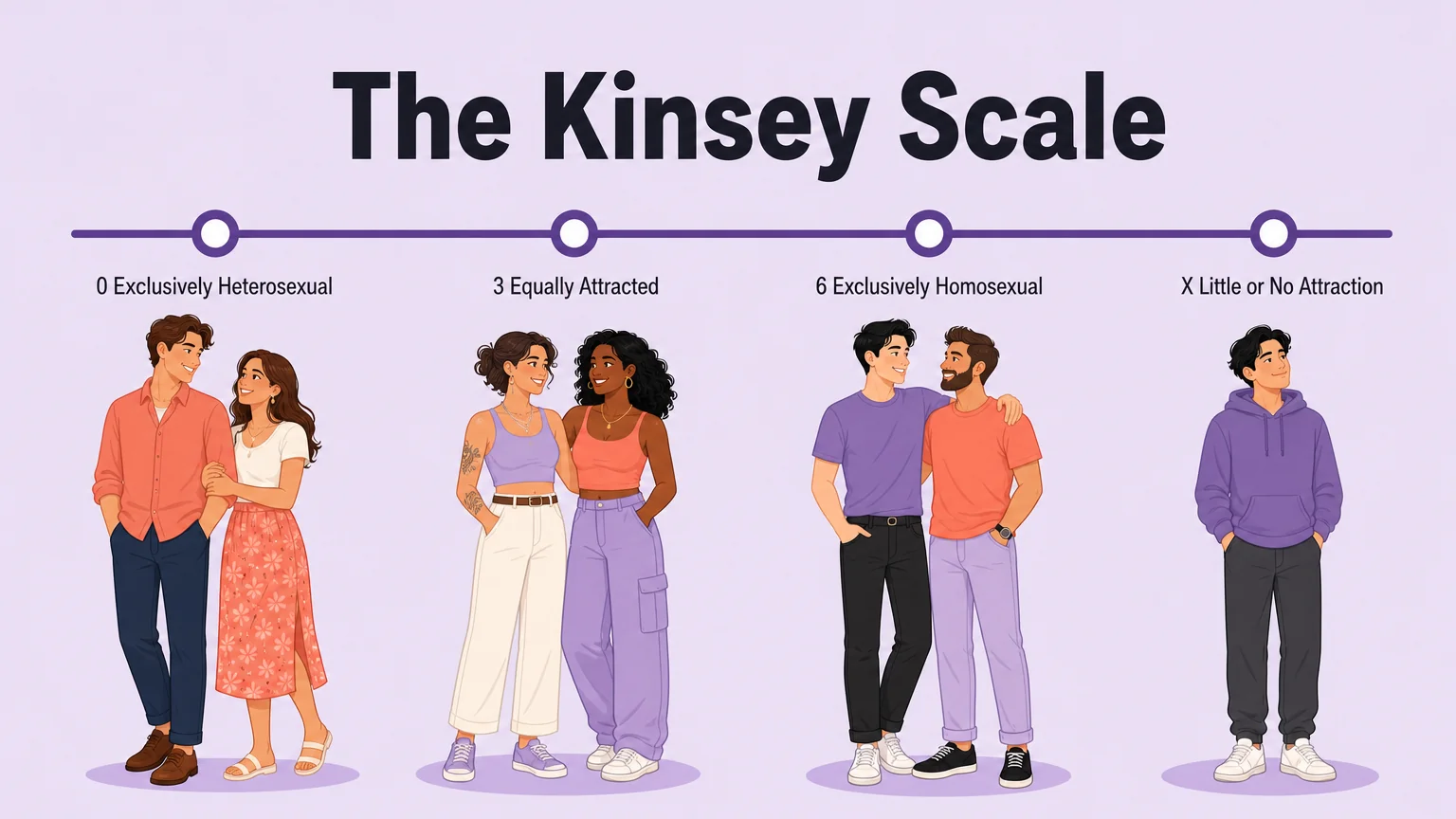
Attraction is also not fixed, and it is not all or nothing. The Kinsey scale runs from 0, exclusively heterosexual, to 6, exclusively homosexual, with an X for people who feel little or no socio-sexual attraction. A study of 17,785 people across the US and 47 other countries supported what researchers call a fluid continuum, where the words gay, straight and bisexual fit most people loosely.
That same looseness is why the label you pick now may not be the one you keep. A word that fit you a few years ago can fit less well today. That is a continuum seen from the inside, and revising your answer later only means the picture got sharper.
Two people describe that late arrival well. Adrian Smoothy, who came out at 27 after growing up in a small English town, said: “you don’t have to be a perceived part of the acronym. You could be a whole bit in between.” A woman looking back on her own late coming out said: “I always felt like I had to marry a man… I never considered that being queer could be an option.” Both were late to their own answer. Neither was wrong about it.
One note if you are a girl or a woman weighing a close friendship: curiosity and attraction can feel similar, but they are not the same. Curiosity says “I want to learn more about this person.” Attraction lingers.
You have a provisional answer now, and permission to revise it as you go.
The verdict: a label is a description you write for yourself. You are allowed to edit it.
Step 2: Answer the Question You Can’t Stop Asking: Can You Change It?
This is the question a lot of people carry, and it deserves a straight answer instead of a debate.
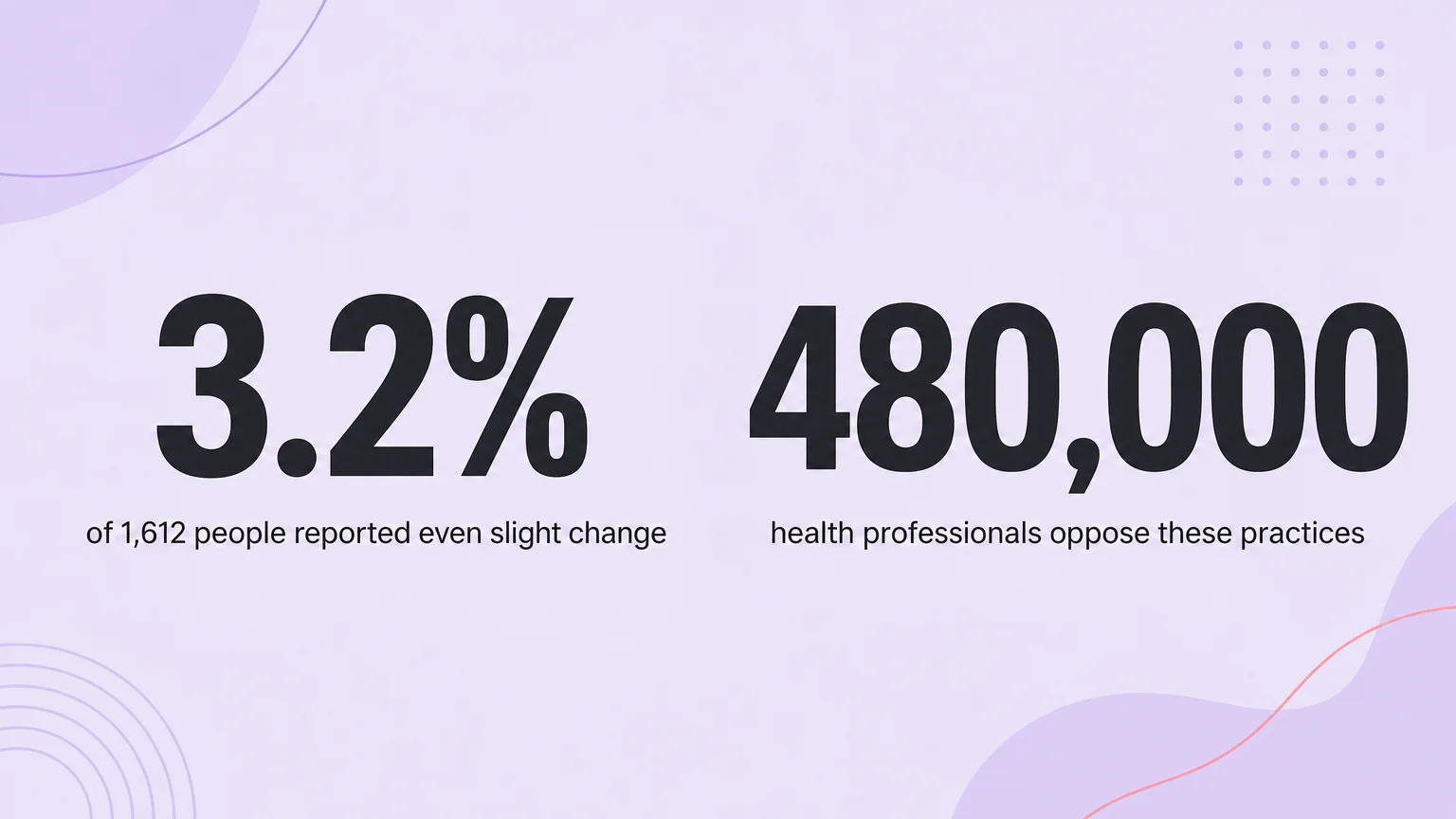
Attraction is not something you choose or convert. No one can make you straight, and no one can make you gay, by effort or will. Same-sex attraction and gender nonconformity are not illnesses. The American Psychological Association and other bodies representing more than 480,000 health professionals agree, and the belief that they need treatment is a scientifically discredited one.
Keep one distinction clear: efforts aimed at sexual orientation and efforts aimed at gender identity are different things, and both are opposed by every major professional body. If you are trans, a question about your orientation is not a question about your gender, and neither one is a condition to fix.
Now the evidence, for anyone hoping change work will hold. In a 2015 study of 1,612 people, only 3.2% reported even slight changes in orientation. Youth whose parents tried to change their orientation had roughly three times the likelihood of high depression and suicide attempts.
A 2020 study found adults exposed to gender identity change efforts had two-fold higher odds of lifetime suicide attempts. A 2022 review put the annual U.S. economic burden of these practices at $9.23 billion. The professional position has only tightened, from 1997 through 2025, which means this is settled rather than contested.
If you were hoping for a different answer, that is understandable, and it is not something to be ashamed of. You are allowed to grieve the life you pictured.
This question also lands differently depending on who is asking. If you are closeted and hoping the feelings will fade, the plain answer is that they rarely do, and that forcing them underground costs far more than it saves. If you are mostly straight and wondering whether you could become gay, the answer is the same. Orientation is not a lever you pull. What changes over time is not the attraction itself, but what you decide to do about the life around it.
A better question than “Did I become gay?” is “What exactly changed?” Most people are not becoming something new so much as finally naming something that was always there.
Then put one fear down. Being gay is not a mental illness, so there is nothing here to cure. The real choice in front of you is not whether to be gay. It is whether to keep spending your life hiding something you did not pick. That choice is yours to make, deliberately, on your own timeline.
By now you should be able to say plainly that this is not a defect to be treated.
Direct recommendation: do not pursue change or suppression efforts. If you are in distress, talk to a supportive, affirming professional or reach a crisis line you trust.
Step 3: Move From Knowing to Accepting
Knowing and accepting are two different jobs, and most of the exhaustion comes from the second one. One gay creator put it plainly: “There is a big difference between knowing that you’re gay and actually accepting it… if you’re always trying to numb down your feelings and numb down your desires, and if you’re just trying to bury them, well, they’re going to come back in your life and just haunt you.” The hiding, not the orientation, is what drains people.
There is a name for how that pressure works. Discrimination, rejection and small daily slights do not stay outside you. They turn inward, into self-criticism, concealment and loneliness, and that inward turn drives the higher rates of depression and anxiety among LGBTQ+ people. Researchers call this minority stress.
What helps is trainable: self-compassion and mindfulness work upstream, buffering the path from rejection to shame.
Then there is the “not gay enough” fear, which has a name. Bi people are routinely recategorized by whoever they are dating, “with a girl, you’re straight, with a guy, you’re gay,” and one participant in the research asked simply, “why do I always have to justify myself?” Trans men are sometimes told they need particular surgeries or experiences to count as gay men. There is no such requirement, only an opinion held by whoever said it.
The cost of this erasure is measurable: bisexual men are 6.3 times and bisexual women 5.9 times more likely to report being suicidal than heterosexual people. That is a reason to find support, not a forecast.
Part of why being late feels so alienating is that gayness is something people learn from one another. It is closer to a practice than a fixed state. So if you feel late to a culture you were apparently supposed to already know, that says nothing bad about you. It is what happens when no one gave you the map on time.
It is allowed to be late. As one woman coming out later in life said: “For years, I thought something was wrong with me.” By the end: “I am worthy and I accept myself as I am.” There is no expiration date on being yourself. Many people coming out in their 30s, 40s or later describe it as a second adolescence, and that is a phase worth having, not a symptom.
One clear line on mental health. If you are persistently low, anxious or having thoughts of suicide, that is not a character flaw and not proof you cannot have a good life. Talk to an affirming therapist, and use crisis support right now if you need it.
You have stopped waiting to feel ready, and started treating acceptance as something you do.
The verdict: acceptance is a practice you build, and it rewards repetition.
Step 4: Decide Whether, When, and Whom to Tell
Coming out is optional. It is a risk-weighted decision, not a rite of passage you have to complete. Waiting, or never telling certain people at all, is a legitimate choice, and sometimes a necessary one.
Your safety outranks disclosure. There is no prize for telling people early.
To judge the risk, work through the variables rather than the feeling. Ask whether your housing, food or rent depends on the person you would tell, and whether your income, tuition or insurance could be cut off. Ask whether your state or employer protects you, how public your job is, and how religious or reactive your family is.
High family rejection in adolescence is linked to more than three times the likelihood of illegal drug use and more than eight times the likelihood of attempted suicide, and 57% of LGBTQI+ youth report some form of parental rejection. None of that means hiding forever. It means choosing your moment with your eyes open.
If you are young, this pressure is heavier and it deserves a straight answer. A trans teenager described it: “Being a child, it can feel like you have a lot of responsibility towards your parents… We want to maintain a good relationship with them and can even be dependent on them financially or otherwise. And this unfortunately can cause difficulties if we are trans.”
Another put the daily reality simply: “So this is how it feels like to be gay. But like. In a homophobic parents kind of way.” It is okay to wait. You can be out to friends and not out at home. Most young people tell friends before family, and most have not told everyone in their family.
School staff should not out you without permission, but rules vary. Eleven states have passed laws that require or encourage notifying parents, so check where you live. GLSEN (glsen.org) can tell you your rights. Reach The Trevor Project (1-866-488-7386, or text START to 678-678), the LGBT National Youth TalkLine (800-246-7743) or Q Chat Space, and do it from a phone you control.
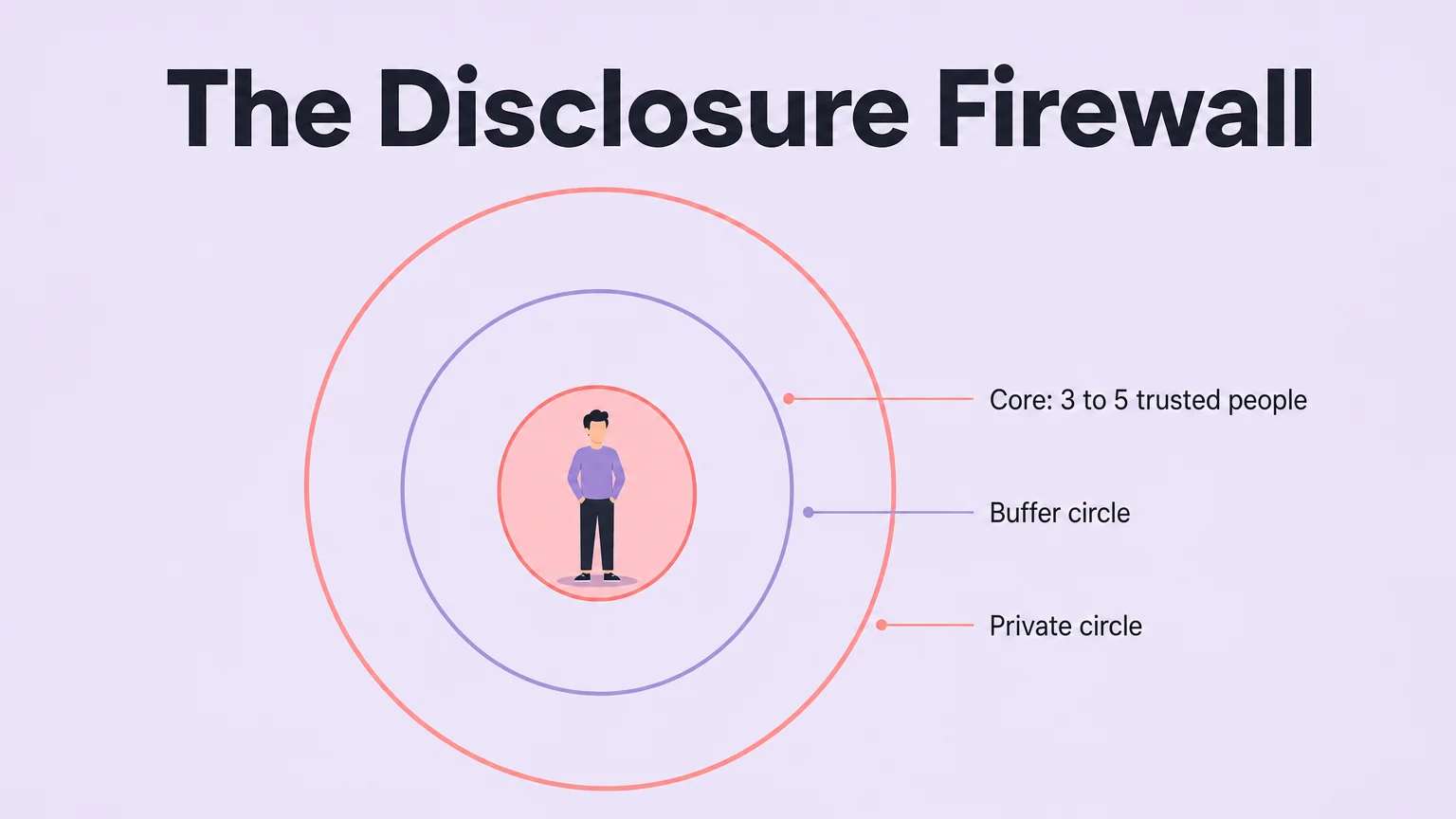
For everyone, staged and partial disclosure beats one big announcement. Think of it as an information firewall. Keep a core of three to five trusted people, a wider buffer circle, and a final circle you keep entirely private.
Tell the people who know who is on your not-out list, so they do not share it for you.
You should have a short list of safe people, a short list of not-yet people, and no guilt about either.
Quick comparison: telling now is worth it when your housing, money and safety do not depend on the person, and when you need the relief more than the risk. Waiting is worth it when disclosure could cost you a roof, a tuition check or your physical safety. Full disclosure tells everyone at once; staged disclosure tells the safe people first and lets the rest wait. When in doubt, stage it.
Step 5: Come Out on Your Own Timeline
Here is how to tell people, and what to expect afterward.
Do it your way, one person at a time, and treat it as a process rather than a single event. A simple script helps. Acknowledge what the other person may be feeling, share your own experience, then say clearly that you value the relationship.
Set your expectations with the timeline rather than the fantasy. Coming out is a process, and it keeps running after the conversation ends. Your own adjustment is usually the quicker one. Family acceptance tends to trail well behind it, and the people closest to you may need a while to catch up. Expect at least one important relationship to change shape. Some of that settles on its own. Some of it becomes a different, better shape.
There is a part of this that rarely makes the highlight reel. One man described it after coming out later in life: “the first thing I felt was relief… but relief has a strange way of fading quickly. Because once the truth is spoken, life begins to rearrange itself. And sometimes it rearranges itself violently… Nobody prepares you for the practical questions that come after coming out.”
That part is logistics, not courage. Where do I live now. How do I rebuild a relationship with an ex-wife. What do I tell my kids. Those questions have answers, and they are survivable.
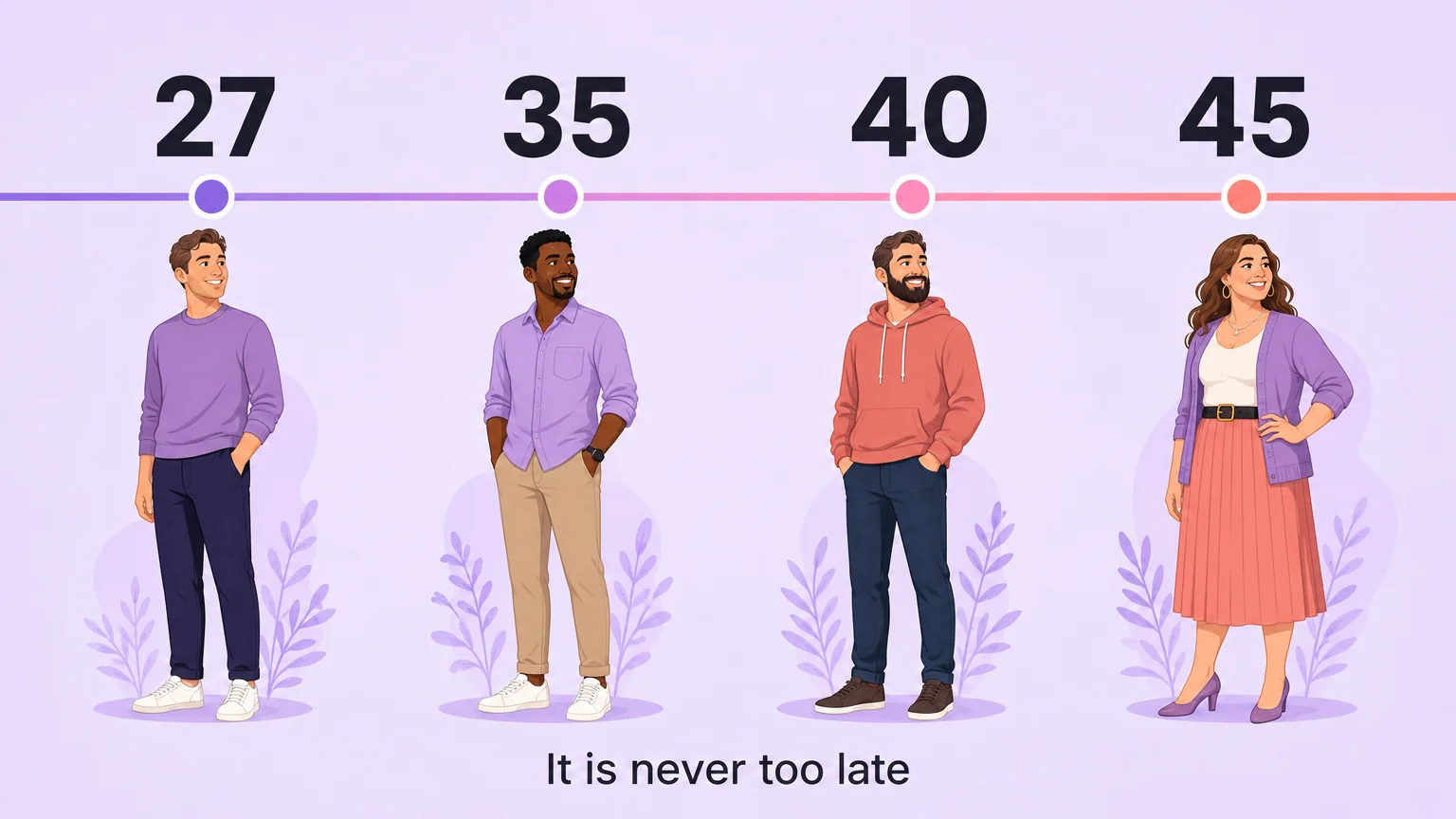
It is also not too late, at any age. Billy came out at 35, after nine years of marriage and children, and did not recognize who he was until adulthood. Stephen came out around 40 and described it as “breathing on one lung all my life and suddenly the other lung inflated.”
Chloe lived about 35 years as the person the world expected, then came out at 45, calling her old persona an “Iron Man suit” that kept her safe but locked her in. And coming out is not a one-time event. One creator recorded his coming-out story at 18, deleted it, then told it again at 30, because the story keeps changing as you do.
If you are trans, loving your parents and depending on them can make this harder, and that is normal. Parent dynamics differ from family to family. If you are bi, expect that some people will try to define you by whoever you happen to be with. You do not owe anyone a defense.
You now have a plan for the first one or two conversations, and no expectation that they will go perfectly.
Direct recommendation: tell the safe people first. Let the rest take the time it takes, including the ones who need a while to catch up.
Step 6: Find Your People

No bar, no center, no queer friends nearby. Community still gets built from there, and it does not require a big city.
Build community before or alongside dating, not after. People who come out later often skip this step, and it makes everything else easier. One coming-out coach puts it bluntly: building queer community matters more than dating anyone. Friends first.
If there is no bar or center near you, start online and then go local. Search Facebook for “LGBTQ” or “Queer Exchange” plus your town or region. Join interest-based Discord servers, or start one. A queer teenager in Eads, Colorado, population about 650, built a server connecting rural LGBTQ+ teens across the Eastern Plains. That is what community looks like with no building for it.
For friendship without dating pressure, try apps like Bumble BFF or Lex. Use Meetup for LGBTQ book clubs, hiking or improv, and ordinary interest groups too. Where they exist, LGBTQ sports leagues such as OutLoud Sports, Stonewall Sports and IGLFA offer the same. Then build one local touchpoint of your own, a monthly happy hour or a standing dinner. Belonging comes from repetition.
Dating is one more route to the same thing. 3Fun is built for gay, bi, trans and queer users, and for couples and singles together.
If your faith matters to you, you do not have to choose between it and being gay. The United Church of Christ has more than 1,700 “Open and Affirming” churches. The ELCA uses a “Reconciling in Christ” designation, and United Methodist “Reconciling” congregations gained ground after the church removed its restrictive language at its 2024 General Conference.
Metropolitan Community Church and GayChurch.org are two more routes in. Verify the individual congregation, since a label does not always bind a local church. Members of one affirming church described acceptance as unquestioned inclusion, not a pride flag on the wall, while others moved from “I’d rather be dead than gay” to an identity that was celebrated, not merely tolerated.
Bi and trans people are sometimes treated as “not queer enough,” and some lesbians mistrust bi or newly out women and fear being “your experiment.” That fear comes from someone else’s pain, not from the person in front of you. It is the spaces’ problem to fix, not yours to absorb.
You should have at least one recurring place where you are expected, and at least one route to more.
Best for and skip if: online groups are best if you are rural, closeted or newly out. Sports leagues are best if you want company with a shared activity attached, and worth skipping if you would rather talk than play. Affirming congregations are best if faith is central to you, and worth skipping if religious settings have only ever hurt you.
Step 7: Date Without Burning Out
Weeks of swiping with nothing to show for it can start to feel like proof that the problem is you. It is not.
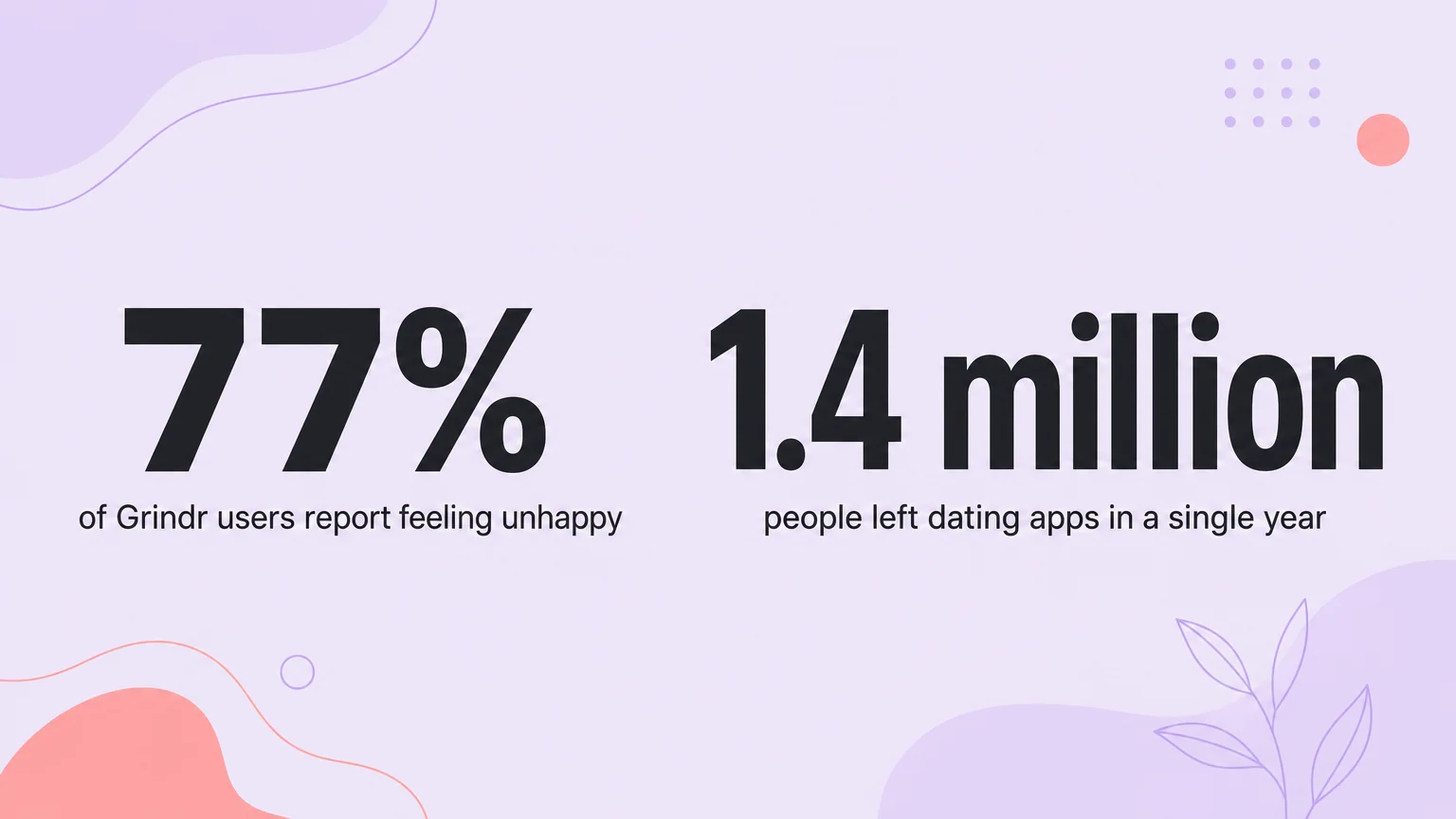
Know the landscape first. Dating apps are how most LGBTQ+ people meet right now, and most of them are also tiring. About 77% of Grindr users report being unhappy using it, and roughly 80% of younger app users describe burnout. Racist, fatphobic and ageist lines, and “no fems” bios, are common enough to be a genre.
The apps are not interchangeable, though. Hinge markets itself to people who are tired of Grindr and want a boyfriend. Scruff was the only major app to grow its usership in 2023 and 2024, and leans into social events.
Lex uses text-based personal ads instead of photos, which suits friendship and eases appearance pressure. Sniffies is web-based, fast and well funded enough that Match invested $100 million, though its iOS app was pulled in 2025, leaving the website as the main route. 3Fun takes a different emphasis: privacy is designed into the foundation rather than added later, and verification photos are never published.
Then make the apps work for you. Set a time limit rather than cycling through delete and reinstall. Move a conversation to a real plan within about ten messages instead of letting it drift. Run the apps alongside in-person options so you are not leaning on one channel.
One TEDx speaker reframed her search as a deliberate daily practice rather than more swiping. Physical queer venues are recovering as app fatigue grows.
The dynamics differ by who you are. For women, relationships can get deep and intense fast, so slow down and check compatibility rather than rushing into commitment. The same research notes that the friendship and dating pools often overlap for women, so a slow start is not a rejection.
If you are new or came out later, say so plainly. “I’m still finding my rhythm with intimacy. I like to take things slow” is a complete sentence and a fair ask. Treat inexperience as a learning curve rather than a deficit. Sex is not a ladder, it is a bridge.
It pays to go slow: the first five years of a marriage carry the highest divorce risk, and marrying before your mid-twenties raises it further, so going slow is often how you go fast. If you are trans or bi, when and whether to disclose is yours to control, on your timeline.
One app habit you can sustain, and one non-app way to meet people. That is the milestone.
Quick comparison: apps are fastest and widest, and best with a time limit and a thick skin. In-person community is slower and warmer, and best when the apps are draining you. Friendship-first apps are best when you want connection without date pressure.
Step 8: Have the Sex You Want and Protect Your Health
There is no manual, and if you came out later, the gap is wider. A podcast host introducing an anal-health conversation named it exactly: “something that a lot of us, especially coming out later in life, were never really taught how to understand, let alone talk about.”
Dr. Evan Goldstein, a surgeon whose practice is dedicated to anal health, points out that gay men are systematically under-taught here. Labels like top, bottom and versatile help some people and box in others. Sex is more psychological than a performance to pass, so treat the labels as options, not a scorecard.
Talk before things heat up. A sexual-health conversation belongs in a calm, non-sexual moment, framed as care, not a mood killer. Try: “I care about both of us and want to talk about our sexual health before we go further.”
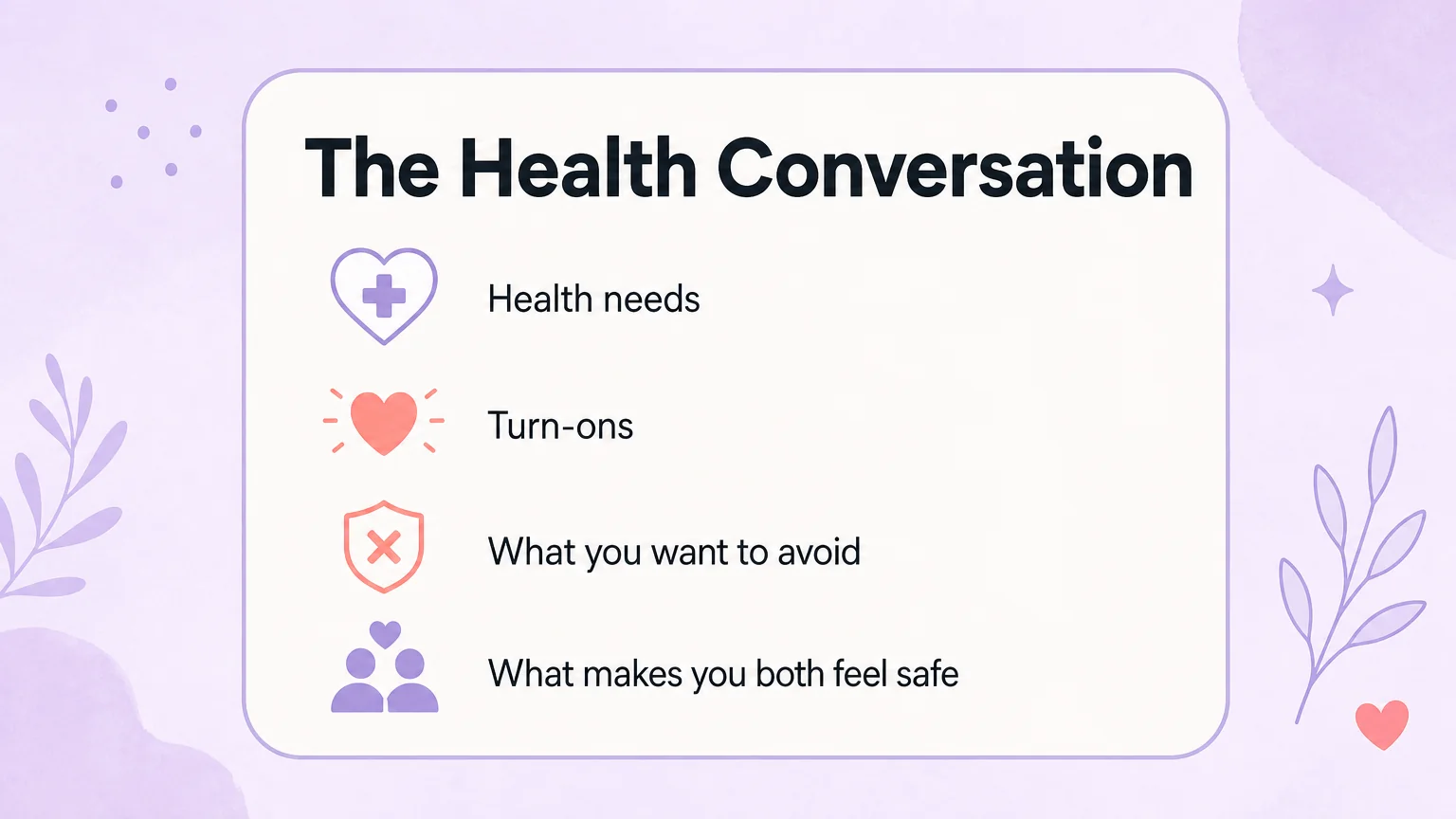
Cover four things in one pass: health needs, turn-ons, what you want to avoid, and what makes you both feel safe. A partner who refuses protection or testing outright is a red flag, not a negotiation.
Looking after your health is part of looking after yourself. In a study of lesbian and bisexual women in Jamaica, a longer gap since a last STI test was linked to depression, sexual stigma and forced sex. Think of screening as part of that same picture rather than a chore bolted on top of it.
Here is prevention that fits real life. The CDC recommends PrEP for men who have sex with men who meet any criterion, including condomless anal sex in the past six months, multiple partners, a partner who is not virally suppressed, a recent STI, stimulant use, or a risk score of 10 or higher. Options include a daily pill, on-demand “2-1-1” dosing (off-label, and only for men who have sex with men using TDF/FTC), and injectables.
Get tested for HIV every three months. If you have had a bacterial STI in the past year, ask about doxyPEP, which sharply cuts syphilis and chlamydia, is less reliable for gonorrhoea, and carries antibiotic-resistance trade-offs. Make that call with a clinician. HIV PrEP does not cover other STIs, and HPV and hepatitis B vaccines matter.
If you are a woman who has sex with women, do not assume your risk is zero. Chlamydia positivity was higher among women who have sex with women than among women who have sex with men only, and many women have been wrongly told they can skip cervical screening. Use barriers for oral sex, wash or cover toys between uses, use water-based lube, and keep up screening and vaccination. You are not exempt, and you are not being difficult by asking.
For adults building the life this guide describes,3Fun is one place to meet people who are open about what they want.
By now you should know your own prevention plan, and how to start the health conversation without dread.
The verdict: good sex here is built on honesty and preparation. Whatever experience you have is enough to start.
Frequently Asked Questions
Can a 12 year old know they are gay?
Yes. Plenty of people know early, and knowing early is normal. It does not obligate you to do anything yet. If it is not safe at home, it is fine to wait and to tell no one. Find one trusted adult, and use support built for you: The Trevor Project (1-866-488-7386, or text START to 678-678), the LGBT National Youth TalkLine (800-246-7743), or Q Chat Space at qchatspace.org.
Is being gay a choice?
No. And no one chose to be straight either, so the question cuts both ways. Attraction behaves more like a continuum than a switch, and changing your label over time is normal rather than proof you got it wrong. The one thing you can choose is whether to keep hiding it.
Is being gay a mental illness?
No. Being gay is not a disorder, and it does not need treatment. The APA and other bodies representing more than 480,000 health professionals state that same-sex attraction and gender nonconformity are not illnesses, and that treating them as conditions to cure rests on a discredited premise. If anyone tells you otherwise, they are working from an old script.
Can I be gay and religious?
Yes. Affirming churches and denominations exist, and the research shows affirming congregations help people hold their faith and their identity together instead of torn between them. Look for designations like “Open and Affirming,” “Reconciling in Christ” or “Reconciling,” and use GayChurch.org to find one near you. Then verify the individual congregation, because labels do not always bind the local church.
How do I come out at work?
You do not have to, and no rule says you should. Check whether your state or employer protects LGBTQ+ employees, then decide who needs to know rather than telling everyone at once. If it helps, tell one trusted colleague first. Disclosure at work can be staged the same way it can anywhere else, and you can always widen the circle later.