If you have ever wondered whether your fetishes are normal, here is the short answer: 97% of adults have sexual fantasies, and most of them would qualify as kinky. So when you ask about the most common fetishes, you are really asking what nearly everyone is already thinking about.
One boundary before we begin. This is not a catalogue of every desire that exists. It answers a single question: which ones show up most often when researchers count? Every item below is backed by named, peer-reviewed research, from Scorolli et al. (2007) to Justin Lehmiller’s survey of 4,175 Americans.
Here are the 10 most common fetishes, starting with the one carrying more scientific firepower than any other.
1. Foot Fetish (Podophilia): The Most Common Body-Part Attraction, Backed by Neuroscience
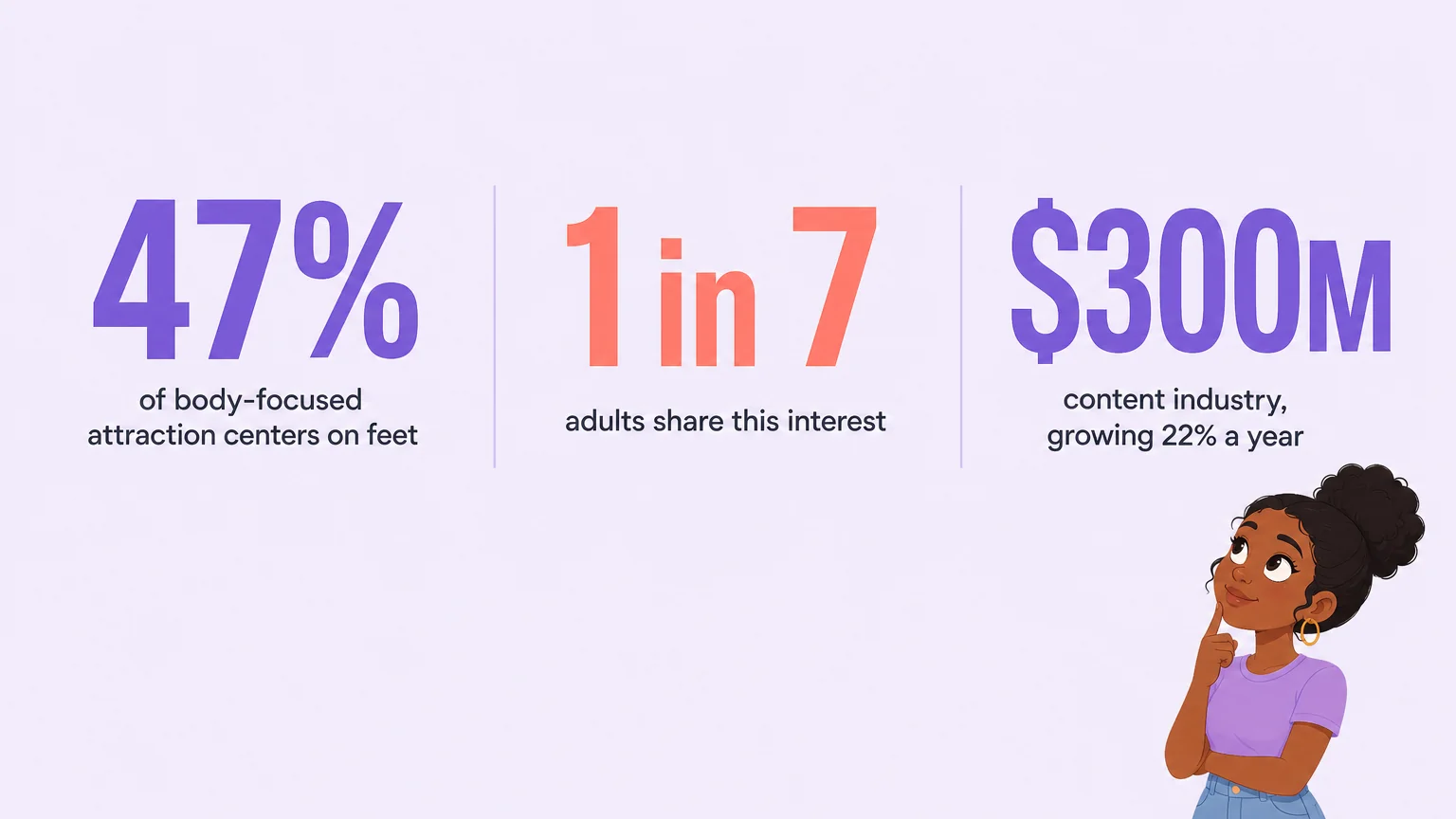
In 2007, a team of Italian researchers did something no one had done before. They analyzed 381 online fetish communities, each with at least 5,000 members, and counted what people were talking about. The result, published in the International Journal of Impotence Research, became the first empirical ranking of fetish prevalence. Body parts accounted for 33% of all preferences, the largest category. And within it, one body part dominated: feet and toes, at 47%.
Eleven years later, social psychologist Justin Lehmiller surveyed 4,175 Americans about their sexual fantasies, the largest study of its kind. He found that roughly 1 in 7 people, about 14% of all adults, have had foot-related fantasies. Not 14% of fetishists. 14% of everyone. That makes feet the most common fetish tied to a single body part.
The why is where it gets interesting. Your brain contains a strip of tissue called the somatosensory cortex, a body map where every part of you has its own processing zone. The region that handles sensation from your feet sits directly beside the region that handles your genitals.
Neuroscientist V.S. Ramachandran of UC San Diego proposed that in some brains, the wiring between these neighboring zones is simply blurrier than average. Signals bleed across the border, and a neutral body part becomes charged with sexual meaning. Nobody chooses this, and nothing is broken. It is geography.
The science is not settled. A 2014 study by Turnbull and colleagues challenged the adjacency theory, finding erogenous ratings for feet lower than expected and suggesting the insula or broader brain networks may matter more. But the prevalence is not in dispute.
Neither is the scale. Foot content is a $300 million industry growing 22% a year, with dedicated platforms like FunwithFeet. Foot attraction appears in ancient Rome, Renaissance art, and Imperial China, in cultures that never touched. When the same desire surfaces independently across millennia, you are looking at biology, not a trend.
2. BDSM and Power Dynamics: Why 93% of People Fantasize About Control
A 2015 study in the Journal of Sexual Medicine surveyed 1,500 adults and found something remarkable: 93% had fantasized about power, control, or rough sex at least once. Only 4% of women and 7% of men had never gone there. By that measure, power play ranks near the top of any list of the most common fetishes and kinks.
BDSM stands for Bondage/Discipline, Dominance/Submission, Sadism/Masochism, but for most people it works less like a lifestyle and more like a menu. The research puts numbers on each course.
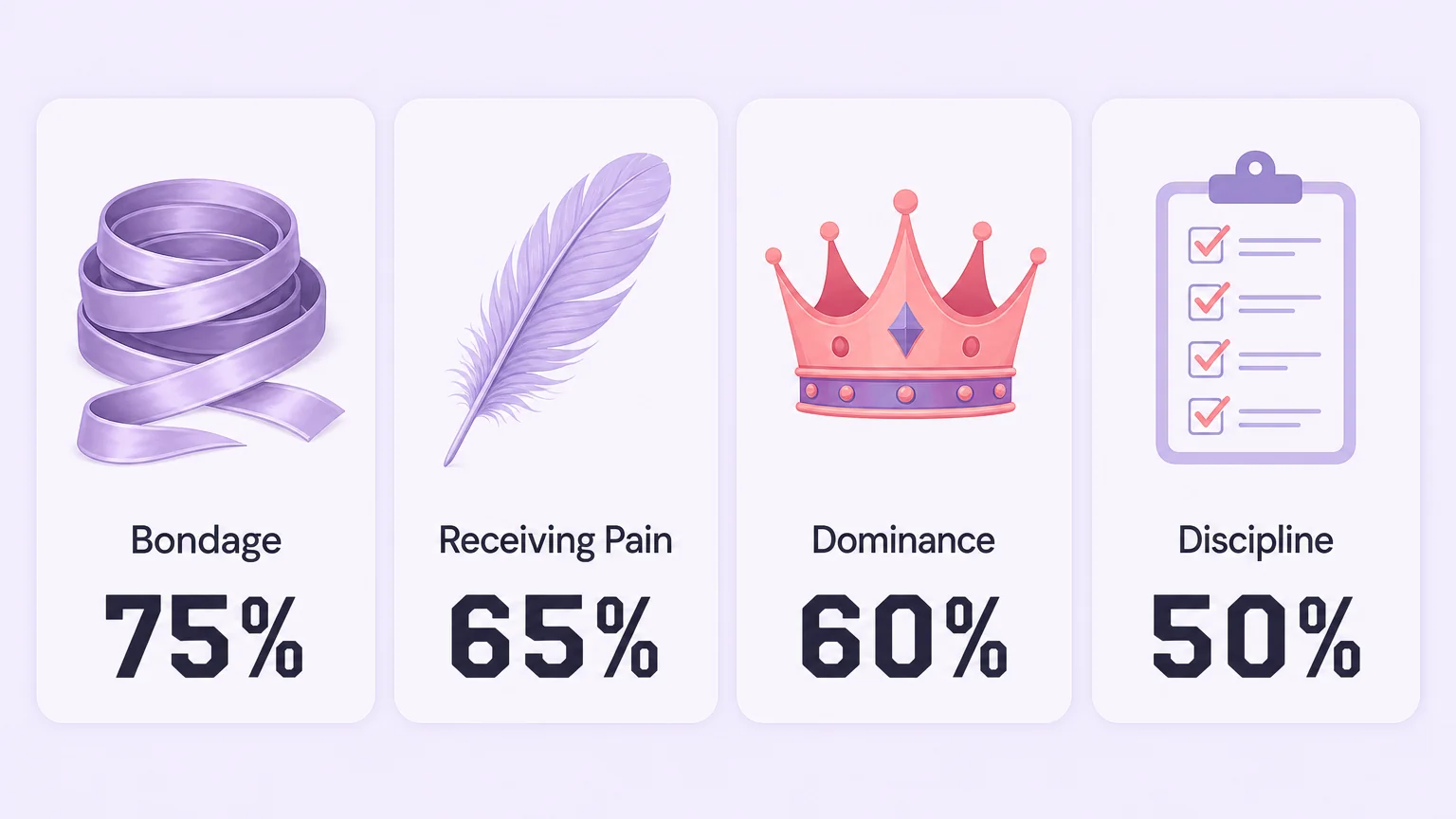
- Bondage and restraint: 75% of Lehmiller’s 4,175 respondents had fantasized about being tied up. Clinical psychologist Dr. Frankie Bashan cites data showing 20% of couples were already using restraints a full decade ago.
- Receiving pain: 65% had fantasized about it, and 30% of couples have tried spanking. Impact play floods the brain with endorphins, creating what sex therapist Dr. Amanda Pasciucco calls a runner’s high, but with intimacy.
- Giving pain or control: 47% of women and 60% of men have fantasized about dominating someone else.
- Discipline and rules: 50% have fantasized about being disciplined or following sexual orders.
The old stereotype, dominant men and submissive women, does not survive contact with the data. In that 2015 study, 65% of women fantasized about being dominated, yet 47% also fantasized about dominating someone else. Men split similarly: 53% had submissive fantasies, 60% dominant. Most people are switches in their imagination, even if they lean one direction in practice.
A 2024 study by researcher Cristian Delcea went further, finding no statistically significant gender difference in fetishistic interest overall. The pull toward power play is human, not male or female.
One more thing the numbers cannot show: the BDSM community built the consent infrastructure the rest of the world is still catching up to. Safe words, negotiation, aftercare, and frameworks like Safe, Sane, Consensual and Risk-Aware Consensual Kink make power exchange possible without harm. That infrastructure is the foundation of the entire practice.
3. Group Sex and Threesomes: The Number One Sexual Fantasy Worldwide
If one fantasy unites humanity, it is this one. Lehmiller’s survey of 4,175 Americans found that 89% had fantasized about threesomes, and 74% had imagined orgies or larger group scenarios. That is nearly everyone.
The clinical world sees the same pattern. Sex and relationship therapist Charlene Douglas reports that threesomes are the number one fantasy she encounters in her practice, across genders, orientations, and relationship structures. Of the most common fetishes and fantasies on record, no single scenario polls higher.
The gender split is real but small: 95% of men and 87% of women reported multi-partner fantasies. Group sex is a near-universal feature of human sexuality, not a male fixation.
Why does this one scenario dominate? Because it hits several psychological drivers at once. Novelty: the brain is wired to respond to new stimuli, and another person is the ultimate novelty. Validation: being desired by more than one person at a time is a powerful reinforcement. Performance: the imagined scene often includes an audience, blurring the line between group sex and exhibitionism. Variety: different bodies, different energies, different dynamics, all in a single experience.
The engine underneath is curiosity. When Lehmiller asked why people fantasize at all, 69.8% cited curiosity about different sexual experiences, ahead of unfulfilled sexual needs at 59.7% and escaping reality at 59.4%. Group sex simply gives curiosity the most room to run.
Now the reality check. Only 23% of people act on their top fantasy, per Lehmiller’s data. Fantasizing about a threesome does not mean your relationship is incomplete. Acting on one requires communication, boundary-setting, and emotional preparation that fantasy conveniently skips. The fantasy itself is normal. The decision to pursue it, or to let it stay imagination, is a separate choice, and both answers are valid.
4. Voyeurism and Exhibitionism: Why Watching and Being Watched Turns So Many People On

Lehmiller’s data shows 60% of people have had voyeuristic fantasies about watching others have sex. Another 42% have fantasized about being watched. These are two sides of the same psychological coin, and both are trending upward.
Charlene Douglas has watched the shift happen in her own practice. One couple told her they specifically book hotel rooms with windows facing other buildings. The possibility that strangers might see them transformed their sex life. Nothing else changed. Just visibility.
Part of what makes this one of the most common fetish categories is accessibility. Voyeurism is among the easiest kinks to explore: it needs no equipment, no elaborate setup, and no physical risk. In its simplest form, watching your partner undress slowly or watching each other touch themselves, it is already part of many couples’ repertoire without ever being labeled a kink.
Dr. Frankie Bashan’s recommended starting point is deliberately small: ask your partner for a slow strip tease, or watch each other masturbate, in person or over video. Nobody else involved, nothing exposed, consent built in from the first minute.
From there, the spectrum runs outward. Private: watching your partner through a cracked door. Semi-public: hotel windows, clubs built for exactly this. Digital: consensual video sharing. Each step raises the intensity and demands more explicit negotiation.
The ethical line deserves plain language. Watching becomes a violation the moment it involves someone who has not consented. The difference between a kink and a crime is consent, full stop. The healthy version involves willing participants who know they are being observed and have agreed to it, every time.
And the trend is unmistakable. Douglas notes voyeurism is becoming more and more popular, and the rise of webcams and amateur content platforms has normalized the watching-and-being-watched dynamic. What was once a quiet interest is quickly becoming a mainstream feature of modern sexuality.
5. Dirty Talk: The Most Accessible Fetish (90% of People Are Into It)
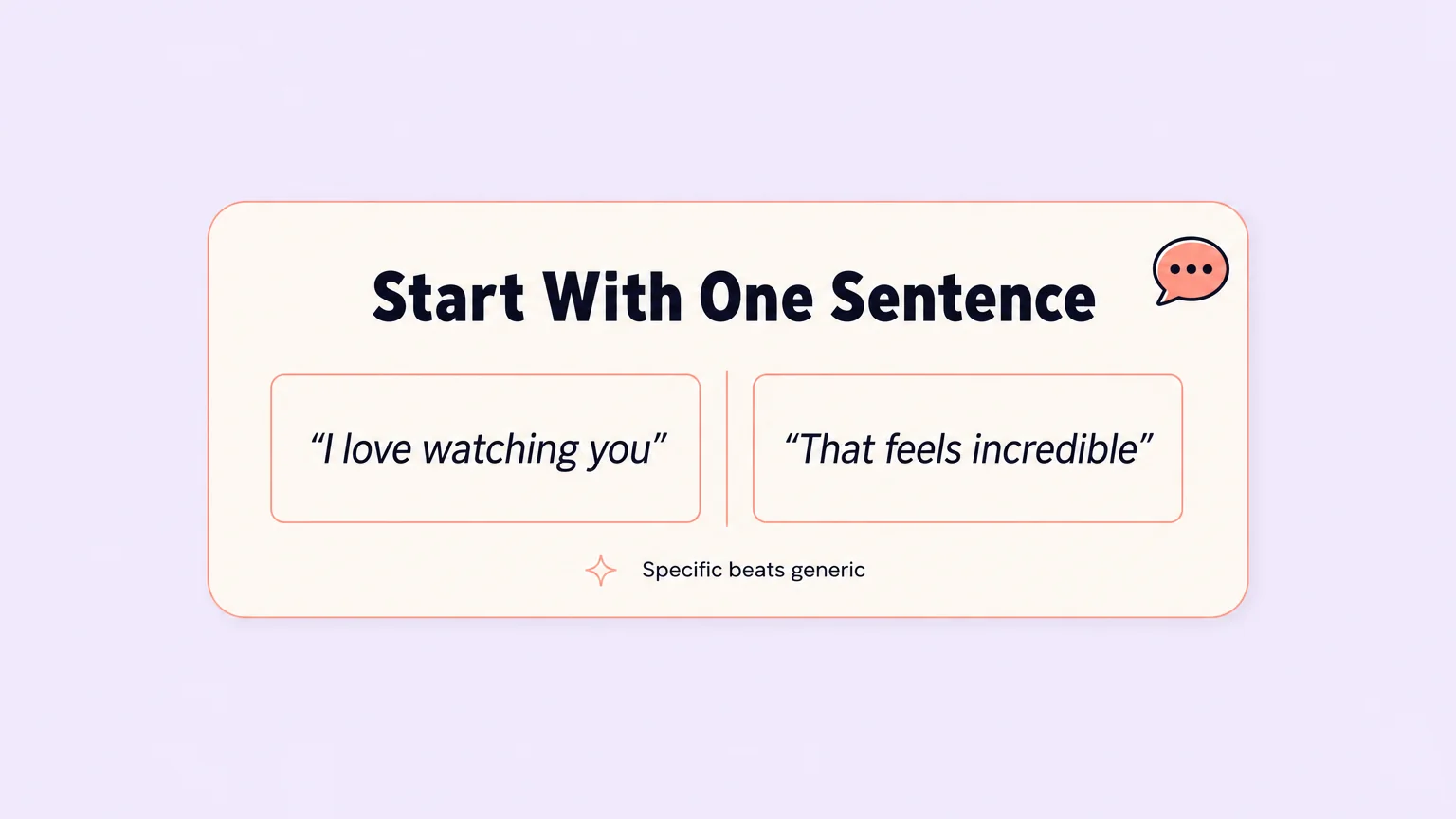
In the right circumstances, 90% of people felt aroused by dirty talk with their partner, according to research cited by clinical psychologist Dr. Frankie Bashan. That is higher than any specific physical act on this list, which arguably makes verbal play the most widely shared entry of all.
Words do not need the body as a middleman. They go straight to the brain’s arousal centers. Hearing desire spoken aloud validates it. Naming what is happening collapses the distance between what you feel and what you know your partner feels. For many people, auditory arousal is the primary driver rather than a bonus layer on top of touch.
If you have never tried it and the idea makes you nervous, start with one sentence. Skip the script and the performance. Name what is happening in plain language: “I love watching you” or “that feels incredible.” You are not writing dialogue. You are narrating desire.
The common fear is sounding ridiculous, like bad movie dialogue. The fix is specificity over performance. “Your body looks amazing” is generic. “The way your back arches when I touch you there” is specific, and specific is what the brain responds to.
Think of dirty talk as the gateway to the rest of the most common fetishes on this list. It costs nothing, requires no equipment, carries no physical risk, and works anywhere. If you are curious about kink but intimidated by ropes or impact play, start here. Most couples already have the raw material. They just have not said it out loud yet.
6. Roleplaying: Why Becoming Someone Else Is a Universal Turn-On
Roleplaying has less to do with costumes than with permission. Step into a character, the stern boss, the innocent student, the stranger who just bought you a drink, and you are temporarily released from being yourself. Your inhibitions belong to you. The character’s inhibitions are negotiable. That release is what earns roleplay its place among the most common fetishes and kinks.
The classic scenarios are familiar for a reason. Teacher and student. Boss and employee. Doctor and patient. Strangers at a bar. None of them are original, and that is the point. Everyone already knows the script, so you can step into the scene without a preamble.
Roleplay separates desire from identity. Someone assertive and in control at work can surrender completely in a scenario without contradiction, because it was the character.
The scene creates a container where desires that conflict with self-image can be explored safely. Call it play, the same way adults understand the person in the mascot costume is not actually a giant mouse.
One branch deserves its own mention: age play. From light bratty dynamics to structured caregiver roles, it ranks among the most misunderstood interests on this list. For most practitioners it has nothing to do with actual children and everything to do with care, surrender, and the eroticization of vulnerability and trust. The stigma is loud. The prevalence is higher than most people assume.
Starting takes one sentence: “Let’s pretend we just met.” That line shifts the frame. You are no longer two people who have seen each other sick and in sweatpants. You are strangers who locked eyes across a bar. Everything after that is discovery.
7. Objects and Materials: Shoes, Latex, and the Second-Largest Fetish Category
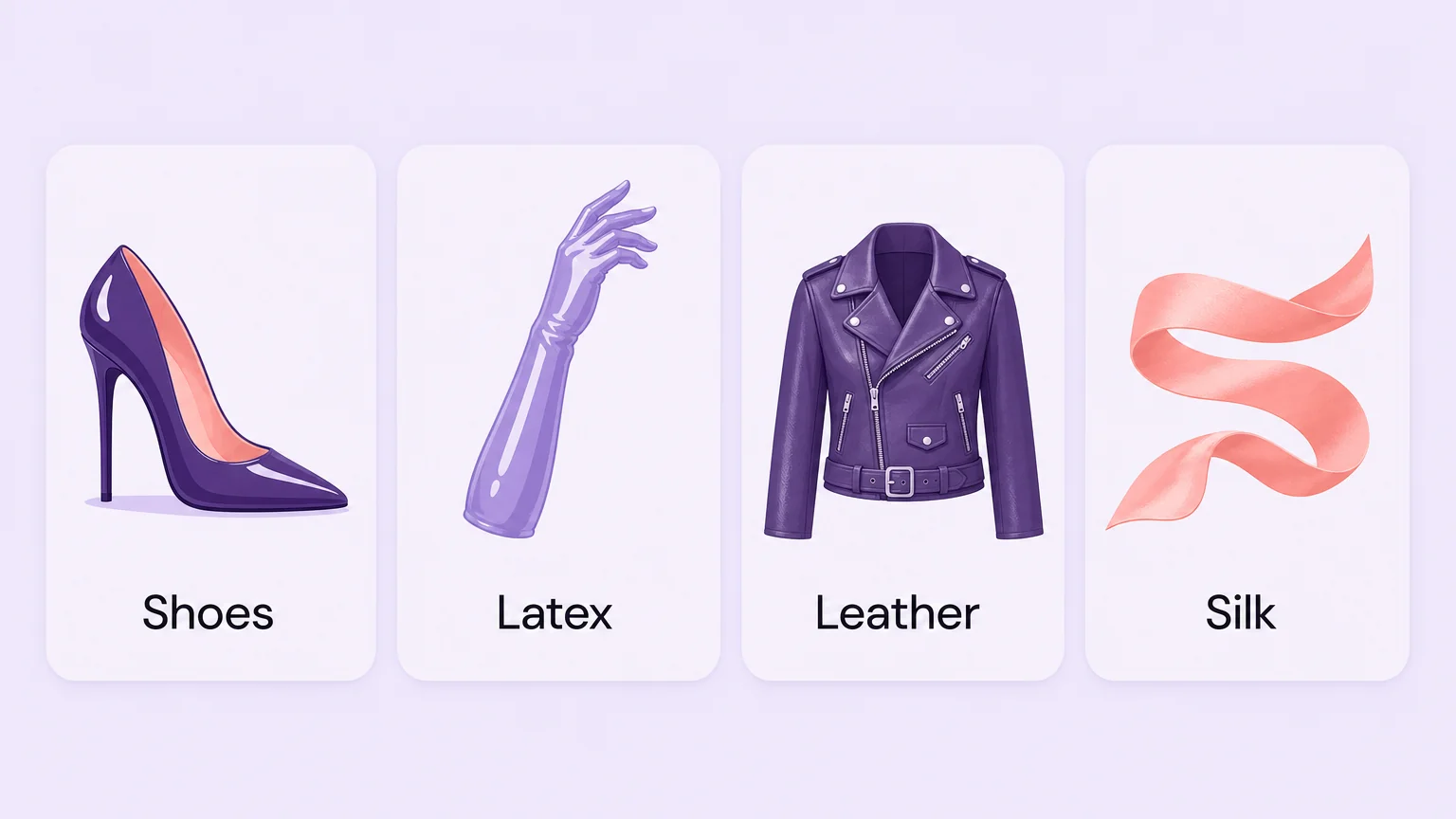
When the Scorolli team categorized those 381 fetish communities, body parts took the largest share of preferences at 33%. The second-largest category, at 30% and nearly tied for first, was not another set of body parts. It was objects associated with the body.
Shoes. Socks. Stockings. Gloves. Underwear. The things that touch skin, carry scent, and imply closeness to a body without being the body itself.
That makes object attraction the second most common fetish category ever measured, and it breaks down into distinct families. Footwear dominates, and it is conceptually separate from foot attraction itself: someone drawn to high heels is not necessarily drawn to bare feet, and vice versa. Latex and rubber rank among the most searched materials, with dedicated platforms and communities of their own. Leather, silk, PVC, spandex, each has its own following and its own sensory signature.
Sensory is the operative word. Object attraction engages more senses than a purely visual preference does. Leather has smell, texture, sound, temperature. Latex has shine, tightness, and the way it catches light. A shoe carries the shape of the foot that wore it. The brain’s arousal systems respond to sensory richness, and these objects deliver it on multiple channels at once.
Many object attractions also trace back to conditioning: an early charged experience where the material happened to be present, a first encounter on leather seats, a formative association with someone’s specific shoes or scent. Classical conditioning is simply how associative learning works, sexual or otherwise.
So if an object flips the switch for you, you are not broken and you are not alone. You are in one of the largest categories researchers have ever counted, and the mechanism behind it is about as straightforward as human psychology gets.
8. Sensory and Olfactory Fetishes: When Smell, Taste, and Body Fluids Drive Desire
Smell is the sense wired most directly to memory and emotion. Scent signals skip the thalamus, the brain’s relay station, and project straight into the amygdala and hippocampus. You catch a trace of something and you are transported to a specific moment, a specific person, before you consciously register what you smelled. That is straight neuroanatomy.
Which explains a category that rarely gets named out loud. Olfactophilia, arousal from body scent, belongs to a family of related interests in body fluids, taste, and chemical signals.
In the Scorolli data, body fluids accounted for 9% of body-part preferences. Smaller than feet at 47%, yes, but larger than muscles at 5%, body modifications at 4%, and breast-specific attraction at 3%. That earns it a real, measurable place among the most common fetish categories.
Charlene Douglas offers a case that shows how these attractions form. A male client traced his arousal to a partner’s natural scent back to a single moment: a teenage dare involving a woman’s underwear. The association formed in that one experience and persisted for decades. Classical conditioning in action: his brain wired together things that fired together.
The category extends beyond smell. Arousal connected to saliva or sweat. Temperature play with ice or wax. Texture fixation. Taste. These interests engage the body’s chemical and sensory reality directly, less mediated by culture and storyline than almost anything else on this list.
So if your strongest turn-on is the way your partner smells at the end of a long day, not perfumed, not showered, just them, you are responding to the oldest and most direct arousal pathway in the mammalian brain. No one taught you this. No culture invented it. It predates language.
9. Body Hair, Muscles, and Physical Features: When Specific Traits Become the Focus
The Scorolli study did not stop at feet. Within body-part preferences, the research team found specific clusters: body size and shape at 9%, body hair at 7%, muscles at 5%. Modest numbers next to feet, but consistent and measurable: patterns of attraction locked onto a specific physical feature rather than the whole person.
Evolutionary psychology offers one lens. Traits like musculature, size, and hair distribution are honest signals: they carry information about hormones, health, and age that the brain processes automatically, below conscious awareness. An attraction that feels like “I just like what I like” may be wiring that evolved to read fitness indicators.
Several named interests live under this umbrella. Muscle worship, arousal focused on muscular physiques, often blended with admiration and submission. Size attraction, a pull toward very large or very small partners that goes beyond general body-type preference. Hair attraction, a specific interest in body hair patterns, grooming styles, or the presence or absence of hair. Even belly and navel attraction registers at 3% in the data.
So where is the line between preference and one of the most common fetishes? Intensity and specificity. Finding muscular bodies attractive is a preference. Finding that a flexed bicep, specifically, is the primary trigger for arousal is fetishistic focus. Most people fall somewhere between those poles.
One sensitivity worth naming: trait-focused attraction can collide with body image and cultural beauty standards. People attracted to larger bodies sometimes hear their preference dismissed in pathologizing terms. People drawn to muscle sometimes feel shallow. The data does not judge. It counts. And it confirms that feature-focused attraction is a normal, cross-cultural part of human sexuality.
10. Orgasm Control and Edging: The Power of Anticipation
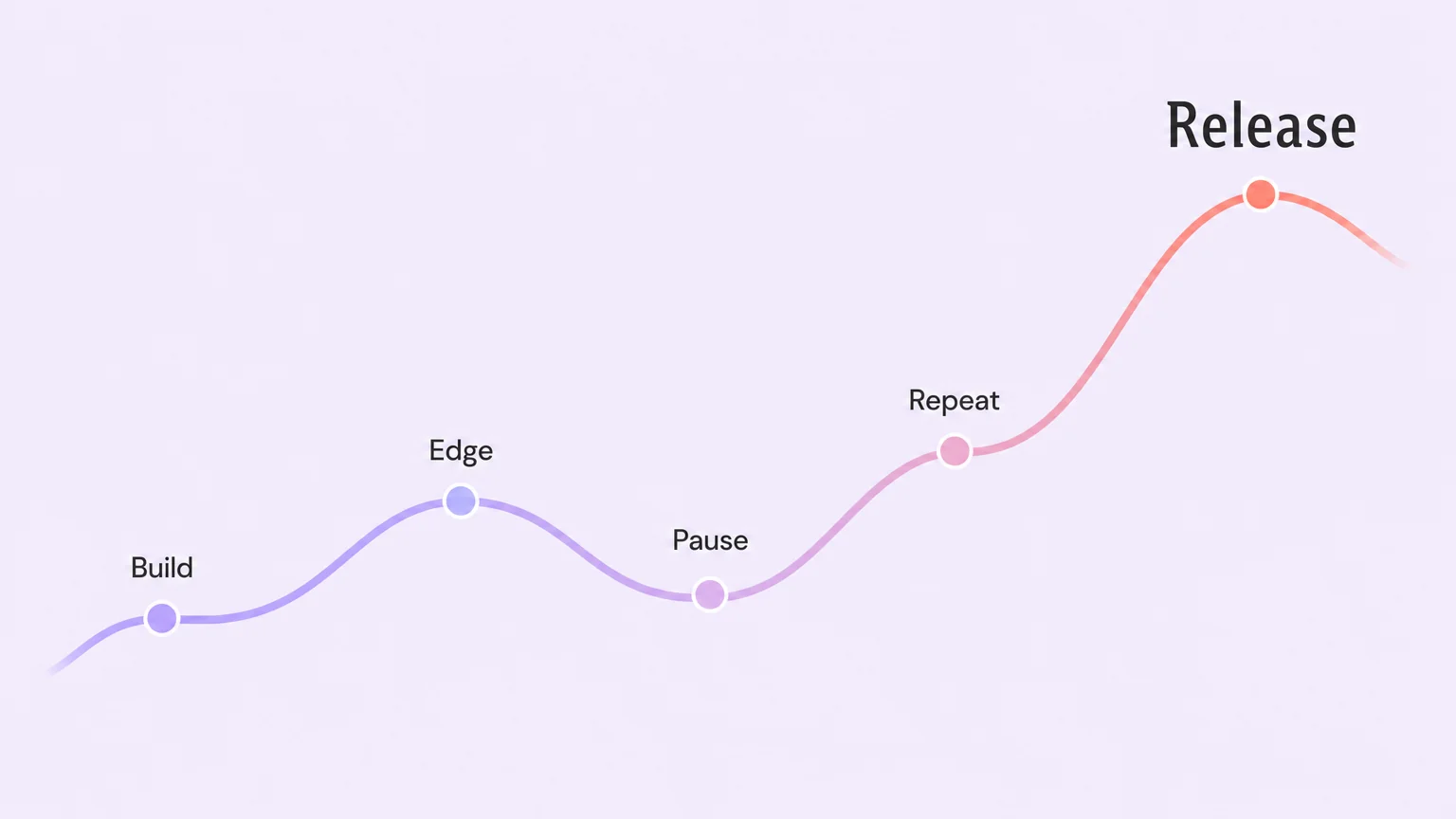
Most entries on this list engage the body through what you see, touch, smell, or hear. Orgasm control works through when. Its only tool is time.
Edging means bringing someone close to orgasm, then backing off, repeating the cycle until the eventual climax lands far harder. Orgasm denial stretches the game across hours or days, letting the charge build inside the waiting itself. Forced orgasm flips the script: one partner surrenders control, and the other decides when and how many times.
All three share the same core. Someone else is holding the remote to your body’s most intense sensation.
The neuroscience explains why it works so well. Anticipation is one of the brain’s most powerful arousal amplifiers; dopamine spikes higher while you are waiting for a reward than when you receive it. Edging exploits that mechanism directly. The brain stays parked in a prolonged state of near-release, and every cycle stacks on the last.
It is also one of the most communication-heavy practices among the most common fetishes and kinks. The receiving partner has to report where they are on the edge: close, not yet, now. The giving partner has to read those signals precisely. The whole practice runs as a continuous feedback loop between two active participants, and the experience is only as good as the conversation running through it.
The entry cost is zero: no equipment, no costumes, no special room, just a partner, a bed, and a willingness to say “stop” and “wait” and “not yet.” If power exchange intrigues you but pain and restraints do not, start here. The only thing you surrender is timing. For many people, that is surrender enough.
FAQ: Your Most Common Questions About Fetishes, Answered
Is having a fetish normal, or is it a mental disorder?
Normal. A fetish only becomes a paraphilic disorder when it causes clinically significant distress, involves people who have not consented, or leads to harm. For most people, fetishes are a healthy part of sexuality. Sex educator Ally’s rule: as long as it is consensual and not hurting anyone, it is not something you need to fix. It is part of your erotic fingerprint. And if the distress is real anyway, here’s what actually helps.
What is the difference between a kink and a fetish?
A kink is a non-traditional sexual interest that enhances arousal but is not required for it. A fetish, clinically, is a specific object, body part, or material necessary for arousal or orgasm. Enjoying feet is a kink; needing them is a fetish. Most people have kinks. Fewer have true fetishes. Both are normal. For more details about the differences between these two, please check this post: Fetish vs Kink: The Distinction Nobody Explains Clearly.
Do men have more fetishes than women?
No. Cristian Delcea’s 2024 study found no statistically significant gender difference in fetishism prevalence; both men and women report moderate levels. The flavor differs, with men scoring slightly higher on sexual sadism and women on masochism. The old male-phenomenon stereotype is outdated.
Do I have to act on my fetish if I have one?
No. Lehmiller’s data shows only 23% of people act on their top sexual fantasy, while 79% say they want to someday. Many never do, and that is fine. Fantasies serve purposes beyond action: curiosity, escape, emotional processing. The goal is self-acceptance, not performance.
How do I tell my partner about my fetish without scaring them off?
Use Charlene Douglas’s framework. Understand your own desire first. Pick a calm, private moment, never mid-sex. Frame it as sharing, not demanding: “This is something I have discovered about myself. No pressure to act on it.” Answer questions without getting defensive and give them space to process. Many partners respond better than expected. Vulnerability like that deepens intimacy on its own.