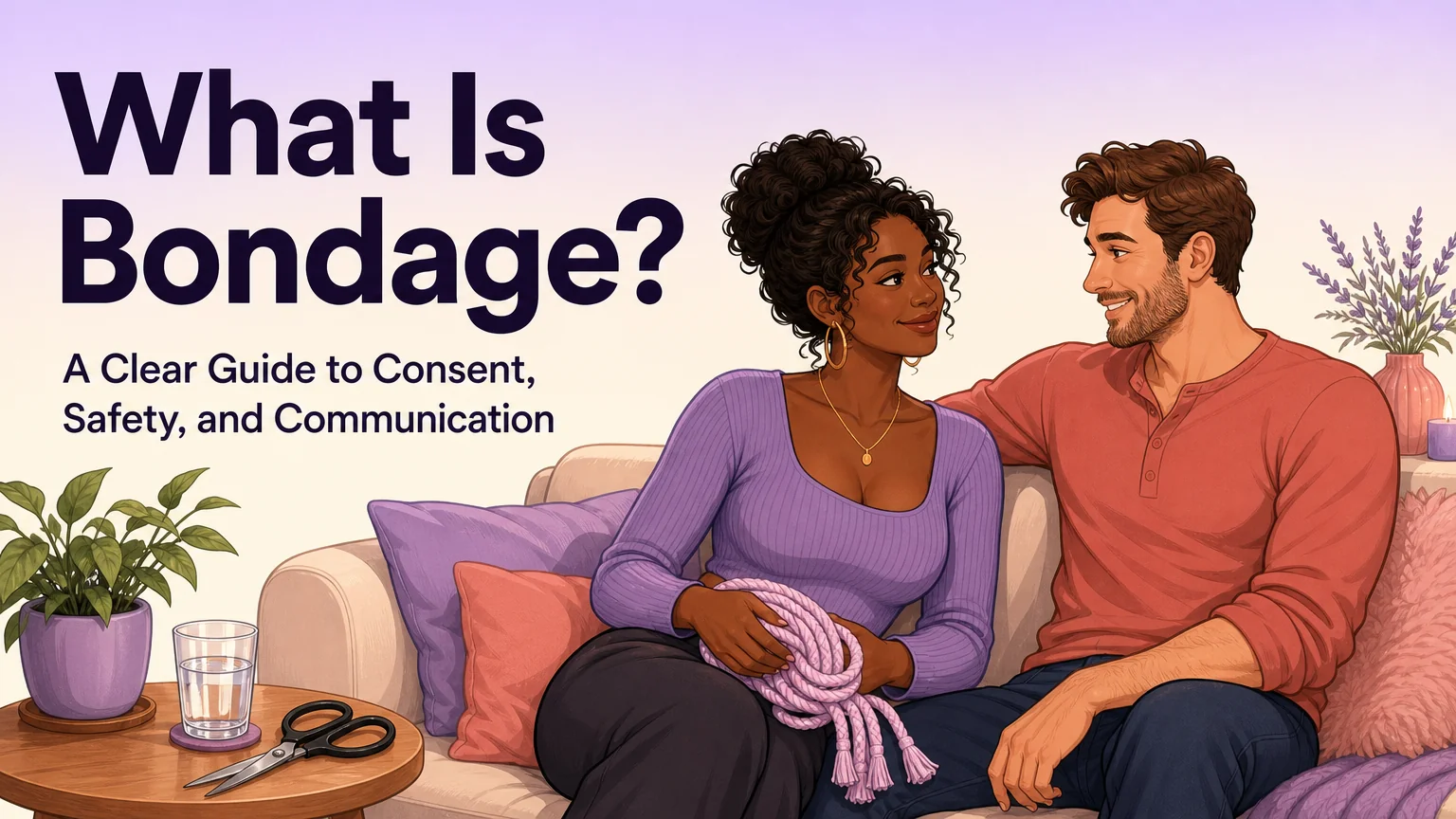
Most people have met the word a hundred times and could not define it without a joke, a porn reference or a shrug. What is bondage? It is the consensual use of restraint: tying, binding or otherwise limiting someone’s movement, agreed in advance, for pleasure, sensation or how it looks. Wanting a straight answer is reason enough.
At least 20% of adults in a nationally representative U.S. sample said they had tied up a partner or been tied up. This guide assumes no prior knowledge, no equipment and no partner. Curiosity turns up single, partnered, casually dating, at every orientation.
Some want a definition. Some want a safety check before trying anything. Some want a way to admit they are curious.
All three are served here. One idea holds throughout: risk can be reduced, not removed.
This guide covers what bondage is, why people do it, how consent and safety work, and how to talk about it. The word itself is older than almost anyone expects.
What Bondage Is, and Where It Fits in BDSM
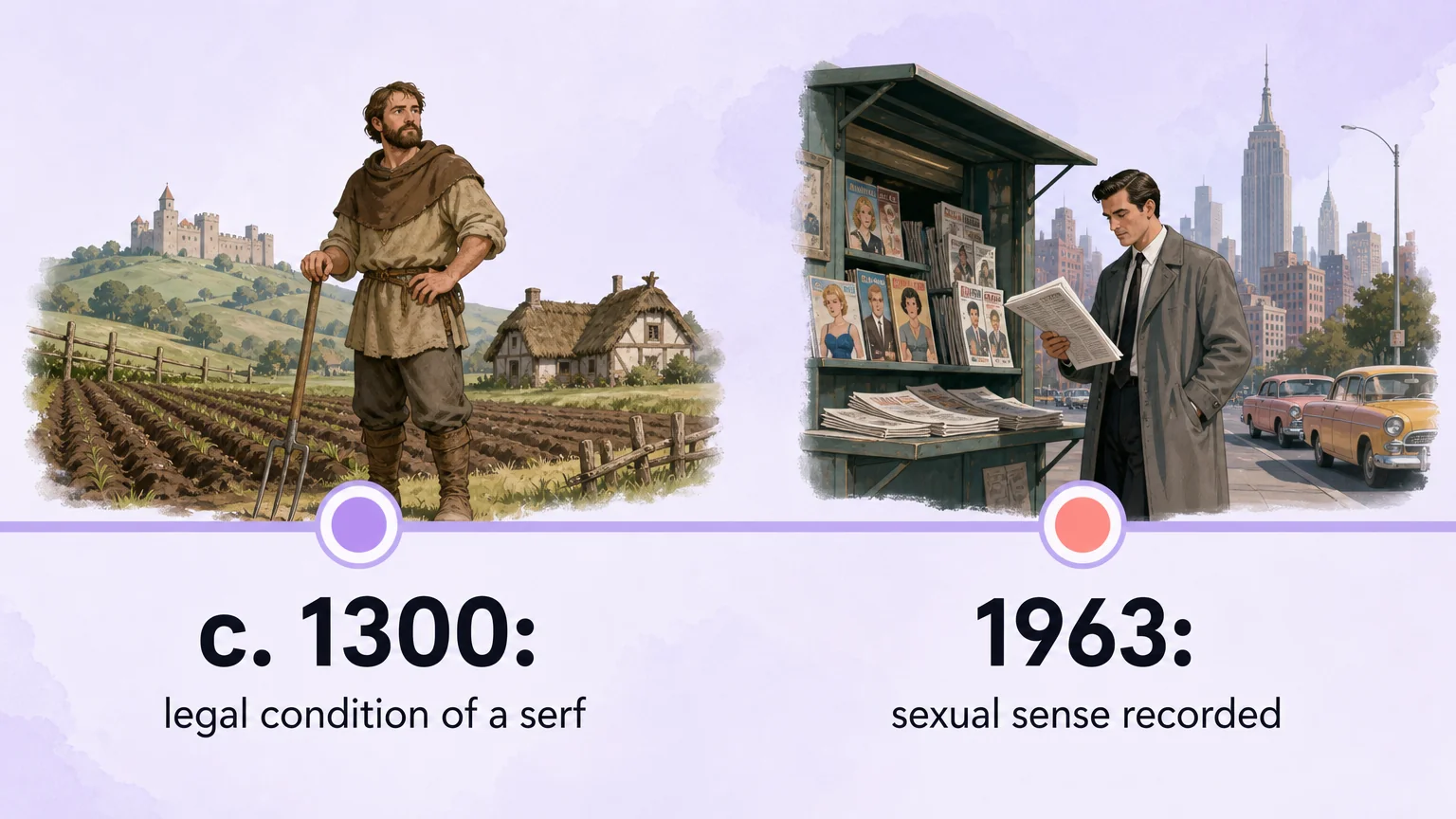
The word is older than its sexual meaning by six and a half centuries. “Bondage” entered English around 1300 as the legal condition of a serf, from the Middle English “bond,” a tenant farmer. The sexual sense does not appear in the record until 1963, in a New York law against publications that portrayed it, so the term spent most of its life describing unfreedom in law.
BDSM stands for bondage and discipline, dominance and submission, and sadism and masochism. The peer-reviewed definition covers experiences in which, by mutual consent, physical restraint, intense sensation or fantasy about dominance and submission play a key role. Bondage is the B, one component of a larger umbrella rather than a synonym for it.
What does bondage mean on its own? Consensual tying, binding or restricting a partner’s movement for erotic, aesthetic or sensory reasons. It does not require pain, penetrative sex, a dominant or submissive role or a full-time dynamic. A person can want the rope and nothing else.
Some people want the restraint itself. Others want the loss of control. Others want the structure around it. Knowing which one you are circling is most of the work.
The vocabulary arrives fast, so here is the short version. A top does the tying, a bottom is tied, a switch enjoys both, a rigger handles rope. A scene is one encounter with a beginning and an end. A limit is anything a person will not do.
Drop, covered later, is the crash that can follow.
Prevalence forms a ladder rather than a single figure. In a U.S. nationally representative sample of 2,021 adults, weighted to national benchmarks and spanning ages 18 to 91, at least 20% reported lifetime experience of tying up a partner or being tied up. The study found no statistically significant gender difference.
A Belgian sample of 1,027 adults fills in the rungs: 46.8% had ever performed at least one BDSM-related activity, 22% had fantasies without acting on them, 12.5% practiced regularly, 26% described themselves as interested and 7.6% identified as practitioners.
The instructive gap sits between 46.8% who tried something and 7.6% who built an identity around it. Trying a thing once and calling yourself a practitioner are different facts, and collapsing them distorts prevalence in both directions. These are Belgian adults, not American ones, and estimates vary widely by country and by how the question is asked.
Why People Explore Bondage
Giving up control sounds like the opposite of pleasure. Yet people who are restrained describe relief, calm and, in some accounts, a kind of freedom. The contradiction resolves once you notice what is handed over: not safety or agency, but the work of deciding.
The appeal is rarely the equipment. Ariel Anderssen, a working BDSM performer and model who grew up in a strict religious household, describes wanting power and control taken away, with the material interchangeable: rope, metal, leather, cuffs, whatever is within reach. The props change. The thing being wanted does not.
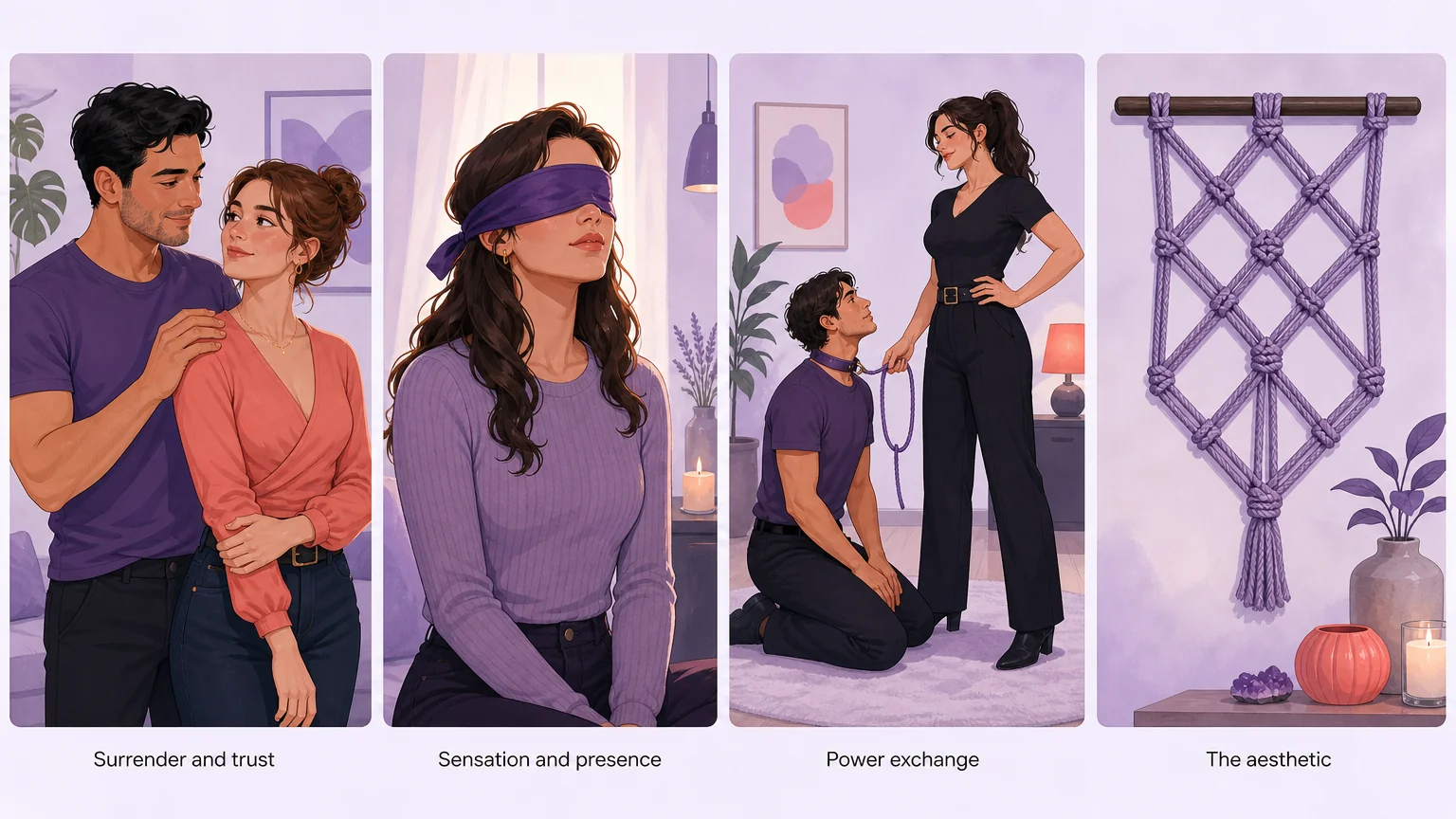
Four reasons keep coming up.
Surrender and trust, handing control to someone who has earned it. Sensation and presence, where attention narrows to the body and the next minute. Power exchange, where restraint makes a dynamic visible. And the aesthetic, where rope work is something made, photographed or worn.
The fifth confuses outsiders most. Meditative rope work, especially in Japanese-influenced practice, treats the point as the restrained person’s inner state rather than sex or pain. This is why someone can describe being tied up as relaxing and mean it. Our guide to shibari covers the vocabulary, history and safety of the practice in full.
People conflate three things constantly. Wanting to be tied is not wanting to be hurt. Wanting restraint is not wanting a dominant or submissive identity. Wanting either is not wanting a full-time dynamic.
A person can want a decorative harness for a photograph, with no power exchange and no pain, and that is a complete desire.
The evidence does not support reading this interest as a symptom. A comparison of 902 BDSM practitioners and 434 controls found practitioners less neurotic, more extraverted, more open, more conscientious, less rejection-sensitive and higher on well-being, though less agreeable. The sample was self-selected, so this is an association, not a cause. The authors read it as recreation rather than psychopathology.
Types of Bondage: Two Ways to Sort Them, and Why It Matters
Sort bondage two ways, and the category stops looking like a pile of gear.
Sorted by purpose: bondage for a purpose (restraint serving something else), decorative (the bound person as an aesthetic object, for photographs or as human furniture), torture (uncomfortable or painful positioning), film (light restraint that only has to look like restraint) and meditative (the restrained person’s inner state). That is a map, not evidence. One form of that torture category has its own name: predicament bondage, where every position available costs something and the person tied keeps choosing between them.
By technique, the list is shorter: binding limbs together, spreading them apart, tying to an anchor, suspension, restricting movement, full-body wrapping. No instructions, because the point is recognizing what someone means.
Bondage for beginners starts with materials, not technique.
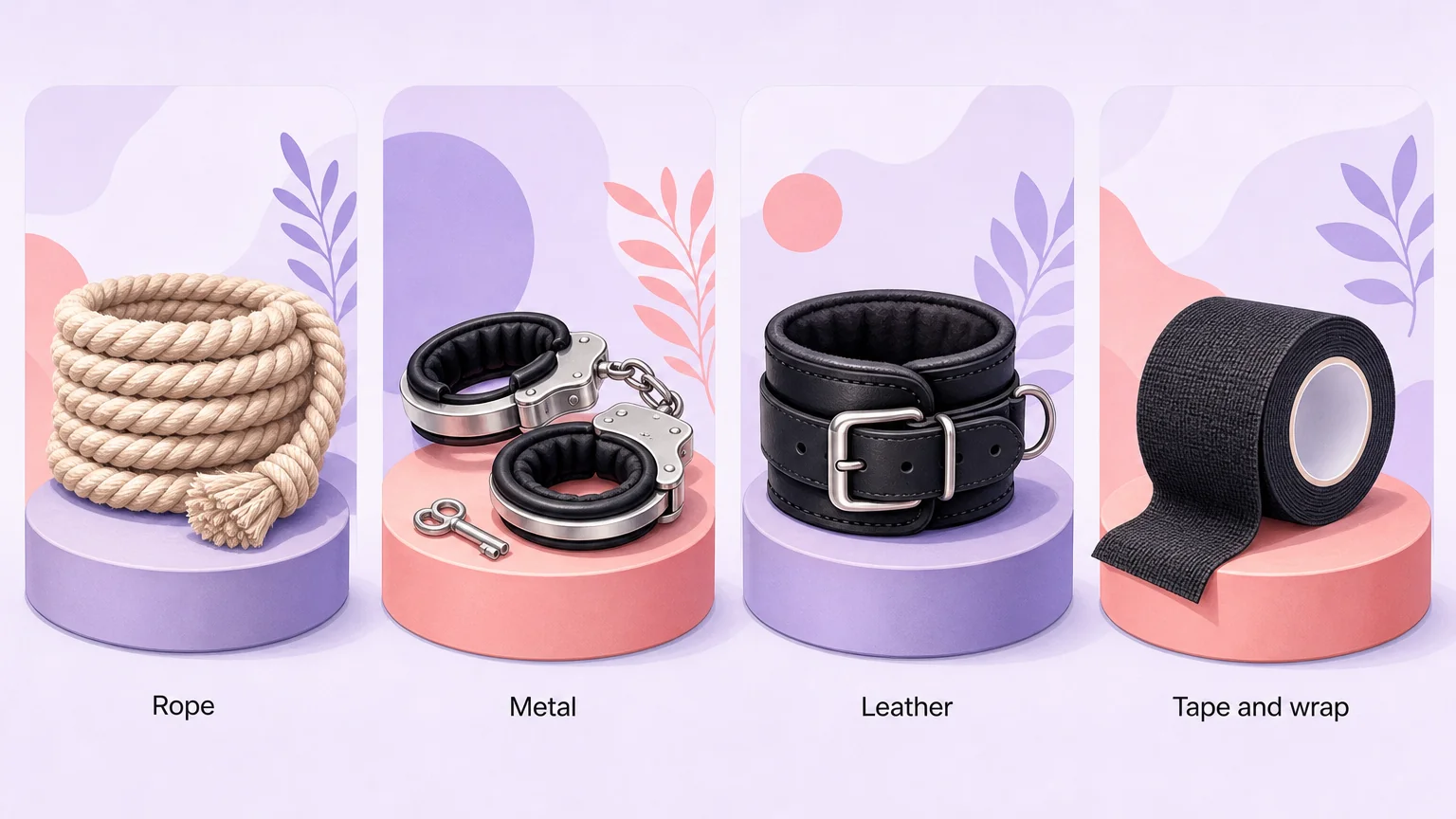
- Rope. Most versatile: decorative harnesses, limb ties, suspension. Cotton or synthetic in the West, hemp or jute in Japanese practice; nylon is cheaper but more slippery. Weaknesses: rope burns, pressure from narrow rope, knots that tighten and slower release than a clip.
- Metal (handcuffs, chains, spreader bars, bondage chairs). Fast to apply, no knot skill needed, and chains are sometimes chosen for suspension. Weaknesses: not adjustable like a strap, hard edges on wrists and ankles, and a lost key becomes an emergency.
- Leather (cuffs, belts, collars, harnesses). Distributes pressure better than narrow rope or rigid metal, and buckles or clips release quickly. Weaknesses: it can still be over-tightened, it is harder to clean, and buckles and rivets press into the wrist when positioned badly.
- Tape and wrap (bondage tape, cohesive bandage, plastic wrap). Bondage tape adheres to itself rather than skin, so removal hurts less. Weaknesses: nothing eases loose, so the only release is cutting, and torso wrapping risks overheating and restricted breathing.
- Household stand-ins (belt, necktie, scarf, pillowcase). Zero cost, so a curious person can learn whether restraint appeals, and soft fabric allows it without pain. Weaknesses: no safety rating, no quick release, nothing load-bearing.
A starter kit pairs 6 mm rope in two lengths with shears. It teaches nothing about tension, nerve anatomy or negotiation. Buying equipment is not how you start. The cheapest way in is a scarf and something to cut it with.
Suspension is not beginner work. Every documented nerve injury in the case series below followed a full-body suspension.
Consent Frameworks: SSC, RACK, PRICK, and What They Ask of You
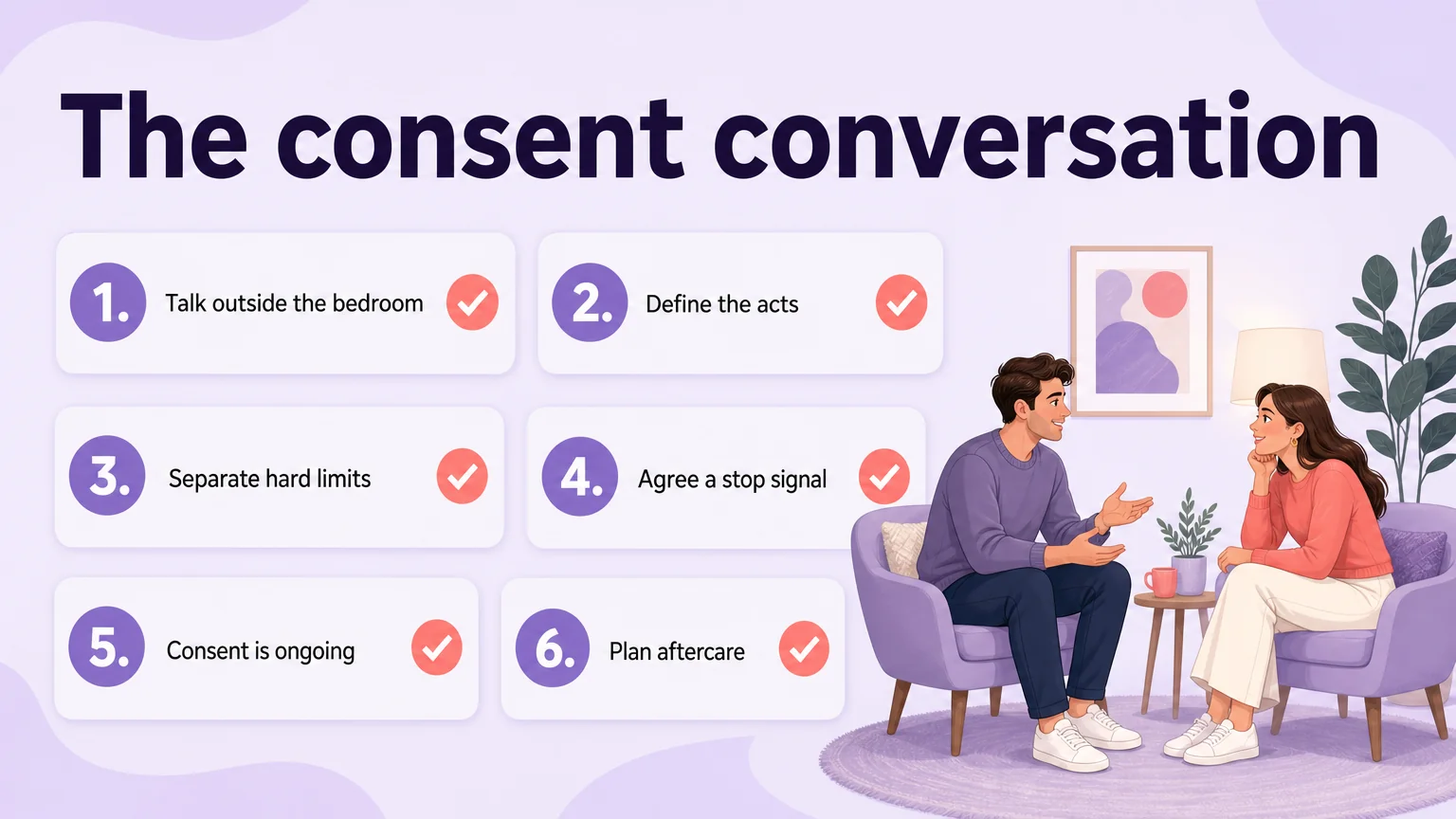
Almost everyone agrees consent matters in bondage. Almost no one was taught what the conversation sounds like. Three frameworks tried to fix that.
SSC, safe, sane and consensual, is the original shorthand and still the most widely recognized. It also draws the sharpest criticism. “Sane” is vague, culturally policed and has been used against neurodivergent people. “Safe” promises an outcome no physical activity delivers.
RACK, risk-aware consensual kink, replaces the promise with the work: name the risk, reduce it and choose it with your eyes open.
PRICK, personal responsibility, informed, consensual kink, adds the sharpest point. If you do not understand the specific risks, your consent is not informed and therefore not meaningful.
None is a compliance certificate, and none tells you where the radial nerve runs. They are openers. The conversation is the substance, and it has six parts.
1. Have it outside a sexual context. Nobody should negotiate under pressure or mid-scene. A walk, a car ride or a message thread the day before beats the moment itself. “Can we talk about something before Friday, not in the bedroom?”
2. Establish what each person means by the acts in question. Two people can agree to a word while picturing different things. “When you say tied up, what does that look like to you?”
3. Separate hard limits from things that are open to trying. A hard limit is not a negotiating position, and the open-to-trying list can be empty. “Is there anything you already know is a no?”
4. Agree a stop signal before you need it. Use a word unrelated to sex if “no” is part of the scene, or the traffic lights: red to stop, amber to slow, green to continue. Both say it back.
5. Agree that consent is ongoing. Anyone can stop at any point, for any reason or none, and stopping is not a failure of the scene. This is the step people skip and the one that matters most.
6. Agree what aftercare looks like, and plan a debrief. Decide in advance who needs what afterward, and set a time to debrief. “What would help you afterward, and when can we check in?”
The governing idea is that consent is fluid and dynamic, not a permission granted once. Kayla Beare, of the UCL EGA Institute for Women’s Health, makes that case in a clinical sexual health journal’s blog and names three practices that transfer to any sex: pre-play discussion, safewords and aftercare.
What Can Go Wrong, and How the Risk Gets Smaller
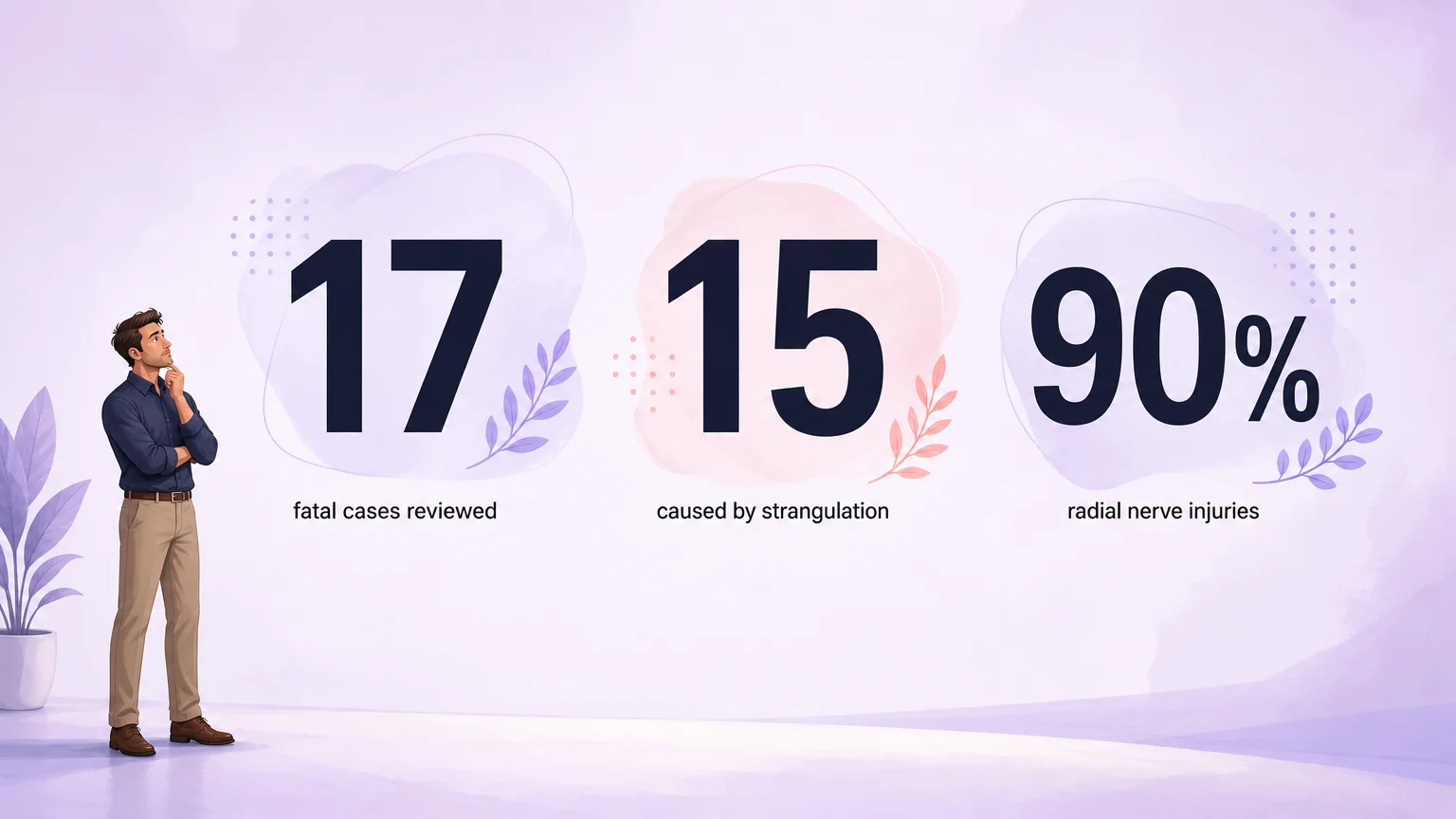
Of 17 fatal BDSM cases published between 1986 and 2020, strangulation caused 15. That number puts the danger somewhere most people are not looking. The deaths were not in the wrist cuffs.
Start with the frame. Risk can be reduced, not removed. Specific risks have specific countermeasures, and they are learnable.
Nerve compression. Rope does not have to be tight to injure. It has to be sustained. A case series of rope practitioners and injured participants identified 10 injured people with 16 nerve injuries affecting the radial, axillary or femoral nerves, with the radial nerve involved in 90.0% of those people. That nerve is vulnerable where it passes behind the arm at the distal deltoid tuberosity, which is why damage shows up in the arm, not the wrist.
A 29-year-old woman was suspended for 25 minutes with 6 mm jute rope. She developed wrist and finger drop and reduced sensation in her left hand. Nerve conduction testing showed a 77.3% conduction block in the upper arm. She improved after three months and had fully recovered after five.
A later suspension of only 8 to 10 minutes re-compressed both radial nerves, with full recovery in four weeks.
The first injury took five months to resolve. The second happened at less than half the exposure.
Circulation. Numbness, tingling, cold or a limb turning blue or white means release immediately. Not adjust, not ask, not finish the tie. Release.
The neck. Never wrap anything around the neck, and do not combine restraint with breath play. This is the one rule that appears in every set of guidelines, and the fatality data explains why: of those 17 cases, ligature strangulation accounted for 6, manual strangulation 5 and hanging 4. Drugs or alcohol were involved in 64.3% of the fatal cases. So no alcohol, no drugs, no exceptions.
Restraint plus water is its own category, with its own failure modes. Our guide to water bondage covers where sensory play ends and drowning risk begins.
Positional asphyxia is asphyxia caused by external chest compression by a heavy object. None of the 17 deaths was attributed to it. It remains a named hazard for hogtie-style positions and torso wrapping, worth taking seriously without treating it as the leading cause of death.
Before anything is tied, run the list.
- Two fingers fit under a limb wrap.
- Snug, not tight.
- Non-collapsing knots.
- Rope flat rather than twisted.
- Wraps offset so bone does not press against bone.
- Shears within reach, not in another room.
- Never leave a bound person alone.
- Never hang anyone by the ankles or feet.
- Gag only if nasal breathing is clear and the head is not tilted back.
Self-tying removes the one safety feature every guideline assumes: another person who can act. Treat it as a distinct, higher-risk activity, not the beginner version.
Aftercare and the Drop That Can Arrive Days Later

The crash is the part nobody warns you about, and it can arrive days after the scene, once you have already decided you are fine.
Drop is the crash that follows the fade of adrenaline, cortisol, dopamine, endorphins and sometimes oxytocin. The chemistry gives you a physical reason for a feeling that otherwise reads as a verdict on your judgment or your relationship.
The timeline is a range, not a schedule. Some people feel it immediately. Some feel it within a few hours. Some after a few days.
Reported duration runs from a few days to several months. A person expecting a two-hour comedown and getting a two-week one will assume something is wrong when nothing is.
Drop does not run one way. The person who was tied reports it more often and more severely. The person who did the tying reports it too, often as physical exhaustion, deflation or guilt a day or two later, and it is easy to misread your own deflation as regret about the scene. Aftercare that flows only one way leaves half the room uncovered.
Plan before, not after. Assess sleep, stress and physical state beforehand and choose intensity from that, rather than from mood. Agree what aftercare each person wants and how much capacity each has to give, because those are not always the same. Book a check-in for the next day, since drop often arrives late and the person who needs it may not think to ask.
What helps: warmth, hydration, food and low-stimulation company right afterward. During the drop, treat it like a hangover, with protein, electrolytes, sleep and rest.
Say the thing out loud, too. “This is chemistry, not a verdict. It passes.”
Common Myths About Bondage, Answered
The myth most likely to be carried privately is also the one that costs the most.
Bondage is abuse. Consent is the dividing line. Official guidance from Sensoa, the Flemish sexual health expertise center, treats consent as a threshold, not a mood: if either person does not fully accept the stated wishes and limits, it is abuse or sexual violence, not a misunderstanding. From outside, a consensual scene and an abusive one can look identical: restraint, a power difference, marks. That is why negotiation is the substance, not the paperwork.
It means something is wrong with you. Two lines of evidence point the other way. In the 902-versus-434 comparison, practitioners scored more favorably than controls on most psychological measures, and the authors called BDSM closer to recreational leisure than psychopathology. Separately, the authors of the Belgian prevalence study argued against stigmatization and pathological characterization. The first sample was self-selected, so the claim is that the evidence does not support the myth, not that bondage is therapeutic.
You have to like pain. Bondage does not imply sadomasochism. Soft fabric allows restraint without pain, and the aesthetic and meditative versions involve none at all. Our guide to soft bondage covers the gentler end in full.
It is for a certain kind of couple. A U.S. nationally representative sample found no statistically significant gender difference in tying or being tied up. That does not make every couple identical. It means the behavior is not sorted by gender the way the stereotype assumes.
What you see on screen is how it works. A film can be an effective fantasy and a terrible model. Mainstream depictions skip negotiation, aftercare and every unglamorous check, like the shears on the nightstand. The recurring link between kink and childhood trauma on screen shapes how viewers read their own desires, while the evidence shows a range of reasons people engage, pleasure among them.
How to Bring It Up, With a Partner or Someone New

The hardest part is usually not the rope. It is the sentence before it, and not knowing how someone will look at you afterward.
With an established partner, ask rather than announce. Lead with curiosity about what they want, not a request for a yes. Make declining easy. A partner who says no to a specific act is not saying no to the relationship.
Mismatch is common, not a verdict. Among kink-identified adults, discrepancy in desire is routine, and managing kink interests is an important stated motivation for choosing consensual non-monogamy, according to a national survey of 690 adults and 70 qualitative interviews in Northern California. That describes what some people do, not the only option and never a threat to raise. Name the alternatives: one element rather than the whole, such as a blindfold before rope; a class taken together; or an agreed separate interest.
With someone new, separate two risks: the rope, and who you are alone with. Sensoa’s guidance advises choosing a known, trusted partner and names unfamiliar partners as raising the risk of theft and sexual abuse. Disregard of stated limits counts as abuse or sexual violence, not miscommunication. That is a different conversation from tension and shears.
A safer first meet: talk before you meet, meet sober, tell a friend where you are, skip a first scene at a stranger’s home, keep a check-in and agree the stop signal before anything comes off. A first meet does not have to involve play at all.
Three scripts, because the language is the hard part.
- Opening it with a partner. “There’s something I’ve been curious about. I’ve been reading about bondage and I think I’d like to try something light. You can say no, and I’d rather have what you actually think than a polite yes.” It names the ask, hands over a real veto and asks for a view, not a permission.
- A new match, in writing. “Before we meet, can I ask what you’re into and what’s a hard no for you? I’ll tell you mine either way.” It is reciprocal, it asks before it offers and it makes limits ordinary.
- Slowing down. “I’m into the idea, and I want to go much slower than that. Can we start with just the blindfold and see how it feels?” It keeps the interest alive, moves the pace and does not treat a limit as a rejection.
Bondage, Identity, and Relationship Structure

The people who practice bondage are less demographically narrow than the stereotype suggests. It crosses every orientation and relationship structure, single or partnered, monogamous or not. Some of the clearest data about who they are comes from a study of what it costs them.
In a survey of 289 BDSM practitioners, 188 LGBTQIA+ and 101 heterosexual, cisgender, allosexual, the LGBTQIA+ group reported more severe experiences of discrimination. BDSM-related stigma and perceived tabooness did not differ significantly between the groups.
LGBTQIA+ practitioners reported more community involvement and connectedness. Heterosexual practitioners reported more general social support from family and non-kink friends. The authors’ reading: where family and peer support is thin, the BDSM community can be a critical source of support. It is a finding about a sample, not a claim about any reader’s life.
Kink interest frequently differs between partners, and managing it is one stated motivation for consensual non-monogamy. Mismatch is a design problem, not a rejection. Non-monogamy is an option some people choose. It is not the mature solution to a mismatch, and no arrangement is a consolation prize for the relationship someone actually has.
People find each other through classes, workshops, rope studios, peer education and community events such as munches, which are casual gatherings in ordinary venues. Quality varies widely. A class beats a video for anything involving nerve anatomy. A room of people who teach tension and shears in person is worth more than an account with a large following.
Stating what you want, what you are curious about and what your limits are is the same skill as negotiation, and a profile is where that starts for a lot of people. 3Fun is one place where people do that.
FAQ
Is bondage abuse?
Consent is what separates a scene from abuse. If either person’s stated limits are not accepted, official guidance from Sensoa, the Flemish sexual health expertise center, calls it abuse or sexual violence, not a misunderstanding. Restraint and marks can look identical from outside.
Is bondage safe?
Risk can be reduced, not removed. The specific concerns are nerve compression, circulation and pressure on the neck. Most of the practical work is in turning those into checks: tension, duration, position, shears within reach, never alone, never the neck.
Do you have to like pain?
No. Bondage does not imply sadomasochism. Restraint can be pursued for sensation, for how it looks or for the loss of control, and light fabric restraint involves no pain at all. Pain and restraint are separate interests that sometimes overlap.
How common is bondage, really?
At least 20% of a U.S. nationally representative sample reported lifetime experience of tying or being tied up. In a general-population Belgian sample of adults, 46.8% had tried at least one BDSM activity, 26% were interested and 7.6% identified as practitioners.
Does being into bondage mean something is wrong with me?
The controlled evidence points the other way. Practitioners scored more favorably than controls on most psychological measures in a 902-versus-434 comparison, and the authors read BDSM as recreation rather than pathology. The Belgian prevalence study reached the same conclusion.
Do I need a partner to explore bondage?
No, but solo practice removes the safety net every guideline depends on, which is another person who can act. Treat self-bondage as a distinct, higher-risk activity rather than the beginner version. Keep shears within reach, never in another room.
What if my partner isn’t interested?
Mismatch is common rather than a verdict. You can take one element rather than the whole, learn together at a class, or agree this stays a separate interest with clear boundaries. Non-monogamy is one option among several and never the default.
How do I bring it up with someone new?
Outside a sexual context, ask rather than announce, and make saying no easy. Agree limits and a stop signal before anything happens at all. With someone new, personal safety is a separate conversation from rope safety and deserves its own conversation.
Do I need to buy equipment?
Not to find out whether you are interested. A belt, tie, scarf or pillowcase will do, and trying the sensation before spending is the point. Do not improvise the safety item: something to cut with, within reach, from the first time.
Ready to say what you want and what your limits are? Start at 3Fun.