
If you have searched for how to be a unicorn, you have probably found two things: a definition, and a long list of reasons not to do it.
Those warnings exist for a reason. They are not the whole story.
Some people step into this role and have extraordinary experiences: being a guest star in someone else’s love story, adventures that reveal new parts of yourself, dynamics where three people genuinely take care of each other.
This guide exists because nobody wrote the one that says here is how to do this well.
A unicorn is someone, often a bisexual woman, who joins an existing couple for connection. That connection might be a one-time adventure, an ongoing arrangement, or a full romantic partnership. Some embrace the term. Some reject it. Both are valid. What matters is what it means to you.
By the end, you will know what kind of experience you want, how to find couples worth your time, how to spot the ones who will treat you well, the conversations to have before you say yes, how to stay safe, how to handle the feelings, and what happens after.
This is your map. Take what serves you.
Step 1: Know What Kind of Unicorn You Want to Be
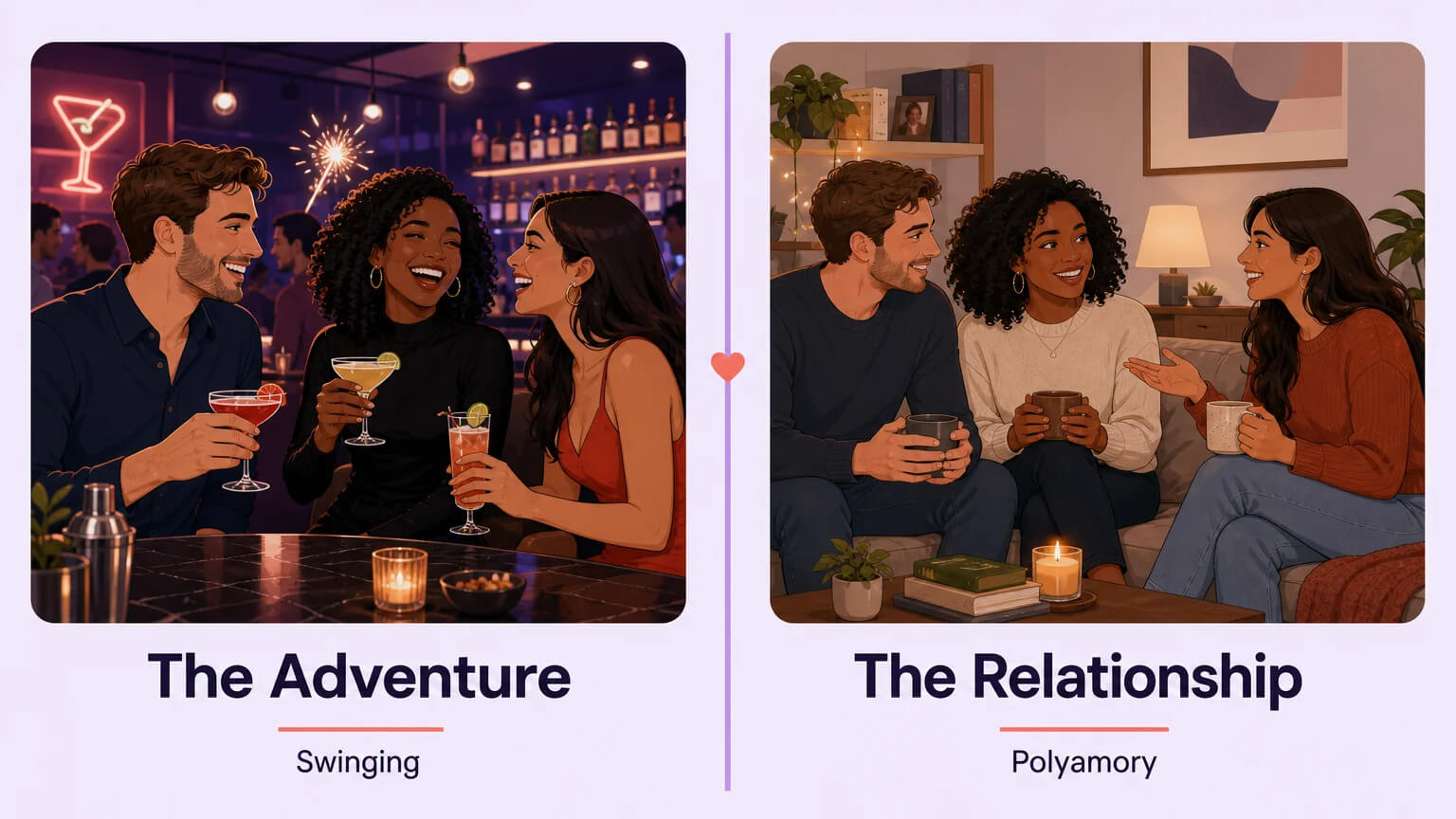
Before you download an app or reply to a message, get clear on one question: what kind of unicorn are you?
There are two distinct worlds here, operating by different emotional agreements. Neither is better. They are different experiences for different people at different points in your life.
In the swinger world, the focus is adventure, play, and the encounter itself. Emotional attachment is not the goal by design. Couples have explicit agreements about keeping feelings in check. You show up, have an amazing time, and go home.
In the polyamorous world, romantic connection is the point. You might build individual relationships with each partner. Feelings are expected. The goal might be a triad: three people who are all primary partners to each other. As ABC News puts it, swinging is casual sex with boundaries against catching feelings; polyamory treats falling in love as the goal.
Ask yourself: do I want an adventure, or do I want a relationship? Do I want to be a delightful guest, or do I want to eventually have a seat at the table?
Either answer is fine. As sex expert Zachary Zane frames it, being a unicorn can be “a great way to have light, fun, casual group sex and explore the bi+ part of yourself.” It does not have to be heavy.
If you want connection without ever joining a couple’s hierarchy, solo poly and relationship anarchist offer another route. You define the shape of your own involvement.
Write down what you want in one sentence. Return to it every time you evaluate a couple. The only wrong answer is not knowing which experience you are walking into.
Step 2: Build a Profile That Attracts the Right Couples
You know what you want. Now you need to be findable by the right people, and invisible to the wrong ones.
Platform choice is your first filter. Feeld is the largest ENM-specific app: over 2 million connections per month, 20-plus gender and sexuality options, and linked couple profiles via Constellation. About one-third of users are in a couple; half use non-heterosexual labels. Strongest in major cities; smaller markets run thin.
3Fun is purpose-built for couples dating together: linked accounts, group chat for three-way conversations, and the highest app store ratings in the category (4.4 iOS, 4.6 Google Play). The free tier includes unlimited messaging with matches.
OKCupid has built-in non-monogamy options and relationship-style filters, though you will sift through mostly monogamous users. #Open draws only 2,100 monthly active users globally; use it as a supplement.
Your bio does three things: states what you want in plain language, signals your boundaries, and gives couples a reason to message beyond your photos.
“Bisexual woman looking to join a couple for casual adventures. New to this, value clear communication and public first meetings.” That tells a couple everything they need to know and screens out anyone not on the same page.
Include at least one clear face shot and one full-body shot in natural light. Skip filters that obscure your features. A photo of you doing something you enjoy, hiking, cooking, at a concert, gives couples an opening line beyond “hey.”
Skip posed lingerie shots unless that is authentically your style, group photos where they cannot tell which person you are, and bios that apologize for being new.
You are not auditioning. You are presenting yourself honestly and letting the right people self-select in.
Step 3: Spot the Couples Who Will Treat You Well
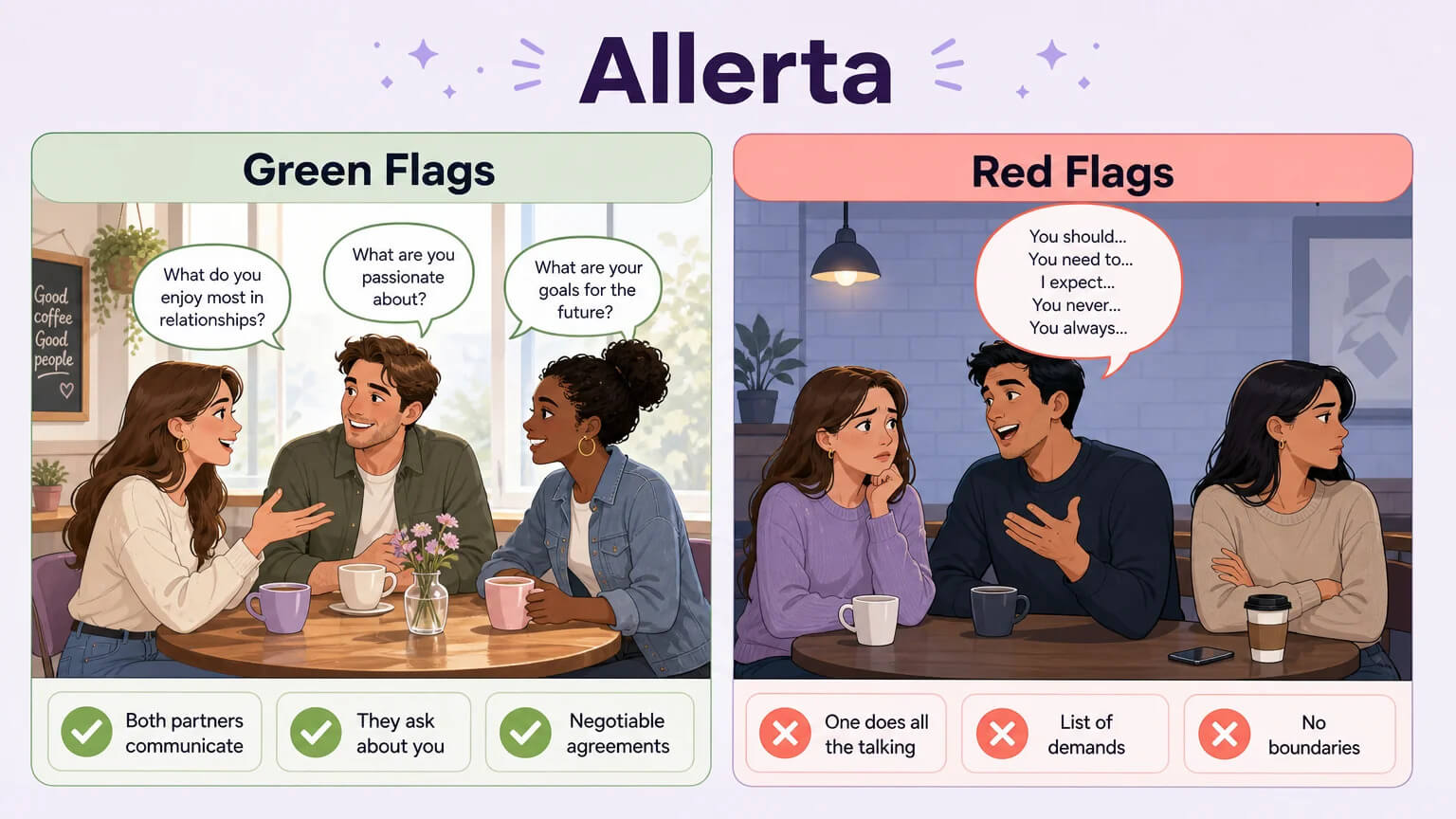
Most couples seeking a third are not predators. Most are just people. Some are wonderfully prepared, some are fumbling their way through a new desire, and some genuinely should not be involving another person yet. Your job is to sort which is which, quickly.
Start with green flags, the signals a couple has done the work.
They treat you like a whole person: they ask about your life, your interests, your goals. Both partners communicate directly; you are not getting everything filtered through one person. They encourage individual connection, solo dates, one-on-one chats, space for each dyad to breathe. They articulate their agreements without a script, and when you ask if those agreements are negotiable, they say yes.
They speak about each other with warmth, not resentment disguised as humor. They discuss jealousy, conflict, and complications without dodging. They respect your autonomy: other partners, other plans, a full life that does not orbit around them.
Now the signals that warrant slowing down or walking away.
One partner does all the talking, or one is visibly uncomfortable and being nudged along. Their pitch sounds like a job description, a list of what you will do for them with no curiosity about your needs. They describe their relationship as struggling or in need of a spark. A third person is not a relationship repair kit.
They claim to have no boundaries, which as Luna Robbie notes, usually means they are unaware of what their boundaries actually are. Their language reduces you to a fantasy delivery system rather than a collaborator.
Trust your body. If something feels off in the first few messages, it will not feel better in person.
After your first conversation, ask yourself: do I feel more like a person they are excited to meet, or a service they are trying to book?
Step 4: Have the Conversations Most People Skip
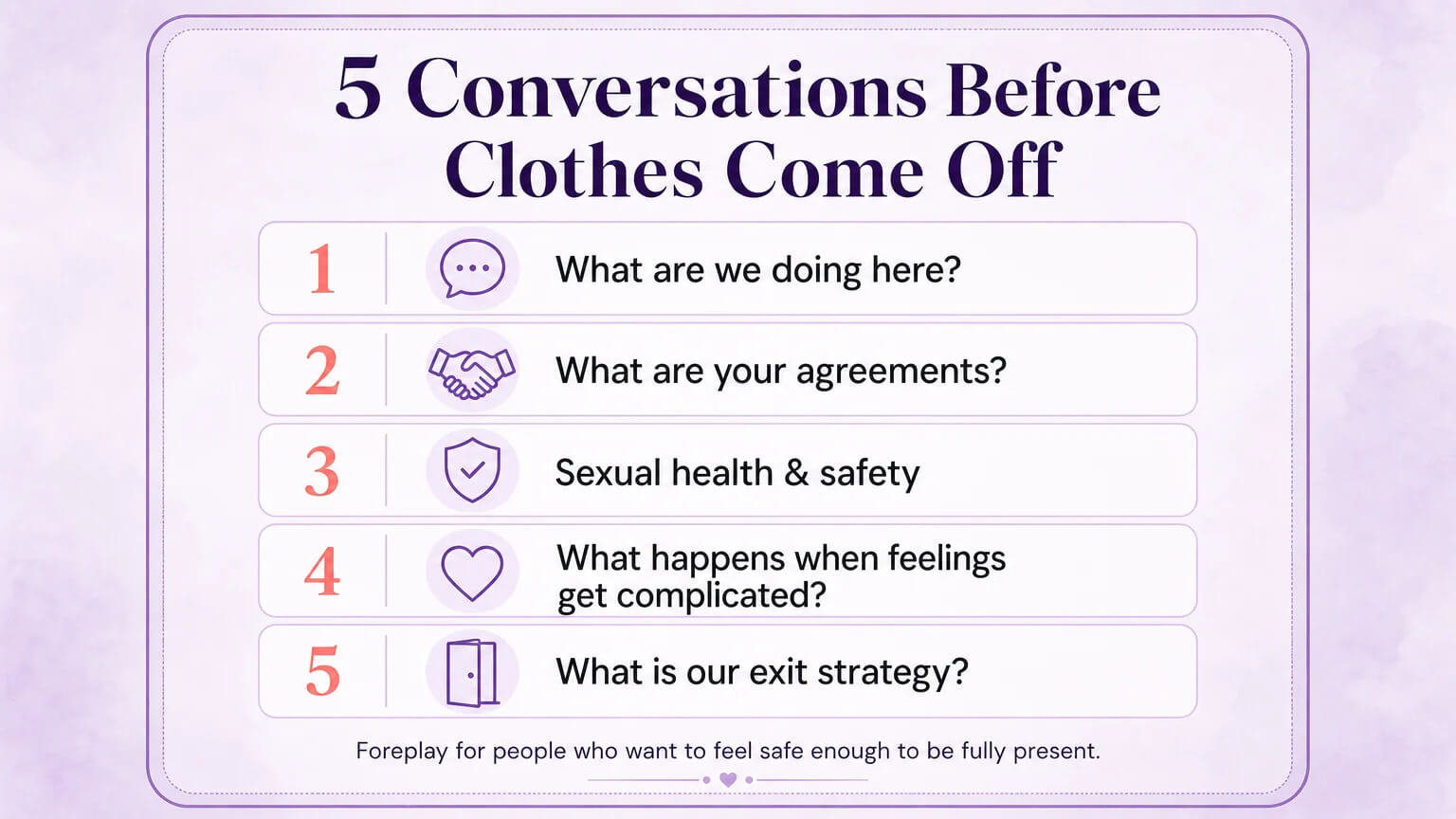
Transcendent experiences versus getting burned: the difference is five conversations before clothes come off.
First: what are we doing here? “Are you looking for one time, ongoing, or something deeper?” Their answer reveals whether they have thought this through. As Ally Isman puts it, “going with the flow is a great way to drown.”
Second: what are your agreements? Are they negotiable? Every couple has them: who does what, solo dates, what happens if feelings develop. Fixed contract or living framework? The first is a red flag. The second is green.
Third: sexual health. “What are your safer sex practices? When were you last tested?” If they deflect, walk. Internal condoms are underrated; they allow seamless switching between partners.
Fourth: what happens when feelings get complicated? Jealousy is data, not failure. “How do you each handle it? Tell me about a time you worked through it.” A couple who describes their process earns trust. One who says it has never happened is not being honest.
Fifth: exit strategy. “If I need to stop, how will you handle that? What if one of you wants to stop?” The answer is the best predictor of whether they see a person or a prop. A couple who says “we would stop immediately, check in, and make sure you get home safely” is telling you something real. One who asks “why would you want to stop?” just told you something real too.
Watch how they answer, not just what they say. Do they make space for your questions? Do they reciprocate? A couple who interviews without consenting to be interviewed broadcasts their priorities.
These conversations are not paranoid. They are foreplay for people who want to feel safe enough to be fully present.
Step 5: Stay Safe, Your First-Meeting Protocol
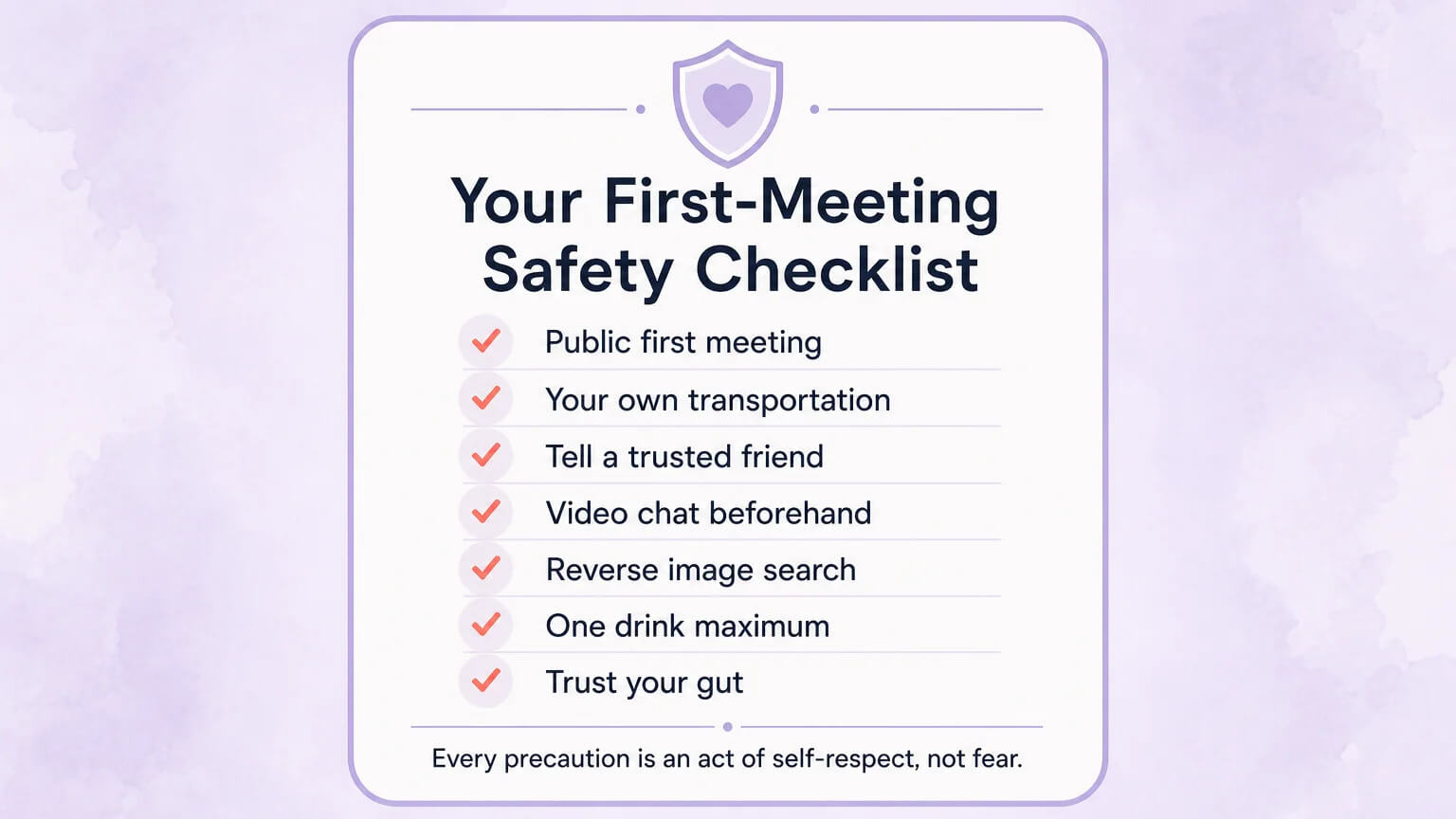
You have vetted them over messages. The conversations went well. Now you are meeting in person. This is where preparation replaces anxiety.
The first meeting is always in public: a coffee shop, a cocktail bar, a busy restaurant. Somewhere with other people, good lighting, and zero pressure to go anywhere private. Never at their home or yours.
Arrange your own transportation. Do not rely on them for a ride, no matter how convenient it seems. Your ability to leave independently is non-negotiable.
Tell a trusted friend where you are going, who you are meeting, and when you expect to check in. Share the couple’s names, profile photos, and the meeting location. Turn on live location sharing for the duration.
Set up a check-in call: a friend who phones you at a pre-arranged time. This doubles as a graceful exit. If you need to leave, the call is your reason.
Video chat beforehand. A five-minute call verifies they are who their photos say they are. If they resist, that is your answer.
Do a reverse image search on their profile photos. It takes thirty seconds and catches common catfishing attempts.
Stay clear-headed. One drink is social. More compromises your judgment when you need it sharp.
Keep your phone charged. Bring your own money even if they offer to pay. Accepting a drink is fine, but maintain your independence.
Trust your gut. If something feels off in the first ten minutes, stand up, thank them for their time, and walk out. You do not owe anyone an explanation for protecting yourself. A couple who reacts badly to reasonable safety precautions has just shown you who they are before you are alone with them.
Every one of these precautions is an act of self-respect, not fear.
Step 6: Get Your Head Right Before You Get Into Bed
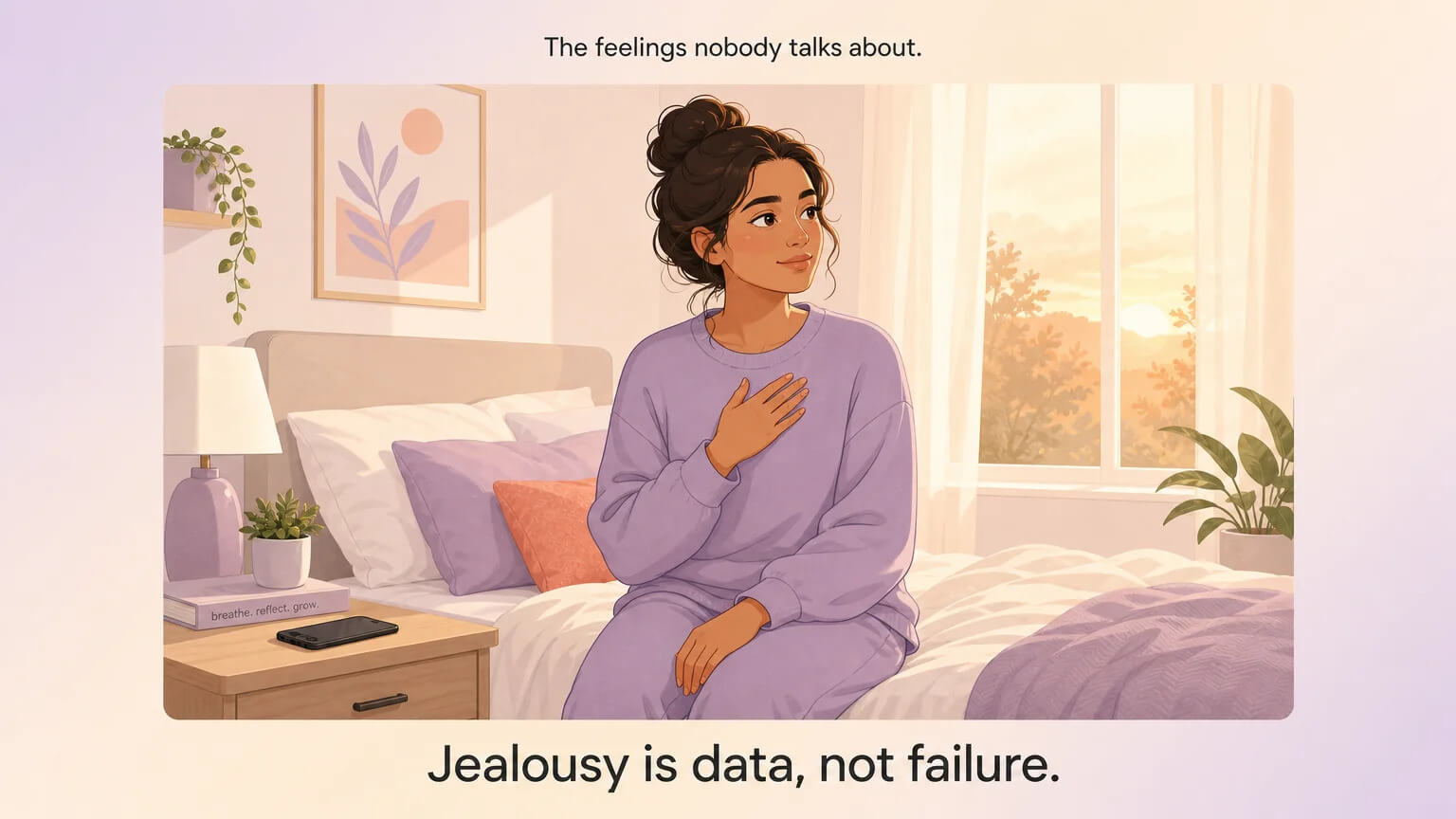
Nobody talks about the feelings. Warnings focus on what goes wrong. Fantasies focus on what goes right. The actual experience lives in between.
Jealousy is the one people worry about most: it is probably coming. Not because something is wrong, but because something is new. Ally Isman describes her own first experience: “My whole body just shut down. It was like tunnel vision. Sound left the room.” She had prepared. It still hit her.
The goal is knowing what to do when jealousy arrives, not preventing it.
Isman names four types. Insecurity: I am not enough. Comparison: they are getting more. Abandonment: I am going to be left out. Distrust: something does not feel safe.
Each needs a different response. Self-compassion for insecurity: treat yourself the way you would treat a friend who just said they felt inadequate, with kindness, not a performance review. A conversation about equity for comparison. Clear agreements for abandonment fear. Investigation for distrust; it might be your history talking, or your intuition flagging something real.
Before the encounter, do an emotional inventory. What am I most excited about? What am I most nervous about? What would make me feel cared for? Share the last two with the couple beforehand. Their response reveals their emotional bandwidth. If they dismiss your nerves, they are not ready. If they say “thank you for telling us. How can we help?” they are.
Prepare for the possibility you will not enjoy it. That is not failure. It is data about yourself. The only failure is pretending you are fine when you are not.
Step 7: Navigate the Encounter Like Someone Who Belongs There
You are here. Preparation done. Safety net in place. Now: how do you navigate the encounter so it feels good for everyone, including you?
Start with presence, not performance. Synchronized breathing: sit together, breathe in rhythm for a minute. It works. Your nervous system calms when it senses calm around you. It also breaks the ice without words. You are all doing the same thing, together, before anything else happens. From there, light touch, hands, shoulders, eye contact. Let energy build.
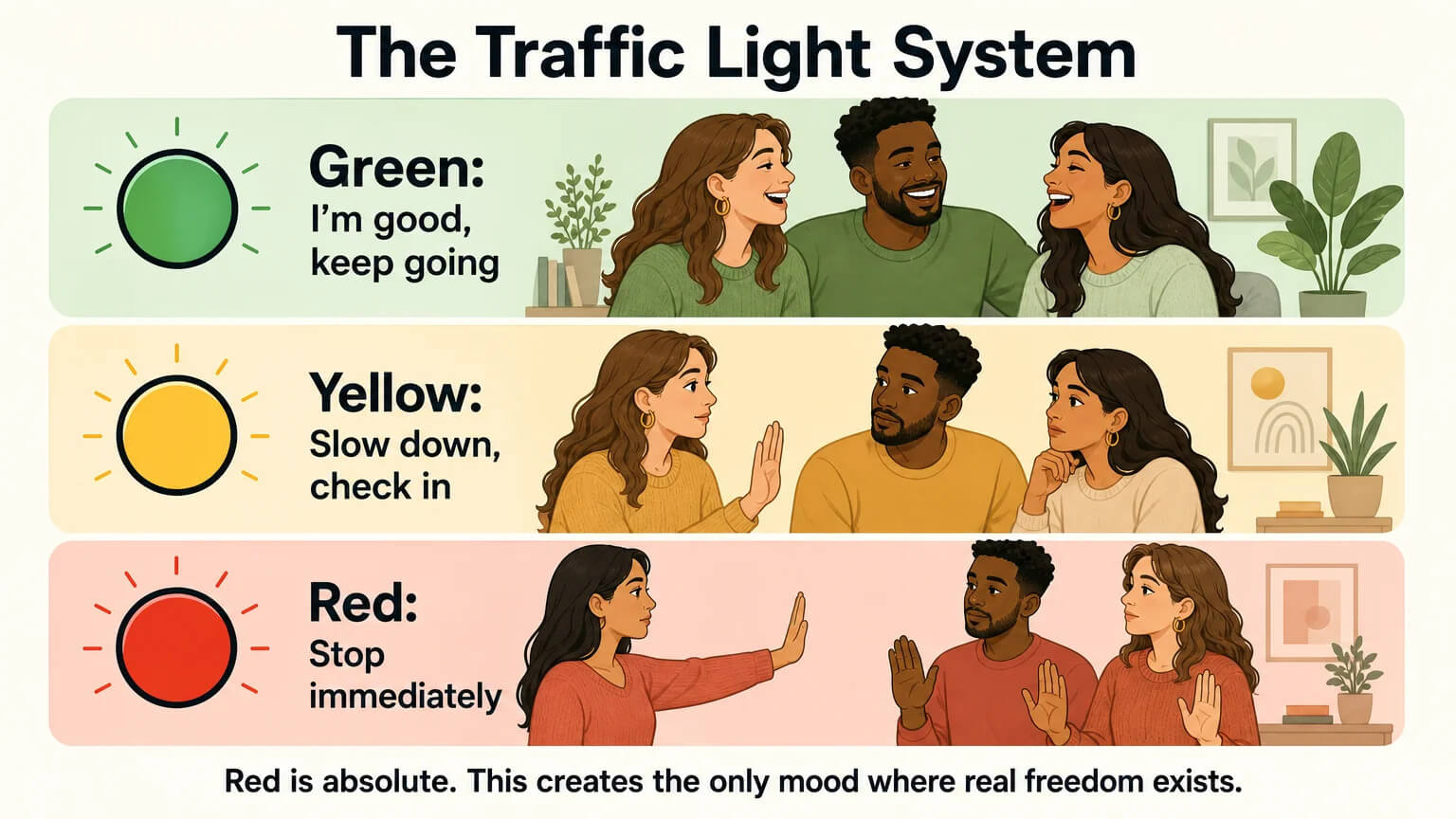
Use the traffic light system. Green: I am good, keep going. Yellow: slow down, I need a moment. Red: stop immediately, no questions. Red is absolute. This does not kill the mood. It creates the only mood where real freedom exists: everyone knows they can stop.
Frame consent as invitation, not permission. “I would love to do X. How does that sound to you?” instead of “Is this okay?” You are inviting, not gatekeeping.
Unexpected things happen. Male performance anxiety is common. Luna Robbie: “penises can get hyper excited, overstimulated, or even very shy, especially in front of their true loves.” Not about you. The script in your head rarely survives contact with a real room. That is fine. Bodies have their own timing. Slow down, return to breath and touch. Follow the energy.
If you need to pause, use your words. “I need a moment” is a complete sentence. Get water. Breathe. Rejoin when ready, or be done. Both are fine.
Your pleasure matters exactly as much as theirs. You are not a service provider. You are one-third of the equation.
Step 8: Aftercare, The Part That Determines How You Feel Tomorrow
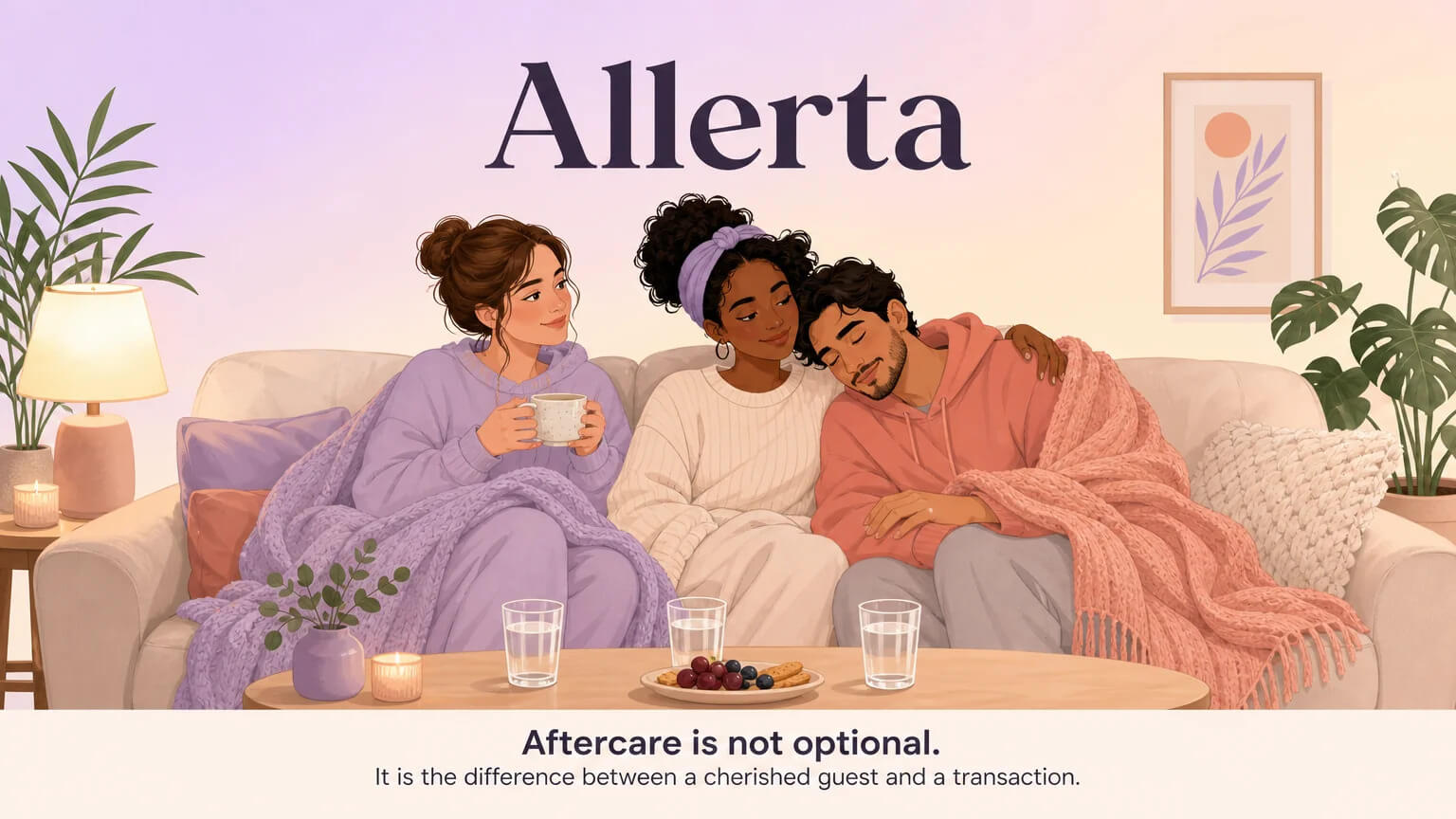
What happens in the hour after matters as much as what happens during. Aftercare is the emotional and physical check-in that follows a shared experience. It is not optional. A couple who shows you the door the moment the encounter ends has told you everything about how they see you.
Ally Isman structures aftercare in three parts.
Part one: all three of you together, immediately after. This is not a performance review. Share a high and a low. “What felt amazing? What felt a little weird?” Keep it light. Provide water, snacks, a blanket. Bodies need grounding after intensity.
Part two: the couple processes alone. Their relationship needs its own container. That container is not your responsibility.
Part three: a follow-up with you, about a week later. A simple message: “Hey, I have been thinking about our time together and wanted to check in. How are you feeling?” This says you were not a one-night transaction.
For you: an emotional drop is normal. After the adrenaline and dopamine of a new experience, your brain chemistry rebalances, which can feel like sadness, emptiness, or anxiety. It does not mean you made a mistake. It means you are human. Plan for it: schedule a quiet evening, have a friend on standby, keep something comforting to return to.
If a couple ghosts you after the encounter, that is information about their character, not your worth. The right couples follow up. The wrong ones disappear.
Aftercare is not just for difficult experiences. The best encounters often need the most processing precisely because they were so intense.
If a couple says they do not do aftercare, believe them, and decide accordingly.
Step 9: What Comes Next, The Paths Forward
You have done it. Maybe once, maybe more. Now the fork in the road, and nobody talks about what comes next.
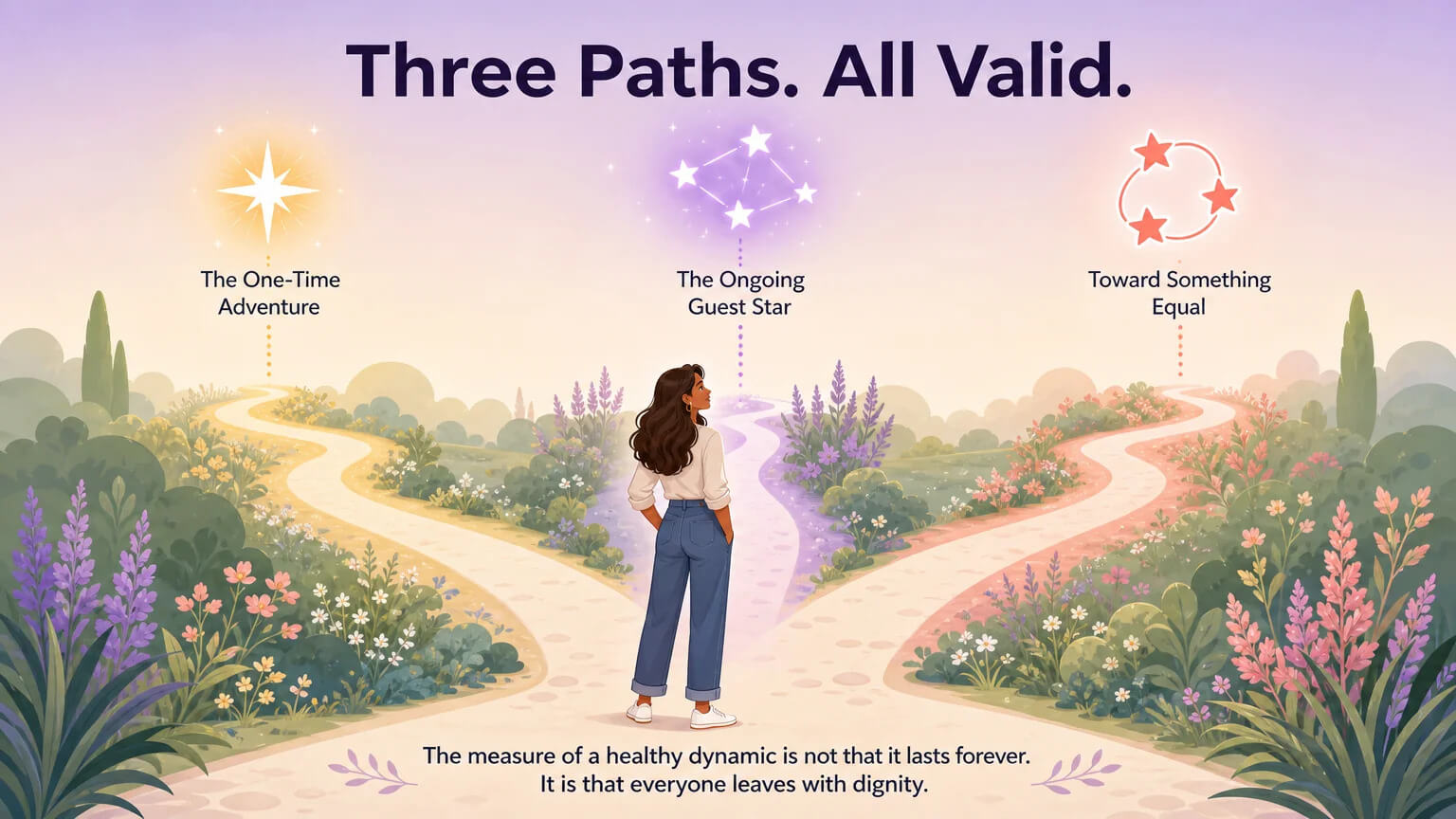
Three paths. All valid.
Path one: the one-time adventure. You had an amazing night. It was what you wanted. It does not need to become anything more. The best unicorn experiences are single chapters, complete in themselves. No obligation to repeat.
Path two: the ongoing guest star. One woman on Poly.Land described dating multiple couples and feeling like a “guest star.” Couples gave her dinners, gifts, and affection. Old Relationship Energy blended with New Relationship Energy, creating what she called spectacular. She was a cherished recurring guest, and that was exactly the role she wanted.
Path three: toward something equal. The connection deepens. You want individual relationships, not just shared time. You want a voice. The guest star wants a seat at the table.
Graduating from unicorn to equal partner requires the couple to share power and integrate you as co-creator, not addition. The Kat, Lincoln, and Eddie triad is a working example: Kat is married to Lincoln and committed to Eddie, and they manage dyadic time and daily life equitably. This exists. It is also rare.
How do you know which path is yours? Ask regularly: am I growing or shrinking? Do I have agency, or am I adapting to someone else’s script?
There is also ending well. One woman was a unicorn in her best friend’s marriage for over a year. It ended amicably when she wanted children. Her lesson: pre-establish boundaries for what comes after. Talk about endings before they arrive.
The measure of a healthy dynamic is not that it lasts forever. It is that everyone leaves with dignity.
FAQ: Your Unicorn Questions, Answered Directly
Is it better to be a unicorn for strangers or people I know?
Strangers. Every time. Ally Isman calls involving friends “so many versions of wrong.” Keep your friend circle and your adventure circle separate.
What if I am nervous about STIs?
Good. That nervousness is self-respect. Exchange test results beforehand. Internal condoms are underrated; they allow seamless switching between partners. If a couple is cagey about testing, walk.
How do I know if a couple sees me as a person or a fantasy prop?
After your first conversation: did they ask as many questions about you as you asked about them? Did they show curiosity about your life, boundaries, comfort? Or did it orbit entirely around their desires? The question ratio is your answer.
Can a unicorn dynamic turn into a real relationship?
Yes. But it requires the couple to dismantle couple privilege, renegotiate with you as an equal, and share power. Most will not do this work. The ones who will are rare.
What is the biggest mistake first-time unicorns make?
Not clarifying boundaries beforehand. It is easy to get swept up and agree to things you would not agree to sober. Write down your non-negotiables. Read them before you walk through the door.
Should couples consider hiring a professional for their first time?
For couples wanting a purely physical experience, yes. Professionals like Luna Robbie offer structure, safety, and clarity civilian encounters cannot guarantee. Legal constraints apply by location.
Is it normal to feel sad or empty after a great encounter?
Yes. It is called an emotional drop. Biochemistry, not a sign something is wrong. After intense pleasure, your brain rebalances. The comedown can feel like a mini-grief. Plan something gentle. It passes.