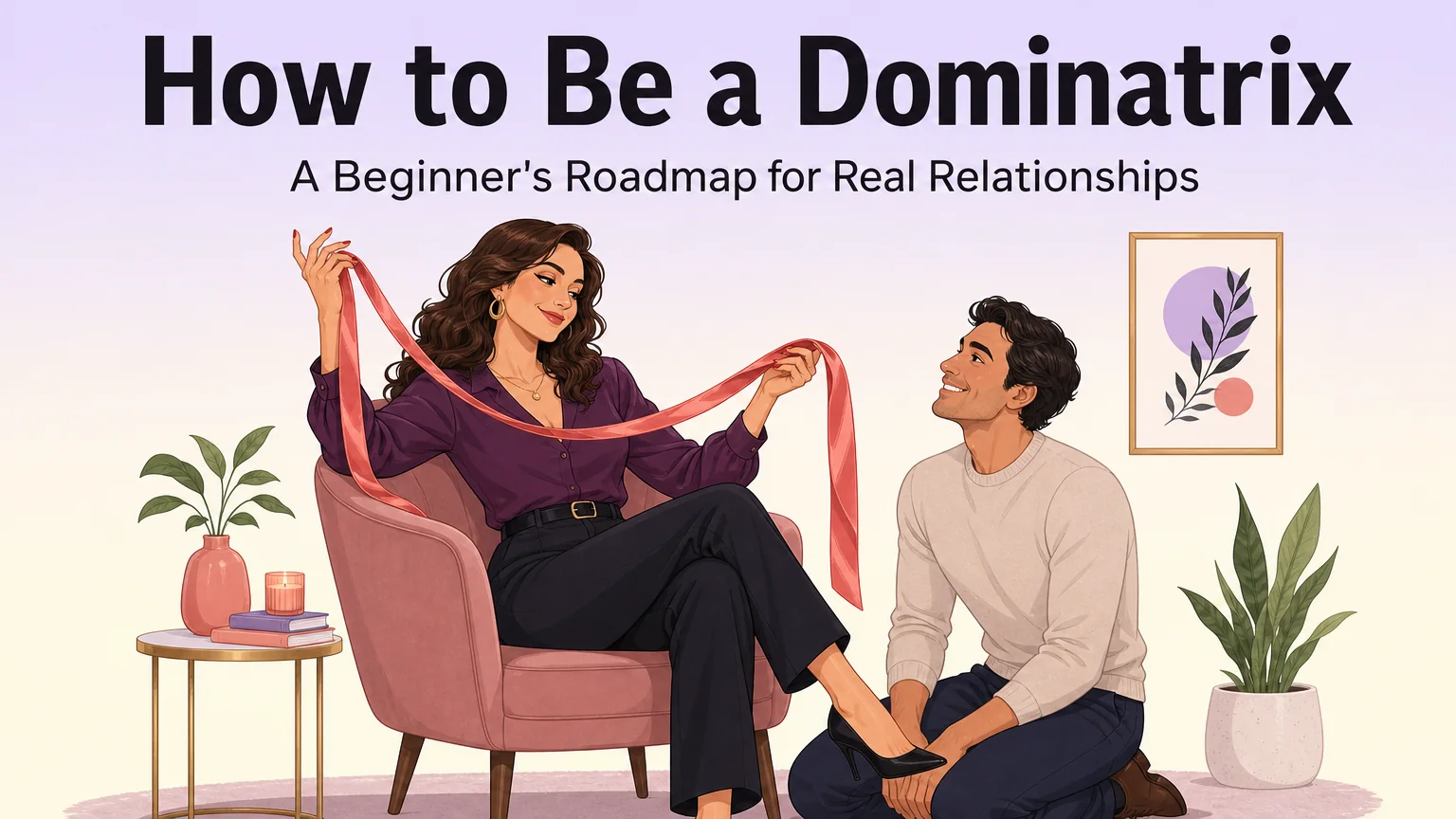
Want to learn how to be a dominatrix? The internet will show you corsets, whips, and career talk. None of that is where a curious beginner starts.
Becoming a dominant begins before any costume or toy, with knowing yourself, knowing your partner, and understanding what consent means in practice. This is not a guide to becoming a professional or performing for an audience. It is about power exchange inside a real relationship, built on trust rather than spectacle.
The best part: you can start with what you already own, tonight if you want. This roadmap walks you through seven steps: what dominance actually is, how to master consent and negotiation, how to bring up kink without the fear, how to plan a first scene with zero gear, how to hold the dominant mindset in the moment, how to handle aftercare for both of you, and how to find community and keep learning. By the end, you will have everything you need for your first scene.
Step 1: Understand What Dominance Actually Is
Before you can lead a scene, you need to know what dominance is, and what it is not. If you are learning how to be a dominatrix inside a real relationship, this step clears away the myths so you can decide whether the path is for you.
What dominance is not
A dominant is not cruel. They do not hate their partner, and they are not looking to cause real harm. They are not a sexual-service provider, and they do not need a wardrobe of fetish gear before they start. Most of what you have seen on screens is costume, not practice.
And you do not have to go extreme to be kinky. Some of the most powerful scenes are psychologically deep and physically basic. It is about headspace, not intensity.
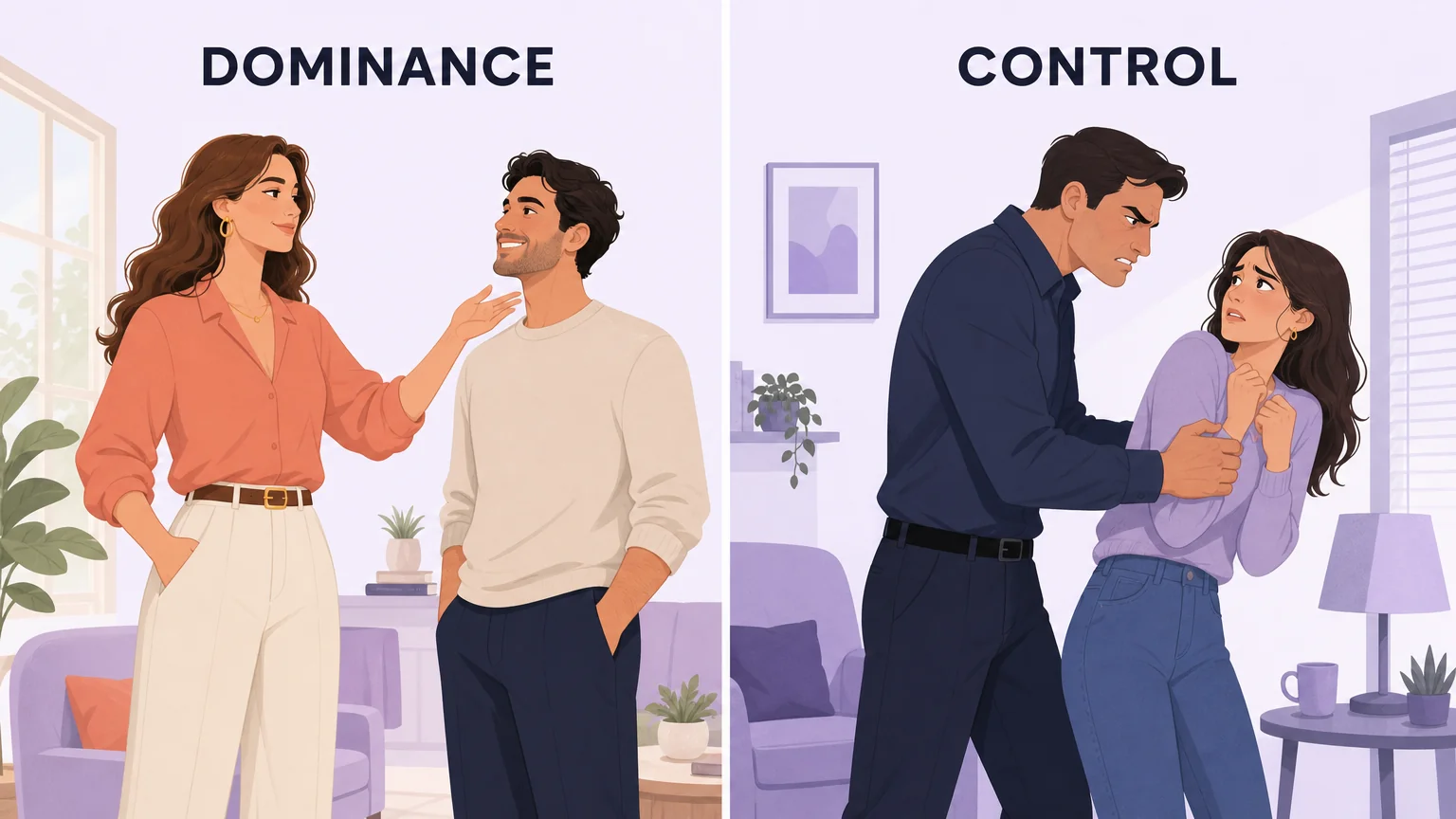
The real distinction is between dominance and control. There is a very fine line between a Dom and a control freak. Plenty of people who call themselves dominants are actually scared control freaks, people who believe that being authoritative about their need to be in charge is the only way forward.
Control comes from the dominant’s own anxiety. Dominance comes from leadership that creates enough safety for a partner to surrender.
Here is the paradox that makes everything click: inside a negotiated scene, the submissive holds the power. Their limits are the walls of the room. Staying inside them is what makes surrender possible at all.
At its best, dominance is a form of service. You are the architect of an experience someone trusts you to build. When a partner surrenders to you, they are not giving up their voice. They are choosing to follow inside boundaries they set themselves, which is what makes the power real rather than taken.
How to tell if this is for you
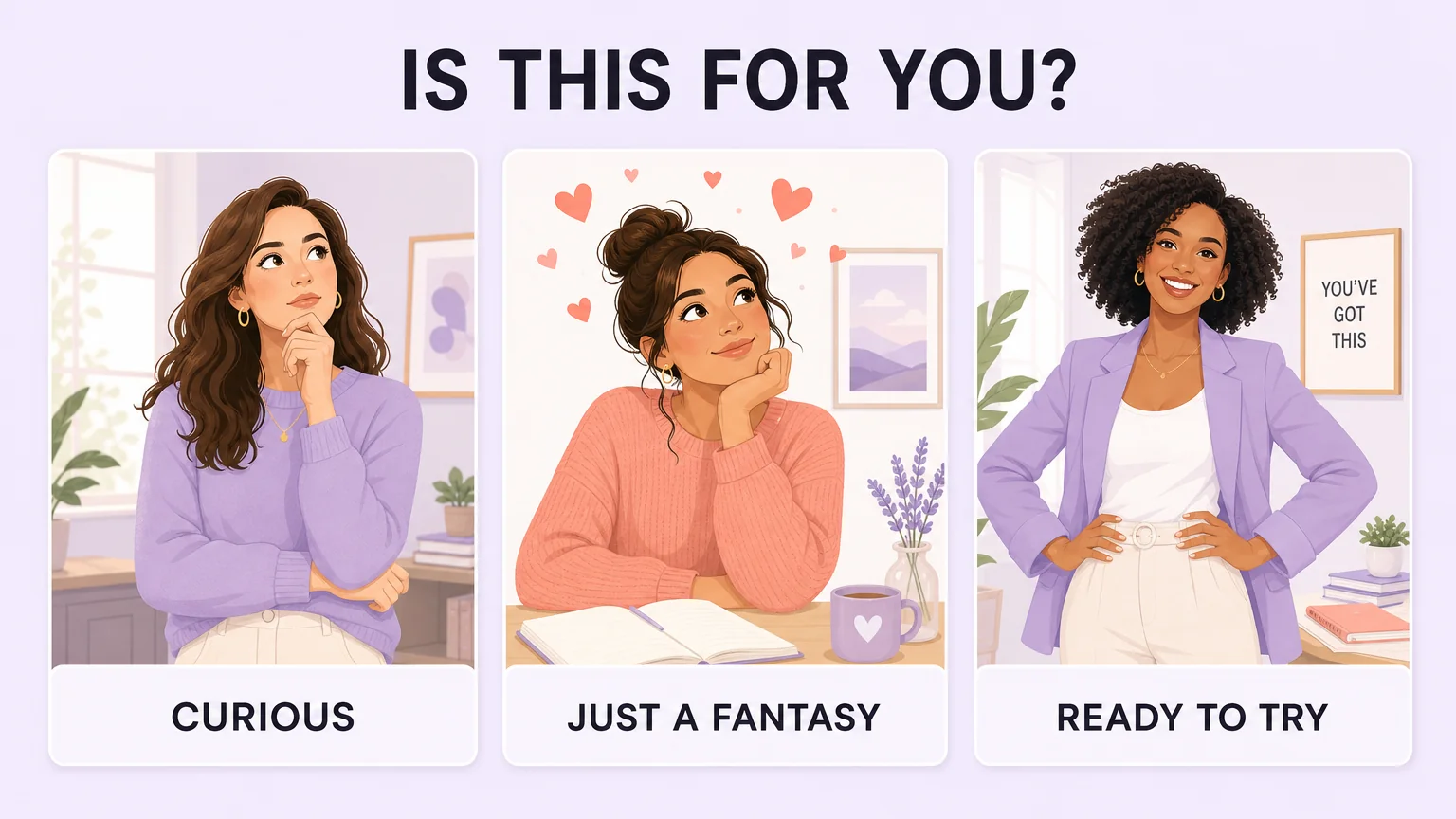
Ask yourself the question a professional dominatrix poses to every aspiring newcomer: why do you want this? If your honest answer is about the feeling of it, about leadership, trust, and a partner’s surrender, you are on the right track. If it is about looking a certain way, that is worth sitting with.
Notice what the fantasy keeps pulling you toward: power, trust, sensation, ritual. Whatever keeps showing up is a clue, not a verdict.
Desire does not require an apology. And know this: there are no natural dominants. Authority is a skill you acquire and hone over time, sometimes over years. You are not broken if it feels awkward. You can only lead someone well once you know what pleases you, so start there.
Milestone: You can name what dominance is not, and you have an honest reason of your own for exploring it.
Step 2: Master Consent and Negotiation Before Anything Happens
Most beginners freeze because they do not know what safe even means. The fix is not a vibe. It is a process, and this step hands you the whole thing before any play begins.
The frameworks, translated
Kink communities spent decades building a vocabulary for consent. SSC, meaning safe, sane, and consensual, emerged in the 1980s as kink fought for legitimacy. RACK, meaning risk-aware consensual kink, followed in the 1990s because of a blunt truth: all play involves risk, and the question is whether everyone understands it and chooses it freely. PRICK added personal responsibility to the mix.
They all reduce to one rule. Consent must be explicit, enthusiastic, informed, and ongoing. It can be withdrawn at any moment, and absence of no is not the same as yes.
Consent is more than words. It lives in your body and your nervous system, which is why checking in matters more than any acronym.
Negotiate with yourself first
Before you negotiate with a partner, negotiate with yourself. Build a want/will/won’t list. Hard limits are absolute nos, the red flags you wave without apology. Soft limits are things you have not tried yet and might be open to; they can evolve into kinks or into hard limits.
Add the practical details too: allergies, materials, trauma triggers, and where you feel comfortable. Tops have limits as well. That is leadership, not weakness.
Front-load everything before a scene
Think of pre-scene negotiation as the GPS before the trip. Run the full checklist: goal of the scene, roles, activities, hard and soft limits, safewords both verbal and non-verbal, aftercare needs, health conditions and medications, mental-health triggers, whether sex is on the table, emergency contacts, and rules about photos and videos.
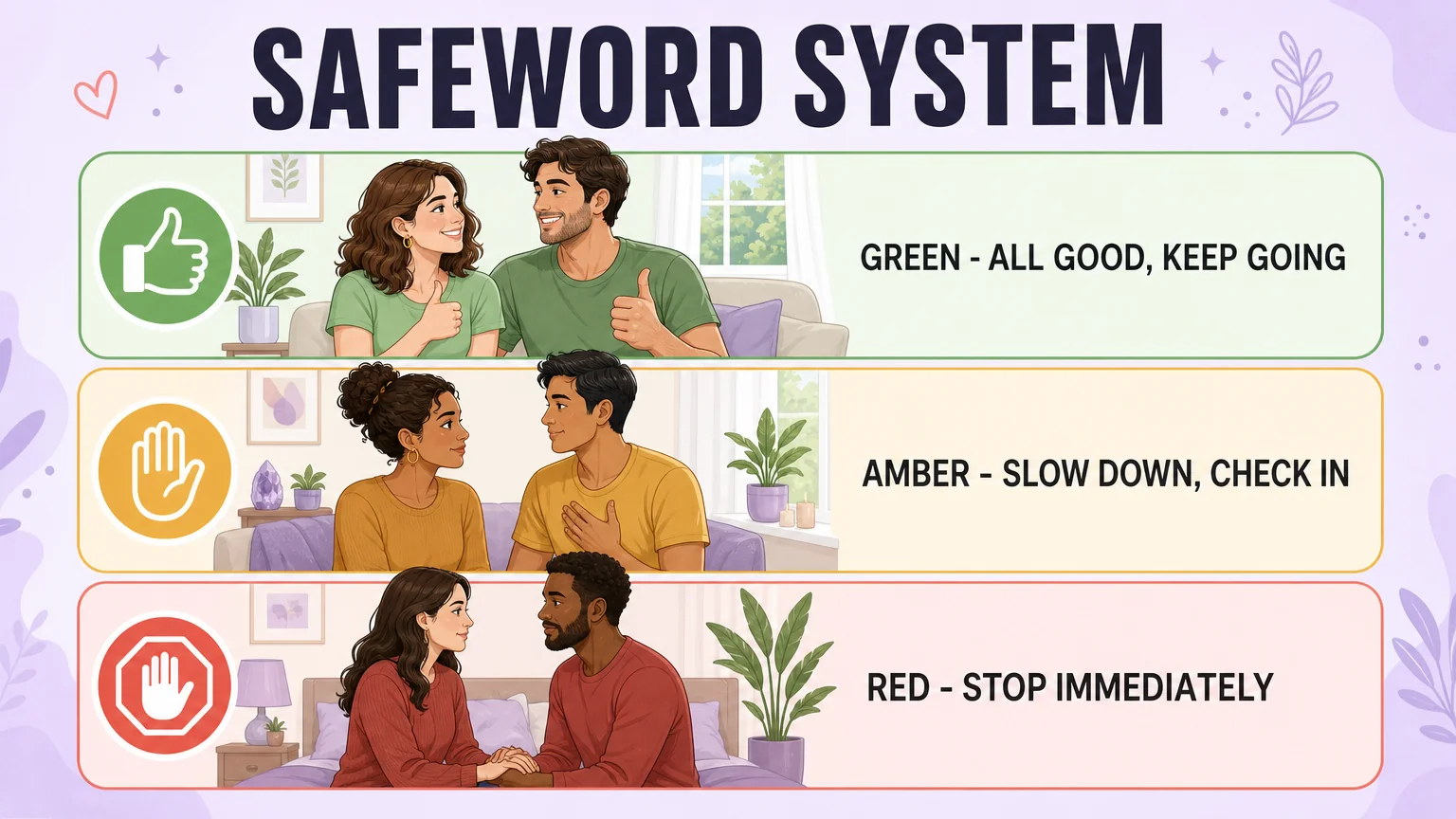
Use the traffic-light system as your beginner default. Green means keep going, and it doubles as ongoing consent. Yellow means slow down or check in. Red means stop immediately, and the person who said red decides what happens next.
If your partner will be gagged or prefers silence, agree on a non-verbal signal, a tap, a dropped object, a hand squeeze, and practice it during negotiation, not mid-scene.
Two integrity rules. Never use the safeword inside roleplay. If you forgot to agree one, the scene stops until you do. And remember that a limit is not a bargaining chip. A negotiation is not a bargaining session.
Milestone: You have a written want/will/won’t list, a safeword system both of you understand, and a front-loading conversation behind you.
Step 3: Bring Up Kink With Your Partner (Without the Fear)

This is the step everyone is afraid of, and the fear is entirely normal. The good news is that there is a path through it, and it starts with how you frame the conversation.
The way you bring it up shapes how it lands. If you present this as shameful, your partner will read it as shameful. Present it as a desire you trust them with, and they can meet it in kind.
The low-pressure playbook
First, get clear on what you want in private. Make a list and rank what you are curious about, what you are interested in, and what you are determined to try. You cannot describe a destination you have not mapped.
Then choose a calm, non-sexual moment. Cooking dinner, a long walk, the couch with no screens. Never mid-intimacy, never post-orgasm. This conversation deserves both of your full attention, and rushing it is how it gets fumbled.
Test the waters before diving in. Ask what they know about kink. Mention a character or story from pop culture and watch how they react. A lighter opener works too: share a kinky story or piece of fiction and ask what it makes them feel.
Then use a low-pressure opener: “Can I share a fantasy with you? No pressure.” And make space for the answer by adding that they do not have to respond right now. For established couples, this whole exchange can be a short check-in rather than a formal meeting.
Their reaction tells you one of two things: they are curious, or they have reservations. Both are information. Keep the first conversation about what this means and why it matters to you, and let the menu of activities come later. The goal of this conversation is not a yes. It is honesty, in both directions.
If they ask whether this is abusive, you have an answer ready. Kink done well runs on explicit, ongoing, withdrawable consent. That is the entire difference between power exchange and harm.
If they are not interested
That is their right, as much as your curiosity is yours. Do not push. Do not negotiate someone into an experience they do not want. Instead, decide whether this part of you matters enough to not shove it back into a closet. That is a relationship decision, not a debate, and only you can make it.
If part of that decision is a desire to explore this with someone who shares the curiosity, that door exists. People find those partners through communities, and increasingly through spaces built for open-minded couples and singles to meet at their own pace, with no pressure to rush.
Milestone: You have shared a fantasy, heard where your partner stands, and made space for their answer.
Step 4: Plan Your First Scene With Zero Gear
A scene is a negotiated window of intentional kink and power exchange. What makes it a scene is the intention, not the activity and not the gear. Your first scene is a data-gathering exercise. It is for learning about your body, your emotions, and how the dynamic feels in practice, not for proving anything or pushing limits.
Structure it simply
Mark the transition into play. A shift in your voice, a command, or placing a blindfold tells your partner’s body the scene has begun.
Keep the scene short and simple. A short, focused scene teaches you more than an hour of wandering, so end it deliberately rather than letting it fade out. That gives aftercare a clear place to start.
The blindfold does double duty: it marks the boundary between your everyday selves and your scene selves, and it hands you a tool to magnify every sensation that follows.
Three scenes you can run tonight
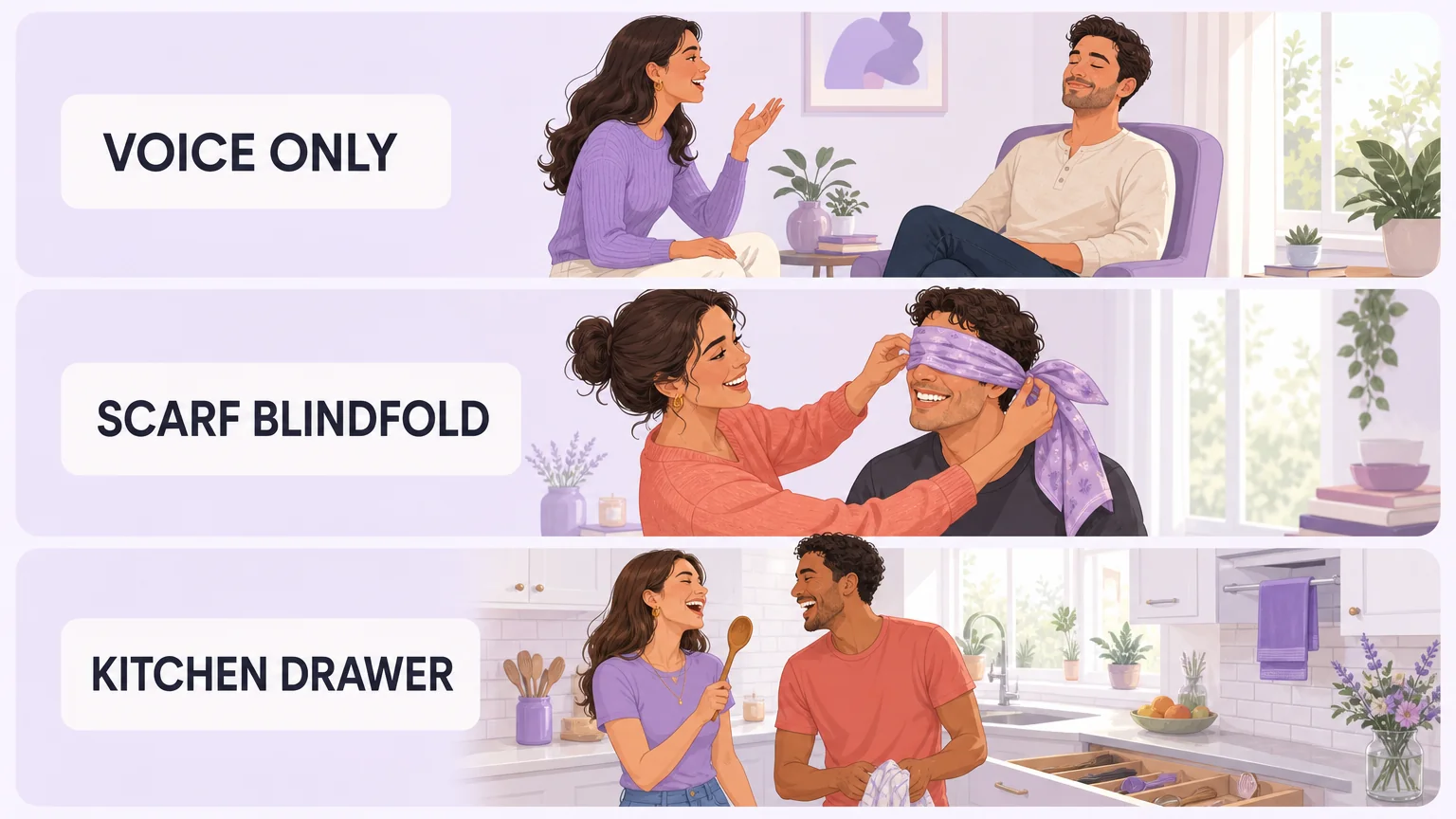
The voice-only command scene. No touching at all. Your voice guides their obedience, teases them, and holds them in anticipation. Think of it as kinky Simon says. It works across a room, and it works long-distance over phone, text, or video call. It is ideal for a new dominant who does not yet know how to wield a flogger.
Sensory deprivation with a scarf. Fold a scarf or sleep mask over their eyes, and every sound and breath magnifies. Trace a finger, a feather, or a piece of ice down their neck, their ribs, their inner thigh. No toy box required.
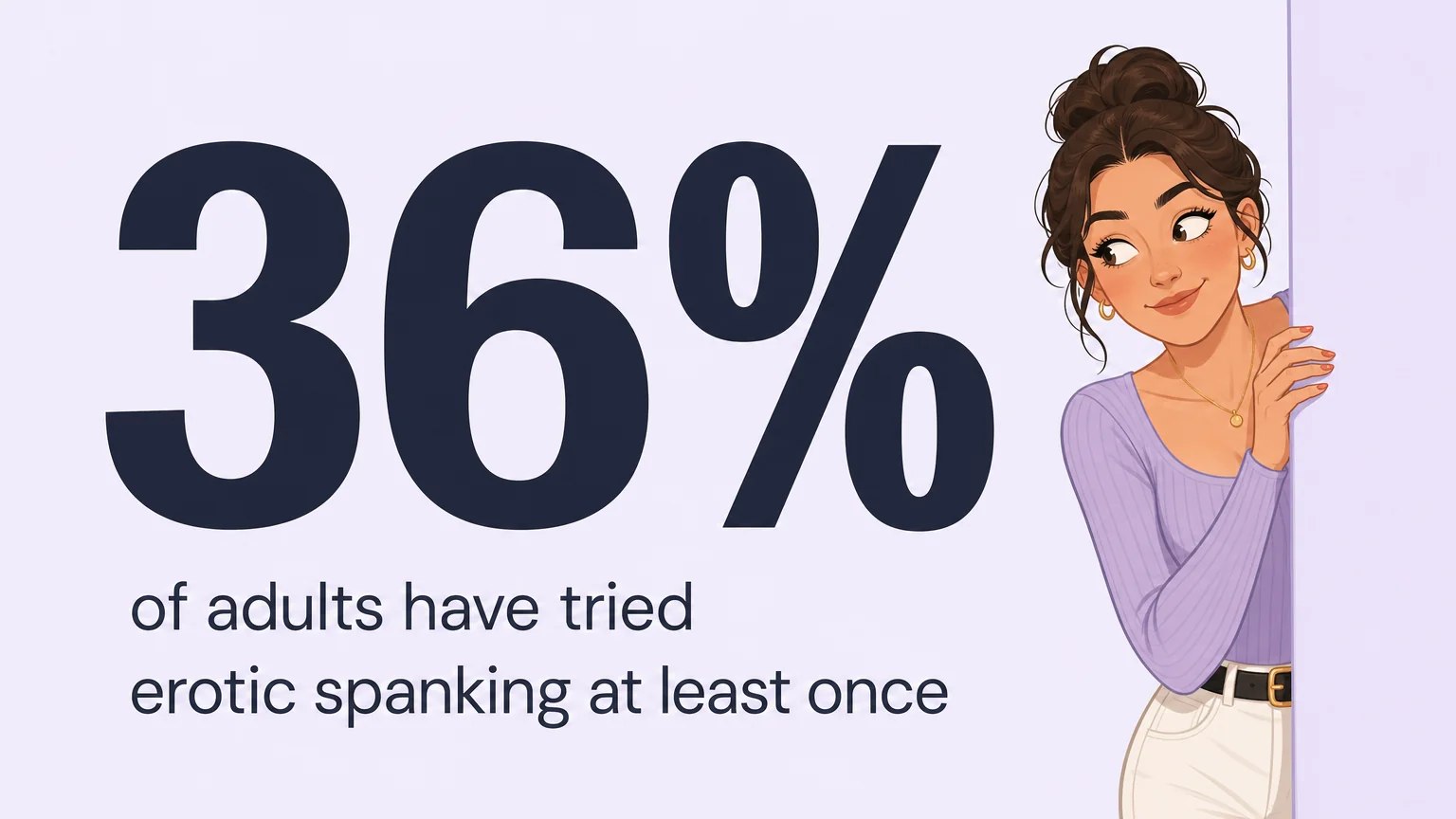
The kitchen-drawer scene. Spatulas and wooden spoons make safe starter implements for light impact play. You are in good company here: more than a third of adults have tried erotic spanking at least once. For about $100 total, you can build a complete starter setup from household items and a few cheap finds.
Carry the limits and safewords you negotiated in step 2 straight into this scene. If it is your first time, cap the scene at three activities or implements so nothing overwhelms. And if any restraint is involved, keep hands above the head for no longer than about 20 minutes.
The energy you bring matters more than any equipment you buy.
Milestone: You have run a first scene, gathered real information, and ended it deliberately with aftercare waiting.
Step 5: Hold the Dominant Mindset in the Moment

Planning dominance and doing it are two different skills. First-scene anxiety is predictable. It comes from not knowing what to expect, and even experienced dominants feel it. What separates them is not courage. It is preparation.
You do not have to wing it
Script loosely. Build a choose-your-own-adventure with anchor phrases, lines you can fall back on when your mind goes blank. Play the scene through in your head before it starts so you can fix the flow. Keep it loose enough to pivot, anchored enough to stay in role.
Build a handful of lines you trust: an instruction to kneel, a question about how it feels, a command to look at you. Your voice becomes the anchor when your mind goes quiet.
Presence is a skill
Attune to your partner’s energy before the scene begins. A shared breath, a moment of stillness. Mark the transition with your voice and a first command, and you signal to both of you who is leading.
Presence is not charisma. It is attention aimed at one person, and it reads as confidence even when your heart is racing. Your voice is your primary instrument, so practice slowing it down and letting silence do some of the work.
The feedback loop
Check in at transitions and intensity changes. A simple “still green?” gives them a door and gives you data. Read their breath, their body language, their stillness.
Treat a yellow not as a failure but as information. It means you found their real edge, and that is worth rewarding, not mourning. The more you practice reading a partner, the quieter and more confident the room gets.
A partner who freezes or goes very still is telling you something without words. Slow down, soften, and check in before anything else.
Managing your own doubt
You will feel things in the room. Shyness. Self-consciousness. A sudden urge to laugh. For shy or anxious newcomers, stepping into an empowered dominant space can feel crippling at first. Feel those feelings without letting them run you. Your emotions are excellent servants but terrible masters.
Ask yourself three questions: what do I feel, what does this tell me about my needs, and how can I advocate for myself. Then let the answer shape your next move.
Wielding authority confidently is a learned skill, not a personality trait. Every scene is practice, and practice is how the role starts to fit.
Milestone: You have run a scene while staying present, checked in with your partner, and managed your own doubt in the room.
Step 6: Aftercare for Both of You (Sub Drop and Top Drop)

A scene has a chemical hangover, and it hits the dominant too.
After intense play, the adrenaline and endorphins that carried you both crash. The result is drop, a wave of depression-like symptoms that typically arrives within 24 to 72 hours. For some people it feels like a panic attack on steroids, especially when a scene ends too abruptly.
And the surprise for most newcomers: drop hits tops too. One person who moved from subbing to domming found the dom drop harder to handle than any sub drop. A professional domme describes feeling depleted, disoriented, and out of her body after a heavy scene. That is when she learned that dominants need aftercare too.
The same cocktail of adrenaline, norepinephrine, dopamine, serotonin, and oxytocin that made the scene electric is what empties out when it ends. The crash can be emotional or physical: exhaustion, tearfulness, feeling out of body. It looks different in everyone, and it is not a sign that anything went wrong.
The aftercare toolkit
It applies to both of you. Blankets, because body temperature drops. Water and snacks for rehydration. A warm shower. Cuddling. A post-scene debrief about what worked and what did not.
A debrief is not a performance review. It is two people telling each other what the scene meant. Chocolate mirrors the oxytocin your bodies just spent. And a gradual wind-down instead of a sharp ending, a slow wave rather than a cliff.
Give yourself a ritual
As the dominant, you carry energy into a scene. Give it somewhere to go. Many dominants use a version of this ritual: drink water to release what you took on, recalibrate, then let the scene persona go to sleep so the daytime self returns. One put it plainly: if you are going to do surgery on someone, you do not leave them unsewn. Apply the same logic to yourself.
Plan aftercare before the scene. Schedule a follow-up 24 to 72 hours out, because drop is often delayed. If symptoms last past 48 hours or bring up trauma responses, seek professional help. And take your own care seriously.
Skipping self-aftercare is how dominant burnout happens. One dominant described hitting hospital-level burnout two years in, when no one was holding space for her. That is the real cost of treating your energy like a tap instead of a bucket.
Milestone: You have an aftercare plan for both partners, including a 24-to-72-hour check-in window.
Step 7: Find Your Community, Learn, and Buy Gear Last

Your first scenes are behind you. Now the growth work: community, education, and gear, in the right order.
Start with a munch
The counterintuitive door into the whole community is the munch. A munch is a casual social gathering at a restaurant or coffee shop. Everyone wears vanilla clothes. There is no play, no toys, and no fetish gear. It is not a hookup spot.
It is a meet and greet without the pressure, and it is the lowest-pressure way to meet people who understand what you are exploring.
For your first one, find events through the FetLife events tab, filtered by your area. Check the event description and RSVPs, and prefer newcomer-friendly, public venues. Message the host beforehand if you are nervous; most are genuinely welcoming to newcomers.
Dress like you are meeting friends for dinner. Introduce yourself to the organizer, say it is your first time, and let them introduce you around. Keep the conversation vanilla-appropriate, and do not grill anyone about their kinks. Showing up alone is normal and reads as confidence, not awkwardness.
Try a couple of different munches before you judge the scene, because every group has its own character.
From there, the path widens to dungeon nights and play parties, where play happens under rules and with monitors present. If you are under 35, look for TNG munches, built for the 18-to-35 crowd.
Learn, because there is no certificate
There is no license or certification to become a dominant. You learn through books like SM 101 and The New Topping Book, through workshops, and through mentorship. Vet any instructor’s reputation before you pay for their time.
Buy gear last, and buy it safe
You can start with everyday items for around $100. When you do buy real tools, choose a flogger, a light cloth flogger for warmup, and a treated-wood paddle over a random kit. Buy from specialist makers, Etsy, or local makers, not general sex shops, which can sell gear that splinters or breaks. Keep safety shears and a first-aid kit on hand, even before you own rope.
FetLife is a collection of individuals, most of them good, not all of them trustworthy. Vet play partners, watch people play before you play with them, and never play alone with a stranger for the first time.
The rules that keep munches safe apply wherever you meet people, including online: vet, go slow, and meet in public first. And if there’s no active scene near you, or you’d rather start the conversation in private, a lot of that first contact now happens on apps built for couples and open-minded singles.
When you’re ready to meet people who share what you’re exploring, 3Fun is built for exactly that: couples and open-minded singles finding each other with privacy, at their own pace. Download 3Fun and see who’s out there.
Milestone: You have attended a munch, chosen a learning path, and picked out your first safe gear.
Dominatrix FAQs: Answers for Curious Beginners
These are the questions that stop curious newcomers before their first scene, the same ones people whisper in community groups and private messages. If one of them has been holding you back from learning how to be a dominatrix, this section is for you. Short answers, no judgment, and a clear next step for each.
Do I need expensive gear to start?
No. The strongest beginner scenes need zero gear. Voice-only command scenes, a scarf used as a blindfold, and everyday kitchen items like spatulas and wooden spoons are free or nearly free. For about $100 total you can build a complete starter setup from household items and a few cheap finds. Gear is the last thing a first scene needs, and buying it first is how money gets spent on toys that gather dust. Spend your early energy on negotiation, presence, and aftercare instead.
How do I know if I am actually dominant, or just hooked on the fantasy?
Start with self-reflection instead of a label. Build your own want/will/won’t list. Journal your desires without judging them, and notice what keeps coming back.
Remember that there are no natural dominants. Authority is a skill you acquire and hone over time, so uncertainty is normal, not a verdict. Watch what keeps coming back: power, trust, sensation, ritual. If the idea of leading, creating safety, and earning a partner’s surrender keeps holding you, that is a starting point. Fantasy and practice grow together.
What if my partner is not interested?
It is their right to decline, just as it is your right to be curious. Do not push, pressure, or negotiate someone into an experience they do not want. Instead, decide what this part of you needs. For some people kink is a nice-to-have; for others it is essential to how they connect.
That is a relationship decision only you can make, and your desire is not a flaw in your foundation. If it is essential, an honest conversation about how to honor it is the next step. And if your partner is curious rather than opposed, start slow with a blindfold or some dirty talk, and agree on a safeword before anything else.
Is being a dominant the same as being mean or controlling?
No. Inside a negotiated scene, the submissive holds the power through their limits, and staying inside them is what makes surrender possible. There is a very fine line between a dominant and a control freak. Control is driven by the dominant’s own anxiety, while dominance is leadership that creates safety. Consent is the whole game. If a safeword is ignored or consent is pressured, that is not kink. That is harm.
How long does sub drop or top drop last?
Drop is a crash in adrenaline and endorphins, and it usually arrives within 24 to 72 hours after a scene. The acute phase lasts minutes to hours, and milder symptoms can linger for 24 to 48 hours. A gentle wind-down, blankets, rehydration, snacks, and connection help both partners through it. For mild cases, rest, comfort, and some light distraction carry it through. Some players add vitamin B and omega-3 supplements before and after heavy play. You cannot schedule chemistry, so plan for drop even if you think you will not feel it. If symptoms are severe, last past 48 hours, or bring up trauma responses, seek professional help.
Is a munch a place to find a play partner?
No. A munch is a community-building social event at a restaurant or coffee shop where people talk in vanilla clothes, with no play and no pressure. It is not a pickup spot. Treat it as a place to make friends and learn, and trust builds over time. Go with zero expectations beyond a good conversation, and let community happen naturally. Play-party invitations and play partners come later, usually once people have gotten to know you.
Wherever you start, the first step is a conversation. If the missing piece is someone who wants to explore this with you, that’s where 3Fun comes in: a space for couples and open-minded singles to find each other, with privacy and zero judgment. Download 3Fun and start the conversation at your pace.