Maybe the spark has already landed. You can picture femdom training in your relationship. Then comes the moment that freezes most couples: how two people who have never done this actually begin.
It starts with one honest conversation and grows in small, gentle, consent-first steps. No gear, no contract, no costume required on night one. This is not a performance you must rehearse; it is a skill you two practice together.
Femdom, at its most practical, is a couple agreeing that she takes the lead and he gets to let go, scaled to fit your real relationship. The two of you set the dial, and no one else gets a vote.
This guide takes you through how to start femdom with your partner in five steps: raise the subject when only one of you has, map your desires and limits so a first scene feels safe, run that first scene with nothing you don’t already own, land each other with aftercare, and grow the dynamic at your own pace.
One note first: both roles are valid, either partner may have raised this, and the quieter one sets the pace. Give the idea room to breathe. After one honest conversation, the rest starts to feel possible.
Step 1: How to Talk About Femdom When Only One of You Has Brought It Up

Underneath almost every question about starting femdom sits one fear: that your partner won’t accept this side of you, will laugh, will think it’s weird, or will quietly judge you. That fear is normal. And how you raise the subject usually decides how it lands. So this step hands you a script, not just encouragement.
If you’re the curious partner, borrow the approach sex therapists recommend. Pick a calm moment outside the bedroom, fully clothed, with no pressure. A walk or a cup of tea works. Ask permission to raise the topic: “I’d like to talk to you about something related to our sex life, is that okay?” Reassure them that the sex you have now is good and this is adding, not a complaint. Then lead with the feeling underneath the label.
“Sometimes I crave moments where I don’t have to make every decision. I just get to let go and be guided by you. Could we try one small thing in the bedroom and see how it feels? You don’t have to have an answer right now.”
Notice what the script does: it frames the ask as an invitation in “I” and “us” language, offers a contained low-stakes shape rather than a lifestyle overhaul, and ends with space. The deeper principle: the way you ask is itself your first act of respect. So ask gently, humbly, and let go of the outcome.
If you’re the partner being asked, the reassurance runs the other way. Not knowing what femdom even is yet is a normal “this is new to me” moment, not a rejection, and asking curious questions is exactly the right response. Three questions almost always surface, and each has a straight answer. “Does this mean you don’t respect me, or that we aren’t equals?” No. This is negotiated play between equals, not a real-world hierarchy. “Is this an internet thing?” It is common enough that whole population studies count it. “What if I don’t want to be in charge of everything?” You won’t be. The hesitant partner sets the pace, and the bedroom can stay the entire arena.
Then there are the two realistic outcomes. If your partner is unsure or wants time, that is a healthy answer. Many couples report that it takes months, sometimes years, for the asked partner to grow into the role, so patience is the strategy here, not a setback. If the answer is no, practice radical acceptance. A no about one activity is not a verdict on you, your desires, or your value to them. A respectful “I’d like to think about it” is not disgust.
That is this step’s milestone: one pressure-free conversation has happened, each of you knows where the other’s comfort sits, and no decision was forced.
Step 2: Map Your Desires, Limits, and Safewords Together
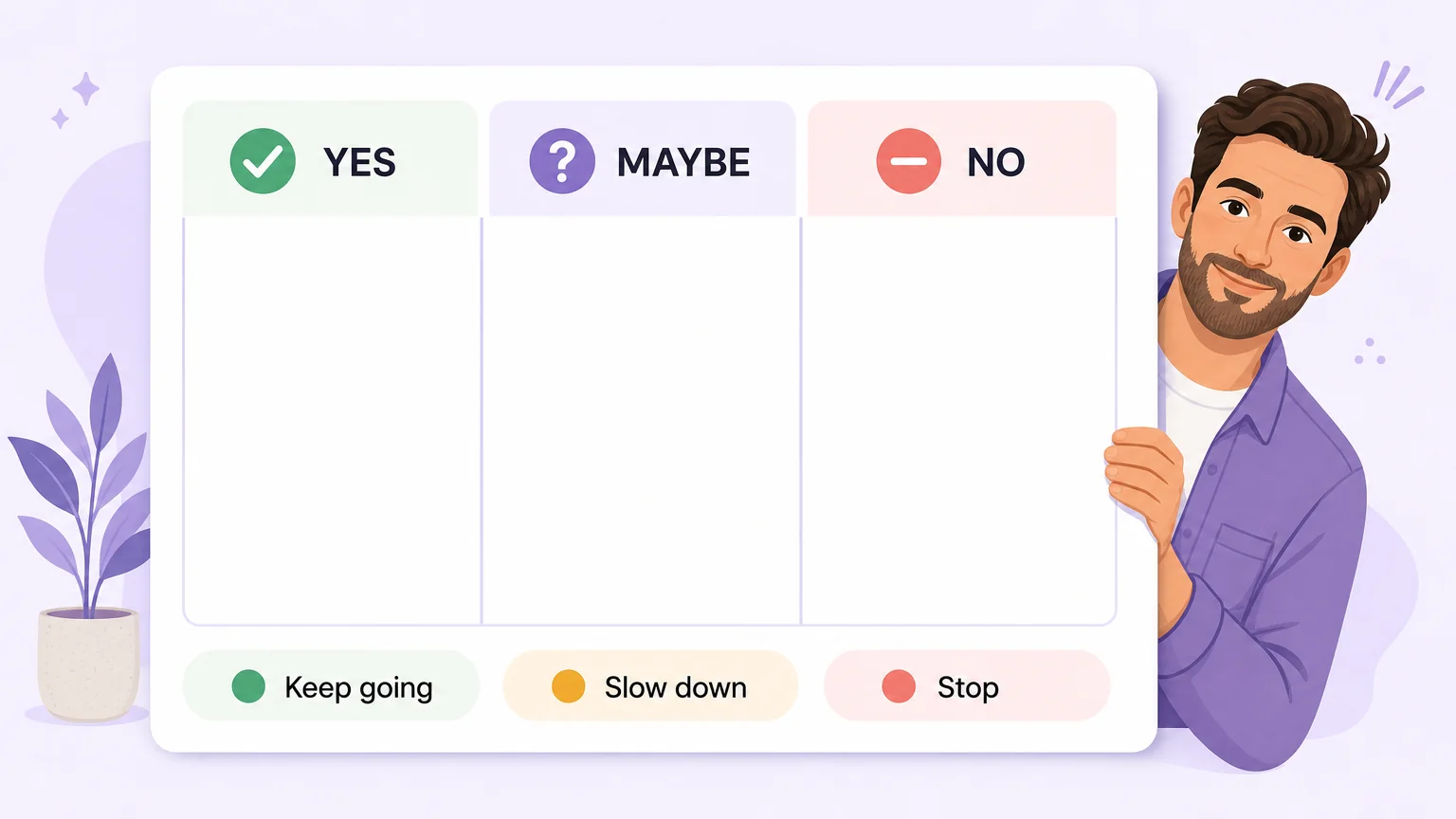
Here is the win this step offers: one shared exercise, done once, removes most of the awkward fumbling and nearly all the risk of crossing a line. It takes about twenty minutes over coffee. Do it as a team.
Begin alone. Each of you writes a Yes/No/Maybe list of things you might enjoy, keeping to gentle starter territory, the kind of thing that needs no gear: being told what to wear, a small act of service, giving or receiving specific praise, having your partner set the pace, light body worship, teasing, waiting for permission to finish. Each of you also writes one thing you are curious about that feels a little daring. No one sees the lists until both are done, because writing honestly is easier without an audience.
Then come back together and compare. Discuss only the places you overlap or differ, and keep it mutual. Neither of you is a service station for the other’s fantasy.
Last, agree on limits. Hard limits are the never list, no conditions. Soft limits are the maybe list, only under the right conditions. And disclose anything relevant, physical or emotional, that your partner should know before play, whether that is a bad back or a topic that brushes an old wound.
Now set the safety language you will both use, and make it feel like a shared secret rather than paperwork. The traffic-light system is a favorite for a reason: green means keep going, yellow means slow down and check in, and red means stop everything immediately. Add a non-verbal signal, like a double tap, for the moments when speech feels hard. In plain terms, gentle femdom runs on safe, sane, and consensual ground. If you ever progress to higher-risk play, the frame becomes risk-aware consensual kink. For a first scene, safe and simple is the whole game.
Agree the stop protocol out loud: if either of you wants to stop mid-scene, it stops, no questions in the moment, and you move straight to care. Consent can be withdrawn at any moment, without explanation, and the only correct response is to stop and take care of each other.
Then add the two agreements that make a first scene feel safe rather than brave. First, decide together what a good first try looks like: a short scene that ends with you both smiling, not an Oscar-worthy performance. Second, agree that this map is alive. You revisit and update it as comfort grows. It is not a one-time form.
Your milestone: you now have a shared map, agreed limits, a safeword you both trust, and a shared picture of what success looks like. You could run a first scene safely tonight.
Step 3: Plan a First Femdom Scene That Needs Zero Gear
Buy nothing. Sign nothing. You already own everything a first femdom scene needs. A scarf or tie can stand in for a blindfold if you want one, and even that is optional.
The single most important rule of a first scene: keep it small. Choose one focus from the gentle starter menu rather than stacking five ideas, and pick what matches the Yes/No/Maybe lists you made in Step 2.
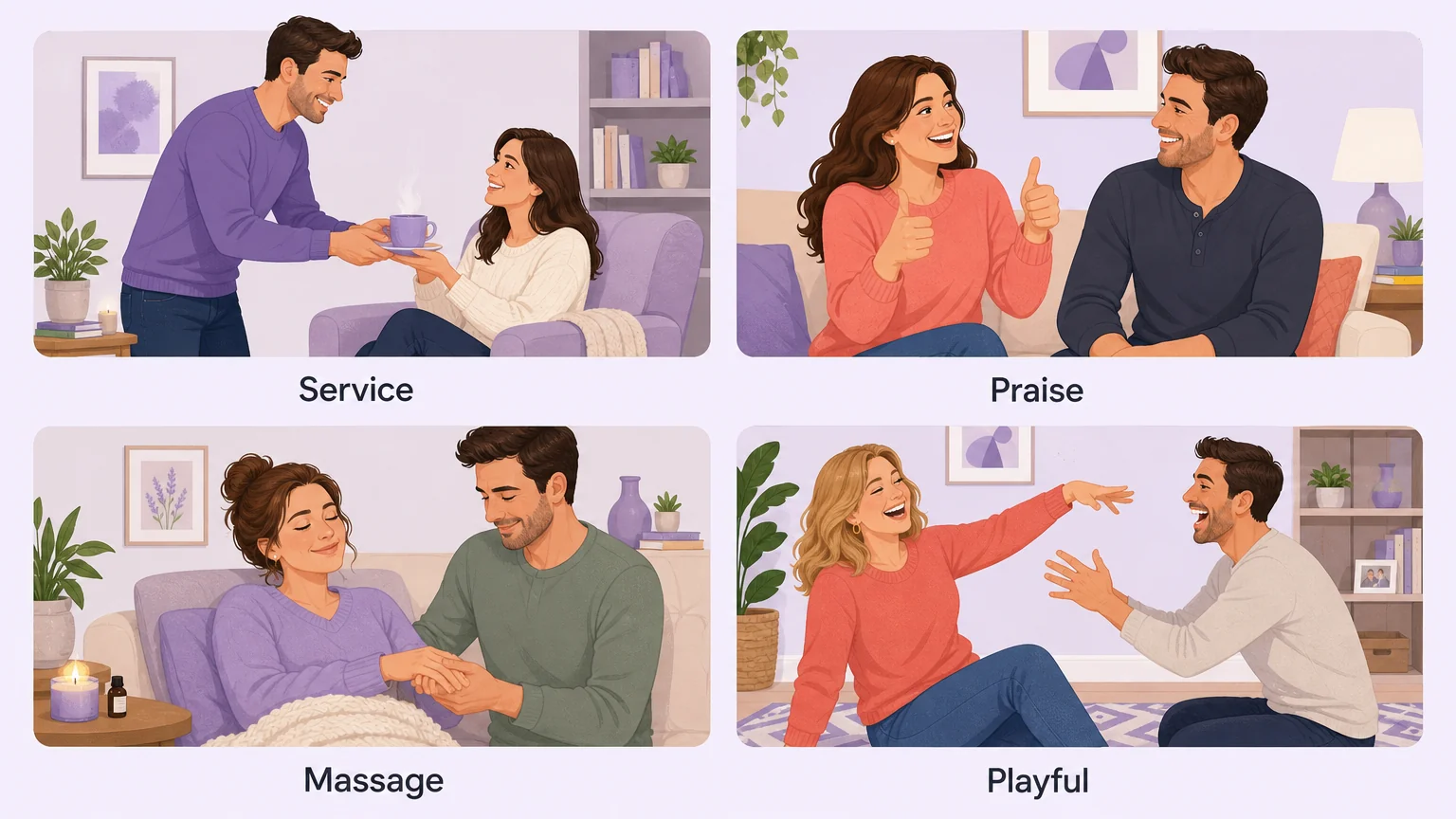
- A service scene, where he brings you tea or finishes a small task and you direct how it’s done.
- A praise and permission scene, built on you naming exactly what you want and rewarding him for following.
- A body worship scene, centered on your pleasure and his devoted attention.
- A teasing and delay scene, where you control the pace and decide when, and whether, he gets to finish.
That one-element rule is what makes it feel like the two of you instead of a performance.
Now script a simple three-part skeleton together in a few lines before you start. The warm-up: step into the roles gently. You name what tonight is about in a sentence or two, and he agrees, which turns an abstract idea into a shared game. The core: fifteen to twenty minutes where you direct with your voice and your pacing, tell him precisely what pleases you, and praise him specifically when he does it, while he follows and lets himself be led. The release: a clear phrase or ritual that sets the roles back down, something as simple as “and scene,” so you both know the power exchange is paused and you are simply partners again.
A few mechanics will make the scene land, and this is where you learn how to be a femdom with nothing but your voice. Praise that is specific rather than a generic “good boy,” and given sparingly so it keeps its weight. A reward half, gentle stroking, words of affection, permission to touch or to come, so the scene is a give-and-take exchange rather than a one-sided power game. Early color checks, so in the first few minutes you check in with a word or a color, and you both learn that stopping or adjusting is easy and safe. That single lesson builds more confidence than any script. The safewords from Step 2 are live. And remember: you are not performing dominance. You are directing pleasure and care, which is what makes it gentle and what makes it real.
By the end of the night you have run a first femdom scene that felt like the two of you, and each of you knows one favorite moment to carry into the debrief.
Step 4: Aftercare and the Debrief: Why the Care After Matters as Much as the Scene

The most important part of a femdom scene often happens after it ends. That sounds backwards, so let’s look at the mechanics.
An intense scene floods the brain with endorphins, adrenaline, and oxytocin. When those levels settle back to normal, usually a day or two later, many people crash into a low mood called drop. It can hit the partner who submitted, known as subdrop, and it can hit the one who led, called domdrop, which gets far less attention.
Here is what drop can look like, so you can recognize it instead of fearing it: sudden sadness or tears, feeling empty or unlovable, guilt or shame, anxiety, exhaustion, shakiness, or a desperate need for reassurance. It usually lands within 24 to 72 hours after a powerful scene and can last from hours to a few days.
Hold onto this reframe: drop does not mean the scene went badly. It usually means it went powerfully. Knowing it is coming is most of the cure.
Now agree on an aftercare plan before you ever play again, built for both directions. Physical care: blankets to restore body temperature, water, a light snack for blood sugar, and peeing after any penetrative play. Emotional care: cuddling, skin-to-skin, holding, reassurance, and praise spoken right then, which lands especially softly in that moment. Make it a rule that neither of you leaves the room or ends the conversation until you are both back in a settled, positive headspace. Dominants get aftercare too. If you led tonight and feel guilt or numbness afterward, that is a recognized, normal reaction, not a sign you did something wrong, and you can ask for reassurance without an ounce of shame.
Extend the care beyond the night. A next-day check-in text or quiet moment matters, because late drop can land 48 hours later, and the person who most needs reassurance is often the least able to ask for it. In the days after, warm baths, cozy clothes, light movement, and journaling all help. And if a heavy mood lasts more than a week, that is worth talking to someone about rather than riding it out alone.
Then run the debrief as a learning ritual, not a verdict. Four gentle questions, each answered out loud by both of you: what felt good, what felt awkward or off, how each of you landed in the hours after, and what you would keep or change next time. Jot the answers down or don’t. Just build the next scene from them.
Your milestone: you can each name your own landing pattern and the care that helps. No good scene has to end badly two days later.
Step 5: Grow Your Femdom Dynamic at Your Own Pace
Let’s defuse the pressure that kills more new dynamics than any scene does: the idea that real femdom means chastity, strict protocols, and elaborate punishments. That is one version, not the requirement. A gentle, mostly-bedroom experiment absolutely counts, and you do not have to level up to be legitimate. Rushing is the fastest way to fizzle.
For most couples, femdom training is about learning each other over time, one small experiment at a time.
First, make every new layer an experiment with a sunset clause. Try one small rule for seven days, something concrete and low-stakes, like he brings you tea without being asked or you choose what he wears on date night. Review it at the end of the week, then renew, adjust, or drop it, no hard feelings. A trial that expires builds trust without building pressure.
Second, schedule a weekly, low-stakes check-in. This is the space where the partner who submits can raise anything, including “this is too much,” without consequence. Treat it as sacred; it is the valve that stops small frictions from becoming resentments.
Third, add one layer at a time: service tasks, then small rituals, then longer-term elements, and watch for the overwhelm that makes couples quit. Keep the Yes/No/Maybe map from Step 2 alive, and renegotiate before you add impact play, bondage, chastity, or anal, not after.
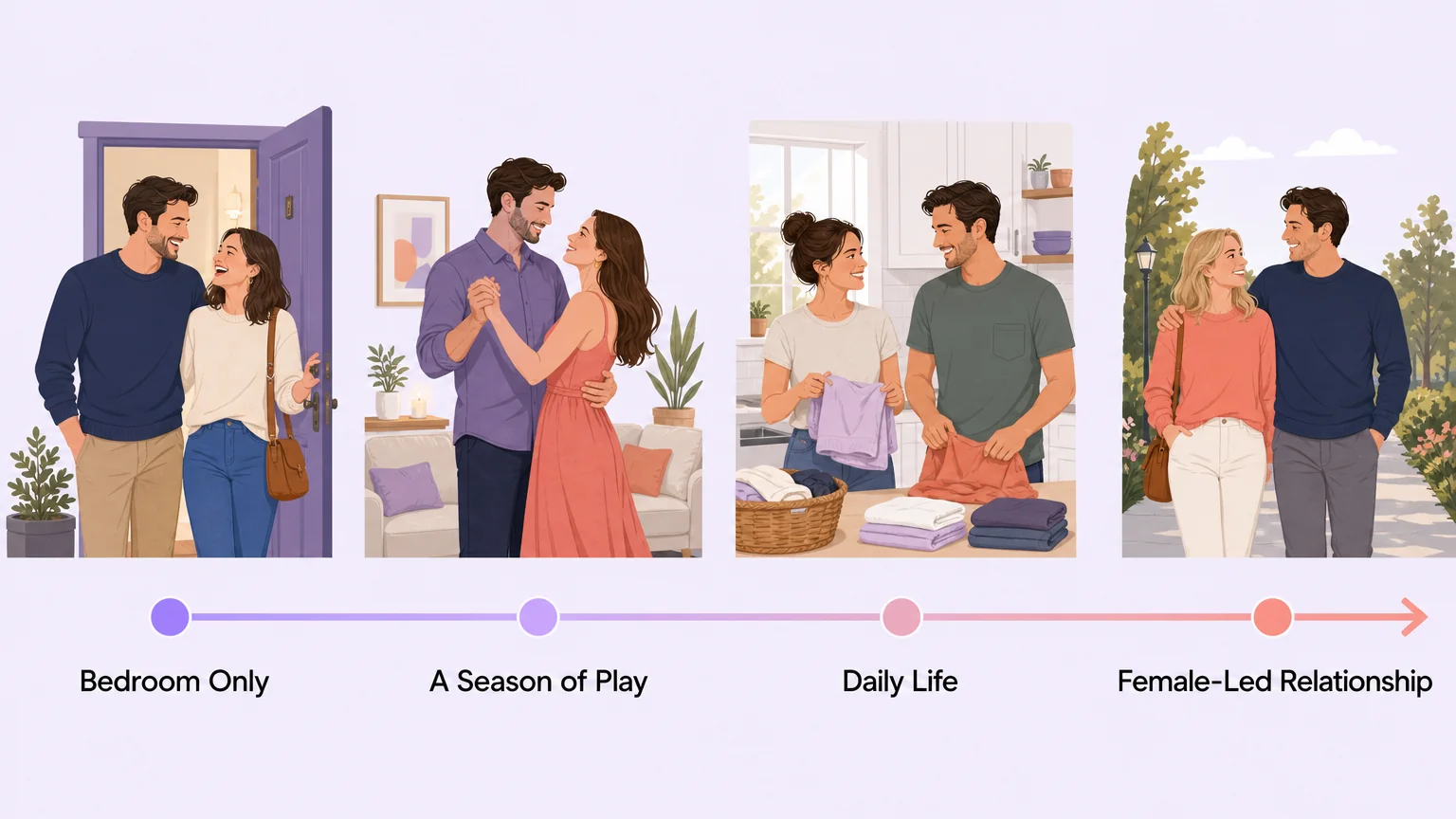
Be honest about the spectrum so you can choose deliberately. A dynamic can stay in the bedroom or grow into a female-led relationship, from gentle leadership in a few areas up to full 24/7 control. Most people who fantasize about total control thrive somewhere more moderate, so say where you want to sit and re-decide as life changes.
When you want more, each higher-risk activity has its own learning curve and risks, so learn them before you try. Two traps matter most: breath play is never for beginners, and chastity, if you ever try it, needs a properly fitted device, a spare key always within reach, and weekly removal for cleaning. If a device sticks, never pull; use cold water and lubricant.
One guardrail saves relationships: do not load the dynamic with an unearned job, like policing a porn habit or fixing an unrelated problem. That burns out the leading partner’s patience and turns play into pressure. Fix the issue first, and let the dynamic stay pleasure.
Some couples who grow into the lifestyle also enjoy meeting others who share it, whether to swap notes or invite a third into the bedroom. When that chapter opens, 3Fun is where open-minded couples and singles meet.
Finally, let the dynamic flex around real life. When work, family, or illness hits, the structure can loosen or pause without the relationship failing. Rigidity breaks couples, not the roles, and a partner pausing the lead while they recover is a sign of health, not failure.
Your milestone: an intentional plan for what comes next, and a date on the calendar to revisit it together.
FAQ
Are we normal, how common is femdom really?
Very. In a 2022 Finnish study of more than 8,000 adults, 38% of women and 36% of men reported an interest in BDSM, and about a quarter of women have led a partner at least once; its authors called that interest surprisingly common. In a separate 2026 study, nearly half of cisgender heterosexual men said they identify with a submissive role at least some of the time. You are not outliers, just a very ordinary kind of curious.
Does femdom have to involve pain or humiliation?
No. That is the version you see on screen, not the requirement, and a whole gentle style leaves both out. When professional dominatrixes are asked what clients most want, it is the power dynamic of her taking charge, not pain, and the same holds for most couples starting out. A first scene can be entirely about direction, pacing, service, and praise. See Step 3 for a plan.
He asked me to lead, but I don’t want to be in charge of everything?
You do not have to be. Femdom and female-led dynamics sit on a spectrum from bedroom-only to full 24/7, and the more hesitant partner sets the pace. Many couples start with her leading in one or two small areas only, and plenty keep it entirely in the bedroom. Step 5 walks through the full scale.
I’m a feminist. Can I actually want to dominate?
Yes. The guilt you feel is social, not personal. Dominant women get caught between being seen as victims or as rebels, and feminist discomfort with enjoying power is a recognized response to social judgment, not evidence that the desire is wrong. Plenty of feminist women lead in the bedroom and hold egalitarian values everywhere else; the two have nothing to do with each other. Desire does not require an apology.
What if I bring it up and my partner says no?
A no about one activity tells you where your partner’s comfort sits right now, and comfort can shift with time. Raise it as an invitation, leave room to process, and do not re-ask repeatedly. A respectful “I’d like to think about it” is a healthy answer, not rejection. Step 1 shows you how to frame the ask.
Will exploring femdom hurt our relationship?
Done consensually, it tends to deepen communication and closeness. Couples describe talking more, being intimate more often, and feeling more connected, which is exactly why the negotiation steps in this guide matter so much. The real risks are skipping aftercare, escalating before you are ready, and using the dynamic to fix an unrelated problem, none of which this plan asks you to do.