Maybe “gentle femdom,” or the three letters GFD, just crossed your screen: a dating profile, a match’s bio, a podcast you only half-listened to. You are not sure whether it is a real thing, a joke, or code for something rougher than you want. The short version is this: gentle femdom is real, it is distinct, and it is almost certainly not what the name first implies.
It is a warm, praise-led, fully consensual corner of BDSM where a woman or femme partner takes the lead, and pain and humiliation are not the point at all.
This guide draws the whole map, start to finish. What the term means, who it is for, what it looks like in practice, the safety basics that keep it gentle, and how to take a first step, with a partner or by finding one.
Gentle Femdom Meaning: What ‘GFD’ Really Is
Gentle femdom (GFD, or gentle female domination) is a subset of the femdom and BDSM family in which a woman or femme-identifying partner leads in a gentle, affectionate, nurturing way. Think affectionate leader rather than the dominatrix of stereotype. Professional dominant Ms. Ava describes the role as “an affectionate leader or owner” for a submissive partner, with service offered as a gift rather than extracted through harshness.
The part that surprises people is the timing. The word femdom surfaced in the 1980s to describe dominant women, and its dictionary image is the dominatrix: severe, controlling, sometimes sadistic. That is exactly why gentle femdom reads as a contradiction at first glance. The origin story the community tells frames it as a corrective to that harsh, male-centered femdom content, and the counter-current grew into a living culture. The r/gentlefemdom community alone is home to more than 591,000 members.
So when someone lists GFD on a dating profile, they are signaling they want to lead softly and affectionately: praise, nurture, emotional safety, no degradation by default. The catch is that the exact shape is personal, so the smartest read is to ask them what it looks like to them.
What Makes Gentle Femdom Gentle? The No-Pain, No-Humiliation Difference
For a lot of people, the word femdom summons one picture: pain and humiliation. If that is not your thing, you may have quietly written off the entire category. You would not be alone. Newcomers describe it that way all the time: too much femdom content is pain and humiliation, and for many people both are turn-offs.
In gentle femdom, gentle describes the psychology, not a ceiling on what can happen. Ms. Ava puts it in a single line: “The physical play isn’t always gentle, but the psychology is always soft.” The community lands on the same definition: gentle femdom can weave into almost any kink, because it is more about the approach than the act itself. Gentle does not mean timid. A scene can be intense, prolonged, even physically demanding and still live inside that soft register; the register is what never changes.
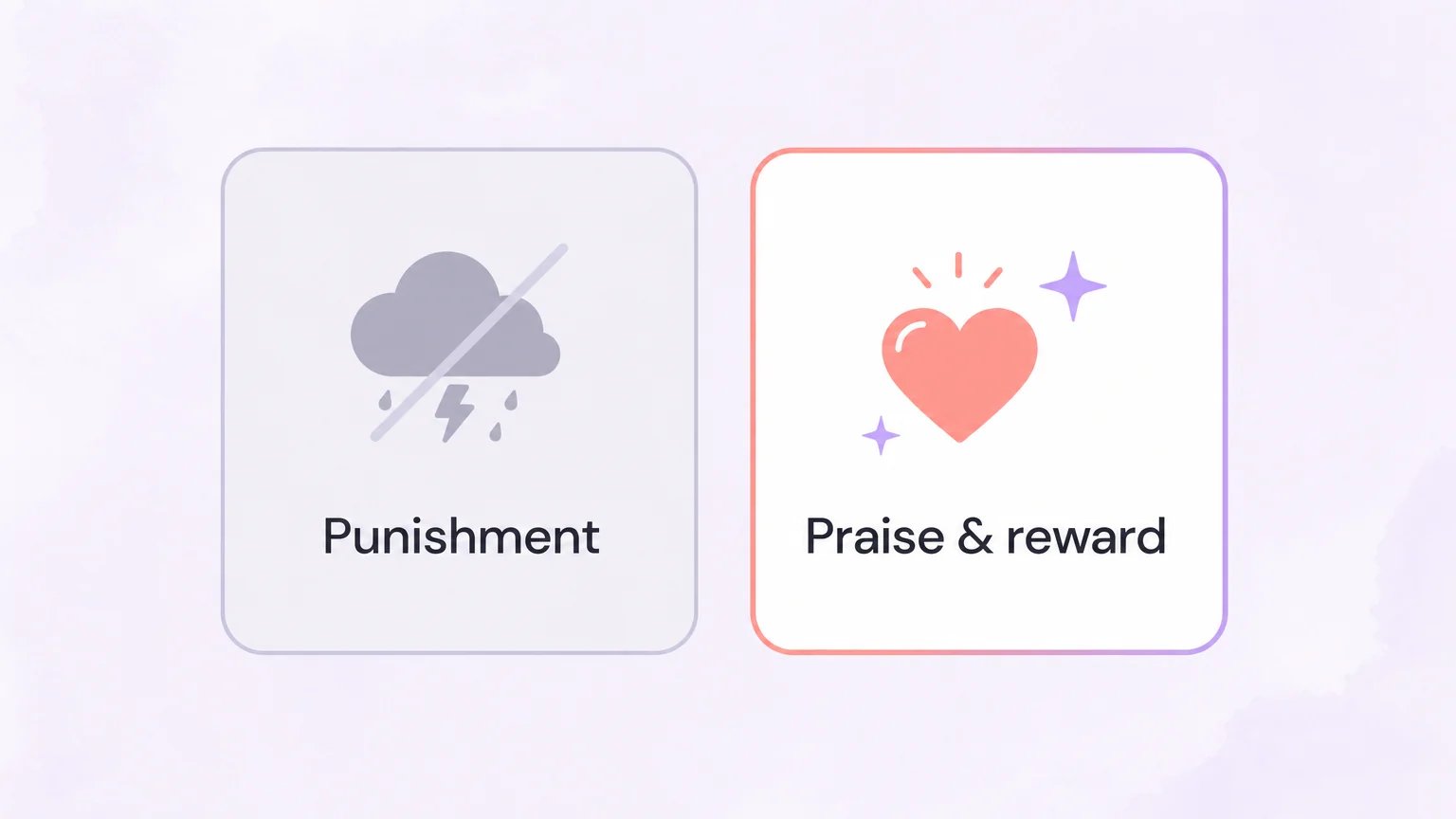
That approach runs on a different economy than harsher femdom. Instead of punishment, it runs on reward: praise, words of affirmation, gentle touch, permission to let go. The dynamic guides with warmth rather than fear.
And yes, it is real BDSM. The DS in BDSM is dominance and submission, which is exactly what this is, and real BDSM does not require pain. As Mistress Carol, a dominatrix and clinical hypnotherapist, puts it: “femdom is femdom, gentle or otherwise.” Wanting a partner to lead you kindly is not a flaw in you, and it does not require an apology.
Who Gentle Femdom Is For: Both Sides, All Kinds of Couples

Most people feel the pull toward gentle femdom before they ever hear the label. Many describe knowing, from novels and private fantasies, that they wanted a warm, female-led dynamic years before they learned it had a name and a whole community built around it.
Both sides of the dynamic have a home. On the submissive side, the recurring wants show up in real voices. Some want to be taken care of and worshipped rather than pressured to perform. Some are drawn to confidence and teasing without pain or degradation. For others, submission is about a feeling of security, of being held and shielded rather than exposed.
On the dominant side: plenty of women and femmes want to lead and were quietly taught to go along instead. That first rush of awkwardness is not proof they are wrong for the role. There is more on what that experience feels like further down.
And the arrangement is wider than the stereotype. Soft dom is the broader, any-gender umbrella term for leading gently, praise over punishment; gentle femdom is the slice of it led by women and femmes. Kink communities explicitly make room for femdom, maledom, and what one group playfully calls themdom. A working gentle domme reports counting crossdressers and men exploring feminine sexuality among her clients. Women sub to women. People of every orientation find this dynamic.
In other words, if you feel the pull, you are not an edge case. The scene was built to hold you.
What Gentle Femdom Looks Like: A Beginner’s Menu, Mild to Intense
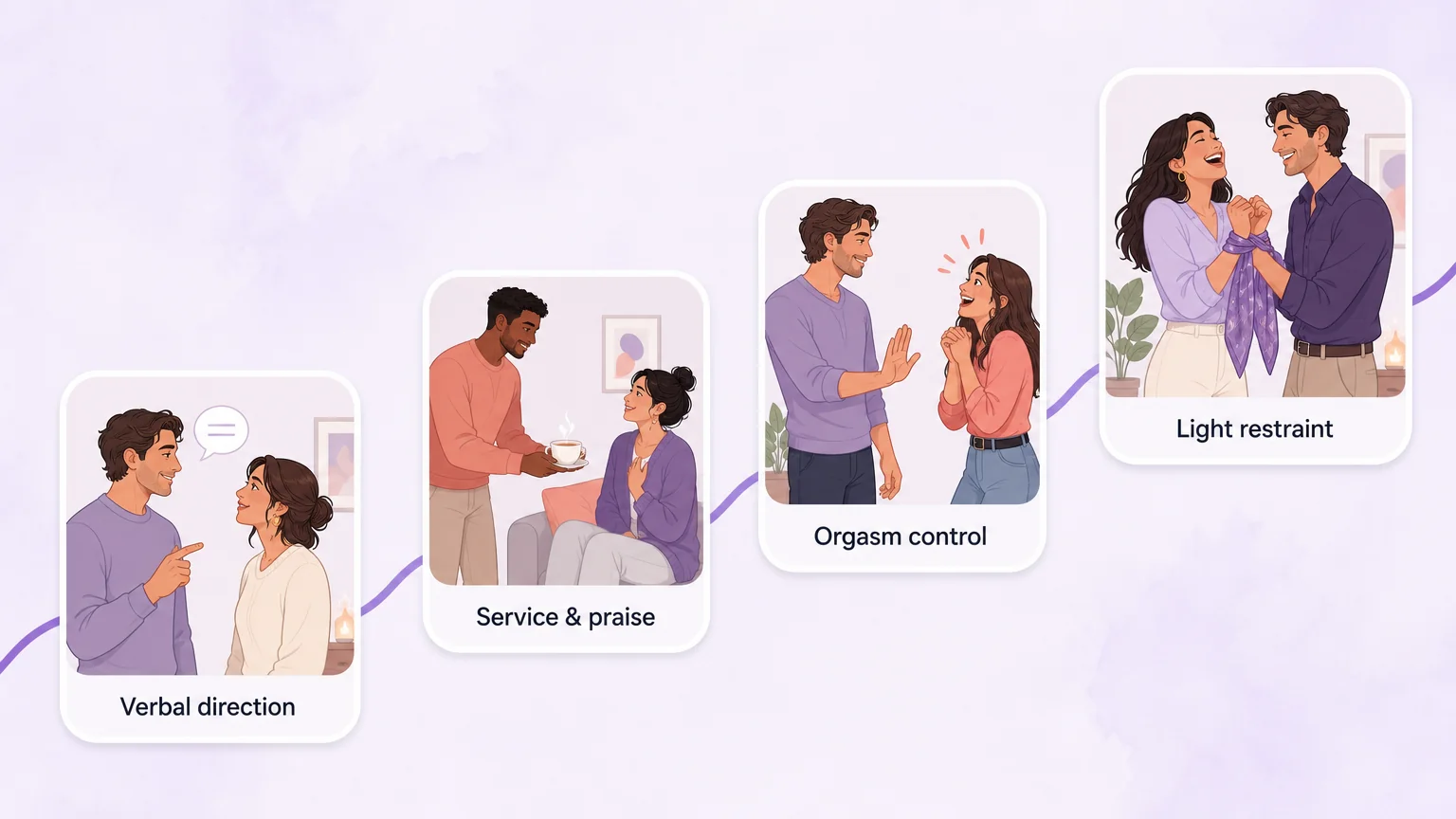
None of it clicks until you can picture it, so treat it as a gentle ladder. The same dynamic can run from a five-minute verbal scene to a fuller service-and-orgasm-control structure, and climbing the ladder never has to change how soft the psychology stays.
At the mildest rungs, it is mostly words. Direction delivered warmly, with a request framed as a calm, certain instruction, and every act of compliance met with praise. “That’s it, exactly right.” Words of affirmation become the running reward, so the whole scene reads as encouragement with a spine.
Step up, and you get body worship, service, and devotion. One professional dominant sums up her preferred play as “traditional romance on steroids, with a few kinky twists.” Attention offered as worship, small services performed because the sub wants to be useful.
The signature structure of gentle femdom is tease and orgasm control. A partner is built up slowly, held right at the edge, then allowed to let go as a reward rather than denied as punishment. The pleasure is given, and the giving is the point.
Above that sit light restraint and a negotiated blindfold, which experienced dommes call an inexperienced dom’s best friend because it cuts self-consciousness on both sides. Add acts of service and light everyday control, like choosing what your partner wears, and the dynamic starts to spill out of the bedroom.
Notice what none of these require. No pain, no degradation, nothing to fear. Intensity is a dial a couple turns together, never a fixed setting. That is exactly what makes the gentle register so safe to explore: you can climb as high as you like and the tone underneath never has to change.
Ready to climb? Our 15 gentle femdom ideas is the ladder in practice, one concrete scene per rung.
Gentle Femdom vs Soft Femdom, Mommy Domme, and FLR: What’s Different
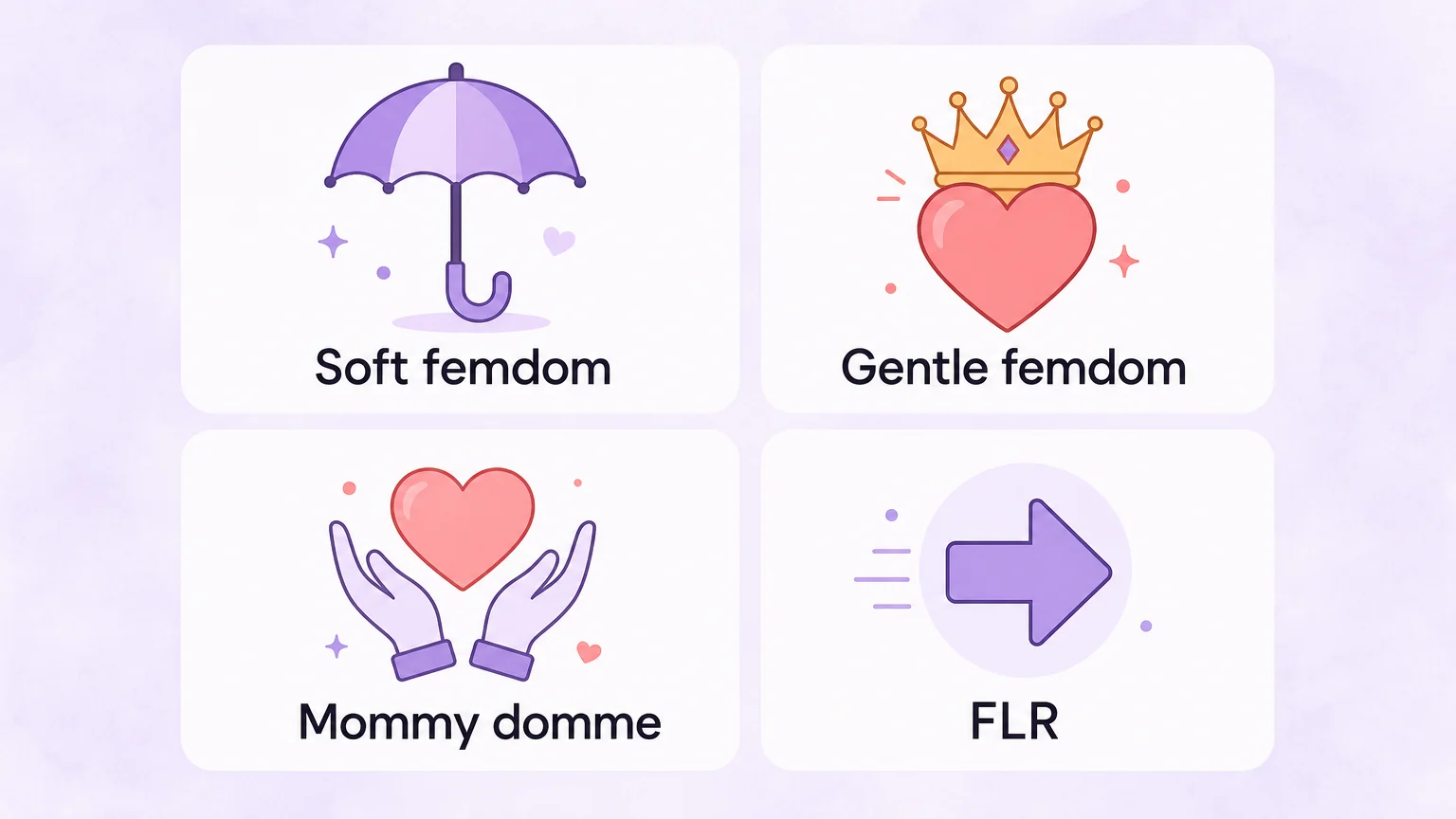
Reading profiles means decoding overlapping tags, so treat this as a cheat sheet.
Soft femdom and gentle femdom sit on the same continuum. Soft dom is the any-gender umbrella: a dominant of any gender who leads gently and reaches for praise over punishment. Gentle femdom is the female and femme-led slice.
A pleasure dom is oriented toward giving pleasure and orgasms. Gentle femdom is defined by its warm, female-led power structure. They overlap but are not synonyms.
Mommy domme and mommydom are caregiver dynamics that center a “little” and often a regression headspace: playful, protective, goal-driven. To be clear, this is always an adult-adult arrangement. A gentle domme can be deeply nurturing with no mommy and little element at all, so the two are not the same thing.
A female-led relationship, or FLR, is broader still: a lifestyle arrangement where the woman leads decisions, structure, and goals, and kink is optional. Gentle femdom is a kink and a dynamic. It can stay in the bedroom or weave through a relationship, and an FLR can carry it as its intimate register, but you can have one without the other.
The same gentle dynamic can be occasional play or a fuller way of relating, and neither is more valid.
The next time a profile says one of these words, remember that labels like soft dom and gentle dom are useful but not all-encompassing, as sex educator Lola Jean reminds us. Always ask what the dynamic looks like for the person using them. Labels are maps, not cages.
Once you can read the tags, the more interesting question is what you would put on your own profile. If a gentle, female-led dynamic is what you keep coming back to, 3Fun gives you a place to say so plainly and match with people who get it.
Why Gentle Femdom Works: What the Research Says About Power Exchange
The research on consensual power exchange points the opposite way from the stereotype.
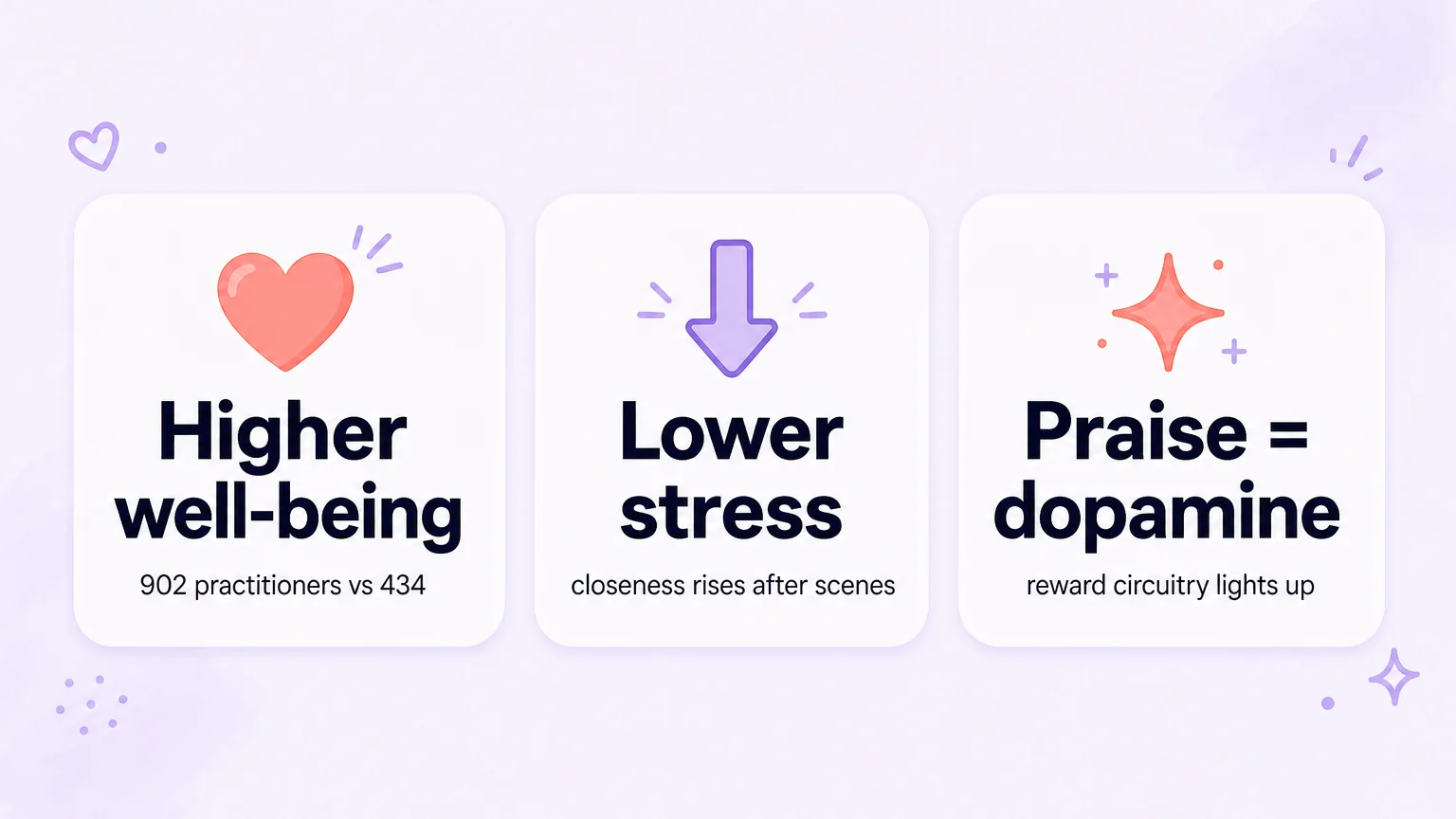
Start with the big survey. In a 2013 study, psychologist Andreas Wismeijer and his colleagues compared 902 BDSM practitioners with 434 people who did not practice. The practitioners scored lower on neuroticism, higher on openness, and higher on subjective well-being, and the authors concluded that BDSM is better understood as recreational leisure than as a sign of pathology.
The chemistry agrees. In a 2009 study led by psychologist Brad Sagarin, consensual players showed drops in the stress hormone cortisol and rises in relationship closeness after scenes that went well. That is direct physiological evidence that negotiated power exchange can build intimacy rather than erode it.
Long-term couples tell the same story. Interviews with people in long-term BDSM relationships, reported by researcher Bradford Cutler and colleagues in 2020, found the relationships highly functional, with power exchange serving bonding and a sense of security beyond sex. Compatibility in the dominant and submissive roles mattered more than sharing the same specific activities.
It also explains why praise, the engine of gentle femdom, feels so good. Receiving praise activates the brain’s reward circuitry and releases dopamine, a response sex therapist Stefani Goerlich describes as very similar to an orgasm. Anticipating the next hit of it keeps the loop running.
None of this works without negotiated consent. That is the frame the next section makes concrete.
Consent, Safewords, and Aftercare: The Non-Negotiables of Gentle Femdom
The counterintuitive truth first: even light, gentle femdom play changes headspace. Drop comes from the adrenaline, endorphin, and dopamine crash after any intense scene, not from the play’s intensity. A soft scene can hit just as hard, so the safety basics apply to every scene.
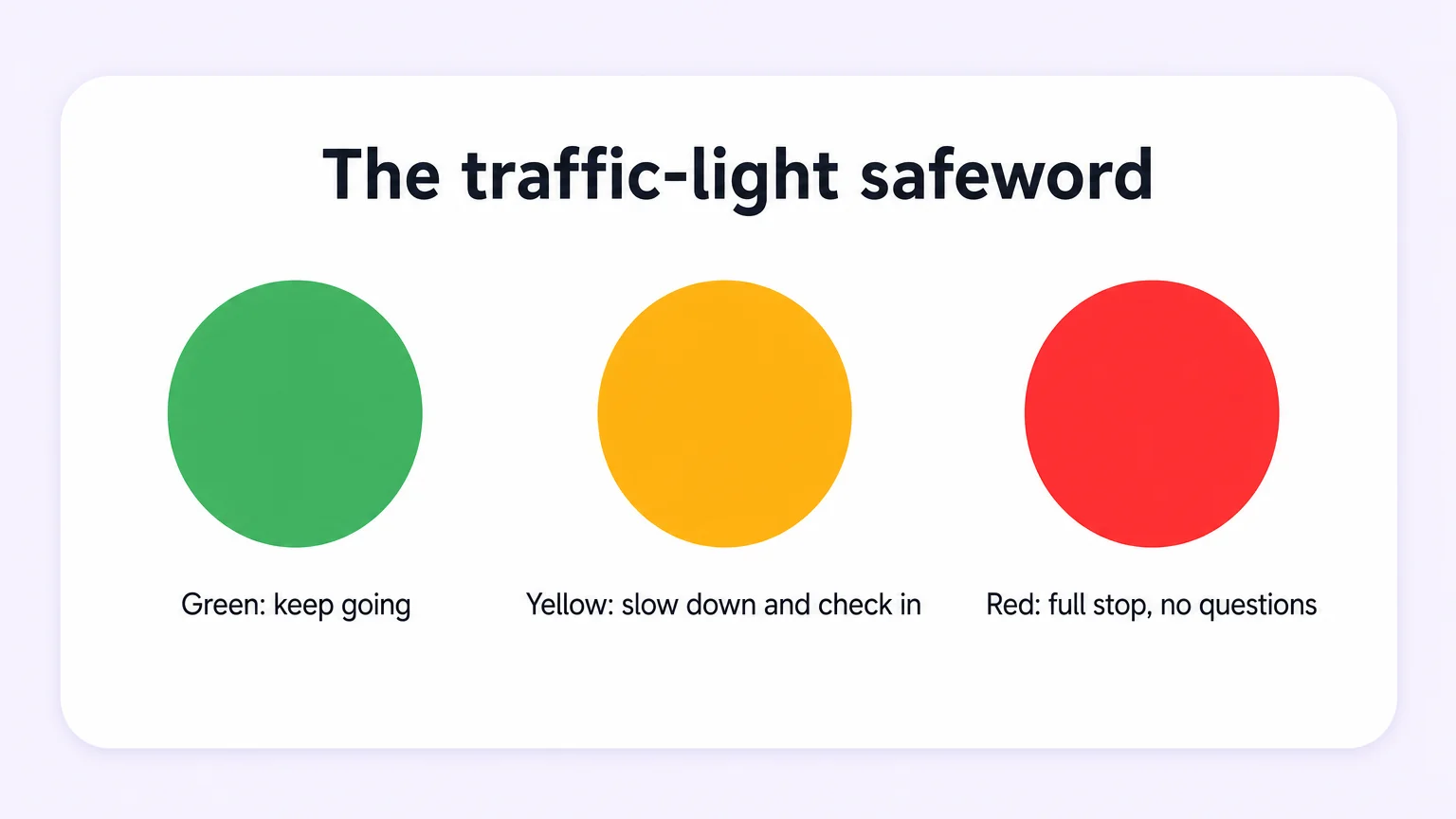
Start with a safeword. The traffic-light system is easiest for newcomers: green means keep going, yellow means slow down and check in without stopping, and red means full stop, no questions asked. Pair it with a non-verbal signal, like dropping an object or a double tap, for when speech is hard. Say the words out loud, both of you, before you play; color words are hard to say under pressure.
Before a first scene, run a short negotiation covering the safeword, medical notes and allergies, aftercare needs, soft limits, hard limits, triggers to avoid, and where touch is allowed. Anything not discussed is off the table, and nothing new gets introduced mid-scene, because people agree to things they would not agree to sober.
Plan aftercare before the scene begins, not after. Stay together. Blankets and long hugs. Praise and reassurance, because the comedown can be tender. Water or a small sugary snack. Talk through what felt good, then a warm shower and rest. Schedule a next-day check-in; drop often lands 24 to 72 hours later, sometimes at work or apart.
Dominants need aftercare too, and it is the least-discussed part of all this. Close the role out loud: the scene is over, I am your partner now. Then ask for the reassurance you need, that it was wanted, that it was enjoyed, that you did well. Dom drop is real, and it shows up as guilt or emptiness rather than exhaustion. A partner’s verbal reassurance is the fix.
If intense symptoms last past about 48 hours, or anything lingers past about a week, reach out to a professional. Otherwise, hold the one rule: green lights only require green lights from both of you. If it is not an enthusiastic yes from everyone in the room, it is a hard no.
The Dominant’s Side: What It Really Feels Like to Be a Gentle Domme
Let us talk about the side of gentle femdom that rarely gets its own voice: you, the woman or femme who wants to lead and has not said it out loud yet.
Start with the awkwardness. If you were raised to be accommodating, the first time you give a command can feel theatrical, even fake. That is the most normal thing here, and it is not evidence that you are wrong for it. Writer Alice Lovegood describes going from awkward, unsure, and anxious to genuinely confident by studying dominant women and building a mental framework of language and tone. You cannot master what you have never seen.
Almost every new dominant makes the same early mistake: performing a stereotype, reaching for the big, bad meanie instead of a dominant version of themselves. You will always be more comfortable, and more convincing, when the dominance is recognizably yours.
So what is in it for you? Devotion and being served. Being seen as the affectionate leader. And the specific satisfaction of watching a partner feel safe and opened by you, rather than controlled. That is the quiet reward of gentle dominance.
You will also need to hold your own line. Subs sometimes push for harder play than a gentle domme wants to give. It is common enough that gentle dommes treat it as part of the job, so name your line early. Declining is not a failure. Your gentle line is a legitimate style, not a phase to be talked out of.
The practical confidence note is simple: thorough negotiation and one short, scripted first scene turn nervousness into real confidence. The next section holds the scripts. And dominants experience drop too, with the full mechanics covered in the safety section above.
Gentle Femdom for Beginners: How to Bring It Up and Where to Find a Partner

Now the part that turns curiosity into experience. There are two journeys here, and each starts with something you can copy.
If you already have a partner: gentle femdom almost always begins with a conversation and one small request, not a full scene. Find a calm moment outside the bedroom and name the desire plainly. You are not asking for a lifestyle change, just a single experiment. A warm opener might sound like this: I would love it if, one night this week, you told me exactly what you wanted and let me take the lead. You can tease me, praise me, and decide when I get to let go. Would you try that with me? Then trade limits and aftercare needs the way you would plan any good night, and reach for the mildest rung on the menu above. Check in together after.
If you are single or looking, there are three real routes. Local munches, found through FetLife, are public, vanilla-clothed, low-pressure community gatherings; message the organizer beforehand, tell them you are new, and they will usually meet you and introduce you around. Kink- and ENM-friendly dating apps let you tag a role or a desire honestly, and we have a full guide to femdom dating apps. Gentle-branded personals exist too, like r/gentlefemdomr4r, whose tagline is soft and cozy vibes ONLY.
Whichever route you take, run a vetting screen so nobody gets hurt or scammed on the way in. Read the whole profile. Ask real questions and watch how the person responds: a genuine dominant welcomes questions, and anger at being questioned is a red flag. Verify identity with a two-way video call before anything intimate. And treat any demand for money or tribute before trust is built as a scam signal. New subs are a known target here, because genuinely gentle dommes are rarer than the demand for them. The good ones are out there, and they are worth a patient search.
If one of those routes is a dating app, 3Fun was built for this exact search. You can put gentle femdom, or GFD, or whatever your version of it is, on your profile and match with people who already know what it means, in a private and judgment-free space. Create your profile and start the search on your terms.
Exploring this does not shrink your life. It adds a new room to it.
Gentle Femdom FAQ: Straight Answers to Newcomer Questions
Is gentle femdom real BDSM?
Yes. The DS in BDSM is dominance and submission, which is exactly what this is. Gentle femdom sets aside the pain and often the bondage elements, and real BDSM does not require them. You are exploring the D/s half of the acronym with the S and M dialed down or off. As one professional puts it, femdom is femdom, gentle or otherwise.
What is the difference between femdom and gentle femdom?
Femdom is the whole family of female-led dominance. Gentle femdom is the affectionate, praise-first slice of it, with no degradation by default. Think of femdom as a spectrum, with the sternest edge at one end and gentle femdom holding the warm end. The difference is tone and reward structure, not the fact of who leads. Read femdom as the broad category and gentle as the register they want inside it.
Do safewords and aftercare still matter if the play is gentle?
Yes, absolutely. Even light play changes headspace, and drop is driven by chemistry, not intensity, so the basics apply to every scene. A gentle scene still floods the system with adrenaline and endorphins, and the crash can arrive 24 to 72 hours later. Set the safeword, negotiate, plan aftercare, and schedule the next-day check-in no matter how soft the play was.
Do I have to be a naturally dominant person to be a gentle domme?
No. First-time awkwardness is near-universal, and it fades. You build the role by scripting a short first scene, negotiating thoroughly, and being a dominant version of yourself rather than a performed stereotype. Calm certainty reads as dominance faster than any costume. Keep the first scene short, about fifteen minutes, with one new element and praise threaded through it. The awkwardness is the work, not a verdict.
Does gentle femdom only involve a woman dominating a man?
No. The soft-dom umbrella is any-gender, women and femmes top women and non-binary partners too, and communities explicitly span femdom, maledom, and themdom. What stays constant is the tone: praise-led, affectionate, and negotiated, whoever holds the lead. If the dynamic fits, there is a place in it for you.
If someone lists “GFD” on their dating profile, what are they telling me?
Most likely that they want to lead in a soft, affectionate, praise-driven way, with emotional safety and no degradation. That might involve orgasm control, service, or light everyday structure. But the term is personal, so the genuinely green-flag move is to ask what it looks like to them before assuming anything. A simple “what does gentle femdom mean to you?” opens far more than decoding the tag ever will.