Most people first meet femdom hypnosis in an online clip: a calm, commanding voice that seems to take over someone’s mind, a caption promising instant control. The practiced version is quieter, and far more interesting. Femdom hypnosis is a consensual form of female domination built on genuine, well-documented states of trance, where nothing happens without agreement. It belongs to the wider family of erotic hypnosis, sometimes called hypnokink or hypnotic domination, and it is a learnable skill rather than a parlor trick.
This guide explains what it is, what trance feels like, how a first scene runs from start to finish, and how to explore it safely on your own. You will not find graphic material or “instant control” gimmicks here. You will find plain language, grounded examples, and a consent-first map that works whether you are curious alone or hoping to try this with a partner.
If part of you wonders whether the wish to hand over control is common, or whether you could even be hypnotized, you are in the right place. Curiosity about power exchange is nothing to be embarrassed about. Safe play depends on good company and clear limits, not on how much you already know.
Keep those two ideas close, and read on. This guide is written for adults eighteen and up.
Is Femdom Hypnosis Mind Control? What Trance Actually Is
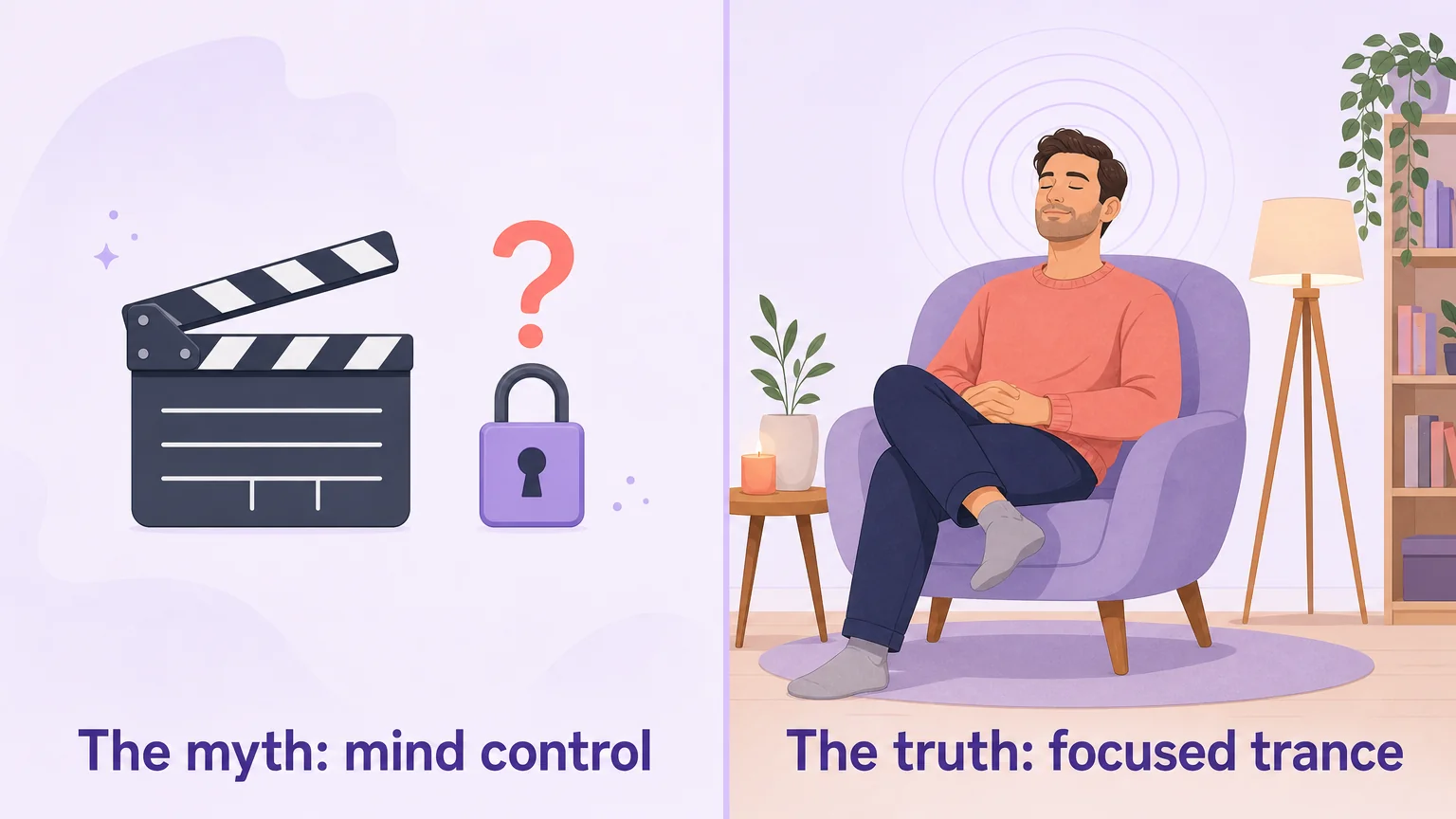
Before you go anywhere near a session, you deserve a straight answer to the question underneath all the others: will you lose control of yourself? Will you do things you would never choose? No, on both counts. Here is what happens when a voice guides someone into trance.
Trance Is Focused Attention, Not Surrender
Trance is not sleep and not a blackout. Educational material from the Hypno Collective describes it as almost total focus on a single thing, usually the guide’s voice, while the body relaxes and the chattering part of the mind steps back. You have been in this state hundreds of times without a label for it. Think of losing yourself in a podcast on a long drive, a gripping chapter in a book, or a film scene so absorbing that the room around you disappears.
Neuroscience agrees. Educator Mark Wiseman points out that on a functional MRI, an everyday absorbed state and a deliberate trance look nearly identical. The difference is intent. Hypnosis simply aims, on purpose, at a focused state you already drift into naturally, then puts that openness to work for arousal, relaxation, or power exchange.
That means the frightening version gets the mechanics backwards. You do not lose the ability to think. You move your attention somewhere on purpose, and you keep the power to move it back. The state is also co-created rather than inflicted: both partners shape it, the guide by steering and the subject by choosing to follow, and it holds only as long as that agreement does.
Why the Mind-Control Idea Is Wrong
That brings us to the fear that a hypnotist can steer you against your will. The safeguard lives inside the mechanism. A filtering part of the mind, sometimes called the hidden observer, checks every suggestion that arrives while you are in trance and says no to anything obviously unacceptable or self-destructive. It is not a perfect system, but you cannot be made to betray your own values, and you cannot even be brought into trance against active resistance, because induction requires your cooperation.
Science writer Vaughan Bell offers a disarming comparison: hypnosis is like watching a movie. You react to the story emotionally without deciding to, but you can look away at any moment, and the effect exists only because you are participating. Nothing is being done to you that you are not, in some sense, doing with yourself.
Why Trust Matters: Trance Lowers Your Guard
Trance makes you more suggestible and less critical, a little like being mildly drunk. Your best decision-making takes a backseat, and you are the least reliable judge of how deep you are. That is precisely why this practice belongs with trusted partners and clear agreements, and why negotiation appears before play in every later section. As Wiseman puts it, hypnosis alone cannot make you do anything you truly do not want to do, but an unscrupulous person can, so choose your people with care.
Separate genuine practice from online theater. Research by Mackay and Mackay, reported in Psychology Today, finds that much of the “hypno” content floating around online is closer to stage hypnotism and a brainwashing fantasy than to real trance. A genuine session will feel far gentler than those clips suggest. We will get to that feeling further down.
What Femdom Hypnosis Adds: Power Exchange, Subject vs. Submissive, and Why It Is So Common
Erotic hypnosis can be completely generic: a voice, a trance, a pleasant float. Femdom hypnosis adds a particular color to it. If BDSM controls through the body, this practice controls through the mind.
Practitioners in one community frame it as psychological sexuality, even “lovemaking of the mind,” with scenes built around sensation, objectification, humiliation, transformation, and domination. You can take any one of those and leave the rest.
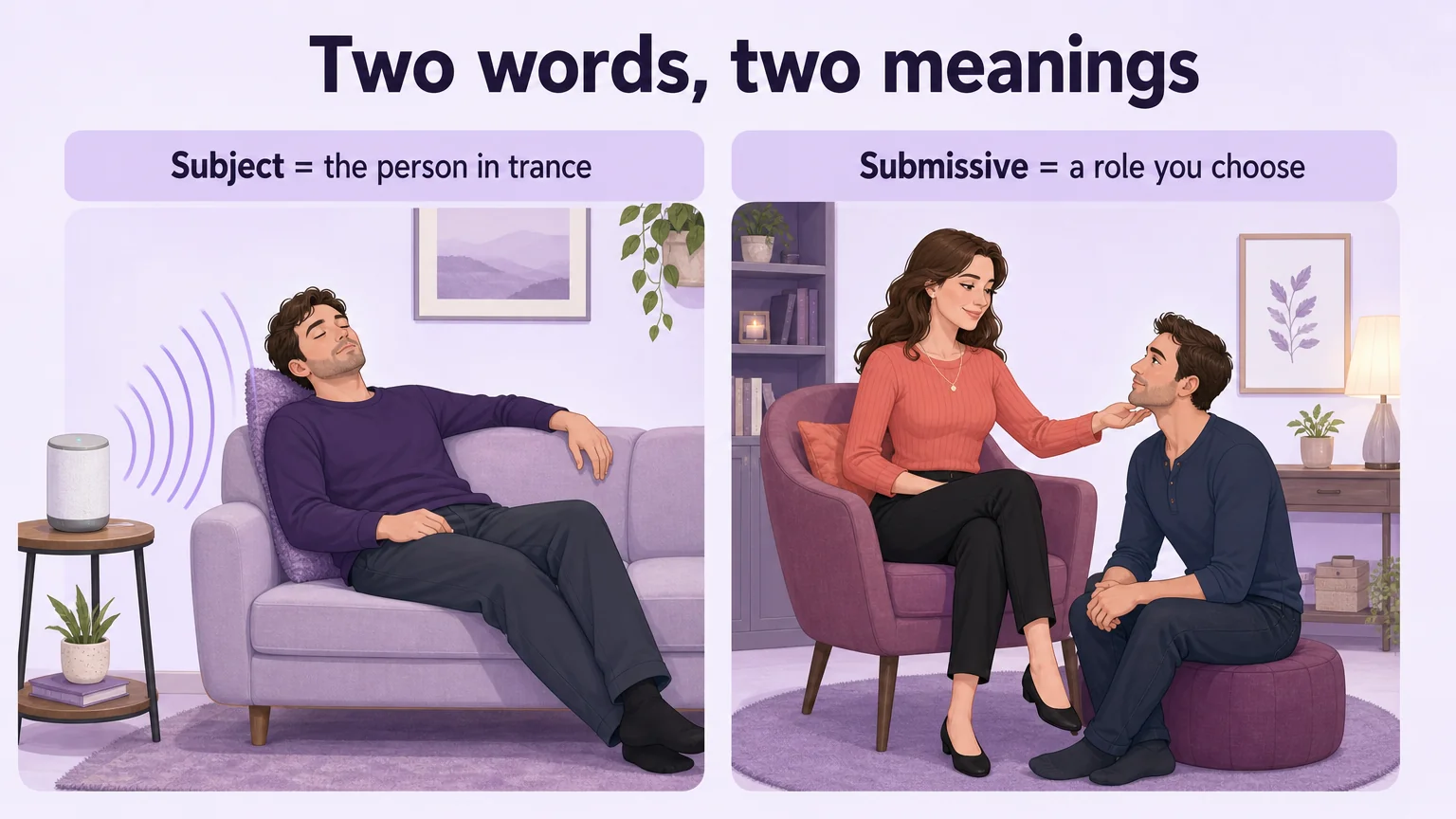
First, two words people mix up. The subject is the person being hypnotized. The submissive is a role inside a power dynamic. The two often overlap, but neither requires the other, and a hypnosis scene does not even need a BDSM label to work.
Plenty of couples enjoy the trance itself without adopting any broader identity. Someone can submit beautifully and still struggle to sink into trance, while another person slips under in seconds and wants nothing to do with titles. Treat the two as separate dials, not one switch.
What does the femdom frame do for the subject? A dominant woman guides the experience, and because suggestion amplifies desires that are already there instead of installing new ones, the trance becomes a container for exploring arousal and power-exchange fantasy in an agreed, safe way. Columbia University’s Go Ask Alice puts it plainly: the practice is less about another person controlling you and more about letting your own imagination take the lead.
Where does it sit next to other kinds of play? Educator Evie Lupine notes that erotic hypnosis can stand on its own, the way a foot fetish or a love of latex can, or it can weave into a wider dynamic of dominance and submission. The same couple might use a light trance as a warm-up on some nights and let suggestion carry an entire evening on others. There is no required ladder of experience, only whatever the two of you agree feels right.
For many people who seek this out, the appeal is permission. Hypnodomme River Nixie describes clients who want to be told it is okay to relax and that they are in a safe space to explore themselves and their fantasies. Less spectacle, more exhale.
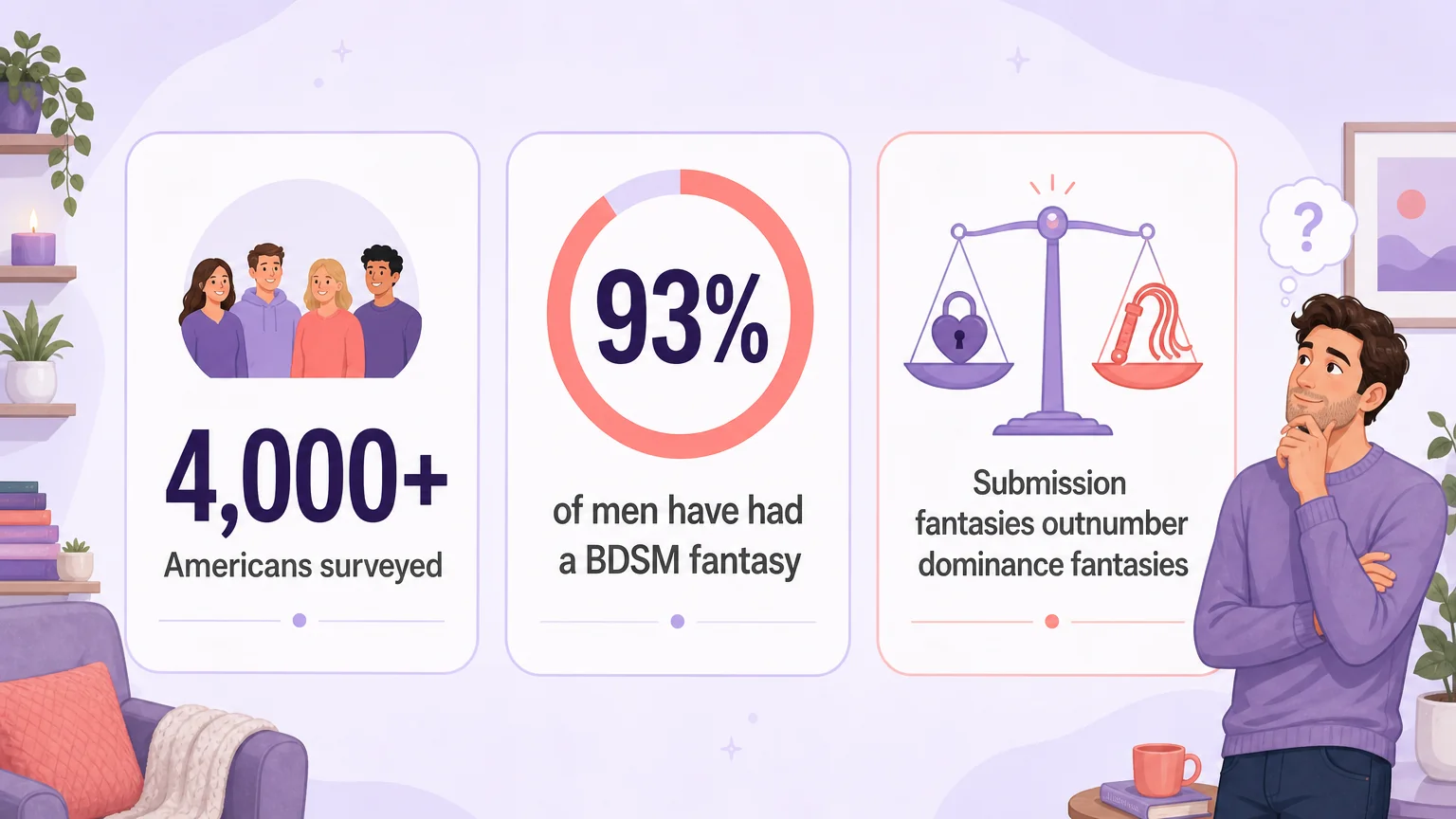
Now the question you may be too polite to ask out loud: is it weird to want this? No. In a national survey of more than four thousand Americans reported by researcher Justin Lehmiller, only about seven percent of men had never had a BDSM fantasy, and more people report submission fantasies than dominance fantasies.
The people drawn to surrendering control are often high achievers who carry responsibility all day. Setting that down for an hour is a counterweight, not a flaw. The decisiveness and vigilance that make someone good at leading are often exactly what they want to switch off for an evening.
Keep the frame wide: subjects are not only men, couples are not only straight, and not everyone who tries this is BDSM-identified or part of any scene. Curiosity about power exchange is common, consensual, and worth exploring, and it tells you about yourself rather than passing a verdict on your character. Couples who already negotiate boundaries for non-monogamy tend to be well prepared for this kind of play, because the skills are the same: say what you want, agree the edges, and trust the person beside you.
What Being Hypnotized Feels Like the First Time

Set your expectations now so your first femdom hypnosis session does not disappoint you: for almost everyone, the first trance feels quieter than the movies promised. Mark Wiseman says nearly everyone who comes out of their first hypnosis thinks, “Wait, that is not what I thought it would feel like.” Being under is a little like being mildly drunk, in that the person doing the drinking is the least qualified to judge how deep they are.
Two worries usually surface before the first attempt, and both deserve an early answer. You do not lose control of your body, and you will generally remember what happened. Forgetfulness is not built into trance. It only shows up if a scene deliberately agrees to it in advance.
If you do go under, the sensations are often subtle and physical: deep relaxation, a floating heaviness in the arms and legs, tingling or warmth. Your breathing slows, and time can feel stretchy while the usual loop of thoughts goes quiet. Practitioners describe a curious sense that things are happening to you rather than that you are making them happen, a gentle dissociation that surprises many first-timers.
What you hear during that first session is usually a string of simple invitations. Notice your breath. Feel the weight of your body against the bed. Let the tension in your jaw unclench.
The guide repeats soft directions while your mind settles, and somewhere in that quiet you stop trying to produce the experience and simply let it arrive. Some people find letting go easier with a voice that is not watching them, which is why recorded audio works well for a first try. Others prefer a partner’s presence and the reassurance of a hand nearby.
Coming back out can leave you feeling fuzzy or groggy for a little while. That residue is normal and usually brief. A good partner guides you up slowly, often with a count upward, a suggestion that you feel refreshed and alert, and a few slow breaths. It is why waking and aftercare are part of the ritual rather than an afterthought.
Then there is the other first-time fear, the whisper that says, “I do not think it worked.” For many beginners, especially people who want trance badly, anxiety and overthinking are what block the state, not any inability to reach it. Some people feel almost nothing for the first few attempts and still build into vivid trance with practice, so give the skill more than one night before judging it. Being a good subject is a skill, built with short, repeated sessions. Whatever your first attempt feels like, treat it as data, not as a performance you passed or failed.
How to Try Femdom Hypnosis With a Partner: A First Scene, Step by Step
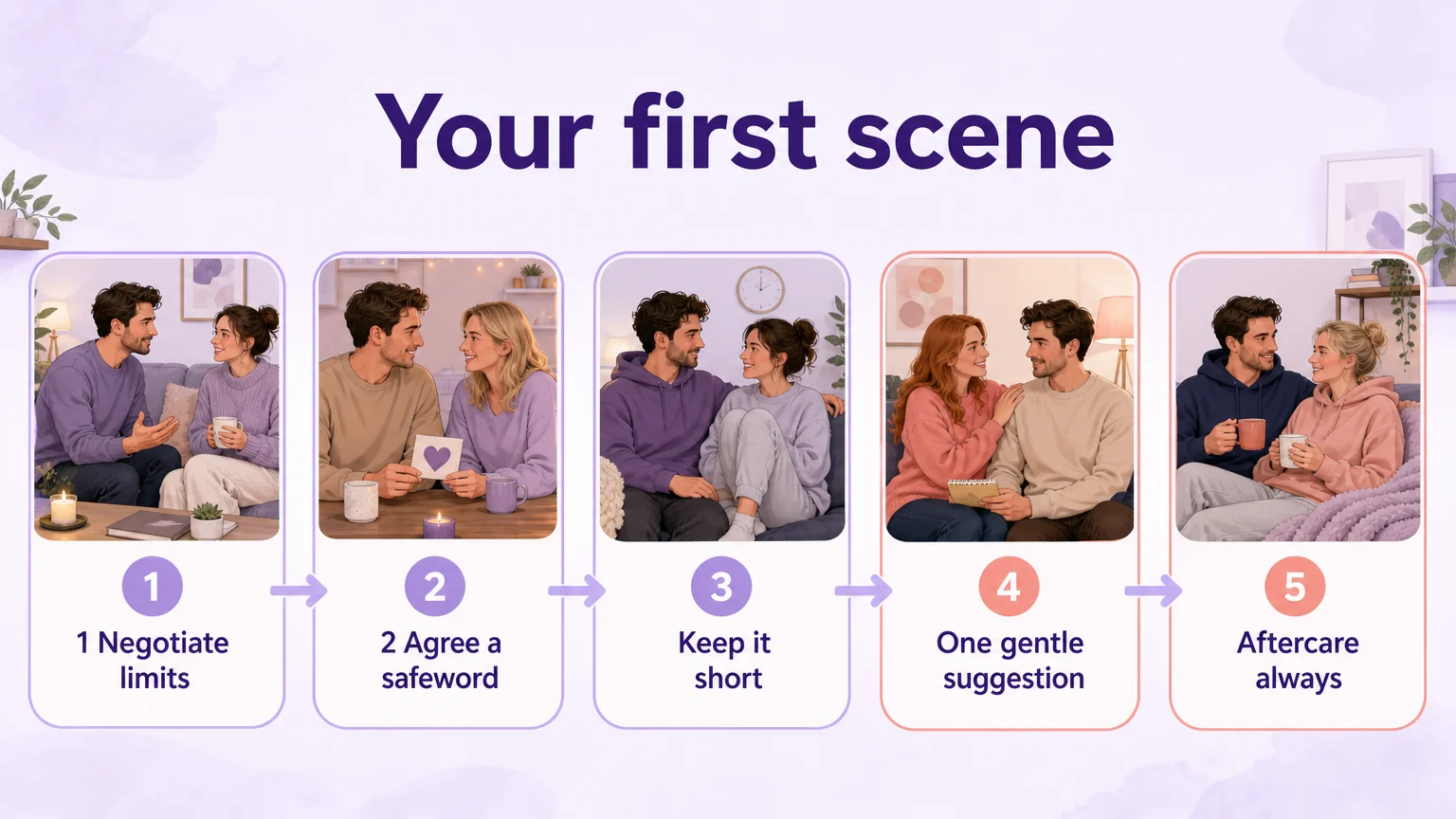
If you are a couple reading this together, welcome to the gentlest way in. Exploring power exchange with someone you trust is an act of discovery about each other, not a performance for an audience.
Sexologist Amy Marsh calls erotic hypnosis a relationship practice you can do with a partner, anchored in the same trust and experimentation as BDSM. That works for monogamous, ENM, and swinging couples alike. This first scene is written for two people who have never done hypnosis or domination before, so it assumes nothing.
About the roles: femdom means the guiding voice belongs to a woman. The partner she guides may be a man, a woman, or a nonbinary partner. Whatever your constellation, one of you takes the guide seat tonight. Many couples switch on later nights, and we will come back to that at the end.
Step One: The Negotiation Comes First
Before any trance, sit down together in your normal voices and agree what is on the table and what is not. This step is stricter than it is in other kinds of kink play, because one partner is deliberately raising the other’s suggestibility. Write out the yes list and the no list, or agree a plain rule like “anything beyond relaxation and shoulder touch is off the table tonight.”
Get consent in clear, everyday language, not in a slow hypnotic voice. Consenting to be hypnotized is not consenting to any particular touch, and never change the goalposts once a session starts. As the Mesmerotic educators put it, far better to end wanting more than to end having gone too far.
Step Two: Agree Your Stop Signals
Pick a safeword and a nonverbal signal, because speech can get difficult mid-trance. Tapping twice on the bed, raising a hand, or a thumbs up all work. Practice both together while you are fully awake so they feel automatic.
Many couples also use a traffic-light check-in, green for good, yellow for slow down, red for stop, and the guide asks “status, please” every few minutes. Keep alcohol and other substances out of the picture; they stack on top of the suggestibility you are already creating.
Step Three: Know the Shape of a Scene
Every session follows the same five-part skeleton, and seeing it whole will steady both of you. The pre-talk sets the frame and builds excitement, the induction eases the subject into light trance, and the deepener settles them further. The suggestion delivers the effect you agreed on, and the awakener returns them to ordinary awareness. Nothing else is required; that is the entire architecture.
Step Four: Your First Induction, No Gear Needed
You do not need a script, a pendulum, or any equipment for your first time. Try the technique called pacing and leading. The guide names two true, observable things about the subject, then leads toward the state they want: “Your breathing is slowing, your shoulders have dropped, and now you can feel yourself settling even deeper.” Attention is the key. The Mesmerotic teachers put it simply: where you put your attention, your mind goes, and where your mind goes, your body follows.
Step Five: Keep the First Session Light
Plan a short in-and-out trance with a single gentle suggestion. Good options for a first night include deepened relaxation, heightened sensitivity to touch, or a slow feeling of floating pleasure. Save the theatrical femdom territory, the objectification and the dramatic triggers, for later sessions once trust is established.
Repeating light inductions is how the skill of being a good subject builds, so a short first session is a success by definition. Ten to fifteen minutes from start to finish is plenty for a first night, and you can always go again.
Step Six: Aftercare Is Not Optional
End the trance deliberately with your awakener, then move straight into aftercare. Intense mental play can leave both partners feeling vulnerable, sometimes a little emotionally low, in the hours after, a comedown people in the scene call the drop. Plan time to reconnect, talk about what felt good and what felt strange, and hold each other.
Never leave someone in trance and walk away. The guide is responsible for the subject’s comfort through the scene and after it. A follow-up conversation the next day, when neither of you is still floating, is often where the clearest learning happens, so build that in before the glow fades.

The woman does not have to hold the guide seat forever. Many couples switch, so each partner gets a turn being hypnotized and hypnotizing. Keeping the exchange mutual rather than fixed is one of the healthiest patterns in this practice, and it is how couples who try this once keep learning something new about each other.
And when the two of you are ready to widen the circle, you already have the skills: say what you want, agree the edges, and trust the people beside you. Many couples on 3Fun started exactly where you are, curious about each other first.
Femdom Hypnosis on Your Own: Audio, Hypno-Dommes, and How to Spot Red Flags

Maybe you do not have a partner yet, or you are not ready to ask. Exploring on your own is a legitimate way to learn how your mind responds, and recorded audio is a low-cost, anonymous place to begin. Columbia University’s health resource suggests dipping your toe in with a plain relaxation or traditional hypnosis track before any erotic femdom content, so you learn your own response to suggestion first.
Choose Your Creator Like You Would Choose a Guide
Audio files are unregulated. Anyone can record one and call themselves a hypnotist. Much of what circulates is fantasy theater rather than genuine trance practice, which is why who you listen to matters more than whether you listen at all. Prefer creators who are vouched for by community educators and who model consent openly, as Mark Wiseman does when he names producers whose ethics he knows personally, including Fiona Clearwater, Leela Lore, and Sensual Spiral. Seek a file out on purpose, and be wary of hypno-lingo content that reaches you randomly.
A reputable file sounds a particular way: it establishes limits up front, invites you to check in with yourself, and suggests rather than commands. Cost is a poor guide. Files commonly run from a few dollars to around fifty, and some creators publish free full sessions alongside paid work, so a generous catalogue is an easy place to start.
Red Flags and the Green Flags That Balance Them
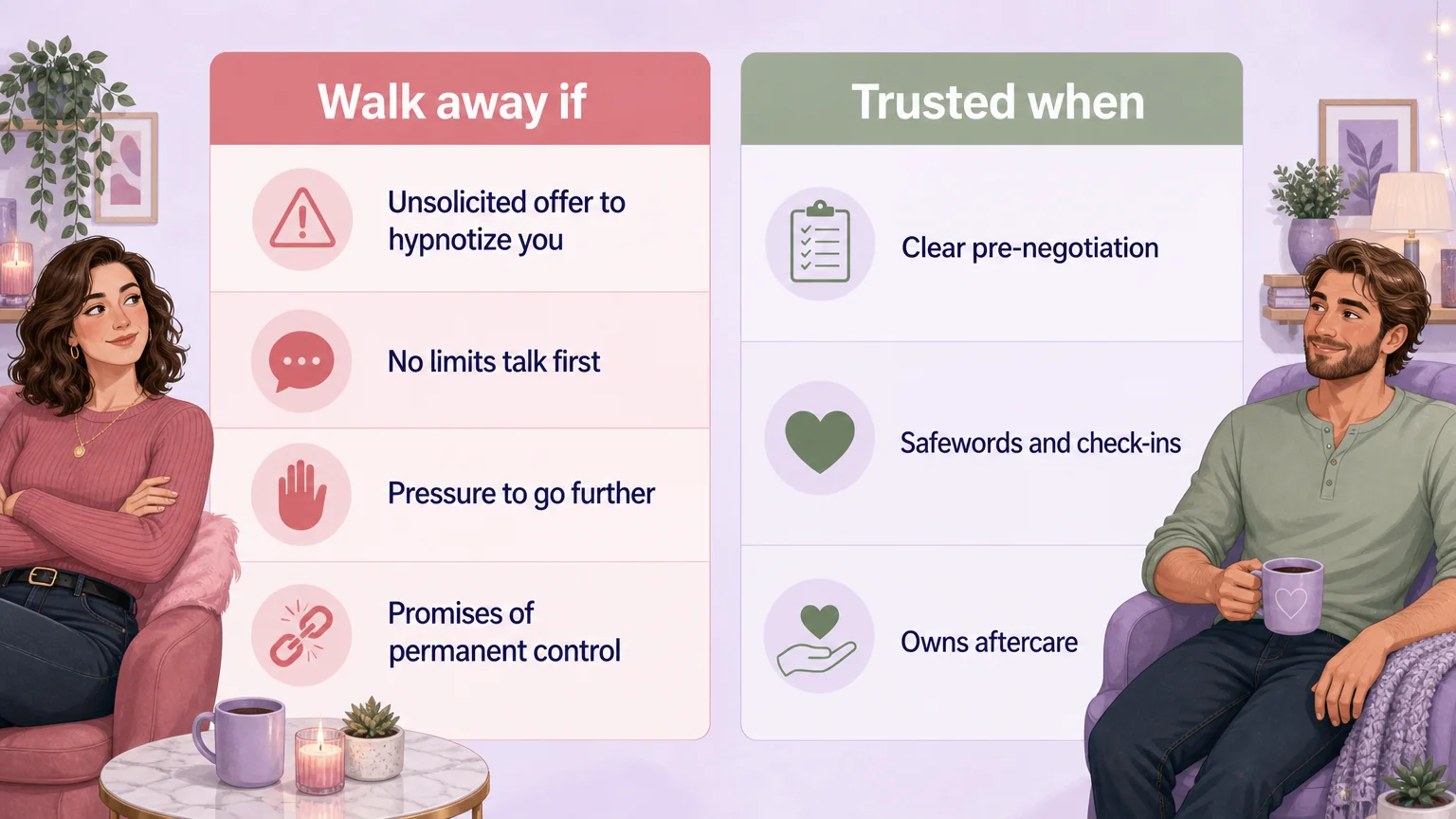
If you move toward a live hypno-Domme, keep this list close. Walk away from anyone who messages you out of the blue offering to hypnotize you, who refuses to discuss limits before you start, or who sells hypnosis as a way to make you do what they want. Leave any session where you are pressured to go further than you agreed, where you are encouraged to get intoxicated, or where you are promised you will be permanently under someone’s control. None of that is how the practice works.
The green flags mirror the red ones: a community reputation you can check, clear pre-negotiation in everyday language, agreed safewords and check-ins, and explicit responsibility for aftercare. A trustworthy practitioner is glad to talk about all four before you spend a cent. If you have access to a local group, ask experienced subjects how a practitioner is to play with, the way you would ask around about any new partner. Word travels fast in a small community, and someone who has crossed lines finds it hard to hide.
A Personal Safety Rule for the Hours Afterward
Heightened suggestibility can linger after a session ends. One practitioner describes a friend who refuses to shop online the same day she does hypnosis, because she knows she would buy everything. Adopt the lighter version of that rule: no big decisions and no impulse purchases in the few hours right after trance. Land gently, eat something, and let ordinary life drift back in before you make any choices.
Where Genuine Education Lives
For anyone who wants to go deeper, the infrastructure that matters is community, not clips. Local erotic hypnosis munches and workshops let you meet practitioners in person and hear how they are to play with from the people who know them best. National events such as Charmed and NEHOW gather the community under one roof.
The beginner books the scene trusts, including Mind Play by Mark Wiseman and Mastering Erotic Hypnosis, teach the craft from first principles, and a title such as Deep Surrender looks closely at the emotional aftermath of intense play. Respected educators also teach for free, including video educators Evie Lupine and the Mesmerotic team, who model consent before they ever demonstrate a trance. Structured classes like the Mesmerotic boot camp are built for beginners, welcome couples, and some can be followed online with a remote partner. Learn from educators who show consent in their opening minutes, and you will absorb the right instincts before you ever take instruction from a stranger’s voice.
None of this has to stay a conversation between two people. If exploring power exchange with consent-first couples and singles sounds like your kind of adventure, 3Fun is where open-minded people say what they want before anything happens. Create a free profile and start the conversation on your terms.
Femdom Hypnosis FAQ: Answers to the Questions Beginners Ask
Is femdom hypnosis real?
Yes, as a genuine practice. Hypnosis is a measurable state, and brain scans show predictable changes when someone enters trance. Femdom hypnosis puts that state to work for arousal and power-exchange play. The caveat: many short clips online are closer to fantasy theater than to genuine hypnosis, so judge the practice by trained educators, not quick videos.
Can femdom hypnosis make me do something against my will?
No. A filtering part of your mind evaluates every suggestion and rejects anything unacceptable or self-destructive. You stay aware and able to refuse, and you cannot be guided into trance against active resistance. The subtler caution is that trance lowers your guard a little, like mild intoxication, so this is play for trusted people only.
Will I lose control of my body or black out?
No, not in the way people fear. You normally stay aware, keep your values, and remember the session. Memory loss and true loss of agency happen only when they are specifically suggested and agreed on beforehand. The letting-go most subjects describe is closer to deep absorption than to unconsciousness.
Does femdom hypnosis put you to sleep?
No. Calling trance sleep is cultural shorthand, a hangover from the Mesmer era, not a description of the state. Trance is a state of deep, single-pointed focus, not unconsciousness, and you can respond while looking fully awake. Expect deep relaxation, not drowsing, and you will not be surprised that you can still hear and answer.
What if I cannot be hypnotized?
Almost everyone who wants trance and lets go of movie expectations can reach it. Being a good subject is a learnable skill that grows with short, repeated sessions. The usual blockers are anxiety, self-doubt, and overthinking, not an innate inability. Easing off the effort is often what lets the state arrive.
Do we need a professional Domme to try femdom hypnosis?
No. A couple can explore this at home. Negotiate limits before any trance, agree on a safeword and a nonverbal signal, keep the first session short and light, and plan aftercare. A professional hypno-Domme is another option for anyone who wants an experienced guide rather than a first attempt with a partner.
How do we bring up femdom hypnosis with a partner?
Start outside the bedroom, in plain language, with curiosity rather than a demand. Say you have been reading about erotic hypnosis and would like to try a gentle session together, with no expectations. Offer to be the guide first, keep the first attempt light, and treat a maybe as an invitation to talk, not a rejection.
Are femdom hypnosis audio files safe to try?
Generally yes, for exploring fantasy, when you choose reputable creators. Files are unregulated, so vet who made one and favor creators the community vouches for. Look for a file that establishes limits and invites you to check in. Afterward, give yourself a few hours before big decisions or purchases, because suggestibility can linger.
Is erotic hypnosis the same as therapy?
No. Erotic hypnosis is recreational play; hypnotherapy is a licensed clinical practice for treating conditions. Educators warn against using recreational hypnosis to “fix” a partner, because you cannot predict the unintended consequences. Leave treatment to trained professionals and treat this practice as pleasure and connection, not self-repair.
Is it weird to want to be hypnotized by a woman?
No. In a national survey of more than four thousand Americans, only about seven percent of men had never had a BDSM fantasy, and submission fantasies are more common than dominance fantasies. Wanting to set down control for a while is a common, human desire. Explored with consent, trust, and good aftercare, it is a healthy extension of your shared adventure, not a verdict on your character.