You might be looking for a faith-based sister wife arrangement. Or a couple exploring a threesome together. Or a solo poly person building a network of intentional relationships.
Those are different worlds with different apps. Without understanding the distinction, you end up clicking between platforms that were never built for what you want.
The word “polygamy” has become a catch-all search term. On one end sits traditional plural marriage, often faith-driven, with marriage as the frame and community as the foundation. On the other sits modern ethical non-monogamy: polyamory, open relationships, swinging, and everything between. One in three Americans now says their ideal relationship would be non-monogamous, according to YouGov. You are not unusual for being curious. You are not broken for wanting something outside the default. You need the right platform for what you want, and the right platform depends on where you actually land on that spectrum.
Below are 9 platforms across the full spectrum, with honest pros, real pricing, and no judgment about where you land.
1. 3Fun: The Couple-First App for Exploring Together
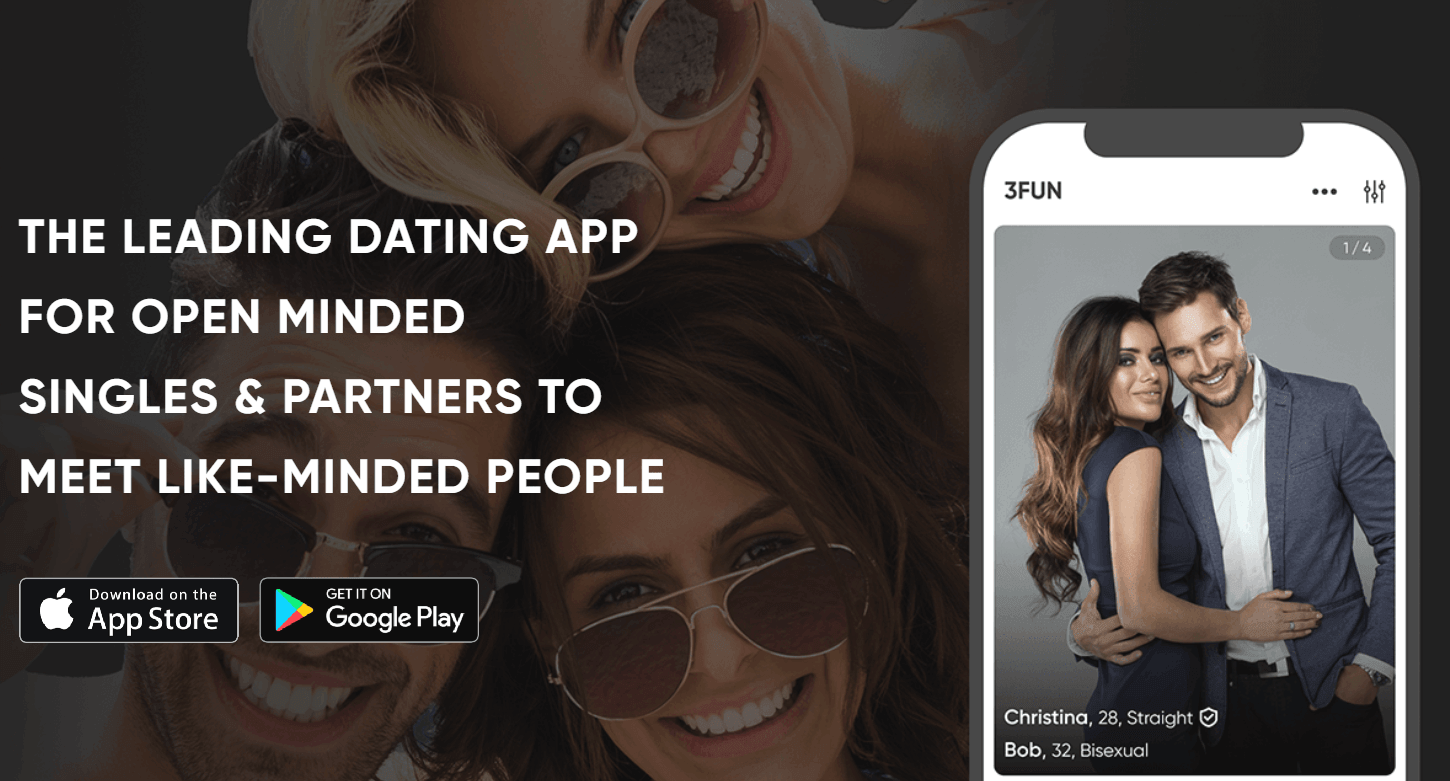
Most dating apps bolt on couple features as an afterthought. 3Fun was built from the ground up for two people opening their relationship together.
Feeld lets you link a partner profile. 3Fun assumes you are exploring together from the moment you sign up: synced accounts, shared visibility settings, group chat. The architecture treats the couple as the user unit, not an add-on negotiated into a singles-first design.
What works: Free unlimited messaging for all users. No paywall between you and a conversation. Photo verification reduces the fake profile problem that plagues other platforms. Dedicated email sign-up means no social media linking required, which matters for privacy. VIP pricing at $29.99 per month drops to $8.33 per month on the annual plan at $99.99 per year. That annual rate is the best yearly value in the ENM space. A Priority Messages add-on is available for getting seen faster.
What to know: The app is built for couples exploring together and leans toward threesomes and swinging. It is less effective if you are dating independently as a solo poly person. Partner linking is a core feature, though synced accounts can occasionally lose alignment between profiles. The platform uses email-based sign-up and privacy controls that let you manage who sees your profile.
If you are a couple taking your first step into ENM together, 3Fun is purpose-built for you. Start with the free tier. Unlimited messaging means no pressure to pay, and if the experience clicks, the annual plan at $99.99 per year is the best value in the ENM space. Get 3Fun on Google Play or Apple Store. If you are solo poly, skip to OKCupid or Feeld.

2. Feeld: The Largest ENM Dating App with 3 Million Members
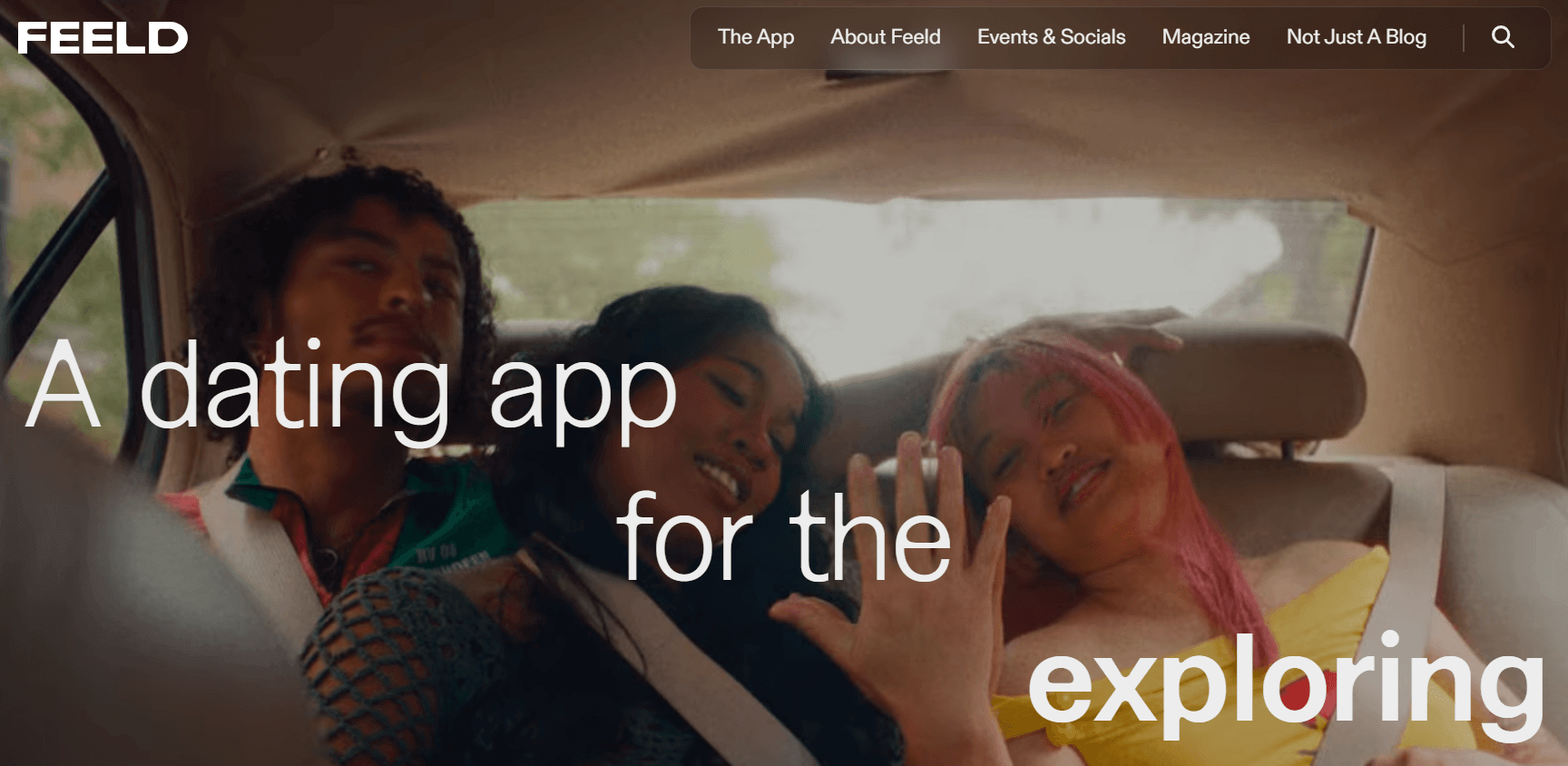
Feeld rode a cultural wave to 3 million members: 368% growth from 2021 to 2025, 30% year over year, Gen Z growing fastest at +20%. Revenue jumped 26% in 2024, and Q1 2025 saw record downloads. Strongest markets: London, NYC, LA, Berlin. That size matters when you open a dating app.
The app itself has not kept up with its own success.
What Feeld gets right: Twenty-plus gender labels and twenty-plus sexuality options. No social media linking required at sign-up. The Constellation feature links up to five partner profiles, giving your polycule visibility. The free tier includes browsing, matching, and messaging. Majestic at $11.99 per month is one of the cheapest premium tiers in dating. Incognito Mode keeps your profile hidden until you Like someone, which matters if you are not publicly out. Conversations here tend to skip small talk and land on substance faster. One user reported a 67% response rate over six weeks: 63 matches turned into 42 actual conversations.
What you need to know before downloading: Trustpilot rates Feeld at 1.1 out of 5. Users report notifications requiring app restarts, five-to-ten-second screen freezes, login loops, and photo upload failures. Blind and screen-reader users describe the app as basically unusable. Customer support is a chatbot with roughly a ten-day response time. In 2024, a security firm identified vulnerabilities that could have exposed private messages and photos. Feeld did not proactively notify affected users. An estimated 50% of profiles are fake or OnlyFans promoters. The community uses the phrase “normie hell” to describe overcrowding with people who do not understand ENM culture.
Feeld is still the largest ENM pool and worth trying first, especially in NYC, London, LA, or Berlin. Run the free tier for one to two weeks. If it works smoothly in your area, Majestic at $11.99 per month is solid value. If the bugs make it unusable, skip to OKCupid or 3Fun.
3. OKCupid: The Best Free Option with Massive Geographic Reach
Geography is the filter that kills most niche dating apps the moment you leave a major city. #open has roughly 2,100 monthly active users worldwide. Feeld thins out fast once you leave a major metro. MoreThanOne may not have launched in your region yet. If you live in a town of 50,000 people instead of 5 million, most of the apps on this list will show you five profiles and go silent.
OkCupid is the exception. Its user base is massive and distributed enough to have active profiles virtually everywhere.
The good: The free tier includes full messaging and matching. No paywall on core communication, which is rare in dating apps. Non-monogamous relationship status at the matching level. Partner profile linking. Over a decade of ENM-specific compatibility questions baked into the matching algorithm. Premium runs roughly $34.99 per month for one month, dropping to about $17 per month on the six-month plan. It works for solo poly dating, couple profiles, and everything between.
The trade-offs: The user base is predominantly monogamous. You will be filtering heavily, not swimming in your community. The UX has not had a meaningful refresh in years and feels dated compared to Feeld or 3Fun. It was not designed specifically for couples dating together as a unit; the architecture assumes individual profiles. Premium pricing has been creeping up, and the basic tier is reportedly being phased out in 2026.
Anyone living outside a major progressive metro should start here. OKCupid is the most reliable option when niche apps cannot deliver. If you are in NYC, London, or Berlin, use it alongside Feeld or #open for broader reach. The free tier is usable. Try it before paying.
4. Modern Polygamy: A Vetted Alternative for Faith-Based Connections
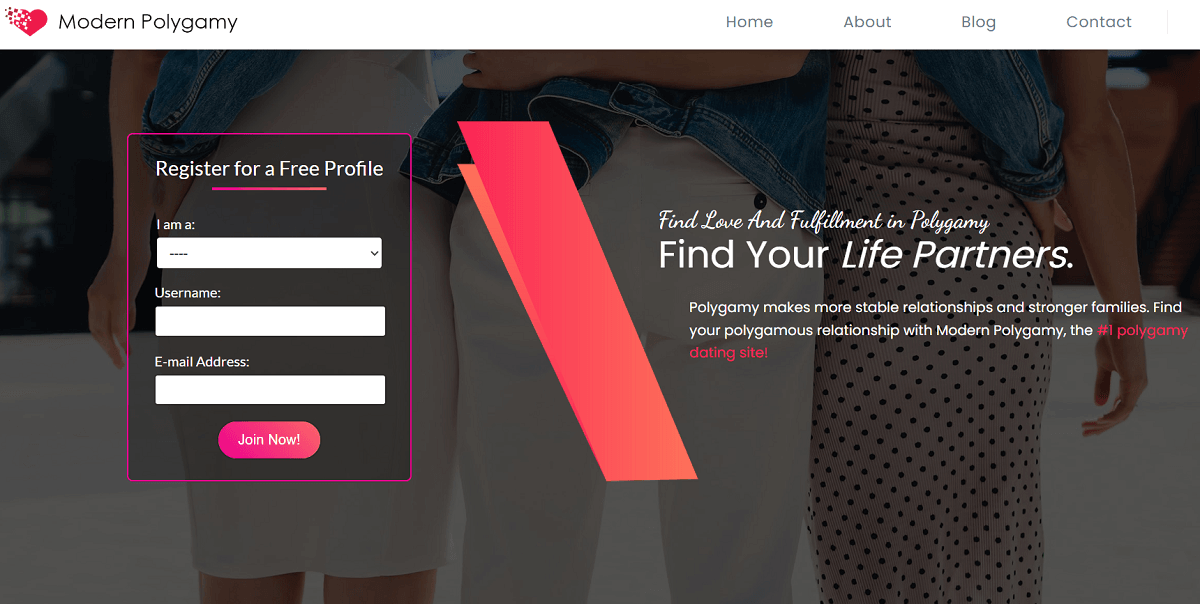
Some apps or sites hold widespread fraud reports. And some have real users but a persistent bot problem. Modern Polygamy sits between the two extremes. It is not flashy, but it moderates, and several users cite it as having “the least amount of fake profiles” in the traditional polygamy space.
The good: Customer support responds, though reviews span from “excellent” to “alright, but not great.” The platform offers video introduction options for paid members. It deletes fake profiles quickly when reported. Profiles feel more vetted than competitor sites. The platform invests real effort in keeping the community real rather than inflating user numbers.
The trade-offs: The user base leans heavily toward families seeking single women rather than the reverse. The gender balance makes it competitive. Navigation is difficult, according to several reviewers. The overall execution lands at “just okay” rather than polished. The small user base means matches take longer, especially outside regions with active polygamy communities.
If you are serious about traditional polygamy and tired of bots on other platforms, Modern Polygamy is worth the effort. If you are casually curious, the competitive dynamics and small user base might frustrate you. It serves a specific need, and serves it well enough. If you are willing to put in the time, the moderation quality makes it a good choice.
5. #open: A Community-Built App Where Everyone Shares Your Relationship Style
Dating while non-monogamous on mainstream apps comes with a specific exhaustion: every match starts with a disclosure that feels like a confession. You explain what ENM means. You clarify that your partner knows you are here. You field questions that assume you are cheating or confused.
#open eliminates that dynamic entirely. One hundred percent of users have opted into non-monogamy. You are not the exception here. You are the default.
What makes it different: Hashtag-based search replaces the swipe model, letting you find people by shared interests and relationship structures rather than just photos. The app is community-built, not VC-funded. The design reflects what poly people asked for. QR code check-ins for real-world events bridge the app-to-IRL gap. There is a verified members system, and no social media linking is required at sign-up.
What the numbers say: An estimated 320,000 total profiles exist, but only roughly 2,100 monthly active users globally. That active user number is the one that matters. Premium runs roughly $9.99 to $14.99 per month. The Google Play rating is 1.96 out of 5, with users citing glitchy performance and location bugs. Support response time runs about a week.
The concept is strong but the execution is still catching up, so treat #open as a supplement, not your primary app. If you are in NYC, San Francisco, London, or Berlin, add it to your rotation alongside Feeld or OKCupid. If you live anywhere else, the active user count will not support regular use.
6. MoreThanOne: The Completely Free App with Polycule Linking
A dating app with no subscription, no ads, and no locked features sounds like a fantasy. MoreThanOne is betting that transparency beats monetization. The vision is compelling, but the trade-offs are real.
What works: Zero cost. No subscription tiers, no locked features, no ads. Completely free. Granular relationship preference filters that are more detailed than most paid competitors. Data encrypted in transit. And the feature that no other app offers: multi-partner linking beyond pairs. A polycule of four can link all profiles together. Everyone sees everyone’s connections. That level of relationship transparency does not exist on Feeld, where Constellation maxes at five but is pair-based, or OKCupid, which only supports pair linking.
What to weigh carefully: The user base is very small. Coverage is sparse outside major progressive metros. Fewer features than established, funded competitors. The completely-free-with-no-ads business model raises real sustainability questions. Nobody knows whether MoreThanOne will still exist in two years. Investing time and emotional energy into a platform that could disappear is a real risk.
MoreThanOne is the right choice for budget-conscious polycules who want multi-partner visibility and do not mind a smaller dating pool. Use it alongside OKCupid or Feeld, not as your primary app. The free price tag is real, but so is the uncertainty about the platform’s future.
7. Bloom Community: Relationship Webs and IRL Events for Poly Networks
Bloom Community is the newest contender on this list, and its bet is interesting. Instead of optimizing for more swipes, it optimizes for getting you into the same physical room with people who share your relationship values.
What works: The relationship webs feature is the first of its kind. Bloom lets you link accounts with multiple partners in a visual web, supporting complex polycule structures that other platforms cannot represent. It is a different way of showing who you are and how you relate to the people in your life. Built-in event discovery treats in-person community as a core feature, not an add-on buried in a settings menu.
What to know: Bloom is the newest platform on this list, which means the user base is still building and features are still evolving. Geographic coverage is limited and concentrated in progressive urban centers. If you are outside a major city, you are unlikely to find active local users or events in your area.
People in major metros with an active poly scene who want more than a swipe feed will find Bloom worth joining. The relationship webs concept is better than anything competitors offer for representing polycule structures. For now, treat it as a supplement to a primary app like Feeld or OKCupid. Bloom is one to watch, but it is not yet ready to carry your dating life alone.
8. Grindr: Unmatched Reach for Queer Men in Open Relationships
If you are a gay, bi, or queer man reading this, Grindr is not news. Tens of millions of users. A free tier that is functional. Geographic coverage that spans virtually every city and town on earth. Non-monogamy is normalized in the community. You will not be the only partnered person on the grid.
The good: The best geographic reach of any app on this entire list. Period. XTRA runs roughly $19.99 per month. Unlimited runs roughly $39.99 per month. The free tier is usable for browsing and messaging. It works in small towns, suburbs, and cities alike because the user density is unmatched.
The trade-offs: Designed for gay, bi, and queer men only. Not for straight couples, not for women, not for non-binary people who are not part of the queer male community. No partner linking, no relationship structure labels, no poly identity options. The platform culture is dominated by casual encounters rather than intentional relationship-building, which means you will need to be explicit in your profile and patient with the mismatch. Location-based visibility can be a privacy concern for people not publicly out.
For queer men, Grindr plus Feeld or OKCupid is the strongest combination. Use Grindr for volume and geographic reach. Use Feeld or OKCupid for more intentional ENM connections. Lead your profile with your relationship structure so the right people find you faster.
9. Bumble: 50 Million Users When Niche Apps Run Dry
If you live in a town of 30,000 people, Feeld might show you three profiles. #open might show you zero. MoreThanOne might not have launched in your region yet. Bumble has 50 million users. Some of them are non-monogamous, even if the app was not designed with them in mind.
Sometimes the best poly dating app is the one that has millions of users in your area when every ENM-specific app shows the same five faces.
The good: An enormous user base means active profiles where ENM apps have zero presence. The non-monogamy relationship type is a visible profile option. The women-first messaging model shifts the dynamic in ways some poly daters appreciate. Incognito Mode is available on Premium. Separate BFF and Bizz modes prevent your dating profile from bleeding into other contexts. Premium runs roughly $39.99 per month.
What matters: The user base is overwhelmingly monogamous. You will be filtering, not swimming in your community. No partner linking, no ENM-specific matching, no community features of any kind. Poly users report inconsistent moderation: some get flagged or have profiles removed, others do not. The 24-hour message window creates time pressure that works against the slower, more intentional communication ENM relationships typically require. Bumble acknowledges non-monogamy exists but does not build for it.
If you are outside a major city and the niche apps are ghost towns, add Bumble to your rotation. Lead your profile with your relationship structure so you filter early. Use it alongside OKCupid for best coverage. Skip it if you already live in a city with a thriving ENM app ecosystem. Bumble is not the ideal tool, but it is the tool that has people on it where you live.
FAQ
What is the difference between polygamy, polyamory, and ENM?
Polygamy is marriage-based, typically one man with multiple wives, and often faith-driven. Polyamory involves consensual emotional and romantic connections with multiple people, not necessarily involving marriage. ENM, ethical non-monogamy, is the umbrella term covering polyamory, open relationships, swinging, and any consensual non-monogamous arrangement. Modern Polygamy serve traditional polygamy seekers. Feeld, #open, and OKCupid serve the polyamory and ENM community. 3Fun leans toward couples exploring swinging and threesomes together.
Do I have to pay for these apps, or are there good free options?
No. OKCupid’s free tier includes full messaging and matching. 3Fun offers free unlimited messaging for all users. MoreThanOne is completely free with no ads and no locked features. Feeld’s free tier is more restrictive since you cannot see who Liked you. The strongest free combination: OKCupid for broad geographic reach plus 3Fun if you are a couple exploring together.
What is the best app for a couple seeking a third partner?
3Fun is purpose-built for this scenario with its couple-first design, synced accounts, and group chat. Feeld supports couple profiles with Constellation linking but has more bugs and a broader ENM culture. OKCupid is designed for independent dating and is less effective for couples exploring as a unit. Whatever platform you choose, the third person is a full individual with their own autonomy, not an accessory to your relationship. Lead with clarity about what you are offering, and respect their boundaries as much as your own.
How do I stay safe and keep my privacy on these platforms?
Use a dedicated email for dating apps. Do not link social media accounts. Scrub photo metadata before uploading. Use Signal for off-app messaging. Turn off location services. Enable two-factor authentication with an authenticator app, not SMS. For higher privacy needs, Feeld’s Incognito Mode on the Majestic tier hides your profile until you Like someone. First meetings should always happen in a public place. Tell a trusted friend where you are going. Have your own transportation and an exit strategy. Romance scams specifically target ENM apps, according to Social Catfish. Never send money, and trust your gut if something feels off.
How do I write a poly dating profile that works?
State your relationship structure in the first one to two lines. Use “I” statements, not “we” language, unless you have a joint profile as a couple. Describe your specific situation: “Partnered, dating independently,” “Solo poly,” or “Couple exploring together.” Include four or more varied photos that show your personality. Get specific about interests. Not “I like music” but “obsessed with 90s indie and vinyl collecting.” State your boundaries clearly. Do not hide your poly status and reveal it later. That is a fast track to hurt feelings. According to FindPoly, leading with confidence rather than apology makes the biggest difference in match quality.
Are traditional polygamy sites like Modern Polygamy legitimate?
Modern Polygamy has better moderation and fewer fake profiles, but it has a smaller, more competitive user base where families seeking single women far outnumber the reverse. Polygamy.com, a separate site with a 1.8 out of 5 rating and widespread fraud reports, should be avoided entirely. Both legitimate platforms are real but require more patience and caution than mainstream dating apps.