About half of lesbian, gay and bisexual adults in the United States have used a dating site or app, against 28% of straight adults, according to Pew Research Center. About a quarter of partnered LGB adults met their current partner through one. The best queer dating apps are not a niche category. For a lot of people, they are simply how dating happens.
The same survey holds a second number that matters as much: 64% of LGB app users report at least one unwanted experience, against 45% of straight users. Yet 61% still call their experience positive, against 53%. Both are true at once. This is a mainstream habit with friction, not a risk story.
What decides your results is fit. A lesbian in a small town, a bi woman dating men and women, a trans woman who is stealth at work, a couple dating together, and an ace dater need different mechanics. So each entry answers five questions: who is in the pool; whether the identity fields fit you and who they leave out; what verification proves; what the free tier hides; and which visibility controls exist, and which cost money.
The list runs by usefulness in specific situations, not prestige or user count. The best dating apps for queer people fit your intent, and that may mean running two at once. Prices move and promotions are first-term, so entries lean on paid mechanics and label every price as a dated snapshot.
1. 3Fun: Queer Dating With Built-In Couple Accounts
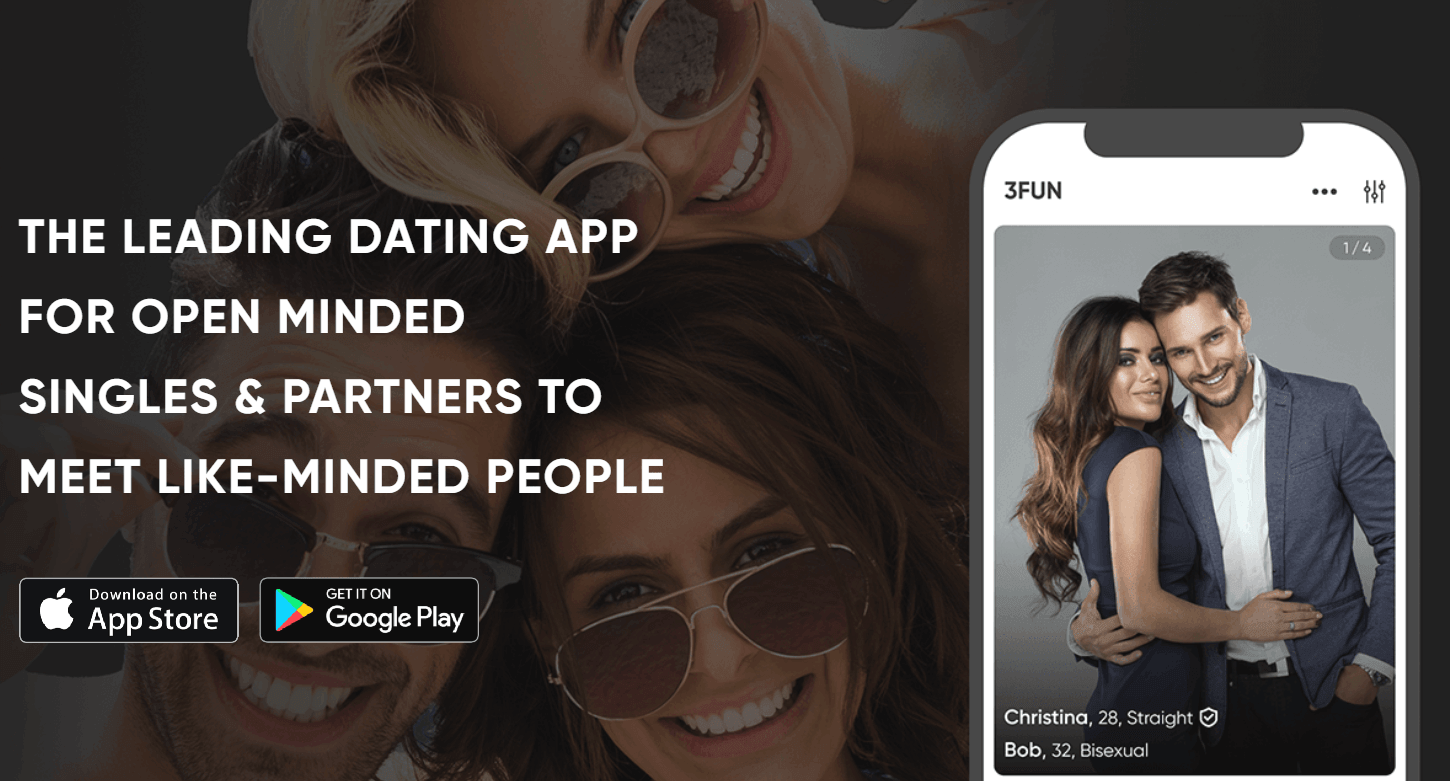
Every app with couples on it hits the same wall. One partner owns the phone. The bio carries a line like “we’re a couple, message her,” and everyone reading it assumes unicorn hunting, because that is what so many couple profiles turn out to be. What changes if couple status is part of the account rather than a sentence someone typed?
3Fun is a dating app for gay, lesbian, bisexual, trans, non-binary, pan and queer people, for singles and couples. Couples get two setups: a shared account on one login, with both partners on one profile, or Link Couple, which binds two independent accounts. One partner invites, both must confirm, and neither can merge the other unilaterally. Either setup can present as a single Couple Profile.
The app also serves people exploring open arrangements, a separate audience.
Who it suits: queer singles, queer couples dating together for any reason, and anyone who wants couple status legible before the first message.
The strengths are structural. Couple status is built in, not appended, and Link Couple answers the question that makes couple profiles suspect: both partners confirmed on their own accounts. Photo verification matches a submitted photo against the photos already on the profile. Originals are never published, and a couple’s verification photo must include both partners.
The free tier covers browsing, likes and chat after a mutual like. VIP adds see-who-liked-you, unlimited likes, Incognito, Hide Distance, last login, video call, read receipts and Boost. Poke is a paid 140-character message sent before a match.
The trade-off is size and money. The pool is smaller than the largest mainstream apps. Privacy is designed into the foundation, but the strongest visibility controls, Incognito and Hide Distance, sit in VIP, so full invisibility is paid. Poke is a real paid layer, and plans are promotional, so check the current offer.
Best for a couple who want to date together without the profile reading as a fetish, and for singles who want couples to be legible. Skip it if raw local volume matters more than structure.


2. HER: A Sapphic App With Community Built In
Ask women who date women what wears them down and the answer repeats: weeks of daily texting, no plan to meet, two hundred swipes to find one person worth one coffee. The frustration is not a shortage of matches. It is matches that stay in the phone.
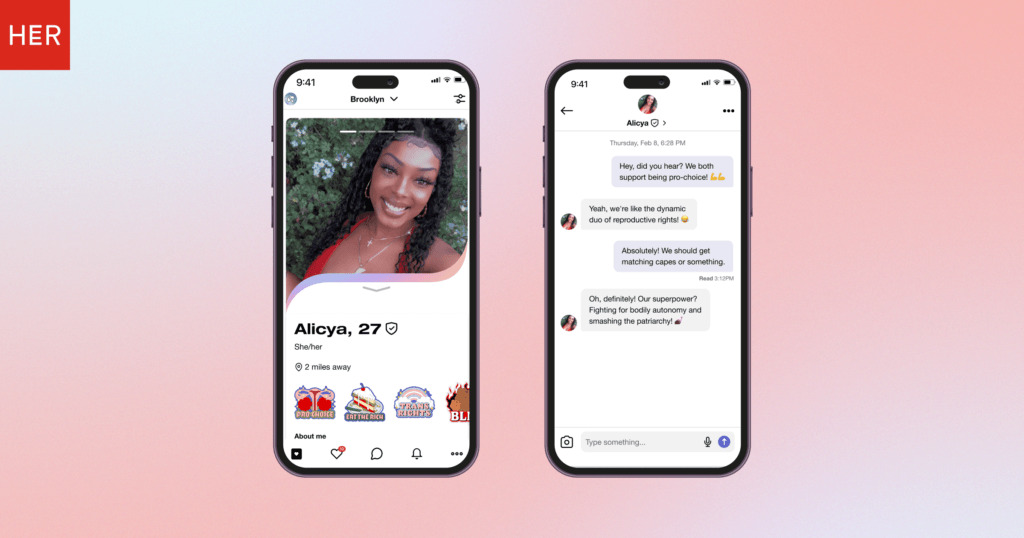
HER is built for that reader. It is a sapphic app that works as dating plus community: profiles carry pronouns, gender identity, pride pins and interests, and themed groups and events run alongside swiping. It is a dating app with a room around it.
Who it suits: lesbian, bi and queer women, trans and non-binary daters, especially in or near a city, and anyone who wants community rather than only matches.
HER pre-filters the pool, so you do not spend the first conversation explaining who you are or defending it. The community layer gives a match shared context and a reason to meet. Because the pool is women and non-binary people rather than everyone, the app reduces unicorn hunting by construction.
HER described itself as a community of over 13 million sapphics in its May 2025 announcement, a company figure. User reviews skew positive, though that is sentiment rather than proof.
The trade-offs are real. The free tier is thin, and the filters and visibility you need for a useful experience sit behind paid tiers; in the UK, Premium was listed at £13.99 a month in October 2026.
Users report glitches, and trans users report being flagged or removed in error, which is a serious failure in a space meant to be theirs. HER excludes men, so a bi woman who dates men loses half her pool.
Start here if you are a queer woman or non-binary dater in or near a city and want community with your dating. If you also date men, run a second app alongside it.
3. Taimi: The Most Configurable Identity Profile
A single bisexual checkbox does two unhelpful things at once. It invites both “so you’re actually gay” and “so you’re actually straight,” and it never says who you are looking for. Kelly R. Minter, a therapist who works with bi clients, describes the result as belonging to neither world: “You’re not queer enough for the queer world and you’re not straight enough for the straight world.”
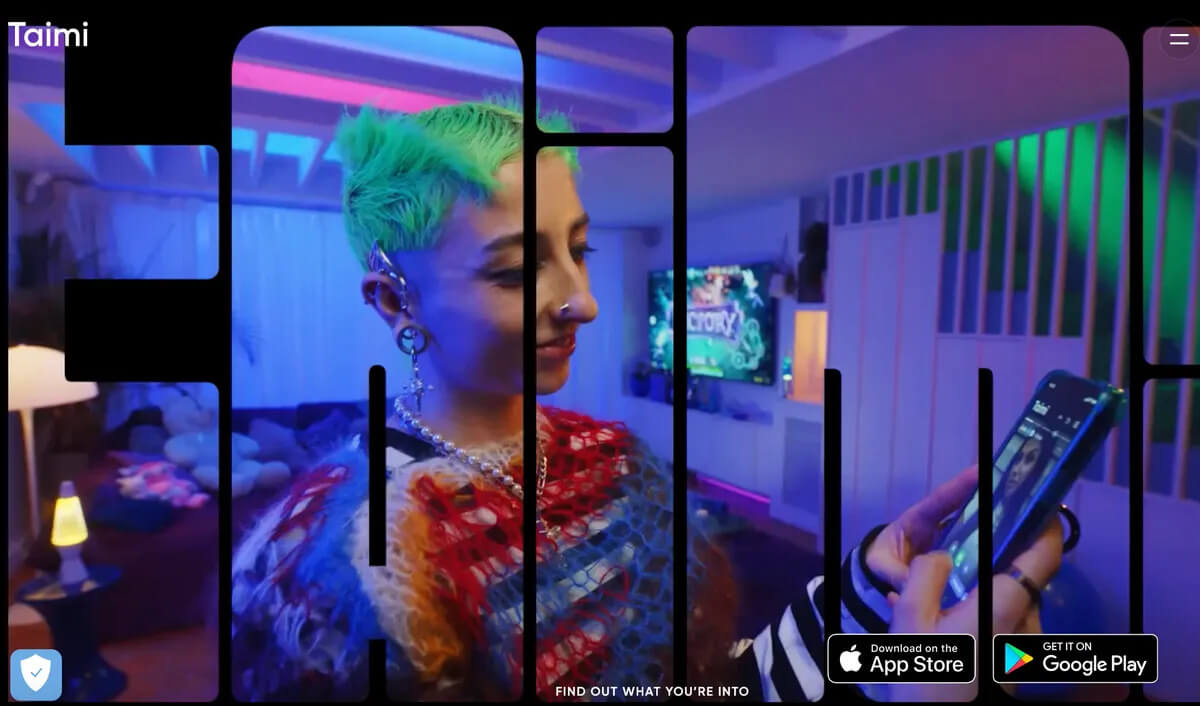
Taimi attacks that at the profile level. It is an all-spectrum LGBTQ+ app that blends a social feed with dating, and it lets you set detailed identity fields plus who you are looking for and who you are not, during profile creation rather than buried in settings.
Who it suits: bi and pan daters who date across genders, trans and non-binary users who want identity fields that fit, and anyone who wants one app for the whole spectrum.
This is the most configurable identity setup in this list. A bi dater who wants women and non-binary people, and not men, sets that at profile creation, and the filter applies before the first profile appears. That pre-empts the assumptions that otherwise arrive in the first message. Trans men have described fielding fewer chaser messages on an LGBTQ-specific app than on general ones.
One described meeting a trans partner there as the easiest relationship he had, because the shared medical and social experience needed no explanation. Treat that as one person’s account, not as evidence about the app.
The cost is noise. Taimi is busy and feed-heavy, with a heavy sponsored-content footprint. Intent runs from casual chat to marriage, so the pool is not pre-filtered by goal and you sort more of it yourself.
Taimi has published no dated figure for its user base, so treat any number you see with suspicion. Verification is not part of the product’s pitch, so plan to vet matches yourself.
Taimi and OkCupid are the two configuration-heavy options here. Taimi is queer-first; OkCupid has more reach. Choose Taimi if configuration matters more than volume.
4. Feeld: Open Arrangements and Couples Dating Together
Feeld publishes a number apps usually keep quiet. The company says about 38% of its profiles were verified within a year of introducing verification, and that complaints about fake profiles dropped roughly a month after it launched. That is a share of profiles verified, not a share of profiles that were fake.
Feeld is the app built around couples, thirds and non-monogamy. Couples can link partner profiles, and there is a registration path for a couple and a third, so the arrangement is declared in the account rather than negotiated in DMs.
Who it suits: queer users in open or non-monogamous relationships, couples who want to date together, and anyone who would rather state the arrangement than have it inferred.
The structural win is expectation-setting. A couple presents as a couple, a third registers as a third, and arrangement fields replace guesswork. That is the difference between a match who knows what they are walking into and one who finds out in the third message.
Verification runs through Veriff and is optional. The 38% is a company figure, not an audit, which means roughly three in five profiles are still unverified.
The frame is the catch. Non-monogamy and kink are the whole product, not a setting, so a couple who are not open have no home here. The pool is small and skews toward married men looking for play outside the marriage. Women on the other side of couples’ profiles describe the experience as objectifying and filter couples out, which is the reception any couple should expect.
Verification may show on only one partner’s profile, so do not assume both people are verified because one badge is visible. In the UK, Majestic was listed at £19.99 per 30 days in October 2026.
If your relationship is open and you want the arrangement stated up front, Feeld is the pick. If you are a couple who are not open, the 3Fun entry above is the one to read.
5. Lex: Text-First Dating for People Who Hate Photo Apps
On a photo-first app you are judged before you have said anything, and the first message is usually a verdict on the picture. For anyone who thinks in paragraphs, that is the exhausting part. It is not rejection. It is being reduced.
Lex goes the other way. It is a text-first, personals-style queer app where profiles are written rather than photographed, closer to an old classified ad than to a grid of faces.
Who it suits: people who think in words, queer users who want a calm and low-performance space, and anyone in a city with enough density to make a small pool work.
The absence of visual performance changes the conversation. Written profiles surface intent and personality early, so the first exchange can be about something rather than about a photo. A written profile also gives a match something to answer, which removes the dead “hey” that opens most chats. Lex is used for community, events and gigs as much as dating, which makes it useful even when you are not looking for a partner.
Entry is cheap next to the big subscriptions: US pricing reported in 2026 put Lexplore at $3.99 a week or $5.99 a month, and Lex Plus was listed at £7.99 in the UK in October 2026.
Supply is the constraint. The pool is small and matching is slow outside cities, and the free tier limits browsing other locations, which matters if you travel or live somewhere thin. Lex does not advertise a verification badge, so the usual caution about meeting a stranger applies without one to lean on.
Lex is the app for a words-first dater in a city who wants a lower-pressure scene. If you need volume this month, or you are outside a metro and not willing to travel for a date, it will feel empty.
6. Hinge: Prompts That Make Your Intent Clear
Intent is the thing most profiles leave out, and it is the thing that decides whether a match is worth a week of messages. Prompts solve that cheaply. Three written answers can say what you want, what you do not, and what a good Sunday looks like, all before anyone sends a like.
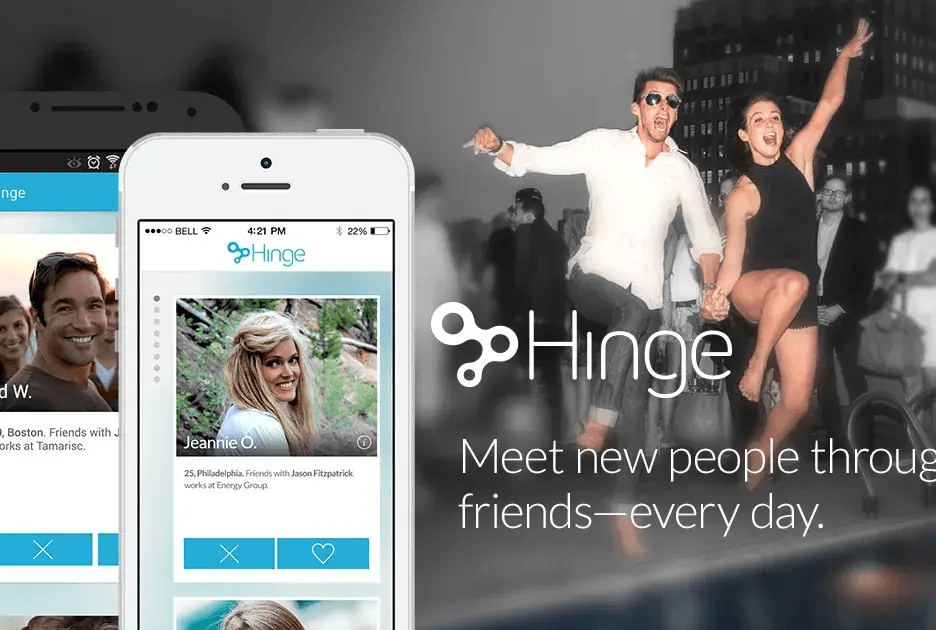
Hinge is built on that idea: prompt-based profiles, longer written answers, and a design that leans toward dating rather than browsing.
Who it suits: queer users looking for a relationship, especially in cities, and ace-spectrum daters who need expectations on the table early.
Prompts do double duty. They carry intent, and they hand the other person an opener that is not “hey.” A line like “looking for a relationship, not a pen pal” does more work than any bio adjective. For ace daters, that matters more than it sounds: photo-and-swipe apps make the sex question arrive as a surprise, while a prompt gives you a place to raise expectations before a date is booked.
Verification is improving too. Hinge offers voluntary selfie verification, and Match Group says Face Check will reach more of its apps in 2026.
The limits are pool and paywall. Outside cities the queer pool thins quickly, and some filters sit behind paid tiers, which changes who you can see at all rather than just how fast you can see them. Verification is optional unless Face Check has reached your market. Because the overall user base is mostly straight, you will explain your identity more often here than on a queer-specific app.
US pricing reported in 2026 put Hinge+ at $32.99 a month; UK pricing started at £12.99 in October 2026.
For a relationship in a city, this is the strongest mainstream pick. Outside a city, pair it with an app that has volume, because prompts cannot fix an empty pool.
7. Grindr: The Biggest Pool and the Fastest Match
Among LGB adults who have used dating apps, 34% have tried Grindr, according to Pew Research Center. No other queer app in that survey comes close. If reach is the question, this is the answer.
Grindr is a location-based grid: a wall of nearby profiles sorted by distance, and the fastest route from opening the app to talking to someone a few blocks away. It gets used for friendship, dating and casual sex, with the mix depending on the night.
Who it suits: gay, bi, trans and queer men, trans women, and anyone who prioritizes immediacy and density over curation.
Nothing else matches the pool size or the speed, and that matters most outside big cities, where every other queer app thins to almost nothing. The interface is simple. A disguised app icon, which can pose as a notepad or a clock, keeps it off a visible home screen, a genuine help for anyone not out.
The trade-off is culture and privacy. The default reads as cruising, so long-term intent has to be stated rather than assumed, and the volume is overwhelming. It is not built for relationships. Its privacy record is the worst in this list.
Norway fined Grindr 65 million kroner in 2021 for sharing user data with advertisers without a legal basis, and the Privacy Appeals Board upheld that penalty in 2023. In October 2026, Norway fined the adtech company Xandr about 92 million kroner for relaying Grindr users’ data, including sexual orientation, to potentially thousands of companies. That second fine is against Xandr, not Grindr.
Grindr reports about 15 million average monthly active users for the second quarter of 2026, a company figure, not an independent count. Grindr XTRA was listed from £9.99 a month in the UK in October 2026.
SCRUFF is the calmer comparison: older crowd, travel and events, less frenetic. Grindr wins when you need the largest pool tonight.
8. OkCupid: The Most Granular Identity and Preference Settings
If your identity does not fit one checkbox, the settings matter more than the algorithm. Most apps ask you to pick a label and then decide what to show you. OkCupid asks a longer set of questions and lets you answer them precisely.
OkCupid is question-bank matching: a long profile, a stack of questions about preferences and values, and granular settings for orientation, gender and non-monogamy.
Who it suits: people with specific requirements, bi and pan users who date across genders, non-monogamous users, and anyone outside a city who needs mainstream reach without giving up precision.
Orientation and gender are separate settings that go beyond the usual handful of options, so a bi woman who dates across genders can say so without picking a side. Non-monogamy is a field rather than a disclosure. Long profiles give you more to filter on before a message, and the pool is large, which matters if your local queer population is small.
The questions drive the matching, so a thorough pass is worth the evening. Match Group plans to extend Face Check across more of its apps in 2026, so verification may improve where it lands.
The cost of a mixed pool is mismatches. A large pool that is mostly not your audience produces more sorting, not less. One month of Premium was reported at $44.99 in the US, which is steep for a trial, while UK pricing started at £5.99 in October 2026. Verification still depends on Face Check reaching your market.
Choose OkCupid when precision matters more than novelty and you are willing to do the setup work. If you want a pre-filtered pool and no configuration, it will feel like homework.
9. AceSpace: Dating When Sex Is Not the Default
Stating that you are ace does not stop matches from expecting sex. One ace dater put the pattern plainly: “No matter how many times you inform people that you are Ace, people will still manage to ignore or completely miss that statement.” Another said she avoided dating apps because she expected to be pushed for sex immediately.
That is an expectation problem rather than a matching one, and most apps have nowhere to put it.
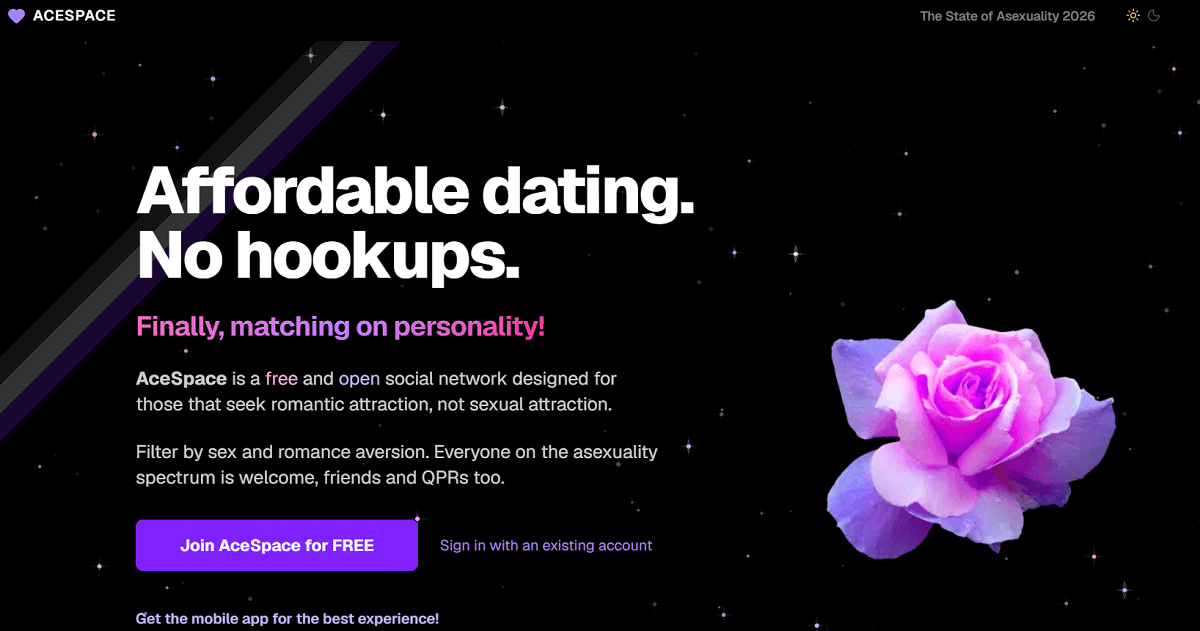
AceSpace is built for it. It is an ace-specific app with dating and friendship modes, designed for asexual and aromantic users rather than adapted for them.
Who it suits: ace and aro daters who want the orientation understood on arrival, and people in major metros or open to long distance.
The pool already knows what ace means, which removes the explanation tax from every conversation. The two modes matter for aro users in particular: friendship is a real destination, not a consolation prize, and partnership without sex is a stated option rather than an awkward negotiation. Users describe relationships starting there.
The arithmetic is the obstacle. The pool is very small, so it effectively requires a major metro or a willingness to date long distance, and one ace dater’s advice was exactly that: expect a metro or expect distance.
A match still may not read your profile, so nothing replaces saying it early. Small-team apps also carry stability risk, and features and pricing can change without much notice. Boo is a second ace-friendly option worth trying if AceSpace is thin where you live.
If being ace is central to how you date and a thin local pool is acceptable, start here. If you need local volume, use a prompt-heavy general app and state it in plain words.
10. Tinder: Reach, and the Strongest Verification Gate
Tinder now runs the strictest verification gate on this list, and it is not optional in the markets where it applies. Face Check is mandatory for new sign-ups in seven countries plus California. Match Group attributes a drop of more than 60% in exposure to potential bad actors, and more than 40% in bad-actor reports, to Face Check combined with its other safety work.
Tinder is the largest general dating pool, and that gate is now one of its features rather than a footnote.
Who it suits: queer users outside cities who need volume, people who weigh verification heavily, and casual daters.
The reach is the point. Where a queer-specific app has a few dozen people within 30 miles, Tinder has thousands, and outside a metro that difference decides whether you date at all.
Face Check checks liveness, matches your face to your profile photos, and detects the same face running multiple accounts. Match Group says it deletes the video selfie shortly after review, while it keeps a non-reversible, encrypted face map and face vector to verify new photos and block duplicate accounts. In markets where it applies, that is a stronger gate than any optional photo check.
The trade-off starts with the pool being mostly straight. The culture leans casual, unicorn hunters appear, and you will explain your identity repeatedly. The retained face map is also a disclosure decision in itself: if you are not out, a biometric profile tied to your face is worth thinking about before you sign up, and Match Group states no retention period for it.
Face Check is mandatory only in the markets named, so do not assume it applies where you are. Prices are a dated snapshot: US pricing reported in 2026 put Plus at $22.48 a month.
Use Tinder for reach and verification, not for community. State your intent in the bio and expect to filter.
Queer Dating Safety and Privacy: What a Badge Proves and What It Doesn’t
A verification badge proves that a human is present and matches their photos. It does not prove the person is kind, honest about what they want, or safe to meet. The badge is the part people trust and the part that proves the least.
Verification comes in tiers. The strongest is Tinder’s Face Check: mandatory for new sign-ups in seven countries plus California, checking liveness, face-to-profile match and duplicate faces. Match Group says it will reach more of its apps in 2026.
Next is optional photo verification. Feeld says its check covered about 38% of profiles within a year, and 3Fun matches a submitted photo against the photos already on the profile. That kind is a photo match, not liveness, not ID, not a background check.
The weakest tier is account review, where a social profile and a trust-and-safety team stand in for a face check. Some apps here publish no verification claim at all. None of these tiers tells you whether the person will respect a boundary.
Outing risk is separate. Visibility controls differ and some cost money: 3Fun’s Incognito and Hide Distance are premium, while Grindr’s disguised app icon is built in. A mandatory face scan plus a retained face map is a disclosure decision for anyone who is not out. Linking a social account exposes more than a photo does.
Data is the third question. Norway fined Grindr 65 million kroner in 2021, upheld on appeal in 2023, and fined Xandr about 92 million kroner in October 2026 for relaying Grindr users’ data, including sexual orientation. Orientation is special-category data under European law, which is why the fines are so large.
Before a first meeting: check whether photos show other people and recognizable places; ask for Instagram early and read the reaction; check tagged photos, follower count and account age; test attitudes with a news item before disclosing anything; disclose by text or FaceTime, never in person; meet in public; tell someone where you are.
Keep the scale in view. Pew found 64% of LGB app users report at least one unwanted experience, including 56% who received unwanted sexual messages or images, and 61% still call their experience positive. No app here promises a reliable screenshot alert, so assume a screenshot can travel.
FAQ: Queer Dating Apps, Answered Directly
Can a queer couple date together without it being a kink thing?
Yes. 3Fun supports a shared account on one login, or Link Couple, where two independent accounts are bound together, both partners confirm, and either can show as one Couple Profile. Feeld is the alternative if your relationship is open, but it places couples inside a non-monogamy frame, which is a different premise.
Which app is best for bisexual people?
Pick one that lets you state who you are looking for, not just that you are bi. Taimi does this at profile creation, and OkCupid offers granular orientation and non-monogamy settings. HER works if you only date women and non-binary people. No app in this list is built only for bisexual users.
Do I have to tell matches I am trans?
No one is obligated to disclose to strangers. Trans women in one panel discussion described disclosure as a safety decision before intimacy, best done by text or FaceTime rather than in person. One panelist discloses immediately and says she has never been rejected for being trans. Both positions are live.
Do dating apps actually verify that people are real?
It varies sharply by app. Tinder’s Face Check is mandatory for new sign-ups in seven countries plus California and checks liveness, photo match and duplicate faces. Feeld says its optional check covered about 38% of profiles within a year. 3Fun matches a submitted photo to existing profile photos, which is not an ID check.
What about asexual and aromantic daters?
AceSpace is the default ace-specific app, with dating and friendship modes, but the pool is thin enough that you need a major metro or an openness to long distance. Boo is a second option. On general apps, prompt-based ones such as Hinge make expectations easier to raise than Tinder does.
Is my data on a queer app private?
Not reliably. Norway fined Grindr 65 million kroner in 2021, upheld in 2023, and fined Xandr about 92 million kroner in October 2026 for relaying Grindr users’ data, including sexual orientation. Check each app’s visibility settings before you post a photo, and assume any screenshot can travel.
Which app has the most queer users?
Grindr reports about 15 million monthly active users for the second quarter of 2026, on company figures. HER reported over 13 million sapphics in May 2025. Taimi has published no dated figure for its user base. Pool size and usable pool differ: a smaller compatible pool often beats a large irrelevant one.
Still deciding where to begin? 3Fun is a dating app for gay, lesbian, bisexual, trans, non-binary, pan and queer people, for singles and couples, with privacy built into the foundation and additional visibility controls in VIP.