Is Thailand LGBTQ friendly? For most LGBTQ+ visitors, yes, and it was welcoming long before the marriage law passed. Homosexuality has never been criminalized in modern Thai law: no article in the penal code since 1957, and no enforcement history to work around. The age of consent has been equal since 1997. Same-sex marriage has been in force since January 2025, carrying the full bundle of spousal rights rather than a civil union.
That is the national answer, and it describes one kind of trip. Thailand is not one experience. A gay man at a Silom bar, a trans traveler at a border desk and an observant Muslim couple in Pattani are not having the same trip, and the differences between them are documented rather than anecdotal.
Two variables explain it: who you are and where you go. Those two organize everything below, from the rights the marriage law grants in practice to the region where the law is technically in force and practically unavailable, and from the cities where the scene is dense to the argument Thai activists are still having about whether visibility has been mistaken for equality.
The rest of this piece is about which version of that answer applies to your trip.
Thailand Same-Sex Marriage: What the 2025 Marriage Law Grants and Who Qualifies
Thailand’s marriage law comes down to a date, and two dates circulate. The gap between them is smaller than it sounds.
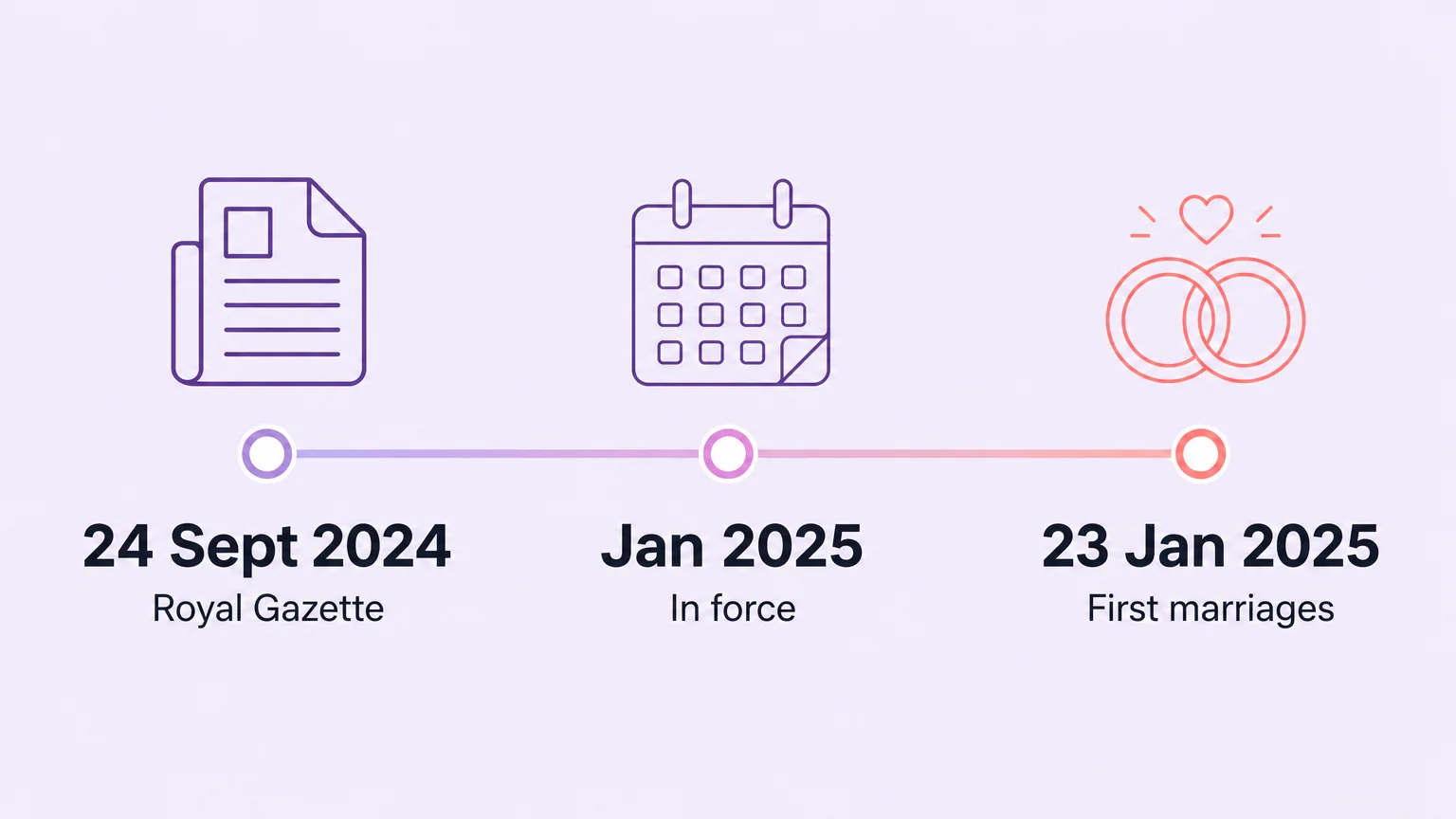
The law is the Act Amending the Civil and Commercial Code (No. 24) B.E. 2567. It was published in the Royal Gazette on 24 September 2024 and took effect 120 days later. Counted straight, that is 22 January 2025. The first mass registrations, and the photographs that filled that week, were on 23 January, which is the date most coverage uses. Either way it is one law, one week, and nothing you plan turns on the difference.
What the law grants is a bundle, not a slogan. A spouse becomes a statutory heir. A spouse can make medical decisions for a spouse who cannot. Social security and welfare as a spouse, joint tax filing, life insurance beneficiary status and reimbursement of a spouse’s medical expenses all follow. So do joint adoption, including adopting a spouse’s child, management of a spouse’s property, and divorce on the same grounds as any other couple. The marriage age also rose from 17 to 18, and couples of 18 or 19 still need parental consent.
Two limits matter as much as the rights. The Act is not self-executing across the rest of the statute book: agencies were given 180 days to propose amendments to the many laws still written around husband and wife, so some spousal rights in other statutes lagged behind the headline change. And two foreign nationals, including a same-sex couple, can register at any district office, provided both are 18 or over. Each needs an Affidavit of Freedom to Marry from their own embassy in Bangkok, a certified Thai translation, legalization at the Ministry of Foreign Affairs, and two witnesses. The affidavit is the step that fails first, because it certifies you are free to marry under your home law, and the district office will not waive it.
Where an embassy declines to issue that affidavit for a same-sex marriage, no alternative procedure is described. Allow two weeks rather than one, and check separately whether your own country will recognize the marriage once it exists. Recognition at home is not automatic, and it is worth knowing before you book the ceremony.
Anti-Discrimination in Thailand: What the Gender Equality Act Covers and What It Leaves Out
Thailand has had a gender-equality statute for a decade.
The Gender Equality Act B.E. 2558 was published in the Government Gazette on 13 March 2015 and came into force 180 days later, on 9 September 2015.
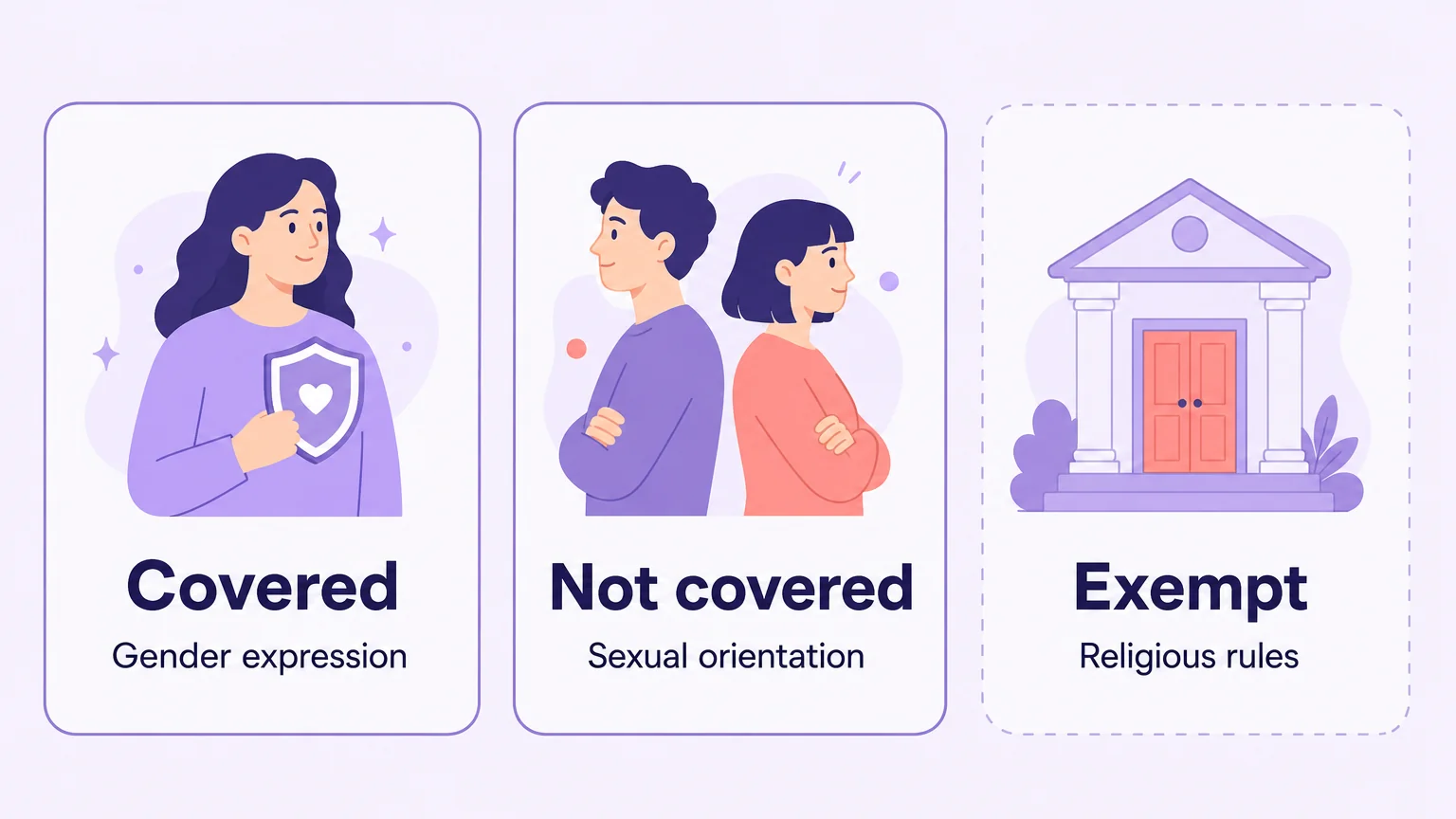
The precision that matters is in the protected ground. The Act defines unfair gender discrimination as an act or omission that divides, obstructs or limits privilege on the grounds that a person is male or female, or expresses themselves differently from their inborn gender. Gender expression is named. Sexual orientation is not.
The distinction has consequences. A trans woman or a gender-nonconforming person is covered by the wording. A gay man dismissed for being gay is not straightforwardly covered, and that gap is why Thai civil society keeps asking for a comprehensive anti-discrimination law. For a visitor, the practical translation is narrower than marriage equality suggests: the Act is not a general shield against being turned away because of who you are with.
Then there is Section 17, paragraph 2. It exempts action taken to follow religious rules, to protect national security or to safeguard public safety, along with action meant to remove obstacles to equal rights. That single clause is the hinge of most of the country’s legal picture, and it is the clause activists want repealed first.
The Act is not decorative. A victim can petition the Committee on the Determination of Unfair Gender Discrimination under the Department of Women’s Affairs and Family Development, or go to court, where punitive damages can reach four times actual damages. Ignoring a Committee order carries up to six months in prison or a 20,000 baht fine. The practical limit is that the remedy is complaint-driven, and the barriers are highest for children and for people already in vulnerable situations.
The absences sit in the same legal layer and read as one picture. Thailand has no hate-crime category. It has no ban on conversion therapy. Ireland has the first without the second, which shows the gaps do not always travel together. Japan has neither a national anti-discrimination law nor a conversion-practice ban, a different combination again. Men who have sex with men face an indefinite deferral on blood donation.
Trans in Thailand: Visible, Medically Advanced and Without Legal Gender Recognition
Thailand is a global destination for gender-affirming surgery, with a well-developed private medical sector built around it, and gender-affirming care is legal. No trans or non-binary person can change the gender marker on any official document.
The consequences of that missing marker are catalogued by the Young Pride Foundation: barriers in employment, education, access to public services, ceremonial dress requirements and detention settings.
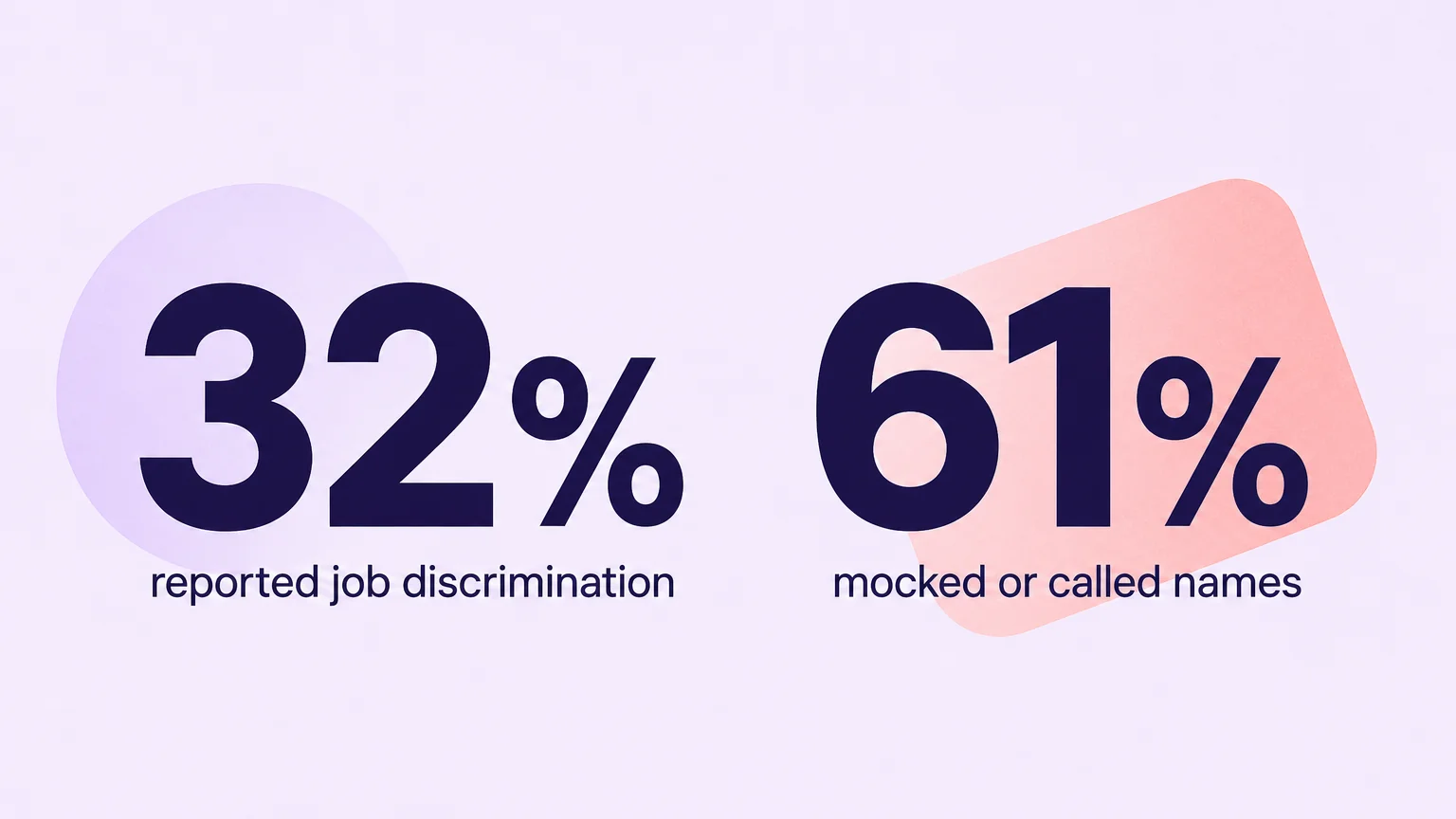
The survey evidence shows what that catalogue costs in practice. Trans women and bisexual men report the highest levels of discrimination of any group measured. Among trans women, 32% reported discrimination in their current or most recent job, 61% had been mocked or called names, 22% had been sexually assaulted, 11% had been hit or beaten, and 8% had been harassed by police. Those numbers describe Thailand rather than tourism, and they are the context in which any visitor’s own experience sits.
A traveler meets the problem at the border. The Immigration Bureau has run Welcome Pride by Immigration since 1 August 2024 at Suvarnabhumi, Don Mueang, Phuket, Chiang Mai and Hat Yai, for travelers whose passports do not match their appearance or gender. A driver’s license, national ID or medical records can be presented alongside the passport, and biometrics are recorded at immigration. Read that as the state conceding the problem exists. It is not a fix, because the cause is the absent legal recognition, and a polite desk cannot supply a document that does not exist.
Spain shows the same limit from the other direction: self-identification without medical proof, but only for Spanish nationals, so a trans visitor still travels on the passport marker. How that plays out at Spanish borders and hotel desks is a useful comparison.
A previous gender recognition draft was voted down in the House in February 2024. Competing drafts are now before parliament and differ on whether recognition rests on self-determination or on medical criteria. The Ministry of Social Development and Human Security draft runs 24 sections and would allow self-determination, require documents and honorifics to match, and explicitly forbid compelled surgery, hormones or psychological treatment as a condition. It went to public consultation from 11 August to 9 September 2026. It is not law. Plan on it: nothing about gender recognition will change at a border before a bill is enacted and published.
Kathoey is often offered to visitors as evidence of tolerance, and inside Thailand the word is contested. Thai trans activists have disagreed over whether kathoey or a medical framing is the better route to rights, and some argue that visibility has been mistaken for equality. The disagreement is unresolved, and it belongs to Thai trans people rather than to anyone watching from outside.
Does Tolerance Mean Inclusion? What LGBTQ+ Thais Report About Family, Work and School
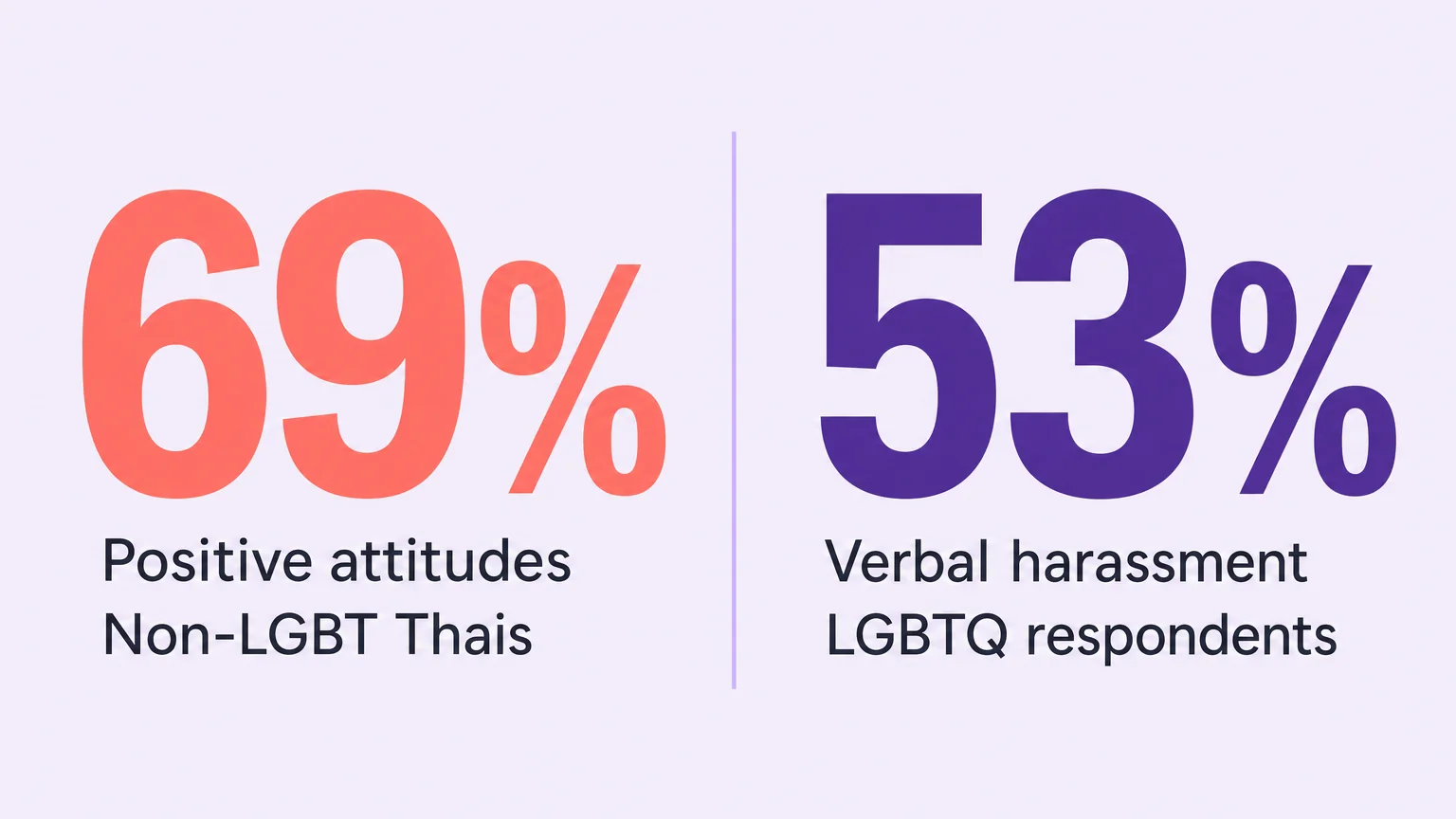
Two numbers from the same survey do more work than any adjective. Among non-LGBT Thais, 69% reported generally positive attitudes toward LGBT people. Among LGBT respondents, 53% reported verbal harassment.
Both come from a 2019 UNDP national survey, the most comprehensive study of its kind conducted in Thailand: 2,210 participants across Bangkok, Chiang Mai, Phitsanulok and Pattani.
The rest of the findings fill it in. Of those respondents, 42% had pretended to be straight to be accepted at school, work or home, which is a measure of concealment rather than a discrimination rate. Among the same group, 49% had contemplated suicide and 17% had attempted it. Overall, 10% reported discrimination in their current or most recent job, and 16% had encountered discrimination in a health-care setting. Those last two matter to a visitor because they describe the rooms a traveler shares with Thai people: the office and the hospital.
Public opinion points the other way. A 2022 NIDA poll recorded 79.62% support for same-sex marriage and 77.63% for a third-gender box on official documents. It also found acceptance of a third-gender friend or colleague at 92.82% and acceptance of a third-gender family member at 90.61%. The gap is small and consistent: Thais accept LGBT people more readily outside the family than inside it.
Renaud Meyer, UNDP’s resident representative in Thailand, put the tension plainly when the survey was published: many LGBTI people still experience abuse simply for who they are or whom they love. Kittinun Daramadhaj, president of the Rainbow Sky Association of Thailand, described where it arrives from: family at home, friends at school, co-workers at work, a stranger in a restaurant.
The same pattern runs through every part of the survey: warmth in public, hesitation in private. The gap between them is the part a visitor rarely sees.
Lesbian, Bisexual and Women’s Thailand: A Thinner Map Than You Might Expect

Bangkok has four permanent venues for women, and none sits in anything like the density of Silom.
Goddess Bar in Ari is women-only, holds about 20 people, runs a daily password, and is free on weekdays and 290 baht Friday to Sunday. Les Hi Bar in Din Daeng is a rooftop open from 8 p.m. to 2 a.m. Tuff Bar in Silom is lesbian-focused but open to all genders and closed on Tuesdays, which makes it the easiest entry point for a mixed group; it shares a building with a bear club and a craft beer bar, so a group can split up and regroup. WO Bar in Nong Khaem is a dive bar with non-alcoholic options.
Roving parties carry more of the scene than the venues do, and they create a planning problem: locations are often announced late, sometimes only days ahead. Permanent space for queer women, trans and non-binary people in Bangkok is scarce. That is a description, not a complaint.
Friction is the better comparison. A female couple is read in public less readily than a male couple, which means fewer stares and also less connection to the visible scene. It is a trade, not an improvement.
Bisexuality is the least documented experience of the lot. Bisexual men report discrimination at roughly the level trans women do: 14% had lost friends because of their sexuality, and just over 9% had lost a place to live. The mixed-gender couple mechanic follows from that. Traveling with a different-gender partner removes public friction and removes the visibility that would connect you to queer spaces, so the trip is easier and lonelier at the same time.
One counterweight is worth keeping. A Black lesbian couple who relocated to Bangkok describe the decision entirely in cost-of-living and retirement terms. No part of their account weighs safety. That absence is itself the finding.
Where Thailand Is Most and Least Friendly: Bangkok, the North, the Islands and the Deep South
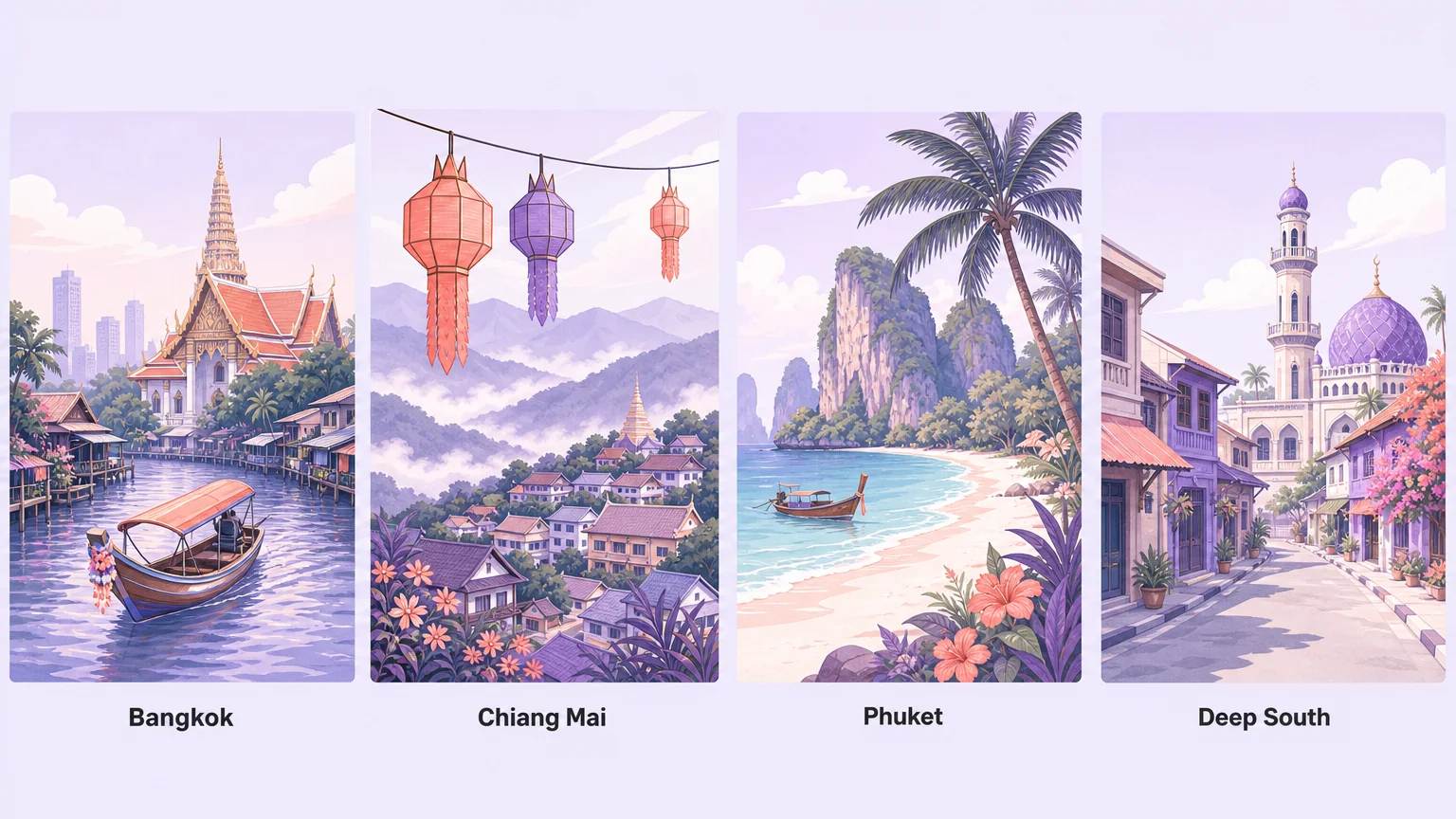
Each hub has a character and an identity it suits.
Bangkok is the core. Silom Soi 2 and Soi 4 form the center, with Thonglor and Saphan Kwai growing around them. The Soi 4 tables are genuinely mixed by nationality, age and gender, drag shows start around 9:30 p.m., and the main clubs charge 400 to 600 baht including two drinks. The caveat: the best-known club draws more tourists than locals, and the gay scene is not the same thing as a Thai scene.
Chiang Mai is the community. A compact cluster on Charoen Prathet Road Soi 6, just off the Night Bazaar, is anchored by a bar with a nightly cabaret. It is community-first and culturally focused, and it is not a smaller Bangkok.
Phuket is the resort. The Paradise Complex in Patong runs bars, saunas and interactive drag cabarets, shaped around holidays rather than around a community. Phuket Pride and TropOut Phuket both run in April.
Pattaya is the outlier. It holds the largest concentration of venues in the country and is the most male-oriented, which makes it the weakest fit for lesbians, bi women and many trans travelers.
The islands are the low-key option. Koh Samui, Koh Phangan, Koh Tao and Pai are welcoming and relaxed, with no gay strip to speak of. Do not book expecting Silom.
The deep south is a different situation. In Pattani, Yala and Narathiwat, Islamic law already governs family and inheritance through a separate court system. Many Malay-Muslim couples treat the religious nikah as the marriage that counts and never register with the state. Same-sex marriage is therefore effectively unavailable to observant Muslims, even though the national law applies in name.
The political coordinate is precise. The bill passed 369 votes to 10, and nine of those ten opposing votes came from MPs representing the southern border provinces. Opposition there was expressed through Friday sermons and mosque signs reading No Same-Sex Marriage, not through mass protest. The long-running separatist insurgency also makes all three provinces a security caution for any traveler, whatever their sexuality.
So the law is real in Bangkok, partial in the statutes, and nominal in the deep south.
Is the Gay Paradise Image Accurate? The Rainbow Washing Argument, Both Readings
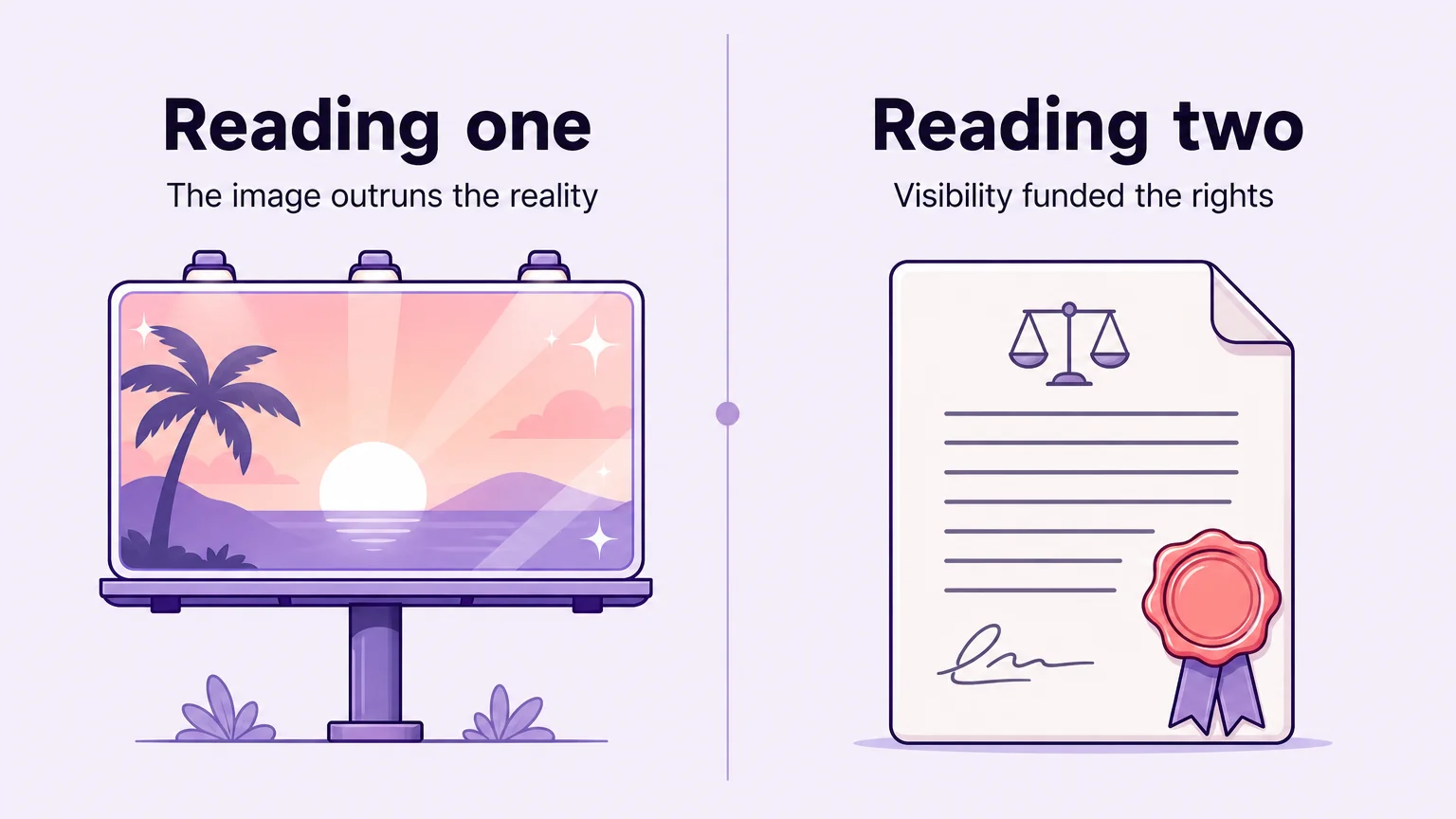
This is a live argument between people who agree on every fact and disagree on what those facts mean.
The first reading says the marketing outruns the reality. Erika Chandra of the ISEAS Yusof Ishak Institute, writing in FULCRUM, names the mechanism rainbow washing: commodification of the community for economic benefit is prioritized over genuine systemic inclusion, and real life is masked by the dazzling queer paradise image. UNDP recorded the same gap in 2014, when the tourism authority promoted the country as gay-friendly while acceptance of non-traditional sexualities at home was still perceived as low.
The Spartacus Gay Travel Index 2026, a travel-industry scorecard rather than a human-rights assessment, evaluated Thailand on 26 February 2026 at 3 points and 52nd in the world, tied with Cyprus and the Czech Republic, with a point off for transgender rights and one for intersex and third-gender recognition. Taiwan scores 8 and India 7.
The Young Pride Foundation’s October 2026 Universal Periodic Review submission puts it concretely: equality cannot stop at marriage. It asks for self-determination gender recognition, repeal of the Section 17 exemptions, discrimination-free health services and a comprehensive anti-discrimination law.
The second reading says the law is real, not a poster. Marriage equality passed 369 votes to 10 and public support sits near 80%. LGBTQ+ tourism was worth 212 billion baht in 2019, about 1.23% of GDP and the world’s largest such share, and Mahidol University’s CMMU projected the marriage law would add 152 billion baht. On this reading, commercial visibility is what made the legal win politically affordable, and the money is not a substitute for rights so much as the route to them.
The readings agree on the facts and disagree on whether commerce leads inclusion or replaces it. That question is genuinely unsettled. What it should not become is a verdict on Thai people, on whether Thai hospitality is sincere, or on whether individual businesses are acting in bad faith.
What the image is worth to you depends on which part of the record you rely on.
Thailand Travel Practicalities for LGBTQ+ Visitors: Visas, Medication, PrEP and Pride
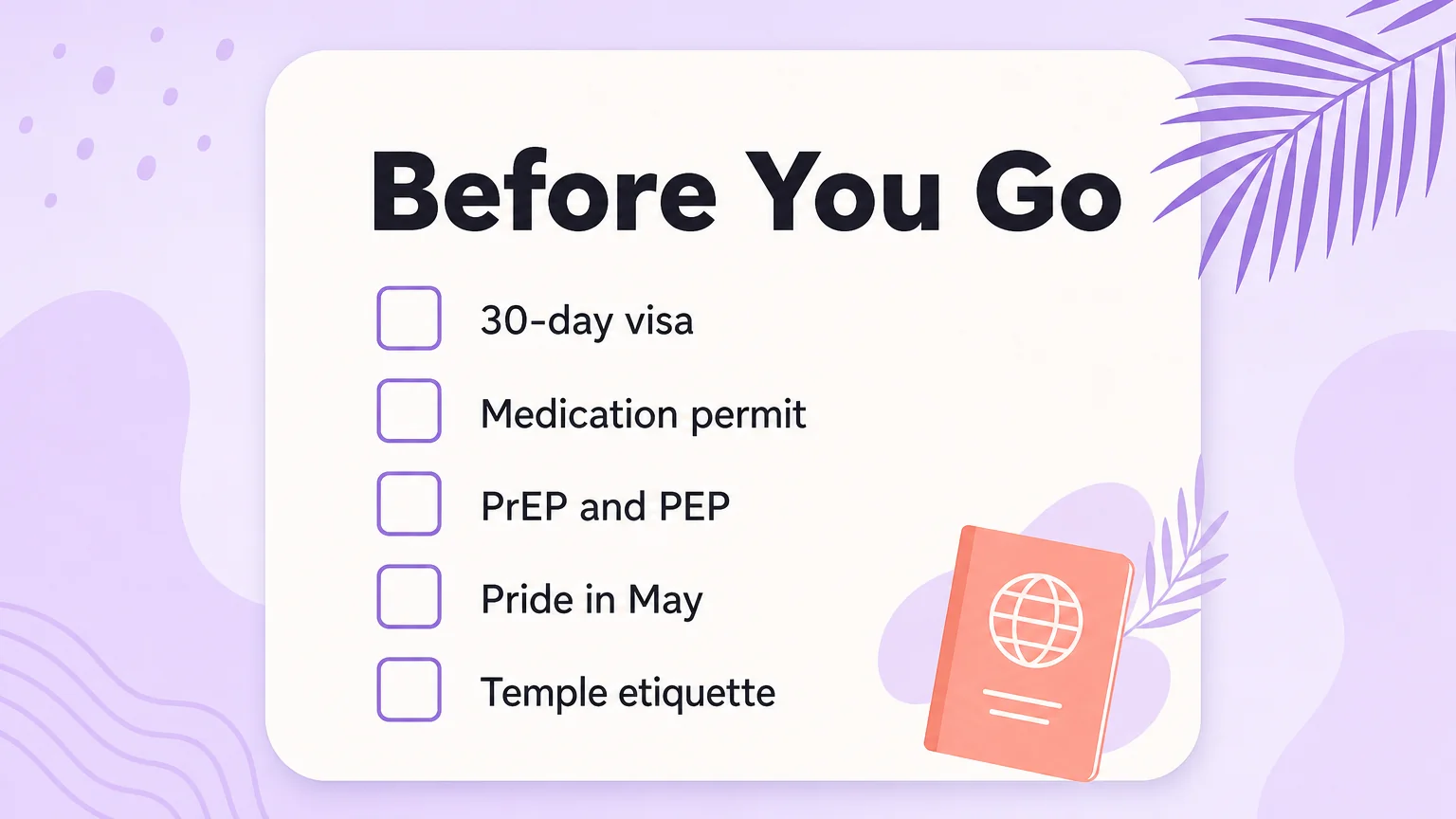
Entry first, because the rule changed recently. From 15 September 2026 the visa exemption is 30 days for nationals of 60 countries and territories, and 15 days for Seychelles and Mauritius. It replaced the 60-day exemption, which ended the same date. Carry an onward ticket within your permitted stay, be ready to show accommodation and funds if asked, and complete the Thailand Digital Arrival Card close to departure rather than months ahead.
Medication is the next snag. Ordinary medicine for personal use is allowed up to a 30-day supply. Psychotropic substances in Schedules II to IV are allowed for 30 days with a prescription or doctor’s certificate, and 31 to 90 days requires an FDA permit applied for at least 15 days before travel. Some hormones are controlled in Thailand, and the published guidance does not classify specific products, so check your own drug rather than a category.
Sexual health is where access matters more than statistics. PrEP and PEP are available at the Thai Red Cross Anonymous Clinic on Ratchadamri Road, which serves foreigners and uses coded rather than named registration. The subsidized national PrEP scheme is for Thai citizens, so visitors pay out of pocket at prices that are low by Western standards. PEP has to start within 72 hours of exposure, so decide where you would go before you need it. Separately, men who have sex with men face an indefinite deferral on blood donation, a fact some visitors meet at a donation drive.
For Pride, check the calendar before you book. Bangkok Pride 2026 ran on Sunday 31 May, a 4.8-kilometer parade from Nararom Intersection to Thephasadin Stadium under the theme PEACE – PEOPLE – PRIDE, with more than 200,000 people expected. Pride month nationally is June, and Chiang Mai, Pattaya, Phuket and Khon Kaen run their own events. White Party Bangkok anchors December, and the city is bidding for WorldPride 2030.
Etiquette is the last thing, and it is aimed at everyone. Cover shoulders and knees at temples. Keep affection restrained in temples, government buildings and family-oriented spaces, as most Thai couples of any orientation do. Outside tourist areas the standard is not no gay affection but no affection, which is easier to comply with and less personal.
If you would rather land with a few conversations already open, 3Fun is one of the places people do that.
Frequently Asked Questions
Is Thailand safe for gay travelers?
Violent hate crime against visitors is rare, and no law criminalizes homosexuality. The realistic risks are ordinary travel risks plus nightlife scams and drink safety. If something does happen, there is no hate-crime category to charge it under.
Can two foreign nationals marry in Thailand?
Yes, including a same-sex couple, at any district office, with both parties 18 or over. Each needs an embassy Affidavit of Freedom to Marry, a certified Thai translation, legalization and two witnesses.
What happens at immigration if my passport does not match how I look?
Welcome Pride by Immigration desks at Suvarnabhumi, Don Mueang, Phuket, Chiang Mai and Hat Yai can help. A driver’s license, national ID or medical records works as secondary ID, and biometrics are recorded. It reduces friction without removing it.
Will a hotel treat a same-sex couple differently?
There is no legal basis for refusing a double room. Book for two adults, and message ahead about bed configuration, because double is used loosely in Thailand.
How long can I stay visa-free?
Thirty days for nationals of 60 countries and territories since 15 September 2026, or 15 days for Seychelles and Mauritius. A one-time extension is generally available.
When is Pride in Thailand?
Bangkok’s parade falls at the end of May rather than in June. Pride month nationally is June, Chiang Mai, Pattaya, Phuket and Khon Kaen run their own events, and White Party Bangkok anchors December.