You’ve probably met a service top without ever having a word for it. The friend who always holds your bags. The lover who gets more turned on by your pleasure than their own. A service top is someone who takes the active, topping role in a scene primarily for the bottom’s benefit, not out of a drive to dominate. The term gets used loosely, even contested online. If you’ve seen conflicting definitions, you’re observant, not confused. Here’s what we’ll cover: a clean definition, the distinctions that trip everyone up (dominant, pleasure dom, topping from the bottom), a quick self-test, and how to do it safely. No term will be left unexplained.
What Is a Service Top?
So what is a service top, in plain terms? The simplest service top meaning is this: a service top takes the active, topping role in a scene primarily for the bottom’s benefit, not out of a personal drive to dominate.
The mechanic that makes it click is direction. The bottom gives the direction, the service top executes. The bottom asks, and the top performs, at the bottom’s explicit instructions. That’s how the definition runs: a service top applies sensation or control to a bottom, only at the bottom’s instruction.
Here’s the nuance that gives ‘service’ its weight in kink. Service only counts as service if the recipient actually wants the thing provided, usually asks for it, and receives it the way they prefer. Otherwise it’s assumption, not service.
A top who drags a reluctant partner into a scene they never asked for isn’t serving anyone, no matter how skilled the technique. Service, in other words, is defined by the receiving person’s experience, not the giver’s intention.
You may have seen definitions that conflict. Some corners describe a service top as the submissive one, others as a bottom in a top’s position. The term is genuinely contested online, which is exactly why beginners bounce off it.
So here’s the working definition you can trust for the rest of this article: a service top performs topping actions for the bottom’s benefit, at the bottom’s direction, with or without holding any power in the relationship.
Hold one more thing before we move on: a service top can be a dominant, a submissive, or a switch. That flexibility is the whole story, and it’s where we’re headed next.
Top Isn’t the Same as Dominant: The Two Axes of Kink
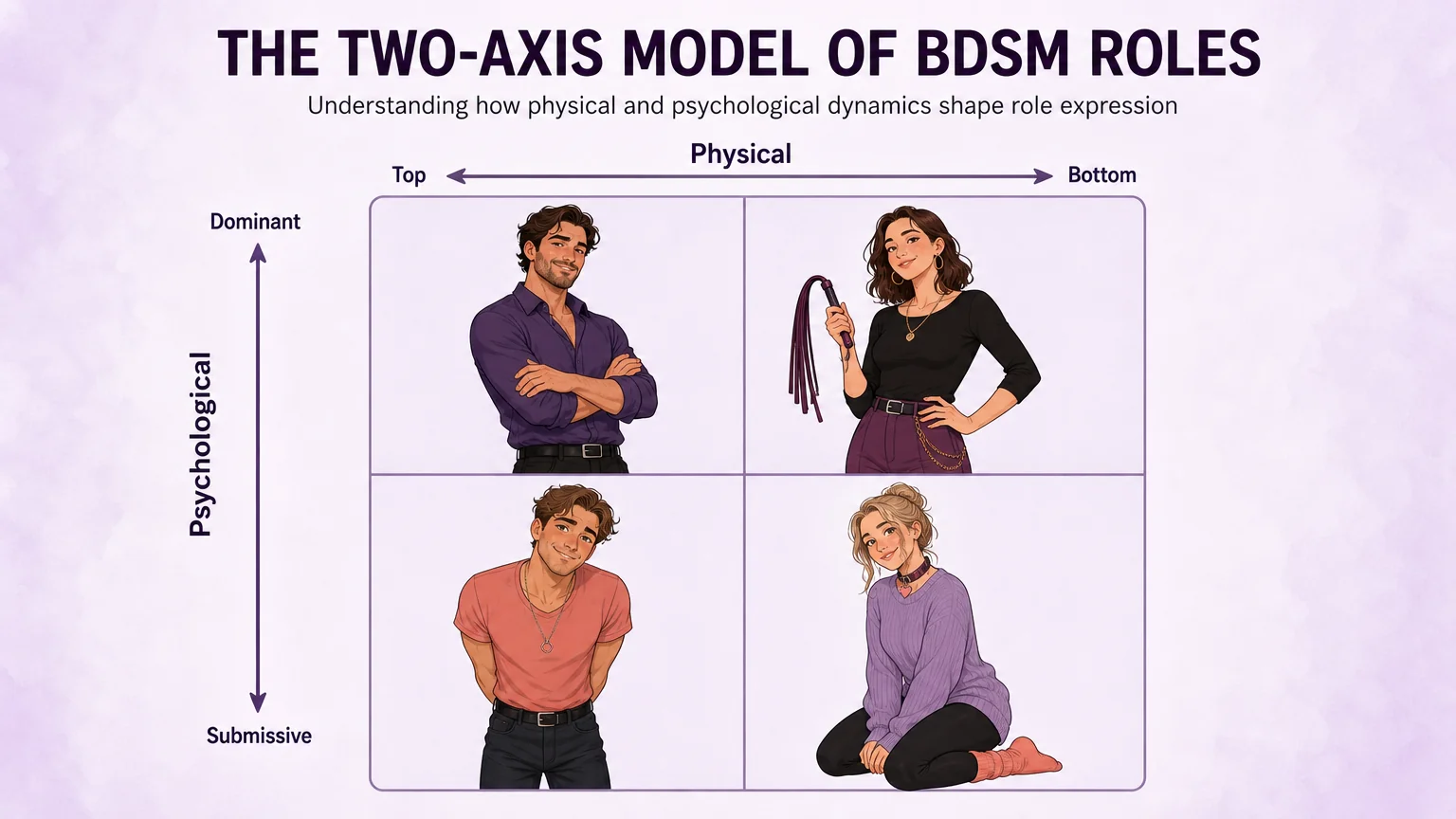
Here’s the mental model that unlocks most of kink vocabulary, not just this topic. Top and bottom describe physical power: who performs the action. Dominant and submissive describe psychological power: who holds authority. Those are two separate axes, and they don’t have to line up.
A dominant can bottom. A submissive can top. Neither pairing is a contradiction, they’re just different combinations of two independent dimensions. Holding both ideas at once is the unlock.
Take rope. A rigger who ties beautiful suspensions is a top, but they may have no power exchange with their partner at all. No dominant in the picture. The skill is the point and the authority is beside the point.
That’s why a top is best understood as an expert in action, while a dominant is an expert in context. The top masters the moment. The dominant architects the why behind it. Two different jobs, and neither one is superior.
Now the payoff: because service topping runs on skill and function rather than on power, a service top can be a dominant, a submissive, or a switch. A submissive who service-tops their owner is still a submissive; they’re performing a task as an assigned form of service.
This isn’t a loophole or a contradiction. It’s a feature of how kink roles actually work. It’s also why a beginner can land here before any power dynamic is in their history. Once you see the two axes, the flexibility stops being confusing and starts being the point.
Service Top vs Pleasure Dom: Who’s Actually in Control?
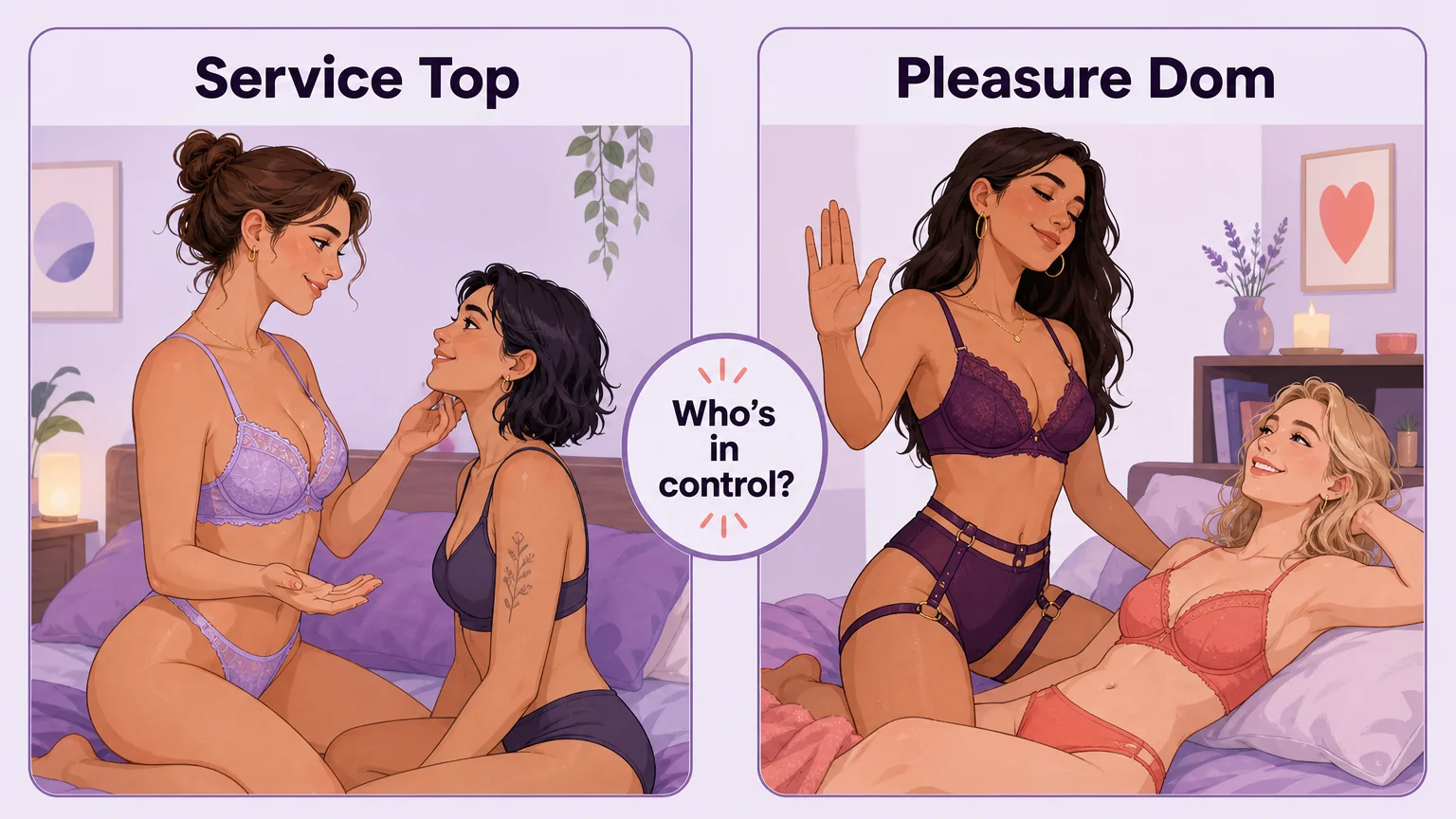
From the outside, a service top and a pleasure dom can look like they’re doing the same exact thing. Hands, mouths, toys, a partner floating on sensation. The acts aren’t the difference. The steering wheel is. Same tools, opposite drivers.
A service top follows the bottom’s lead and executes what was requested. A pleasure dom directs everything. They decide when pleasure happens, how hard, how slow, whether permission gets granted or withheld.
Control over pleasure is the point, and it’s what fuels their arousal. Pleasure is how they lead, not a sign that they’ve handed over the wheel.
Here’s the test you can run on any scene: is this person leading, or reacting? A service top reacts to direction. A pleasure dom shapes pacing, intensity, anticipation, timing, permission, restraint. If you watch closely, the difference is visible in who steers.
This matters more than you might think. Newer dominants can accidentally slide into service topping without realizing it, becoming emotionally dependent on the sub’s pleasure. They stop pacing and start chasing the sub’s reactions, hyper-focused on whether they’re enjoying it every second. The result erodes the power gap while they believe they’re deepening it.
Why should you care? Because a sub who wants genuine dominance will feel the difference even when they can’t name it. If you’re the one who wants to be led, you want a partner who leads on purpose, not one who reacts to your happiness.
Service Top vs Topping From the Bottom: The Confusion, Resolved

If you’re a submissive, you’ve probably had this worry: ‘if I ask for what I want, am I topping from the bottom?’ Answer it clearly, early: no. Asking for what you want is communication, and negotiating is responsible, not manipulative. The worry itself is the thing to drop.
Three ideas keep blurring together, so let’s separate them. Service topping is a negotiated, agreed role. The acts are assigned, the control is understood.
Topping from the bottom is a bottom quietly directing the scene without that agreement, steering the top and managing the outcome. It’s usually framed negatively, and it lives in the absence of negotiation. A power bottom is different again: they set the framework and intensity of their own submission, dictating boundaries and pace while remaining fully the bottom.
Here’s the clean test educators use. Who decides when control is given? In service topping, the dominant decides.
The sub shows up and performs the physical acts as an assigned form of service, and someone watching from the outside might even think the sub is running the scene. They aren’t. The control was handed over on purpose, and it was always for the dominant’s pleasure.
Close the loop on the reassurance: physical acts don’t dictate your place. A submissive can top someone, even strap-on or fist a partner, and stay fully submissive. Expressing a desire or teasing a partner’s dominance doesn’t make you less of a submissive. What matters is who holds control, and who decides when it’s given.
What Service Topping Looks Like in Practice

Definitions only carry you so far, so let’s make this concrete. Four real scenarios, then the everyday version, then a mental tool that explains why service topping feels the way it does.
A submissive agrees to service top their owner because the owner needs the catharsis of a spanking after a brutal work week. The sub wields the paddle, but the owner’s needs drive the scene. That’s service: the action is topping, the direction came from the person receiving.
An experienced rope submissive ties up their dominant to teach them how the ties feel. The skill is real, the ropes are real, but the scene exists for the dominant’s education, not the sub’s. Topping in service of the other person’s experience.
A dominant skilled at fireplay offers mini-scenes at the local dungeon so curious strangers can try wax or flame. No power exchange, no relationship, just skill offered to whoever wants it. A dominant agrees to a scene with activities they don’t personally enjoy because a bottom friend is craving them. The top’s needs aren’t the point of that scene.
The everyday version makes it human. In some friend groups, the ‘service tops’ are the ones who hold the door, carry the bags, plan the birthdays. The orientation shows up in daily life long before it shows up in a bedroom.
And there’s a professional version too. A pro domme is effectively a paid service top, hired to give the client the exact negotiated experience they asked for. The client’s desires are the product, and the dominant still holds their own limits.
If you want the tool professionals use to check themselves, it’s Betty Martin’s Wheel of Consent. Four actions, serving, accepting, taking, allowing, map onto who is doing what for whom. Service topping lives in the serve and accept quadrant.
Next time you’re in a scene, ask which quadrant you’re in. The answer tells you what’s actually happening.
Are You a Service Top? Take the Self-Test
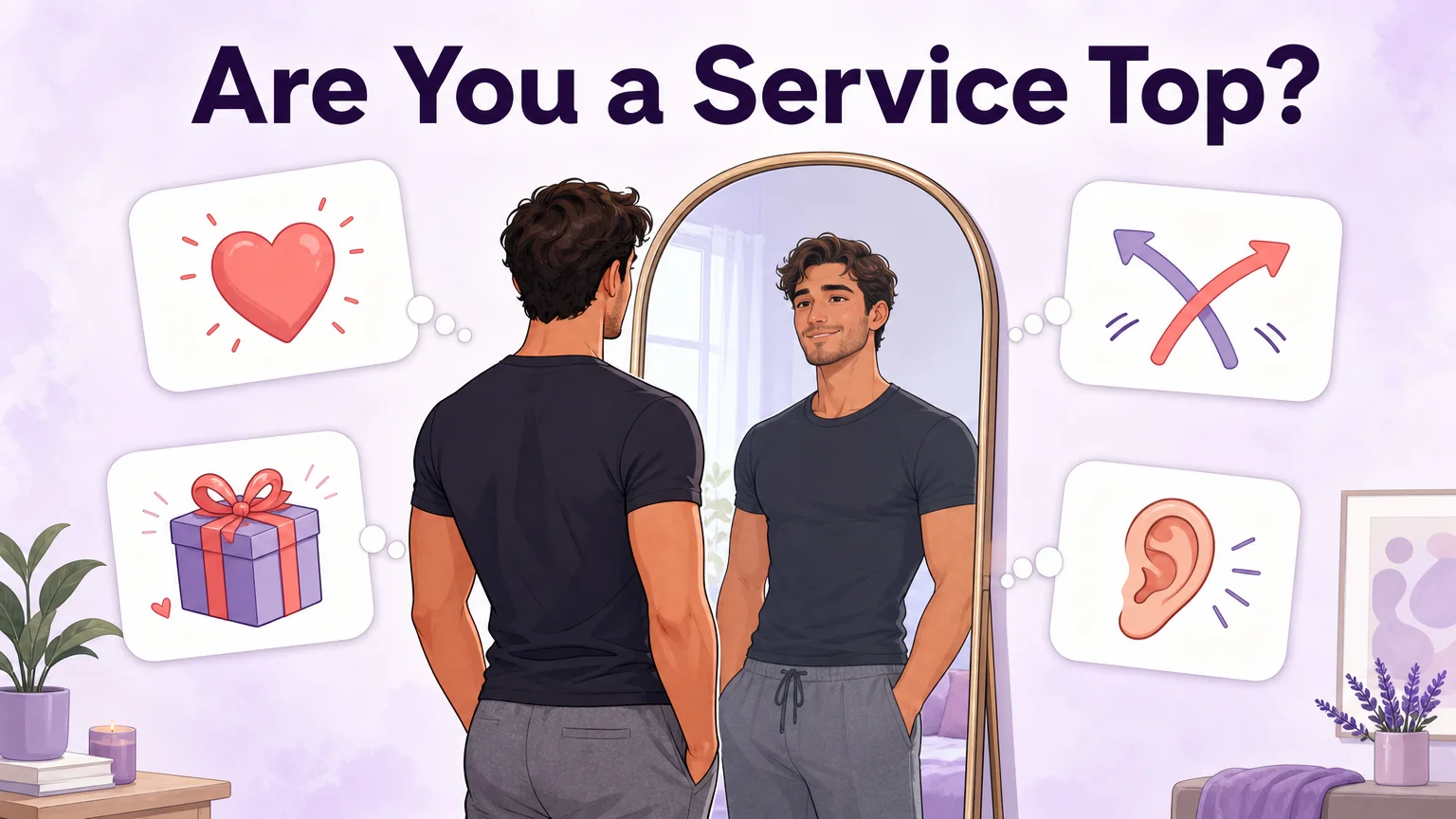
Wondering whether the label fits you? Run this mirror. You might be a service top if you feel hot and heavy when your partner is getting off, if you have an overwhelming need to please, and if you keep developing skills, rope, massage, impact, so you can serve well rather than claim a title.
You’re also flexible about roles, because your investment is in your partner’s satisfaction rather than your own position. You’re hyper-attentive to the other person’s responses, reading their body for what’s working. None of these on its own decides it. It’s the pattern that counts.
For many people, this is a genuine giving orientation, not people-pleasing in disguise. It can be how you love, and that’s not a flaw to be corrected. But there’s a line, and the guardrails matter.
The first trap is the coin-operated top. That’s when you dispense whatever kink the bottom wants on demand and never ask for your own needs to be met. Serve without reciprocity long enough, and resentment builds. It always does. Give past your own limits, and burnout follows.
The second trap is giving from a fear of abandonment. If you hope that keeping the other person satisfied is what makes them stay, that’s not service, that’s survival. Serve without abandoning your own limits, and learn to let others serve you in return. Your needs aren’t selfish.
And the mirror has a second side. For submissives, receiving controlled pleasure is itself a form of surrender, an active choice to be taken care of in exactly the way they asked. Service tops and the people who love them are both valid, and neither one is doing it wrong.
Knowing the role that fits you is the first half. Finding people who actually want it is the second. The people who already speak this language are out there. 3Fun is one of the rooms they’re in.
The Service Top’s Safety Kit: Negotiation, Safewords, and Aftercare
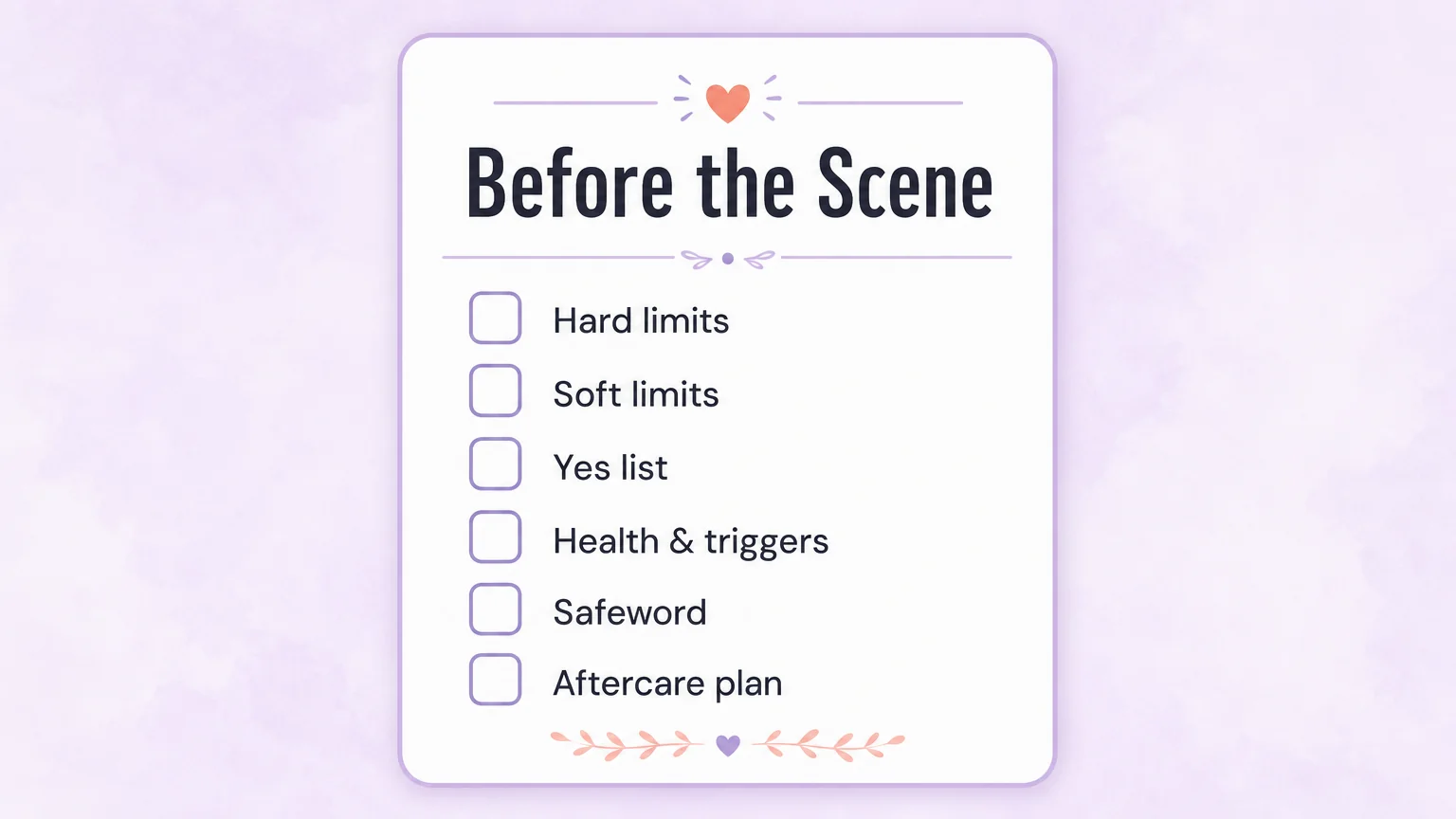
The most important thing a service top learns isn’t a technique. It’s a checklist. Before any scene, talk through what each person wants out of it, why this scene, and what each hopes to feel.
Set hard limits, the absolute no’s, and soft limits, the situational maybe’s, plus a yes list of things you actively want. Disclose health conditions, medications, allergies, chronic pain, and known triggers. Agree whether sex is part of the scene, how long it runs, and the signal for wrapping up. Inspect the equipment, safety shears for rope, a first aid kit, and never leave anyone alone in bondage.
And for the record: none of this kills the mood. For people who plan well, the talking is part of the arousal.
Then safewords. The traffic light system is the classic: green for all good, yellow for slow down or check in, red for stop now. Plain language works too, and custom words. And for scenes where hands or mouths are busy, agree on a non-verbal signal, a tap out, a hand squeeze, dropping an object.
Then aftercare, and this is not negotiable. Aftercare is a neurological necessity, not an optional nicety. Plan it before the scene, not after. Blankets, water, snacks, reassurance, and a debrief conversation where you talk about what worked and what didn’t.
Here’s the part most people don’t get, and the part this article’s audience most needs to hear: tops need aftercare too. Top drop is real and it’s underreported, because people in topping roles are often socialized to be caretakers, the last ones to admit they need something. It shows up as guilt, second-guessing, deflation, sometimes a day or two after the scene.
The simple supports work: reassurance that they did well, hydration, warmth, and a delayed check-in at 24 to 72 hours for both sides. Sub drop and top drop don’t respect the scene’s ending time. They arrive when the adrenaline fades, so schedule the check-in before you think you need it.
It’s a Role, Not a Verdict: Why Service Tops Get a Bad Rap

If you’ve spent any time in kink spaces, you may have absorbed a quiet feeling: that service topping is not as pure as other roles. That service tops are just submissives pretending. Some corners of the community have gone further and called the role unethical.
Here’s what that is. Role policing, built on a false dichotomy, a two-party system that says you’re either a real dominant or you’re not a top at all. Desire doesn’t require an apology, and neither does the way you top.
Answer the first objection: are service tops real tops? Yes. They perform real topping actions with real skill, sensation, and technique. Their motivation differs from a dominant’s, but their competence doesn’t. An expert in action is still an expert.
Answer the second: are they submissives in disguise? No. Service tops aren’t submissive, they’re partner-focused, and that’s a different orientation entirely. A service top can be a sub, a switch, a dominant, or someone who does no power exchange at all.
The stigma comes from competitiveness and purity judgments, not from anything wrong with the role. It’s the same impulse that polices soft dominance and hard dominance and everything in between. And it deserves the same answer: your role is how you show up, not a verdict on your worth.
Take what fits and leave the rest. Labels help some people find themselves, and they limit others. If the label service top makes you feel seen, use it with pride. If it feels like a box, drop it and keep the behavior that made you look it up.
Service Topping in Group Play and ENM: Threesomes, Swinging, and Dungeon Events

Here’s something most people don’t know: at some dungeon events, you can literally sign up to have a mini-scene with a service top. No power exchange required, no relationship, just show up and get the experience you’re curious about. Service topping is a normal, valued role in shared spaces, and it translates directly to group play.
In a well-run threesome or moresome, you negotiate roles per scene; you never assume them. You’ll often see a Primary Top, a Primary Bottom, and secondary or support roles, and service topping maps naturally onto the support and execution side. Some group-play guidance even describes a pleasure conductor, someone whose job is keeping everyone in bounds and engaged, triaging each person’s physical and emotional state.
The group negotiation basics are the same shape as a one-on-one scene, just more voices. Everyone states STI status and substance use up front. Limits are explicit, per person, not assumed from anyone else’s. There’s a primary safeword plus a non-verbal veto, because hands are often busy.
Anyone, top, bottom, or observer, can end the scene instantly. Check-ins happen at every transition and roughly every 15 minutes. And aftercare is a contractual obligation in group scenes, not an afterthought, with the most vulnerable person re-grounded first. If it’s not an enthusiastic yes from everyone in the room, it’s a hard no.
If you already date non-monogamously or play in groups, you’ve likely seen service topping in action without a name for it. The person who keeps the scene flowing, the one who checks in with everyone, the one whose job is making sure each person gets what they came for. Now you have the word, and the protocol to do it well.
The next step is finding people to do it with. 3Fun is built for exactly that conversation.
Service Top FAQs
Is a service top a real top?
Yes. Service tops perform real topping actions with real skill. Their motivation is partner-focused rather than power-driven, but the competence is genuine.
Aren’t service tops just submissives pretending?
No. Service tops aren’t submissives in disguise. Their orientation is partner-focused, and that’s a different thing entirely. They can be subs, switches, dominants, or none of the above.
What’s the difference between a service top and a pleasure dom?
Control. A service top follows the bottom’s lead. A pleasure dom directs everything and decides when and how pleasure happens. The acts look alike; the steering is opposite.
Is service topping the same as topping from the bottom?
No. Service topping is a negotiated role, agreed on openly. Topping from the bottom is quietly steering the scene without that agreement. Asking for what you want is neither.
Can a submissive top someone?
Yes. Physical acts don’t dictate your place. You can top someone and stay fully submissive; what matters is who holds control and who decides when it’s given.
Does a service top have to do anything the bottom wants?
No. Serving doesn’t mean abandoning your own limits. You offer what you freely choose to give, and ‘no’ is always on the table.
Can I be a service top in threesome, swinging, or ENM dynamics?
Yes. Roles get negotiated per scene, service tops fit naturally into support roles, and anyone can end a group scene at any time.
Do service tops need aftercare?
Yes. Top drop is real and underreported. After intense scenes, tops can feel guilt and deflation. Reassurance, hydration, warmth, and a delayed check-in help a lot.
If you’re curious whether service topping, pleasure dominance, or any other role belongs in your life, the best next step is simply talking to people who already live it. Curious and open is exactly the right place to start. Find your community at 3Fun.