
What is a pleasure dom? If you have heard the phrase and had to guess, you probably guessed something close: a dominant who cares about your pleasure. The reality is sharper. A pleasure dom is a dominant whose primary mode of control is the submissive’s pleasure, giving it, pacing it, edging it, withholding it, and sometimes forcing it, always on their terms. Traditional dominance runs on obedience. This runs on intimate mastery of what you crave and how you respond.
Before the definition settles, clear one decoy out of the way. “Pleasure dome,” with an “e,” is a phrase from a poem from 1816, a palace in Xanadu, not a person in a bedroom. The role you are here for is spelled “pleasure dom,” no “e.” One letter apart, two different worlds.
This guide walks the whole terrain: what the role is and is not, why edging and orgasm control work in the body and the brain, the six behaviors that make a scene, how to become one yourself, how to find one, and how the dynamic fits threesomes, swinging, and ethical non-monogamy. It is longer than a one-line definition because the mechanism matters as much as the label, and both sides of the dynamic deserve the full map. It starts from the only place this topic should start: wanting this is not a symptom of a broken relationship. It is an extension of a secure one.
So What Is a Pleasure Dom, Exactly?
Here is the whole answer in one breath. A pleasure dom is a dominant whose primary mode of control is the submissive’s pleasure: paced, edged, withheld, sometimes forced, always on their terms.
That definition is true, and it is not enough. To answer what is a pleasure dom precisely, you have to see the mechanism underneath the label, because the role looks like generosity from the outside and is nothing like generosity on the inside.
Start with the flip. A traditional dominant says, “You will do this because I said so.” A pleasure dom says, “You will do this because I know exactly what your body and your mind are craving, and I decide when you get it.” Same power exchange, completely different channel. The obedience is not replaced; it is redirected. The submissive still submits. The control just travels through pleasure instead of punishment.
That is why a pleasure dom is not a generous lover. Generosity hands control to the other person: it responds to their wants and follows their lead. This hands control to the dominant. One educator describes the whole craft as turning someone on by tuning in, an active, intentional, almost methodical attunement to what creates response in a partner and what shuts it down. The tuning in is the power, not the niceness. And the satisfaction on the dominant side runs on response, not compliance: watching a sub come undone is the reward, not the obedience itself.
Pleasure domination does not even require sex. The dynamic can center touch, attention, service, and praise with no genital play at all, which is why it serves asexual and demisexual people as much as anyone. One dating platform reports demisexual interest up 66% year over year. The role grows because the mechanism scales.
One detour, because the spelling is where the confusion starts. “Pleasure dome,” with an “e,” belongs to Samuel Taylor Coleridge’s 1816 poem “Kubla Khan”: “In Xanadu did Kubla Khan / A stately pleasure-dome decree.” It is a 54-line fragment about an ornate palace, Xanadu being an English corruption of Shangdu, the real summer capital of Kublai Khan. It is a poem, not a person. The kink role is “pleasure dom,” no “e,” and it has never lived in Xanadu.
Pleasure Dom vs Service Top vs Soft Dom vs Sadist
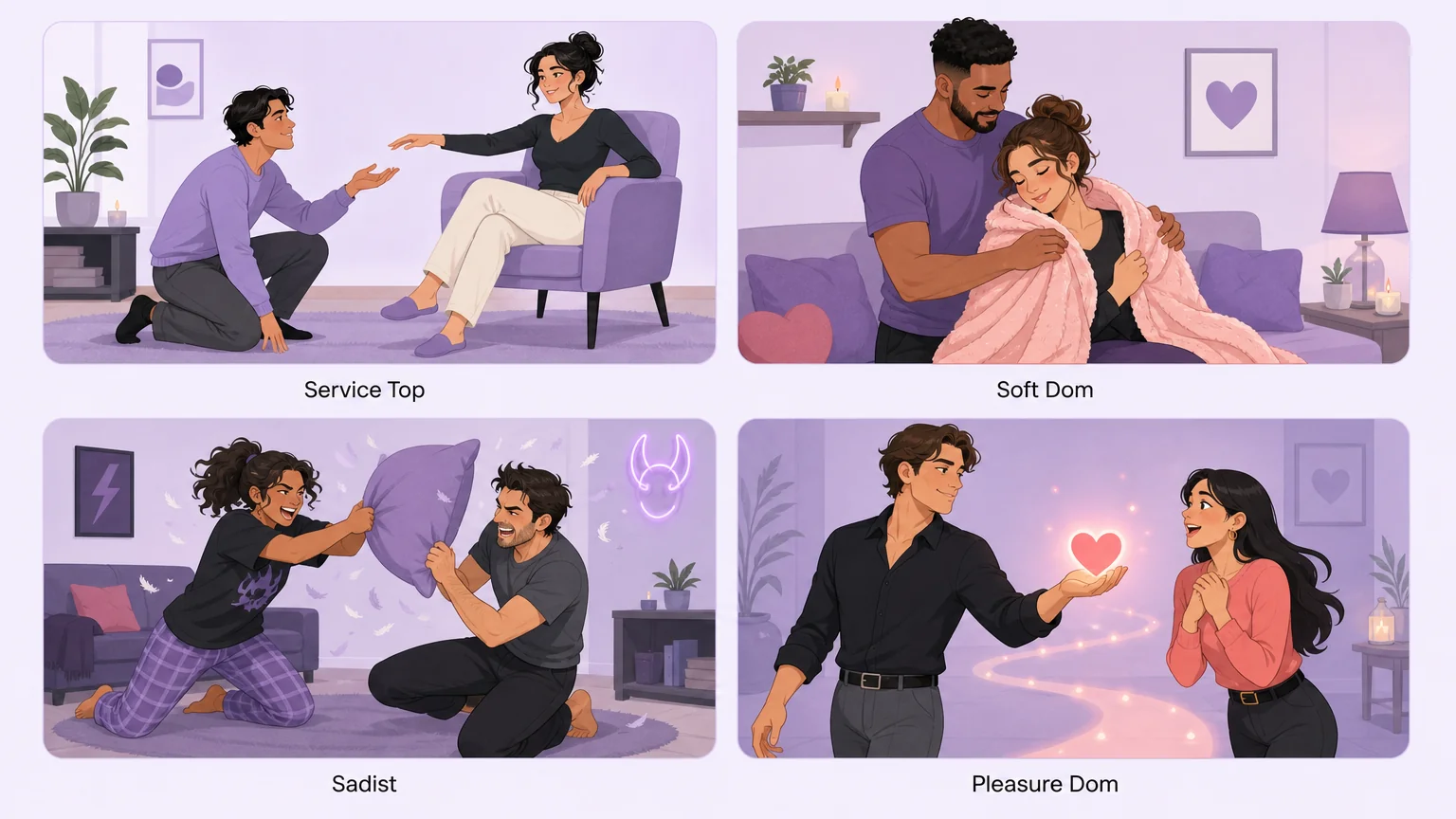
The cleanest way to see what is a pleasure dom is to hold it against the labels it keeps getting confused with. Pleasure dom, service top, soft dom, sadist: the words blur in casual conversation, with real consequences, because two of them put the sub in charge and two do not.
| Service top | Soft dom | Sadist | Pleasure dom | |
|---|---|---|---|---|
| Who holds control | The bottom leads | The dom leads, gently | The dom leads, intensity is the point | The dom leads, pleasure is the channel |
| What pain means | Whatever the bottom requests | Occasional, in service of care | The objective | A tool in service of pleasure, never the point |
| Characteristic tone | Responsive, follow-the-lead | Tender, praise-led | Charged, intense | Attuned, deliberate, commanding |
Read the first row and the taxonomy falls into place. A service top follows the sub’s lead and does what the bottom asks; the exchange ends when the scene ends. A soft dom leads with a tender, praise-heavy delivery but still holds the authority. A sadist makes pain and impact the objective. A pleasure dom controls through pleasure, deciding when and how it happens, with sensation play and light impact woven in as tools that heighten the pleasure, never the point.
One line keeps the whole map straight. A pleasure dom retains the authority to decide when and how pleasure happens, and if the “dom” is only following the sub’s script, the label no longer applies. That boundary is why the role has to be reciprocally nourishing: a pleasure dom who gives without receiving anything back breeds resentment, because the control needs something to anchor to.
Now the myth, head-on. A pleasure dom is not soft, and is not a pushover. The giving is deliberate, paced, and always on the dom’s terms. A pleasure dom can be intensely, overwhelmingly dominant; the control simply travels through a different channel. Being attentive is not the same as being passive, and confusing the two is how people convince themselves the role is not really dominance.
The last assumption to break is the one that says a pleasure dom must be a man on top. The role is control through pleasure, not anatomy. Dom bottoms and stone tops can be pleasure doms, giving without receiving while still directing everything. A female or non-binary pleasure domme tops any gender with toys, hands, voice, and commands, no penis required. The channel is the point, and the channel is wide open.
Why It Works: The Science of Edging and Orgasm Control
Edging is famous for making orgasms stronger. The mechanism underneath is less famous, and the data checking whether the claim holds is rarer still. Both halves matter, because knowing what is a pleasure dom at the level of the body changes how you run a scene.
Start with the physiology. The human sexual response cycle has a plateau phase, the stretch of high arousal just before climax, first mapped by William Masters and Virginia Johnson in 1966. Edging works by extending that plateau: bringing someone to the brink, stopping, letting the arousal settle, then approaching again. Each pass extends the period of maximum tension. The brain rewards the stretch: dopamine peaks during anticipation more than during the reward itself. Delayed gratification stacks arousal in a way that immediate release cannot.
What happens after the orgasm is the part nobody explains. Elevated prolactin and serotonin after climax suppress dopamine, the arousal neurotransmitter, which is the chemical reason post-orgasm hypersensitivity and “I cannot go again” happen. Higher oxytocin correlates with a longer refractory period, the unresponsive window after orgasm. The physiology even has a strange footnote: a prolactin-inhibiting drug has experimentally shortened or eliminated the refractory period in men. The lesson is practical, not pharmaceutical: the refractory curve is real, and a good dom works with it instead of fighting it.
The curve also differs by body, and this is where assumptions fail. Penis owners face a physiologically enforced refractory period that ranges from minutes to 12-24+ hours and grows with age. Most vulva owners have no forced stopping phase, which is why multiple orgasms are possible, yet only about 15% actually experience them, and hypersensitive genitals can make continued stimulation genuinely uncomfortable. So a pleasure dom reads the body in front of them, not the statistics.
The psychology is where the intensity multiplies. When someone else controls the timing, when you genuinely do not know when it will come or when it will stop, anticipation becomes its own altered state, a constant low hum of waiting. The body surrenders before anything technically happens. That is the mechanism beneath the whole dynamic.
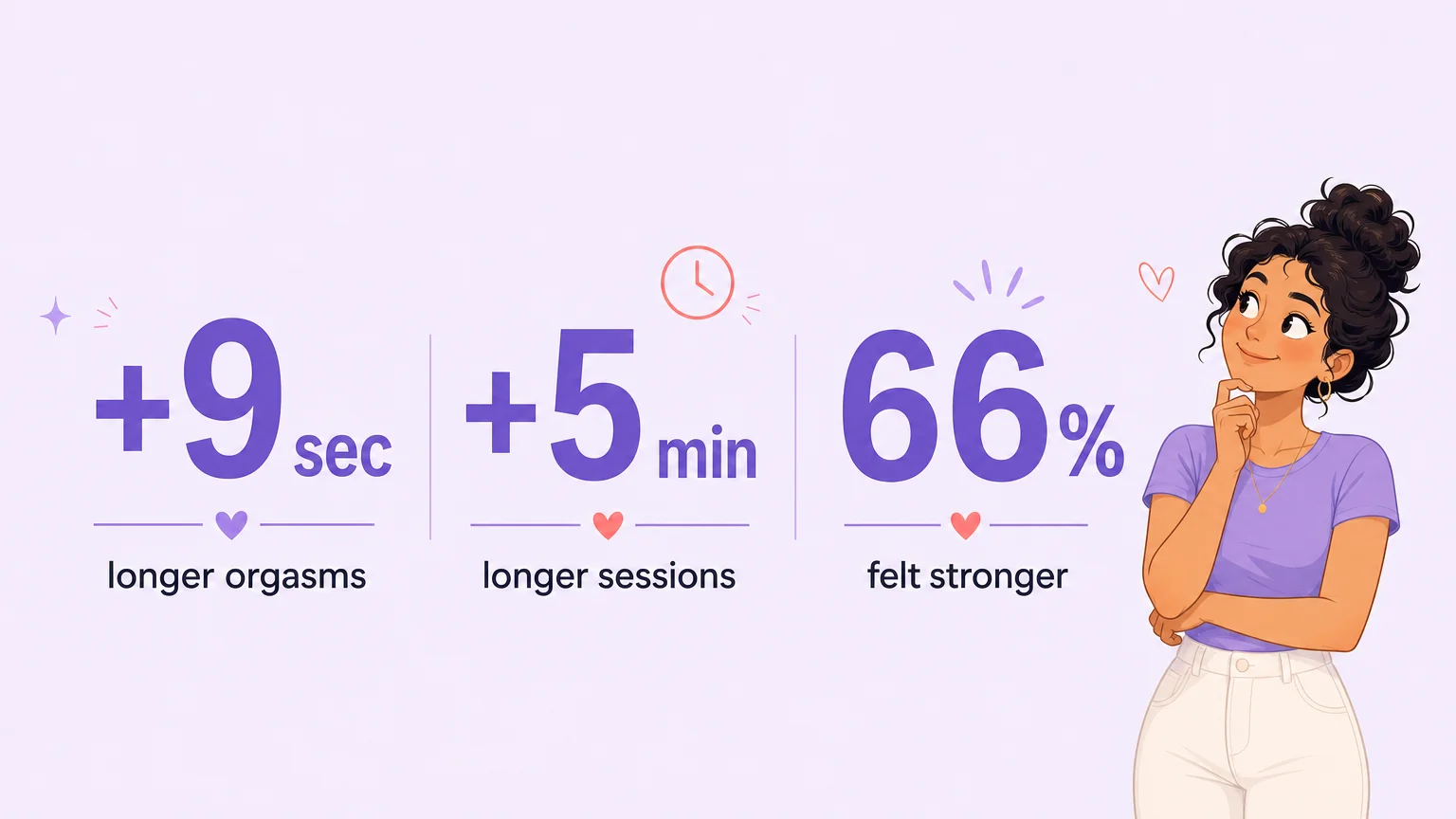
Now the actual data, because this topic is full of hype. The one direct user-data experiment, run by Lioness, a data-collecting smart-vibrator company, on its own users, found edging added about 9 seconds to average orgasm length and more than 5 minutes to session length, but it did not raise peak orgasm force, and most participants said edging improved their orgasms while some said it did not. A marketing-adjacent survey claimed 66% of vulva owners felt stronger orgasms when edging, while sexual-medicine specialists hedge that it helps in some people. There is no scientific evidence that edging raises testosterone, despite the social-media claim.
The grounded read: the payoff is the wanting, and the being seen while you want. Not guaranteed fireworks. That distinction is the whole difference between a technique and a dynamic.
Six Ways a Pleasure Dom Actually Operates
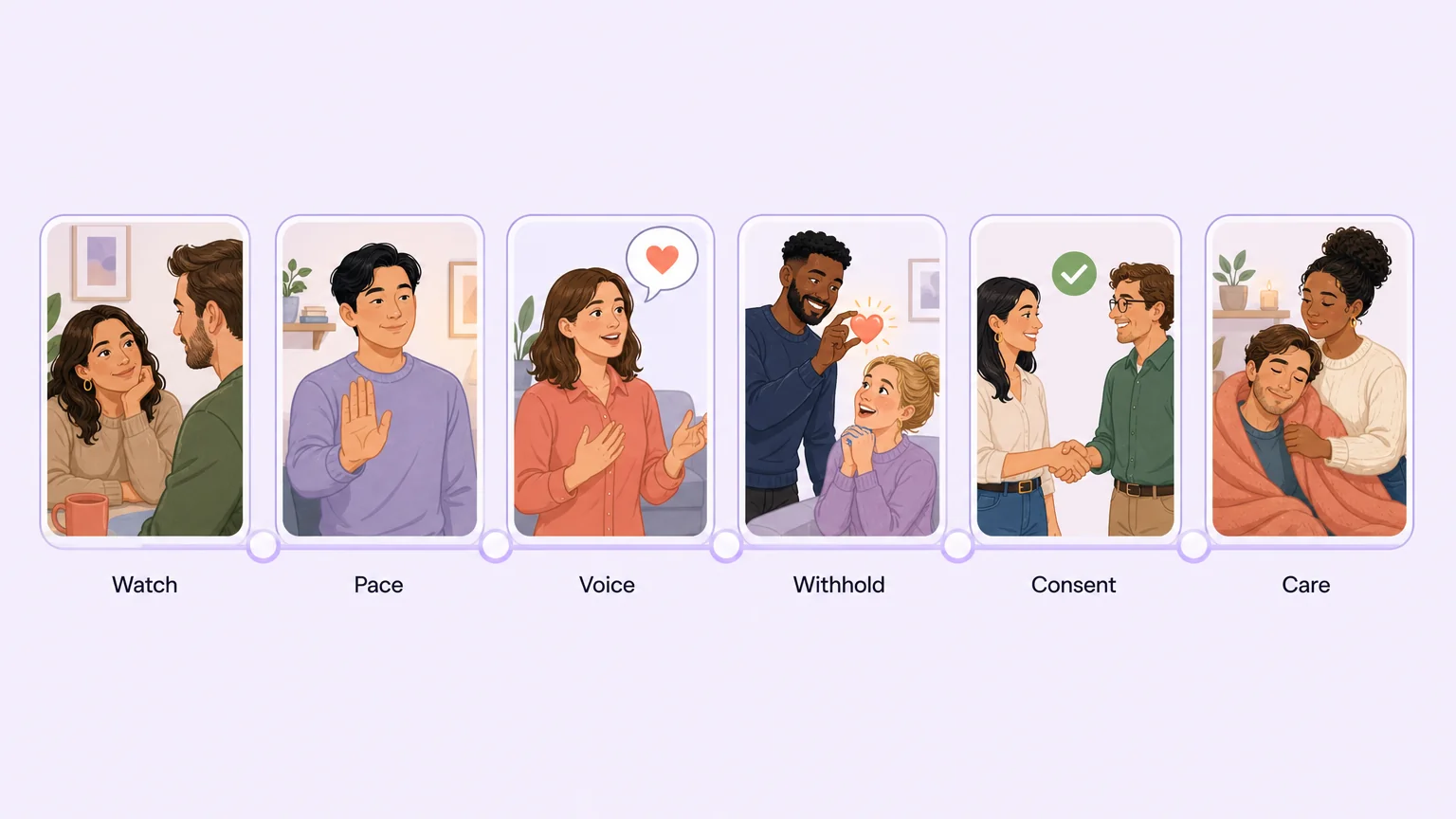
A definition tells you what the role is. The behaviors tell you what it feels like to be in a room with one. Watch a skilled pleasure dom at work and what is a pleasure dom becomes six concrete operating principles.
1. They watch and study you. This is not passive staring. A pleasure dom studies their sub actively, intentionally, almost methodically, building a map of what creates responsiveness and what shuts it down. The attention itself is the dominance. The message underneath is always the same: I see you. I studied you. I know exactly what you need.
2. They control the pace. Slowing down is dominance. A skilled pleasure dom brings a sub right to the edge and then pulls back, and keeps doing it until the suspended wanting becomes the submission itself. The point is not the release. The point is that you cannot get it without them.
3. They use their voice. Beyond dirty talk, they narrate what they observe in real time, describing what they are seeing and what it is doing to them. Being narrated like that creates a depth of surrender that pure physical sensation alone cannot reach, because it makes the attention visible.
4. They withhold on purpose. The withholding is what makes the giving dominant. Without it you are just a generous person; with it you are in control. It is pacing, not punishment, and the distinction matters, because punishment asks for compliance while withholding builds anticipation.
5. They force pleasure inside a negotiated container. In a fully negotiated consensual-non-consent scene, the dom gives the sub pleasure they did not ask for, cannot pace, and cannot stop or end. Kink educators describe this as one of the most dominant experiences in the entire D/s spectrum, and it works only because limits were established and the conversation already happened before anyone was naked.
6. The care continues after the scene ends. All the attention follows through. You are not just in the moment; you are held after it. That follow-through is what builds the trust that lets the dynamic go deeper every single time.
The sub’s side of each behavior deserves equal attention. A pleasure dom describes partners who end sessions trembling and shaking from the intensity of the pleasure, reached while being very gentle and very intense at once. One practitioner tells the story of a sub who spent years in strict, protocol-heavy dynamics and did not register pleasure dominance as dominance at first. She thought he was just attentive, just generous. It took weeks to realize she was more surrendered than she had ever been, because the control was woven into the pleasure itself. She was being led the whole time and never saw it.
Here is who this is built for: subs who have felt unseen in past dynamics, subs for whom receiving is its own form of vulnerability, harder than following commands, and people who knew what they wanted but did not have the word for it yet.
How to Be a Pleasure Dom: Skills You Can Learn
Once you know what is a pleasure dom, the next question is whether you can become one. The dominant side has an on-ramp, and it starts before technique.
The first step in every credible version of this guidance is the same: know why you want this before you perform it. So ask the uncomfortable questions. Is this about your own satisfaction, in being seen and in control? Or is it about being needed? Are you giving because you have something to offer, or because you are afraid of what happens when you stop?
The self-check matters because the line between the two is where the role lives or dies. Giving from anxiety instead of intention is people-pleasing dressed up as dominance. One leads through pleasure; the other uses pleasure to avoid leadership, and your partner will feel the difference even if they cannot name it. A pleasure dom who is performing is not a pleasure dom. They are a confused dominant with new vocabulary.
The craft itself, on the other hand, is genuinely learnable. Some of it is wiring, an instinct for tuning in, but the specific skills, pacing, observation, using your voice intentionally, reading responses in real time, are all teachable. Treat them like any craft: built scene by scene, adjusted by feedback.
Then come the actual words to raise it with a partner, and they are simpler than people fear. Build on what already worked: “When you did that the other night, it felt so good, can we do more of it?” Use a scene from a show or book you both know as a hook, or open directly: “I have been thinking about trying something new in the bedroom, and I want to try it with you.” Work through a beginner resource together and talk about how it could apply to your relationship, and ask each other what appeals, what you want from a partner, and where the limits are.
Keep the first experiments small. Beginner safewords can start as plain “no” and “stop,” no system required. Beware frenzy, the urge to do everything at once, because that is how scenes go sideways. Then build technique, with each one opening in negotiation rather than performance: edging, orgasm denial, forced orgasms, sensation play, temperature contrast. And you are allowed to build slowly: scene-limited first, then decide whether it becomes a way of relating. The skill that separates the role from the trap is reading the difference between giving from abundance and giving from anxiety. Everything else is practice.
Tip: If you want more details about this topic, you can check this guide of ours: How to Be a Pleasure Dom: A Step-by-Step Guide to Becoming a Good One.
The Consent Playbook: Negotiation, Safewords, and Safety
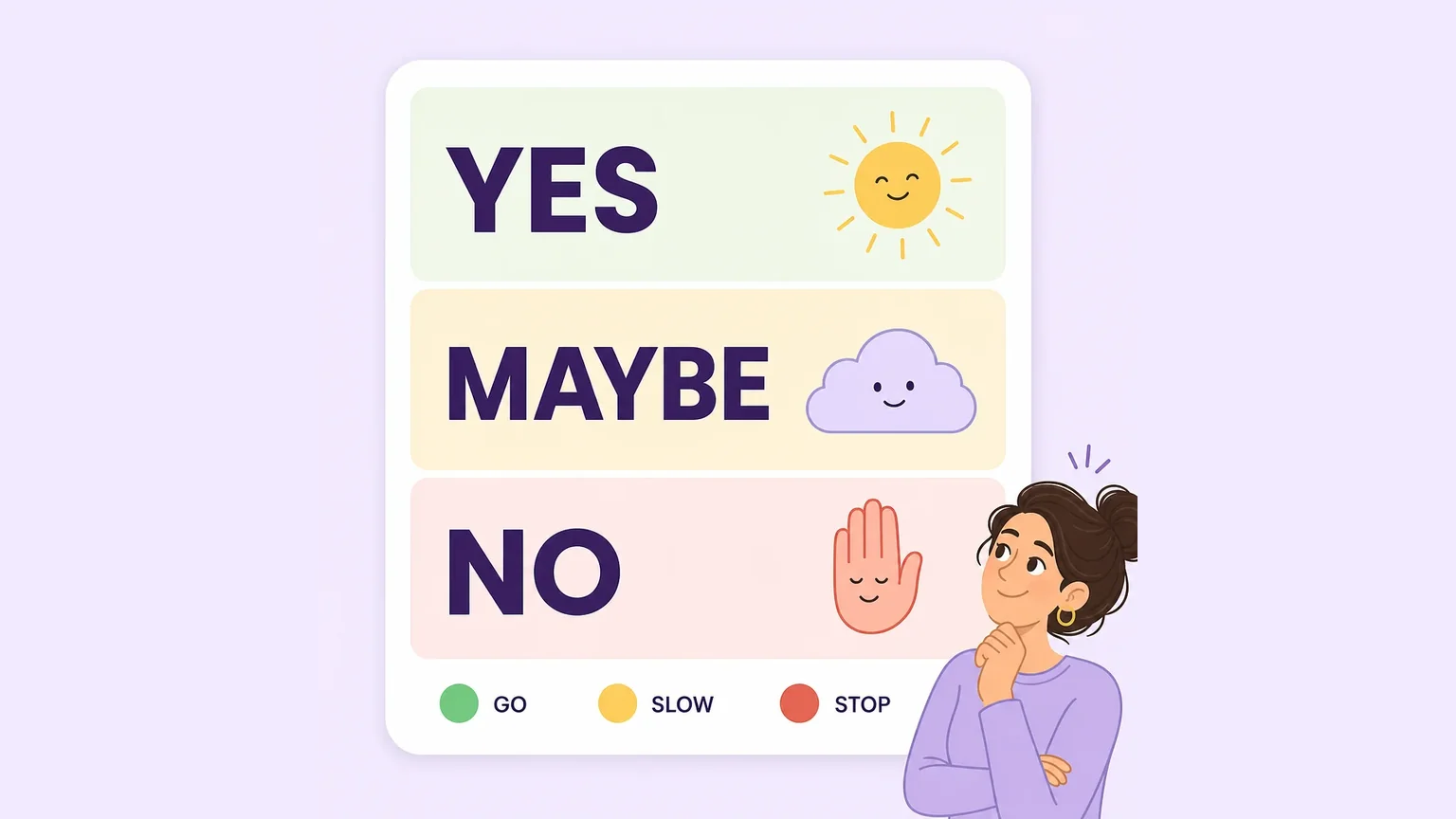
Consent is the foundation of the whole dynamic, and foundations deserve blueprints, not slogans. Everything about what is a pleasure dom depends on the agreement underneath it, so the agreement gets built first.
Before the scene. Build a shared yes/no/maybe list, sometimes called a kink menu, in a document both of you can update on your own time, where yes means green light, no means hard limit, and maybe means curiosity. Say the hard and soft limits out loud, because a limit no one has heard is a limit that can be crossed. Agree on the traffic-light safeword system, green for continue, yellow for slow down or check in, red for stop. Add a nonverbal signal, a tap, a dropped object, a snap, and practice it, because a gagged or deeply spaced-out sub may not have words.
Then the practical layer. Disclose health conditions, medications, allergies, and STI status. Choose a consent framework you both understand, whether that is SSC, RACK, or PRICK. Plan aftercare before play, not after. And if you are meeting someone new, arrange a safe call: a friend who knows where you are, when you expect to be done, and when to check in.
One principle governs the whole negotiation: the onus for clarity rests on the person holding the most perceived power in the moment. “Do whatever you want” is a red flag, not a green light.
During the scene. The rule that keeps pleasure dynamics safe is that enjoyment is not consent. Arousal and joy are never proof of agreement, and sometimes not enjoying something is the point of a negotiated scene. A dom checks the consent, not the smile. If a boundary is crossed mid-scene, stop, name it, check in. Ignoring a safeword is a non-consensual act, and it ends trust in one move.
When it goes sideways. Learn to recognize nonverbal distress and subspace, the flat affect and glassy eyes that can show up mid-scene. Stop stimulation that flips from pleasure to overwhelm: hypersensitivity, cramping, numbness, sensory overload right at the point of finishing. And never make climax the only success metric. A scene with zero orgasms can still be excellent, and orgasm pressure is a classic failure mode.
The hygiene layer. In casual and group scenes, safer sex compounds. Use fresh condoms, gloves, and dental dams per toy, per partner, per body part. Put condoms on porous toys, which cannot be fully sanitized. Sanitize body-safe implements between partners, and do not share lube containers. None of this is a vibe killer. It is what makes the play worth doing.
And if a scene went wrong and the read on it is muddy, pause the dynamic entirely. It can wait. Safety cannot.
Sub Drop and Dom Drop: Why Aftercare Goes Both Ways

After an intense scene, both bodies go through the same crash. Knowing what is a pleasure dom includes knowing what happens to the dom after the scene, because both sides drop. Sub drop and dom drop are the same neurochemical hangover from opposite sides: the scene floods the system with adrenaline, cortisol, endorphins, oxytocin, and dopamine, and when the levels return to baseline hours or days later, the drop can feel like depression. One therapist calls it the hangover of the erotic nervous system.
The crash gets real weight in the people who live it. A sub in drop describes it as feeling like an addict who needs another fix, unable to think straight, not realizing how high they were during play. Another compares the come-down to returning to a hated job after a dream vacation, with isolation and depression layered on. The stronger the high, the worse the come-down.
Dom drop is real and under-reported. Dominants are socialized to be the caretaker and to look unaffected, and the crash often arrives as guilt or second-guessing about how they treated someone they care about. Some subs genuinely do not believe doms need aftercare, which is exactly why it matters to say it here. Both nervous systems went through something intense, and less is said about one of them. Both need care.
The plan runs both ways. Physically: tend marks, rehydrate, eat to restore blood sugar, stay warm, blankets, soft low-stimulation touch. Emotionally: make clear the dynamic is over and you are equals again, and name gratitude for the scene specifically. A dom in drop needs their own reassurance: “I’m okay. I’m not hurt. I enjoyed it. You’re not a bad person.” Then schedule check-ins at 24 and 72 hours, because drop can be delayed, and it can arrive over messages and calls for casual or long-distance scenes. Know the warning signs of deep drop, prolonged depression, self-doubt, withdrawal, and seek support if they appear.
One rule closes the loop: if you do not have time for proper aftercare, postpone the scene. Drop is not worth the momentary pleasure. With aftercare, the crash feels like a landing. Without it, a lonely night.
Pleasure Domination in Threesomes, Swinging, and ENM

This is where the dynamic actually lives for many people. What is a pleasure dom changes shape when you add a third person, and the shape is worth understanding before anyone is naked.
Start with the numbers that make the stakes real. Threesomes are the most common sexual fantasy in America, yet among the least likely to play out well, because expectations go unspoken. Add a pleasure-dom dynamic and the communication bar rises higher, not lower.
Then the control question, because in a group scene someone has to be the point of control. Decide who leads before anyone is naked, and negotiate it with all three partners, not just two. The pleasure-dom role maps directly onto who runs the scene: who paces it, who reads the room, who decides when the focus shifts. In a swinging context, the dynamic travels with you: the couple that already runs orgasm control at home can carry that choreography into a club scene, where someone still needs to lead.
Consent scales with the head count. Everyone has to be genuinely on board, or the scene turns into a chasing triangle where two people orbit and one chases. Attention has to be divided deliberately, which is harder than it sounds. Communication demands are higher than people expect, and you check in with each person, not only the sub. A third person is a guest in your playground, not a toy in your toybox, which means their limits get the same weight as everyone else’s.
Then there is compersion, the vicarious joy when a partner enjoys a scene with someone else. It is a cultivated skill, not the absence of jealousy. A 2024 study of 255 people in the consensual non-monogamy and alternative-sex community, published in Archives of Sexual Behavior, found that closeness with the metamour and knowledge of the partner and metamour relationship positively predict compersion, while jealousy, envy, and attachment anxiety predict against it. In a kink context, a primary dom’s pleasure can come from sanctioning the sub’s heightened surrender through a trusted third, which reads as overarching authority, not threat, and arrives as warmth, arousal, and intense relational bonding.
Aftercare scales too. Three people crash differently and on different timers, so plan aftercare for everyone and stagger the check-ins. The sub being pleasure-dominated is not the only one who drops. And safer sex compounds with more partners: change condoms when you switch partners or toys, and treat barrier hygiene as non-negotiable in group play.
How to Find a Pleasure Dom: Signals, Conversations, and Red Flags
The easy half is understanding what is a pleasure dom. The hard half is finding one, and it deserves a playbook instead of a shrug.
Signal in layers. On more mainstream apps, keep the language suggestive without being explicit: “open-minded,” “adventurous,” “alternative.” One notch up, use moderate language: “into dynamics,” “D/s compatible,” “consent-focused.” On kink-first platforms, where profiles have fields for roles, limits, and kink menus, you can be direct, because profile depth makes the first conversation informed, not a cold read. One caution everywhere: keep explicit kink photos off even kink apps, and be careful what a screenshot could broadcast.
Run the first conversation like a preference, not a test. Ask what appeals to them, what they want from a partner, and where their limits sit. To move toward pleasure domination, build on what already worked: “When you did that the other night, it felt so good, can we do more of it?” Or name a scene you both know and ask if you could try it. The point is not to seal a dynamic. It is to find out whether the person can hold a conversation about one.
Know where dynamics actually start. Munches, the low-pressure meetups where people say these preferences out loud, are where dynamics often genuinely begin. Kink-aware apps, including BeeDee, KinkD, Whiplr, and KINK People, do the early filtering with structured profiles, and Chyrpe is built around dominant-woman and submissive-man pairings.
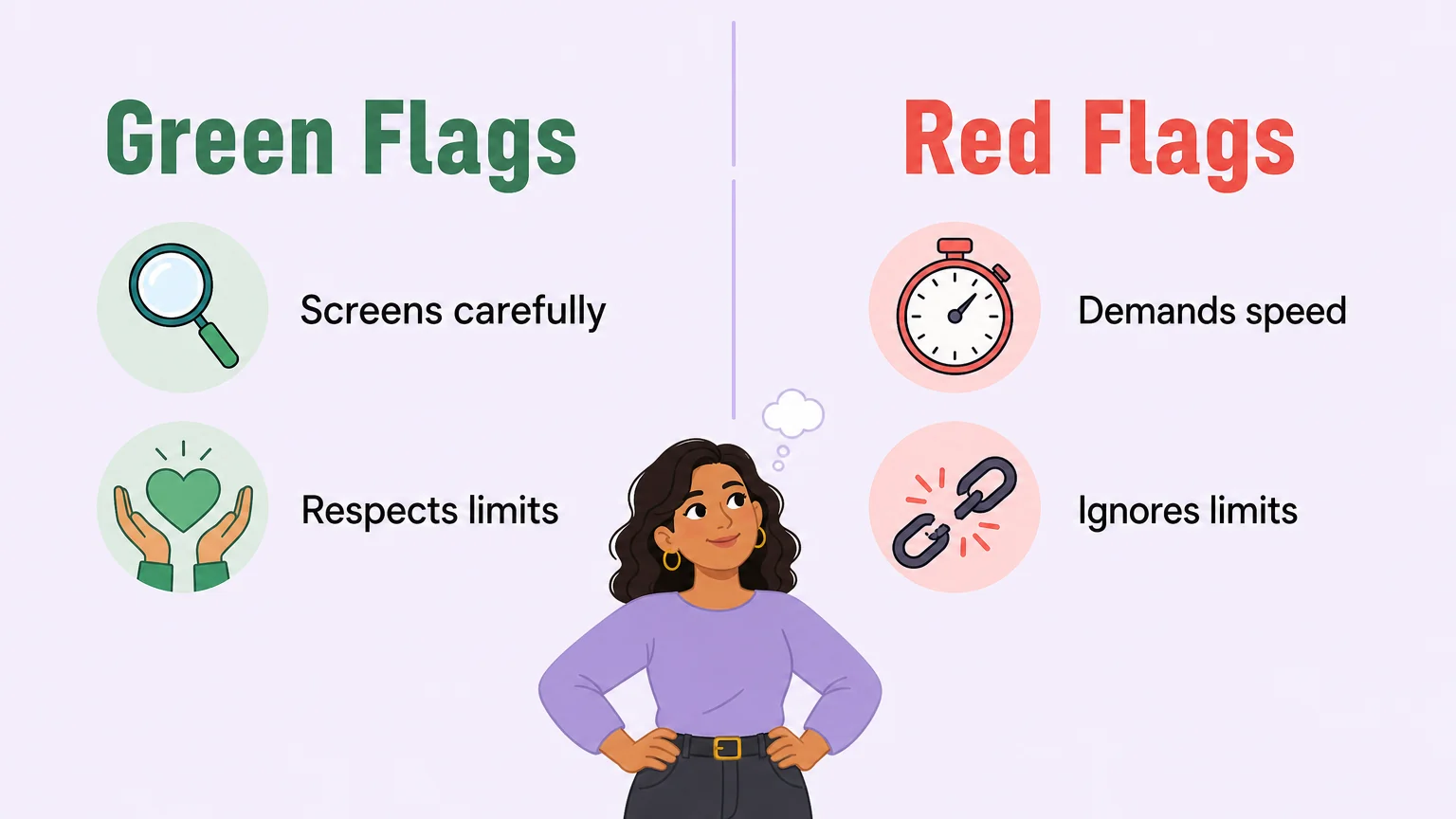
Vet without alarm. A real dominant is overwhelmed with interest, screens people carefully, and never cold-calls strangers. The unsolicited “you seem like the perfect submissive, go to this link” is the classic scam, and one simple check filters out most of the bots: legitimate people do not need to recruit. Profiles that lead with demands, skip your stated limits, or pressure you to move fast are all reasons to close the conversation.
Run it at a distance. Pleasure domination works long-distance, and the playbook is concrete. Use a remote toy with app control, and agree on the moment first, because remote control should be invited, never assumed. Test the connection before the session, start lower than you think, and let the receiver keep the override right at all times. Keep a non-sexual safeword that halts all stimulation, and be transparent about app privacy. By text or call, edging becomes approach-and-retreat, directing your partner toward orgasm and pulling them back on command, with delayed-release tasks that extend the wanting across time zones.
And if the hunt runs long, there is a place where this is already normal conversation. 3Fun is built for couples and singles exploring kink and ethical non-monogamy to find people who already get it.
FAQ
What is a pleasure dom?
A pleasure dom is a dominant whose primary mode of control is the submissive’s pleasure, giving it, pacing it, edging it, withholding it, sometimes forcing it, always on their terms. The dom decides when and how pleasure happens. It can include sex or not, and it is not the same as being a generous lover.
Is a pleasure dom really dominant?
Yes. The control is genuine, just channeled through pleasure instead of punishment. The giving is deliberate, paced, and always on the dom’s terms. If the person is only following the sub’s script with no authority of their own, the label no longer applies.
What’s the difference between a pleasure dom and a service top?
A service top follows the sub’s lead and does what the bottom asks, and the exchange ends when the scene ends. A pleasure dom directs everything and decides when and how pleasure happens. The actions can look similar, but the control sits on opposite sides.
Does edging really make orgasms stronger?
It extends them. One user-data experiment found edging added about 9 seconds to average orgasm length and more than 5 minutes to sessions, but it did not raise peak force, and experts say the research is thin. The real payoff is the anticipation and the being seen, not guaranteed fireworks.
What is a pleasure dome?
“Pleasure dome,” with an “e,” is a phrase from Samuel Taylor Coleridge’s 1816 poem “Kubla Khan”: “a stately pleasure-dome decree.” It describes an ornate palace in Xanadu, not a kink role. The BDSM term is spelled “pleasure dom,” no “e.”
How do I ask my partner to be a pleasure dom?
Raise it as a preference, not a test. Build on what already worked: “When you did that the other night, it felt so good, can we do more of it?” Ask what appeals to them, what they want from a partner, and where their limits are. Keep the first experiments small.