
Maybe it shows up as a thought you don’t say out loud. The thing that gets you off is watching your partner get off. And right behind it, the doubt: is this even dominance, or am I just a generous person? A nice one, with good hands and no spine to speak of.
Here’s the research. In one large survey of kink-practicing adults, 76 percent report being turned on by their partner’s eagerness and enjoyment. The wiring is common, not strange. How to be a pleasure dom is a skill, and the skill is learning to control someone’s pleasure as fluently as a traditional dom controls obedience.
Here’s the ordered path: know whether the role fits you, find the partner who wants it, learn the craft, run your first scene, read the room in real time, recover well, keep the dynamic from burning you out, and bring it into threesomes, swinging, and ethical non-monogamy.
Two things to know before you begin. The submissive holds the real power the whole time; consent, negotiation, safewords, and aftercare run through every step.
Step 1: The Intention Test: Know Whether Pleasure Domination Is Your Role
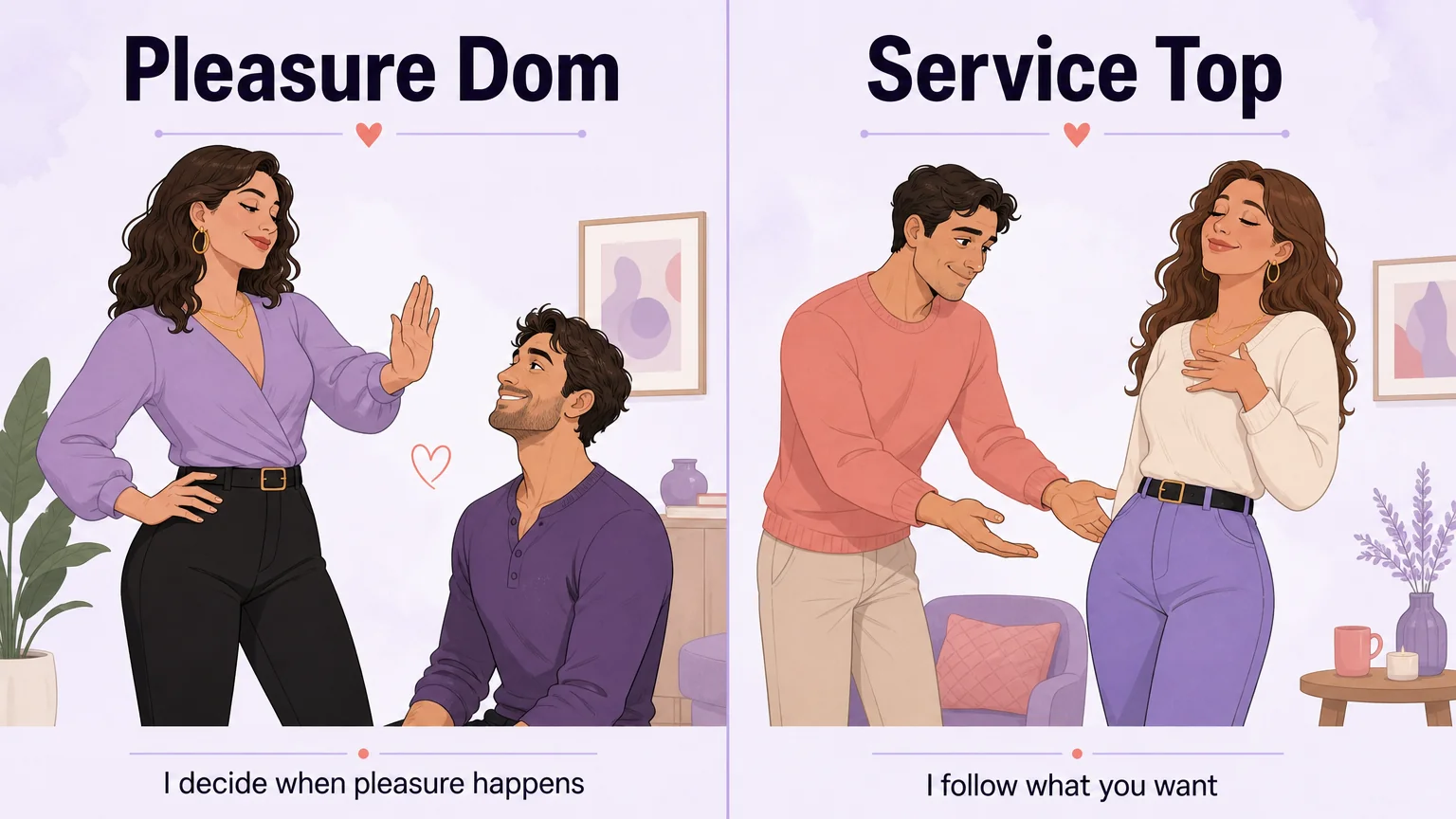
Goal: Run the two-question test that tells you whether pleasure domination is your role, before you spend an hour learning how to become a pleasure dom.
The myth, stated plainly: “pleasure dom” gets read as “nice dom.” A doormat. A generous lover. Even someone secretly submissive, using a pretty label to avoid real leadership. Kill it with the mechanism. The giving is deliberate, paced, and on the dom’s terms, always. Control travels through pleasure instead of punishment, and the channel does not make it weaker. Attentiveness is not passivity.
A passing clarification, because the labels blur: a pleasure dom is not soft. The intensity can be overwhelming, the room can shake. The “pleasure dom vs soft dom” question is about delivery, not volume, and delivery can run from a whisper to a wrecking ball.
So how do you know the role is yours? Run the intention test. Two questions.
Question one: who is leading? A service top follows the sub’s script and does what the bottom asks. A pleasure dom directs everything, even when the channel is pleasure. If the giving happens because the sub requested it, you’re serving. If it happens because you decided it does, you’re dominating.
Question two: what do I get out of this besides my partner’s pleasure? This is the gate that matters. If you cannot answer it, you are people-pleasing, not domming.
There is a version of this role that looks right from the outside and is giving from anxiety, the fear of what happens when you stop. There’s another that gives from abundance, a surplus you choose where to spend. One leads through pleasure. The other uses pleasure to avoid leadership. Your partner will feel the difference even when they can’t name it. Abundance is the control. Giving is the dominance.
Here’s the reassurance buried in the test: pacing, observation, using your voice, reading responses in real time, all learnable, not just wiring. But they’re only worth learning if the test comes back the same way every time: I am the one leading.
The verdict: if you lead through pleasure and can say what you get out of it, the role fits, and the rest of this guide is yours to practice. If you’re giving to be needed, no technique will save it. Fix the intention first, then come back.
Milestone: By now you should be able to answer both questions out loud and know whether pleasure domination is a fit, a phase, or a no.
Step 2: How to Find a Partner and Negotiate a Pleasure-Dom Dynamic
Goal: Find someone open to pleasure-driven power exchange and agree, out loud, on what the label means for both of you.
Name the fear first, because it’s what keeps this step from happening. Telling a partner you want to control their pleasure sounds, in your head, like asking to be waited on. And “pleasure dom” means different things to different people, so the word may not survive the conversation.
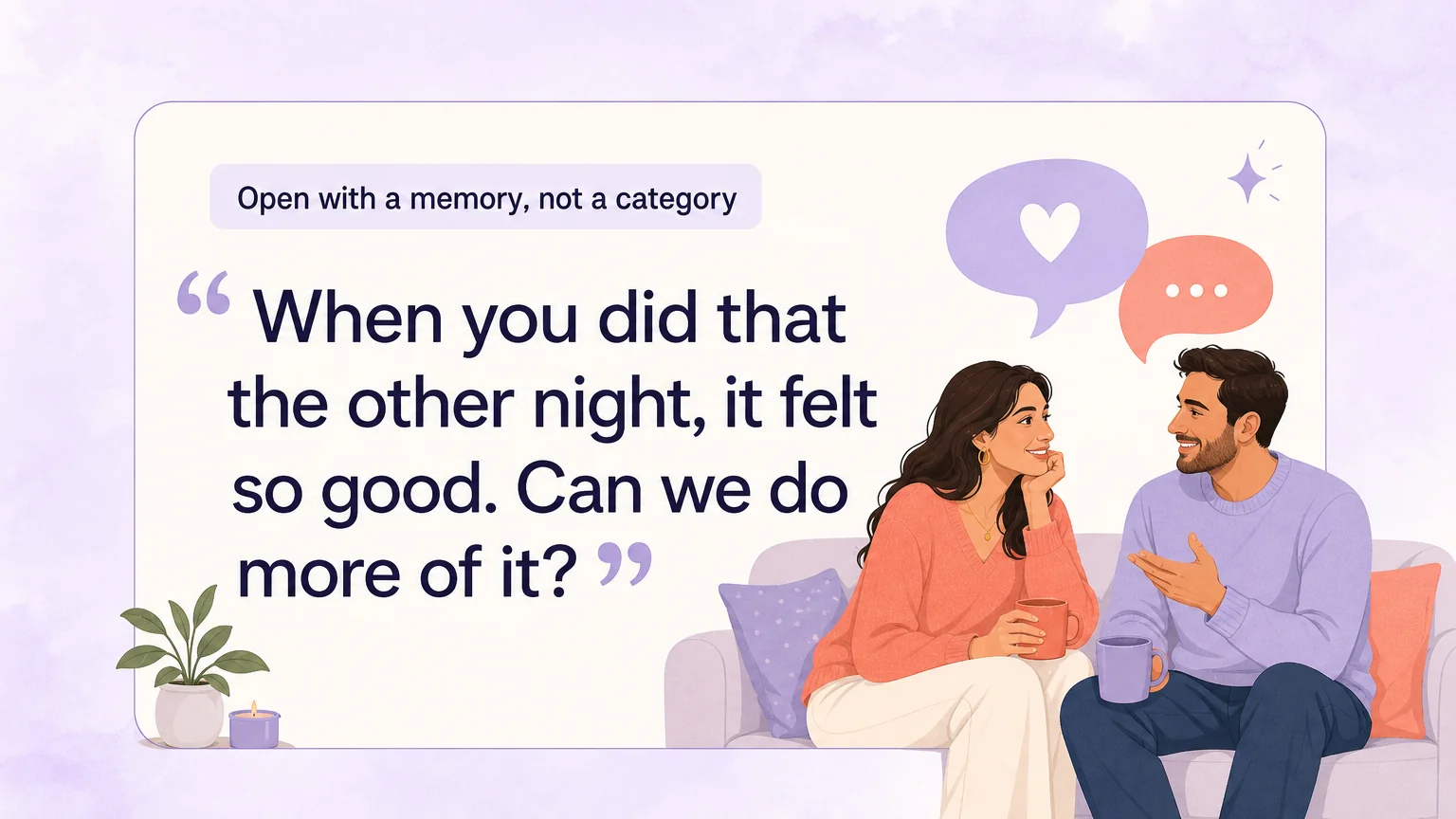
The move is to bring it up early, specifically, building on what already worked. Open on a specific memory, not a category:
“When you did that the other night, it felt so good. Can we do more of it?”
Or bridge with a scene from something you both watched. On apps, put it in the profile; a line about leading someone into their desires does the filtering for you. On a space like 3Fun, the desires tags do that work, and profiles that ask for roles and boundaries make the first conversation informed instead of a cold read.
Then negotiate the label so it means the same thing to both of you. Ask what “pleasure dom” means to them and what they hope for. Align on who leads, and on what “in charge of pleasure” looks like in practice. This is relationship-level negotiation. The scene-level mechanics, the yes/no/maybe list and the safeword system, live in the consent playbook; you’ll want that too, but the label conversation comes first.
Negotiate reciprocity up front. What does the sub offer back? Feedback, reassurance, service, praise when you hold a boundary. This one move prevents most of the burnout that kills the dynamic later, and Step 7 returns to it.
Then vet, from the top’s side. Watch how a potential partner handles being told no; do they respect it or push it? Trust the gut that says walk away; pushback after a polite no is confirmation. And build trust through micro-risks before any play. Real trust is built on small bets, so start with “Choose for me.” A low-stakes scene where you observe whether they can call a safeword and gauge their tolerance tells you more than a month of messaging.
The direct recommendation: send that opener tonight. In the reply, listen for two things: curiosity about the idea, and willingness to talk about their own limits. Both present, and you have a negotiation worth having.
Milestone: By now you should have a partner who can say the word “pleasure dom” back to you with the same meaning you hold, a reciprocity agreement on the table, and a clear read on how they handle a no.
Step 3: The Pleasure Dom Toolkit: Edging, Sensation Play, and Praise
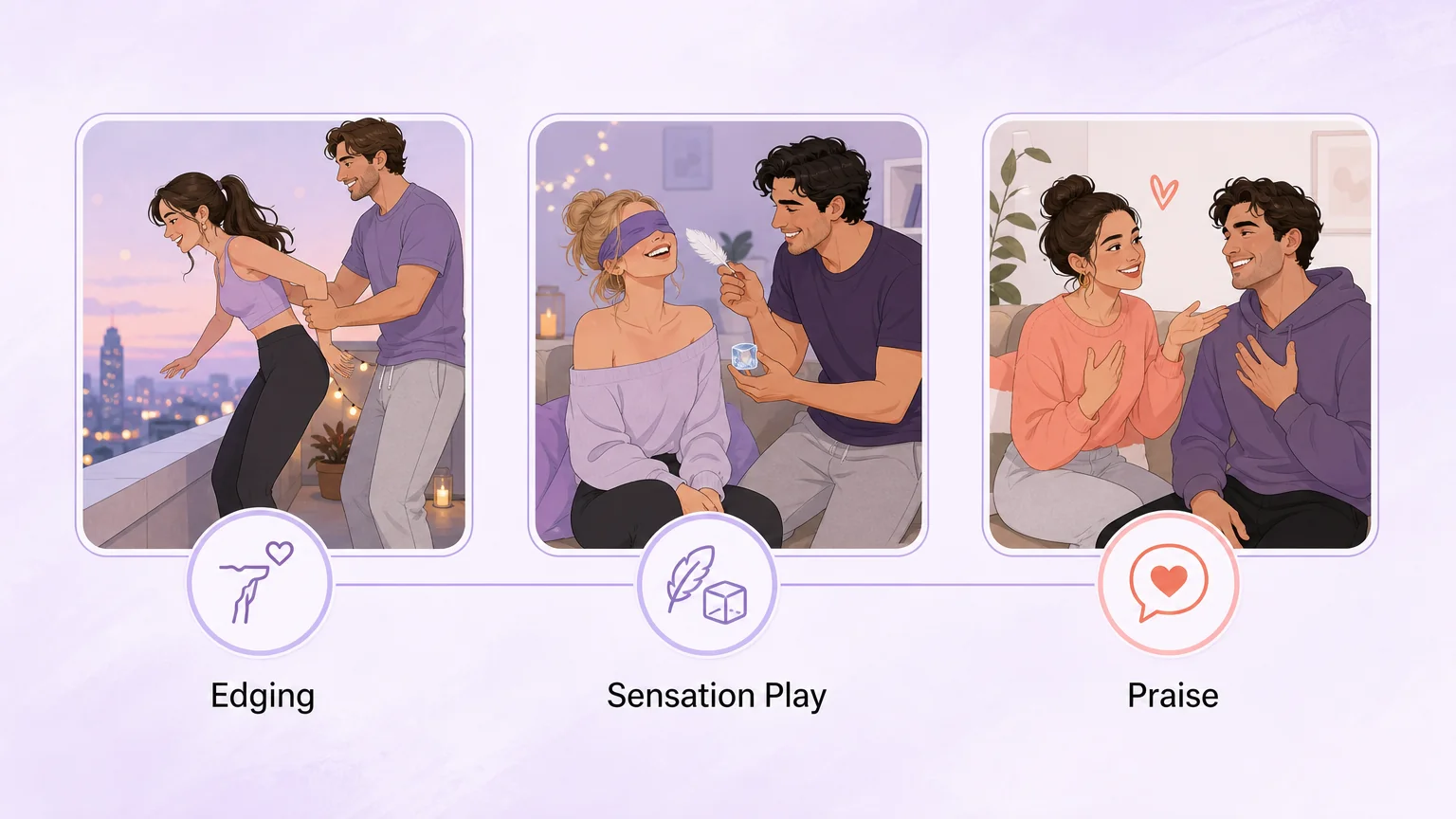
Goal: Build a working toolkit, edging, sensation play, and praise, with most of it already in your house.
The reframe that carries the whole toolkit: slowing down is dominance. The second reframe: you don’t need to buy anything yet. An eye mask, a scarf, ice from the freezer, warm oil from the kitchen, and you have four scenes.
Start with edging, the beating heart of pleasure dom techniques. Agree on signals first, so “pause,” “not yet,” and a tap on the arm mean something specific. Start slow; the first session is never a race to the edge.
Bring them to a seven or eight out of ten, then switch to a gentler touch elsewhere, the breast, the thigh, so the momentum holds. Repeat two to three times before release; that’s the beginner three-edge rule. For partners with a penis, the squeeze technique: light pressure at the base of the glans for about thirty seconds. Read the approach signs: muscle contractions, hypersensitive skin, leg shaking, faster breathing.
Learn the words that separate pacing from punishment. “Not yet” is pacing; “deny an orgasm” is punishment. Pacing is the point: you are teaching the body that wanting, and the being watched while wanting, is the reward. The science of the plateau and the refractory curve lives in the companion explainer.
Then the sensation toolkit, ordered by impact. The blindfold first: a cheap eye mask or a scarf is a full scene by itself. Remove the visual and every other sense sharpens, and the sub’s position becomes instantly submissive.
Temperature contrast next: ice on thick-skin zones first, always tested somewhere safe, then warm coconut oil dripped after the blindfold, in five-second microwave increments because warm oil is bliss and hot oil is a burn. Texture after that: a silk scarf dragged slowly, a Wartenberg wheel dialed in by pressure. And one toy that earns its place: a wand vibrator, because it stops and starts cleanly for edging.
Pair implements instead of stacking them. Flog while the vibrator runs, and the loud-but-soft sting reads entirely differently against the hum. Drip oil while they’re blindfolded, and the drip becomes the scene.
Then praise, the currency the role runs on. Done right, it is not flattery: specific praise tied to what they just did regulates the nervous system and wires pleasure directly into pleasing you. “Good” means nothing; “You took that edge so beautifully, look at you holding still” changes the body. Reinforcement, attachment, arousal, in one sentence.
Best for a first scene: the blindfold, the oil, the wand, and a hand rather than an implement. Skip for now: anything that restricts breathing, anything that leaves a mark you’d have to explain, and any toy neither of you has used. And the release rule: a scene with zero orgasms can still be excellent; orgasm pressure is a failure mode, not a goal.
Milestone: By now you should be able to run a three-edge sequence, set up a blindfold-and-oil scene, and name the specific praise your partner responds to.
Step 4: Your First Pleasure Dom Scene: A Minute-by-Minute Walkthrough
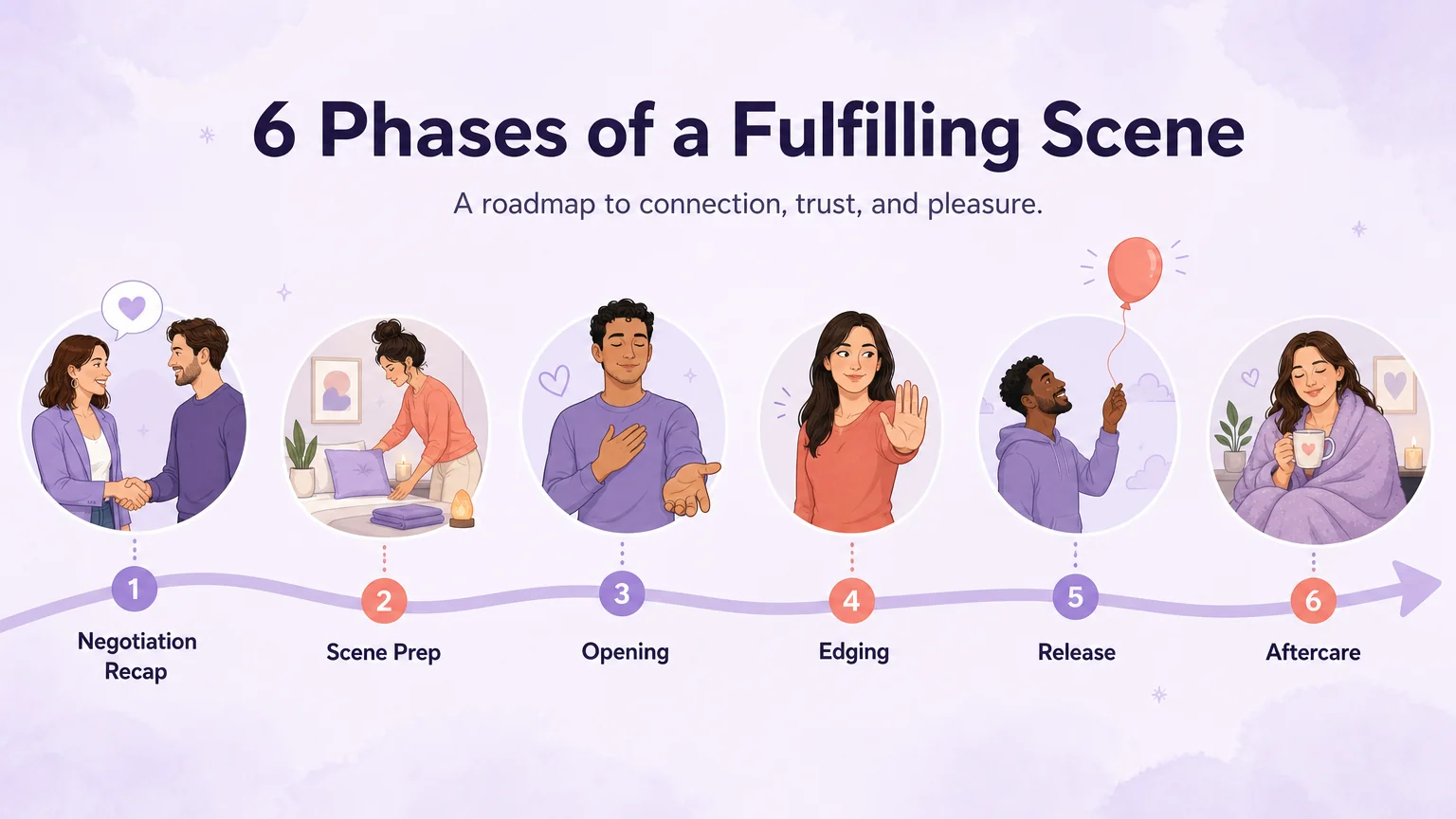
Goal: Run your first complete scene as a pleasure dom, from the first word to the last, with scripts you can say out loud.
What actually happens in a pleasure dom scene, first word to last? Here’s the full build, scripts included.
Set the container first. Plan the whole scene ahead; budget two to three hours, aftercare included. Play somewhere familiar and private, and keep it simple: no rope, no breath play, no intense impact the first time. Never add anything mid-scene that wasn’t negotiated, even if your partner begs. The begging is the point; the negotiating is the safety.
Phase one: the negotiation recap. Not a second negotiation; a confirmation. Restate the plan aloud, confirm the safeword or color system so it’s live in the room, and confirm the aftercare plan. Then the last chance to change anything: “Anything you want more of or less of?”
Phase two: scene prep. Clear the room of hazards, sanitize the toys, and set out lube, water, towels, and safer-sex items before anyone is naked.
Phase three: the opening. Establish the container with your voice: slow, sensory, eye contact. Say what you’re about to do before you do it, because anticipation is the altered state.
“You’re going to feel this before it happens.”
“Look at me. You’re safe here. I’m going to take care of you.”
Phase four: the edging and pleasure sequence. Bring them to the edge, pull back with a check-in, rebuild, repeat. This is where the permission structure lives, the pleasure dom dirty talk in one exchange:
“Can I come?” they ask.
“Not yet,” you say. You slow the vibrator or take it away, and you rebuild.
“Please.”
“Not yet.”
Repeat until the begging is real, then:
“Okay. Now. Come now. For me. Because I said.”
The variant, when the dynamic wants teeth:
“You probably can’t handle it. Look how much you want it. You’re going to have to earn it.”
Narrate what you observe: “I can see the goosebumps building on your skin. You’re shaking. Stay with me.” Being seen that specifically is the difference between something happening to you and being witnessed.
One beat from the sub’s side: for many subs, receiving pleasure is more vulnerable than following commands. The exposure is the submission. One practitioner tells of a sub who didn’t register the dominance at first, only later realizing she had been led the whole time. Expect that, and honor it.
Phase five: release. Give explicit permission, or deliberately choose a zero-orgasm scene; orgasm pressure turns the scene into a performance.
Phase six: the aftercare handoff. Set it up here so Step 6 can pay it off. When the scene ends, the role softens but the attention does not; move to water, warmth, and presence, then hand off to Step 6.
The safeword moment. The instant yellow or red appears, drop the role immediately. No negotiation, no sighing. Just move to care:
“Hey. I’ve got you. You did nothing wrong. Thank you for telling me.”
Never punish a safeword. If your partner feels even a flicker of “I’ll get in trouble for this,” the system collapses. The safeword is a gift of information; you receive it gratefully.
Your pre-scene checklist, six phases in one line each:
- Recap the plan, and confirm the safeword and the aftercare plan.
- Prep the room: hazards cleared, toys sanitized, lube, water, towels, safer sex decided.
- Open with the voice, slow and sensory, and say what you’re about to do.
- Bring to the edge, pull back, check in, rebuild, repeat.
- Release with explicit permission, or choose a zero-orgasm scene on purpose.
- Move to aftercare, and hand off to Step 6.
Run it this carefully once, and the next scene gets easier to trust.
Step 5: How to Read Your Partner Mid-Scene (and When to Break Character)
Goal: Read your partner’s body mid-scene, run color checks, and know exactly when to break character.
Here’s the hard truth: a sub in deep subspace may not be able to verbalize. The body is gone, the words are slow, and even a safeword can be out of reach when the nervous system shuts down. So you read the body, not the words.
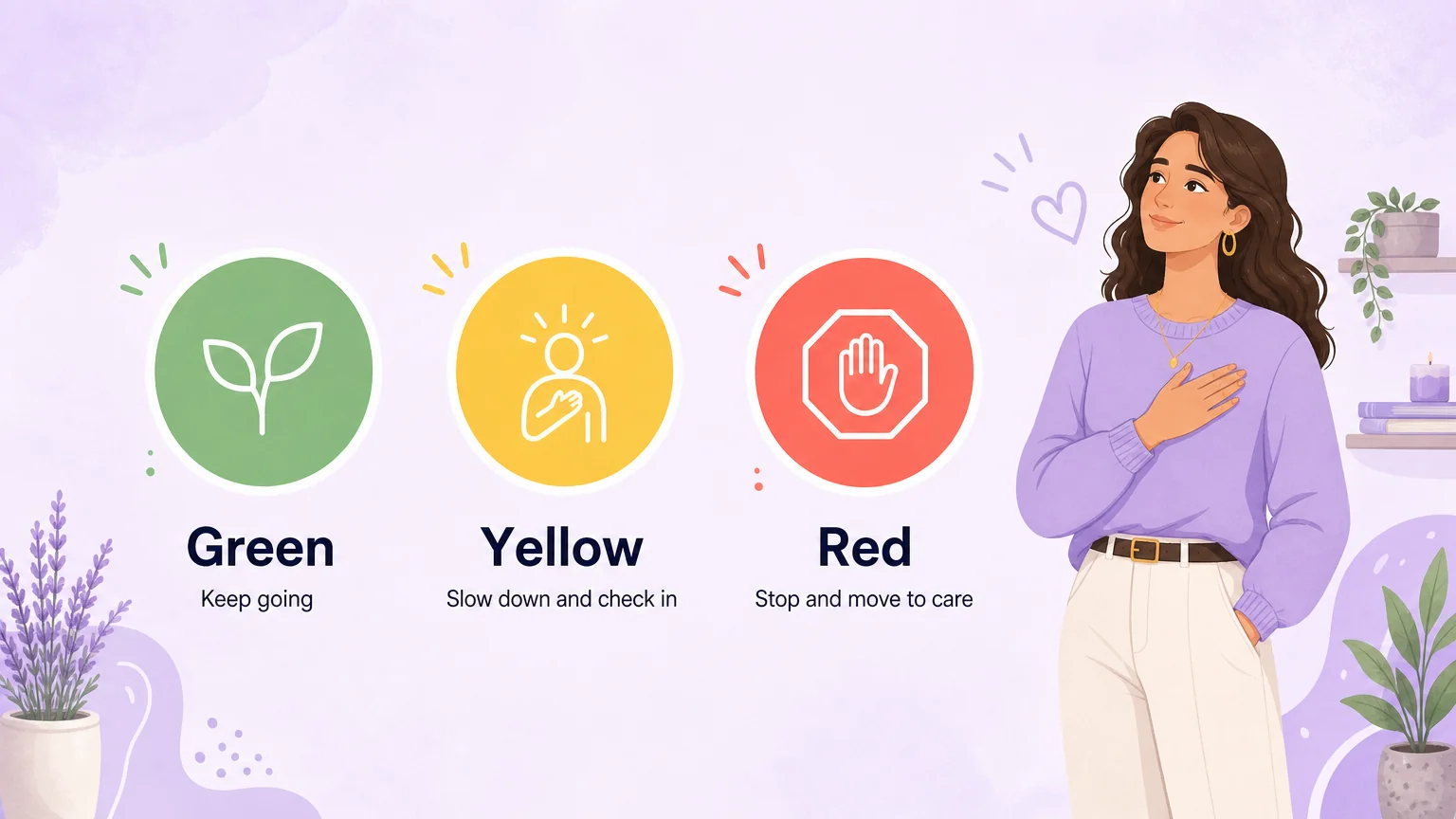
The color check is your spine. Negotiate it before the scene, then ask “What’s your color?” at natural transitions and after intensity spikes. Colors beat “how are you?” because a sub on autopilot answers “fine.” A color forces a real status report. Green means continue. Yellow means slow down and check in. Red means stop and move to aftercare. When you’re calibrating a new partner, encourage an early yellow, and praise the information instead of only hearing green.
Then read the body. Watch for muscle contractions, hypersensitive skin, leg shaking, toe curling, faster breathing, all the approach signs.
And watch for the flip: stimulation that moves from pleasure to overwhelm, hypersensitivity, cramping, numbness, right at the point of finishing. That flip is your cue, and the flat affect and glassy eyes that can arrive in subspace are its signature. If the energy flips, you stop.
The warning that matters: a fawned “yes” is not consent. Some subs say yes to avoid hurting your feelings, to keep the scene from stopping, to be safe rather than to want. Enjoyment is not consent, and a smile is not a status report. You check the consent, not the smile, which is why specific color checks exist in the first place.
Then the graceful break of character. Drop the role the instant something feels off. Move to care, physically and verbally, and do not make a ceremony of it. The scene can resume or it can’t, and both are fine. And it goes both ways: both partners can safeword, and tops get overwhelmed too. Your own flat affect is data, not weakness.
The quick comparison: a sub who trusts you reads as open, present, and in their own body, giving specific feedback even in subspace. A sub who is enduring reads as checked out, polite, saying the right words while the eyes go flat. And the one-line habit that separates the two reads: ask a specific question, not a general one. “What’s your color?” not “Are you okay?”
Milestone: By now you should be able to run a color check at the right moments, spot the flip from pleasure to overwhelm, and break character without making it an event.
Step 6: Aftercare for Overstimulation and Forced-Orgasm Scenes
Goal: Build the aftercare protocol for the intense scenes this role runs, overstimulation, forced orgasm, edging marathons, and land both partners safely.
The reframe that makes this step land: the more intense the scene, the more elaborate the aftercare. And the rule that flows from it: if you don’t have time for proper aftercare, postpone the scene. This is not negotiable in this role, because of what the role does. A forced-orgasm or overstimulation scene floods the system with adrenaline, cortisol, endorphins, oxytocin, and dopamine. When the levels return to baseline, hours or days later, the crash arrives, for both partners. The stronger the high, the harder the landing.
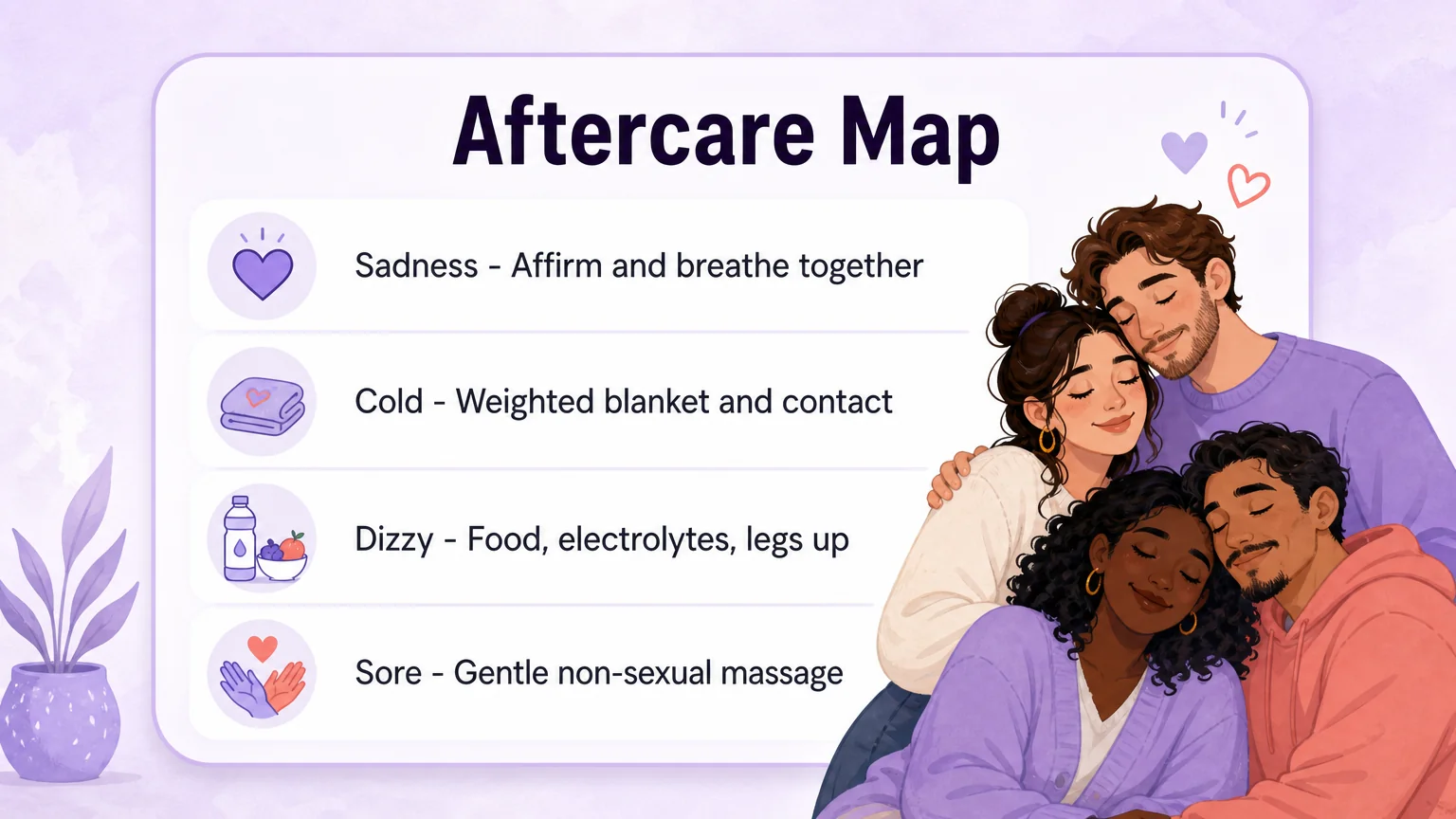
So run it by symptom. Here’s the pleasure dom aftercare map, symptom to response:
| Symptom | Response |
|---|---|
| Sadness or tearfulness | Co-regulated breathing and affirmation |
| Cold or shivering | Pre-warmed weighted blanket and contact (the adrenaline crash) |
| Emotional disconnection | Skin-to-skin and non-sexual eye contact |
| Fatigue or dizziness | Food and electrolytes, with legs elevated |
| Physical soreness | Topical analgesic and non-sexual massage |
Recite the validation script, out loud, because the sub needs to hear it in your voice, not read it in their head:
“You were safe. Everything was consensual. You performed beautifully, and I am proud of you.”
Then revert the roles on a timeline. First names only, no commands. Roughly four hours after the scene, you are equals again. The role was a container with a door, and you close it deliberately.
Now give dom drop its real weight, because it is under-reported. Dom drop arrives as guilt or second-guessing: did I take it too far? Was that too much? The sub holds the lines that fix it, and if they don’t offer them, you can ask:
“I’m okay. I’m not hurt. I enjoyed it. You’re not a bad person.”
Doms are allowed to need this, and needing it is not a failure of dominance. You steered the intensity; your nervous system went through it too. For an overstimulated sub, add the grounding script, slow and repeated:
“Breathe with me. In. Out. I’m right here.”
And schedule the delayed check-ins at 24 and 72 hours, because the drop can arrive days later, and the message is what carries someone through it.
The direct recommendation: if your calendar can’t hold the aftercare, hold the scene. And the one step never to skip, no matter how tired you are: the verbal check-in before you part, for both of you, so nobody walks out mid-drop.
Milestone: By now you should have an aftercare map for overstimulation scenes, a validation script, a role-reversion timeline, and a 24- and 72-hour check-in scheduled.
Step 7: How to Avoid Pleasure Dom Burnout: Getting Your Own Needs Met
Goal: Catch the burnout signs early, get your own needs met inside the role, and keep the dynamic sustainable.
Let’s say it plainly, because someone needs to: you are allowed to get something out of this.
The role runs on the sub’s visible reaction being your reward. That’s the fuel. But a dom who gives without receiving quietly resents it, and the resentment kills the dynamic faster than any technique gap. Pleasure doms are especially vulnerable, because giving is the identity.
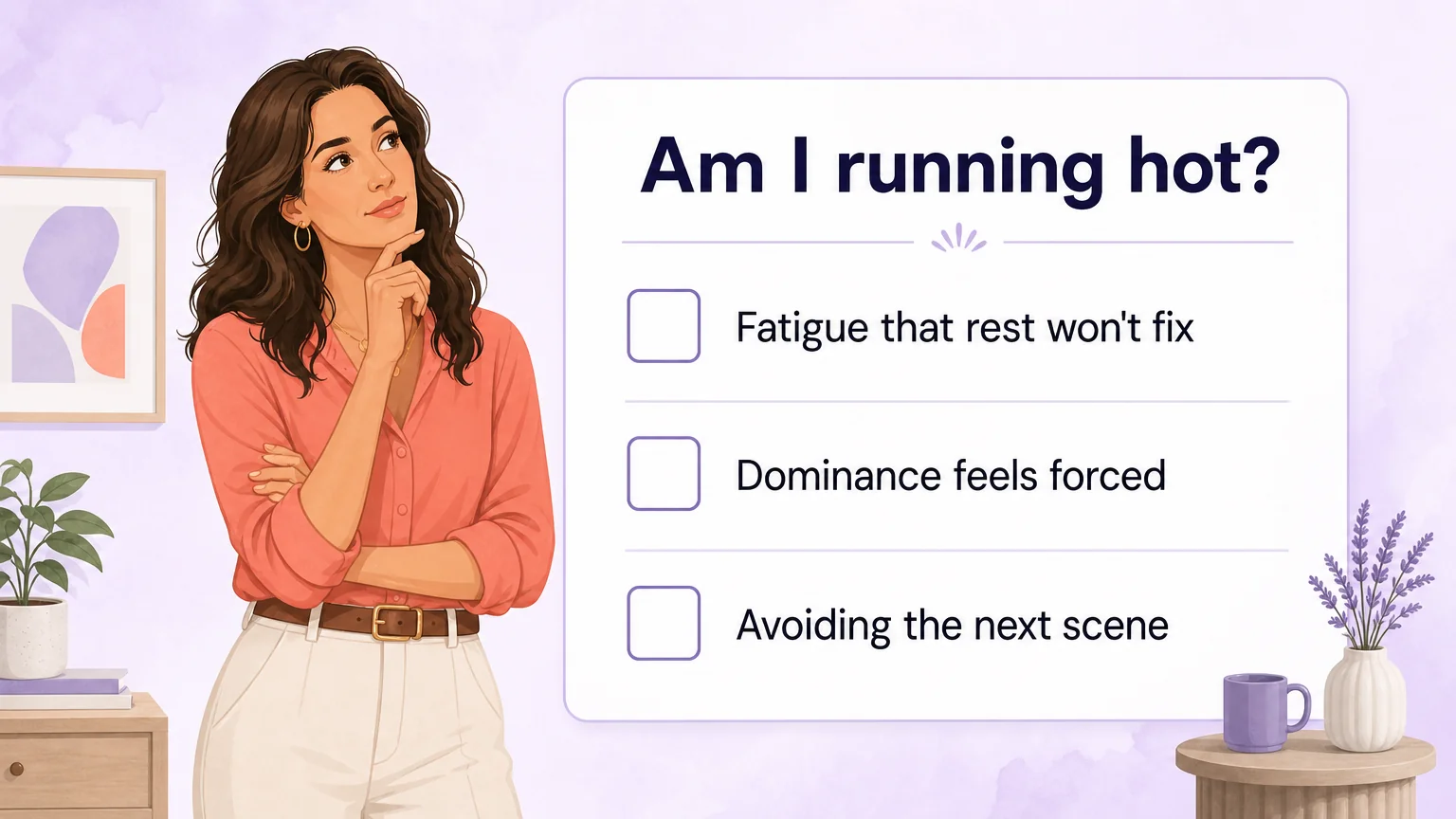
So learn the signs before the damage. Fatigue that rest doesn’t restore. Loss of motivation. Performance mode, where dominance feels forced instead of instinctive. Guilt for not hitting the intensity of last time. Putting off planning the next scene. Any of these, and you’re running hot.
And name the failure pattern while we’re here: the kink-dispenser dynamic. That’s when a sub expects you to be eager, limitless, and unemotional. They won’t initiate, won’t describe their own limits, and offer no feedback and no aftercare to the dom. It’s a path straight to burnout, and it is fixable by negotiation, not by quietly enduring.
The fix, in order. First, the self-inquiry that started this guide, now pointed at your own life: what do I get out of this besides my partner’s pleasure? If you can’t answer, you are people-pleasing, not domming, and the fix is not more technique.
Second, negotiate reciprocity. Ask what you want. Receive feedback, reassurance, and aftercare of your own. And get praised when you hold a boundary, because holding the boundary is what the sub asked for. Reactions are the top’s safety information and the top’s reward, and tops have the right to expect support from their partners both during and outside scene space.
Third, take scheduled rest. A top wanting a break from responsibility is common and legitimate. It is not a failure of the role. Book the scene-free weekend like you’d book a holiday.
Fourth, reframe dominance as a co-created culture rather than a performance you owe. You are not an actor delivering a show on demand. You and your partner are building a shared dynamic, and the building is allowed to rest.
The verdict on how to be a pleasure dom that lasts: needs on the table, rest scheduled, giving that flows from surplus, not duty. That version of the role runs for years. The one where you quietly give and quietly resent it cannot survive the season.
Milestone: By now you should be able to name your own burnout signs, state what you get out of the role, and hold a reciprocity conversation without breaking character.
Step 8: Pleasure Domming in Threesomes, Swinging, and ENM

Goal: Bring your pleasure-dom dynamic into threesomes, swinging, and ethical non-monogamy without losing the control role, and negotiate the group scene safely.
The shape of the role changes with a third person, and the shape is worth understanding before anyone is naked.
Start with the numbers that make the stakes real. Threesomes are the most common sexual fantasy in America, and among the least likely to play out well, because expectations go unspoken. Adding a pleasure-dom dynamic raises the communication bar, not lowers it. The fantasy is easy; the choreography is the work.
Then who leads. Decide before anyone is naked, and negotiate it with all three partners, not just two. The pleasure-dom role maps directly onto who runs the scene: who paces it, who reads the room, who decides when the focus shifts. In a swinging context, the dynamic travels with you. The couple that runs orgasm control at home carries that choreography into a club scene, where someone still needs to lead. Book-length research on triads documents power and erotic control as central themes in three-person sex; the control doesn’t dissolve, it distributes, and you make that distribution on purpose.
Then the group-negotiation mechanics, the difference between a scene and a fiasco. Decide soft versus full swap before the night, not in the room. Use traffic-light timeouts and preplanned exits, a trigger phrase that means “we need a minute” that no one has to explain. Plan repair chats in advance, because after a group scene, someone will have a feeling. Ambiguity is where jealousy festers, so the job is to remove the ambiguity.
Treat the third as a whole human with their own desires, never a toy, and avoid unicorn framing unless they claim it for themselves. A guest in your playground has limits, and they get the same weight as everyone else’s.
Then the dom-specific emotional math, where pleasure doms in ENM either thrive or quietly suffer. Compersion, the vicarious joy of watching a partner enjoy someone else, is a cultivated skill, not the absence of jealousy. A primary dom’s pleasure can come from sanctioning the sub’s surrender through a trusted third; that reads as overarching authority, not threat, and it arrives as warmth, arousal, and intense bonding. But name the jealousy risk plainly. When it shows up, treat it as a dashboard light, not a stop sign, say it to your partner the same night, and let the negotiation catch it before it becomes a wall.
Safer sex compounds with the head count. Fresh condoms, gloves, and dental dams, per toy, per partner, per body part. This is not a vibe killer; it’s what makes the play worth doing.
And aftercare scales too. Three people crash on different timers, so plan for everyone and stagger the check-ins; the sub being pleasure-dominated is not the only one who drops.
The direct recommendation: before you schedule the night, schedule the negotiation, then the repair chat, then the aftercare for three. That order is what makes the group version real. And for couples and singles who already treat this as normal conversation, 3Fun is built for exactly that.
Milestone: By now you should have decided who leads, agreed soft versus full swap, and put a traffic-light timeout and a repair chat on the calendar before anyone gets naked.
Frequently Asked Questions About Being a Pleasure Dom
Isn’t a pleasure dom just a generous lover, or a fake label?
Partly fair, so take both answers. The term exploded on social media, and much of the early discourse was just “my dom cares about my pleasure,” a baseline that shouldn’t need a label; some therapists find it overused. But it maps onto real practices, chastity, edging, and orgasm control, where the goal is pleasure rather than denial or pain alone. The label is useful when it starts a conversation instead of box-making. See Step 1 for the intention test.
Am I secretly submissive if I get off on my partner getting off?
No. The sub holds the ultimate power and can always safeword, but the pleasure dom is decisively in charge of pleasure. The giving is deliberate, paced, and on the dom’s terms, so being response-driven is a specific expression of dominance, not a lack of it. See Step 1 above.
Do I have to do edging and orgasm control to be a pleasure dom?
No. Sensory play, temperature and texture, praise, narration, withholding, and non-genital rituals all count, and a scene with zero orgasms can still be excellent. Edging and orgasm control is one strong tool, not the definition of the role. See Step 3 above.
Is orgasm training safe?
It’s risky. Conditioning a person to orgasm only on command or in specific conditions can leave them unable to get off for weeks or months if the relationship ends. If you try it, go slowly and disclose that risk fully before anyone agrees. See Step 4 above for the permission structure it depends on.
What does my sub actually do for me? I give constantly.
Reciprocity is built into the role. The sub’s visible reaction is your reward, but you are entitled to feedback, reassurance, your own aftercare, and your own limits. If you can’t answer what you get out of this besides their pleasure, you are people-pleasing, not domming. See Step 7 above.
What if a scene goes wrong mid-way?
Drop the role the instant something feels off, move to care, and own any fault. Reassure them they did nothing wrong, and don’t expect to keep playing that night. The safeword is never punished. See Steps 5 and 6 above for the mid-scene read and the aftercare that follows.