What is DDLG? It is a kind, or a consensual relationship dynamic where one partner takes a caregiving, protective role and the other accesses a younger, more vulnerable headspace. That is the sentence. Everything beyond it gets more interesting, and more human.
This article walks through what DDLG actually is, using real terms, not jargon. It covers why people are drawn to it (the psychology most explainers skip), what it feels like from the inside, and how to explore it whether you are partnered, single, monogamous, or non-monogamous. Along the way, you will hear from people inside the dynamic, in their own words, because third-party description only gets you so far.
No judgment. No clinical distance. No sleazy framing. Just a clear map, drawn for the curious newcomer and the committed practitioner alike. Welcome.
DDLG Defined: The Terms, the Roles, and What They Actually Mean
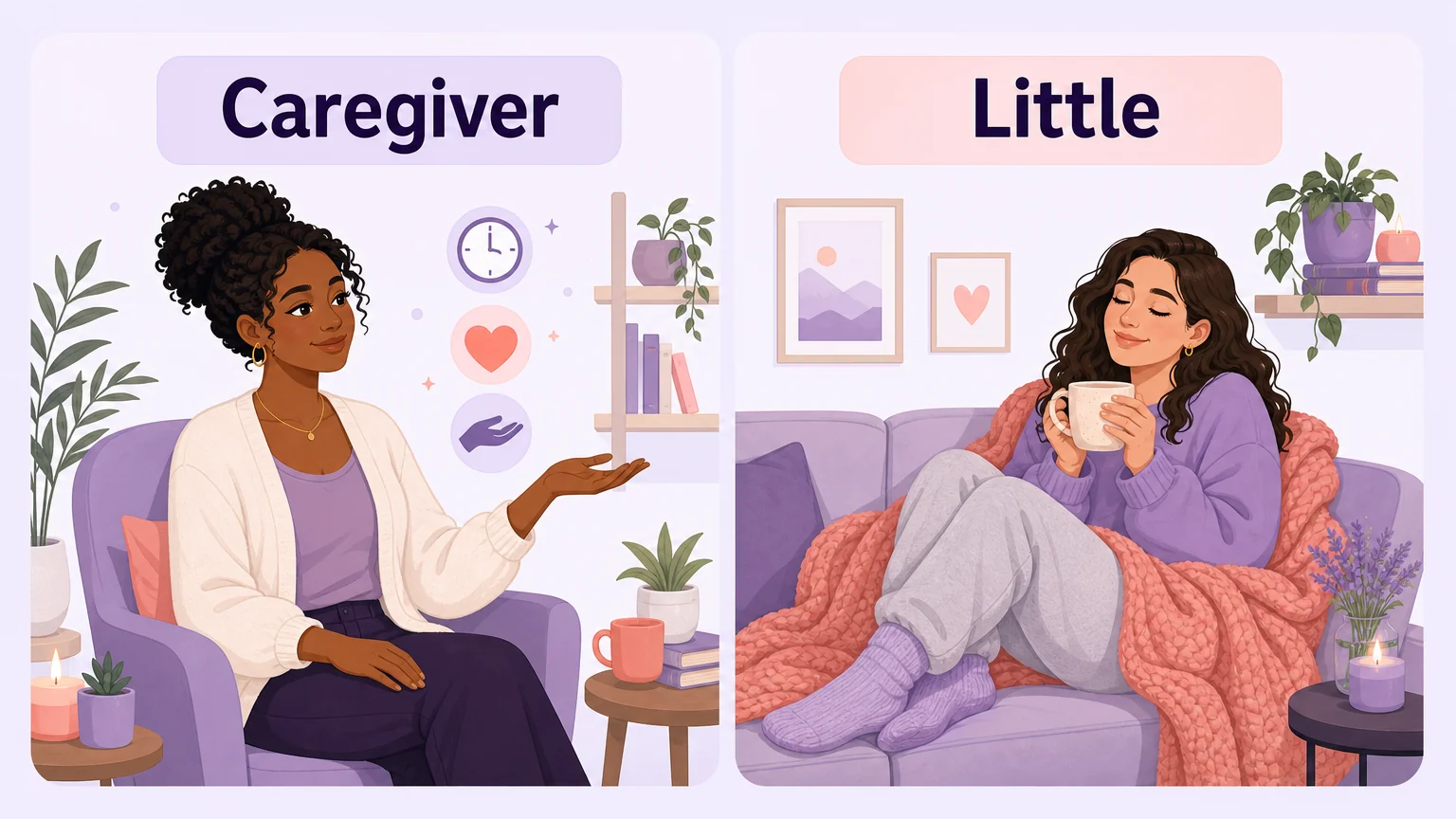
DDLG stands for Daddy Dom / Little Girl, but the term has broadened well past that literal framing. The more inclusive umbrella is CGL: Caregiver/Little. You will also see variants like MDLG (Mommy Dom / Little Girl), DDLB (Daddy Dom / Little Boy), MDLB, and trans-inclusive versions. None of this is gatekeeping. You do not need to memorize every acronym to belong here. You just need to understand the two core roles.
The Caregiver, sometimes called Daddy or Mommy, is not a boss. Authority in this dynamic flows through care, not control. The role is about structure, guidance, and protection: knowing when to hold the line and when to soften. For many Caregivers, the fulfillment is deeply emotional. It is a style of dominance that is nurturing rather than sadistic, built on the trust of the person who chooses to be vulnerable with them.
The Little, sometimes called a Middle if their headspace skews older, is the partner who accesses a younger internal state. This is not performance, and it is not regression as pathology. It is a chosen, consensual state. Some describe it as the mental volume knob on “adult” getting turned down. Others describe it as the only place they do not have to be in charge.
Then there is the spectrum. For some, DDLG is a lifestyle identity, lived as a 24/7 relationship structure. For others, it is occasional play: bedroom-only, weekend retreats, designated time with clear entry and exit signals. Neither is more real. Neither is more valid. Lifestyle DDLG is closer to a relationship orientation; occasional-play DDLG is closer to a scene. You get to decide where you land, and you get to move.
The Emotional Logic: Why People Are Drawn to DDLG
Most people who feel drawn to DDLG cannot immediately say why. They just know something about it resonates, somewhere under the ribs, before they have language for it. That is not a red flag. That is how desire works before we give it words.
The draw maps onto universal human needs once you look past the props.
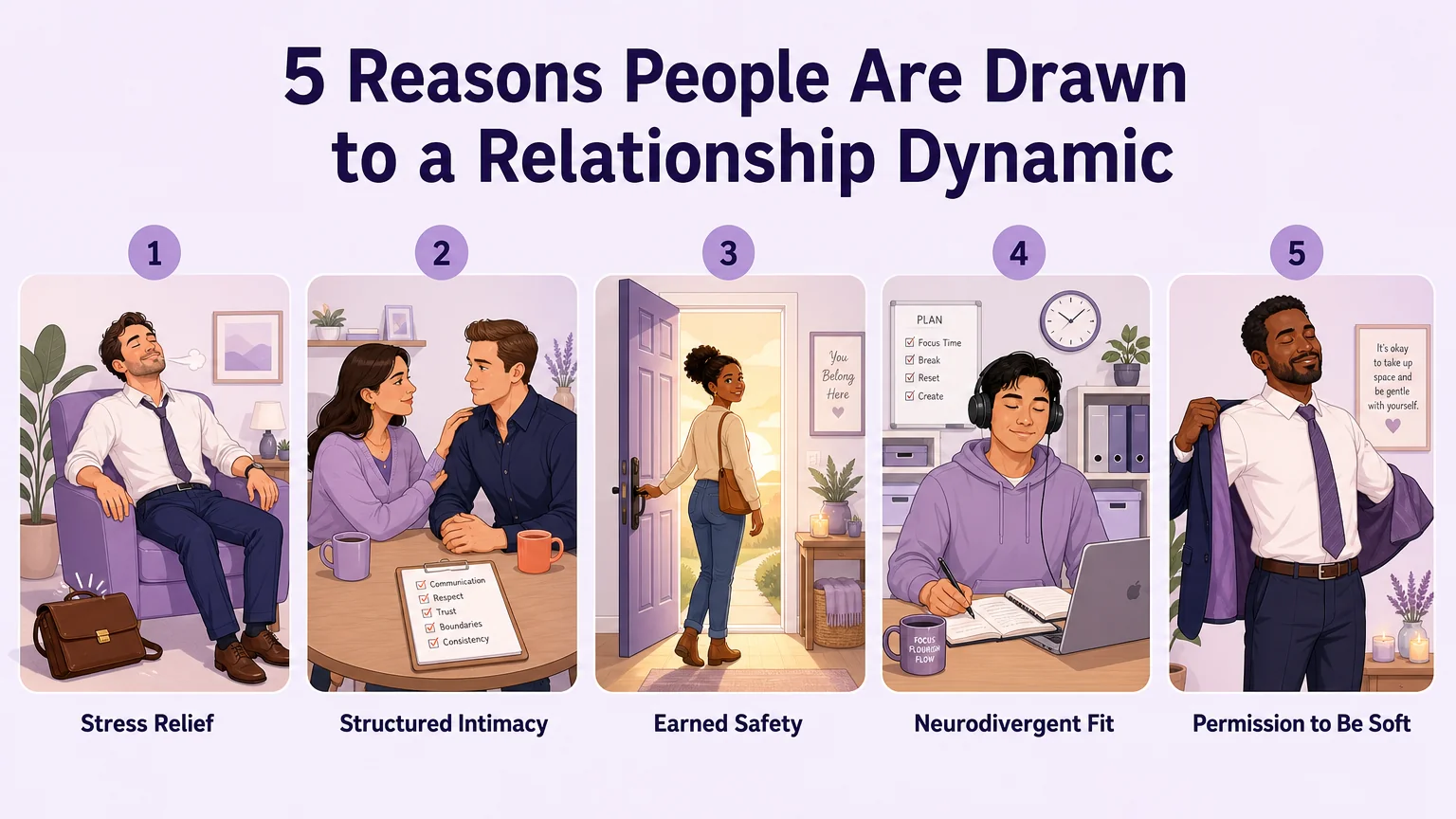
Stress relief is the most common entry point. Littlespace functions as a deliberate break from adult decision-making: the job, the bills, the constant triage of a life where you are always the one who handles things. For high-functioning adults who carry authority or caretaking roles in their day-to-day existence, this is often the only place the mental offloading feels permitted.
Structured intimacy comes next. Rules, rituals, and routines sound like constraints from the outside. From the inside, they are containers for closeness. Knowing your Caregiver expects you to drink water, brush your hair, and check in before bed is not micromanagement. It is being held by someone else’s attention to your wellbeing.
For some, DDLG creates a relational space where vulnerability was previously unsafe. Clinical psychology recognizes age regression as a defense mechanism. DDLG takes that mechanism and, through negotiation and consent, transforms it into something chosen rather than something suffered. One practitioner described it as “a compensatory gentle experience,” a chance to revisit developmental needs inside a container built by two adults who decided, together, that this was worth building. This is not to imply DDLG is therapy or that everyone who practices it has trauma. Plenty of people arrive with secure attachment histories and simply find the dynamic fulfilling.
There is also a neurodivergent affinity worth naming. The sensory and structural elements of DDLG (predictability, clear roles, sensory comfort, explicit expectations) can align with autistic or ADHD needs in ways that mainstream relationship models do not.
The through-line across all of these is the same: DDLG gives people a structured way to access something they need and cannot easily reach in default adult mode. If the draw were as simple as a kink preference, nobody would wrestle with it the way they do. The wrestling itself is a sign that something deeper is at work.
Inside Littlespace: What the Experience Actually Feels Like

From the outside, littlespace looks like props and behaviors: coloring books, cartoons, a softer voice. From the inside, it is a felt shift, a state change that people describe in sensory and emotional terms, not behavioral ones.
The cognitive shift comes first. Decision fatigue recedes. The internal monologue that narrates every obligation quiets. Present-moment focus replaces future-worry. One ASMR creator described it to their listener this way: “We are just going to go to our happy little place for a bit. It does not bug me when you cry. You are my priority right now.” That is the tone. That is the container.
The emotional texture is not helplessness. It is chosen vulnerability with a safety net: the feeling of being held by someone else’s competence. Another community voice put it directly: “You know you do not have to earn cuddles, right? You can just need me. You do not got to be strong all the time.” The relief in that sentence is the entire point.
The sensory world matters more than outsiders expect. Weighted blankets. Soft clothing. A specific tone of voice from the Caregiver, the one that says you are safe and you are small and both of those things are welcome here. Comfort objects are sensory anchors, not props.
The relational container is what makes it work. Littlespace exists because someone is holding the frame. It is co-created, not solo. The Caregiver’s presence, whether physically in the room or structurally in the rules and rituals, is what makes the vulnerability possible rather than frightening.
What littlespace is not: clinical age regression (involuntary, often trauma-driven), dissociation, or “acting childish” as performance. The distinction matters because conflating these things causes real harm.
If you are trying to understand whether this resonates, pay less attention to the props and more to the feeling. Does the idea of temporarily setting down adult responsibility, inside a relationship where someone you trust is holding the frame, feel like relief? That is the signal.
If you want to hear what that feeling sounds like from inside the dynamic, our DDLG quotes collection captures 21 voices across safety, trust, play, devotion, boundaries, and more — in their own words.
The Question Everyone Asks: Is DDLG Sexual?
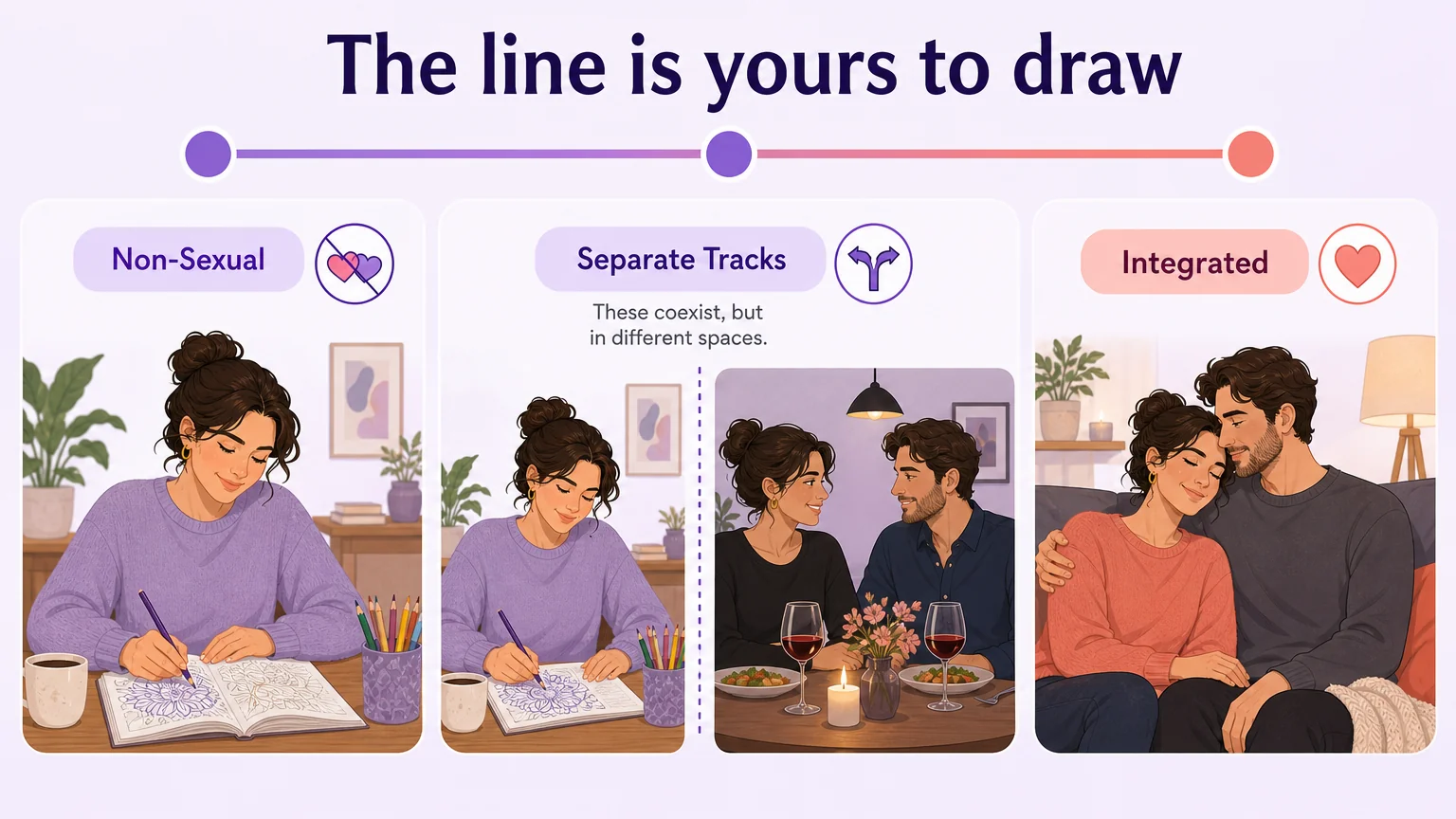
This is the question every newcomer asks and every forum thread circles. The answer is not a binary. DDLG exists on a spectrum, and most practitioners move between points on that spectrum depending on context, mood, and partner. Neither end is more valid.
On one end: fully non-sexual age regression. Littlespace as comfort, stress relief, and emotional reset with no sexual component whatsoever. This is sometimes called CGlre (caregiver/little regressor) to distinguish it from dynamics where sexuality is integrated.
Next: a non-sexual dynamic with a sexual relationship existing separately. The Caregiver/little dynamic itself stays non-sexual, but the partners may have a sexual relationship outside littlespace. These are parallel tracks, not contradictions.
Then: integrated sexual DDLG, where the power exchange and role dynamic extends into sexual intimacy. This is where DDLG overlaps most directly with BDSM: the same trust, the same negotiation, the same power differential, now including physical intimacy as part of the container.
Most practitioners move between modes. Fluidity is the norm, not the exception. You and your partner get to decide where the line is, and you get to move it.
As for objects like pacifiers, onesies, and stuffed animals: they function differently in sexual versus non-sexual contexts, and their presence or absence says nothing about legitimacy. Some people use them as sensory anchors for non-sexual regression. Some integrate them into sexual play. Some do not use them at all. Objects do not define the dynamic; the agreement between the people in it does.
Exploring Together: A Roadmap for Couples
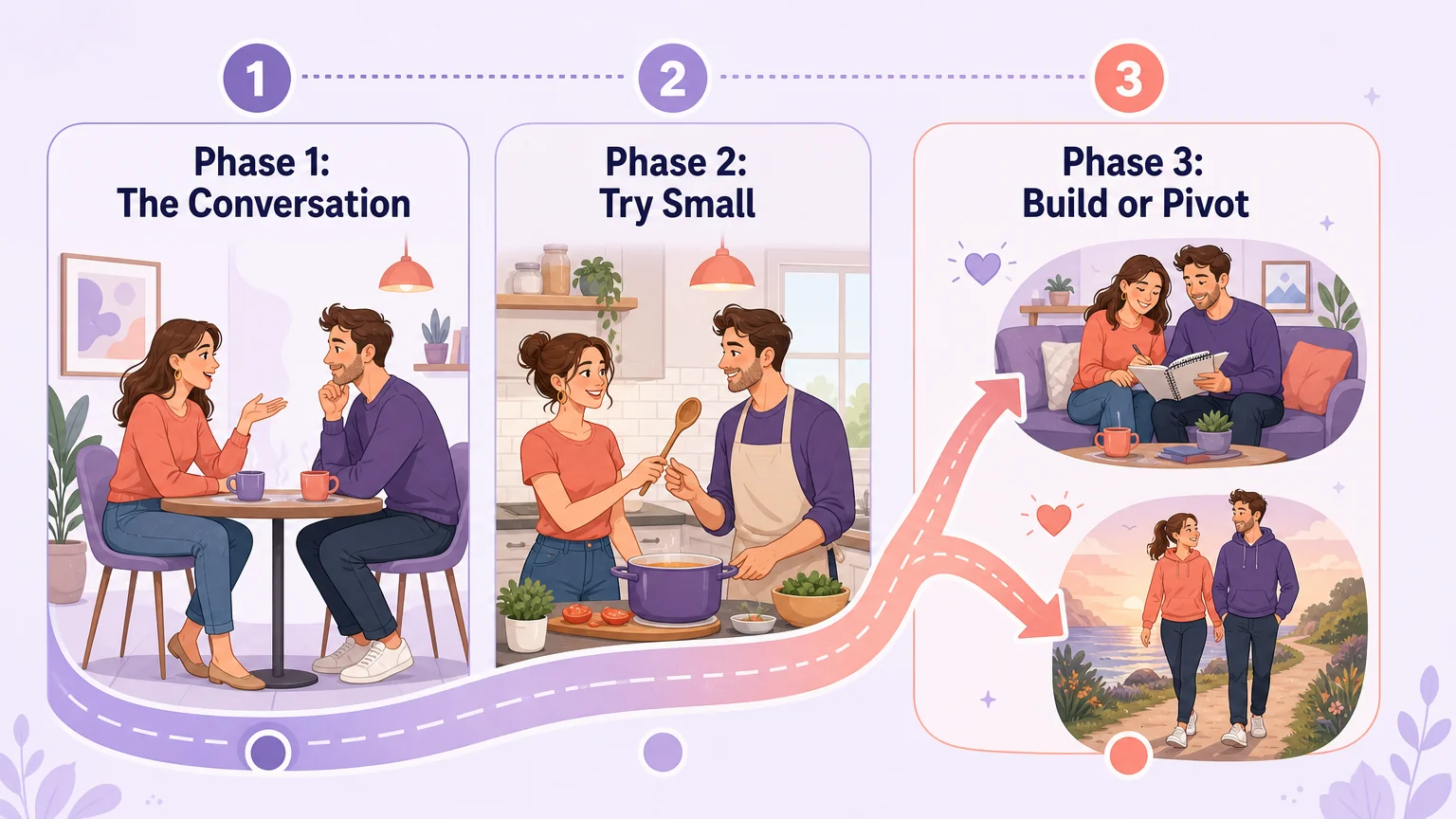
Bringing DDLG into a relationship is not a reveal and it is not a demand. It is a conversation, one that can deepen your dynamic whether or not you end up adopting the full framework. You and your partner are exploring something together, not one person convincing the other.
Phase 1: The Conversation
Do not make this a Big Serious Talk. The best conversations about DDLG start sideways: “I came across something interesting and I would love to know what you think.” You are inviting curiosity, not asking for a decision.
If you are the one bringing it up, lead with feelings, not terminology. “I have been reading about dynamics where one partner takes a more caregiving role and the other gets to be softer, less in charge, and something about that really resonated with me” lands differently than “I think I want to be your little.” Give your partner the emotional logic before the label.
If you are the one receiving the information, you are allowed to need time. “I need to sit with this” is a complete sentence. Normalize uncertainty. Neither of you needs certainty at this stage. You need shared curiosity.
If the word “Daddy” feels awkward, alternatives exist: Sir, Caregiver, or a private pet name that belongs only to the two of you. The words matter less than the container they point to.
Phase 2: Try Small
Do not adopt the whole dynamic at once. Start with one element. A single evening where one partner takes a more caregiving tone: making dinner decisions, setting a softer pace, using language that says I have got this. A shared activity (movie, puzzle, cooking together) where roles are lightly experimented with.
Then debrief. The debrief matters as much as the experiment: “What felt good? What felt weird? What do you want more of?” Ask these questions out of dynamic, as equals, with no stakes attached to the answers.
Phase 3: Build or Pivot
If it resonates, gradually add elements: rituals, care-oriented rules (drink water, brush your hair, remind yourself you are beautiful), and dedicated littlespace time with clear entry and exit signals. Build slowly, with check-ins at every step.
If it does not resonate, you learned something about each other. That is not failure. That is intimacy.
If only one of you is curious, start with Phase 1 and stay there until it is genuinely a shared curiosity. DDLG only works as a co-created dynamic. It cannot be one person performing for the other.
Going Solo: DDLG Exploration for Singles

Most DDLG content assumes a partnered dynamic. If you are single, it is easy to feel like you are standing outside a window looking in. You are not. Solo littlespace is real, community exists, and your path deserves its own section.
Solo littlespace is about creating your own container. Routines, comfort objects, designated time where you give yourself permission to step out of adult mode: coloring, cartoons, stuffies, ASMR audio as a stand-in caregiver voice. For a full list of concrete activities — solo, partnered, and long-distance — see our DDLG ideas guide. It is not lesser because it is solo. For many, solo exploration is how they learn what they actually want before a partner enters the picture.
Finding community helps. Forums, Discord servers, and online spaces exist where you can learn the vocabulary, ask questions anonymously, and figure out where you fit before or without partnering. When you are ready to move from community to connection, we have a guide to the best DDLG dating apps that breaks down which platforms actually serve this dynamic — pricing, privacy features, and real community feedback included.
If you are a single Caregiver, your path is equally under-discussed. Developing that identity outside a relationship means understanding your own motivations: what draws you to the nurturing role? What structure would you want to provide? What are your own limits and needs? Knowing yourself before you partner is the foundation.
Safety for singles deserves direct language. When power-exchange dynamics are on the table, vetting is self-protection, plain and simple. Someone genuinely interested will welcome your questions and respect your pace. Someone using the language to fast-track access will treat your caution as an inconvenience. Specific red flags: love-bombing with caregiver language before trust exists, pushing for titles before negotiation, dismissing your limits as “not what a real little would say.” A real Caregiver builds your ability to say no.
Red Flags, Green Flags: Spotting a Healthy Dynamic
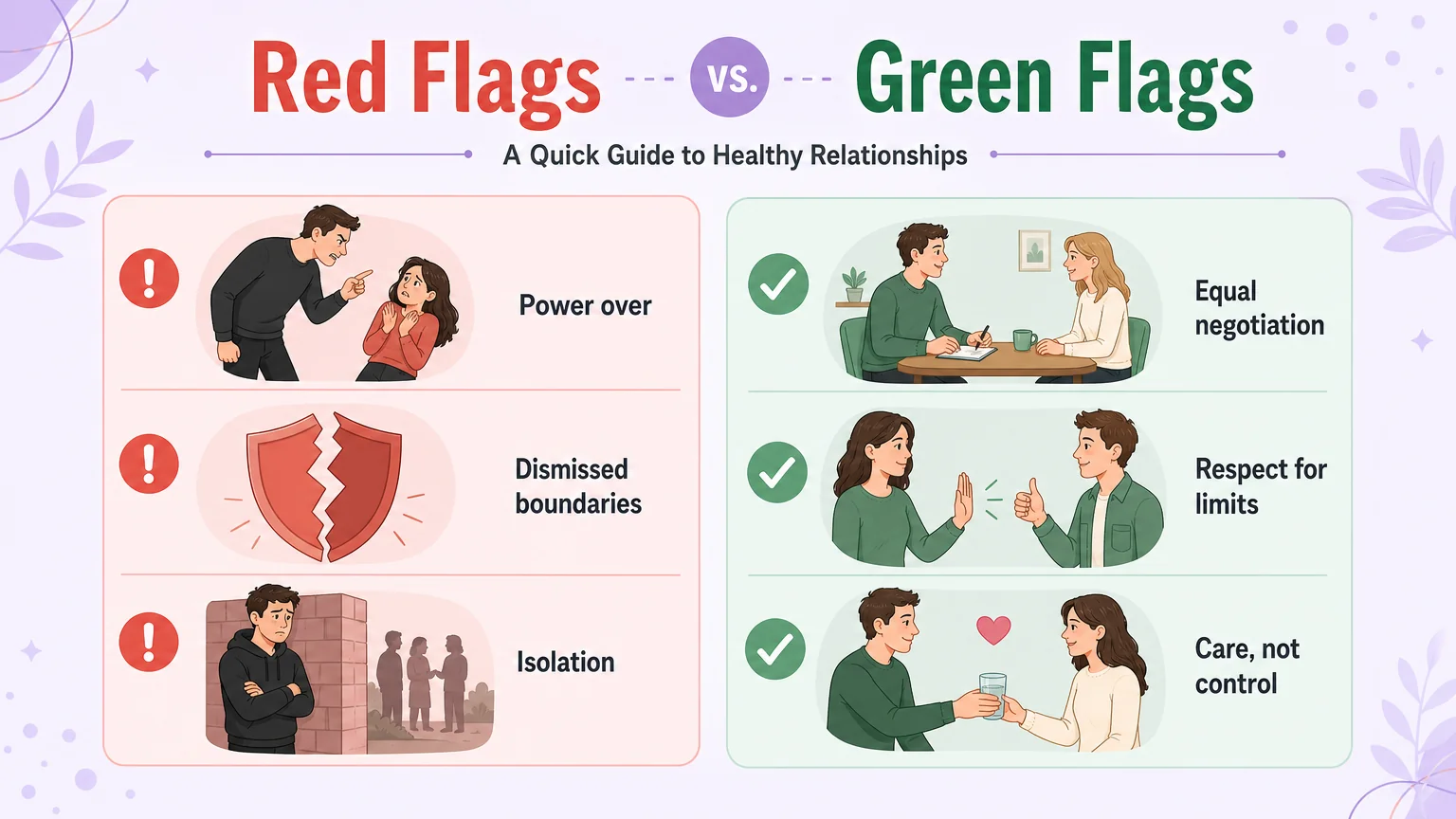
Any relationship structure with a built-in power differential attracts people who will exploit it. That does not make DDLG dangerous. It makes vetting essential. This is true of BDSM, age-gap relationships, mentorship dynamics, and every other asymmetric structure. DDLG is not unique in this; it is just honest about the asymmetry.
Here is what unhealthy looks like, in specific, observable terms:
Someone who pushes for titles before trust or negotiation exists. Someone who uses “that is what a real little would do” to override your limits. Someone who treats the dynamic as 24/7 from the start without discussion. Someone who isolates you from community or outside perspective with “they do not understand our dynamic.” Someone who confuses punishment (retribution, delivered in anger) with discipline (structure you consented to, delivered from care). Someone who dismisses safewords or check-ins as “breaking the mood.”
These are not subtle. They are patterns. And they show up early if you know what to look for.
Here is what healthy looks like:
Negotiation happens in equal-power, out-of-dynamic conversation before anything else. Your limits are met with “thank you for telling me,” not disappointment. The Caregiver role is visibly about your wellbeing, not their access to you. Check-ins are built into the dynamic, not treated as interruptions. You can step out of littlespace anytime and be met as an equal. Rules, if they exist, are care-oriented: drink water, eat something, tell me how you are actually feeling. Punishment, if it is part of your dynamic, comes from caring, never from anger.
Three ethical frameworks serve as community guardrails. SSC (Safe, Sane, Consensual) is the most common. RACK (Risk-Aware Consensual Kink) acknowledges that some risk is inherent and must be understood, not ignored. Aftercare, the deliberate transition back to equal-power connection after a scene or littlespace session, is not optional. It is how you close the container you opened.
A real Caregiver builds your ability to say no. Someone using the title to take will treat your no as a problem to solve. The difference is visible. Trust what you see.
DDLG Meets ENM: When Your Dynamic and Your Relationship Structure Intersect

If you are navigating both DDLG and non-monogamy, you have probably noticed there is almost nothing written about how they fit together. That is not because they do not. Plenty of people live at this intersection. Most DDLG resources assume monogamy, and most ENM resources do not address power-exchange dynamics.
For many ENM practitioners with a DDLG dynamic, the Caregiver/little relationship is the emotional anchor. Other partners and experiences orbit that center. This is about preserving the container that makes the dynamic work. The dynamic itself feels exclusive by design, and treating it as home base while welcoming other connections is not a contradiction. It is architecture.
Does littlespace stay exclusive to the primary Caregiver, or can it be shared with other partners? There is no universal answer, but the question needs to be asked explicitly, not discovered mid-scene. Some couples keep littlespace as their private container. Others find the dynamic can extend, in limited ways, with trusted thirds. The only wrong answer is the one you did not discuss first.
What happens when the Caregiver has other relationships? Jealousy in DDLG can hit differently because the dynamic itself feels so exclusive. The attachment is structurally dependent in a way that makes sharing feel higher-stakes. The Caregiver needs to be proactive, not defensive. The Little needs to name what specifically feels threatened rather than letting it curdle into generalized insecurity.
During threesomes or group play, the dynamic may need to pause or shift. For some couples, maintaining the Caregiver frame during group play provides safety and continuity. For others, the presence of a third means everyone operates from equal footing. Either approach works if it is discussed beforehand.
When vetting a third who will enter a scene that touches your dynamic: they need to know the nature of your dynamic, what is and is not part of the encounter, and what language or behavior would cross a line. A safe third respects the container without needing to be inside it. The visitors do not get keys to the shed.
Navigating DDLG inside monogamy is like tending one garden. Inside ENM, you are tending that garden while welcoming visitors. The garden still needs its fence, its routines, its caretakers. The boundary is what keeps it alive.
FAQ
Is DDLG the same thing as pedophilia?
No. DDLG is a consensual dynamic between adults. The community is explicitly anti-pedophilia.
Do I have daddy issues if I am into this?
No single psychological profile describes everyone who practices DDLG. People with secure attachment histories are drawn to it; people with complex histories may not be. The stereotype is pop psychology.
What is the difference between age regression and DDLG?
Clinical age regression is involuntary and often trauma-linked. DDLG is consensual and negotiated. They can overlap, but they are not the same thing.
Is this psychologically healthy?
It depends on the relationship, not the dynamic. Built on consent and clear boundaries, it can bring stress relief and fulfillment. Built on manipulation, it can cause harm.
How do I bring this up with my partner without freaking them out?
Lead with feelings, not labels. Describe the emotional resonance before naming the dynamic. Give your partner space to process.
Can I be a little without a Caregiver?
Yes. Solo littlespace is valid. Routines, comfort objects, and designated time can create a container without a partner.
What do age-play items like pacifiers and onesies actually do?
They are sensory anchors for accessing the headspace, like how a song pulls you into a memory. Not required, not universal, and not inherently sexual.
Does DDLG work with ethical non-monogamy?
Yes, with clear communication about boundaries. Many people live at this intersection. What matters is that everyone involved knows the lines and consents.
DDLG, at its best, is people building a container where vulnerability is safe. Everything else is scaffolding around that.