You just learned the term DDLG. Maybe you fell down a forum thread at midnight, or a partner mentioned it over coffee and you nodded along while mentally bookmarking a hundred questions. You now understand the basic idea: one partner takes a caregiving role, the other embraces a more childlike, receiving headspace. It can be sexual or not. Partnered or solo. A full weekend or five quiet minutes before bed.
But the morning after the research rabbit hole, you hit the same wall everyone hits.
Okay. But what do I actually do?
“Littlespace” sounds abstract until you try it. It is not a single fixed destination you either arrive at or fail to reach. It is a spectrum of entry points. Some people slide into it through texture and smell. Others through the rhythm of a voice. Some need structure and rules. Some just need permission to color for twenty minutes with no goal in mind.
Desire does not require an apology. And it certainly does not require you to have everything figured out before you begin.
This list is a menu, not a checklist. Pick one idea that feels accessible. Try it with curiosity, not pressure. The rest can wait.
Before you start: if you are playing with a partner, agree on a safeword. The standard system works: red for stop, yellow for pause and check in, green for all good. Have a nonverbal signal too. A tap on the arm works when words feel far away. Aftercare matters. More on that later. For now, here are 25 concrete DDLG ideas to try tonight, this weekend, or whenever you are ready.
1. Start With a Coloring Book and Zero Expectations

You. A coloring book. Crayons or colored pencils scattered across the table. That is the entire setup.
No partner required. No performance. No “am I doing this right” running on a loop in the back of your head. The act of choosing a color, filling in lines, and watching something pretty emerge is inherently a littlespace activity. It engages the part of your brain that does not carry bills, deadlines, or adult worries. That is the part you are trying to reach.
For partnered play, the scene is simple. The caregiver sits beside the little, offers a specific crayon, compliments a color choice, or colors their own page quietly alongside. That dynamic (one person offering gentle guidance and praise, the other receiving it) is DDLG in its simplest, clearest form.
Themed coloring books (animals, fantasy, kawaii) tend to produce more satisfying results than basic children’s books. The paper is thicker. The lines are more detailed. The finished page looks like something you would actually keep.
You already know how to color. That means you already know how to start.
2. Let a Guided Regression Audio Lead You Into Littlespace
When your brain is stuck in adult mode and you cannot find littlespace on your own, a guided audio acts as a temporary caregiver. A soft, rhythmic voice walks you into the headspace step by step. You do not have to generate the feeling from scratch. You just follow along.
Headphones on. Quiet room. A voice speaks in slow, measured tones, guiding you to imagine a safe, cozy space. Let your shoulders drop. Feel small. Feel cared for. Channels like Regress With Mommy, Time With Daddy, and Mommy ASMR have built entire catalogs of free guided regressions. Each one follows a similar arc: breathwork, visualization, sensory anchoring, and affirmations.
The voice becomes a caregiver anchor, giving your brain permission to stop self-directing. As one creator puts it: “You can be all alone and still be wrapped in mommy’s love.”
This is a zero-cost, private entry point. Headphones and twenty minutes. Try a ten-minute guided regression before attempting a longer solo session. The shorter the commitment, the lower the pressure, the easier the drop.
3. Build a Sensory Toolkit for Instant Headspace Shifts
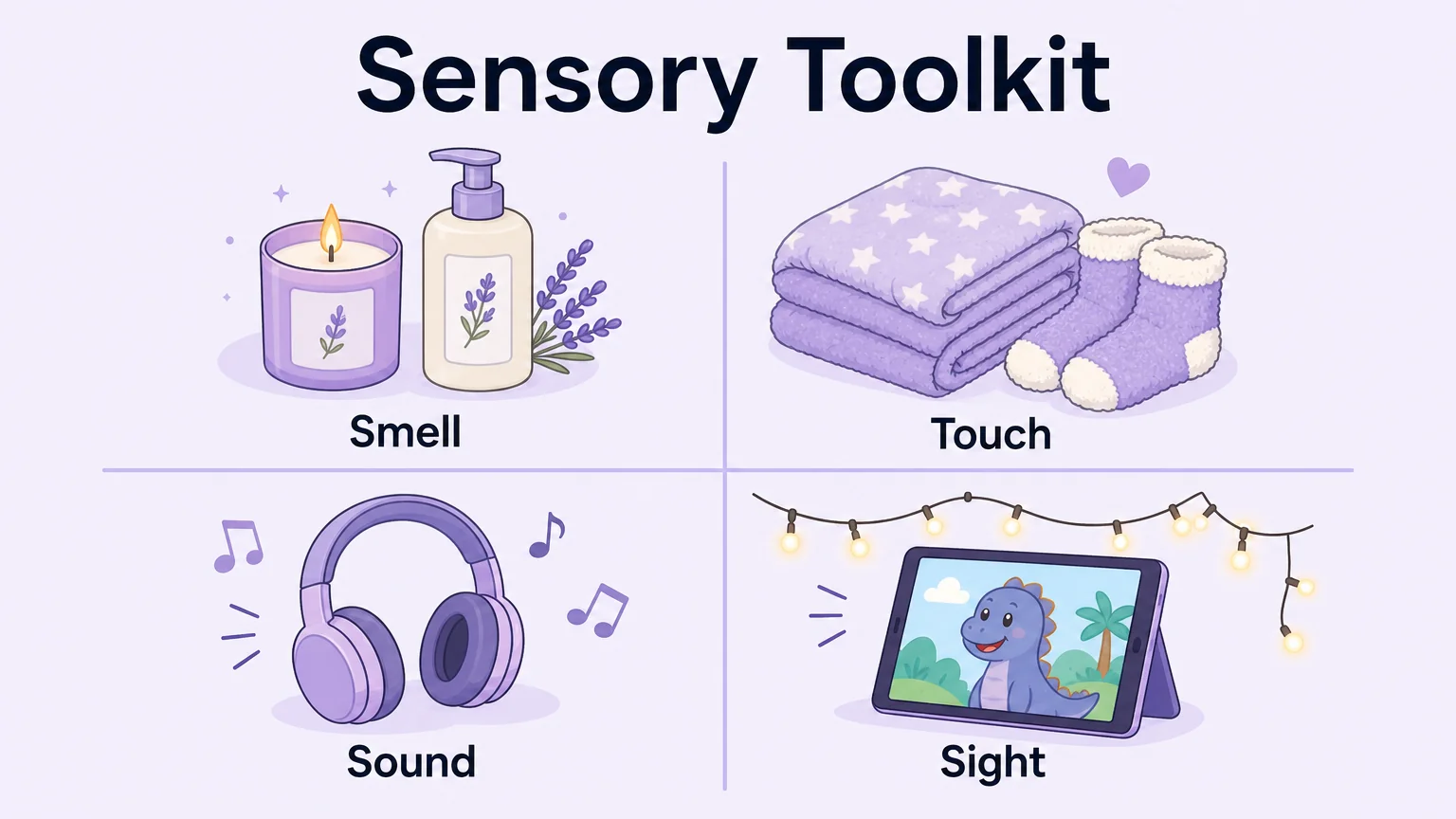
Littlespace lives in the senses, not the mind. You cannot think your way into feeling small. But you can smell, touch, hear, and see your way there.
Your brain already links certain smells, textures, and sounds to feeling safe and small. Trigger enough of them at once, and littlespace arrives on its own. This is sensory stacking, and it works across four channels:
Smell: Lavender lotion, baby powder, a vanilla candle. Anything that signals comfort to your specific nose.
Touch: A soft blanket, fuzzy socks, a weighted stuffie, silky pajamas. Texture is the fastest route to the body.
Sound: A specific playlist, lullabies, guided regression audio, white noise. Sound fills the silence that adult thoughts rush into.
Sight: Fairy lights, a cartoon on screen, coloring pages spread across the table. Visual cues tell your brain which mode to run.
One guided regression describes a “secret room” deep inside you, filled with soft pillows, story books, and cozy smells. Your sensory toolkit builds that room in the physical world. Most of the items are already in your house.
Pick one item from each channel. Arrange them before your next session. Let your senses do the work your mind keeps fighting.
4. Curate a Littlespace Comfort Box
A comfort box does two jobs. It stores your tools, and the act of opening it becomes a ritual that tells your brain: time to switch modes.
Find a box, a basket, or a dedicated drawer. Fill it with five categories. One soft item: a stuffie, a blanket, fuzzy socks. One creative item: a coloring book and crayons, Play-Doh, craft supplies. One sensory item: scented lotion, a small candle, a fidget toy. One entertainment item: a list of comfort movies, a puzzle, a handheld game. One care item: favorite snacks, herbal tea bags, a cute cup or water bottle.
Opening the box is the transition trigger. Everything you need sits in one place. There is no “what do I do now” friction, no hunting through drawers for the crayons you bought last month. Littlespace entry is often gradual, and friction at the start can stop it before it begins. The box removes that friction.
Almost everything comes from what you already own. This is about curating comfort, not buying gear.
5. Set Up Your First Solo Littlespace Session
DDLG guides assume you have a partner. That framing leaves a lot of people feeling locked out, as though littlespace requires a caregiver in the room. It does not.
A structured solo session is often the safest and most effective way to learn what littlespace feels like before involving anyone else. The routine is simple.
Prepare comfort items beforehand: blanket, stuffie, water, coloring supplies. Put your phone on Do Not Disturb. Change into soft or cozy clothes. Pick one grounding activity: coloring, a cartoon, or guided audio. Set a timer for fifteen to thirty minutes.
The Charlie McGee ABDL solo playtime structure adds useful shape: start with an emotional check-in, open with three rounds of slow breathwork, and set three ground rules. You are always in control and can stop anytime. Stay off your phone. Use the time however you like.
Check in every five minutes. Notice how you feel. Adjust. End with a self-care closing: a warm drink, a few affirmations, tucking yourself into bed with your stuffie.
One guided regression creator puts it plainly: “This calm, this safety. This is littlespace, too.” Solo littlespace is valid, complete, and enough.
6. Play With Kinetic Sand, Play-Doh, or Modeling Clay
Your hands remember being small before your mind does. Tactile play (squishing, molding, pressing) bypasses the thinking brain entirely and drops you into a sensory headspace that words cannot reach.
Kinetic sand flows and compresses in a hypnotic, almost liquid way. Play-Doh smells like childhood. Modeling clay requires focus and hand pressure that quiets an overactive mind. Fidget cubes and 3D-printed slug toys work the same channel: repetitive, rhythmic, grounding.
There is no “right way” to squish sand. Performance pressure disappears because there is no performance. The tactile feedback provides a direct line to the body that overthinkers especially benefit from. People who get stuck in their heads and cannot feel their way into a different state find relief here.
These are also the most subtle options for semi-public littlespace. A fidget cube at your desk is invisible to colleagues. A tin of kinetic sand in your bag is just a stress-relief tool to anyone who asks.
You do not have to make anything. Just squish it. That is the whole activity.
7. Build a Blanket Fort and Disappear Into It

A blanket fort is a physical boundary that separates littlespace from the adult world. Once the blankets are draped and the fairy lights are on, you are not in your living room anymore. You are in a den, a hideout, a place where being small is the default setting.
The build is part of the ritual. Couch cushions for walls. A fitted sheet for the roof. Every pillow in the house for the floor. String lights or a flashlight for ambiance. Snacks within arm’s reach. Leaving the fort for supplies breaks the spell.
If partnered, the caregiver builds or helps build, then guards the entrance. Bringing supplies. Checking if the little is comfortable. Keeping the outside world out. After the fort is complete, pair it with a comfort movie or a cartoon marathon.
The fort is not furniture. It is permission. Once you are inside, the rules change. That spatial shift does more for your headspace than any mental exercise ever could.
8. Host a Stuffy Tea Party (and Play It Completely Straight)

Stuffed animals are not props in littlespace. They are guests. Treating them as real gives the little full permission to be in the imaginative headspace, and it hands the caregiver a ready-made script: serve, pour, ask how everyone takes their tea.
Set the scene. A low table or a blanket on the floor. A tea set, real or toy. Stuffies seated around it. Real snacks: cookies, crackers, fruit cut small. The caregiver pours for everyone, asks Mr. Bunny if he wants sugar, compliments Princess Bear’s outfit. The little answers on behalf of the stuffies or just giggles and drinks their tea.
Talking to stuffies about your day and feelings turns out to be genuinely useful for emotional processing. The stuffie does not judge. The caregiver plays along. The dynamic builds itself.
This works solo too. The little hosts. The stuffies are the guests. The key is sincerity. The caregiver plays it straight. The tea is real because you both agree it is.
If you feel silly, you are doing it right. The silliness is the point.
9. Paint or Craft Together With No Goal in Mind
Making something together dissolves the pressure to “perform DDLG correctly.” The dynamic emerges naturally when one person guides the supplies and the other follows along.
As YouTube creator Cup describes it, painting together, crocheting, and working through craft kits all create a natural caregiver-little dynamic. One person sets up the supplies, helps with the tricky parts, praises the finished result. The other person receives the help and makes the thing.
Specific options: one canvas, two brushes, no skill required. Perler bead art. Friendship bracelets. Simple craft kits from a dollar store. Pasta art. Papercrafts. The caregiver lays out supplies on newspaper, cleans up spills, and displays the finished art on the fridge.
The art does not need to be good. It needs to be made together. The point is not the painting. The point is them watching you concentrate on it, then telling you it is beautiful.
10. Get Lost in Miniature Worlds With Calico Critters
Detailed miniatures unlock a specific kind of littlespace: the focused, quiet kind where you build a tiny world and the adult one recedes. There is no room for it inside the dollhouse.
Calico Critters (Sylvanian Families) are the product that littlespace content creators consistently recommend. Highly detailed animal families, miniature furniture, tiny accessories. Setting up a scene (a family having dinner, a classroom, a picnic) is absorbing in exactly the way that quiets an overactive adult brain. Your hands are busy. Your mind is occupied. Both channels are engaged.
Alternatives exist at different price points. Calico Critters for collectors who want the detail. Our Generation 18-inch dolls for dress-up and pretend play. Printable paper dolls and dollhouses for the budget-conscious.
The activity has a natural caregiver role: helping with tricky small pieces, admiring the finished scene, taking a photo of “the family.” You look up from the dollhouse and realize an hour passed. That is littlespace doing its job.
11. Play Cozy Video Games From Your Actual Childhood
The right video game time-travels you back to the feeling of a Saturday morning with no obligations, a controller in your hands, and the whole day ahead.
Cup’s specific game recommendations are a good starting point: Hello Kitty Island Adventure, The Sims, ParaLives, and Little Friends (a Nintendogs-like pet game). The common thread is games designed for younger audiences: pastel aesthetics, low stakes, gentle objectives, and no fail states that punish you.
Stardew Valley (farming and friendship). Animal Crossing (decorating and visiting neighbors). Pokemon (collecting cute creatures). Disney Dreamlight Valley (cozy questing). These games provide structure and feedback without needing a caregiver. Perfect for solo littlespace.
For partnered play, cooperative games let the caregiver “help” the little through harder sections. Or the caregiver simply sits beside them, watches, and cheers. The loading screen hits and suddenly you are nine years old again, cross-legged on the carpet, nowhere to be.
12. Let Your Caregiver Give You a Bath
A bath is not just hygiene. It is a doorway. Warm water, bubbles, and being physically cared for create the conditions where littlespace arrives without effort. The body is already there before the mind catches up.
The caregiver-led bath ritual: running the water at the right temperature, adding bubbles or a bath bomb, setting out bath toys (rubber ducks, boats, cups for pouring). Washing the little’s hair gently. Scrubbing their back. The caregiver’s physical caretaking (pouring water, lathering soap, wrapping them in a warm towel afterward) is the scene itself.
The warmth relaxes muscles. The bubbles and toys signal “this is play time.” Being washed by someone else is inherently receptive and vulnerable. Bath time is recognized across the DDLG community as a reliable transition activity for exactly these reasons.
For solo littles: bubbles, bath toys, and a playlist of soft music or an audio story create the same container. Keep a towel warmer or a robe ready. The comfort should not end when the water drains.
A practical note: check the water temperature yourself, and do not leave a deeply regressed little unattended in the bath.
13. Read a Bedtime Story Out Loud
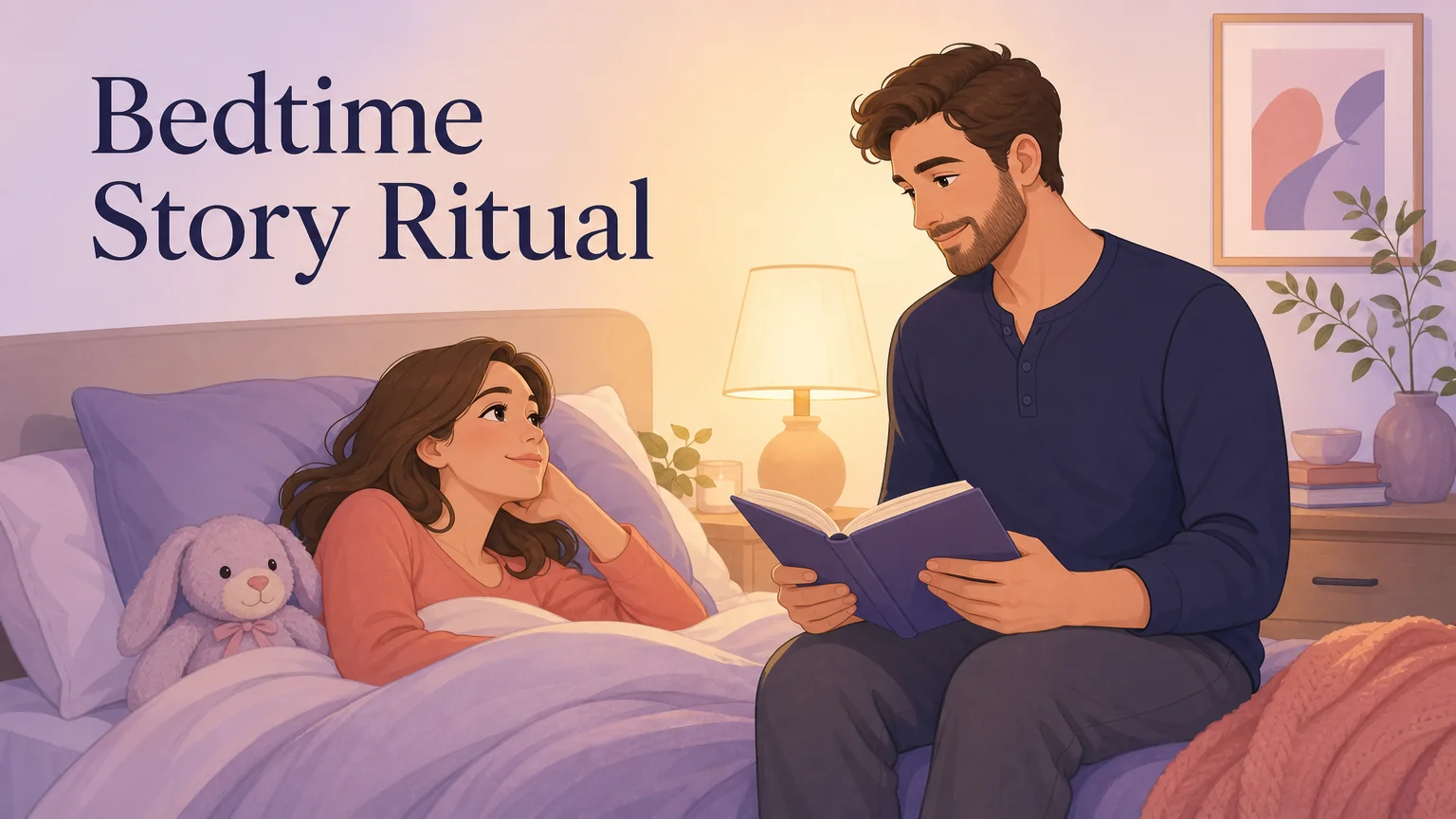
A bedtime story is the most direct pipeline to littlespace because it recreates one of the earliest caregiving memories most people have: being read to until the world got soft around the edges.
The Mommy ASMR bedtime ritual captures the arc perfectly. The caregiver notices signs of sleepiness, guides the little to bed, gathers comfort items (bottle, pacifier, stuffie), and reads a chapter while the little lies on the caregiver’s chest. Three elements work in concert: the caregiver’s voice rhythm, the story’s cadence, and physical proximity. Combined, they reliably produce littlespace.
Book choices matter. Winnie the Pooh works for its gentle, meandering tone. The Velveteen Rabbit. Shel Silverstein poems. Any book the little loved as an actual child carries extra weight because nostalgia is a fast track to the headspace.
For long-distance adaptation: a video call with the caregiver reading aloud, voice notes sent for bedtime, or a shared audiobook started at the same time. Back rubbing continues after the last page. The caregiver stays until the little is asleep. That is the whole scene.
14. Start a Sticker Chart for Daily Wins
A sticker chart turns self-care tasks from obligations into a game. Every sticker earned is visible proof of progress. Every reward reinforces both the task and the dynamic.
The setup is simple. A physical chart on the wall or in a journal. Daily tasks: make the bed, drink eight glasses of water, take medication, complete one creative activity. Each completed task earns a sticker. After twenty stickers: a reward. A new stuffie, a special outing, a favorite treat.
The system works because it uses positive reinforcement. The little is motivated by earning something, not avoiding something. The caregiver checks the chart, praises progress, administers the reward. All of these are natural, repeatable caregiving interactions that strengthen the dynamic without requiring elaborate scenes.
For solo littles: self-administer the chart, and let the reward become self-care accountability. Themed stickers (stars, animals, sparkles) are part of the fun.
This is not treating an adult like a child. It is recognizing that gamification works for everyone. Adults just forgot they are allowed to use it.
15. Create Simple Rules With Matching Rewards
Rules without rewards are just chores. Rules with rewards give the caregiver a script for praise and the little a structure that feels protective, not controlling.
The DDLG community has a well-established framework for this. Rules typically cover bedtime enforcement, snack limits, manners (please and thank you), hydration goals, screen time limits, and daily chores. Every rule pairs with a matching reward.
Concrete pairs work best. “Finish your water bottle by 6pm” earns a sticker. “Be in bed by 10pm all week” earns a weekend treat. “Complete one creative activity per day” earns a small toy at the end of the month.
Rewards can be tangible (a new stuffie, a favorite candy) or experiential (an extra story at bedtime, choosing the weekend movie, a special outing). The caregiver’s real job is to notice and praise compliance, not just enforce lapses. Rules that serve the little’s health and happiness feel protective. Rules that serve the caregiver’s ego feel controlling. Build the first kind.
16. Be the Caregiver Who Notices a Hard Day and Takes Over

The caregiver’s most powerful move is not a grand gesture. It is noticing tension and removing the decision-making burden before the little has to ask. Taking over is the care in caregiving.
Here is the specific script, drawn directly from community guidance. The caregiver notices the little is tense: tight shoulders, short answers, doom-scrolling on their phone. They do not ask “what’s wrong.” That question feels like pressure. It demands the little articulate something they may not have words for yet.
Instead, the caregiver takes over. Hands the little their favorite stuffie. Says: “Go sit on the couch. I’m making you hot chocolate. Pick a cartoon.” This removes every decision. The little does not have to identify their feelings, name what they need, or make any choices. The caregiver does all of it.
After thirty minutes of low-pressure co-regulation (quiet cartoon, warm drink, physical proximity), the caregiver can gently check in. But by then, the tension has often already released on its own.
They might not be able to tell you what they need right now. That is exactly why they need you to know.
17. Weave DDLG Into a Regular Movie Night
A movie night transforms into a DDLG scene with three small adjustments. The caregiver chooses the film or curates a shortlist. Snacks are served in little-friendly portions. The caregiver actively watches with the little, reacting, explaining, cuddling.
The setup: the caregiver picks the movie (Disney, Pixar, Studio Ghibli, or a childhood favorite), prepares snacks in small, intentional portions (cut-up fruit, crackers and cheese, a small cup of juice or hot chocolate), and builds the couch into a nest of blankets and stuffies.
During the movie, the caregiver points out details (“Look at the little fox!”), asks questions (“Which character is your favorite?”), and provides physical comfort: an arm around the shoulder, a hand to hold during the scary parts. The caregiver is not just watching alongside. They are curating the experience.
After the movie: a brief check-in (“Did you like it?”), maybe one more snack, then a transition to the bedtime routine. This works as a standalone date night or as the anchor activity in a longer scene. The movie is the excuse. The dynamic is the point.
18. Take Littlespace Outside: Park Swings, Ice Cream, and Toy Aisles

DDLG does not need a closed door. Some of the most powerful littlespace moments happen in public, invisible to everyone except the two of you, through small, intentional acts of care and play.
Park swings are the most accessible option. The caregiver pushes the little on the swings, catches them at the bottom of the slide, watches them climb. To anyone passing by, it is just a couple at a park. The dynamic runs underneath, invisible.
An ice cream date follows the same pattern. The caregiver orders for both of them. The little gets sprinkles. They sit on a bench and the caregiver wipes a drip off the little’s chin. These are small acts of care and guidance that require no setup, risk no exposure, and maintain the dynamic’s thread across a busy week.
Toy aisle wandering is another underused option. Walk through a toy store or the toy section of a department store. The caregiver asks “Which one do you like?” and buys one small thing. Grocery store runs work too: the little gets to pick one special treat just for them. Secret pet names, used in non-sexual contexts, keep the connection alive in public spaces.
No one at the next table knows. But you both know. That is enough.
19. Build a Five-Minute Morning Ritual
Morning is the most underused window for DDLG. The transition from sleep to wakefulness is already a vulnerable state. A simple caregiver morning ritual turns that vulnerability into connection before the day takes over.
The ritual is brief by design. The caregiver wakes the little gently: a soft voice, a forehead kiss, not an alarm. Brings coffee, tea, or juice to bed. Asks about their dreams. Lays out an outfit or helps them choose one. A quick hug and a “be good today” before the day begins.
Five to ten minutes. No props, no preparation, no sexual expectation. Just a structured caregiving moment that sets the tone for everything that follows.
Morning rituals are a recognized practice across the DDLG community precisely because they work at scale. They happen every day without fail. For long-distance adaptation: a good-morning voice note, a text with a small instruction (“wear the blue sweater today”), or a quick video call.
You do not need a two-hour scene. You need two minutes of intentional care. That is still DDLG.
20. Blend Littlespace With Physical Intimacy on Your Own Terms
DDLG does not have to be either purely innocent or entirely sexual. The most fulfilling dynamics often live in the space between, where littlespace creates emotional safety and that safety makes physical intimacy more connected.
Most DDLG content forces a false binary. Non-sexual activity lists on one side. General guides that gloss over sex entirely on the other. Neither serves the reader who wants to understand the full spectrum.
DDLG exists on a range from purely non-sexual age regression to kink play. Most practitioners fall somewhere in between. The blend point is different for every dynamic. A caregiver-led bath that begins as nurturing and gradually becomes sensual. A bedtime ritual that ends with intimacy. A sticker chart where some rewards are explicitly romantic.
The emotional safety of littlespace can deepen physical intimacy because vulnerability is already present. The key principle: every detail depends on prior negotiation and enthusiastic consent. The blend works when it is discussed beforehand, not assumed in the moment.
The goal is not to follow someone else’s rule about what DDLG should include. It is to build a dynamic that feels good to both of you.
21. Close Every Scene With Intentional Aftercare
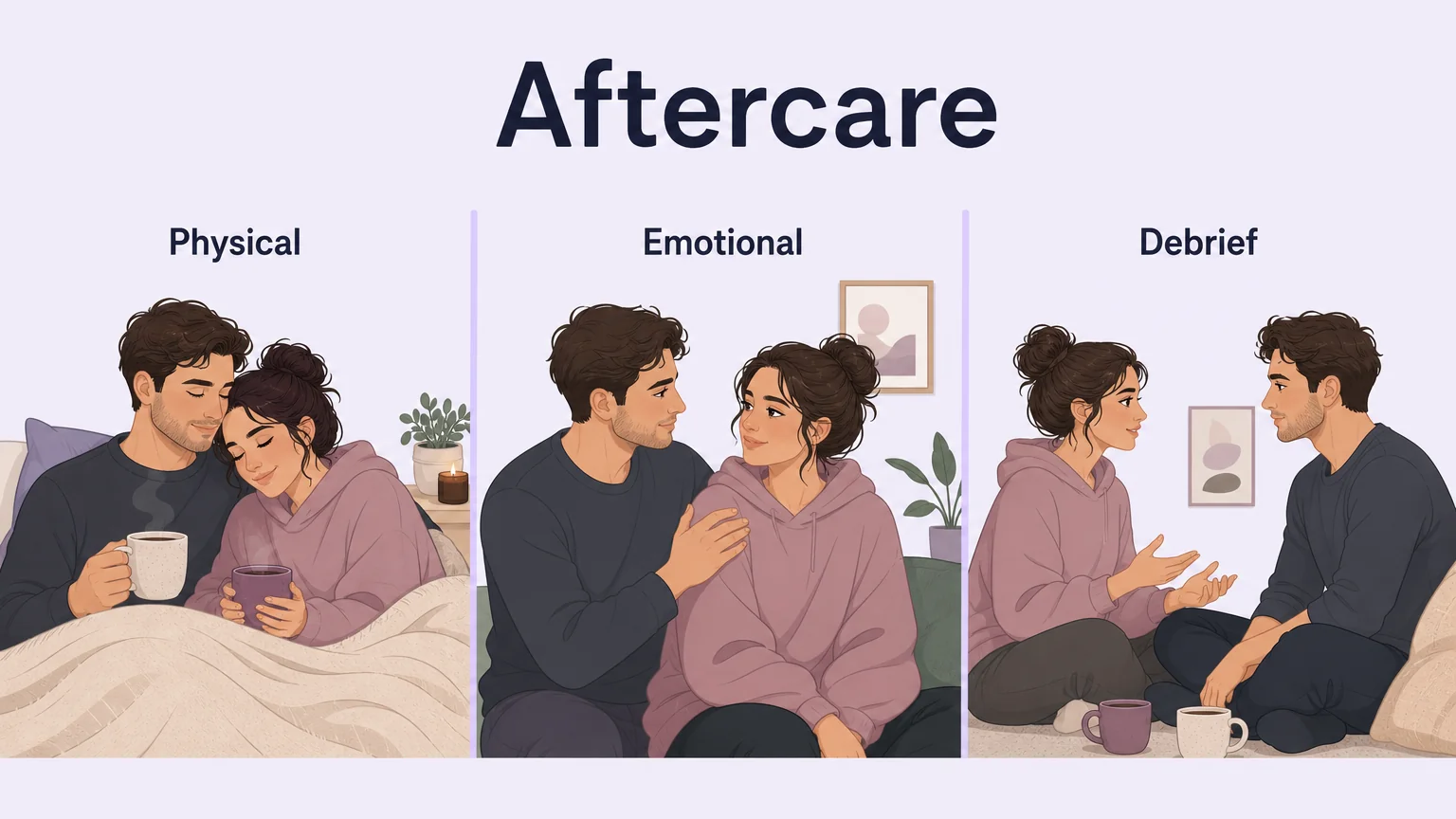
Aftercare is not optional and it is not an afterthought. It is the closing act of every scene, the bridge that brings both partners back to equal ground, and the single biggest predictor of whether someone will want to do DDLG again.
The Sex With Emily protocol breaks aftercare into three layers. Physical comfort: cuddles, blankets, stuffies, warm drinks. The body needs warmth, softness, and hydration to come down. Emotional reassurance: verbal praise, affirmation, “you did so well.” The little may feel exposed or vulnerable. Words close that gap. Debriefing: a brief discussion of what worked and what did not. Not a performance review. Just enough to learn.
The follow-up matters as much as the immediate aftercare. Have a second conversation the next day, back in adult headspace, about what to adjust for next time. Without this step, the same friction points repeat.
Think of aftercare as the scene’s landing gear. You can have a wonderful flight. If the landing is rough, that is what everyone remembers. You brought them into littlespace. You are responsible for bringing them gently back out.
22. Plan a Long-Distance Movie and Story Night

Distance does not break DDLG. It just changes the delivery method. A well-structured long-distance date night can create as much connection as an in-person scene because rituals and structure travel perfectly through a screen.
The playbook: schedule a specific time. Spontaneity is great in person but unreliable at a distance. The caregiver sends a “mission” earlier in the day: “Tonight we are watching Tangled. Have your favorite stuffie and a snack ready by 8pm.” Sync a movie via Teleparty, which works with Netflix, Disney+, Hulu, HBO, and YouTube. During the movie, the caregiver checks in: “Are you cozy? Show me your stuffie on camera.”
After the movie, the caregiver reads a short bedtime story over video call. They close with a goodnight affirmation: “You were such a good little one tonight. I’m proud of you.”
Alternative tools expand the options. CozyTwo adds synced YouTube, virtual hugs, and built-in games. Lovedove offers virtual FaceTime dates with mini-golf and trivia. Structure bridges distance. The ritual does the work when presence cannot.
23. Send Care Packages and Daily Voice Notes Across the Miles
The gap between video calls is where long-distance DDLG lives or dies. Daily micro-rituals and periodic physical packages keep the dynamic breathing between sessions.
Daily digital rituals come first. Good-morning and goodnight voice notes. Hearing the caregiver’s voice is the entire point. “What did you eat today?” accountability texts. Sticker chart photo exchanges: the little sends a photo of today’s stickers, the caregiver praises. Bedtime story voice notes, recorded during the day and sent for nighttime.
Periodic physical care packages come second. A box mailed every few weeks or once a month. Inside: a small stuffie, a new coloring book, a snack the little loves, a handwritten note from the caregiver. Most powerfully, a piece of the caregiver’s clothing: a worn t-shirt that smells like them. It is one of the strongest long-distance sensory anchors available.
The package arrives and for a moment, they are in the room with you. That is what you are building.
24. Try a DDLG-Inspired Fitness Routine
Movement and littlespace are not opposites. They are natural allies. A DDLG-flavored workout feels less like exercise and more like recess. Which means you will actually do it.
The DDLG Forum fitness community has surfaced specific, tested options. Follow Disney Dance routines on YouTube. Hula hoop in the backyard. Jump rope to a favorite soundtrack. Play Ring Fit Adventure on Nintendo Switch. The common thread: movement framed as play, not punishment.
For goal-oriented littles, The Conqueror Challenges offer Looney Tunes or Scooby Doo themed virtual races. You log real-world distance and unlock story content as you go. The sticker chart system from idea 14 integrates here naturally. Fitness goals earn stickers and rewards on the same chart.
For partnered play: the caregiver leads a living-room dance party, counts reps, or cheers at a hula hoop record. Running around until you are breathless and giggling is exactly what recess felt like. That is the point.
25. Cook or Bake Something Simple Together
Cooking in littlespace is not about the food. It is about the caregiver guiding each step, the little following instructions, and the shared pride when something warm comes out of the oven.
The caregiver picks a simple recipe: cookies, brownies, cupcakes, pizza from scratch. They lay out ingredients in little-friendly portions and guide each step. The little cracks the egg. The caregiver fishes out the shell. The little stirs the batter. The caregiver holds the bowl. Sprinkles go on top freely, generously. The caregiver handles the oven and cleanup.
When the timer dings, they eat warm cookies together with milk. The sensory richness of the activity is part of its power: the smell of vanilla, the texture of flour, the warmth of the oven, the taste of something made together.
For long-distance: both partners bake the same simple recipe on video call. The cookies might be lopsided. It does not matter. You made them together, and that is the flavor that counts.
FAQ
Is DDLG the same as pedophilia?
No. DDLG is a consensual dynamic between adults involving roleplay and power exchange. All participants must be eighteen or older. The community actively distinguishes itself from illegal activity, and reputable practitioners are clear about this boundary. This is the most common misconception, and it deserves a direct answer: DDLG has nothing to do with actual minors.
Does DDLG have to be sexual?
No. Many people practice DDLG entirely non-sexually, sometimes called age regression or agere in those contexts. For some, it is about stress relief and emotional comfort. For others, it includes sexual elements. There is no single correct approach. The only answer that matters is what the participants have discussed and consented to.
Can I try these ideas without a caregiver?
Yes. Many items on this list (coloring, guided audio, sensory toolkits, comfort boxes, video games, blanket forts, tactile play) work perfectly solo. Solo littlespace is valid, common, and often the best way to learn what the headspace feels like before involving a partner.
How do I bring up DDLG with my partner?
Pick a calm, neutral time outside the bedroom. Frame it as exploration, not demand. Use “I” statements: “I have been reading about something called DDLG and I think I might enjoy the caregiving dynamic because…” Be prepared to explain what it is and what it is not. Offer resources. Respect their reaction. They may need time to process.
What if I try these ideas and cannot get into littlespace?
Do not force it. Pressure is the enemy of littlespace. Start with one small, genuinely enjoyable activity. Try sensory stacking: soft textures, childhood snacks, cartoons. Notice even subtle shifts: shoulders dropping, breathing slowing. Those count. As one guided regression creator frames it: you are allowed to just be near it, to feel a little lighter, to let the world shrink down to something you can hold in your hands. The goal is not depth. It is feeling a little lighter than you did before.