You’ve spent another evening explaining ethical non-monogamy to a stranger on Tinder who responded with “so… how does that work?” Maybe you’ve been there. Maybe you’ve been there this week.
Most dating apps were built for one story: two people match, delete the app, roll credits. If you’re practicing ENM, polyamory, or navigating an open relationship, that story doesn’t cover your life. A wave of apps now exists that treat non-monogamy as the default, not an edge case you have to apologize for.
The difference between an app that tolerates ENM and one built for it comes down to a few concrete things. How couples are supported: one unified account, or two profiles awkwardly linked. What privacy controls exist: incognito mode, photo verification, screenshot blocking. Whether the culture expects you to explain your boundaries in every first message, or whether people already get it.
We tested the landscape. Here are the seven apps that deliver.
1. 3Fun: Purpose-Built for Couples Who Want to Explore Together
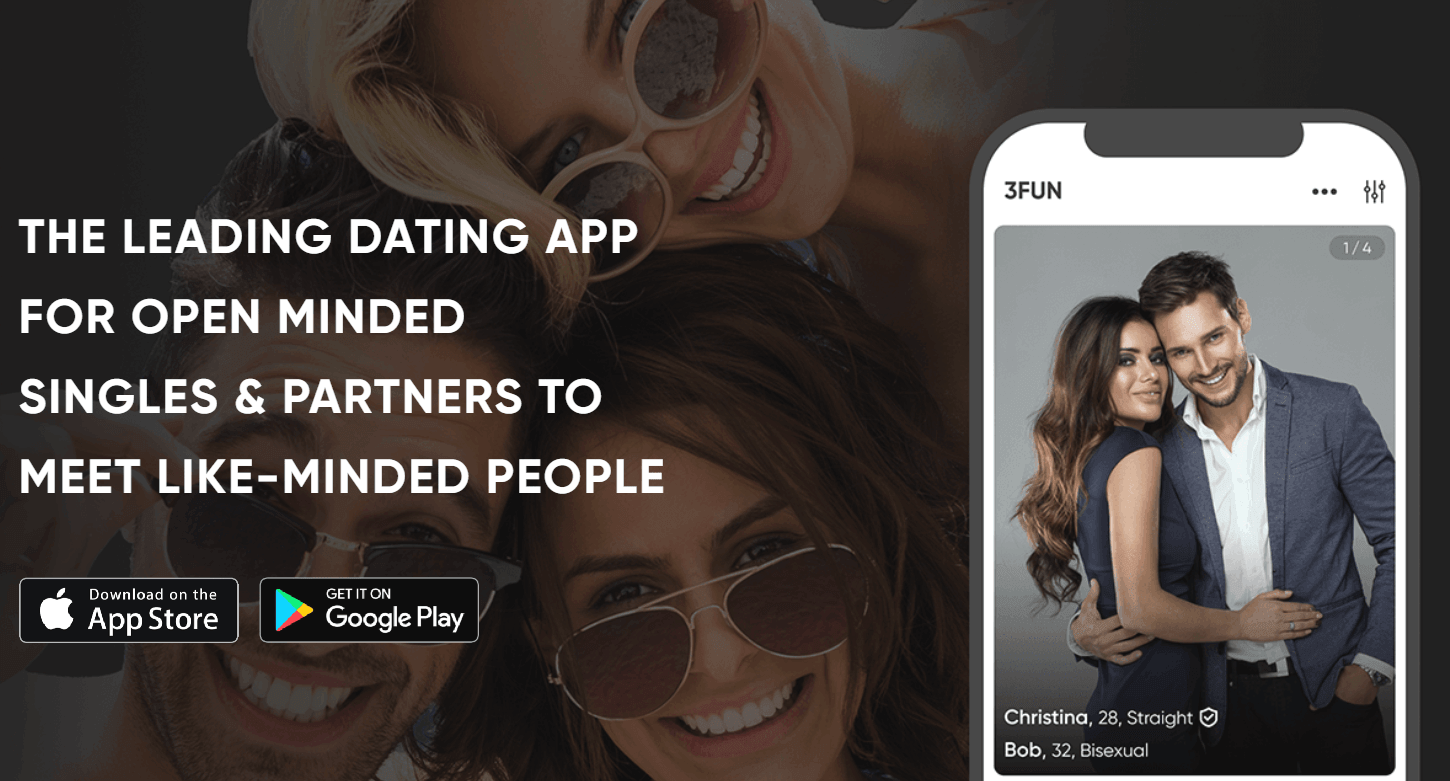
Most ENM apps treat couples as two individuals who happen to be dating. Two separate profiles, two separate inboxes, and an ongoing coordination headache about who said what to whom. 3Fun solves this at the architectural level. A synced couple account means both partners share one profile, one chat thread, one experience. No more texting screenshots to your partner to keep them in the loop.
The free tier is one of the strongest in the space. Unlimited messaging, no paywall on conversations. You can match, chat, and arrange to meet without ever entering a credit card. Photo verification reduces the catfishing problem that plagues Feeld. Around three million active users worldwide gives it enough density to be viable in most regions, and the demographic mix matters: 51% of female users on 3Fun identify as bisexual. That creates an environment where chemistry with a third is more organically likely, not something couples have to chase.
38.4% of 3Fun users had their very first ENM connection on the app. Before joining, nearly 70% reported minimal understanding of ENM. After joining, the share reporting a positive, informed understanding jumped from 30% to 68%. For many couples, 3Fun is where the exploration starts, not just where the matching happens.
VIP costs $29.99 a month, pricier than Feeld’s Majestic, and unlocks priority messaging and advanced filters. The free tier is strong enough that most couples can hold off on paying until they confirm the app is active in their area. Some users in 2026 report match and message bugs, and pockets of outdated profiles persist in less active regions. Customer support responsiveness is a recurring complaint worth knowing about before you go all-in.
Best for: couples exploring together, whether you’re brand new to ENM or experienced swingers who want a platform that treats your partnership as the unit. Get 3Fun on Google Play or Apple Store. Skip if: you’re solo-poly or primarily seeking independent connections without couple dynamics.
2. Feeld: The ENM Heavyweight with the Biggest User Base, When It Works
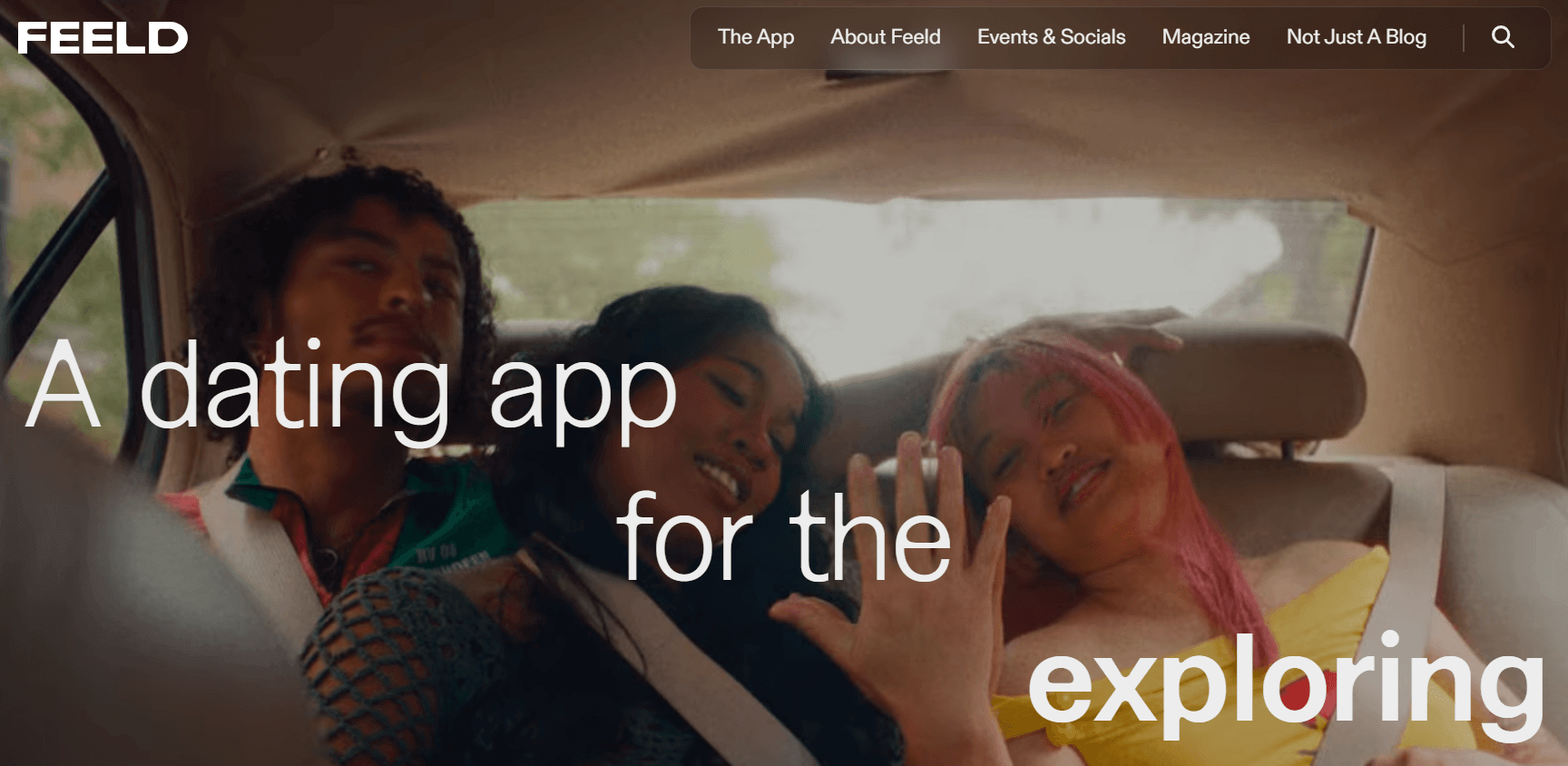
Feeld is the app where non-monogamy is the default, not the exception. It has the biggest concentration of explicitly ENM, kink-friendly, and queer users of any app on the market. Walking into Feeld feels different from walking into Tinder. Nobody asks what “ENM” means in their opening message.
The feature set backs up the reputation. Twenty-plus gender identities and sexualities. Constellation, which lets you link up to five partner profiles, avoiding the “whose account is this?” confusion that plagues couples on other apps. Desires tags that surface compatibility around kinks, relationship structures, and what you’re open to. The free tier includes full messaging without payment and no ads on any tier. That last part is rare in 2026.
Majestic, the paid tier, runs $12 to $30 a month and unlocks incognito mode, private photos you share only after matching, and the ability to see who liked you first. In a major city like New York, London, or Berlin, that upgrade speeds things up. Outside those metros, the user base thins considerably, and paying won’t fix the fundamental problem of not enough people.
Now the part nobody puts in the marketing copy: Feeld is buggy. Users report crashes and disappearing matches. Majestic features sometimes stop working after payment processes. A 2024 security incident exposed private messages and photos; affected users were not notified. Community veterans note that as the app has grown, the culture has diluted. Some call it “Feeld for Normies,” a wave of newcomers treating ENM like a weekend experiment rather than an ongoing practice.
If you’re in a major city, start with Feeld’s free tier. The crowd is worth the frustration. If you’re outside a major metro, supplement with OkCupid for volume, or you’ll be shouting into a very stylish void.
3. OkCupid: The Mainstream App That Gets Non-Monogamy
OkCupid is the best mainstream app for ENM dating. It lets you set your relationship status to “non-monogamous” explicitly. You can link partner profiles, a feature nearly unique among big-name apps. Twenty-two gender identities and twelve sexual orientations give you room to be specific. And the compatibility question bank includes ENM-relevant filters: views on jealousy, relationship structure preferences, safer sex practices. It is the only mainstream app where you can screen for compatibility around the things ENM daters actually care about, not just proximity and photo appeal.
The app wasn’t built for ENM, it launched in 2004 as a compatibility-driven dating site, but its DNA of matching questions and granular identity options made it a surprisingly good fit.
With roughly fifty million users, OkCupid works in places where niche apps fall flat. If you live in a mid-size city of half a million people, this is likely your best option for volume. Free messaging with matches keeps the barrier low. Premium runs $17 to $35 a month depending on term length.
The downsides are worth knowing before you invest time. New users get flooded with bot likes within minutes, engineered to sell subscriptions. Match Group ownership means algorithm changes prioritize engagement over genuine compatibility. The free tier caps you at ten likes per day, workable for intentional dating but limiting if you prefer to cast a wider net. And the user base, while ENM-friendly, is majority monogamous. You will still need to filter.
Best for: ENM daters in smaller cities who need volume, beginners who want to test the waters without committing to a niche app, and anyone who wants one app that handles both dating and identity well. Skip if: you’re in a major city with a lively Feeld scene and want a purely ENM environment.
4. #open: For When You Want a Poly Community, Not Just a Dating Pool
Feeld is becoming “ENM for everyone,” and not in a good way. As the user base has swelled, the cultural density has thinned. Newcomers treat non-monogamy like a novelty. You end up doing education labor in conversations that should be about connection.
#Open is the counterweight. Built by polyamorous people for polyamorous people, it is the most culturally coherent ENM app available. Everyone here understands the vocabulary. Nobody needs “kitchen table poly” or “relationship anarchy” explained to them in the DMs. Hashtag-based search lets you find people by interest (#solopoly, #RA, #kitchentable) rather than just swiping on faces. Partner-linked profiles support coupled and polycule visibility without reducing anyone to a side character.
Verified members add a layer of trust, and the community norms around consent and communication are stronger here than on any app with a larger user base. The free tier includes messaging with matches, and Supporting Membership runs $10 to $15 a month for unlimited Sparks and advanced filters.
Now the reality check: #open has roughly 2,100 monthly active users globally. In San Francisco, Brooklyn, or Berlin, you will find your people. In a city of 200,000 in the Midwest, the app is a ghost town. Think of #open as a supplement, not a primary platform. Pair it with Feeld or OkCupid for reach, and let #open serve the cultural depth that larger apps have lost.
Best for: philosophically committed poly people who value shared vocabulary and community norms, and anyone tired of explaining ENM basics to strangers. Skip if: you are outside a major progressive city or want a single app that covers all your bases.
5. Pure: Maximum Privacy for ENM Daters Who Cannot Afford to Be Seen
For some people, being recognized on a dating app is annoying. For others, teachers, doctors, lawyers, public figures, anyone in a conservative community, it is career-threatening. Pure is built for the second group.
The core premise is radical: your profile self-destructs after twenty-four hours. No permanent record. No archive. Nothing for anyone to screenshot and share later. Pure blocks screenshots at the system level. Messages are end-to-end encrypted. Photo verification confirms you are real without storing your images on a server. This is a different category of privacy from Feeld’s incognito mode or 3Fun’s visibility controls. Your data cannot leak because your data does not persist.
Women use Pure for free. Men pay $7 to $15 a month or around $70 annually. Posting a profile requires a subscription, which keeps the user base more intentional than the free-for-all on larger apps. The culture is sex-positive and unusually direct, which means less pretense but also less of the community warmth you might find on Plura or #open.
The trade-offs are significant. Pure is not ENM-specific, so you will encounter people across the full spectrum of dating intentions. The UI, while visually distinctive, can be confusing to navigate. The user base is modest, though growing steadily. And the subscription requirement means you are committing before you can test whether anyone interesting is nearby.
Best for: anyone whose professional life cannot survive being outed, people in conservative or small communities, and daters who want privacy by design rather than privacy by a toggle buried in settings. Skip if: you want a large, ENM-specific dating pool or prefer a free-to-start experience.
6. Plura: The ENM App That Gets You Off the App and Into Real Rooms

Plura users who attend an in-person event match with other attendees at ten times the rate of pure app swiping. The insight is not complicated. It is easier to feel chemistry with someone you have shared a room with than someone you have shared a text thread with.
Plura, formerly Bloom Community, inverts the typical dating-app model. Instead of swiping endlessly and hoping for a match, you browse real-world sex-positive events: munches, workshops, meetups, discussion groups on boundaries, jealousy, and scheduling. You can see who else is attending, connect before the event, and match afterward. There is a friend-only mode for people who want community without the dating pressure, useful for newcomers who want to learn the landscape before diving in.
More than a thousand monthly events are listed, though the concentration is heavily US: San Francisco, New York, and a handful of other progressive metros. Plura+ costs $24.99 a month and unlocks additional filtering and event features. If you are not in an event city, Plura is just another small dating app.
But if you are, it solves the deepest problem in ENM dating. Therapists who work with ENM clients describe a specific kind of burnout: too many shallow app connections that all require emotional labor to maintain. Plura’s model, meeting first, texting later, is the closest thing to an antidote.
Best for: people who want community over swiping, newcomers to ENM seeking low-pressure social entry, and anyone who prefers meeting people in rooms rather than reading bios on a screen. Skip if: you are not near an active event city or prefer the anonymity of app-first dating.
7. Grindr: Surprisingly Useful for Queer ENM Connections
Grindr is not a polyamory app. But it has evolved beyond its “gay men only” origins into something more gender-diverse, and that shift makes it unexpectedly useful for queer ENM daters.
The dynamics are different here. Grindr’s culture is direct, sex-forward, and unapologetic. For bi men, trans people, and queer folks operating in ENM spaces, that directness can be a relief. You spend less time explaining your situation and more time connecting. Searchable tags like “poly,” “bi,” and “t4t” help filter for compatibility. The profile field for your most recent HIV test result is a signal of a culture that normalizes health disclosure, something dedicated ENM apps have been slow to adopt.
The free version limits how many profiles you can view, a restriction that varies by country. XTRA and Unlimited memberships remove those caps and add features like incognito browsing and read receipts. The open inbox means anyone can message you, images included, which is either a feature or a hazard depending on your tolerance. Location-based visibility can be a privacy risk if you are not mindful about where you open the app.
Grindr works best as a supplement if you are already using Feeld or OkCupid. It fills a gap for queer ENM connections that are harder to find on couple-focused or poly-community apps. Know what you are walking into, and use the block button without hesitation.
Best for: queer ENM daters, especially bi men and trans people, and anyone comfortable with direct, sex-positive communication. Skip if: you prefer a moderated, couples-friendly space or want to avoid unsolicited messages entirely.
8. Mainstream Apps: Tinder, Hinge, and Bumble, Quick Takes for ENM Daters
The big three mainstream apps now let you check a box for non-monogamy. That is genuine progress. What happens after you check the box is the part worth understanding before you invest your time.
Tinder has the largest user pool on the planet. The ENM relationship type exists in profile settings, but the culture is overwhelmingly monogamy-default. Expect to explain your situation in most conversations, and expect some people to unmatch when they actually read your bio. The free tier is restrictive on swipes, and paid tiers climb to $40 a month. Use Tinder for volume, not culture.
Hinge has better matching momentum than Tinder, and the prompt-based profiles give you more room for nuance than a 500-character bio. But free users get only eight likes per day, and the user base is still mostly monogamous. If you are deliberate about who you match with, Hinge can work. If you’re casting a wide net, the limits will frustrate you.
Bumble lets women message first, supports non-monogamy as a profile option, and went through a widely mocked 2024 rebrand, nicknamed the “Bumble Fumble,” that damaged user trust. Some poly users report profiles removed for mentioning non-monogamy; enforcement is inconsistent across moderators. The twenty-four-hour message window creates a countdown-clock pressure that works against the deliberate, boundary-respecting communication ENM requires.
The verdict: mainstream apps are supplements, not primaries. Pair one with a dedicated ENM app and let the specialized platform do the heavy lifting. The mainstream app gives you reach; the ENM app gives you compatibility.
How to Choose the Right ENM App for Your Situation
The best ENM dating app is not a universal answer. It depends on your relationship structure, where you live, how much privacy you need, and whether you are dating solo or as a couple.
You are a couple exploring together. Start with 3Fun’s free tier. The synced account and group chat were built for exactly your situation. Add Feeld for individual exploration if both partners want independent connections too.
You are solo-poly in a mid-size city. OkCupid for volume, Feeld for ENM-specific matches. Niche apps like #open will frustrate you because the user base is too thin outside major metros.
Privacy is non-negotiable. Pure for dating, Plura for community. Feeld’s incognito mode at the Majestic tier is a solid third option if Pure’s ephemeral model feels too extreme for your comfort level.
You are on a budget. Feeld free tier plus OkCupid free tier. Both offer full messaging without payment. MoreThanOne is entirely free if you are on Android. You can date effectively for zero dollars.
You want community, not just dates. Plura for events, Lex for queer text-based community, FetLife for kink and ENM discussion groups. Apps are doorways. The most sustainable ENM lives are built on real-world connections, and the platforms that prioritize those connections produce better outcomes than the ones optimized for infinite swiping.
The consistent advice across community discussions and expert reviews: use two apps, one ENM-specific, one mainstream. Supplement with community spaces. Do not pay a dime until you have confirmed the app is active in your area. A free tier that works in Brooklyn might be a ghost town in Boise. Test before you commit.
FAQ: Your ENM Dating App Questions, Answered
Which app has the most ENM users?
Feeld. It is the only app where non-monogamy is the default assumption rather than an exception you flag in settings. In major cities, the density is unmatched. Outside major cities, OkCupid’s fifty-million-user pool may give you more reach than any niche app.
Can couples use dating apps together?
Yes, but not all apps support it well. 3Fun is built from the ground up for couples with synced accounts and group chat. Feeld supports partner linking via Constellation, connecting up to five partners. #open offers partner-linked profiles. Mainstream apps like Tinder and Bumble offer no couple features and may remove joint profiles. If you are dating as a unit, stick to apps designed for it.
Do I need to pay for ENM dating apps?
No. Feeld, OkCupid, and 3Fun all offer functional free messaging with matches. MoreThanOne is entirely free on Android. Start with free tiers. Only upgrade after confirming the app has an active user base in your area. Paying for Majestic or VIP in a city where nobody is active is the fastest way to resent an app.
How do I avoid being treated as a disposable third?
Use apps with clear identity and desire labels. Feeld and #open are strongest here. State your boundaries in the first line of your profile: “Not interested in being anyone’s experiment” or “Looking for ongoing connections, not one-time scenarios.” Block early and often. Couples who treat singles with genuine respect are easy to spot: they lead with transparency about what they are looking for, and they ask about your comfort before they describe their fantasy.
What is the one app I should start with?
If you are in a major city, Feeld. If you are not, OkCupid. If you are a couple, 3Fun. Start with two, one ENM-specific app for culture, one mainstream app for volume, and see where your best conversations happen.