A stone butch is a masculine-presenting lesbian who gives sexual pleasure but does not want to be touched during sex, and who finds her own satisfaction in her partner’s. Ask what is a stone butch and that is the whole answer in one sentence.
The term is not a synonym for butch, and it is not a description of how someone looks. It is not a diagnosis. It names a boundary plus a history.
Start with what the term means, then where the word came from, who uses it now, and how partners handle it. Every unfamiliar term gets defined as it appears, starting with butch and femme. One rule up front: stone is self-chosen community language, not a clinical category, and it carries a lineage rather than a diagnosis.
What Does Stone Butch Mean? The Definition in Plain Terms
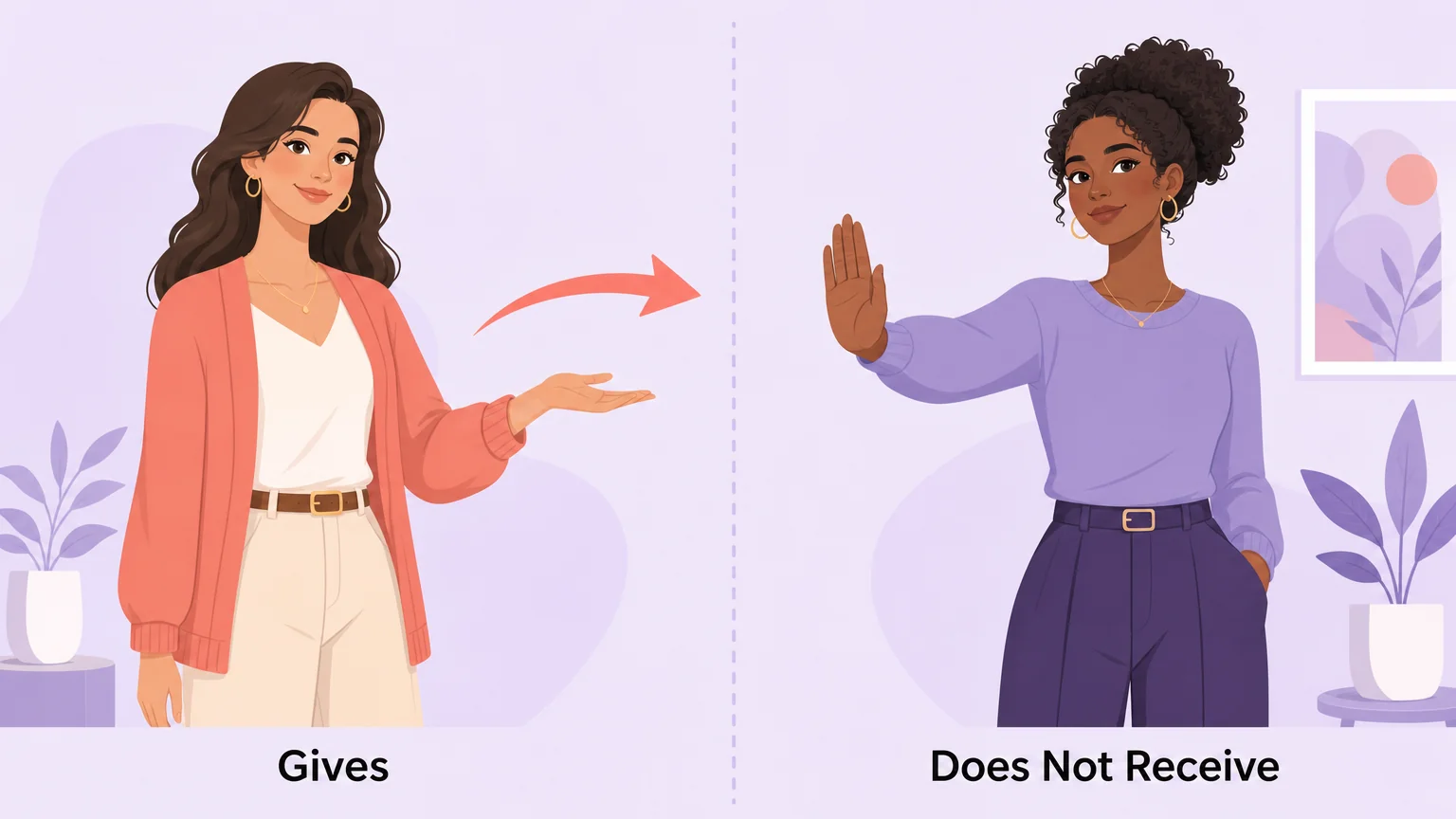
A stone butch is a lesbian who presents in a traditionally masculine way and does not allow her genitals to be touched during sex. The pleasure runs one direction: from her to her partner.
The Wiley Blackwell Encyclopedia of Gender and Sexuality Studies calls sexual untouchability the defining characteristic of a stone butch. Bonnie Zimmerman, in Lesbian Histories and Cultures (2000), writes of a lesbian who does not allow herself to be touched during lovemaking but who may experience vicarious sexual pleasure from her partner’s enjoyment. Vicarious means secondhand: her arousal arrives through her partner, not her own body. Zimmerman dates the usage to the 1940s and 1950s.
So how is this sexual for her? Community writing names the routes: self-stimulation, indirect contact, and the gratification of pleasing a partner. The giving is the sex. This is not celibacy or a low sex drive, and it is not doing nothing.
Receiving is genuinely optional here, which dismantles the assumption that sex must be reciprocal to count. For some the boundary is absolute. For others it is partial or depends on the partner and the situation.
Two words do a lot of work here: butch is a masculine gender expression and community role, femme a feminine one. Neither says who does what in bed.
Stone Butch vs Butch: What’s the Difference?
The cleanest way to hold the two words: one can be stone without being butch, butch without being stone, and being a stone butch has its own meaning and history.
Butch describes gender expression and a community role. Stone describes a sexual boundary. Neither one implies the other.
The layer that trips people up is butch against masc. One reader puts it this way: butch feels like an identity, and masc feels like an adjective. Masc sits above butch as the broader term and carries no lineage or community role.
Soft butch settles the question. It is presentation only, with no sexual-role implication, and it is not a lesser form of butch. A soft butch look does not preclude being stone in bed, the confusion the term attracts most often.
The wording feels slippery because it is shifting. Many younger masculine-presenting lesbians now prefer masc or soft masc, sometimes from imposter syndrome, though the preference is about language rather than about who is stone.
The two words describe different layers of a person, so reaching for the wrong one is a slip rather than an insult.
Stone Top, Stone Femme, and Touch Me Not: How the Terms Differ
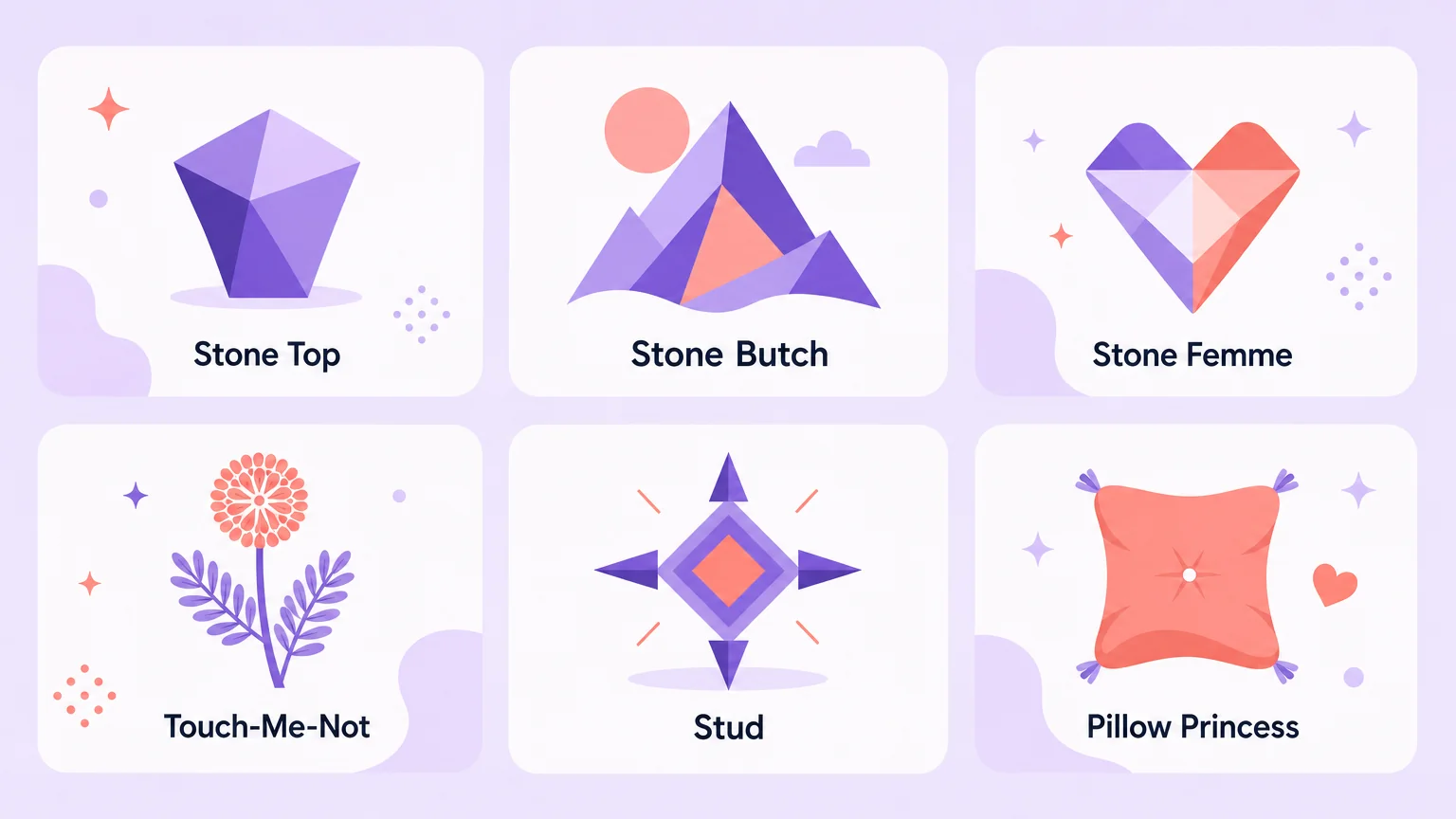
These terms sound interchangeable and mostly are not. Top gives, bottom receives.
| Term | What it describes | Who uses it |
|---|---|---|
| Stone top | Gives, does not receive | Anyone |
| Stone butch | That plus a masculine identity | Butches |
| Stone femme | A feminine lesbian who only gives | Femmes |
| Touch-me-not | The same boundary | Black queer people |
| Stud | A masculine identity with its own lineage | Black sapphic communities |
| Pillow princess | The receiving counterpart | Anyone |
Stone top is the broadest umbrella: newer, vaguer, open to any presentation, and an entry point for people who are neither butch nor lesbian.
A stone femme is a femme lesbian who only wants to give and not receive sex. That breaks the assumption that stone means masculine. It is often misread as a femme who dates only stone butches.
Black queer people use touch-me-not; touch-me-not stud is the Black sapphic pairing. Choosing it does not erase stone’s history.
Stud is not a synonym for butch and carries its own Black lineage. Pillow princess names the receiving partner, itself a boundary that need not pair with a stone partner.
In practice these terms get swapped freely. The differences are specificity and cultural context, not behavior. Arguing over who is allowed which kind of sex is misplaced judgment, not a rule.
Where Does Stone Butch Come From? The 1940s and 50s Bar Scene
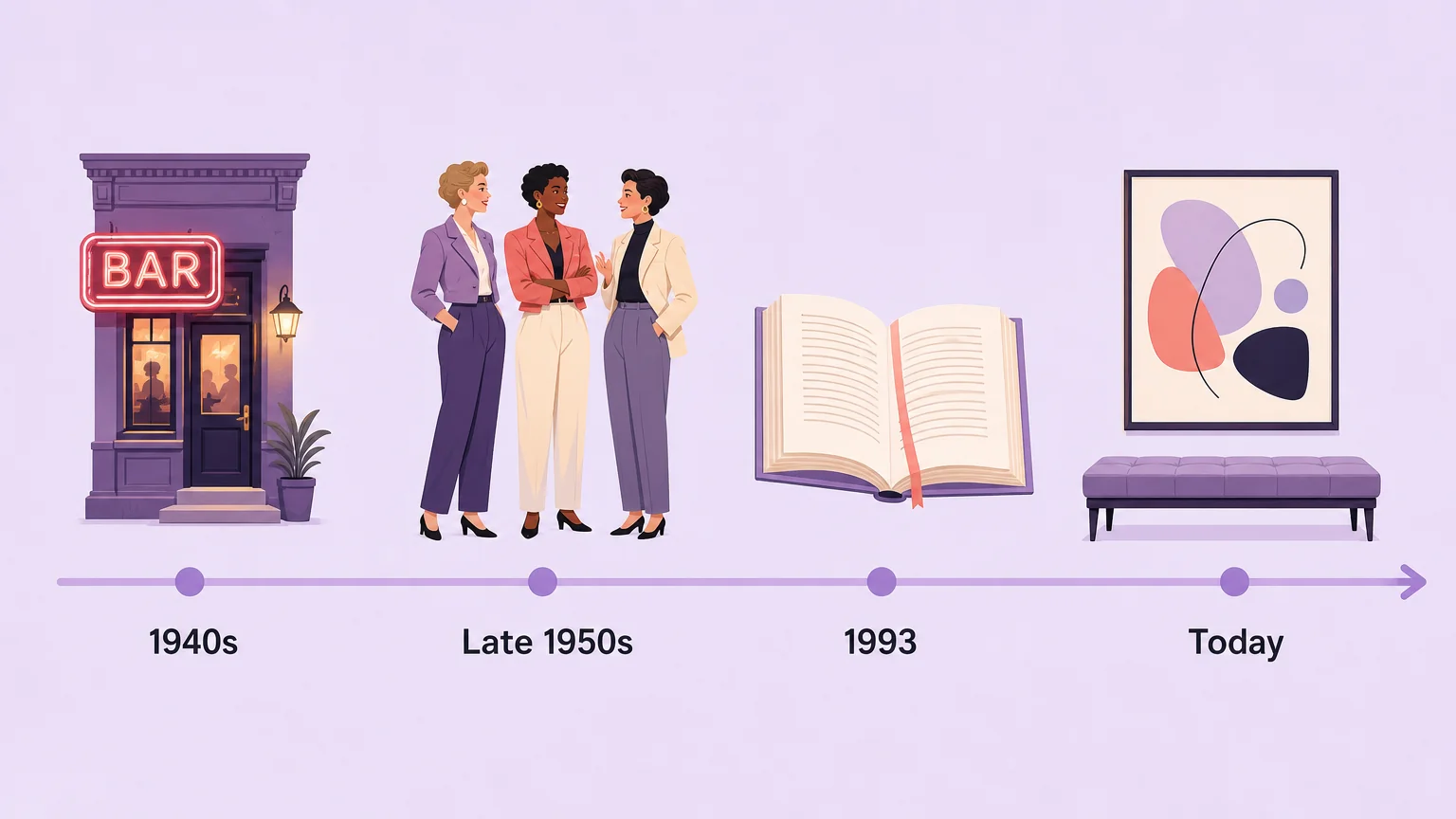
The word and the boundary are about forty years older than the book most people associate with them.
The term emerged in a largely US white, working-class lesbian context in the 1940s and 1950s, in bars that were among the few places women who loved women could gather openly. That is where butch and femme roles took shape.
Kennedy and Davis, in Boots of Leather, Slippers of Gold, describe those roles as a social imperative and a culture of resistance, built by Black and white working-class lesbians and foundational to later gay liberation. Their book draws on oral histories of 45 women in Buffalo, New York, covering the mid-1930s to the early 1960s, and they call their lasting contribution the documentation of those communities as communities of resistance.
Cross-dressing laws meant police could arrest a butch unless she wore a minimum number of items of feminine clothing, so presentation was risk management rather than fashion.
Stone butches commanded respect in those bars as symbols of strength and community defense. Butches held the line when police or homophobic crowds attacked. The culture came first, the word later.
When Stone Was an Expectation, Not a Choice
In mid-century bar culture, being flipped, meaning letting a femme make love to you or touch you, was considered an embarrassment for a butch.
In the late 1940s and early 1950s the butch role as sexual initiator centered loosely on penetration. By the late 1950s and early 1960s the designation stone butch emerged: no penetration and no touching by the femme. It was never a fixed 1940s category, which makes the word younger than the culture it comes from.
The rule tightened as a package. As sexual definitions of butch narrowed, acceptable dress codes narrowed with them. That is social role enforcement, not a bedroom rule.
This does not mean every butch was stone. Stone was both an identity in its own right and, for a period, an expectation pressed on butches who did not all want it.
It also explains why a separate term exists. African American lesbians were frequently excluded from mid-century bars through racist practices such as double-carding, so that culture was not equally open to everyone. Touch-me-not developed in Black sapphic communities with its own resonance.
This history explains why the term carries weight. It is never a claim about why any individual today is stone, and never a reason to tell someone their identity was imposed on them.
What Is Stone Butch Blues, and Did It Invent the Term?
The novel popularized the term. It did not invent it.
Leslie Feinberg’s Stone Butch Blues (1993) carried the term into broad cultural use, and Feinberg described it as defying easy classification, both a lesbian novel and a transgender novel.
Two misreadings persist. It is not an autobiography, though it may parallel events in Feinberg’s life, and it turns the protagonist’s journey into a metaphor for coming to consciousness about capital, labor, collectivity and political action. Feinberg also chose fiction deliberately, as a thin disguise to thwart what she called the naked literalism of reading a life off the page.
She gave her own account in 2003: she began the novel as a continuation of her work as a grass-roots organizer, framed her method as you have to have lived the reality to write the fiction, and called herself essentially a working-class activist.
Her metaphor for stone: being stone is like being a fortress, not because she does not want to feel, but because feeling too much had cost her too much.
The novel refuses the wrong-body story. Jess says she does not feel like a man trapped in a woman’s body, and when pressed on whether she is a woman, answers that she is a he-she and that it is different. She wishes they had their own words to describe themselves.
Is Stone Butch Caused by Trauma? Why the Myth Is Wrong
Being stone is not always, or even primarily, rooted in trauma.
That assumption has been named a misconception, and one non-binary stone lesbian calls it extremely damaging. Asking someone why she is stone is considered rude. Being stone can be a positive assertion of sexual autonomy and boundaries instead.
So where did the myth come from? Stone Butch Blues landed at a moment when butch, and especially stone butch, identities were widely dismissed as the frozen amalgamation of prejudice and pathology. The book is a heartfelt love song to a lost world, not a case study, and a culture already pathologizing stone read it as confirmation.
A subtler contributor: even sympathetic academic readings of the novel have described stone-ness as a tough exterior developed in the face of oppression. That is fair as a reading of a character. It becomes the myth the moment someone applies it to people who are stone today. The novel refuses it, since Jess rejects the wrong-body narrative the pathology reading depends on.
Different people simply have different boundaries about where they do not want to be touched. That is a complete explanation. Stone people have faced ostracism and ridicule in both straight and queer company, which is why the myth lands as a judgment.
Is Stone Butch the Same as Asexual?
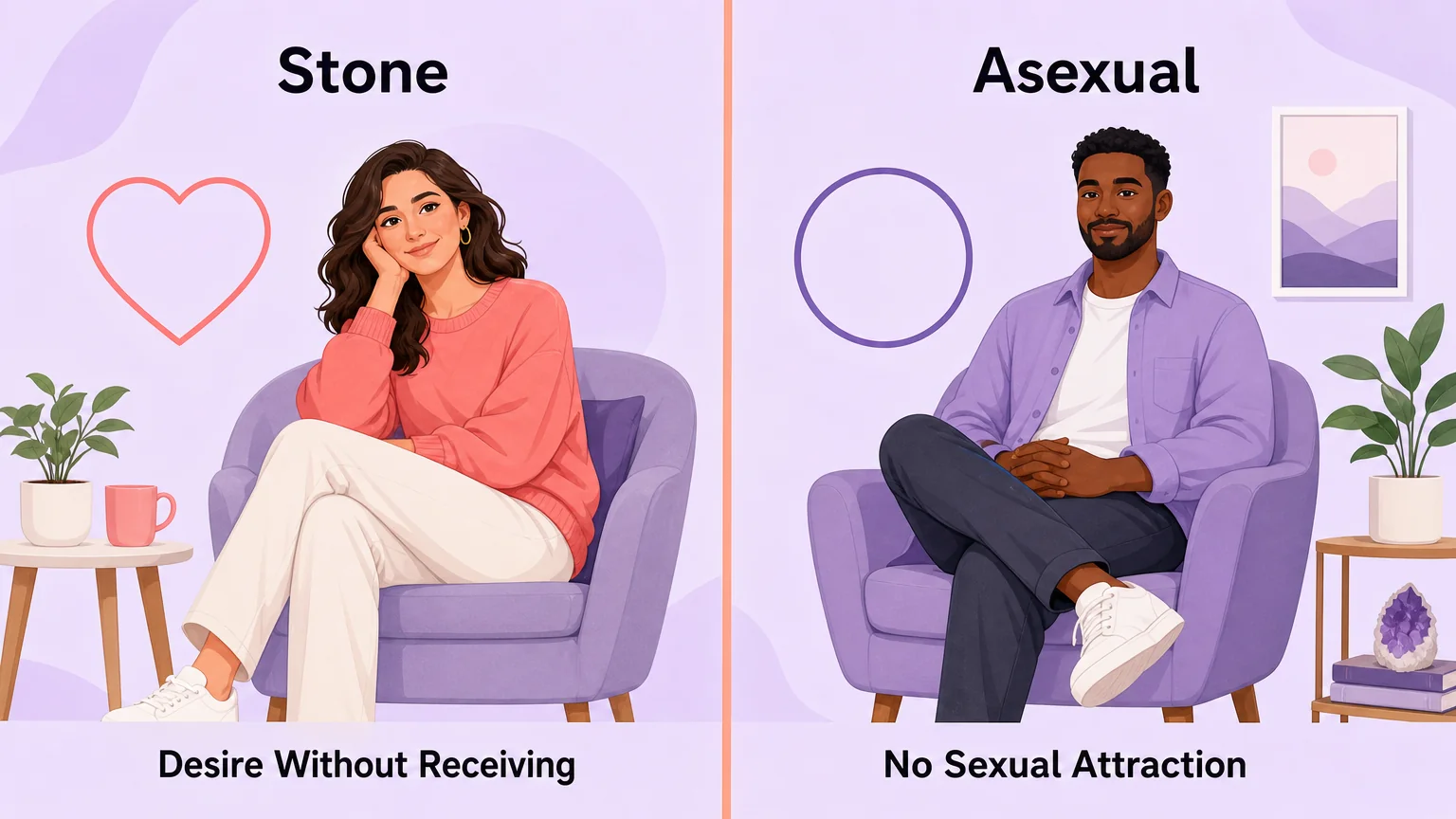
No. Asexuality concerns the absence of sexual attraction or an intrinsic desire to have sexual relationships. Stone concerns the direction of desire and touch, so the shorthand is desire versus touch receptivity.
Put it as a test. A stone person wants sex and wants to give it but does not want to receive. An asexual person does not experience the desire in the first place.
There is no false choice here. A person can be one, the other, both, or neither, and an asexual person may share the same behavior for entirely different reasons. Overlap is not a contradiction.
For readers arriving from outside sapphic contexts, the missing vocabulary matters. Someone who is sex-averse, meaning they do not want sex for themselves, may recognize the same pattern in their own life. Iamvanosexual describes disliking touching others, and placiosexual describes disliking being touched. The sapphic equivalent is giver versus receiver, or stone butch versus pillow princess.
One fairness note. The word stone is so bound to butchness and lesbianism that people outside those identities who share the dynamic sometimes feel they cannot use it, reaching for sex-averse instead. Stone people have reported hearing their own term used as an insult, with one saying they have only ever heard it in a condescending context.
How Do You Know If You’re a Stone Butch?
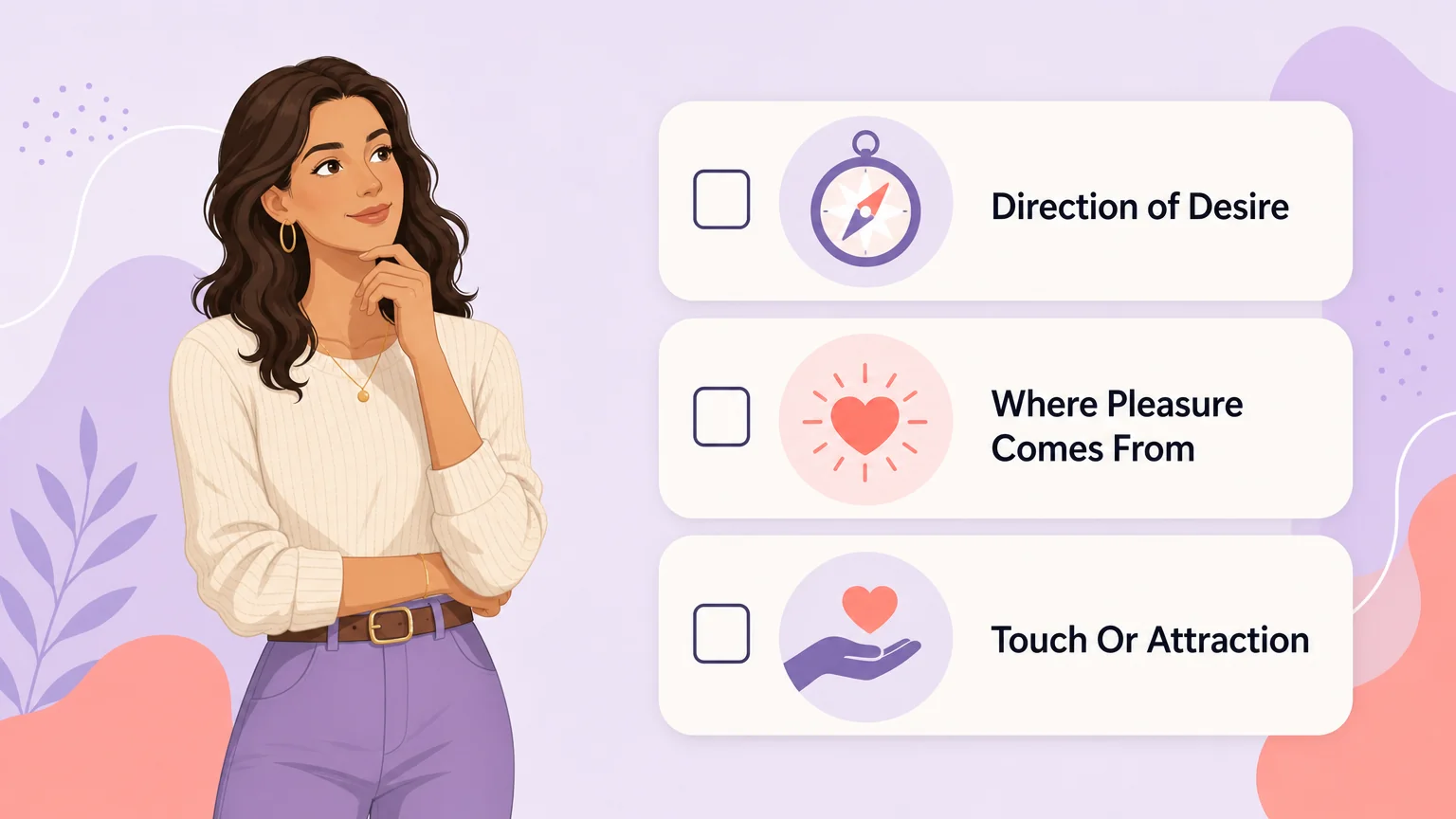
There is no test. It is a pattern people recognize in themselves, and the recognizing is the whole answer.
The distinguishing feature is wanting quite literally zero sexual pleasure or stimulation from the other person.
The counter-case matters. Stone does not mean having sexual or kink boundaries or limits. Everyone has those, and having them does not make you stone.
Check the direction of your desire rather than the length of your limits list. Ask where the pleasure comes from: giving, self-stimulation, indirect contact, or pleasing a partner. Separate not wanting to receive touch from not experiencing attraction at all. Notice whether the no-touch boundary holds by default or only with specific partners.
One account calls it an incredibly frustrating journey of self-questioning: someone felt fairly butch young, questioned whether she was trans, and only later recognized no inclination toward reciprocal sex. Recognition can also run backwards through shame, as when a younger person carries disgust for butch appearance long before identifying that way herself.
The last question is whether stone butch carries identity weight or is purely behavioral. It offers certainty and structure to people tired of ambiguity, plus a lineage of older butches who pass the knowledge down.
Can You Be a Stone Butch If You’re Not a Woman?
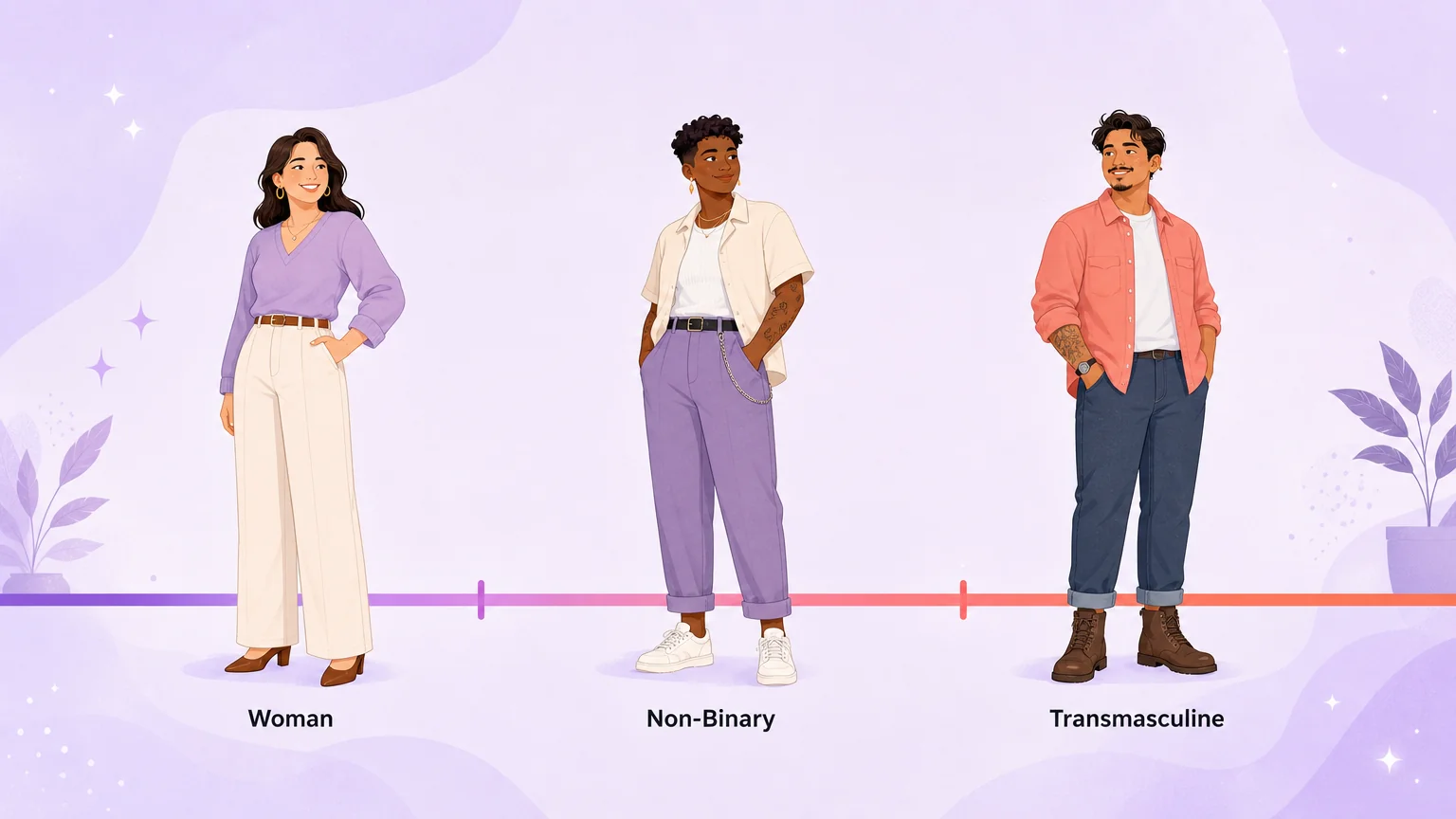
Stone butches most often identify as female but not as women, and take on masculinity codes in clothing and mannerisms, including an expectation of stoicism.
A note on language. Stone butches use a range of pronouns, and the she used in this article follows the sources and how the people quoted here speak about themselves.
Non-binary describes a gender identity that is neither exclusively man nor woman. Transmasculine describes someone assigned female at birth who moves toward a masculine identity or presentation. Either can overlap with stone butch identity.
Sara Crawley gives the most useful framing: the distinction between stone butch and masculine transgender selves is not the characteristics but the intended audience. Lesbian self-identification speaks to a lesbian audience, and transgender masculine self-identification does not. Same characteristics, different audience, different word.
Jack Halberstam defines the stone butch as a butch who does not let her partner touch her sexually, argues that female masculinity stages hybrid and minority genders rather than imitating virility, and places her in a grey zone between lesbianism and transsexuality.
S. Bear Bergman and S. Lochlann Jain both argue for butch as a contemporary third gender category, and transbutch names a butch who opposes traditional gender but keeps a lesbian-specific edge. For many who hold the identity, transness is not separable from it.
The label is contested. Kai Tjoon Lim’s 2025 work reframes stone butchness as erosion and mutability, not a fixed condition.
Dating a Stone Butch: How Partners Can Respect the Boundary
Stone top and pillow princess are boundaries, not selfishness or a problem for a stone butch’s partner to manage.
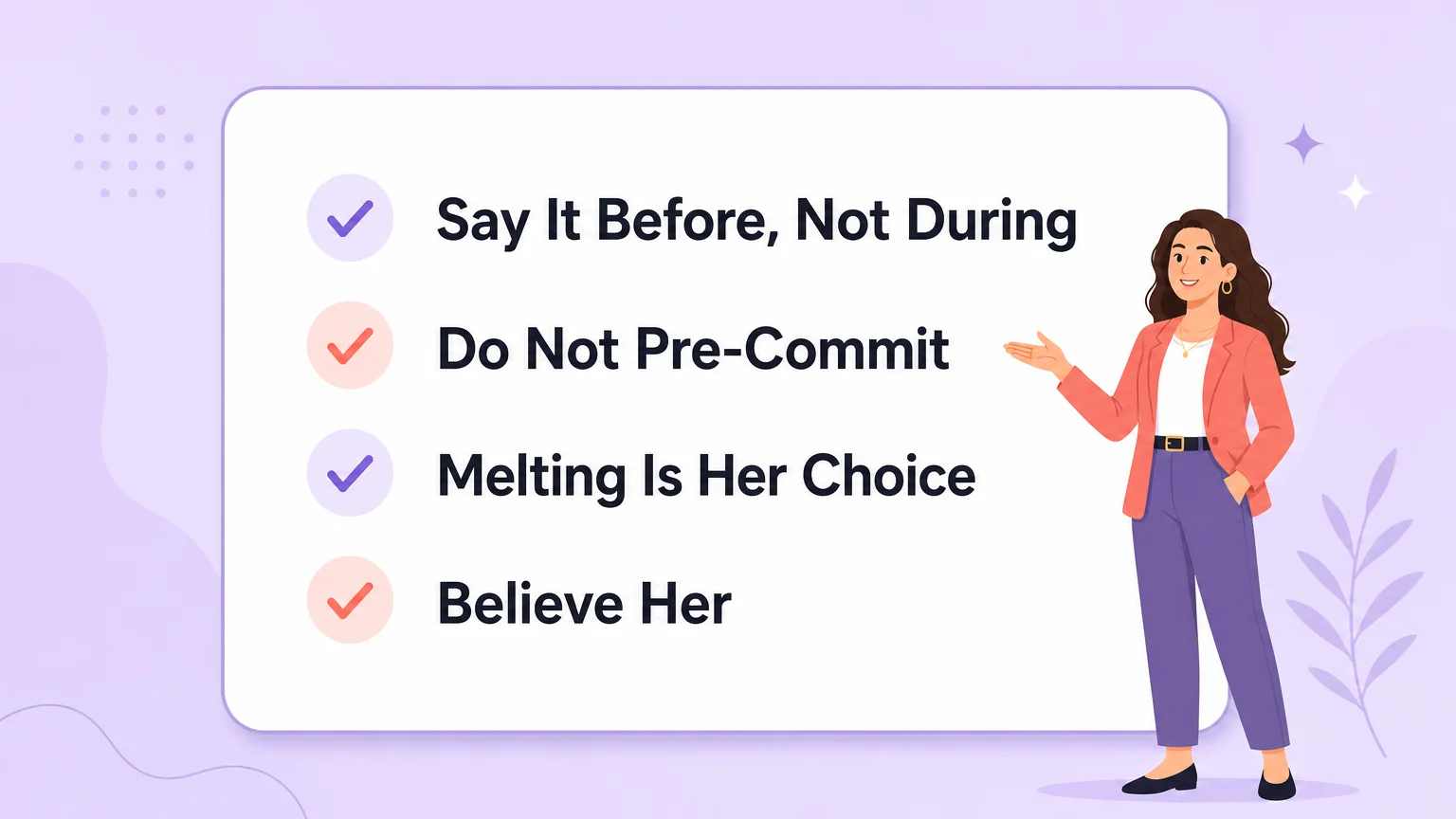
Say it before, not during, and say what you do want as well as what you do not. Stone includes giving, so this is the shape of the encounter, not a refusal.
If you are not certain of your edges, do not pre-commit. Saying you are stone sets an expectation you may not meet, and saying you are not invites violations.
Melting means some stone people accept certain touch in specific situations. It is her exception alone, never a partner’s objective. Pursuing it is control and can amount to abuse. If it happens, she initiates it.
Reciprocity guilt belongs to the partner to work through. Believe her when she says she enjoyed it rather than reading deprivation into silence.
The clarity itself is the attractive part. Stating a boundary plainly, and believing your partner the first time she states one, is the whole skill. Everything else is logistics.
One stone poster describes an ex who thought she could fix her: she cannot will her body to enjoy things. She counts two groups of partners: those who understand, and those who think you are something to break or conquer.
A poster whose partner was stone for their first ten years together says she never pressured her to change. If the dynamic does not work for you, moving on is acceptable. A stone femme shows the boundary is not dictated by appearance.
If you are dating and want a space where this conversation happens before anything else does, that is what 3Fun is for.
Is Stone Butch Still a Current Identity?
Current, not historical.
Ro Robertson’s open-air sculpture Stone (Butch), made in 2021 and acquired by Yorkshire Sculpture Park in 2022, takes its title from Feinberg’s novel and is framed as a reclamation of space from a history of queerness deemed against nature. Esther Godoy has spent a decade building Butch is Not a Dirty Word, a photographic archive challenging harmful stereotypes. Current literature exists too, such as A Stone’s Throw: Inside the Stonefemme and Stonebutch Life by Victoria Darling, and the history is still staged in the play Bar Dykes.
Why the question feels open: label rejection runs in cycles. Stone butch has been in use since the 1940s, lost ground when lesbian feminism rejected butch identity as mirroring patriarchal gender roles in the late 1960s and 1970s, and returned to popularity around 2020.
Many younger masculine-presenting people now prefer masc, soft masc or girlypop masc, from imposter syndrome or because the softer word feels safer while exploring. One reader says masc might feel gentler for those just beginning.
Butchness is an approach to masculinity rooted in womanhood rather than an attempt to become a man, and its work expands what a woman is allowed to be. Contested edges signal a living term, not a broken one.
Stone Butch: Frequently Asked Questions
What’s the difference between a butch and a stone butch?
Butch is gender expression and a community role. Stone is a sexual boundary. You can be stone without being butch, butch without being stone, and a stone butch has its own history. See “Stone Butch vs Butch: What’s the Difference?”
How do you know if you’re a stone butch?
The distinguishing feature is wanting zero sexual pleasure or stimulation from a partner while still wanting sex and wanting to give it. Limits alone do not make anyone stone, and the process is slow. See “How Do You Know If You’re a Stone Butch?”
Is stone butch the same as asexual?
No. Asexuality concerns the absence of sexual attraction or an intrinsic desire for sex. Stone concerns the direction of desire and touch: desire versus touch receptivity. A stone person still wants sex. See “Is Stone Butch the Same as Asexual?”
Can a stone butch ever be touched? What does melting mean?
Sometimes, and the stone person decides. Melting means some stone people accept certain touch in specific situations. It is her exception alone, never a partner’s goal. Pursuing it can amount to abuse. If it happens, she initiates it. See “Dating a Stone Butch.”
Can you be stone and not butch, or stone and feminine?
Yes to both. A stone femme is a femme lesbian who only wants to give and not receive sex. The boundary is not set by presentation, so you need not look masculine to avoid touch. See “Stone Top, Stone Femme, and Touch Me Not.”
How do stone butch, stone top and touch-me-not differ?
Stone top is the broadest umbrella term, open to any presentation. Stone butch adds the historically rooted identity and masculine presentation. Touch-me-not is what Black queer people mostly call the same boundary. See “Stone Top, Stone Femme, and Touch Me Not.”
Does being stone mean you were traumatized?
No. Being stone is not always, or even primarily, rooted in trauma, and asking someone why she is stone is considered rude. People have different boundaries about where they do not want to be touched. See “Is Stone Butch Caused by Trauma?”
Where does the term stone butch come from?
It emerged in a US working-class lesbian context in the 1940s and 1950s, then tightened in the late 1950s to mean no penetration and no touching by the femme. Feinberg’s Stone Butch Blues (1993) popularized it, not invented it. See “Where Does Stone Butch Come From?”
Can you be a stone butch if you’re not a woman?
Yes. Stone is not a woman-only label. Stone butch identities can overlap with non-binary and transgender masculine identities among lesbians, and many stone butches describe themselves as female but not women. See “Can You Be a Stone Butch If You’re Not a Woman?”
Is there a stone butch pride flag?
No dedicated stone butch flag is documented. Butch flags do exist, including the most widely used one, created by Tumblr user butchspace on 27 June 2017, an older blue butch flag, an orange butch lesbian flag from 2021, and a Black Butch Community flag from 2022. Stone butch is a modifier under the broader butch entry.
Is stone butch still a current identity?
Yes. Stone butch is current rather than historical. Artists, photographers and scholars are building work around it now, and the label has been in use since the 1940s. Younger people often prefer masc. See “Is Stone Butch Still a Current Identity?”