
Late 2024, TikTok did something unexpected. Millions of people watched the same Ghostface clips from Scream and realized, almost in unison, that what they felt was not fear. It was attraction. Thousands of comments piled up beneath those videos: “wait, is this a thing?”, “I thought I was the only one”, “why is this doing something to me.” Mashable and The Post Athens covered it. The comments kept coming, strangers discovering together that a horror mask could do something they had no language for. An entire generation realized they shared a mask kink through the same villain, at the same time, on the same feed.
That collective double-take was not a fluke. Mask attraction is not a TikTok invention. It is a well-documented dimension of human sexuality that spans horror fandom, BDSM culture, sensory play, power exchange, and the relationship dynamics that define the 3Fun community. What changed was not the desire. What changed was that the culture finally caught up enough to talk about it.
This article maps the territory. You will learn what mask kink actually is, why masks trigger such powerful psychological responses, which types match which desires, and how to explore safely. Solo, with a partner, or in the group contexts where this kink truly shines.
Masks do not hide who you are. They reveal what you are ready to explore. And you are in good company.
What Mask Kink Actually Is (And What It Definitely Isn’t)
If you have ever wondered whether what you feel counts because it is just that one character, because you are not sure it is sexual, this section is your exhale.
Mask kink is a sexual or erotic interest in face masks. That breadth is deliberate. It spans everything from a decorative masquerade mask to a full-coverage BDSM hood to the charged anonymity of a horror mask. If the presence of a mask, on you or on someone else, stirs something, you belong in this conversation.
A kink is an enhancement, a spice that turns up the volume on desire. A fetish is typically a requirement for arousal. Most people with mask kink are firmly in the enhancement camp. That does not make their experience less real. You do not need the mask to get there. You just like where it takes you.
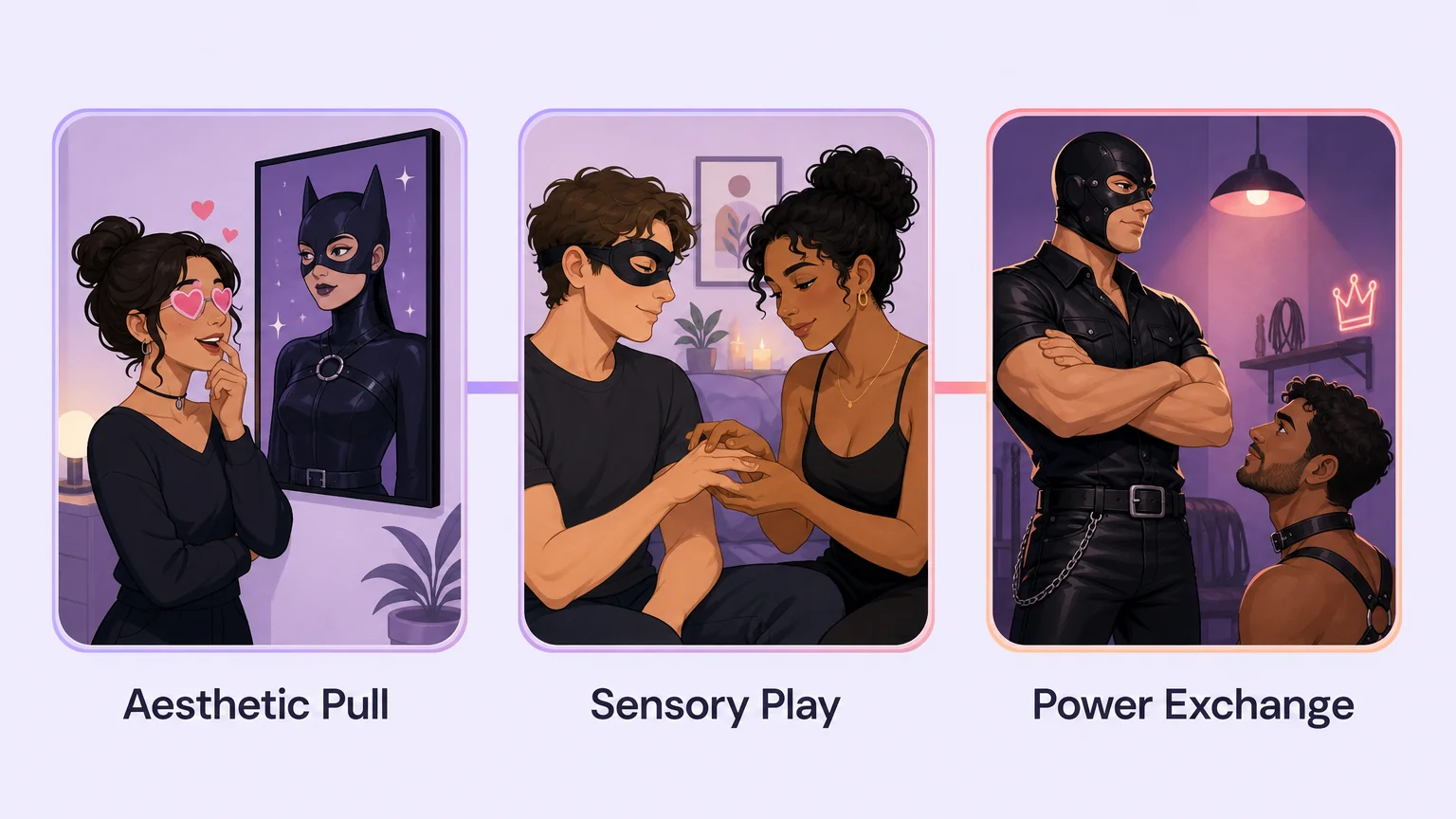
Mask kink lives on a spectrum. On one end: the aesthetic pull of a masked figure. The Kakashi crush, the Ghost from Call of Duty, the character whose face you never see but whose presence you feel. In the middle: sensory play where reduced vision heightens touch and anticipation until a breath near your ear becomes an event. On the other end: power-exchange scenes with identity erasure and deliberate objectification. The mask is not decoration. It is transformation.
No, this does not mean something is wrong with you. The DSM-5 classifies a paraphilia as a disorder only when it causes distress or harm to self or others. Finding masks erotically compelling, with a consenting partner, is not pathology. It is exploration. One study of sadomasochistic practitioners found that 66% reported using masks or blindfolds in play. You are not the outlier. You are the majority.
The Psychology That Makes Masks So Powerful in the Bedroom
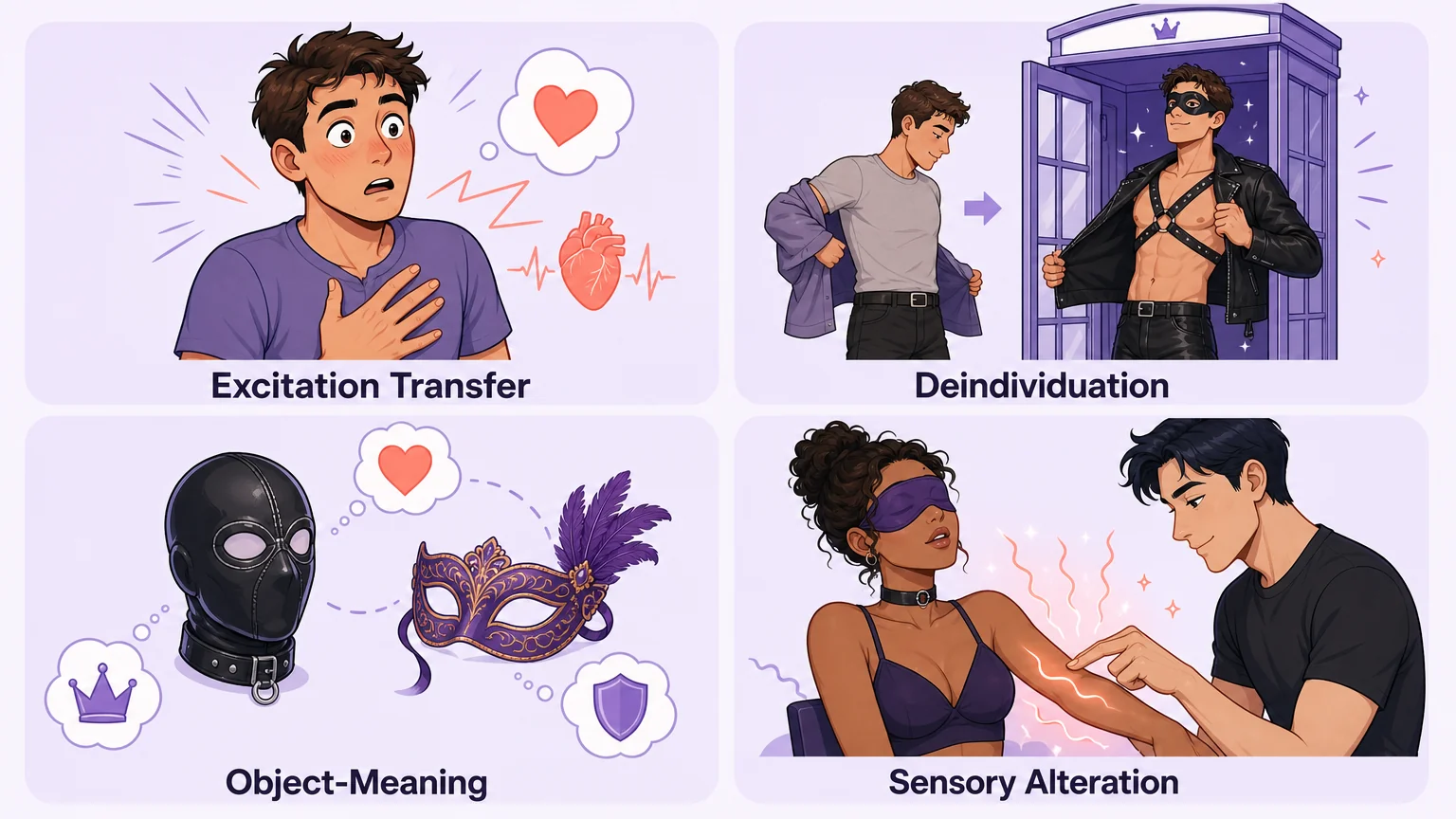
Your brain is running ancient software, and masks are a cheat code. What you feel when a masked partner walks into the room is four distinct psychological mechanisms firing at once, each one pulling you deeper into the experience.
First, excitation transfer. The nervous system does not cleanly separate fear arousal from sexual arousal. Same adrenaline. Same racing heart. Same dilated pupils. Think about the last time you watched a horror film. Your heart pounded. Your breath shortened. That is the identical physiological state to early attraction. The only difference is context. Sex educator Gigi Engle explains that when a masked figure triggers that cascade, the brain can misattribute the charge as attraction. When the masked figure is framed erotically rather than threateningly, the brain redirects that energy. The fear you feel watching Ghostface is real. The attraction is your brain repurposing that fear into something else entirely.
Second, deindividuation. Research by Nitschinsk and colleagues, published in 2025, found that anonymity reduces fear of social evaluation. When people feel anonymous, they disclose intimate desires more readily. They step into alternative selves with less hesitation. Critically, Nitschinsk identified two distinct motivations for seeking anonymity: self-expression motives (revealing a truer self, disclosing without fear of judgment) and toxicity motives (antisocial behavior without reprisal). Both correlate with low self-concept clarity. Mask kink draws on the self-expression pathway. The mask removes the audience, and with it, the inhibition that usually keeps you in character. You are not “you” anymore. You are whoever you decide to be for the next hour, and that freedom is intoxicating.
Third, object-meaning theory. The brain does not desire objects. It desires what objects represent. A leather hood is not arousing because it is leather. It is arousing because it signifies surrender, or authority, or protection, or the freedom of becoming someone else. Academic semioticians Voto and Soro describe how the gas mask performs a “turning of individuality into collectivity.” The face becomes unrecognizable. The spatiality of the face becomes “plurally managed and thus expanded.” A masquerade mask is not arousing because it is elegant. It is arousing because it says mystery, invitation, the promise that something is about to happen. The mask is never just a mask. It is the meaning you pour into it.
Fourth, sensory alteration. Vision occupies roughly 30% of the brain’s sensory processing bandwidth. When a hood or blindfold closes that channel, the remaining 70% redistributes. Touch becomes electric. A finger tracing your arm feels like a full-body event. A whisper becomes a complete experience. Anticipation sharpens into something almost unbearable, in the best way. Dr. Itamar Cohen describes kink as a mechanism that allows contact with deep emotions through physical experience. When you remove sight, you do not lose sensation. You gain access to a different kind of sensation entirely, one that your overstimulated daily brain rarely has space to notice.
This is why your first time in a blindfold felt like stepping into a different universe. Your brain was running entirely different software. And it liked it.
The Mask Spectrum: Types, Materials, and What Each Unlocks
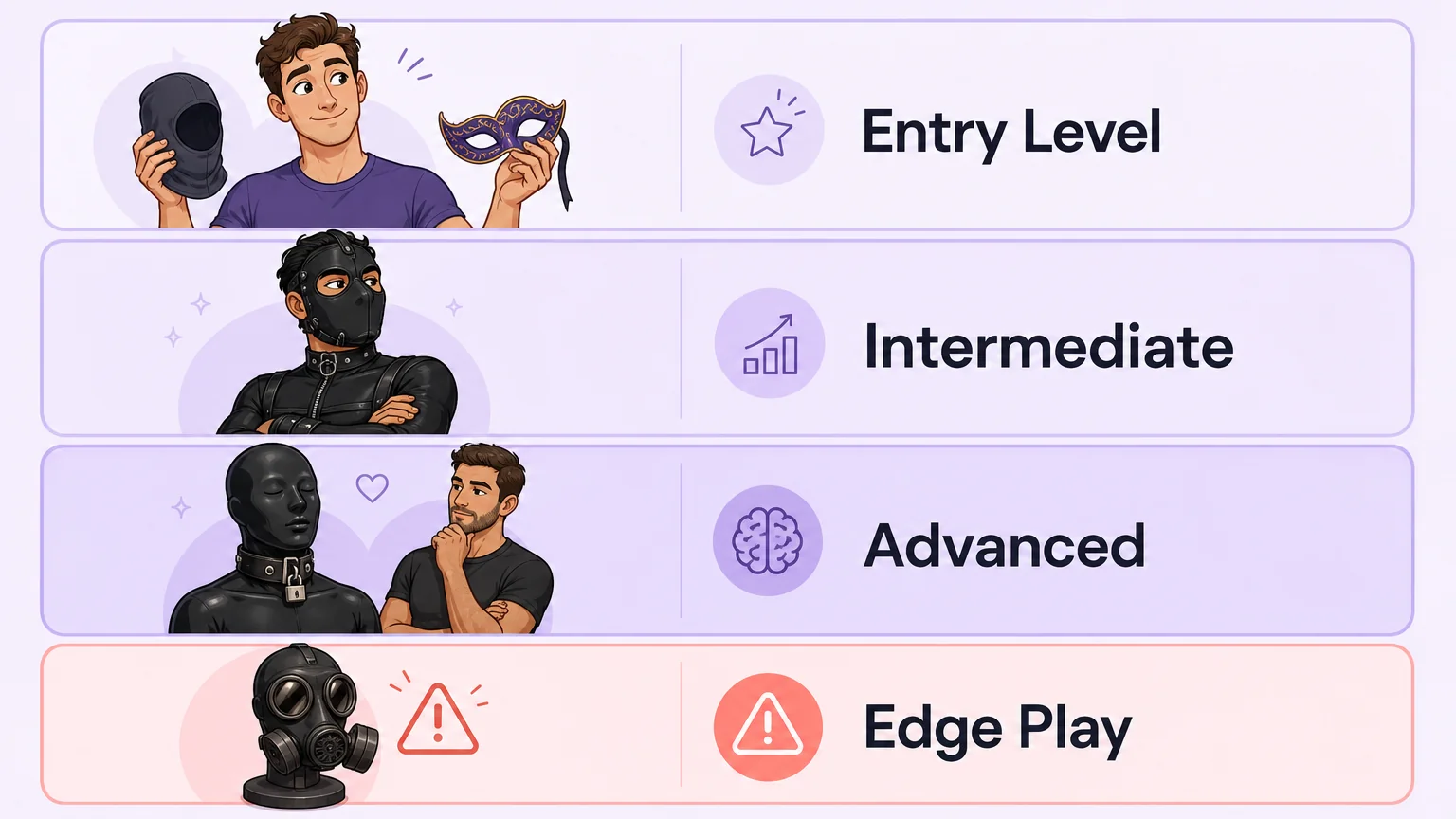
Forget everything pop culture taught you about kink masks. The real taxonomy is more interesting than Pulp Fiction suggested. What matters is what the mask does to the wearer’s headspace, and what it invites from the person looking at them.
Entry level: the “try this on a Tuesday” tier. Spandex and Lycra hoods run $20 to $60. They are breathable, machine-washable, forgiving on sizing, and easy to remove in seconds. Decorative masquerade masks sit here too: accessible, elegant, zero breathing restriction, available anywhere costumes are sold. These are for the curious. They do not demand a scene. They invite one.
Intermediate: when you know what you like. Leather discipline masks are durable, carry the classic BDSM aesthetic, and project dominance without a word. They break in over time, molding to the wearer like a good jacket. Latex hoods are the second-skin option: unmistakable shine, zippered eye and mouth openings for modular sensory control, a tightness some describe as a full-body embrace concentrated on the head. Latex allergies are common, so ask before using one on anyone. These masks are for the committed.
Advanced: full sensory immersion. Silicone full-head masks are hypoallergenic, heavier than latex, and profoundly quieting. One first-timer described the material as “softer and heavier than latex,” and that weight is part of the appeal. Gimp masks offer total identity erasure and multiple attachment points for integration with other gear. These are for practitioners who have built trust over time and know exactly what surrender feels like.
Edge play tier: read this warning carefully. Gas masks with controlled respiratory limitation involve breath play, and breath play is never 100% safe. Every reputable BDSM source classifies it as edge play. Risks include oxygen deprivation, loss of consciousness, and cardiac arrhythmia. This tier is not for beginners. If you are new to masks, stay in the entry and intermediate tiers until you have years of experience and a partner whose judgment you trust completely.
For every tier, the question is the same: what does this mask unlock in the wearer’s mind? The material is logistics. The psychology is the point.
How to Bring Mask Kink Into Your Relationship (Without It Getting Weird)
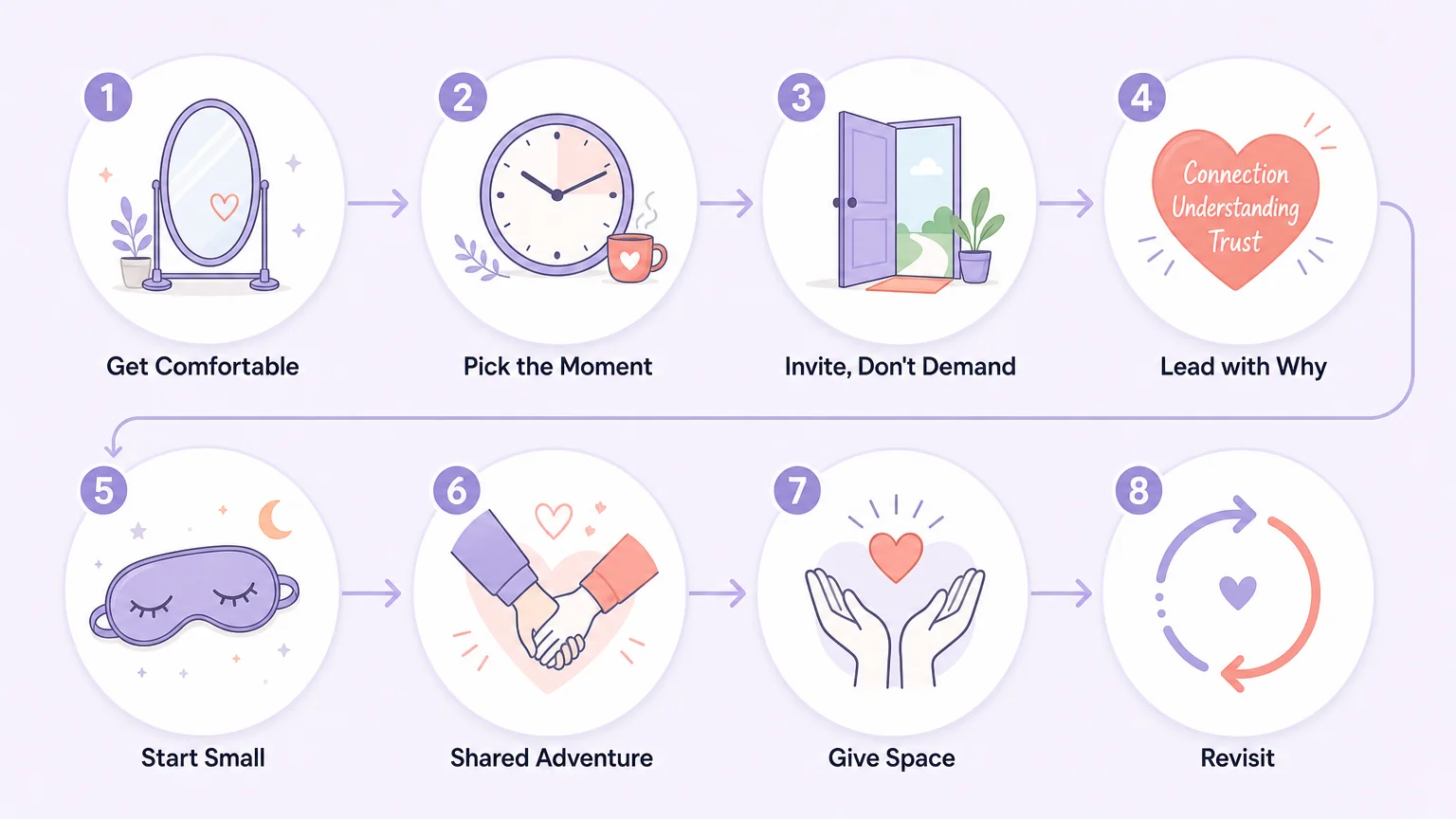
The hardest part of any kink is not the gear. It is the conversation. Mask kink carries weight because it visually transforms someone, because pop culture associations can be intense, because you might not have the words yet. Here is how to have the conversation in a way that brings you closer regardless of the outcome.
Step one: get comfortable with the desire yourself first. If you are apologetic when you bring it up, your partner will sense shame, not curiosity. Masks are a normal, documented dimension of kink and role-play. Understand what draws you. If you cannot articulate it to yourself, you will struggle to articulate it to someone else.
Step two: pick the right moment. Not during sex. Not when they are rushing out the door. Not after a fight. A relaxed, private, sober moment. Cooking together. On a walk. The setting communicates as much as the words.
Step three: frame as invitation, not demand. One sentence opens the door: “I have been curious about something, and I would love to hear what you think.” That gives your partner room to step through at their own pace.
Step four: lead with the emotional why, not the physical what. Talk about the intimacy of sensory surrender. The trust built when one partner guides the other while blinded. The freedom of stepping into a different persona together for an hour and then coming back to each other. The gear is the least interesting part of this conversation. The connection is what matters.
Step five: start microscopically small. A sleep mask from the nightstand. A decorative half-mask from the costume drawer. You are not asking for a gimp hood on day one. You are asking for a five-minute experiment. The smallest possible step is the one that actually gets taken.
Step six: make it about shared adventure, not fixing a deficiency. “I want to try this with you because I trust you, not because something is missing.” This reframe matters more than almost anything else you say. You are not here because the relationship is broken. You are here because it is strong enough to hold curiosity.
Step seven: give them genuine space to react. Enthusiasm, curiosity, confusion, and discomfort are all valid responses. Your job is to receive, not to persuade. “You do not have to have an answer right now. I just wanted to start the conversation.” That sentence is a gift. It says: your feelings matter more than my fantasy.
Step eight: revisit. “I have been thinking about what we talked about. How are you feeling about it now?” Ongoing openness builds the kind of trust that makes any exploration safer and hotter. One conversation is a start. The second conversation is where the real work happens.
Your First Mask Scene: A Step-by-Step Beginner’s Roadmap

You had the conversation. Your partner is curious. Now curiosity becomes something you can touch. The first scene is not about being impressive. It is about being intentional. Here is your roadmap.
Pre-scene: negotiate everything before anyone is turned on. Activities. Hard and soft limits. Safeword and backup non-verbal signal. How long you will play. What each of you needs afterward. Do this over coffee, fully clothed, sober. Desire clouds judgment. Negotiating first keeps everyone safe.
Environment prep: clear the space. Remove tripping hazards. Have safety shears accessible, not because something will go wrong, but because preparedness lets you relax. Water and snacks ready for after. A clean, intentional space communicates care before a word is spoken.
The scene itself: start with the gentlest mask possible. A blindfold or half-face decorative mask is perfect. Let the masked partner breathe and acclimate for two to three minutes before adding anything. Begin with non-sexual touch: hand-holding, back stroking, hair touching. This builds the trust that makes everything after it possible. Check in verbally every two to three minutes using traffic lights. If they cannot speak, use the signal system from negotiation.
Keep it short. Fifteen to twenty minutes max. The goal is a positive first memory, not a marathon. You can go longer next time. And you will want to, if this goes well.
Scene end: go slow. Remove the mask gradually. Make eye contact. Re-establish verbal connection. The transition back to unmasked presence is as important as the scene itself.
Aftercare: do not skip this. Cuddle. Hydrate. Snack. Talk. Ask: “What surprised you? What would you change next time?” Give space for emotional processing before analysis. Some need quiet. Some need to talk through it immediately. Know which one your partner is.
First scenes are rarely cinematic. They are data. You are learning each other’s responses in a new context. The second scene is always better, and you only get there by doing the first one with care.
Staying Safe Behind the Mask: Breathing, Signals, and Consent Mechanics
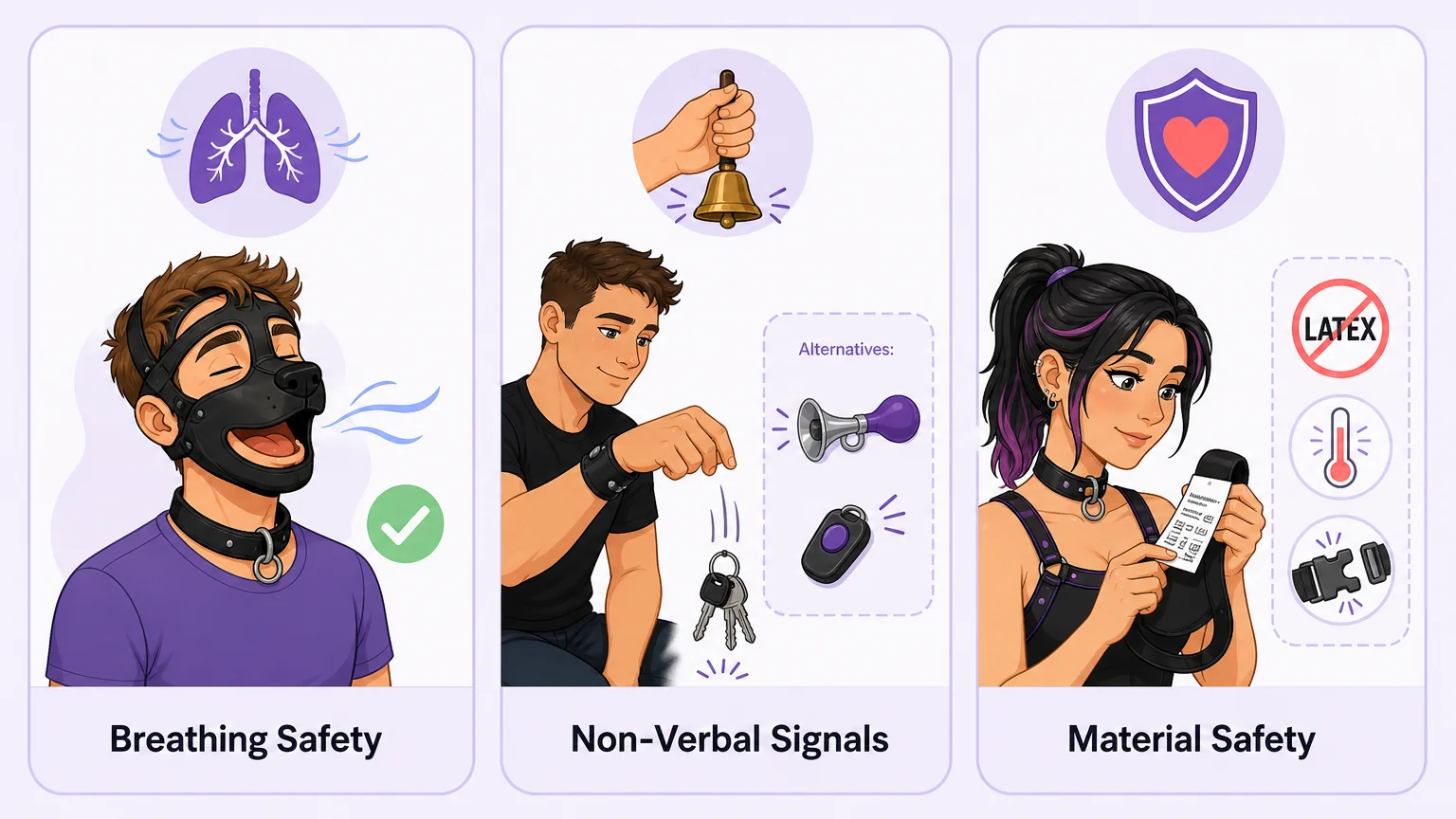
Picture a scene going beautifully, until it is not. The masked partner needs to stop, but their mouth is covered, their hands are restrained, and nobody established a backup signal. This is why this section exists. Safety is not the opposite of adventure. It is the container that makes adventure possible.
Pillar one: breathing. Breath play involving masks is classified as edge play across every reputable BDSM source. It can never be 100% safe. Risks include oxygen deprivation, loss of consciousness, and cardiac arrhythmia. Beginners should use masks with completely open mouth and nose areas. Gas masks belong in the advanced and edge-play tier, require explicit negotiation, and demand sobriety and emergency preparedness. The Burnett Foundation is unambiguous: breath play carries permanent risk.
Pillar two: non-verbal communication. When a mask covers the mouth, verbal safewords do not work. Before any scene where speech might be compromised, establish a layered signal system. Drop signals: a scarf, keys, or stress ball held in hand. Dropping it means stop. Sound makers: a bike horn, dog clicker, or bell for when hands are restrained. Hand gestures: rapid tapping or a specific squeeze pattern as check-ins. Practice together before play. The sighted partner must maintain continuous awareness of the signal area throughout the entire scene.
Pillar three: material and physical safety. Latex allergies are common. Ask before using latex hoods on anyone. Full-coverage masks trap heat; monitor for overheating or dizziness. Complex buckles and straps slow emergency removal. Use quick-release designs exclusively for first scenes. If you cannot remove the mask in under three seconds with one hand, it is too complicated.
Aftercare is not optional. Water. Warmth. Verbal reassurance. Quiet time for emotional re-grounding. The scene ends when both of you say it ends. The processing afterward is part of the experience, not an afterthought.
Here is the rule that holds everything together: anyone can stop the scene at any time, for any reason, with zero explanation required. That is not a loophole. That is the foundation. Without it, nothing else works.
Masks in Group Play: Threesomes, Parties, and the Lifestyle Connection

In kink play parties from Singapore to San Francisco, masks are not unusual. They are infrastructure. In the lifestyle spaces where the 3Fun community already moves, masks solve specific problems that solo or couple play never faces.
For the participant who feels self-conscious in a threesome or orgy setting, a half-face mask provides psychological armor. It reduces self-monitoring. It quiets appearance anxiety. It lets you sink into the experience rather than performing it. You are present, inside your body, where the pleasure actually lives.
For the couple inviting a third, coordinated masks create a shared fantasy container without complex narrative setup. The masks do the world-building. Everyone understands the frame without explanation. That shared understanding is rare in group dynamics, and when it works, it clicks.
In kink-focused play parties, masks function as visual shorthand. A hooded submissive communicates their role to everyone in the room instantly. It is worth distinguishing between kink play parties, where masks and hoods are normalized and expected, and traditional swing parties, where they are less common but increasingly present as communities overlap.
The practical layer matters too. Communication complexity multiplies with every additional person. If one participant is masked and cannot speak, every person present must know the non-verbal signal system. Designate one person as primary safety monitor, someone whose only job that scene is watching the masked participant’s signals. That person does not participate. They observe. That distinction saves scenes and relationships.
On the digital side, mask-specific dating apps like Masked Kink, KS, and WAX exist because people want to explore masked identity before revealing their face. 3Fun’s own privacy features serve the same instinct. For couples meeting a new third, a masquerade-mask first date is a low-stakes entry point: intrigue without full exposure, fantasy without recklessness, and control over how much you reveal on your own timeline.
Masks let you show up as whoever you want to be that night while keeping what is yours, yours. In a scene built on consent and clarity, that is not hiding. That is choosing.
Why Mask Kink Is Having a Cultural Moment Right Now
Mask kink did not start with TikTok. Gas mask fetish communities have catalogued their object of desire for decades. A 614-page Illustrated Gas Mask Dictionary, now in its sixth edition, maps models with the rigor of a naturalist’s field guide. What is new is that the culture caught up enough to talk about it.
Three threads converged.
First, the pandemic. For two years, masking was mandatory, medical, and associated with fear. Then the frame flipped. Balenciaga sent masked models down runways. Thom Browne’s Met Gala looks obscured faces entirely. Professor Andrew Groves captured the pivot: voluntarily adopting fetish masks after mandatory masking is reclaiming bodily autonomy. “I have to wear this” became “I choose to wear this, on my terms, for my pleasure.”
Second, pop culture. The Ghostface moment on TikTok in late 2024 saw millions realizing their reaction to a horror mask was not fear. The Kakashi effect: an entire generation whose first crush was a masked anime character, lacking the vocabulary to name it. Ghost from Call of Duty. The list keeps going. Masked figures have activated desire circuits for decades. People just did not have a framework for what they were feeling.
Third, the broader kink normalization wave. OnlyFans, Euphoria, social media making once-underground aesthetics visible. This visibility cuts both ways. Fewer people thinking they are broken for liking what they like. But it can also flatten a diverse kink into one aesthetic. The frustration from long-time practitioners, who know there is more to explore than one horror mask, is real.
You are not late to a trend. You are arriving at a moment when the conversation includes everyone, from the person who just figured out why Kakashi made them feel things to the practitioner with a closet full of custom latex. You do not have to explain yourself from scratch anymore.
FAQ
Is mask kink the same as having a mask fetish?
They are related but distinct. A kink is an erotic enhancement. It turns up the volume on desire. A fetish is typically a requirement for arousal. Most people with mask kink are firmly in the enhancement camp. They enjoy what masks add to an experience rather than needing them to reach arousal at all.
Does enjoying mask play mean something is wrong with me psychologically?
No. The psychology behind mask attraction is well understood: excitation transfer, anonymity disinhibition, sensory alteration, and object-meaning theory all describe normal, documented pathways of human desire. The DSM-5 classifies a paraphilia as a disorder only when it causes distress or harm. Enjoying masks with a consenting partner is exploration, not pathology.
What is the safest mask to start with?
A spandex or Lycra hood, or a simple decorative half-face mask. Both are affordable, breathable, easy to remove in seconds, and do not restrict breathing. A sleep mask from your nightstand works too. The point is to start, not to optimize. Build toward more involved gear once you know what you enjoy.
Do I need to be into BDSM to enjoy mask kink?
Not at all. Mask attraction exists independently in horror fandom, cosplay, fashion, and sensory play. Many people discover their interest through pop culture rather than through kink communities. That said, understanding BDSM safety principles (consent, negotiation, safewords, aftercare) will make any mask play safer regardless of how you label yourself.
How do I find partners who are into mask kink?
Kink-friendly dating apps like Feeld and 3Fun are designed for this. FetLife communities connect you to local events and munches. Mask-specific platforms like Masked Kink and KS exist for masked exploration. Lead with curiosity, not demand. The right people will match your energy, and the wrong people will filter themselves out before you waste a night on them.