
Every couple knows the moment. Things heat up, the room goes quiet, and suddenly neither of you knows what to say. Not because there’s nothing to say. Because no one ever told you how.
That’s what this guide hands you: dominant dirty talk, which is simply taking the verbal lead. Naming what you want. Praising what you love. Steering the pace.
One reframe before the phrases, because it changes everything: dominance is not degradation. In a dynamic, the dom is the partner who leads and the sub is the partner who follows, and both chose their seats. “Good girl” can be more dominant than any insult, and the difference is whether your words make your partner feel claimed or diminished.
The science is normalizing, not a lecture. In a survey of 4,175 Americans, roughly 91 percent had fantasized about a partner talking dirty, and researchers who studied more than 500 erotic conversations found eight recurring themes, from praise and instruction to ownership and intimacy. The pattern that tracks with satisfaction is partner-focused talk, not one-sided talk.
Words light up the brain’s arousal circuitry and release dopamine and oxytocin. Delivery matters enough that 1 in 5 people have stopped sex over bad dirty talk.
So start where it’s easiest. Pick a category that feels like you, pull three to five phrases from it, and say them out loud once by yourself before you try them together. You aren’t supposed to be good at this yet. Nobody is on the first try.
1. Praise and Possession Phrases

Start here. Praise and possession is the phrase category almost everyone loves, and the easiest place for a first try, because it never risks sounding mean.
Two moves, one phrase. Praise tells your partner they’re doing something right. Possession tells them they’re yours. Stacked together, they land as a claim and a compliment at the same time, which is the exact feeling dominance is meant to produce.
Core examples to steal tonight:
- “Good girl.”
- “Good boy.”
- “You’re taking it so well.”
- “That’s exactly what I like.”
- “You’re mine tonight.”
- “Whose is this?”
- “I love watching you like this.”
Read them in a low voice and watch which one makes your partner lean in.
Now the one line that matters, because it’s the difference between dominant and mean: “MY good girl” sounds claimed, wanted, arousing. “You’re a stupid bitch” sounds diminished and insulting, and it ends the scene.
Dominance claims the person. It never attacks their worth. Say that distinction once, out loud, and you’ll never confuse the two again.
Then use praise as a steering wheel. Name what you love and you’ll get more of it. “That’s exactly what I like” the moment they get something right teaches them the target without a single instruction, and a partner who feels praised will move toward what you want all on their own. It works because praise is the fastest route to more of what you want, and it costs nothing but attention.
One personalization note, from a survey of women who enjoy dirty talk: 92 percent love it, but 30 percent hate the word “bitch,” 24 percent hate “shit,” and 22 percent hate “whore.” Specific words are deal-breakers for about a third of people, so sub in your partner’s pet names and never assume the classics fit them.
Best for couples who want dominance to feel like devotion. Skip if your partner prefers stern or neutral words, which is exactly what the next tiers cover.
2. Commands and Control Phrases
Here’s the structure that generates half the phrases in dominant dirty talk: command plus desired action, kept short. Say what you want, then say what they do. Nothing else is required.
The core list:
- “Look at me.”
- “Don’t move.”
- “Stay right there.”
- “On your knees.”
- “Slow down for me.”
- “Keep going.”
- “Eyes on me.”
Add the takeover lines once the scene is running:
- “Turn around.”
- “Do as you’re told.”
- “Don’t move. Stay right there.”
Keep each one to four words when you can, because short orders land better than long ones.
But a command lives in the tone, not the words. Whisper it, hold their gaze, then pause and let the silence sit. The pause does half the work, because it turns a sentence into an order the other person has to answer, and anticipation is where the power comes from.
Keep commands a dialogue, not a monologue. Pair each one with a question that invites a response: “Look at me when I’m talking to you.” “Tell me you like it.” That keeps the scene a team game, and it’s what the research backs: partner-focused talk, not one-sided talk, is what tracks with satisfaction.
Use your partner’s name inside the command, because a name turns a generic order into something personal and charged: “Come here, [name].” “Eyes on me, [name].” It’s the cheapest way to raise the temperature of a sentence.
Power words need their own rule. Honorifics like “Sir,” “Daddy,” or “Master” reinforce control and can be electric, but they’re only on the table if your partner says so. Offer them once, in the conversation before the scene. Never impose them mid-scene, because a title is a gift your partner gives you, not one you take.
If you master only one category, make it this one. Commands are the grammar of dominance, and everything else in this list is vocabulary.
3. Warm-Up Phrases to Open With

The first barrier is starting, not vocabulary. Plenty of couples freeze because they don’t know how to open the scene without feeling ridiculous, so they stay quiet and wait for the other person to break the silence. Starting is a skill, and you can practice it tonight.
Here’s the reframe that unlocks everything: you don’t need to go explicit to take the lead. The on-ramp is simply asking them to come to you.
Starters that cost you nothing:
- “Come here.”
- “I’ve been thinking about you all day.”
- “I need you right now.”
- “I’ve wanted you since this morning.”
Read them warm, and give the last one a little weight, because it tells them you’ve been thinking all along.
Then learn the one-word rule, because it’s the most underrated move in all of dirty talk: a single word at the right moment is more powerful than a paragraph.
- “Harder.”
- “Don’t stop.”
- “Right there.”
Therapists who study this point out that the simplest statements land the hardest, so you never have to elaborate.
Once the scene is moving, keep an escalation skeleton in your back pocket so you always know the next step. Say what you did, what you’re doing now, and what you want to do next.
For example: “I watched you all through dinner. Now I’m going to take my time. Then I want you on the bed.” Narrating the moment in that order draws it out into a full scene instead of a flat few minutes.
Your whole first assignment: pick two phrases from this section and say them the next time you’re alone together. That’s it. Two phrases, said out loud, and the door is open.
4. Making Them Beg: Questions That Pull Them In
The phrase that does the most work in a dominant scene isn’t a command. It’s a question. Because making your partner ask for what they want is itself the dominant move.
The list:
- “Say please.”
- “Tell me what you want.”
- “To do what?”
- “Ask me nicely.”
- “You can have it when you say the word.”
Then the technique that does double duty: state your desire and end in a question. “I want to strip you naked and take my time. Does that sound good to you?” It keeps the scene hot and keeps it consensual at the same time, which is the most attractive combination a scene can have.
Try the exchange version, because it shows how the pull works in motion. They ask for something. You answer with: “To do what? Tell me what you want me to do to you.” Watch how fast a vague request turns into a very specific one.
Now the silence rule, because this is where scenes go quiet. If you ask and they freeze, don’t fill the pause. Hold it. The pause is the point, and your stillness reads as confidence, not awkwardness.
If they’re clearly stuck, hand them a starter instead of rescuing them: “Say the word and I’ll make it worth your while.”
And flip the lens for the partner who freezes on the receiving end: you don’t have to match a sentence with a sentence. A moan, a nod, or a simple “yes” is powerful feedback and keeps the scene moving.
The verdict: questions turn a scene from you performing at someone into a game you’re playing together. Run this category once, and you’ll never default to monologue again.
5. Teasing, Denial, and Verbal Edging
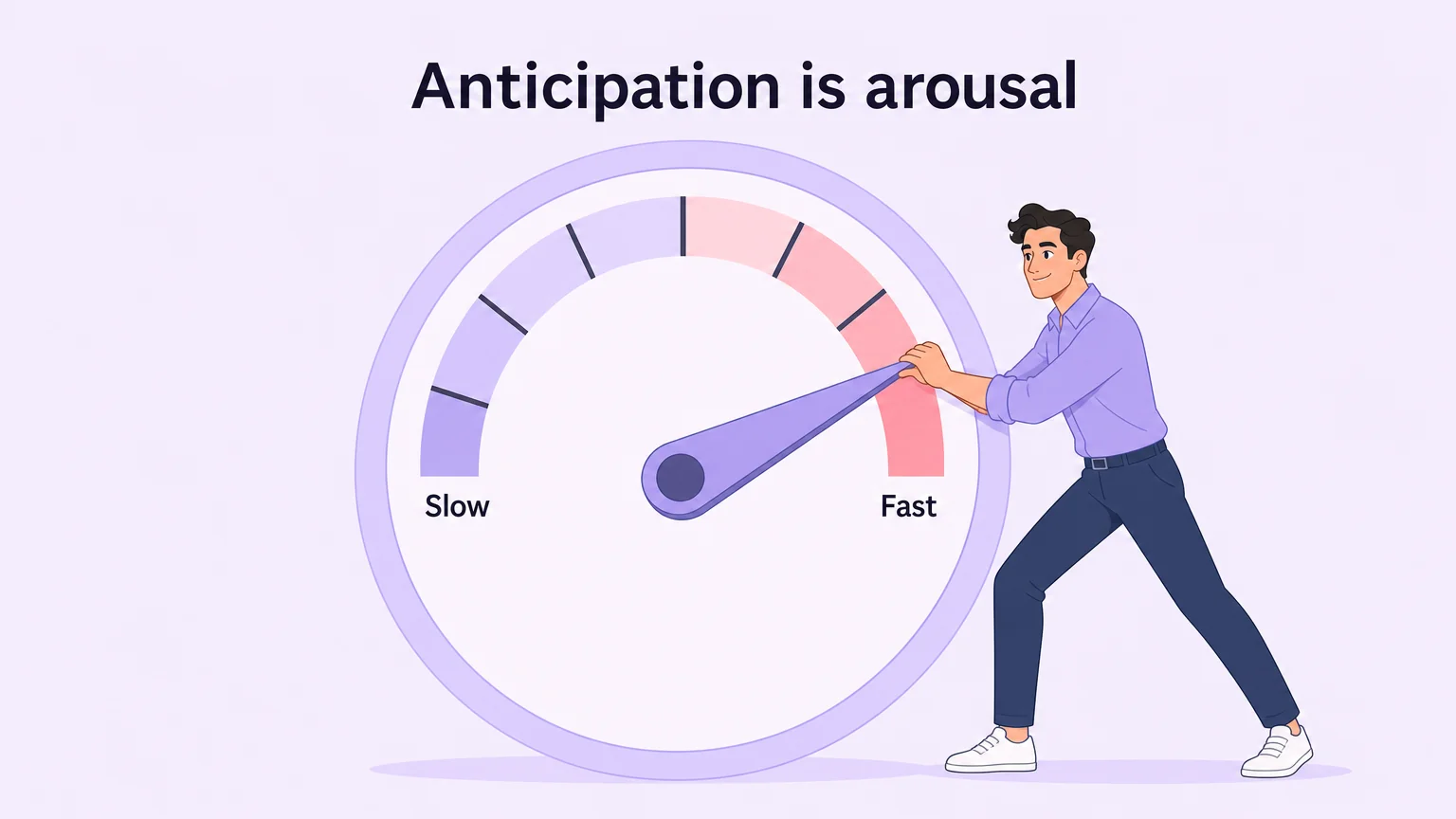
Here’s the fact that changes how you use everything above: anticipation is arousal. The brain is the biggest erogenous zone you own, which is why teasing feels electric, and it’s why the most powerful tool in dominant dirty talk isn’t a phrase at all. It’s pacing.
That’s the skill called verbal edging, and it works like a dial. Speed your voice up and your partner speeds up. Slow it down and they slow down. A deliberate pause after a sentence builds suspense they’ll feel in their body before you touch them again.
The denial phrases that make the dial work:
- “Not yet.”
- “Wait.”
- “You can only finish when I tell you to.”
- “Count for me.”
- “Slow down.”
- “Tell me you want it.”
Take “count for me” as an example of the technique. It does three things at once: it pulls their attention to your voice, it gives them a task, and it stretches the moment out, because they can’t rush a countdown without breaking the command.
Denial also scales beyond one night. “You’re not allowed to play with yourself until I say so” turns a single evening into a whole day of anticipation, and every hour in between is foreplay you barely had to do anything for.
Here’s the practice trick that makes the timing feel natural: narrate your own solo time out loud first. Whisper it. Experiment with pace and tone until the words stop making you cringe. You’re finding your voice before you ever use it on someone else, which means the first time they hear it, you already know how it sounds.
Quick comparison to keep the tiers straight: teasing is the appetizer, denial is the main course, and the release you finally allow is the dessert. You don’t have to run all three tonight.
6. Playful Correction for Brats and Pushback

Every dominant eventually meets the partner who pushes back. They tease, play dumb just to be chased, and go quiet at the worst moment. And right then, the fear hits: correcting them will come out mean, and you’ll have ruined the scene you were building.
Reframe it before you say a word: correction is erotic feedback, not punishment theater. You’re not scolding. You’re showing them the better move, quietly.
The phrases:
- “That’s not how you ask.”
- “Try again.”
- “Did I say you could stop?”
- “You know better than that.”
- “Don’t make me say it twice.”
The delivery rule is the secret: whisper the correction. Tell them what they did wrong and how to fix it, right at their ear. Loud redirection breaks the scene. A whisper keeps you both inside it, which is why it reads as intimacy instead of anger.
Then pair the correction with a reward, so it never lands as pure scolding: “Bad boy. You’ll have to try again,” and the moment they get it right, “Good. That’s what I wanted.” The correction only works when praise is right behind it, because the whole point is steering, not shaming.
For the hard cases, the brat who leans in, you can lean back with the same tone: “You’ll regret this defiance.” “Don’t make me tell you again.” Said warmly, with a smile in your voice, they land as a dare to keep playing, not a threat.
And keep the smile in your voice the whole time. A brat is chasing the game, not a lecture.
Best for couples who love banter and pushback. Skip if correction reads as criticism for either of you, and leave this category out entirely.
7. Firm and Intense Phrases, When You Both Want More
Everything above ran gentle to firm. This tier is where the dial turns further, and it’s for scenes with a history, not the one you audition with. Here’s what firm can sound like when the scene is going well and you both want more.
Opt-in first, and out loud: these phrases assume a scene that’s already working. They’re the higher gear, not the starting gear, and you only reach for them on the strength of a yes.
The phrases:
- “I’m not done with you yet.”
- “You’ll take what I give you.”
- “Understood?”
- “You’re going to feel me tomorrow.”
- “Tell me how good it feels.”
- “Do as you’re told.”
- “Moan for me.”
Intensity works like a ladder, and the ladder has a rule: climb one rung, then check in before you climb again. “Is that okay?” “Still with me?” Well-run scenes check in at every change of intensity, and body language counts as a check-in, so you can read the answer without asking a single question.
Read the room with both channels, not just words. If your partner’s breathing speeds up or their body relaxes deeper into the scene, that’s a green light you earned. If they go quiet in a way that isn’t anticipation, that’s a yellow light, and you slow down. The best dominants in any dynamic treat the other person’s body as the loudest voice in the room.
One boundary, stated once, because it’s the whole difference between this tier working and it hurting: at full intensity, claim the person, never their worth. “You’re mine tonight. Every inch of you.” That’s claiming. “You’re worthless.” That’s degrading, and it ends something you were building.
Direct recommendation: start at the bottom of this tier and let your partner’s yes be the only thing that moves you up. One rung per yes.
8. Phrases for Every Dynamic: Femme-Dom, Same-Sex, and Neutral

Let’s be clear about who this belongs to: every couple. Dominant dirty talk doesn’t care whether the scene runs man-over-woman, woman-over-man, or two partners of any gender. Whoever leads and whoever follows, the gender changes the words, not the game.
The swap rule makes the whole list portable. If a phrase says “girl,” try “boy.” If it names body parts, drop them and name the action instead. The dominance travels, because dominance lives in the tone, the pace, and the claim, not in the anatomy.
For the femme-dom and male-sub set, which is powerful and beginner-usable:
- “Kneel.”
- “On your knees.”
- “Beg for it.”
- “Good boy.”
- “Who do you belong to?”
- “You may ask nicely.”
- “Address me properly.”
Note what’s happening in that set. “Good boy” lands differently for a male sub than “good girl” does for a female one, and that’s exactly the point. The dominance is identical. The word is what changes, and the partner’s response tells you which word is theirs.
Run both and see which one draws the bigger reaction; that’s your signal.
For same-sex and neutral pairings, keep the dominance and lose the gendered script:
- “Your mouth.”
- “My hands.”
- “I’m not done with you.”
- “Tell me who you belong to.”
That phrasing works in any pairing, because it claims the person without assuming a single thing about their body.
The research says different partners genuinely want different scripts. In studies of erotic talk, women were likelier to use submissive statements and intimacy talk, while men were likelier to fantasize about being called out and moaning, and 52 percent of women had fantasized about being called derogatory names versus 35 percent of men. None of that is a rule for your bed. It’s evidence that the word map is personal, and only your partner can fill it in.
Quick comparison to end on: gendered phrases put your dynamic on display, neutral phrases put the dominance on display. Both are correct. Let your partner’s word map decide which one you play in.
Worth knowing: on 3Fun, the word map is part of the introduction. People there state what they want up front, so you skip the guessing and find the couple or single whose language actually matches yours.
How to Be Dominant Over Text
Text isn’t a lesser version of the scene. It’s a different instrument, and dominant dirty talk runs on pacing, not volume.
Rule one, and it saves more scenes than any phrase: never lead with the finale. Sending the most explicit thing first is like opening a performance with the big finish.
Open suggestive and small. Keep messages bite-sized, and paint with sensory detail: what you smell, what you feel, what you’ll do. Use strategic ellipses to create pauses the other person fills with anticipation, because what they imagine between your messages is half the scene. Double entendres are free anticipation, so use them freely.
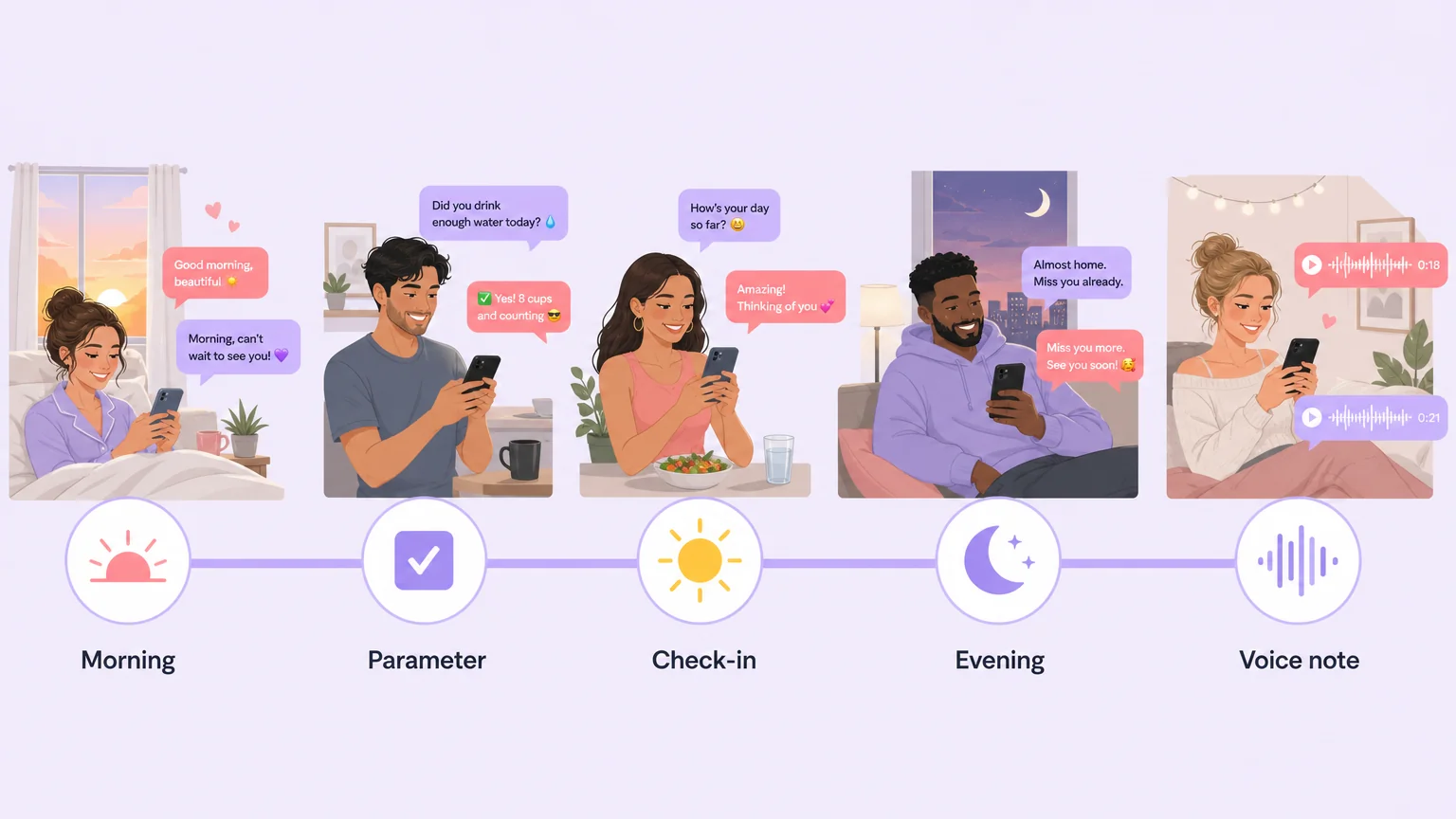
Then build an all-day arc, because a dominant scene fits in a pocket. A good morning sets the tone: “I’ve been thinking about you all day.” A small command or parameter builds it: “You’re not allowed to touch yourself until I say so.” A mid-day check-in keeps it warm: “Still thinking about me?” Evening escalates: “I want you ready for me tonight.” And the night ends by switching mediums, because a slow, low voice note lands harder than another paragraph, and sealing the scene matters as much as opening it.
Ready-to-send lines for the build:
- “Describe how you want me to find you tonight.”
- “Still with me?”
- “Say it out loud before you fall asleep.”
Now the silence rule, because it’s where text scenes die. If they go quiet, don’t double-text. The fear of silence reads as anxiety, and anxiety is the opposite of dominance. Pause, then check in with energy instead of spiraling: “You still with me?” That’s a warm nudge, not a needle.
Name what text is best for: the lowest-stakes practice ground there is. You get time to think, and you can reread before you send. And the anticipation you build all day means the in-person scene is already half-built by the time you’re together, so you’re not starting from silence when you meet. Practice here, because the phone is where you learn what your dominant voice sounds like.
The verdict: text rewards patience above cleverness. Pace the build, let the silence do its work, and you’ll turn a phone into a scene.
Set the Scene: Consent, Safewords, and Aftercare
The advice is always the same: talk about it first. Hardly anyone hands you the words for the actual talk. That’s what this section is for, because the phrases in this article are only safe when they’re agreed on, and only good when they’re built on a yes.
Step one is the conversation, and it runs best in a non-sexual moment, on the couch, with zero expectation of going anywhere that night. “I read something about dominant dirty talk and it sounded fun to try. Does that appeal to you?” One sentence, no pressure, and the door is open.
Then map the word list with two questions: “What would you like to hear?” and “What’s off-limits?” Get specific: which pet names are in and which are out, which body words, which intensity. This is the conversation that makes the phrases yours instead of borrowed, and it’s also half the fun, because naming a desire out loud is its own kind of foreplay.
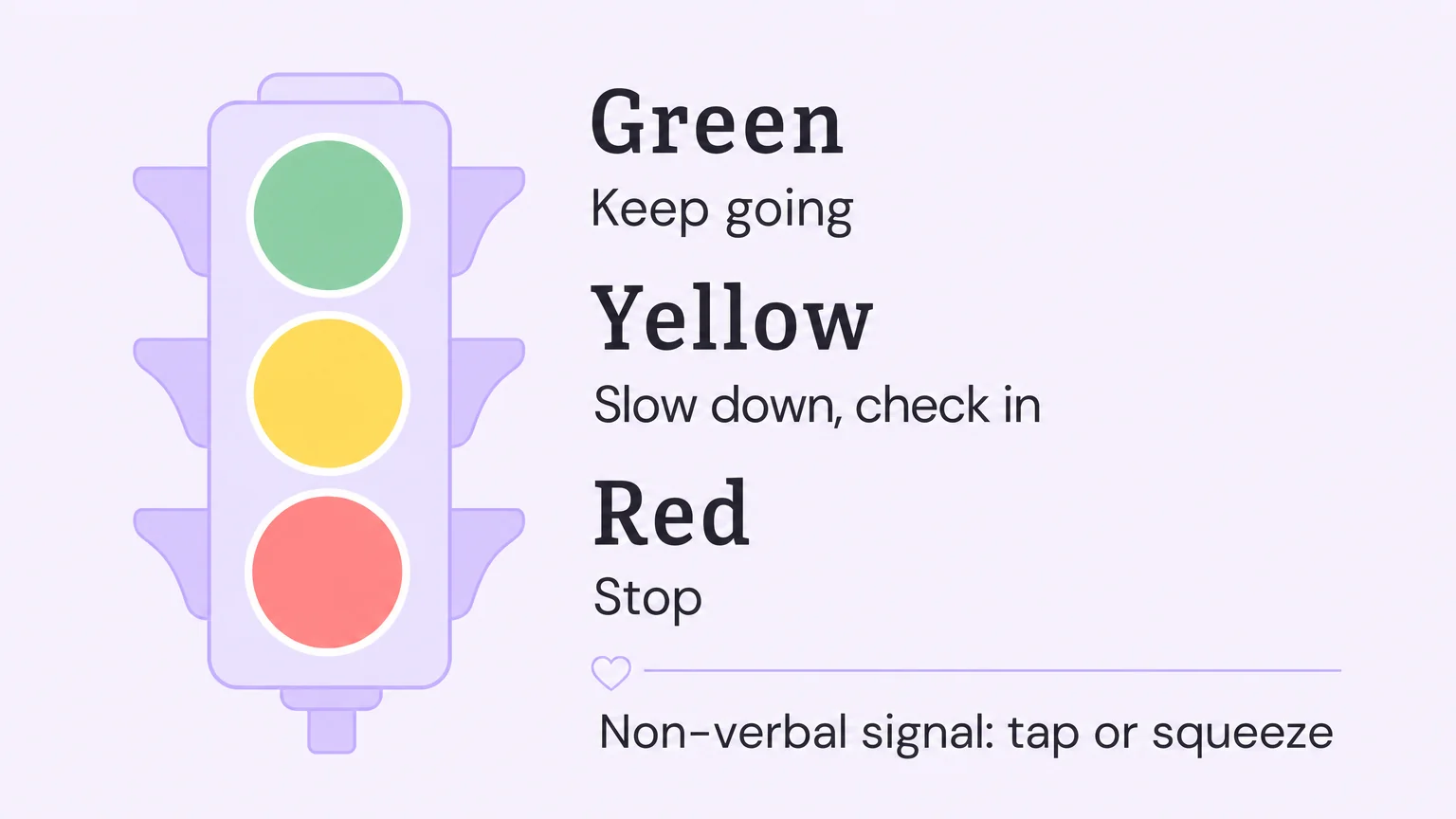
Step two is the safeword, agreed before anything starts and never used inside roleplay, so it stays an unambiguous emergency signal. The traffic-light system works: green means keep going, yellow means slow down and check in, red means stop. Add a non-verbal signal, like a tap or a hand squeeze, for the moments a partner can’t talk. For text scenes, agree on “pause” or “red,” and decide together what happens to the messages afterward.
Step three is running the scene as an arc with aftercare as a required act, not an afterthought. Warm-up, build, peak, cooldown, and then cuddles, water, and words of affirmation, plus a debrief: “What did you like best? What could we skip next time?” This isn’t a footnote. Well-run scenes average about a third of the time on aftercare, so budget for it like you’d budget for the peak.
And read the room the whole way through. Check in at every change of intensity, and let body language count as a check-in. The scene you’re running is a conversation, and a conversation has to stay open at both ends.
Direct recommendation: run this conversation once, with zero pressure to act that night. You’ll both leave knowing the other better, and the next time one of you says “kneel,” it’ll already be a yes.
This whole article has been about the conversation. The last step is deciding who else you want in it. When you’re both ready to meet couples and singles who already speak this language, without flinching and without judgment, 3Fun is where they are. No pressure. Just a door that’s open.
Dominant Dirty Talk FAQ
What is dominant dirty talk?
Dominant dirty talk is taking the verbal lead: naming what you want, praising what you love, and steering the pace of a scene. It’s assertive and arousal-focused, never mean, and it works in any dynamic, whoever leads and whoever follows.
Is dominant dirty talk just being mean?
No. Dominance is assertive and arousal-focused; degradation is a negotiated opt-in kink, not the default. “Good girl” can be more dominant than any insult, because dominance claims the person and never attacks their worth. Keep it claimed, wanted, and consensual.
How do I get past feeling silly?
Everyone starts out bad at dirty talk. It’s supposed to feel ridiculous. Practice out loud alone until you stop cringing, then start with three to five phrases that feel like you. One word at the right moment beats a paragraph.
Do we need a safeword?
Yes, even for words. Agree on the traffic-light system before the scene starts: green means go, yellow means slow down and check in, red means stop. Add a non-verbal signal like a tap, and never use the safeword inside roleplay.
What if my partner hates a word I use?
Swap it, don’t fight it. Watch their reaction and check in: “Is that word okay?” If one lands badly, redirect gently and talk about off-limits words together outside the bedroom. The word map is personal, and it gets built together.
How do I be dominant over text without it dying?
Pace it. Keep messages bite-sized, use strategic pauses, and never lead with the finale. Set a task or parameter to build anticipation, then pivot to a slow voice note for the finish. If they go quiet, check in instead of double-texting.