Somewhere in the last few years, queer coding escaped film criticism. People now apply it to a song, a dress, a car, a sandwich. The phrase has become a compliment, a joke and an accusation, sometimes inside the same conversation.
It also has a specific meaning, and that meaning came out of a censorship regime. Queer coding is the practice of giving a character traits audiences read as queer while the work never says so. That is the plain version. The complications start immediately.
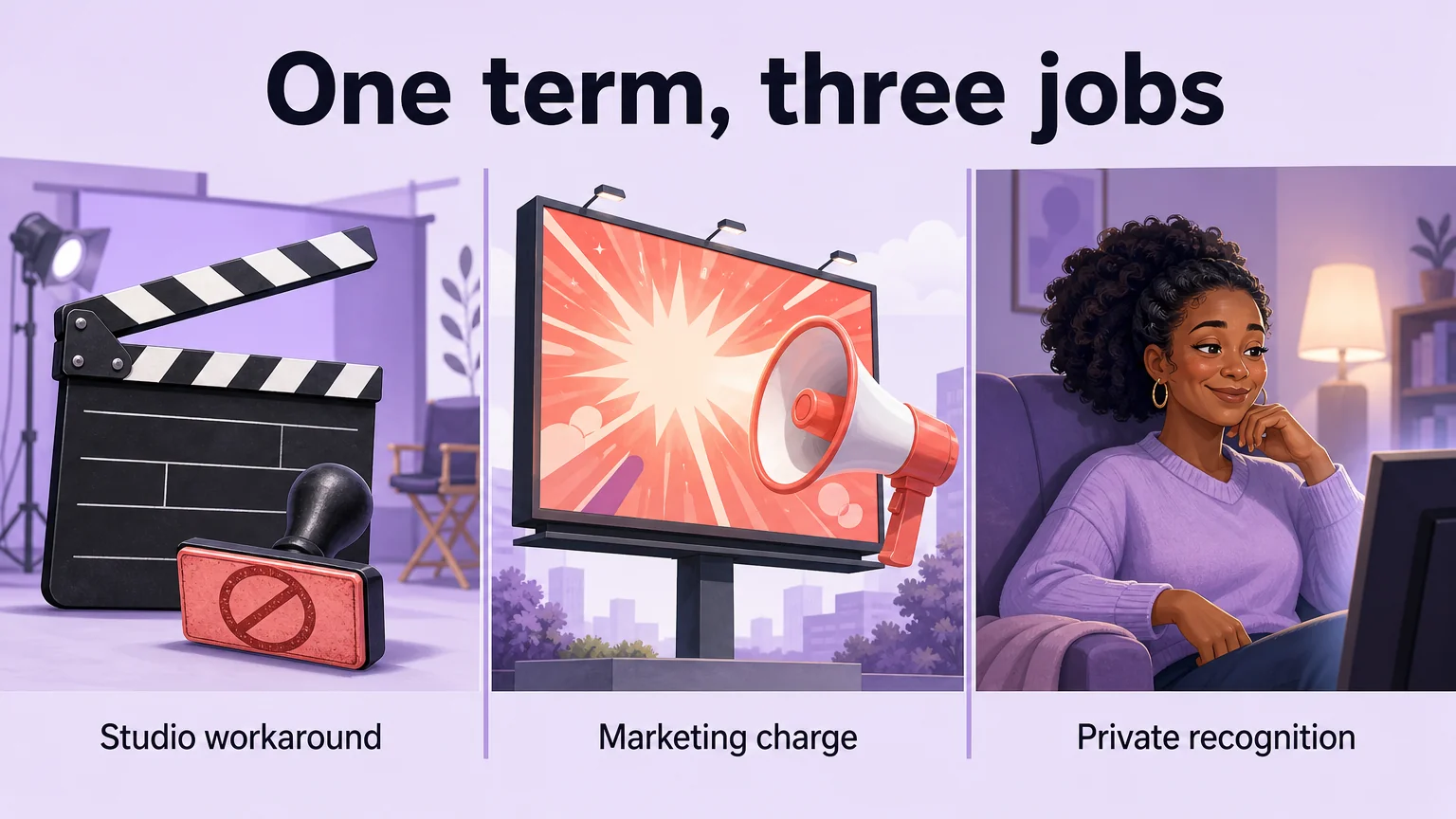
The same term now covers three different things: a studio workaround invented under a ban, a marketing charge aimed at a franchise, and a private act of recognition between a viewer and a character. Those are not the same act, and blurring them does most of the work in the argument. You can defend one and object to another without contradicting yourself.
The disagreements make more sense once you can see the machinery underneath them, and the machinery is older than the slang.
What Queer Coding Is, and Why There’s a Word for It
Start with the answer, because this part is the least contested.
Queer coding is the attribution of stereotypically queer traits to a character without stating that character’s gender or sexual identity. That definition comes from Francesco Piluso, writing in the journal Semiotica in 2023. His version has scholarly standing behind it, which matters for a term this disputed.
The definition covers gender as well as sexuality. A character can be coded as gender-nonconforming, or as trans, without the work ever saying so. It helps explain why the term stretches across so many kinds of character: the fussy bachelor, the villain with a taste for jewelry.
Two conditions turn a bundle of traits into coding.
The first is deniability. The cues are present, the text never confirms them, and the reading depends on what the audience assembles.
A queer character who is badly written is not coded, only underwritten. Subtext that gets confirmed in a later season was subtext, not coding. Coding is the version that stays unconfirmed, and the original text remains exactly what it was no matter how many sequels settle the question.
The second is audience. The traits have to be legible to someone, or they are just a performance. A code needs two parties: the people who install it and the viewer who cracks it.
Coding describes; it does not indict. It names a studio practice and the reading skill audiences built in response, usually under a rule that forbade the alternative; it is not a synonym for bad representation. The practice did not begin as a wink. It began as a workaround.
How Queer Coding Works: The Cues Audiences Learn to Read
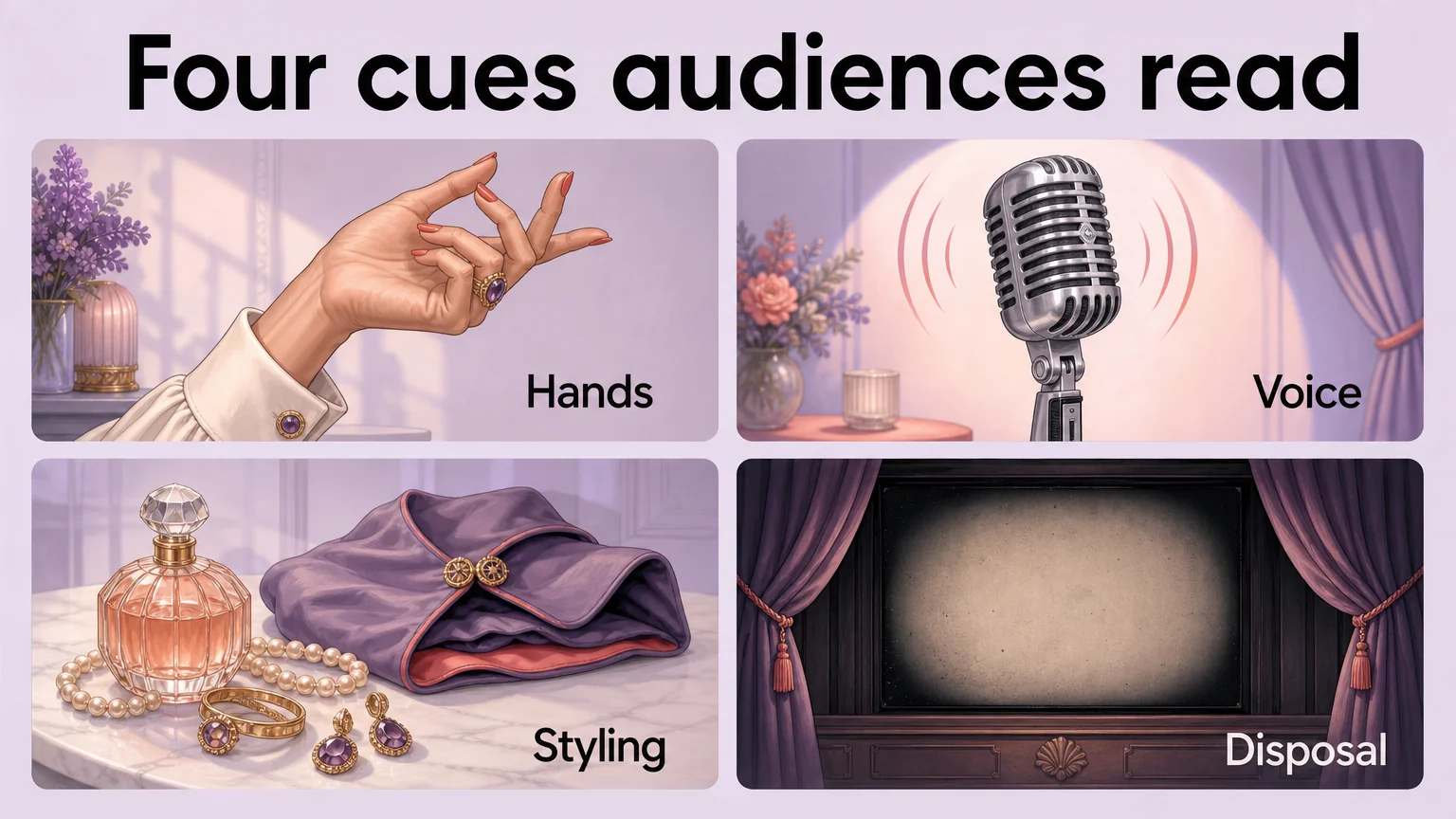
The cues are easiest to see in four passes. None of them is a test. Together they are the vocabulary queer coding runs on.
Hands and movement. Gliding rather than walking. A limp wrist. Self-grooming in the middle of a conversation. Decorative gesture that draws the eye to the hand. Animators and actors have leaned on this register for a century because it reads instantly and says nothing a censor can quote.
Voice. Register, accent, sibilance. In old Hollywood, a refined foreign accent could carry an identity the script never named; to an American ear of the period, certain French, British and German accents doubled as a signal.
Styling and vanity. Jewelry, perfume, a maintained appearance, a pet. The films treat care of the self as suspicious, which is how a groomed beard or a coordinated cape becomes evidence.
Disposal. Look at how the story ends the character. Punishment, exile and death confirm a code more reliably than any line of dialogue. In classic Hollywood, coded characters could be intelligent, stylish and powerful. They were rarely allowed to be happy.
Why does a cue register at all? Deviation from a baseline. A viewer learns what is normal for a character, so a shift in voice, posture, appetite or physical ease reads as information. The gesture is not inherently queer; it is legible because it breaks the pattern the film taught you to expect. It is also why the same gesture can carry a different meaning in a different film.
The list is learned, and it is contested. Audiences were trained film by film, which is why a marker can read as queer in one decade and as something else in the next. The list is gendered, classed and raced, a product of its moment rather than a fixed dictionary. One reader’s peacock motif is a queer signal; to another tradition it is a bad omen.
Deniability has a cost. By design, a general audience does not see the cues. That is why the people who do see them get told they are imagining things, and why the denial itself becomes part of the argument.
The Hays Code: How a Ban Became a Visual Language
A ban can produce a language. That is what happened in Hollywood.
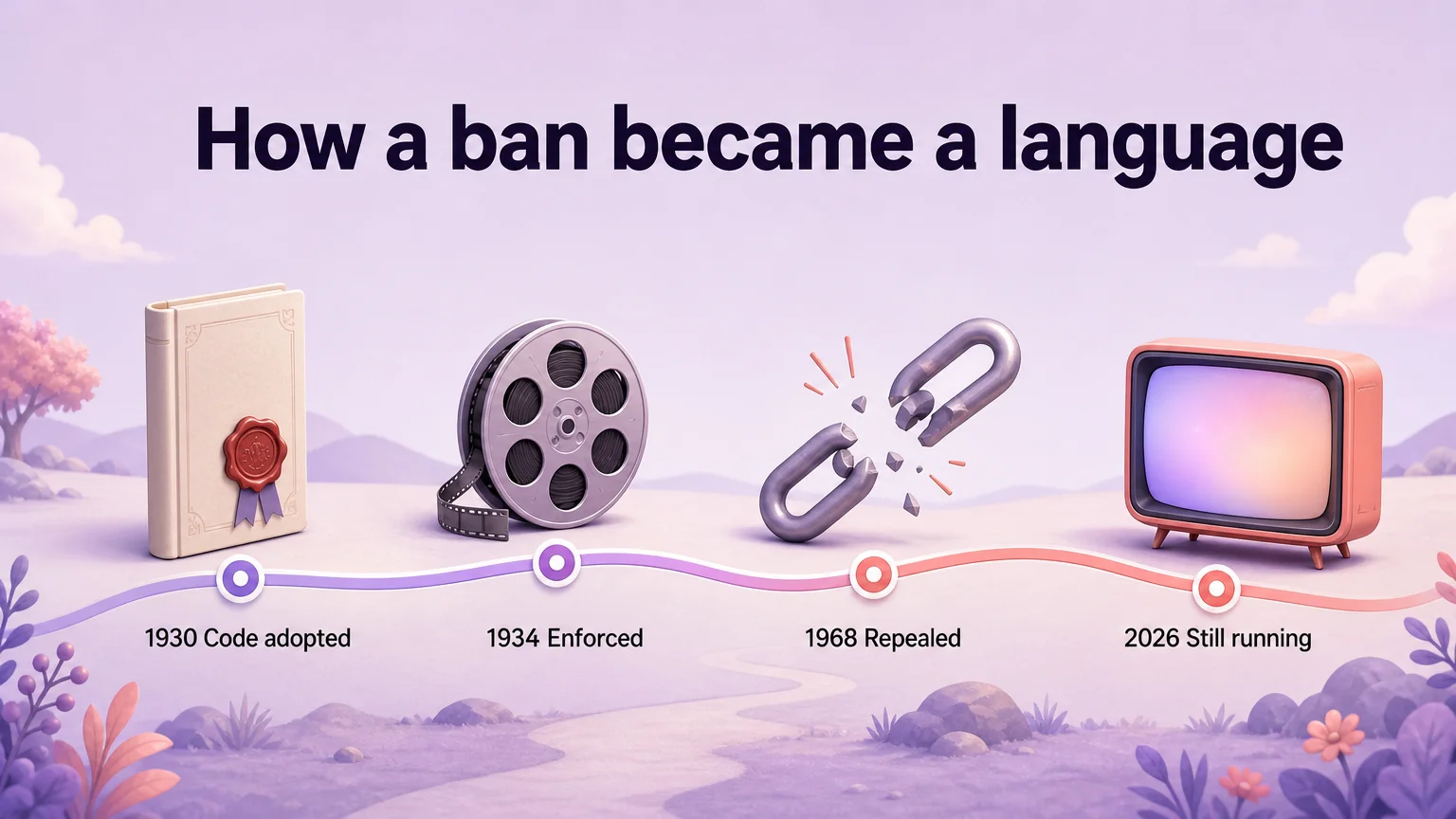
The rule. Section II, item 4 of the 1930 Motion Picture Production Code barred “sex perversion or any inference to it.” Enforcement ran from 1934 to 1968. Disney was founded in 1923, which means the studio’s golden age sits entirely inside that window. The house style is a censorship artifact, not a coincidence.
The mechanism. Censorship did not remove queerness from film. It pushed queerness into implication, and implication became a shared shorthand audiences learned to read. Queerness, gender nonconformity and sexual ambiguity were used to signal danger, so the roles that permitted those traits were villains. A refined man, a devoted woman, a character with no heterosexual motivation: any of these could be read as a signal that something was wrong. That was the moment queer coding stopped being a habit and became a system.
The grammar arrived already sorted by gender. Male coding ran through refinement, foreign accents, aesthetic vanity and emotional coldness. Joel Cairo in The Maltese Falcon (1941) arrives perfumed, ornate and unmistakably queer, written as untrustworthy and disposable, his accent doing double duty as a signal to an American ear. Female coding was framed as a corrupting force rather than a criminal one, as with the Countess in Dracula’s Daughter. The two modes punished different things.
Who paid. Gay and bisexual actors were repeatedly cast as heavies. Raymond Burr built heterosexual cover stories, played unreadable men in films such as Rear Window, and then spent years as Perry Mason, which is the proof that the menace was a job and not an essence. The pattern hardened through the 1950s and 1960s into the queer psychopath, a figure that outlasted the Code and predated the removal of homosexuality from the DSM in 1973.
The Villain Problem: Why Coded Villains Get Punished for Femininity
The pattern matters more than the list.
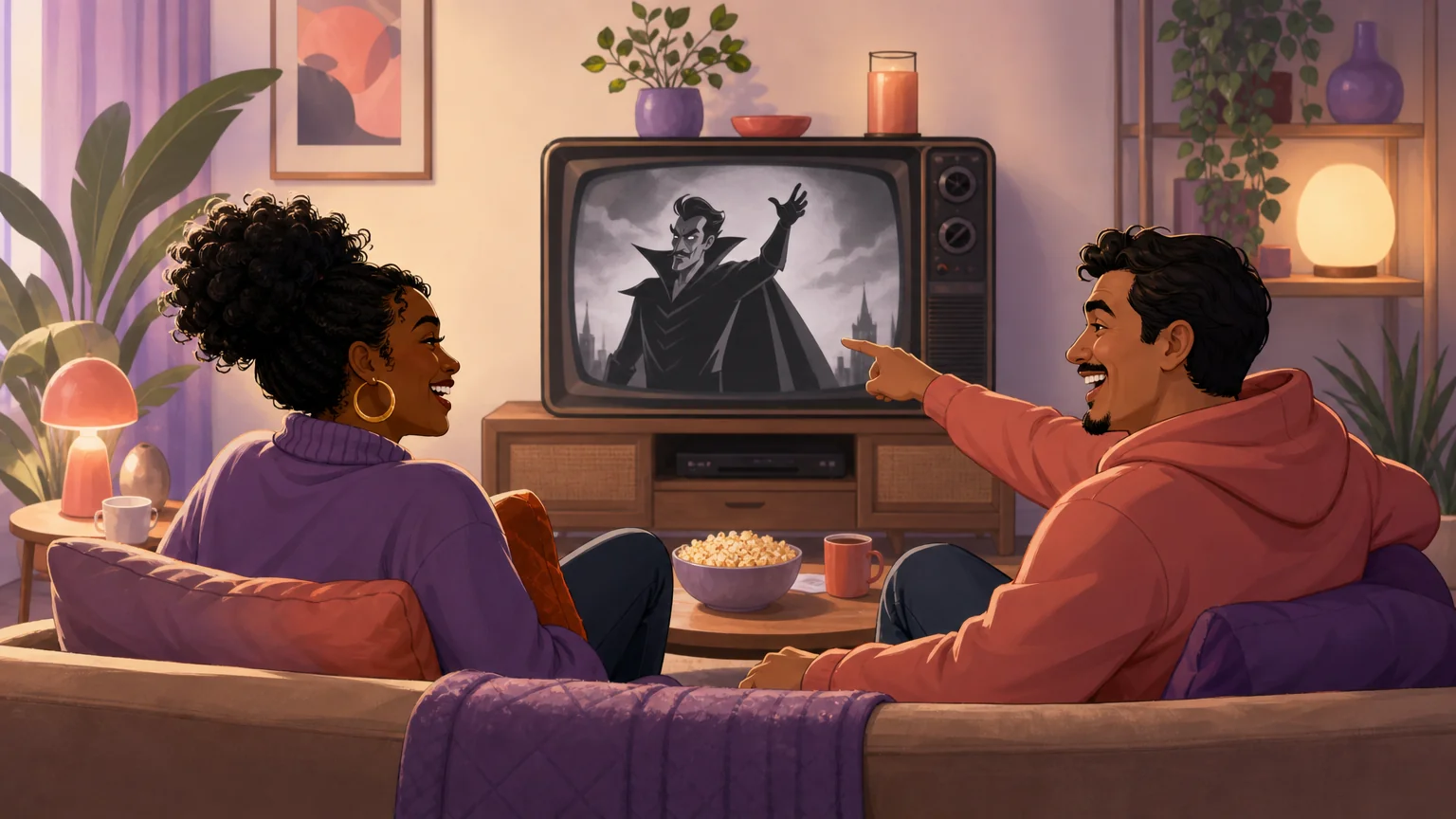
Heroes are stoic, physical, action-oriented. Villains are theatrical, graceful, vain and strategic. The films reward the first set of traits and punish the second, and they do it with the same gesture every time. This is the version of queer coding most people meet first, usually as a child, usually without a name for it.
Scar is the clearest case. The limp wrist, the lounging across rocks, the grooming of his claws in the middle of a conversation. He announces that he shall practice his curtsy. His refined British accent sits against James Earl Jones’s bass, and “Be Prepared” is a camp number staged as a fascist rally. The film’s logic is that Scar is unfit to rule because he lacks traditional masculinity.
Jafar is drawn to match. Elongated, gliding rather than walking, jeweled, with an aggressively groomed beard and a voice that hisses its Fs. The animator Andreas Deja said he designed hands you would not want to touch. The film reads his care for his appearance as suspicious.
Ursula was modeled on the drag performer Divine, with the animators studying her performances. The reading is less subtext than drag staging: a sea witch whose femininity is coded as artifice. Governor Ratcliffe, with his perfume and his poodle, is the most explicit feminization in the canon.
The reading is about gender as much as sexuality. Some critics argue the pattern is at least as much misogyny as homophobia: two enforcement mechanisms for one system that punishes femininity in men and rewards its absence in the hero. That argument connects a 1940s animation cel to present-day fights over drag, books and trans healthcare. No peer-reviewed study settles it, and the critics making the case are reading it off the films.
The attachment lands because these characters were built to be disliked. A character made less likable for a 1960s audience reads differently to a viewer who already feels outside the room. One queer viewer, speaking on a 2026 convention panel, asked why she gravitates to coded villains and then answered herself: because it is nice to know you are not alone.
Liking a coded villain is not endorsing what the character does. The pull is toward the performance and the recognition, not the wickedness.
Beyond Villains: Where Else Queer Coding Lives
The villain is the most studied case because it is the most punitive. It is not the only place queer coding lives.
Romantic subtext. In Rope (1948), Brandon and Philip are two men in a committed relationship who murder for intellectual sport. Their queerness does not explain the murder, yet it is inseparable from how the film frames their arrogance and moral detachment. Coding here is characterization rather than threat.
Intimacy framed as corruption. Mrs. Danvers in Rebecca (1940) caresses Rebecca’s clothes, keeps her bedroom as a shrine, and tries to destroy the marriage that is replacing her. She is not violent at first. She is intimate, and the film treats that as worse. Lesbian attachment registers as obsession, which is its own kind of punishment.
Coding without the stereotype. Harry Powell in Night of the Hunter (1955) is masculine, religious and violent, and does not fit the sissy template at all. He reads through revulsion: fury at a showgirl, a wedding night spent shaming his wife for wanting him. The trait set is not one template, and he is the proof.
Coding by negation. The fourth mode subtracts desire instead of adding a stereotype. A character is written as if straightness were the default, and the relationship is performed rather than felt. The tells are procedural. A partner chosen because friends approved. Lines mirrored back from a script. A relationship used as cover. Visible physical discomfort. Exhaustion with the performance. The cues sit in the gaps rather than in the styling, which makes this the most deniable mode of all: there is nothing for a censor to catch. Viewers read Stranger Things’ Mike Wheeler this way, and the show’s refusal to settle it is what keeps the reading alive.
Four modes, several genres, one grammar. The variable is not villainy. It is who is allowed to say the thing, which is why the vocabulary now travels far past film.
Queer Coding vs. Queerbaiting vs. Queercatching
Three terms get used as if they were one. Queer coding is only the first of them, and the differences matter.
Coding. Cues are present, confirmation is withheld, and the reason is usually external: a censor, a sponsor, a ratings regime. The withholding is a condition, not a sales tactic.
Queerbaiting. Cues or promises are dangled to draw an audience with no intention of delivering. The charge is about intent and follow-through, not about whether the cues exist. A show can be full of subtext and still not be baiting if it eventually commits. It can be thin on subtext and still be baiting if the promotion promises what the story will not give.
Queercatching. The inverse of queerbaiting. Creators confirm or promote a character or romance as queer in interviews, press tours and social posts while the work itself offers little or no evidence. Confirmation happens off the page instead of on it. Rowan Ellis coined the term in a 2019 video essay.
The third term is recent because promotion became a second text. Press tours and interviews circulate separately from the work and can carry a confirmation the story never earns. An actor can answer a question about a character’s sexuality in a junket and reach more people than the episode did. Once that happened, the old vocabulary stopped covering what viewers were seeing.
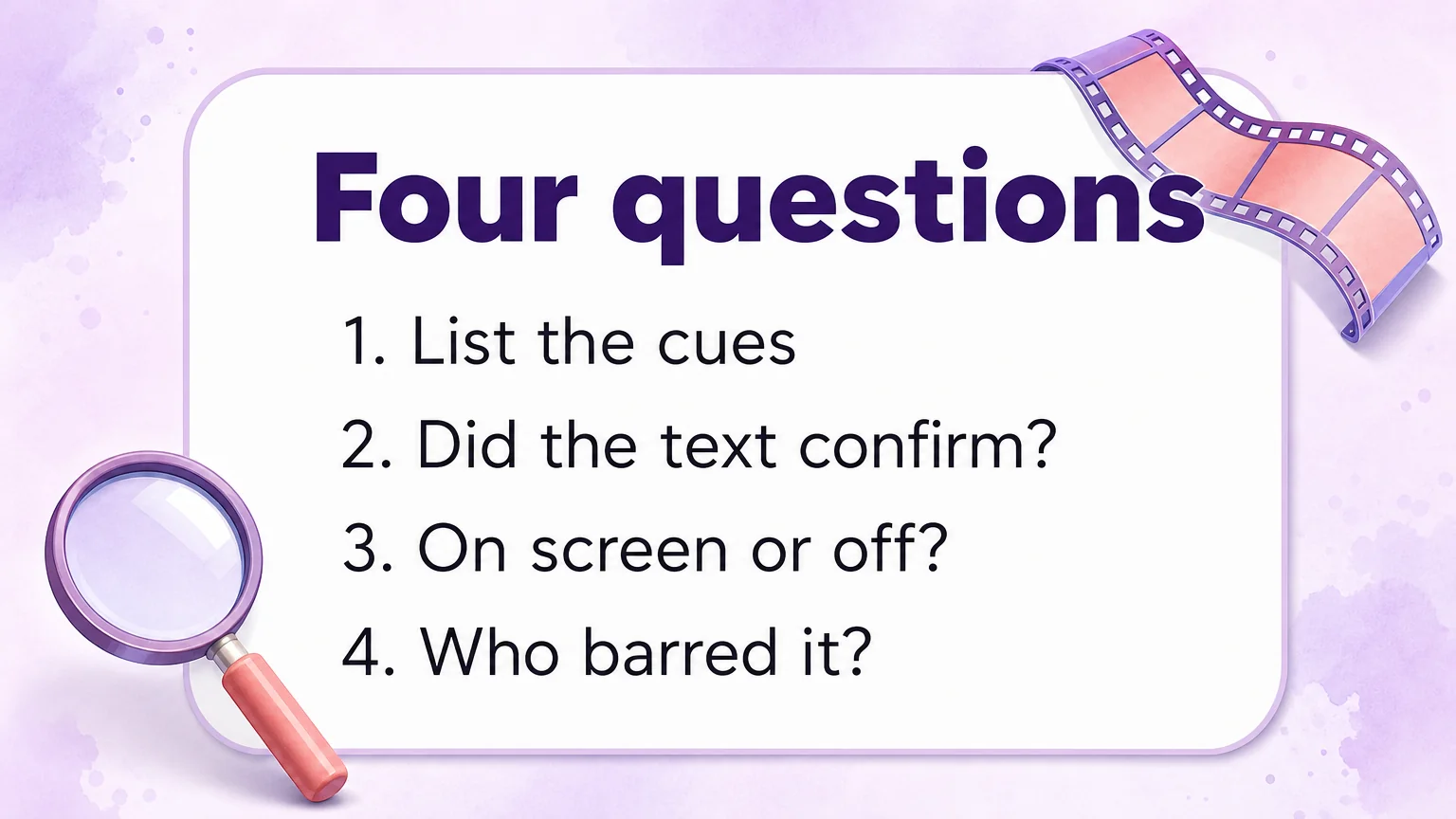
Four questions sort most cases:
- List the cues on screen.
- Ask whether the text ever confirms them.
- Ask where the confirmation lives, on screen or off.
- Ask who barred it: a censor, a sponsor, a ratings board, or a choice.
The last question separates coding from baiting, and it is often unanswerable from outside the production. Intent is not observable. You can describe the cues and the pattern of confirmation. You cannot read a studio’s mind.
The Case Against Queer Coding, and the Case for It

The disagreement is not queer readers against straight ones. It runs through queer criticism, and both sides have a case.
The case against. Queer coding tied queerness to villainy for decades and taught children who gets rewarded and who gets punished, well below the level of argument. Subtext let a studio collect a queer audience without ever committing to one, and it asked the audience to do interpretive work the studio would not pay for. On this reading, the practice is a closet with a marketing budget: visible enough to sell tickets, deniable enough to sell everywhere else.
The case for. Under a ban, the choice was coding or nothing. Coding preserved presence and produced the most vivid characters in the canon. Piluso argues that the villain’s camp performance lets the character exceed the moral role the plot assigns and seize the spotlight. The defense rests on a viewer, not a text.
Consider someone who read teen magazines whose advice columns covered only boys and the signs a boy liked her, attended a school where out students were not treated well, and had no words for her own attraction until adulthood. Coding gave her a private language before she had a public one. That is not nothing. It is also not the same as representation.
A third objection, about craft rather than ethics. A hinted romance can be well written or inert. Some readers object that a coded pairing is boring, not that it is harmful: two characters blush at each other and the story never gives them a scene worth the wait. Naming this keeps the argument from collapsing into a morality binary.
The live case. Wicked is not censored, which is what makes it useful. Nothing is forbidden and the queerness is still optional. Ariana Grande said Glinda’s love goes beyond gender, described the two characters as in love, then called it platonic. Co-star Marissa Bode posted a video calling each main character queer. Kelsey Cummings, in a 2026 study in the Journal of Homosexuality, reads the films’ narrative, promotion and audience investment together and argues they are best understood not as baiting or coding but as a conflict between capital and narrative. Her frame is cruel optimism: viewers keep investing in a queer possibility the commercial text may never deliver.
Whether coding is good is unsettled, and so is whether a coded character counts as representation. A verdict either way would be a matter of taste dressed as a finding.
Queer Coding: The Constraint Changed, the Practice Didn’t
Enforcement of the Code ended in 1968. Queer coding did not.
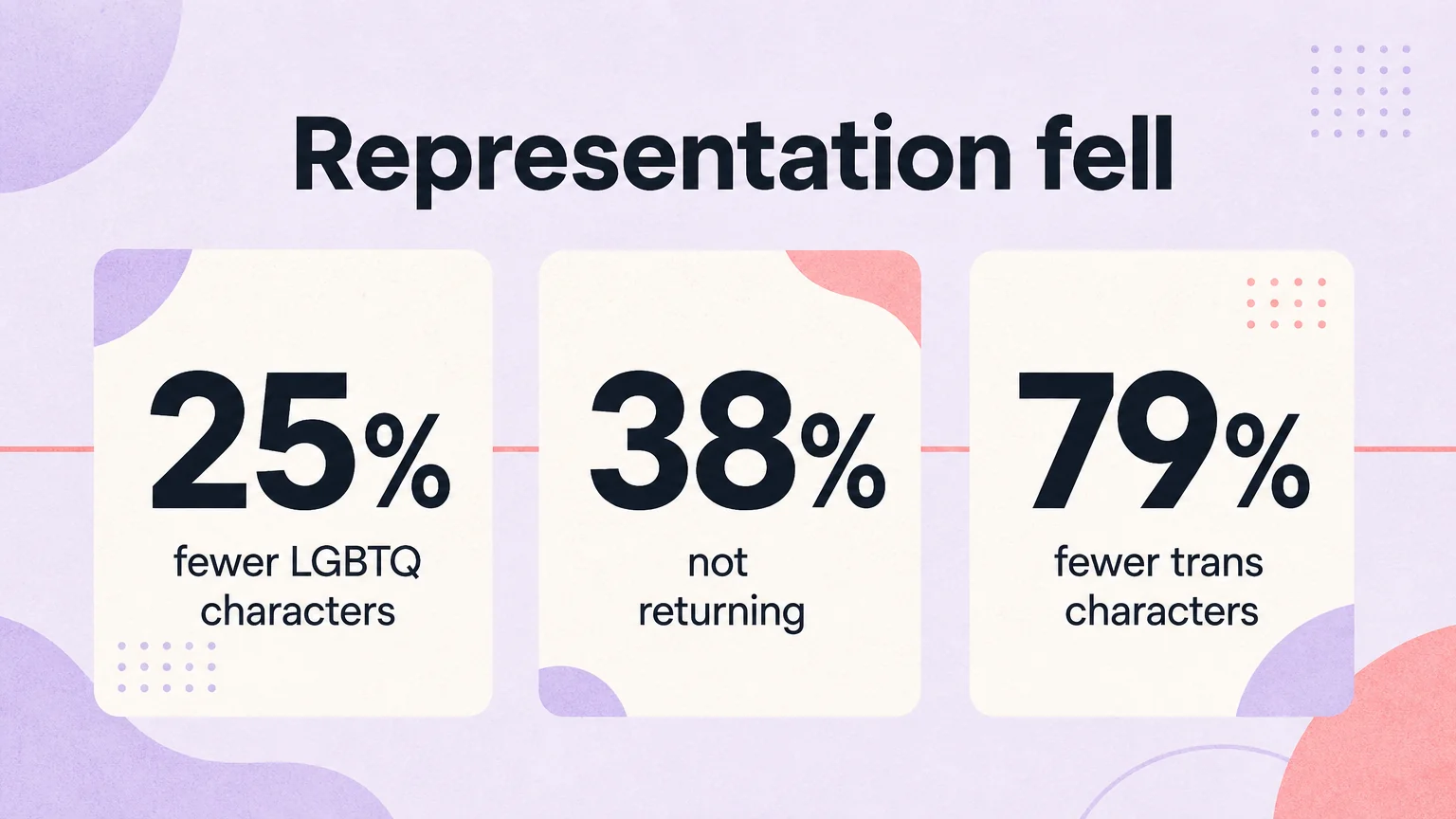
GLAAD’s 2025-26 Where We Are on TV report, released 12 November 2026, records a 25% one-season drop in LGBTQ characters. 38% of this season’s characters are not set to return. Trans characters fell from 33 to 7, a 79% collapse, and none of the survivors are set to return. Characters of color hit an eight-year low at 44%, below GLAAD’s own 50% benchmark, and cable carried just 13 LGBTQ characters of color, 28% of its total.
Cable is at a 16-year low and broadcast at a 12-year low, while streaming still carries 75% of LGBTQ characters. Representation fell at twice the rate of overall production. The practical reading is that subtext is being asked to carry representation again, and this time the market is doing the trimming. A character whose queerness stays in subtext is cheaper to keep and easier to sell abroad.
The other regime never stopped. In September 2021, China’s broadcasting regulator warned producers against rushing to adapt danmei novels. Deputy director Zhu Yonglei urged the industry to adhere to realism and resist deformed aesthetics, with more than 60 such dramas in production or scheduled at the time. The Untamed, a 50-episode 2019 adaptation, turned the novel’s lovers into soulmate cultivators.
Two regimes, one grammar. Coding is something done to a text by whoever holds the power to forbid the thing. When one censor steps back, another constraint can step in.
Deniability is a condition imposed on a story. It is not a condition anyone has to accept about themselves. 3Fun is a dating app for gay, lesbian, bisexual, trans, non-binary, pan and queer people, and nobody has to read between the lines to be welcome.
FAQ
What does queer coding mean?
Queer coding is giving a character traits audiences read as queer while never stating the character’s gender or sexual identity. The cues live in voice, gesture, styling, gaze and narrative framing, and the audience assembles them into a reading the text never confirms. The unconfirmed part is what makes it coding rather than subtext that later paid off.
Is queer coding the same as queerbaiting?
No. Coding describes cues without confirmation, whether a censor or a choice kept them unconfirmed. Queerbaiting is a charge about intent and follow-through: hinting at queerness to attract an audience while planning never to deliver it. A coded work can be open about its limits; a baiting one is accused of pretending otherwise.
What is queercatching?
Queercatching is the inverse of queerbaiting: creators confirm or promote a character or romance as queer in interviews, press tours and social posts while the work itself offers little or no evidence. Confirmation happens off the page instead of on it. Rowan Ellis coined the term in a 2019 video essay.
Is queer coding bad?
It is contested, and both positions are held by queer critics. Critics point out that coding tied queerness to villainy, taught generations that gender nonconformity means danger, and let studios profit from subtext without commitment. Defenders point out that it preserved queer presence under censorship, produced some of cinema’s richest characters, and gave isolated viewers something to recognize.
Is queer coding only about villains?
No. Romantic subtext, intimacy framed as corruption, coding that runs on revulsion rather than the sissy template, and coding by negation all exist outside the villain template. The common thread is deniability, not villainy: the cues are present and the text is barred, by a censor or a market, from confirming them.
Is queer coding still happening now that US censorship has ended?
Yes. The constraint changed shape rather than disappearing. GLAAD recorded a 25% one-season fall in LGBTQ characters and a 79% collapse in trans representation in its 2025-26 report, which means subtext is carrying weight that explicit characters used to carry. Legal censorship never stopped elsewhere, including China’s 2021 restrictions on danmei adaptations.