
Somewhere in your feed, a profile reads “submissive seeking domme.” If you are wondering what is a domme, you are not alone, and the answer carries no shame.
BDSM-related fantasies are the single most common sexual fantasy on record, reported by 93% of men and 96% of women in a large US survey. Reviews of 60 studies put BDSM fantasies in 40 to 70 percent of adults. This is not a fringe interest. It is one of the most common sexual curiosities there is.
A domme is a woman who takes the dominant role in BDSM. She leads, sets the terms, and guides the power exchange with her submissive. That is the whole definition. Everything else, the latex, the whip, the mystery, is decoration this guide will strip away.
Here is what we will cover: the definition and every confusing title, what a domme actually does, why people seek this dynamic, the safety systems that keep it healthy, the myths, findom, and how to meet a domme. No shame. Just a map.
What a Domme Is: The Definition, and Every Confusing Title, Untangled
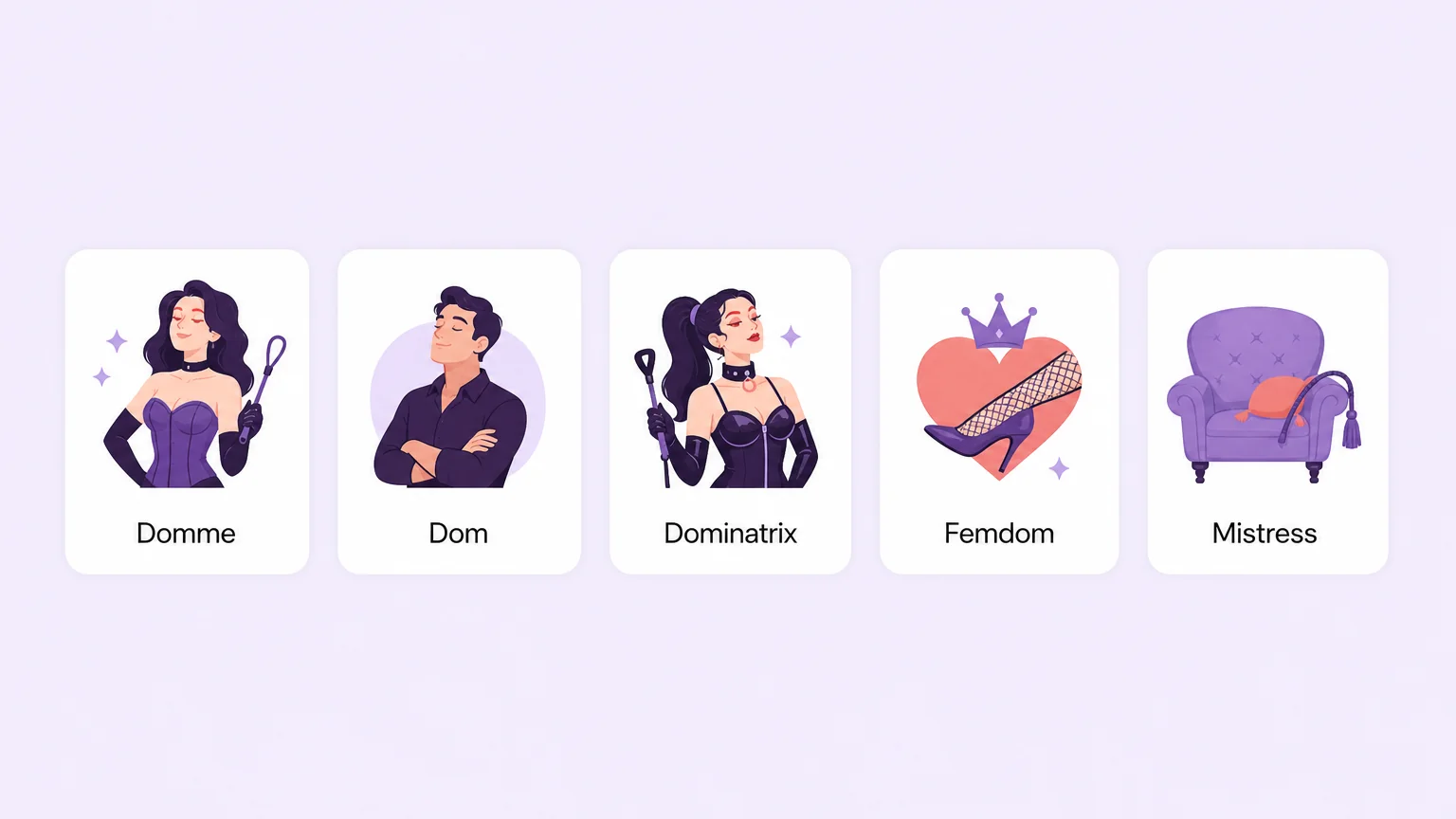
Every title seems to say the same thing. Ask three people to explain the difference between a domme, a dominatrix, and a femdom, and you will get three different answers. The confusion is understandable. These words overlap heavily, which is exactly why this section exists. Whatever title you arrived with, it points at the same question, and one answer settles all of them.
Here is the definition in one place: a domme, pronounced like “dom”, which is a little different dom, is a woman who takes the dominant role in BDSM. It is a near-synonym of dominatrix and of female dominant. The word reads like a French-flavored twist on “dom,” the clipped slang for “dominant,” and it doubles as a shortened form of “dominatrix.”
The longer word has deeper roots. “Dominatrix” is the feminine form of the Latin “dominator,” meaning a ruler or lord, and its modern BDSM use dates to 1961. For centuries before that, the word simply meant a woman who rules.
Before the titles make sense, the acronym has to. BDSM is three mini-acronyms in one: Bondage and Discipline, Dominance and Submission, Sadism and Masochism. A domme lives in the D/s branch, the dominance and submission side.
Sex therapist Dr. Laura Prescott says much of what newcomers hear about BDSM is misleading, and the basics are where everyone should start. The D/s branch is the basics.
Here is the title list, one line each:
- Domme. The everyday term, the feminine of “dom.”
- Dom. The short form, used by dominants of any gender.
- Dominatrix. Usually implies a paid professional.
- Femdom. The umbrella genre for female domination, a term that traces to around 1986.
- Mistress. The feminine of “master,” and the classic honorific.
- Domina. The Latin-flavored variant.
- Female dominant. The plain-language synonym.
Two clarifiers before we move on. Femdom is a kink genre, not a belief in female supremacy, and it never licenses treating anyone as less than equal. And a domme can be of any sexual orientation, with partners of any gender. Nothing here is written for only one kind of reader.
One thing worth knowing as you go: domination does not require pain. That thread runs through everything that follows.
What a Domme Actually Does: Activities, Styles, and What a Scene Looks Like
You have the definition now, but a definition is not a picture. The gap between understanding the word and picturing the dynamic is where most newcomer anxiety lives, and the mystery creates more anxiety than the activity ever will.
So what does a domme actually do? The short answer: she directs. The full answer is a range of activities, most of which never involve pain.
- Bondage and restraint. Ropes, cuffs, scarves, or simply being told to hold still.
- Spanking and impact play. Licensed sex therapist Matt, who is AASECT-certified, defines impact play as “a consensual activity where someone is being struck for the purpose of pleasure, connection, or exploration.”
- Tease and denial. Bringing you to the edge and deciding you stay there.
- Orgasm control. Permission becomes part of the scene.
- Body worship. Your devoted attention, offered as service.
- Chastity and keyholding. She holds the key and decides when release happens.
- Verbal humiliation. Erotic words that sharpen the power dynamic, negotiated in advance.
- Service tasks and rituals. Small duties that keep the dynamic alive between scenes.
- Plain power exchange. Being led, being told what to do, and finding relief in it.
Notice how many involve no pain at all. Domination can be verbal, task-based, or purely psychological. Pain is one flavor, not the meal.
The Five Styles of Domme
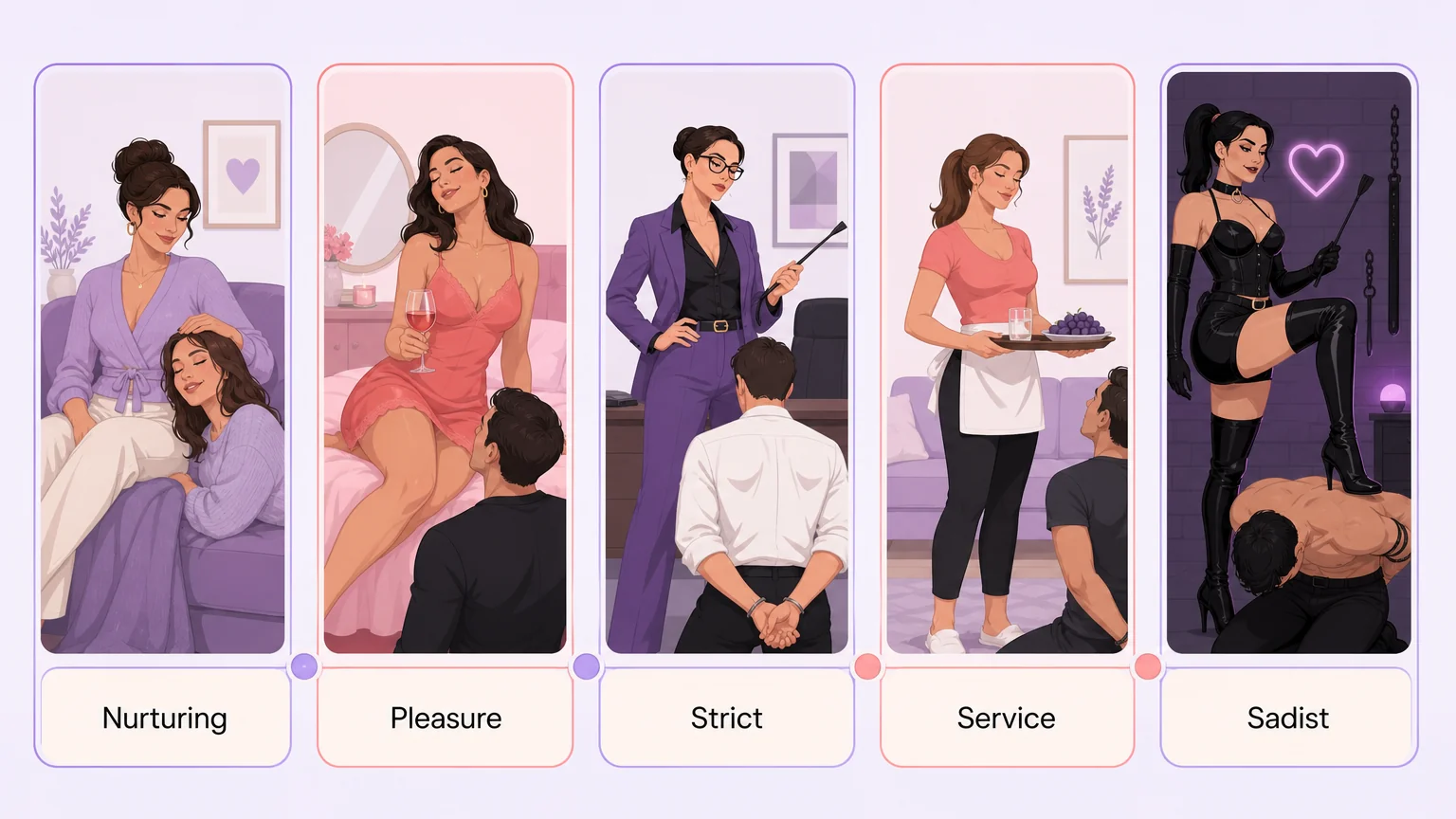
Knowing the styles helps you name what you want before you seek anyone out. Dominance comes in different forms.
The nurturing domme, sometimes called the mommy domme, leads with care. She is firm but invested in your wellbeing and growth, encouraging with praise more than punishment. She makes sure you sleep, eat, and show up, then holds you accountable. Encouragement is her primary tool.
The pleasure dom has one goal: your pleasure and ecstasy. Educators call it the most craved and most misunderstood style of dominance, because it looks nothing like the leather-and-whip stereotype and everything like careful attention to what makes you feel amazing.
The strict domme runs on rules and discipline. Consequences are negotiated in advance, and the clean relief of clear expectations is exactly the point.
The service domme directs acts of service. Errands, devotion, caretaking tasks, all framed as submission to her direction. Being useful to someone who leads can feel like the deepest form of connection.
The sadist enjoys giving consensual pain. The pain is negotiated, bounded, and delivered to a partner who wants it. The enjoyment lives inside the agreement.
What a Scene Looks Like
A scene runs in three phases: negotiate before, play, aftercare after, with the full safety treatment coming later in this guide. A dynamic can be scene-only, bedroom-only, or all the way to a 24/7 power exchange, complete with contracts and negotiated rules, and there is no one right shape.
The Three Kinds of Dommes: Professional, Lifestyle, and Online
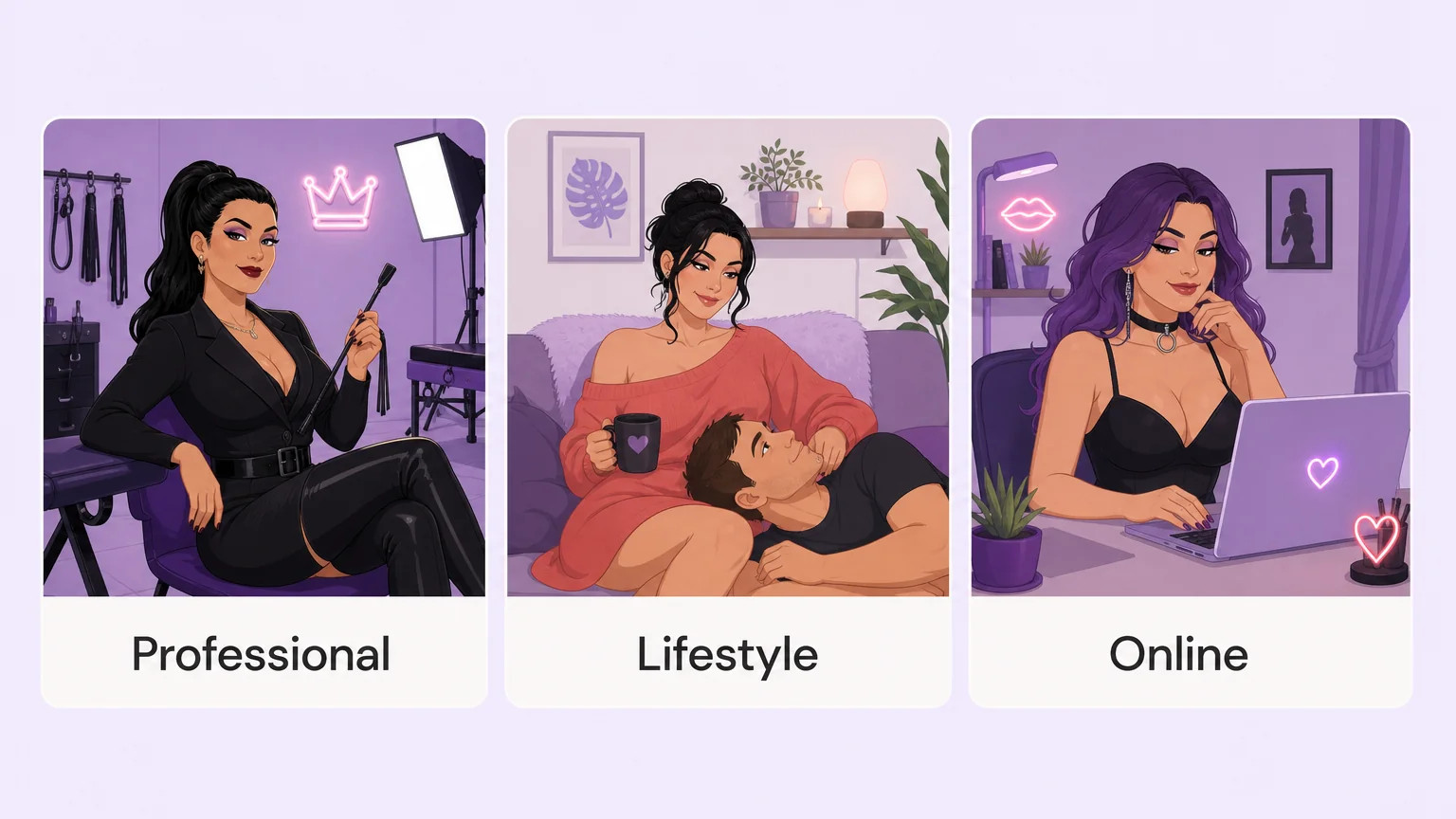
“Domme” is not one thing. Knowing which kind you are looking for changes everything, including where you look, what you say, and how much money and time you should expect to spend.
Professional Dommes
A professional domme is hired to carry out a fantasy for a specific period of time, usually around fetish and power dynamics, as practitioner Eva O. puts it. Sessions typically involve no sex, no nudity, and no touching the domme. It is a paid service, now generally accepted as sex work, and it is not escorting.
Sessions often take place in rented dungeons, where the space and the equipment are already handled. A 2012 study found that 39% of professional dominatrices had graduate-level training, a useful check on the idea that this is unskilled work. It is a craft, and it is studied.
Lifestyle Dommes
A lifestyle domme is dominant in her personal relationships and is not paid. She prioritizes her own desires rather than a client’s fantasy. As tantric dominatrix Kalyss Mercury notes, a lifestyle dynamic asks for more time and emotional investment from a sub than a single session ever does, and that investment is exactly where genuine connection lives. This is the route for people who want a relationship, not a booking.
Online and Remote Dommes
Domination moved on demand. The industry shifted from magazine ads and forum threads to OnlyFans and fan sites, and remote dommes now operate from anywhere in the world. Online play is a great low-stakes way to explore a dynamic without physical contact, and it is the easiest place to start. It is also where the highest scam surface sits, because it is where “instadommes,” people who are not genuine dominants, tend to gather.
One nuance worth knowing. Even inside the community, whether lifestyle dommes should accept tribute is genuinely contested. About half of lifestyle dommes accept gifts or money, and about half refuse it as a form of exploitation. There is no consensus, so do not assume. Ask, and let the answer guide you.
Why People Seek a Domme: The Psychology of Power Exchange
Here is the part that surprises everyone: the people seeking a domme are often the ones with the most control in their daily lives.
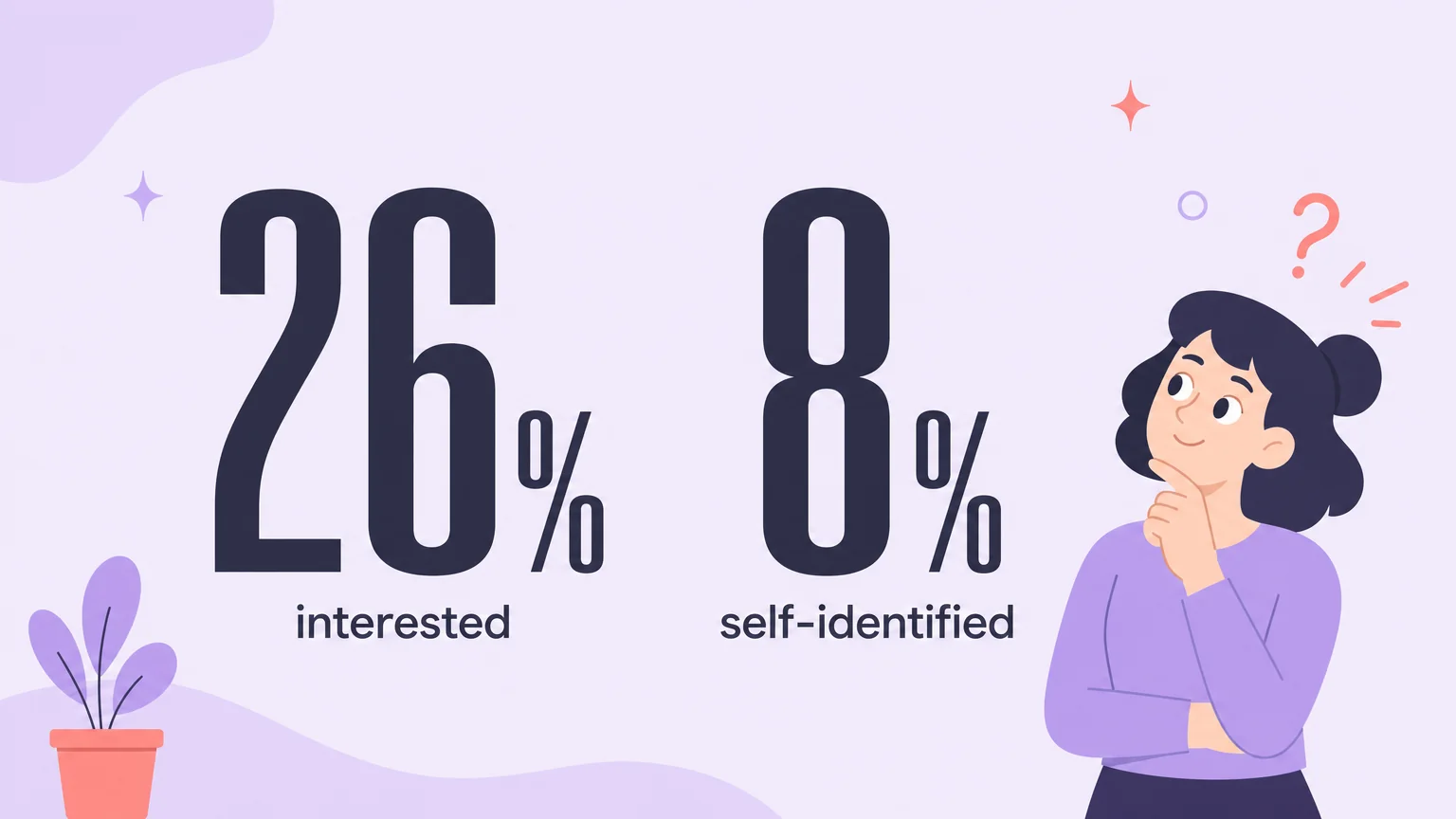
Curiosity runs ahead of the label. One Belgian population study found 26% of people drawn to BDSM and just 8% calling themselves practitioners, a gap that stigma explains.
Professional dominatrix Mx Tomie interviews her submissives, and the pattern repeats. In one conversation, a business finance professional with a master’s degree described exactly why he hands over the reins. Ask any submissive when the pull first showed up and the answer is usually the same: a teacher, a police officer, an authority figure who simply commanded the room. High-achieving, educated, in charge all day, and quietly drawn to giving that up for a while. It is a recurring pattern, not a contradiction.
For many submissives, surrender is a release. The relief of not deciding. The focused attention of someone who sees you completely. The feeling of being held by a structure instead of having to build one from scratch.

Dr. Misty, a sex therapist and kink educator, describes explicit rules and boundaries as genuinely soothing, a moment when the nervous system can finally exhale. That is why so many people with decision-heavy jobs, and so many neurodivergent people who find social scripts exhausting, describe the dynamic as rest.
On the dominant side, the draw is rarely cruelty. It is being handed something precious and trusted with it. Sex therapist Dr. Amanda Pasciucco breaks dominant motivation into three styles: service-focused dominants who want to care for and direct, suffering-focused dominants who enjoy consensual pain, and reaction-focused dominants who thrive on the partner’s response.
All three are expressions of trust, not harm. To dominate well is to hold someone’s safety in both hands.
So is this oppression? No. It is chosen power exchange. A submissive makes intentional choices about their body and pleasure every single day, which is a kind of agency, not the absence of it.
A kink educator summed it up: feminism opened the door, and BDSM lets you walk through it on your own terms. Wanting to kneel and wanting equality are not in conflict. One is a social stance. The other is a bedroom, and the bedroom is yours.
Myths About Dommes, Debunked
The myths are where the fear lives, and each one dissolves on inspection. Five of them, handled quickly, because fear should not get more time than it deserves.
Myth: Dommes are cruel or hate men
Care and consent are the operating system. Praise, structure, and aftercare are core tools, not exceptions. As one kink educator puts it, when you praise a submissive you are not just turning them on, you are regulating their nervous system and shaping their attachment. That is care, practiced seriously.
Myth: Dommes are prostitutes
Covered in full above. Pro-domme sessions typically involve no sex, no nudity, and no touching the domme, and lifestyle dommes are not paid at all. The word “prostitute” fits none of it.
Myth: Subs are weak
Chosen surrender takes more agency, not less. Handing over control deliberately, with safe words and limits in place, is a strength, not a failure. The psychology section makes the case in full, but the short version stands alone: it takes more confidence to give up control than to keep it.
Myth: Dommes always wear latex and carry a whip
That is pop-culture costuming, straight from Catwoman to movie dominatrixes. Latex, boots, and whips are an aesthetic some dommes enjoy and many never touch. The essence of the dynamic is the power exchange, not the outfit. Strip away the costume and the dynamic is unchanged.
Myth: Femdom means female supremacy
Femdom is a kink genre, not a politics. It describes female domination in scenes and relationships, and it has nothing to do with beliefs about who should run the world. Conflating the two confuses a bedroom dynamic with a social system, and neither deserves the confusion.
Consent, Safe Words, and Aftercare: How Domme Dynamics Stay Healthy
Consent is not the unromantic part of BDSM. It is the unbreakable foundation.
As Dr. Amanda Pasciucco puts it, dominance is not a costume you slip into; it is an energy you cultivate from within, and everything in a scene is co-created. Strip away consent and what remains is not kink. It is abuse. That distinction is the whole game.
Two frameworks carry the community’s standard, and they say the same thing. SSC stands for Safe, Sane, and Consensual. RACK stands for Risk-Aware Consensual Kink.
One frames safety as the baseline, the other frames risk as something acknowledged and managed. Both put consent as the line between kink and abuse, which is the single most important idea in this guide.
Three tools make it real.
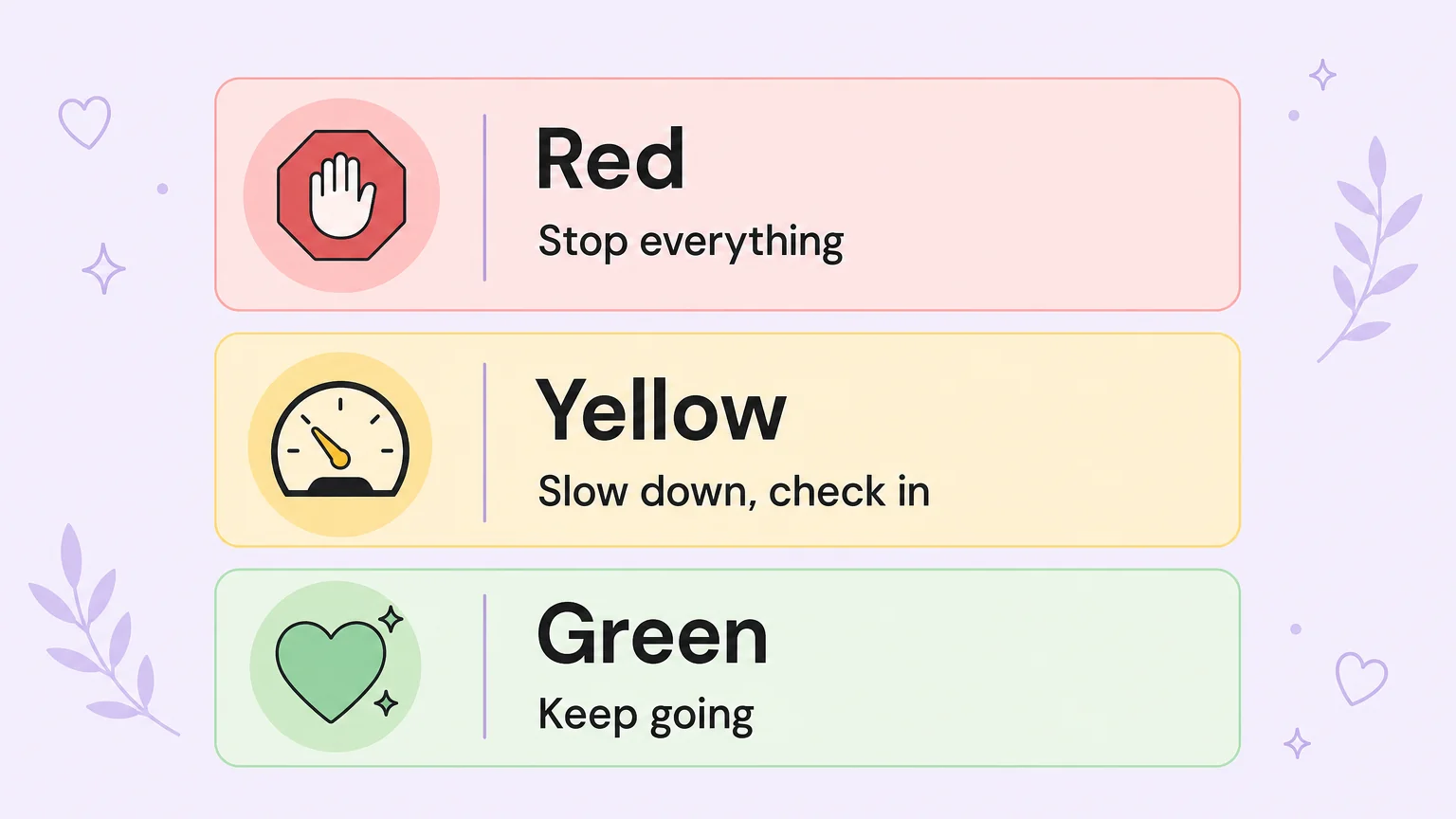
Safe words. Agree on a word before any play. The traffic-light system is the standard: red stops everything immediately, yellow slows down and checks in, green keeps going. Anyone can use one, the dominant included, and using it is not a failure. It is the system working exactly as designed.
Negotiation. Before a scene, sit down with no distractions and co-create a map of zones: yes, explore, absolutely not. Agree on the activities, the limits, the scene length, and what happens if someone stops. Consent is an ongoing check-in, not a one-time yes. Nothing is assumed, because assumptions are where accidents come from.
Aftercare. The physical and emotional reconnection after a scene: cuddles, water, reassurance, check-ins. Build an aftercare menu in advance, a list of what reconnects you and your partner, so it is ready the moment the emotional low hits. You should not be improvising comfort at the worst possible moment.
Two things beginners rarely get warned about. Subspace is the altered state some submissives enter during intense play, a floaty high that can be followed by a hard low. Dom drop is the emotional comedown some dominants feel after a scene, and it is common enough to have a name. Aftercare runs in both directions. Both people went through the scene, and both people need to come back.
One warning to close. Edge play, including consensual-non-consent and blackmail roleplay, demands extra safety rails and is not a beginner’s first stop. Learn the baseline first. The intensity will still be waiting when you are ready.
How to Find and Approach a Domme: Etiquette, Screening, and First Messages
You now know what a domme is. The next question is where to find one and how to approach without the mistakes that get most first messages ignored. The fix is simple respect.
Where to Look
Kink-forward dating apps with role and kink filters are the natural place to meet a domme who is genuinely dating and looking. Feeld is built for exactly this, and so is 3Fun, made for the ENM, threesome, and swinging communities where kink interests overlap naturally. Apps with long profiles, like OkCupid, let dommes state their preferences and limits in advance, which does half your work for you. A profile that names boundaries is a profile you can read, and reading it is step one.
For community first, kink social networks like FetLife are the best place to find munches: casual, clothes-on meet-ups where you meet people in person before any play is on the table. Events and classes serve the same purpose, and the community you meet is the best education you can get. A munch is not a speed-dating event. It is a room full of people being ordinary, and that ordinariness is exactly the point.
Know the paid-versus-lifestyle split before you start. It decides where you look, what you say, and what either of you owes the other. Nobody wants to discover that mismatch late.
How to Message
The first message opens a conversation. It is not an audition, and it is not a negotiation of the entire relationship.
Do read her full profile and only reach out if you genuinely fit her stated criteria. Do follow any protocols she lists. Do introduce yourself in two or three short, well-written sentences, and name one specific thing from her profile that stood out. Specificity is the whole trick. A message that shows you truly read her reads as respect.
Do not open with “I’ll do anything” or “no limits.” No limits is a red flag, because everyone has limits, and knowing yours is the minimum requirement. Do not use titles like Mistress or Goddess before she offers them. Do not lead with explicit demands. Do not send unsolicited pictures. Every one of these gets messages ignored, and all of them signal fantasy-thinking rather than self-awareness.
How to Screen
Screening runs in both directions, and the same checklist protects everyone.
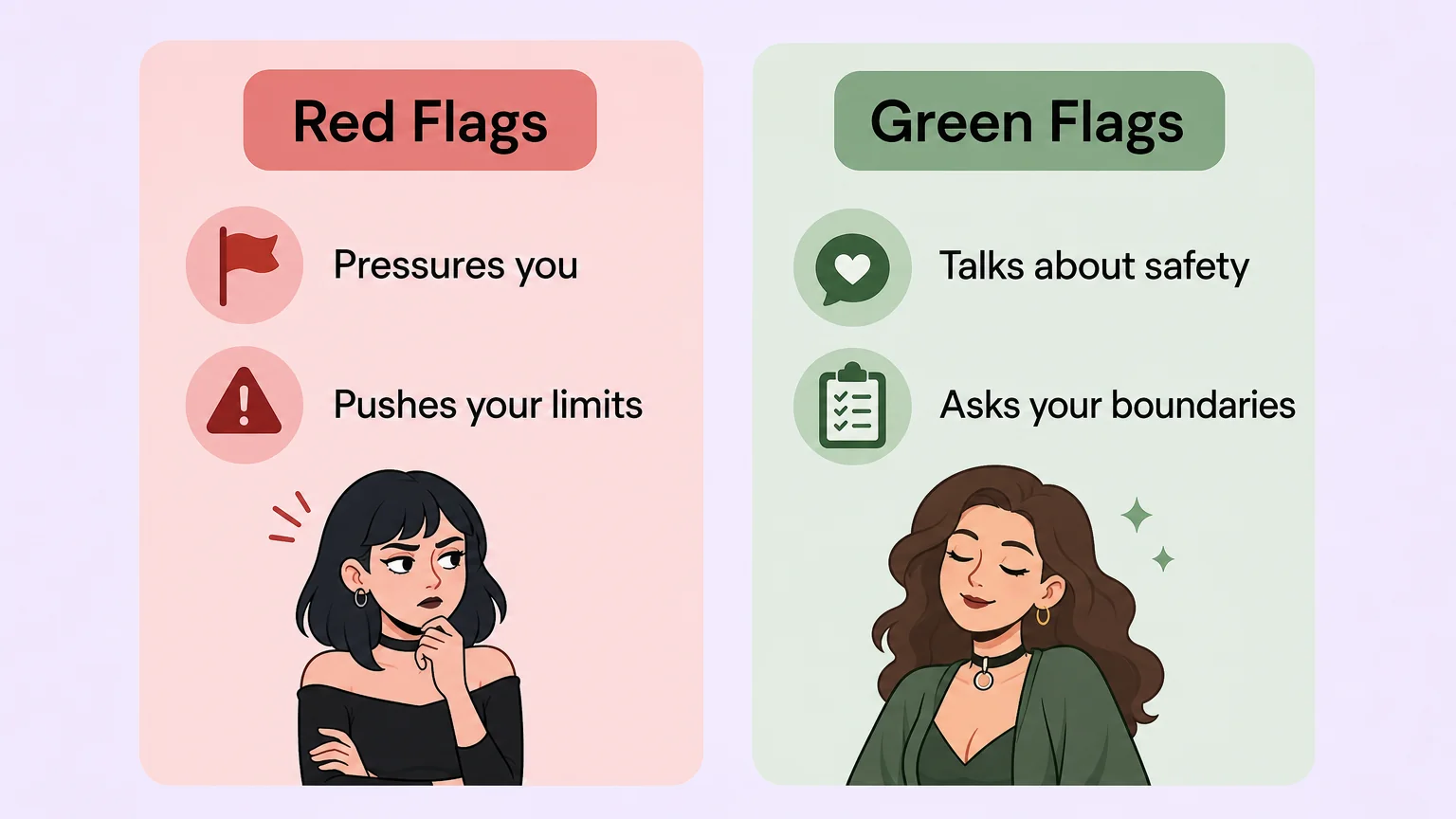
Red flags: she pressures you, refuses to discuss safe words or aftercare, rushes the negotiation, or pushes back when you set a boundary. That last one is the single most reliable test. A domme who respects you will not fight your limits. A domme who wants control without consent will.
Green flags: she asks about your limits and aftercare needs proactively, before you bring them up, and she brings up safety unprompted. That is a person who treats the framework as the point, not the paperwork.
The person is the safety system. Take the time to get to know her as a person first, and everything else gets easier.
Ready to meet a domme who is genuinely dating? 3Fun is built for couples and singles exploring ethical non-monogamy. Create a profile, set your role and kink preferences, and match with people who have already stated theirs. The screening rules in this section apply on every app, 3Fun included.
Findom Explained: What Financial Domination Is, and How to Stay Safe
Findom, short for financial domination, is a branch of femdom where the sending of money is the erotic act, not a side effect. The submissive gets gratification from sending tribute. The dominant gets a thrill from controlling someone financially. It runs from small daily “coffee sends” of around $10 to $25 all the way up to total power exchange, where a domme controls a submissive’s finances and grants an allowance.
Here is the before-you-start checklist.
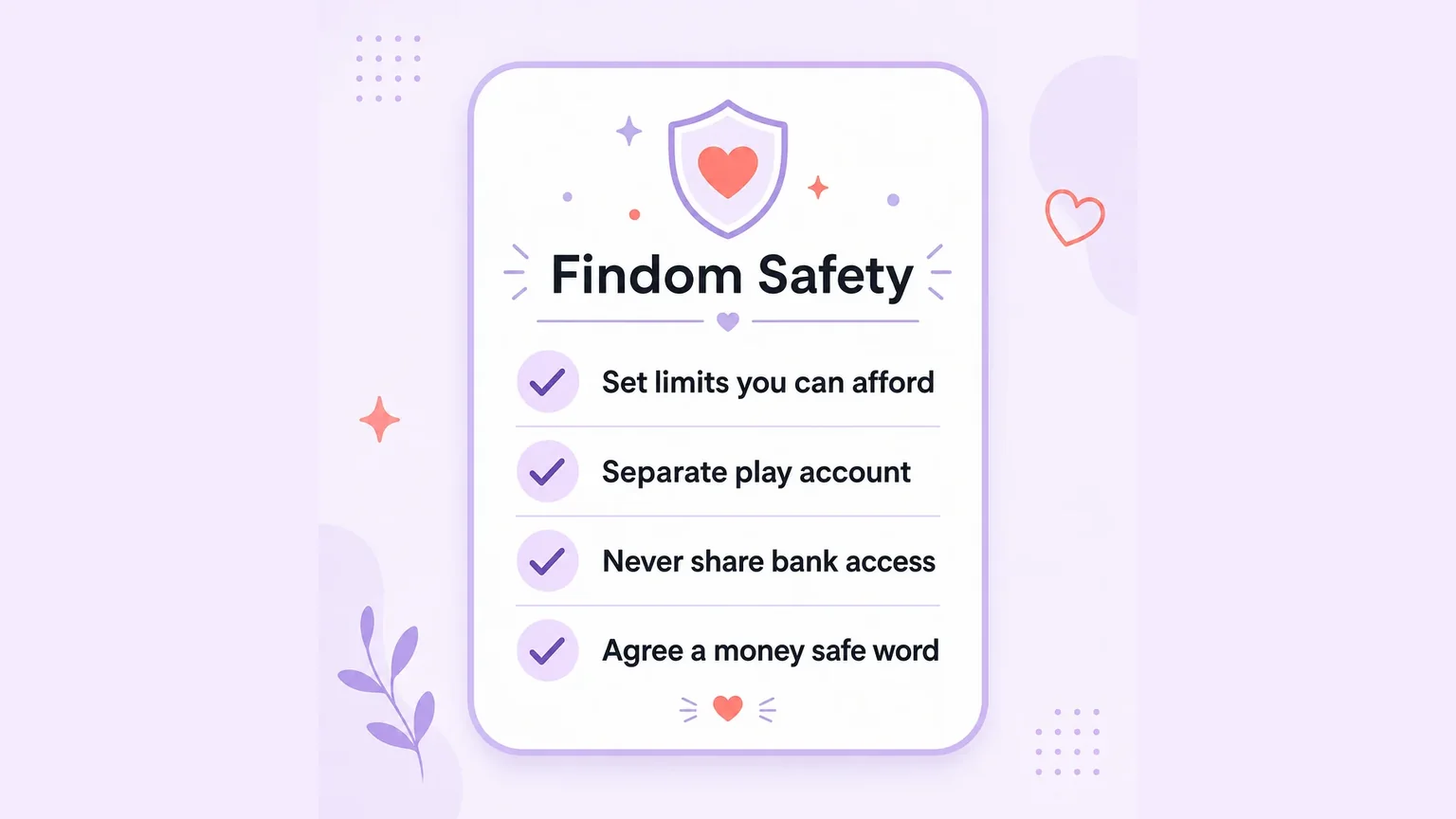
- Treat findom as discretionary spending, nothing more. Set daily and weekly limits you can afford to lose.
- Use a separate play account or prepaid card so essential money is never touched.
- Never share banking access or passwords. Ever.
- Never send money to unlock a bigger payment. That is not findom. That is a scam.
- Agree a money safe word that pauses all financial activity, no questions asked.
- Vet the domme hard. Most online contacts in this space never intend a real dynamic.
The scam tells are consistent: profiles too good to be true, fake payment screenshots, catfishing with stolen photos, and pressure to exceed agreed limits. If a single one shows up, walk away.
Findom is legitimate when it stays consensual, budgeted, and separate from your real financial life. When it stops being any of those three, it has stopped being kink.
FAQ: Your Domme Questions, Answered
Is a domme a prostitute?
No. A professional domme session typically involves no sex, no nudity, and no touching the domme. It is a paid service, accepted as sex work, and it is not escorting. A lifestyle domme is not paid at all. The confusion is understandable, but the distinction is clean.
Does being with a domme mean pain?
No. Domination can be verbal, task-based, service-based, or purely psychological. Pleasure doms aim for your pleasure and ecstasy, not pain, and much of the activity in this guide involves no pain at all. For many dommes, the goal is closeness, not pain. How much pain happens, if any, is fully negotiated in advance.
Do I have to submit 24/7 to be with a domme?
No. Dynamics span scene-only play, bedroom-only dominance, and full 24/7 power exchange, where structure runs around the clock. You negotiate the shape with your partner, and there is no one right way. The shape is a negotiation, not a test. Most dynamics start light and grow from there.
Can I explore this with my current partner?
Yes. Couples routinely add short, negotiated domme-sub scenes to their sex life without any lifestyle change. There are also genuine consensual 24/7 dynamics inside polyamorous structures, complete with written contracts and negotiated rules. The negotiation is the adventure, and a conversation is enough to begin.
Is findom a scam?
Findom is a genuine consensual kink, but money plus anonymity makes it scam-prone. Keep it budgeted, separate, and bounded. Agree a money safe word before anything is sent. Watch for fake payment screenshots, catfishing, pressure to exceed your limits, and demands for deposits. If any of those appear, walk away.
I’m successful in my career but I want to submit. Is that weird?
It is a recurring pattern, not a contradiction. Surrendering control can be a release from a life full of decisions, and dommes consistently report that many of their partners are high-achieving, educated people. The relief of not deciding for an hour is the point, not a sign of weakness.
How do I meet a domme who wants a genuine connection?
Use platforms where dommes genuinely date, read profiles fully, and send a specific, respectful first message. Attend munches to meet the community in person. Screen for green flags like proactive talk about limits and safety, and for the absence of red flags like pressure and boundary-pushing. Take your time.