A furry fetish is a sexual focus on anthropomorphic animal characters where attraction to these characters, or the experience of identifying as one, is a primary pathway to arousal. Colloquially, people use “fetish” to describe the sexual side of furry culture at any intensity level, and that is how we use it here. Some people experience it as a genuine clinical fetish. Others experience it as a strong kink. The label matters less than understanding what is actually happening. What is a furry fetish if not one specific way human desire organizes itself around a particular target?
This article is about the fetish specifically, not the broader furry fandom with its conventions, community structure, and creative culture. What follows is a clear look at what the sexual dimension entails and why it works the way it does.
What is the Furry Fetish
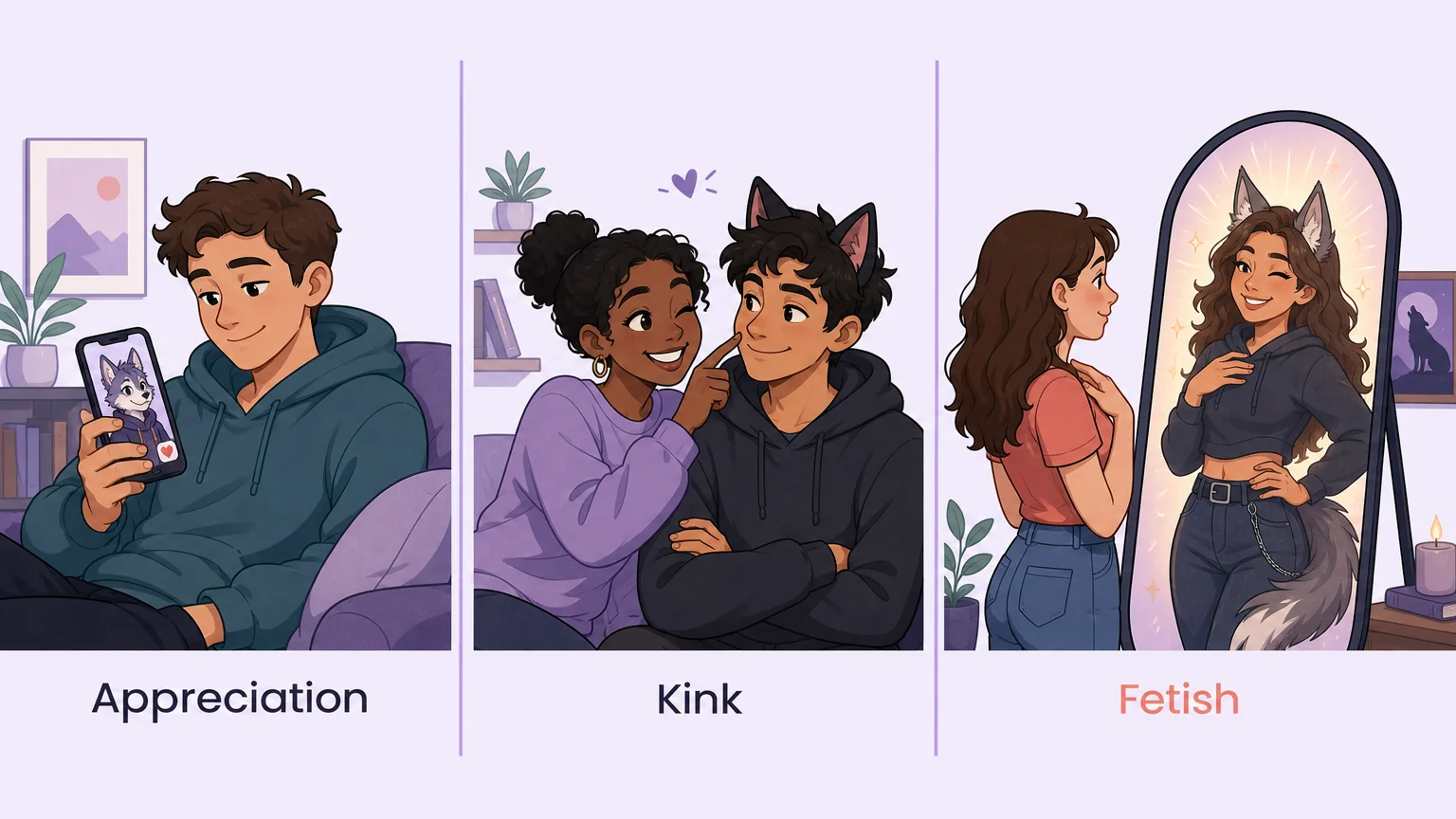
A fetish, clinically speaking, is a sexual focus on a specific object or scenario that is necessary or strongly preferred for arousal. In the furry context, that object is anthropomorphic animal characters: fictional beings that combine human traits like speech, personality, and relationship capacity with animal-coded physical features such as fur, ears, tails, muzzles, and paws.
Think of characters like those from Zootopia. They walk upright, hold jobs, fall in love, and navigate social lives. The attraction targets the human qualities inside the animal-coded design, not the animal underneath. The fur, the ears, the tail are aesthetic layers on top of a recognizably human core.
What distinguishes the fetish from casual appreciation? The answer comes down to centrality. Someone can find a furry character design attractive the same way they find a human actor attractive. That is aesthetic appreciation. Someone can enjoy furry content as one element in a varied sex life alongside other kinks and interests. That is a kink.
A furry fetish sits at the far end of this spectrum. Anthropomorphic characters, or the fantasy of being one, are the main course, not a side dish. The fetish is the primary pathway to arousal. Without it, arousal is diminished or absent.
This distinction matters because it separates the broader fandom from the fetish-specific experience. The furry fandom is vast. Some people are in it for the art, the community, the conventions, the creative expression. Others are in it primarily for sexual reasons. Those are different motivations, and they coexist without contradiction inside the same community spaces. One person’s hobby is another person’s orientation.
One number grounds this conversation. In a 2019 study by Hsu and Bailey published in the Archives of Sexual Behavior, 47 percent of male furries said sexual motivation was their primary reason for engaging with furry content. That group is the fetish cohort. Nearly half of a studied population identified sex as the central draw. The rest of this article uses “fetish” the way most people searching for answers use it: to describe the sexual dimension of furry culture, at whatever intensity someone experiences it.
The Psychology of Furry Fetish: Why Anthropomorphic Characters
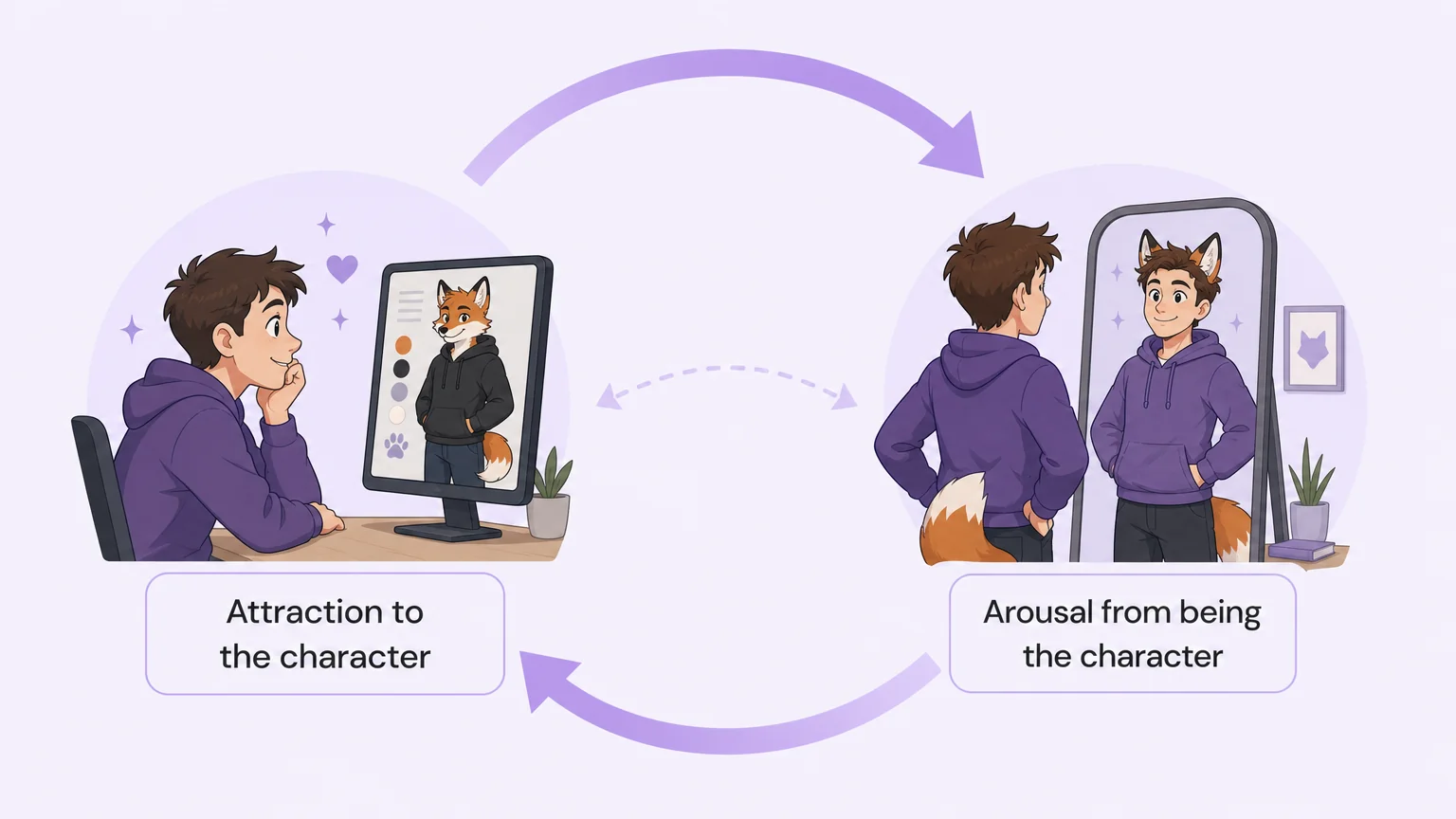
The furry fetish operates through a mechanism researchers call Erotic Target Identity Inversion, or ETII. Hsu and Bailey identified this in their 2019 study of 334 male furries. It describes arousal that flows in two directions simultaneously: attraction to anthropomorphic characters, and arousal from the fantasy of being one.
This dual mechanism is what makes the furry fetish psychologically distinct. Compare it to a foot fetish. Someone with a foot fetish is aroused by feet. They do not fantasize about being a foot. The arousal is one-directional: observer to object. But the furry fetish works in both directions. The person experiences arousal from seeing anthropomorphic characters and from embodying their own fursona. These are not separate interests. They are two sides of the same erotic experience. The gaze and the embodiment feed each other.
This is why fursonas are central in a way that has no parallel in most other fetishes. The fursona is not just an avatar or a creative project. It is an erotic target. Designing the character and inhabiting it sexually belong to the same underlying desire. A shy person whose fursona is a bold, dominant wolf feels arousal from encounters with other characters and from the exhilaration of becoming that confident self. The character is a bridge between who you are and who you want to feel like during sex. The arousal lives in the transformation as much as in the destination.
The anthropomorphic filter provides psychological distance, and this distance explains a lot. The fursona is you but not quite you. Close enough that desires feel real and urgent. Distant enough that exploration feels safer than it would in an unfiltered human context. You can try on dominance as a wolf character before you try it as yourself. You can explore a different gender presentation as a fox before you name what you are doing. This is why the furry fetish often intertwines with gender exploration, dominance and submission dynamics, and body image work. The character permits what the self hesitates to claim.
What the Furry Fetish Looks Like in Practice
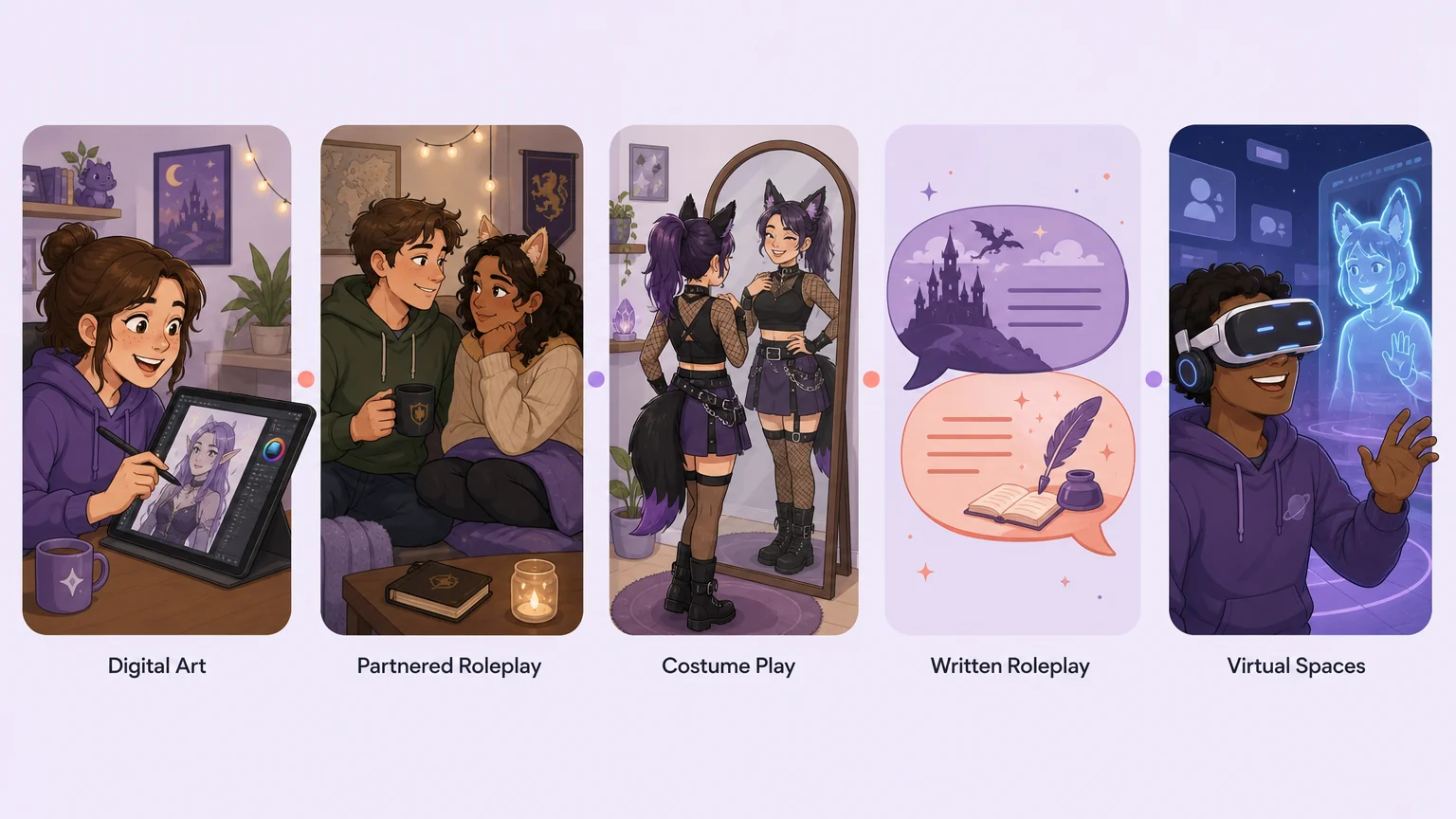
The furry fetish expresses itself through several channels. Most people who engage with it use more than one.
Furry erotic art is the most common channel. People commission images of their own fursona in sexual scenarios from independent artists. A sketch might cost thirty dollars; a full illustrated scene, several hundred. These commissions are personal, private, and require no partner. The client describes the fantasy, the artist renders it, and the resulting image becomes a sexual object tailored to one person’s specific desire. For many, commissioned art is their primary sexual outlet. The image is not a substitute. It is the thing itself.
Fursona embodiment during partnered sex is another major expression. This can mean wearing ears, tails, or partial costumes during sex. It can mean roleplaying as the fursona, adopting the character’s personality and name with a partner. The ETII mechanism is at work: arousal comes from being the character with someone else engaging with that version of you.
Murrsuiting represents the most fetish-specific expression. These are purpose-built fursuits designed for sexual activity, with reinforced seams, strategic openings, and body-safe materials. They are also the rarest form. Only 1.8 percent engage with murrsuits weekly, though 61.6 percent express interest. The cost is five thousand to fifteen thousand dollars or more. Murrsuiting combines costume fetishism, identity embodiment, and partnered sex. It dominates outsider curiosity but does not represent how most people with the fetish actually engage.
Written and digital roleplay offers a purely imaginative channel: collaborative erotic storytelling as fursonas, built over hours or weeks. No costumes, no visuals, no cost. Just language and shared fantasy.
VRChat adds a technological dimension. People inhabit 3D fursona avatars with full-body tracking for virtual sexual encounters. Avatars range from free to several hundred dollars for custom models. Desktop mode works fine as an entry point.
The common thread across every channel is the fursona. It is the engine. A desire organized around a specific target: the anthropomorphic self, in whatever medium brings it closest to life.
How Common Is the Furry Fetish?
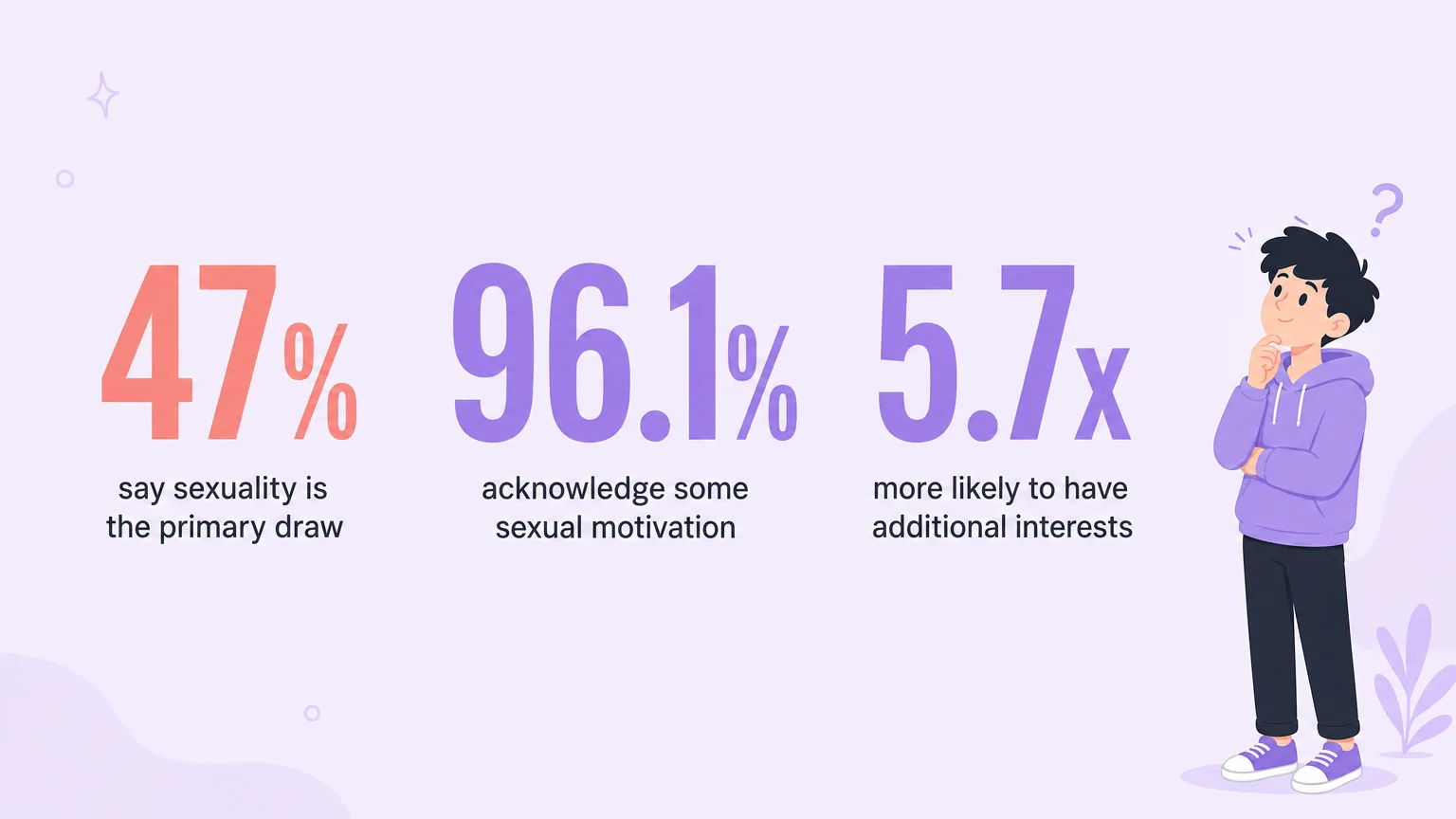
Hsu and Bailey’s 2019 study of 334 male furries provides the most cited data. Among their sample, 96.1 percent acknowledged some sexual motivation for engaging with furry content. But that headline figure spans the full intensity spectrum, from mild interest to primary driver. It includes everyone who has ever found a furry image appealing, which is most of the fandom.
The fetish-specific number is sharper. Forty-seven percent said sexual motivation was a primary reason for their involvement. Nearly half of a studied population identified sex as the main draw. An additional finding sharpens the picture further: 99 percent reported at least some sexual interest in furry content. Sexuality saturates the space even for people who do not name it as their primary motivation.
How people discover the fetish tells its own story. Only 5 percent said furry pornography was the definitive entry point into the fandom. Most people discover the sexual dimension after they are already involved in the creative community. They join for the art or the social connection, and the fetish dimension reveals itself along the way.
Furry fetishists rarely have just one paraphilic interest. Only 19 percent in the study reported a single one. Most have two or three distinct non-normative sexual interests operating simultaneously. Compared to the general population, furries in the sample were 5.7 times more likely to have additional paraphilic interests. Pet play overlaps especially heavily, at 3.6 times the baseline rate. The furry fetish tends to be one node in a broader network of interests, not an isolated outlier. It arrives in company.
Eighty-four percent of the male furries in the study identified as non-heterosexual. Millions of people engage with some version of this interest across every demographic category. The fetish is not a tiny fringe phenomenon. It is a well-documented, internally varied pattern of sexual desire that researchers continue to study because the numbers demand it.
The Misconceptions about Furry Fetish
Two misconceptions follow the furry fetish everywhere. The data ends each one.
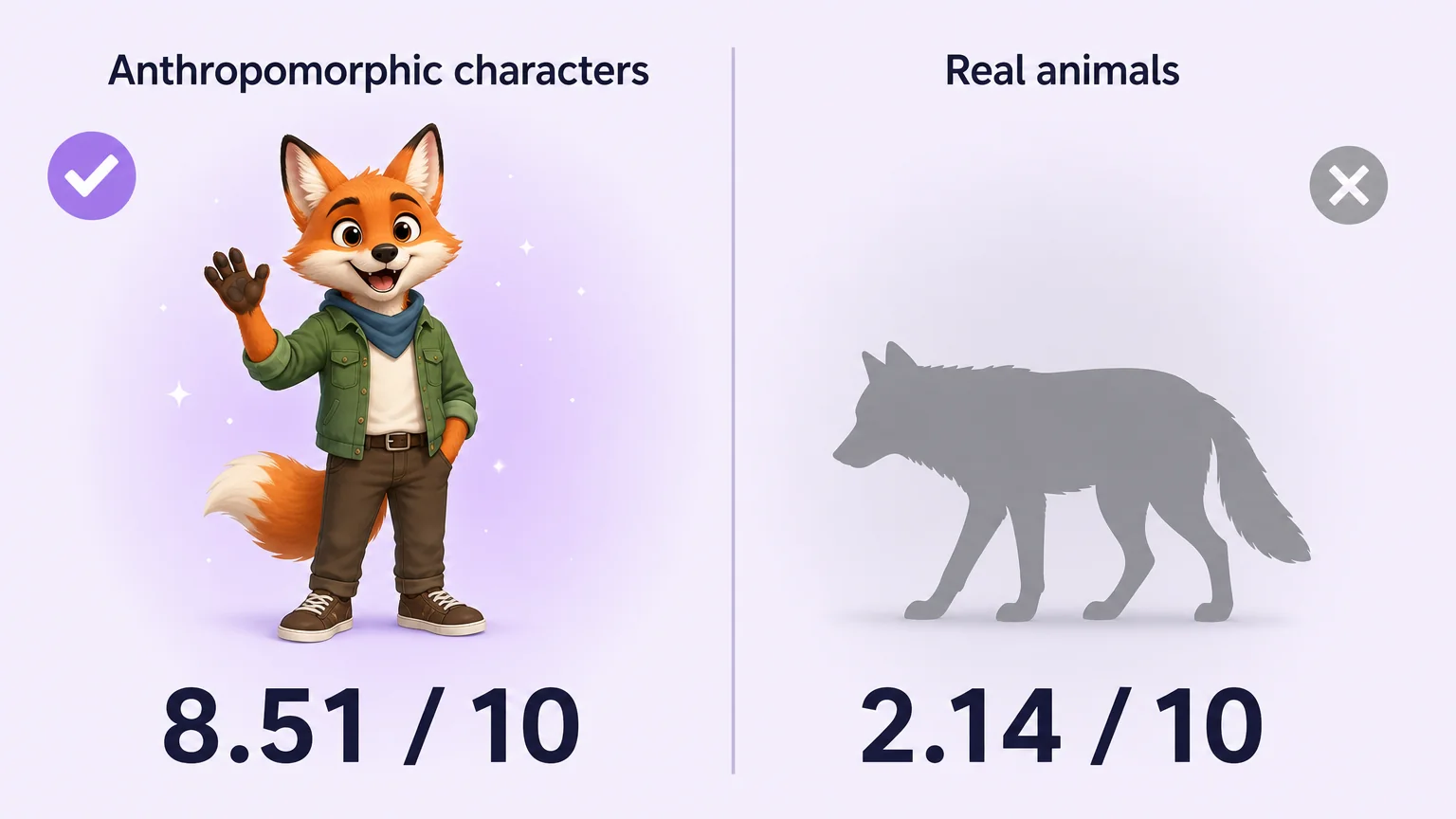
The first is the conflation with bestiality. The numbers could not be clearer. In the Hsu and Bailey study, furries rated their attraction to anthropomorphic characters at 8.51 out of 10. Their attraction to real animals rated at 2.14 out of 10. These are fundamentally different targets separated by an enormous gap in self-reported attraction. Anthropomorphic characters are fictional beings with human-level intelligence, personality, and agency. They talk. They consent. They exist in stories. Bestiality involves non-consenting animals and is illegal in most jurisdictions. The two share a surface similarity, the presence of animal features, and nothing else underneath it.
The distinction runs deeper than preference. Seventy-one point one percent of furries in the study reported no zoophilic arousal whatsoever. None. Among the 28.9 percent who did report some, the correlation with furry-specific fantasy was weak: an r value of 0.19, which means the two interests barely overlap even within the same person. Someone can find both categories interesting without one causing or implying the other. The furry community overwhelmingly condemns bestiality. This distinction is not a technicality. It is the foundation the entire community is built on.
The second misconception is the “is this weird?” anxiety. Millions of people share some version of this interest. Researchers group it alongside other recognized paraphilic interests in the academic literature. Most people with a furry fetish never disclose it: 65 percent have not told family members, and 70 percent have not told coworkers. They carry it privately, often for years, because the social cost of disclosure feels higher than the burden of silence. The stigma is real and it extracts a price. But the desires themselves are neither pathological nor dangerous. The shame comes from social judgment, not from anything inherent to the fetish. That distinction is not just semantic. It is the difference between suffering and self-acceptance.
FAQ
Is a furry fetish the same as bestiality?
No. The attraction targets sit on opposite ends of the scale: 8.51 out of 10 for anthropomorphic characters versus 2.14 out of 10 for real animals. Anthropomorphic characters are fictional beings with human intelligence and agency. Bestiality involves non-consenting animals and is illegal in most jurisdictions. The furry fetish involves consenting adults engaging with fictional content and each other. These are different categories of behavior, different targets of attraction, and different ethical frameworks. Seventy-one percent of furries report zero zoophilic arousal. The community condemns bestiality outright.
How would I tell a partner about this?
Frame it as curiosity, not confession. “I have been learning about this and some of it resonates with me. Would you be open to exploring together?” Start small. Share a piece of art you like or describe the specific aspect that interests you rather than dropping the entire fetish on the table at once. If you and your partner already discuss sexual interests openly, this conversation is not fundamentally different from any other desire you might share. Pick a calm moment outside the bedroom. Be direct about what you find appealing. Let them react without managing their response. Their first reaction does not have to be their final one.
Can a furry fetish become problematic?
Not inherently. The standard is the same as for any sexual interest. It becomes a concern if it interferes with relationships, work, or your sense of wellbeing. Longitudinal data from Furscience, the main academic research group studying furries, found no escalation pattern over time. Most people maintain a stable, predictable relationship with the fetish across years. It does not spiral. It does not consume. If you feel out of control or distressed by your interests, a kink-informed therapist can help you find equilibrium. The goal is not to eliminate the fetish. It is to integrate it into a life that works.