It seems like the last thing anyone would want: being told, in explicit detail, that their penis is too small to satisfy anyone. That they are sexually useless. That their most vulnerable insecurity is not only true, but laughably obvious.
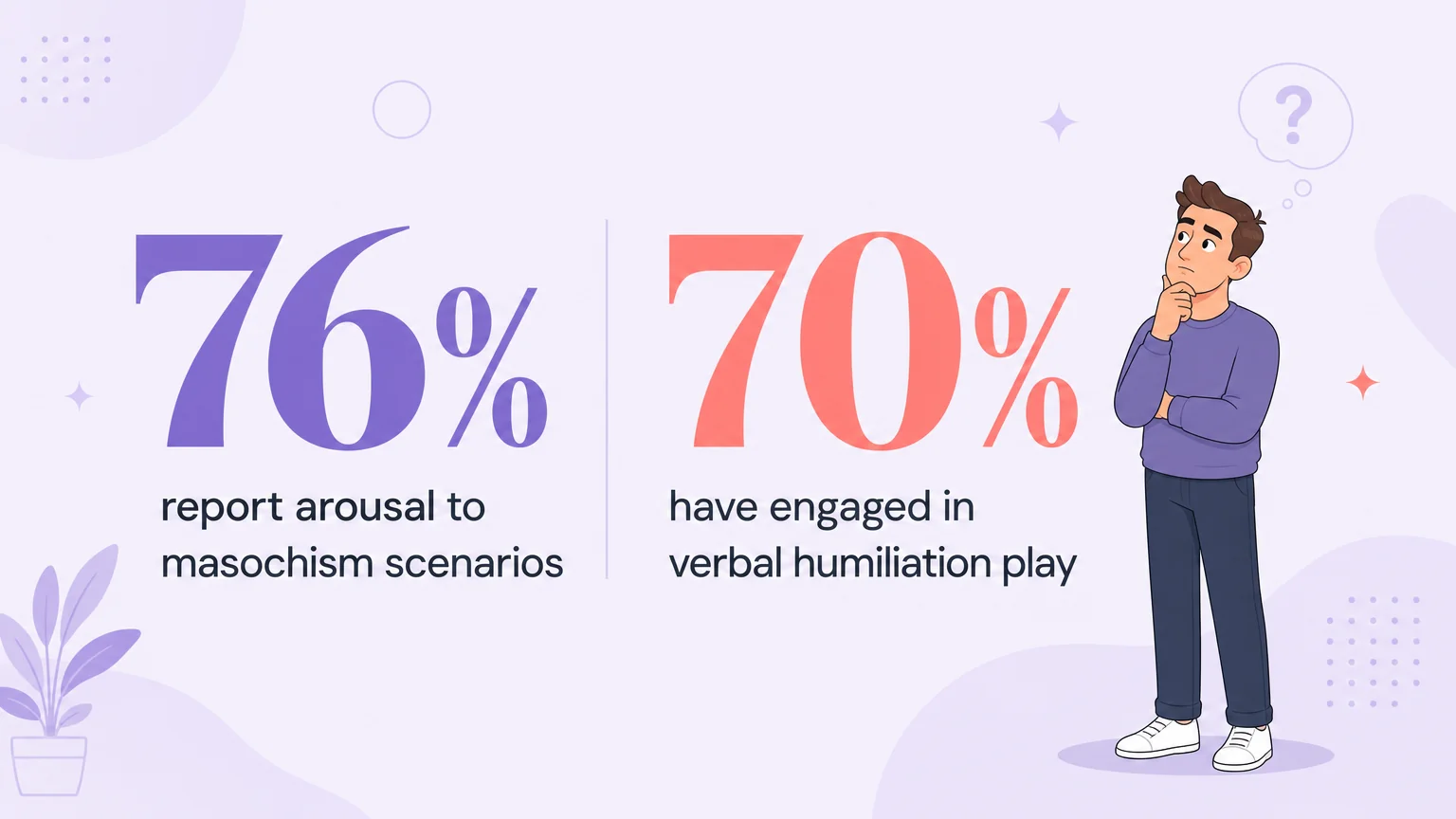
And yet, 76% of people surveyed report arousal to masochism scenarios. 70% of kink-club participants have engaged in verbal humiliation. Searches for humiliation fetishes have risen nearly 700% over the past decade. Small penis humiliation, far from a fringe curiosity, is one of the fastest-growing kinks among men and couples. You are not broken for being curious. You are in crowded, mostly silent company.
If you landed here because a partner brought it up, or because a search you were not sure you should make led you here, you are in the right place. Here is what SPH is, why it works, and how people explore it without shame.
What Small Penis Humiliation Actually Is
Small penis humiliation is a form of consensual erotic humiliation where one person degrades or mocks another’s penis, usually its size, usefulness, or adequacy, as part of a negotiated BDSM dynamic. It is a subset of verbal and psychological humiliation play. It is not the same as cock and ball torture (CBT), which involves physical pain. SPH lives entirely in words, tone, and the space between what is said and what is true.
And that last part is the most important thing to get straight: you do not need a small penis to enjoy this.
“SPH scenes don’t require one to have a small dick,” says Dr. Reece Malone, a board-certified sex therapist. “It’s fully engaging in the role-play itself that’s hot and exciting.” Many people who seek SPH have average or above-average penises. The arousal is in the scene, not the anatomy.
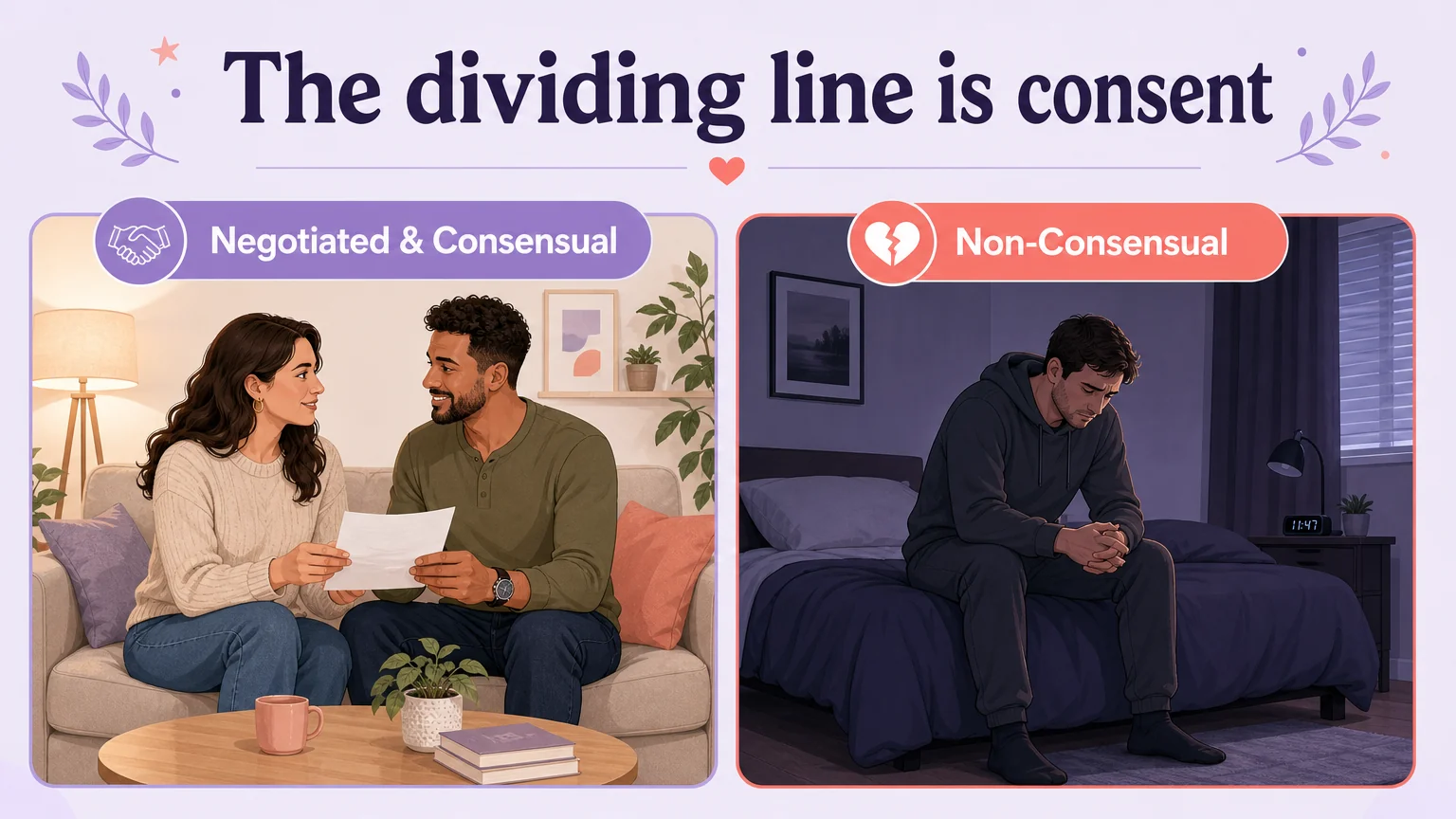
This is also where SPH separates from body shaming. Body shaming is non-consensual, unbounded, and causes genuine harm. SPH is negotiated. It has a start and an end. It is followed by aftercare that explicitly reverses the framing of the scene. A safeword stops an SPH scene instantly. Real body shaming cannot be safeworded away. The dividing line between kink and harm is consent, boundaries, and what happens after the scene ends.
SPH is distinct from general erotic humiliation, though it lives under the same umbrella. General humiliation kink can target intelligence, appearance, social status, or behavior. SPH narrows the lens to one specific site: the penis as the symbol of masculine adequacy. That specificity is not an accident. It is what gives SPH its particular charge. You are not just being degraded. You are being degraded at the exact point where culture tells you your worth as a man is measured. It is roleplay, not a medical diagnosis. The people who engage in it know the difference.
The Psychology: Why Would Anyone Want This?
The question hangs over every conversation about SPH: why would someone want to be degraded about the very thing almost every man fears hearing? The answer is not simple, but researchers who study humiliation kink have mapped it with clarity.
Start with the framework that explains the most: anxiety gets transformed into eros.
Nearly half of cisgender heterosexual men wish their penises were larger. At the same time, 85% of straight women report being satisfied with their partner’s size. The insecurity exists almost entirely in men’s heads, but that does not make it less real as a psychological weight. When someone takes that passive fear and turns it into active, controlled erotic play, something shifts. They are no longer the person who secretly worries they are inadequate. They are the person who chose to hear those words, on their terms, and can stop them whenever they want.
Psychologists call this a “corrective emotional experience”: recreating a painful scenario in a safe container where you control the outcome. The scene mimics the fear, but the person experiencing it holds the safeword. That changes everything about what the fear means.
There is a second mechanism at work. Neel Burton’s 2024 analysis of BDSM psychology identifies humiliation as one of four core patterns, noting that taking on a role of subjugation offers “release from stress, responsibility, or guilt.” This is what researchers call escape-from-self theory: the temporary suspension of high-level self-awareness. For people who carry the constant cognitive load of measuring up to masculine ideals, SPH offers a strange and powerful reprieve. You cannot fail to measure up if failing is the entire point.
The 2024 Gewirtz-Meydan study on BDSM and trauma processing adds a third layer. For some, humiliation play functions as unconscious repetition of difficult experiences aimed at processing them, or as deliberate “trauma-play” involving rescripting. But the study carries an important caveat: for childhood sexual abuse survivors, BDSM involving humiliation can also trigger trauma, dissociation, guilt, or shame. This is not a universal benefit, and it is not a therapy replacement.
Pull back and the data is consistent. A 2024 survey of 515 participants found 76% reported arousal to masochism scenarios. A 2002 study of people recruited from kink clubs found 70% had engaged in verbal humiliation. Research consistently shows BDSM practitioners have good psychological health. This is not pathology. It is one of the ways human sexuality expresses itself when given room and safety to do so.
Who’s Into SPH? (Spoiler: Not Who You Think)
The stereotype is easy to picture: a cisgender man with a genuinely small penis, alone with his shame, seeking out SPH as a confirmation ritual. The reality is more crowded and more interesting.
The majority of SPH enthusiasts do not have small penises. Many have average or large penises. The arousal lives in the roleplay, not the anatomy. As one therapist put it, the size of the penis in an SPH scene is almost beside the point. What matters is the dynamic: one person surrendering masculine pride, another person taking it, both of them aware that none of it is true.
Cisgender men make up the largest demographic, but they are not the whole picture. Transmasculine people engage with SPH in ways that range from eroticizing “not measuring up” to finding gender affirmation in being treated “like any other guy with a small dick.” Transfeminine people may find that having their penis mocked as inadequate alleviates dysphoria by challenging masculine associations with size and power. None of these experiences are universal, but they are all present in the community, and they are all valid.
The numbers tell their own story. More than 76,000 SPH-themed videos exist on adult platforms. Individual SPH videos have accumulated over two million views. Search interest has risen nearly 700% over ten years. This is not a fringe.
SPH also crosses relationship configurations. It shows up in monogamous couples. It shows up in ethically non-monogamous dynamics where one partner’s “inadequacy” is the narrative justification for the other partner seeking elsewhere. It shows up in swinging contexts where size comparison becomes part of a group scene. It is not just a solo fantasy or a transaction with a professional dominatrix, though those are common entry points. SPH lives wherever people trust each other enough to play with their deepest vulnerabilities.
If you are curious about this, you are in very crowded company. Most of them just have not said it out loud yet.
What SPH Looks Like in Practice: The Intensity Spectrum
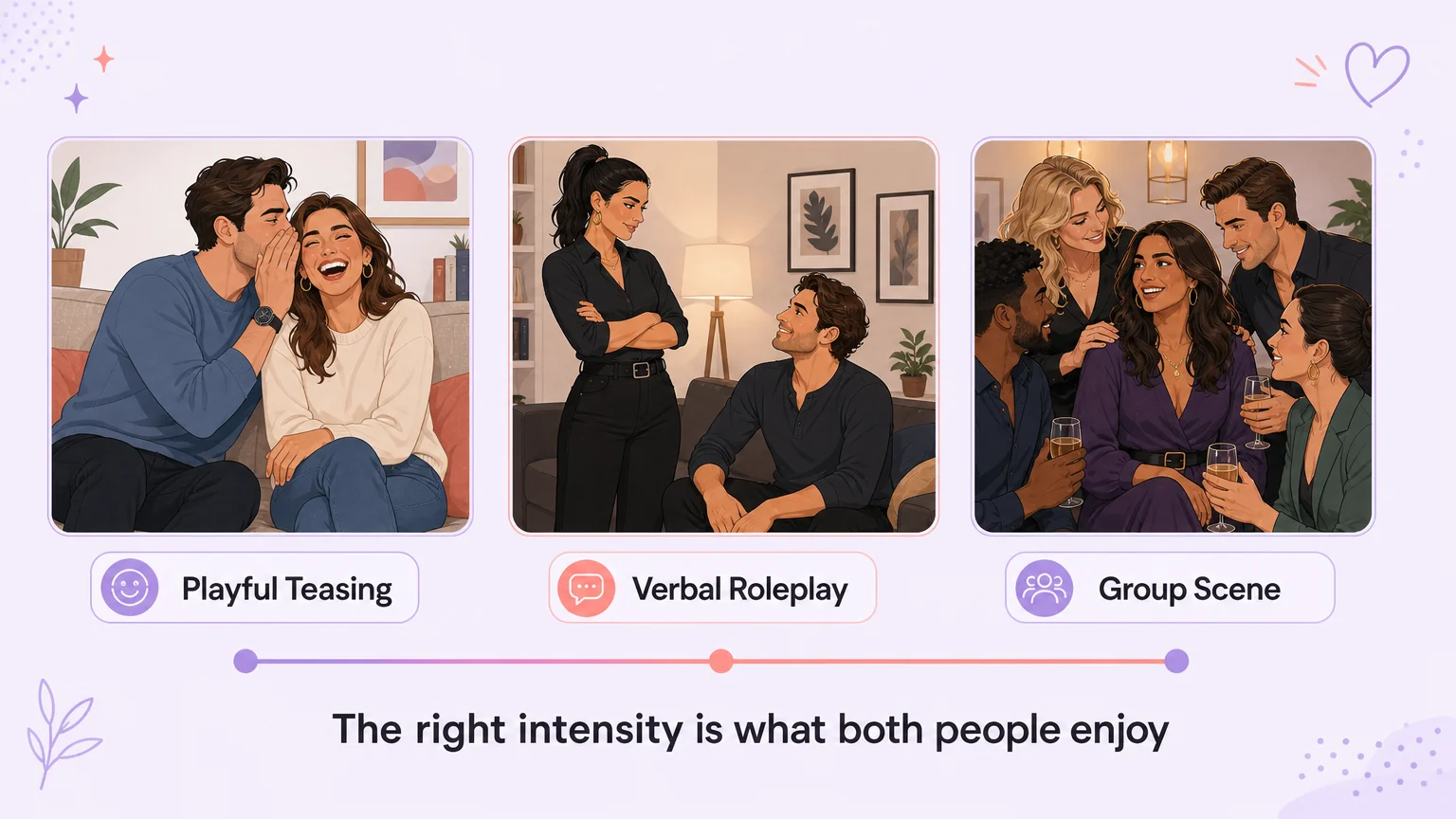
SPH is not one thing. It is a spectrum, and most people who practice it stay somewhere in the middle. Understanding the range helps you figure out where you might land, and that you do not have to go further than you want to.
On the light end: a partner sighs “aww” when underwear comes off. Or says “cute” with a knowing look and lets the word hang there. That is the entire scene. Ten minutes, one word, then back to whatever you were doing. For many couples, this is where SPH lives. It is less about degradation and more about a shared, slightly subversive inside joke that deepens intimacy precisely because it plays with a vulnerability both people know is not true.
The mid-range is where most partnered SPH happens. This is a verbal scene where the humiliating partner describes the penis as useless, ineffective, or embarrassing while the receiving partner displays it. The language is negotiated in advance. The tone can range from mock-pitying (“Oh, you really thought that would work?”) to cold and matter-of-fact. The scene might include a specific setup: the receiving partner undresses while the humiliating partner stays clothed, or stands in front of a mirror while being described in degrading terms. These scenes typically run 15 to 30 minutes and end with a clear transition back to normal dynamics.
The extreme end exists but is less common: inviting informed, consenting friends to participate, comparing the penis to objects or to other people, combining verbal humiliation with physical elements like CBT, or public humiliation scenarios in kink-community spaces. These require the most extensive negotiation, the clearest boundaries, and the most thorough aftercare. They are not a goal to work toward. They are an option for people who have built up to them over time and want to go there.
The right intensity is whatever both people enjoy. Not what looks hardcore enough from the outside. Not what someone else’s scene looks like. What makes the people in the room feel aroused, connected, and safe afterward.
How SPH Plays With Other Kinks
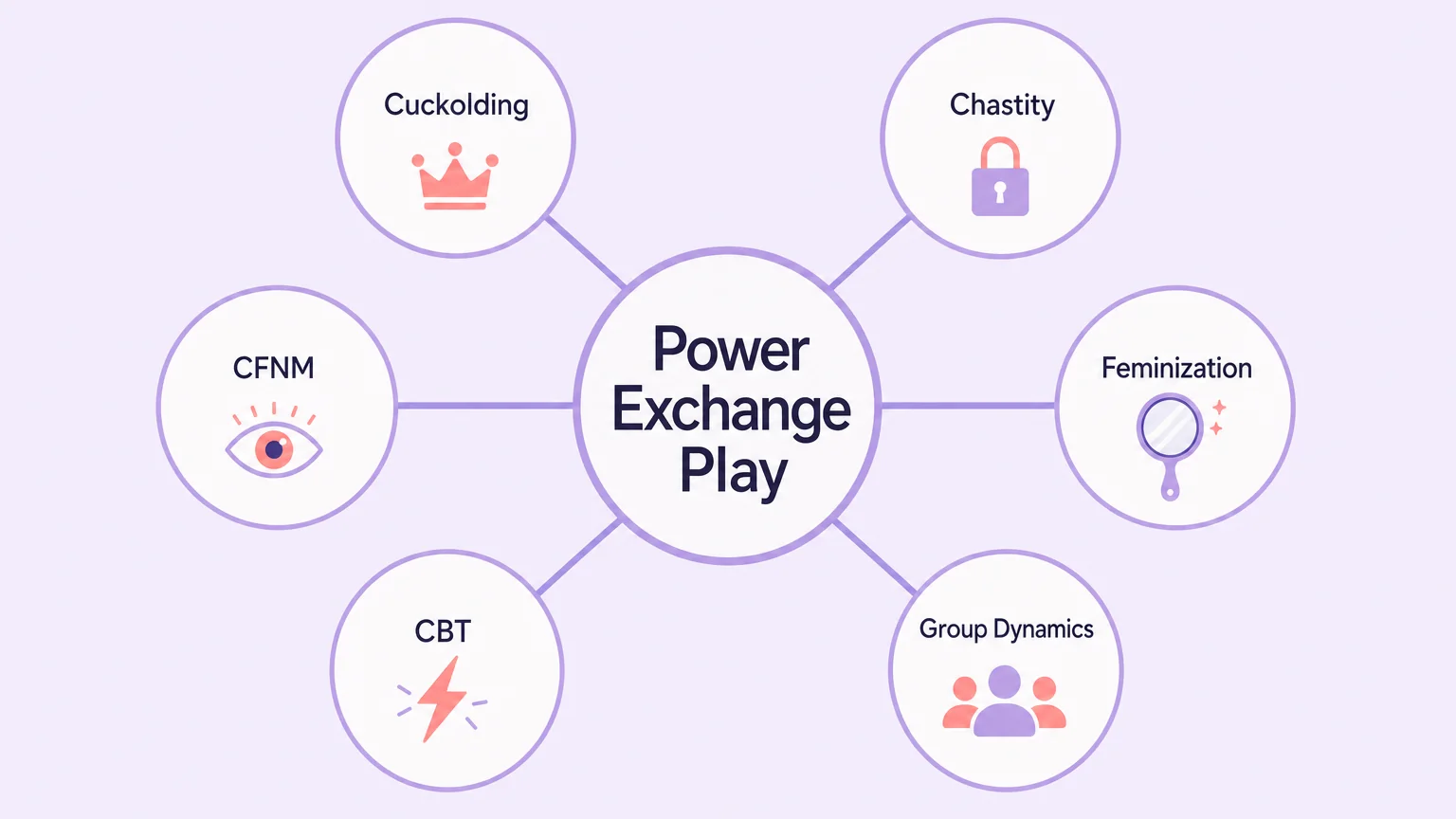
SPH almost never exists in isolation. It is the kink equivalent of a social butterfly: it pairs well with almost everything and rarely shows up alone.
The most common crossover is cuckolding. The narrative arc writes itself: the submissive partner’s penis is too small to satisfy, so the dominant partner seeks sex elsewhere. Adult performer Tokyo Leigh describes this progression: many clients start with SPH and discover, through it, that what they want is the full cuckolding dynamic. Others stop at the verbal play and never bring in a third person. Both paths are valid.
Chastity is another frequent companion. The logic is self-contained: the penis is too useless to deserve erections. A chastity device becomes the physical manifestation of what the words are saying. The humiliation is no longer just verbal; it is locked on.
Feminization and sissification also overlap with SPH, though this pairing carries more complexity. The script often runs: your penis is so small you could never be a real man, so you might as well be feminized. The community actively debates whether this framing reinforces misogyny. As Domme Danielle puts it, feminizing language “sends the message that we don’t value women or the genitalia of women in our society as much as we do the genitalia of men.” This is not a reason to avoid the combination. It is a reason to negotiate it explicitly.
CFNM (Clothed Female, Naked Male) and CBT (cock and ball torture) round out the common pairings. CFNM adds a visual power imbalance. CBT adds physical sensation to the psychological play. Neither is required; both are options.
SPH also shows up in threesomes and group dynamics, and this is where practical negotiation matters most. In a swinging or ENM context, SPH can be woven into cuckolding scenes where size comparison includes everyone in the room. All participants, including the third, must consent to the dynamic beforehand. The third is not a prop. They need to know what language will be used, what their role is, and that they can stop at any point. Aftercare should include everyone who was in the room, not just the primary couple.
SPH is modular. You can plug it into whatever else you are already into. The only rule is that everyone in the room knows what is being plugged in and has agreed to it.
The Other Side of the Dynamic: What the Humiliator Gets Out of It

Every SPH scene has two people in it. Most articles only interview one.
The person doing the humiliating is not a prop. They have their own arousal, their own reasons for being there. Ignoring them is a recipe for scenes that leave one person carrying weight they cannot name.
For professional dominatrices, the draw is straightforward: an “incredible power trip,” getting to “totally emasculate men” while being paid. The container is professional, and aftercare is built into the service.
For romantic partners, the experience is more layered. Some find it liberating to say things they would never say in real life. Some find genuine arousal in being trusted with someone’s deepest vulnerability. There is intimacy in being the person someone chooses to hear their worst fear from, knowing it is not true, knowing they chose you because they trust you.
Some partners discover a dominant side they did not know they had. Accessing a controlled, temporary cruelty in a bounded scene can feel expansive rather than contradictory. The scene is not who they are. It is a room they visit.
But the weight is real. Some dominants struggle with guilt after saying degrading things about a partner’s body, even with consent and aftercare. Dom drop is real: the humiliator needs to hear that their partner is okay, that they wanted the scene, and that they do not see them differently. A Dom who refuses aftercare burns out. The guilt is the safety mechanism. It tells you this is still play.
If you are the one being asked to humiliate, your comfort matters too. You can say no. You can negotiate which words you will use and which you will not. You can need time to process. None of that makes you a bad partner. It makes you a person with boundaries, and that is the only kind of person who should be doing this.
How to Explore SPH: Safely, Slowly, and Sanely
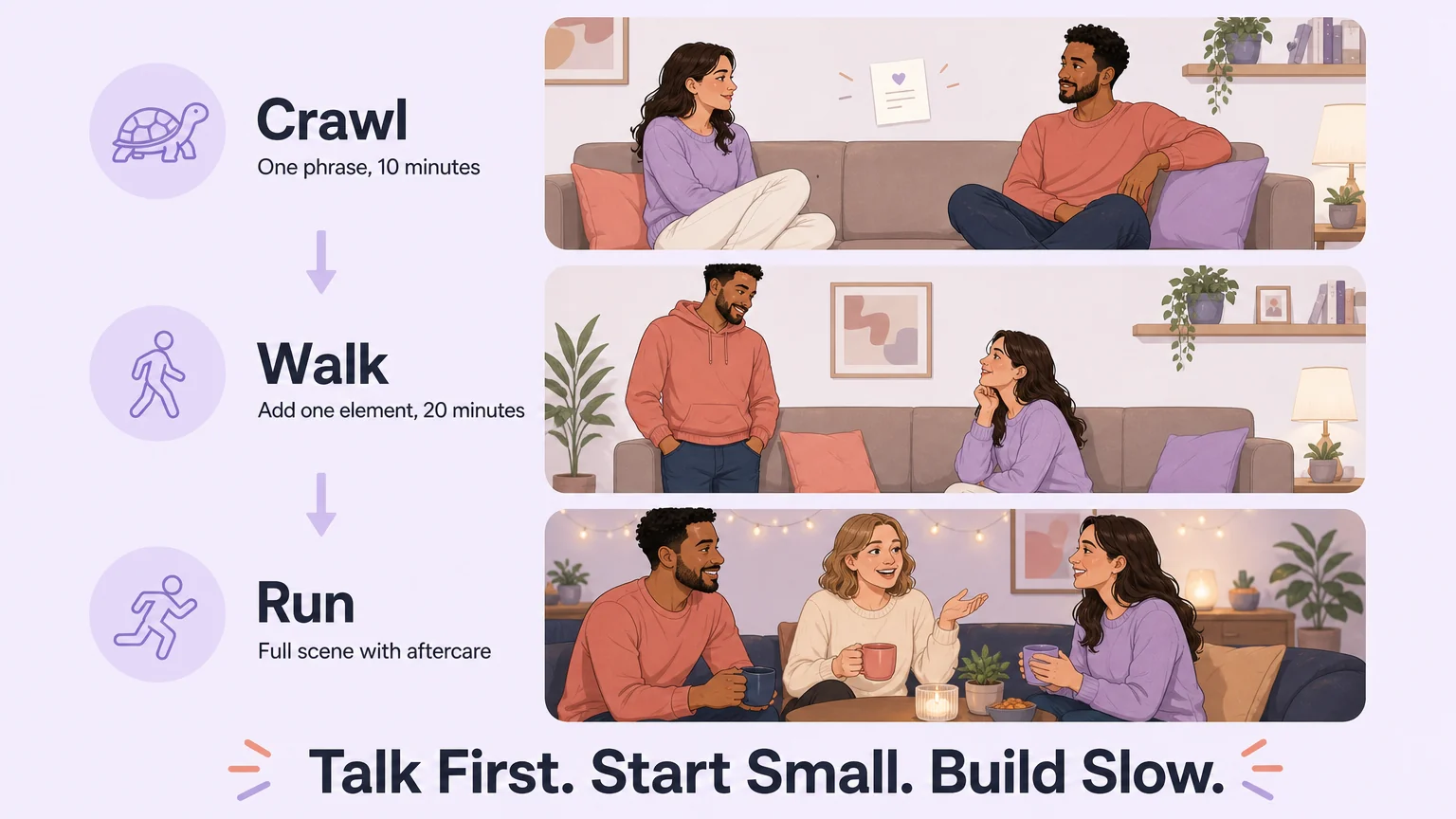
Every therapist-backed protocol converges on the same structure: talk first, start small, build slow.
Talk First
Start outside the bedroom in a neutral setting. “Can I run something by you?” lands differently than “We need to talk.” Frame it as shared curiosity. Name the feeling: “I think I’m curious about exploring power dynamics together” tells your partner more than “I want you to call my penis small.”
Use a yes/no/maybe list. Write out the actual words. “Name-calling” is too vague. One phrase can be erotic; a nearly identical one can cause genuine harm. Green for enthusiastic yes, yellow for uncertain, red for hard limit.
Give your partner permission to not have an answer right away. If they say no, respond with steadiness: “Thanks for being honest. I’m glad I can talk to you about this.”
Start Small
Crawl: one negotiated phrase, 10 to 15 minutes, immediate debrief. Your partner sighs “aww” when you undress. That is a complete first SPH experience.
Walk: add one physical or situational element. Extend to 20 or 30 minutes. Introduce mid-scene check-ins: green for keep going, yellow for pause and adjust, red for full stop with immediate aftercare. A partner who shames safeword use is using kink language as cover for abuse.
Run: layer multiple pre-tested elements with full negotiation, full aftercare, and a scheduled debrief 24 to 48 hours later. If any stage produces a negative reaction that persists after aftercare, do not progress.
Build Slow
Aftercare is the second half of the experience. Skipping it is where most harm happens.
Signal the end with a ritual: a specific phrase or removing a piece of clothing that means “we are back to us.” Physical comfort first: blankets, water, skin-to-skin contact. The body must exit fight-or-flight before the mind can receive reassurance.
Then verbal reversal. The Dom must explicitly undo the scene’s narrative: “The things I said were roleplay. They are not true. Your body is exactly what I want. I care about you and I am not going anywhere.”
Both people need aftercare. If you were the one humiliating, you need to hear that your partner is okay and does not see you as cruel. Schedule a check-in 24 to 48 hours later: “Does anything still sting from our scene?”
Do not spring this on a partner during sex. Do not improvise new degrading content mid-scene. Do not skip the safeword because “it is just verbal.” Do not assume the dominant does not need aftercare. A 10-minute scene that leaves both people feeling connected beats a 45-minute scene that leaves someone spiraling.
Myths, Misconceptions, and the Body-Shaming Line
The line between SPH and body shaming is the one outsiders most often miss. SPH is negotiated, bounded, and ends with aftercare that reverses the scene. A safeword stops it instantly. Body shaming has no consent, no container, no off switch. If you cannot stop it with a word, it is not kink.
Another persistent myth: enjoying SPH means you hate yourself. The research says otherwise. BDSM practitioners consistently show good psychological health. This is play, not self-harm, the same way a horror movie is not actual danger: the fear is real in the moment, but everyone chose to be there.
The concern about reinforcing toxic masculinity is worth engaging. For many practitioners, eroticizing the bigger-is-better script in a controlled setting is how they subvert it rather than being controlled by it. The debate about feminizing language, whether calling a penis a “clit” as an insult devalues women’s bodies, is live. Discuss it in your negotiation. Do not assume consensus.
No, SPH is not only for people with micropenises. Most participants have average or large penises. The arousal is in the scene, not the measurement.
No, SPH is not a slippery slope to dangerous practices. Done properly, it is one of the most carefully negotiated kinks because the psychological stakes are high. The negotiation, the safeword, and the aftercare are not optional. They are the practice.
Desire does not require an apology. What happens between consenting adults who have talked it through, set their limits, and take care of each other afterward is not anyone else’s business to pathologize. If it is not an enthusiastic yes from everyone in the room, it is a hard no. If it is, then the only people who need to understand it are the ones in the room.
FAQ
Do I need to have a small penis to enjoy SPH?
No. SPH is about consensual roleplay, not anatomical reality. Many participants have average or large penises. The arousal comes from the humiliation scenario itself: being degraded, surrendering masculine pride, and being put in a submissive role.
Is SPH a sign of mental illness?
No. Research consistently shows BDSM practitioners have good psychological health. SPH is a consensual kink practice, not a pathology. If someone has a history of body dysmorphic disorder, that warrants separate attention from a qualified professional.
How do I bring this up with my partner?
Start outside the bedroom in a neutral setting. Use a soft opener like “Can I run something by you?” Frame it as shared curiosity, not a demand. Use a yes/no/maybe list to negotiate specific words. Give your partner permission to not have an answer right away. If they are not into it, respond with steadiness: “Thanks for being honest. I’m glad I can talk to you about this.”
My partner asked me to humiliate them and I feel uncomfortable. Can I say no?
Yes. Dominant partners have the right to set boundaries. You can say: “I’m glad you trusted me enough to share this, but I don’t think I can do it in a way that feels good to me.” Explore whether adjacent dynamics like gentle teasing or power exchange without degradation might meet some of your partner’s desires without crossing your own.
Is it normal to feel ashamed about wanting this?
Yes, it is deeply common. Even experienced kink practitioners wrestle with internalized shame about humiliation kinks. The shame is cultural programming, not evidence that something is wrong with you.
Where can I find SPH content or community?
FetLife hosts active SPH discussion groups and is the largest kink social network. OnlyFans and similar platforms connect you with professional dominatrices offering custom SPH content. For in-person community, sex-positive events and kink parties often include negotiation spaces for humiliation play. Kink-aware, AASECT-certified sex therapists can help if shame or relationship dynamics need professional support.