Your partner says “you’re doing so well” during sex, and something shifts. Your skin warms. Your breath catches. Your body responds before your brain catches up. That is not just liking a compliment. That is a praise kink: when receiving praise, compliments, or positive verbal affirmation produces a genuine sexual or erotic response.
The term has exploded. The #praisek1nk hashtag on TikTok crossed 568 million views. Nicole Kidman’s film “Babygirl” brought the dynamic to theater screens. Sally Rooney’s “Beautiful World, Where Are You” wove it into literary fiction. A conversation that once lived in BDSM forums now lives in dating-app bios, group chats, and the comment sections of sex-ed TikToks.
If those words landed in your body, you are in the right place. This is not a diagnosis, a pathology, or a sign that something went wrong in your past. This is a clear explanation of what a praise kink is, the psychology behind why words hit this hard, how this plays out in real relationships (monogamous, open, and everything between), and exactly how to explore it with confidence.
What Is a Praise Kink, Really
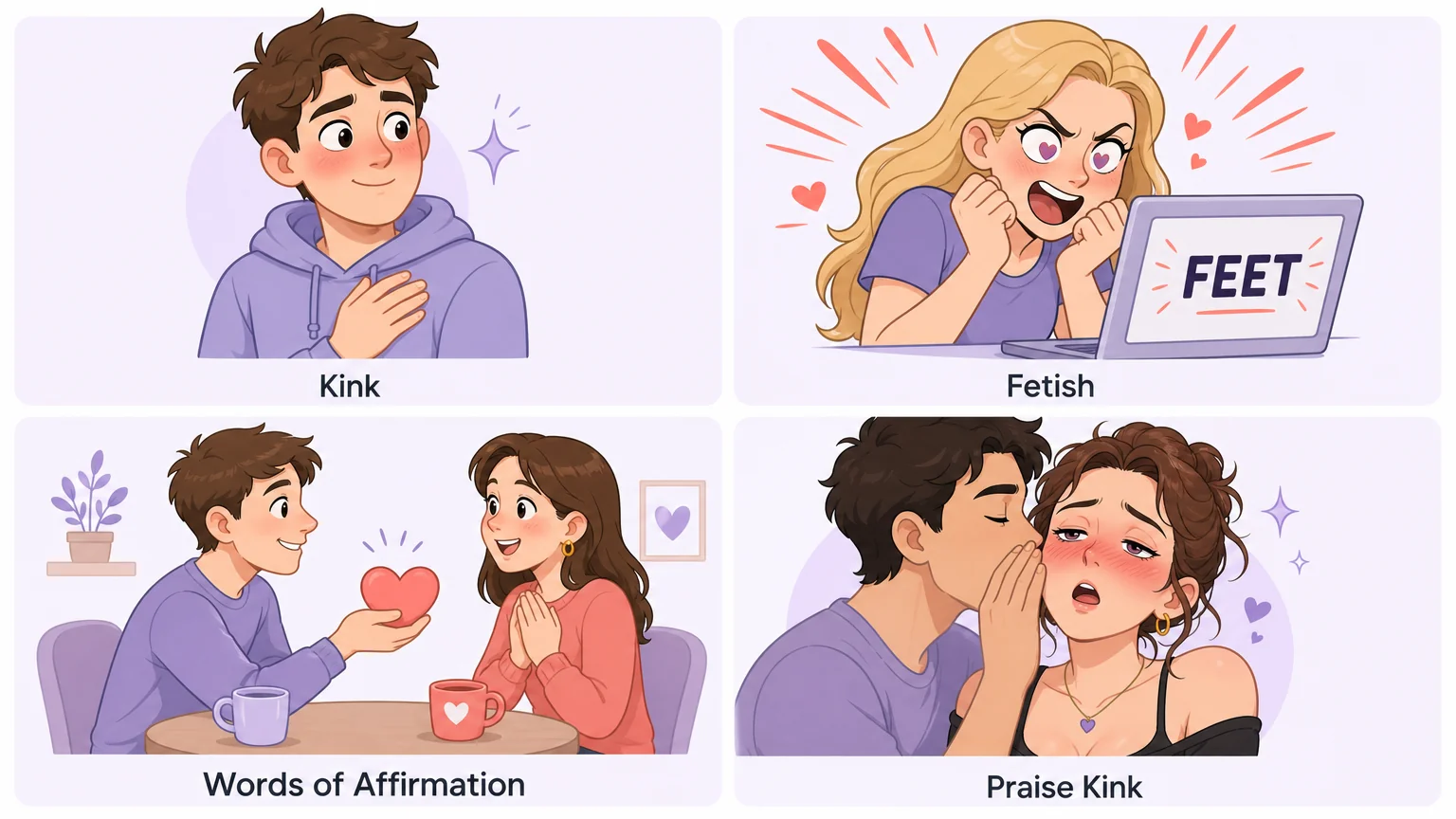
A praise kink is when receiving praise, compliments, or positive verbal affirmation produces a genuine sexual or erotic response. Not warm feelings. Not appreciated. Aroused. Sex educator Emma Austin puts it cleanly: “Everyone loves praise, but not everyone gets off to it.” If a well-timed “good girl” or “I’m proud of you” lands in your body, not just your ears, you have your answer.
Two distinctions matter. First, kink versus fetish. Kink educator Aoife Murray draws the line: a kink enhances arousal but is not required for it; a fetish is necessary to achieve arousal. Someone with a praise kink can enjoy sex without praise. But praise takes the experience somewhere else entirely.
Second, praise kink versus words of affirmation as a love language. Words of affirmation create emotional closeness. A praise kink creates specifically sexual arousal. They can coexist, and often do, but they run on different wiring.
In BDSM contexts, related terms surface. Affirmation play is broader: it confirms something true and positive about the person, like “you are worthy of love,” rather than specifically praising an action. Worship kink is similar but more intense. BDSM educator Evie Lupine distinguishes these carefully: praise kink uses praise as a tool to evoke specific emotional states on purpose, whether that is feeling adored or feeling deliciously uncomfortable.
A quick self-check, adapted from Dr. Kate Balestrieri’s clinical framing: if praise during intimacy pushes you “over the edge” in a specifically sexual way; if a partner’s verbal affirmation creates a physical response you can feel; if you seek out audio erotica or romance content specifically for the praise dynamic. Any of those hits, and this describes you.
Many people enjoy both praise and degradation. The “brat” dynamic, where resistance meets degradation followed by submission met with praise, creates an intense emotional loop. Dr. Balestrieri notes the reversal between harsh and soft treatment heightens the impact of both. More on that in the FAQ.
The Psychology Behind the Praise
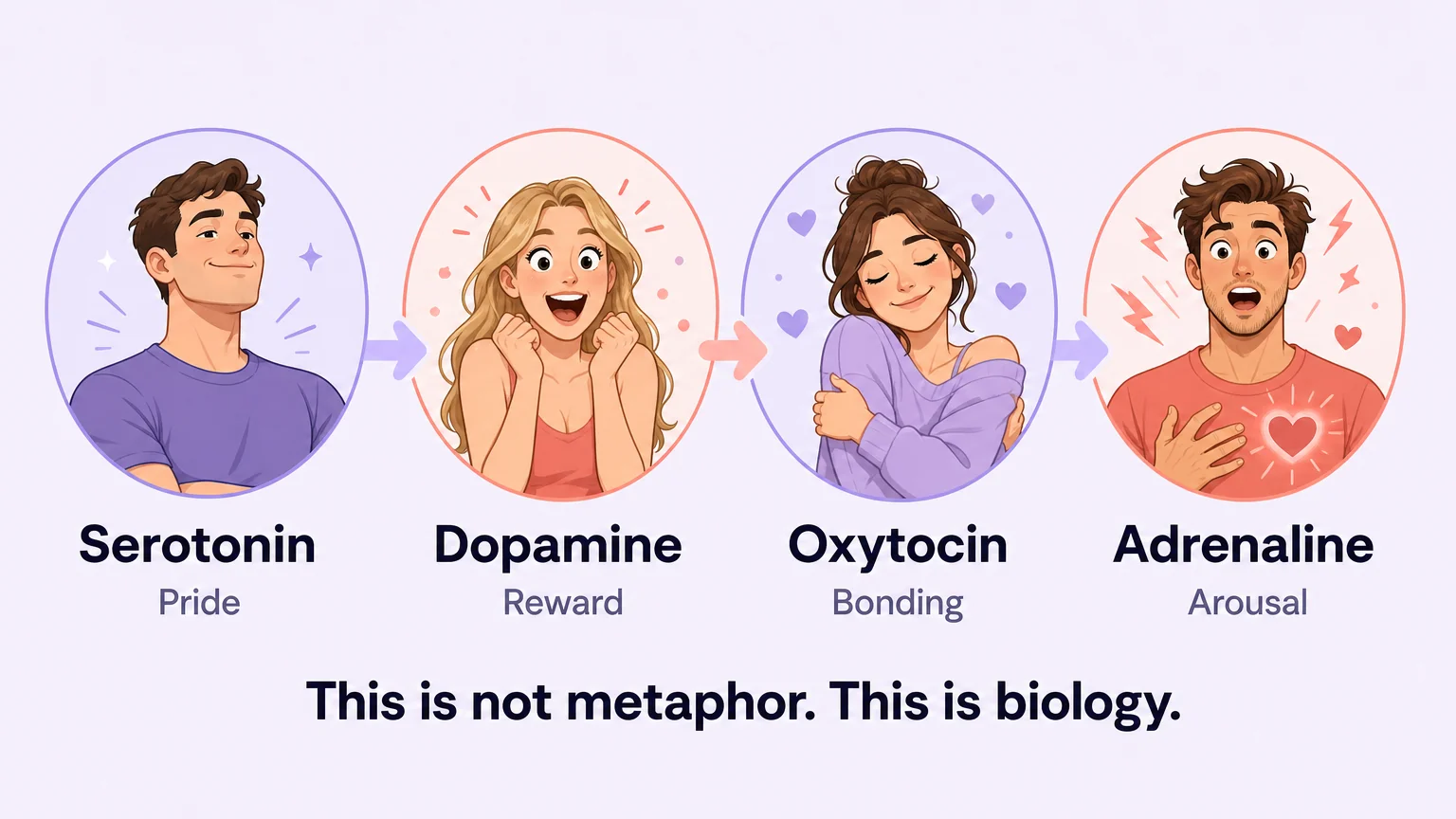
Praise during sex triggers a neurochemical cascade. When someone you are attracted to says “you’re doing so well” or “I’m so proud of you,” your brain releases serotonin, the pride-and-respect chemical. Combine it with dopamine (reward), oxytocin (bonding), and adrenaline (arousal), and you have a chemical cocktail that is genuinely intoxicating. This is not metaphor. This is biology.
The autonomic nervous system gets involved too. Praise activates feelings of belonging, approval, and acceptance at a physiological level. When those feelings mix with sexual arousal, they reinforce each other. Certainty, admiration, and emotional validation become braided into the physical experience. Your body learns: this person’s words mean safety and pleasure at the same time.
Now the developmental layer. The “former gifted kid to burnt-out perfectionist with a praise kink” meme points at something real. If you grew up with conditional approval, high expectations, or emotionally reserved parents, praise during intimacy can hit with a force that surprises you. You learned early that being good equaled being loved. Hearing someone affirm you in a vulnerable moment plugs directly into that wiring.
Sexologist Dr. Sarah Ashton adds a gendered dimension. Cis women may particularly resonate with praise kinks because male parents and partners were historically less taught to be emotionally available, creating a quiet deficit of verbal affirmation that builds over a lifetime. Dr. Tiffany K, a clinical psychologist, notes another pattern: the overlap with social anxiety and neurodivergence. For chronic people-pleasers who spend their days apologizing for existing, hearing “you are good enough” in a sexual context is not just arousing. It is relief, delivered at the nervous-system level.
Therapist Jennifer Rehor offers a necessary counterpoint: there is not going to be a singular reason. Plenty of people who received abundant childhood affirmation develop praise kinks too. You might simply like what you like. The origin is not what makes it valid.
Brandon The Dom, a BDSM educator, draws a distinction worth carrying forward. Praise can function as a mirror, reflecting genuine worth back to someone who is seen and valued. Or praise can function as a band-aid, masking insecurity without addressing it. Enjoying praise during sex is celebration. Needing it to feel worthy is something to examine. The goal is to understand what the desire is doing for you, so you can explore it from a place of strength rather than depletion.
Why Everyone Is Talking About It Now
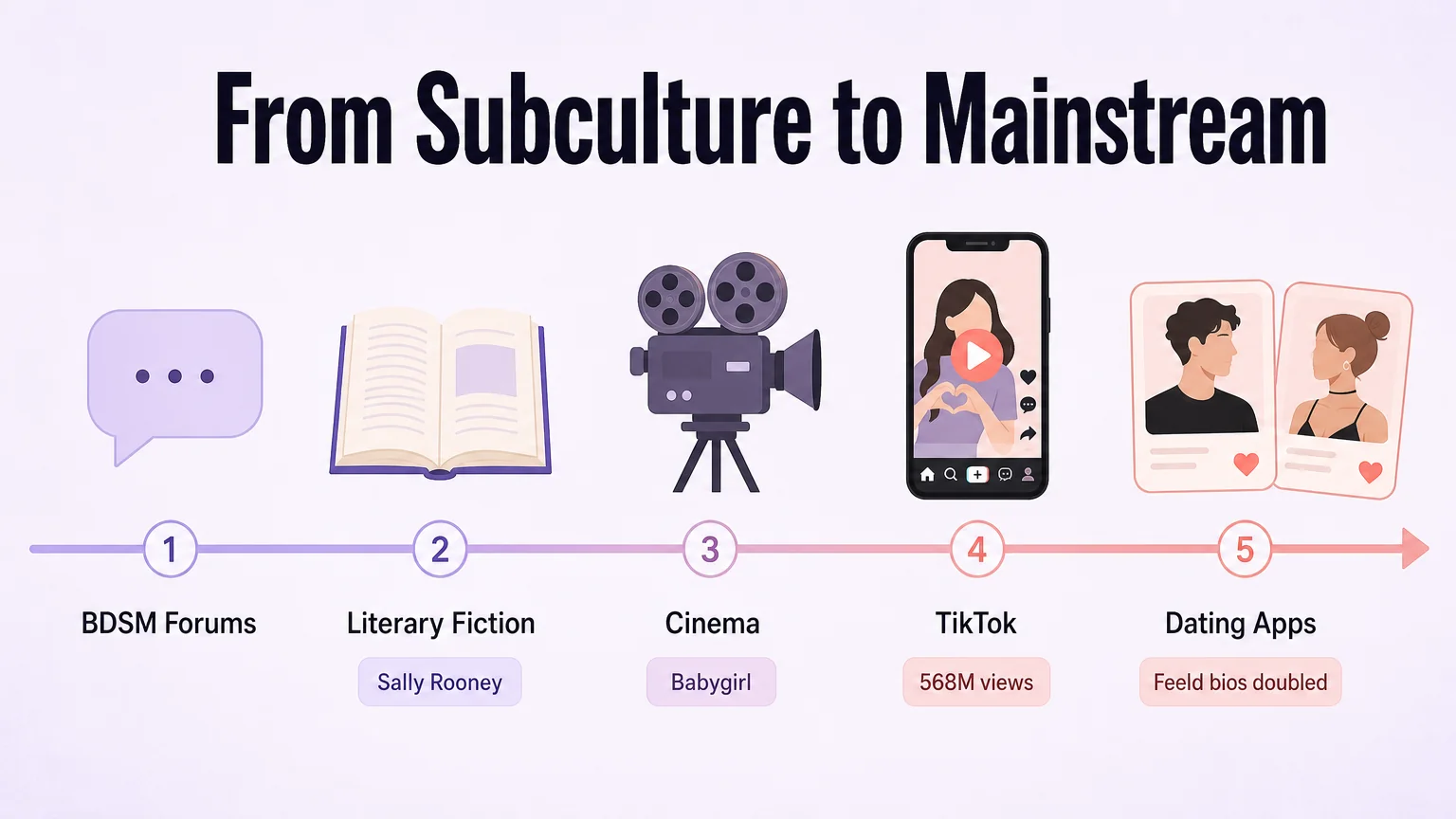
568 million. That is how many views #praisek1nk had accumulated on TikTok by 2025. A term that once lived in BDSM forums now floods For You pages, dating-app bios, and late-night group chats. The question is not just what a praise kink is. It is why it broke containment, and why now.
The catalysts are concrete. Sally Rooney’s “Beautiful World, Where Are You” brought praise-kink dynamics into literary fiction. Nicole Kidman’s “Babygirl” put it on cinema screens. Dr. Nicole K. McNichols, a sex professor and TikTok creator, popularized praise-kink education on the platform, where comments tell the story: “I didn’t even know I had a praise kink until today.” Audio erotica and romance novels provided the quiet infrastructure. TikTok provided the amplification.
A viral TikTok by Paris Mwendwa crystallized an uncomfortable truth: “Kindness to women in sex is so rare and odd that the only way women can communicate their desire for it is through pornified language.” Praise kink’s rise is partly a course correction against porn-normalized aggression. It also reflects how starved many people are for basic tenderness. The fact that “be nice to me during sex” needs to be framed as a kink to be taken seriously says something about the culture, not about the individual.
Feeld’s internal data confirms the trend: praise-kink mentions in user bios doubled. This is not a TikTok fad. It is a realignment of what people want from intimacy.
Social media gets some things right: destigmatizing desire, helping people discover themselves, giving language to something they felt but could not articulate. What it flattens is the emotional complexity, the difference between a meme and a genuine kink. If you found this term through an algorithm, you are not wrong to be curious. Just know the TikTok version is the trailer. The rest of this article is the film.
How Praise Kinks Work in Real Relationships

Knowing what a praise kink is and integrating it into a relationship are two different things. The theory is clean. The practice is where couples stumble.
A praise kink is not a solo experience. It is a dynamic co-created between two people. Start outside the bedroom. Try casual praise in everyday moments: “You handled that work call so well.” “I love watching you cook.” The goal is to notice what lands. The signal is not just “that felt nice.” It is a physical response: a flush, a sharp inhale, a visible shift in energy. Established couples often find that praise outside the bedroom builds anticipation and trust that amplifies the sexual dynamic later. The everyday becomes foreplay.
The giver’s experience matters, and almost no one writes about it. In BDSM terms, dominant validation labor is the conscious emotional work of affirming a partner’s value around acts of surrender or vulnerability. Giving authentic praise is the satisfaction of seeing your partner light up under your words. It is the responsibility of holding someone’s self-perception in your voice. It is the skill of noticing the small things worth praising and naming them.
Be specific and personalized: “I saw how hard today was for you. I’m so proud of how you handled it” lands deeper than “good job.” Match praise to your natural voice. Quiet sincere praise in a low voice is more powerful than effusive compliments that feel out of character. Learn your partner’s insecurities and highlight the positives around those areas. Inauthentic praise undermines trust. If it feels performative, it will land as manipulation.
Use a neutral setting, frame the desire as a discovery rather than a deficiency, and give your partner time to process. Lo, host of The Little Lounge podcast, offers a framework: first learn to love your kink yourself, then identify the specific shame narrative, then prepare resources to share. You cannot confidently share what you are still ashamed of.
The aspirational picture is the “soft Dom” dynamic: a partner who leads with empathy and emotional attunement rather than command. They negotiate. They praise. The sub complies from a place of joy, never fear or shame, and praise becomes the primary tool of the exchange rather than a supplement to control. This is not the only way to build the dynamic, but it is a useful picture of what is possible when two people build it together.
What If Your Partner Hates Giving Praise

Discovering you have a praise kink is exciting. Discovering your partner feels deeply awkward about giving praise is deflating. This is common. It is not a relationship death sentence.
Name what the reluctant partner might be feeling: “I do not know what to say.” “It feels fake when I try.” “I am not naturally verbal during sex.” “Calling my partner good girl or good boy feels patronizing.” These are legitimate reactions, not rejection. The partner who struggles is not withholding. They are standing at the edge of something unfamiliar and do not know what the first step looks like.
Many people soft launch their praise kink: dropping hints, sharing TikToks, testing the waters. Relatable, but inefficient. A better path: share an article as a conversation opener. “I read something interesting about why certain words during sex hit differently. Can I send it to you?” This externalizes the conversation. It is about the article, not about what is wrong with your sex life.
For the partner who wants to show up but does not know how: start with non-verbal praise. A knowing look, a forehead kiss, an appreciative sound. Write it down first if speaking feels too exposed. Pick one phrase that feels authentic and use it once. Ask your partner what specifically they want to hear. Specificity removes the performance anxiety.
Not everyone likes “good girl” or “good boy.” Many people with praise kinks actively dislike those phrases. You need to learn which specific words land and which give your partner the ick. You cannot guess this. You have to ask.
The mismatch may be about something broader: different love languages, comfort levels with verbal intimacy, histories with receiving affirmation. If your partner tries and it genuinely does not work, that is not failure. Some dynamics are better explored through audio erotica, solo fantasy, or, in ENM configurations, with a different partner.
Wanting to explore is a sign of relational abundance. Sometimes exploration means discovering what is not for you, together. That is not a setback. That is clarity.
Praise Across Genders, Identities, and Orientations
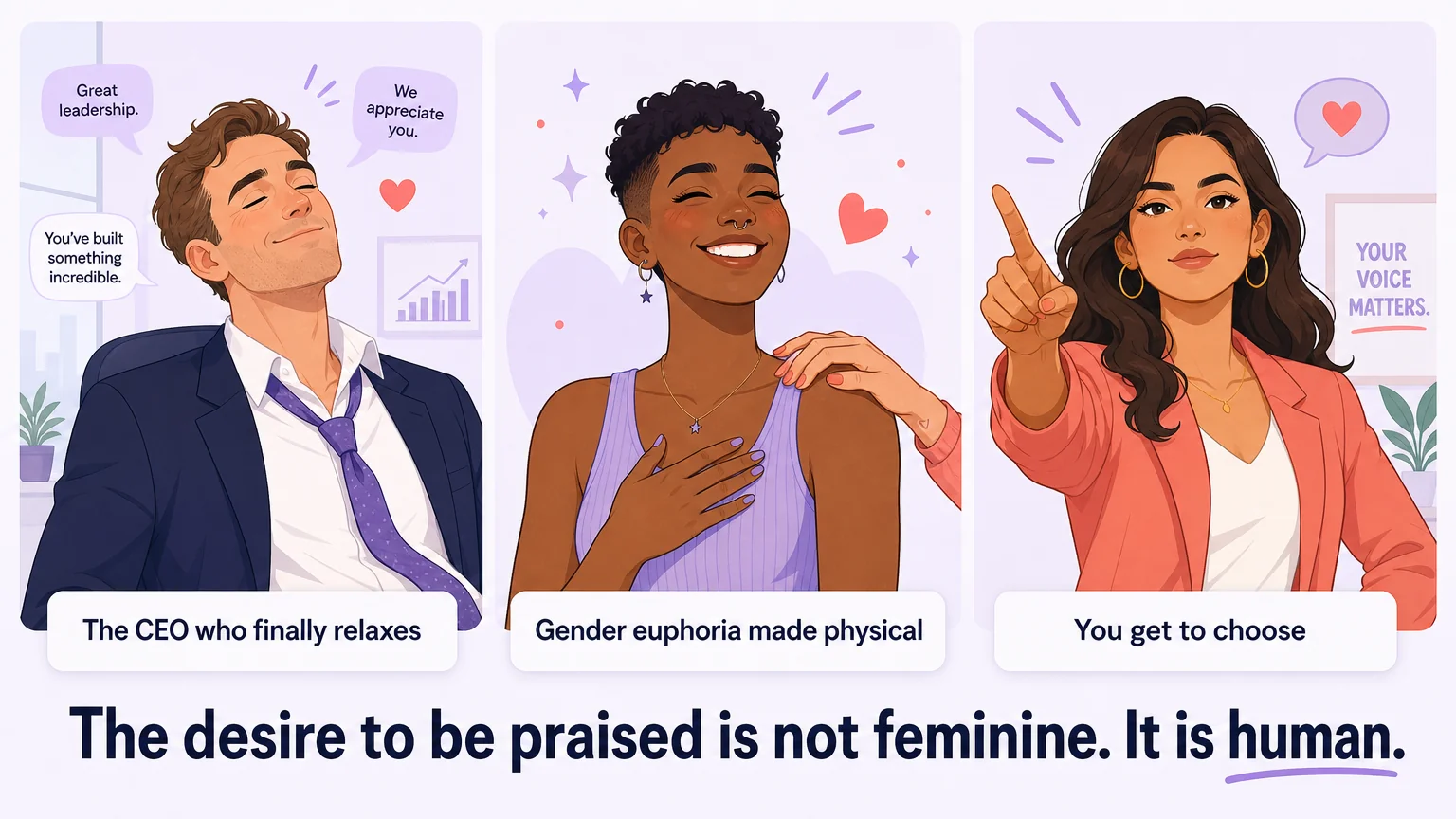
Praise kink is culturally coded as something women want from men. That coding is inaccurate and limiting.
Many men with praise kinks are CEOs, lawyers, and high-powered professionals who spend their days in control. Surrendering that control and receiving verbal affirmation during sex forces the nervous system to relax. For men with performance anxiety, hearing “I love that, keep going” creates an instant feeling of safety. Men are culturally starved for verbal affirmation, and the sexual context may be one of the few places they allow themselves to receive it. After heartbreak, praise during sex can function as a corrective emotional experience, canceling out the voice that says “you were not good enough.” The desire to be praised is not feminine. It is human.
For queer, trans, and non-binary individuals, praise during intimacy carries a specific power. Hearing the right name, pronouns, and gendered language in a context of desire is gender euphoria made physical. For people misgendered in daily life, a partner’s affirming words during sex are restorative. Mx. Sly, author of “Transland,” writes that BDSM helped them “understand and articulate their gender” and “turn shameful experiences into liberating ones.” Esther Appiah, a UCLA researcher, documents how Black queer kink spaces articulate intimacy through “community, kinship, and care,” resisting colonial conditioning around sexuality. The words that land affirm not just what someone did but who someone is, especially the parts the world outside the bedroom refuses to see.
Some women worry that enjoying “good girl” contradicts feminist values. Experts are unanimous: consensual bedroom desires have no bearing on feminism. As Annabelle Knight frames it, engaging in a praise kink does not put you in a subjugated position. You direct how your partner speaks to you. Feminism means you get to choose. The freedom to name your desire is agency.
Praise kink is human wiring that shows up across identities. The words that trigger it are as individual as the person hearing them.
Beyond the Couple: Threesomes, ENM, and Group Play
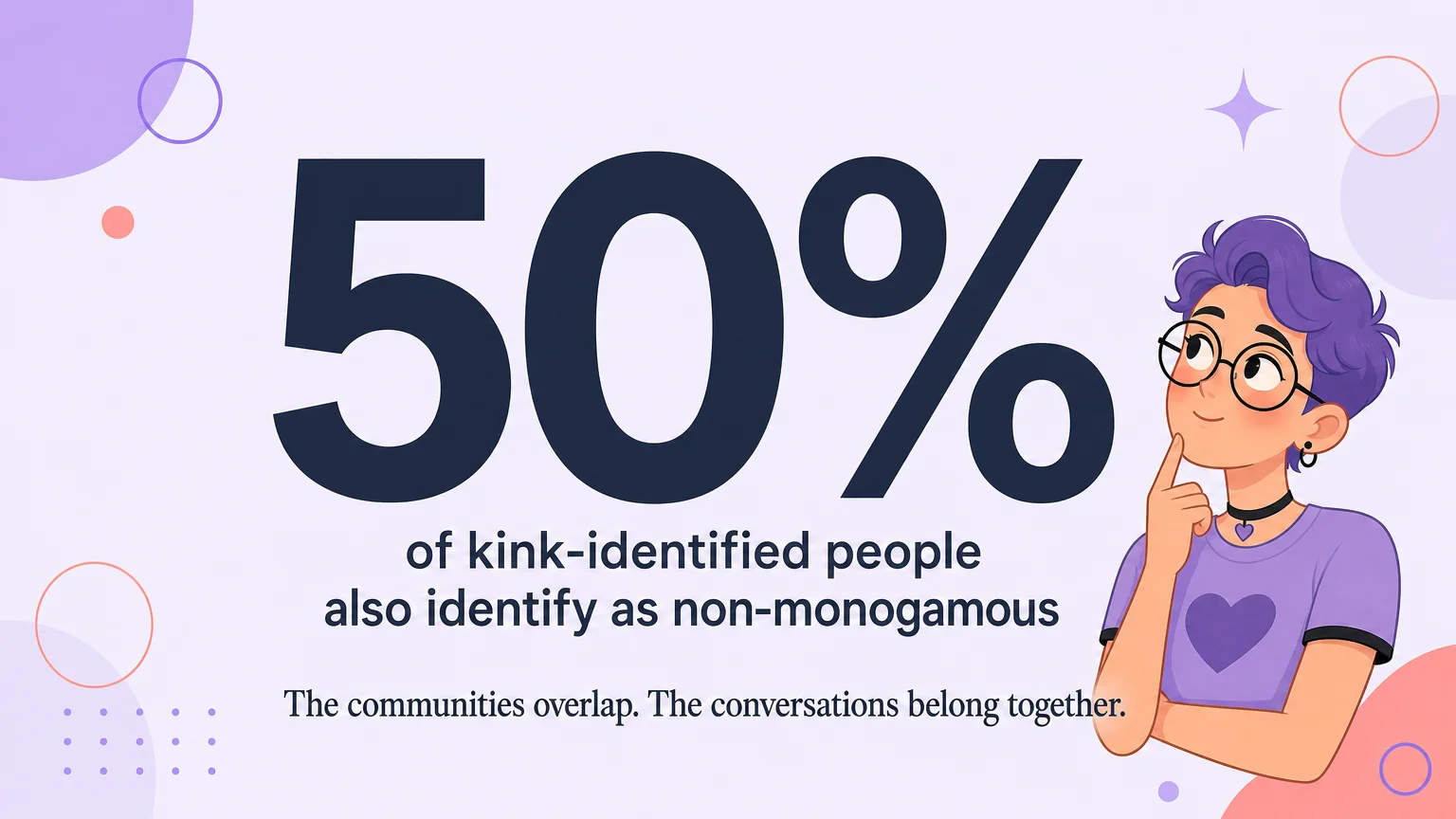
About half of kink-identified participants in one study also identified as non-monogamous. The communities overlap significantly. Yet the conversation about how praise kinks function in multi-partner dynamics is almost entirely absent.
In threesome dynamics, praise creates layered power exchange that a two-person scene cannot replicate. Academic research on multi-partner sex confirms that adding a third person creates stronger and more varied power dynamics. The configurations are flexible: a dominant partner praising two submissives simultaneously, each receiving affirmation calibrated to them. A couple working together to praise and care for their third, the combined body knowledge of an established relationship creating expert-level attention. A switch dynamic where praise flows in multiple directions. One research participant described their experience directly: “They’ll call me their sex doll, which I fucking love.” Praise in group sex is lived and loved.
For the single person joining a couple, being intensely desired and focused upon by two people is itself a form of embodied praise. One research participant described being the third as “a really privileged position to be in.” This comes with responsibility on the couple’s side. The third is a guest in your playground, not a toy in your toybox. Praise given to a third should be genuine, negotiated, and never transactional. The couple’s job is to make the third feel valued, not used.
In ENM and poly configurations, different partners can fulfill different roles within a praise-kink dynamic. One partner may provide nurturing, soft-Dom praise. Another may provide challenge or degradation for those who enjoy the interplay. A poly setup can accommodate the need for both without one partner having to be everything. Audio messages, voice notes, and text-based praise also make this one of the more accessible kinks for people in remote or multi-partner configurations. Praise travels well.
Feeld’s data on praise-kink mentions doubling in bios tells the larger story. This is happening in the same spaces where people are exploring ethical non-monogamy. The two conversations belong together.
Frequently Asked Questions About Praise Kinks
Do I have a praise kink, or do I just like compliments?
The distinction is physical. Someone with a praise kink experiences genuine sexual arousal from praise: butterflies, a push toward orgasm, an erotic charge. Emma Austin: everyone loves praise, but not everyone gets off to it.
Does having a praise kink mean something is wrong with me?
No. Plenty of people with happy childhoods develop praise kinks. You might simply like what you like. It is only a problem if it becomes the sole basis for your self-worth.
Can I have both a praise kink and a degradation kink?
Yes, and it is common. Dr. Kate Balestrieri explains the brat dynamic: resistance met with degradation followed by submission met with praise creates an intense feedback loop. The contrast heightens both.
Does enjoying “good girl” make me a bad feminist?
No. Consensual bedroom desires have no bearing on feminist values. You can direct how your partner speaks to you. The freedom to name your desire is agency, not submission.
How do I bring this up with a partner who is vanilla?
Share an article as a conversation opener. Try casual praise outside the bedroom. Frame it as a desire you discovered, not a deficiency. Be specific about which phrases work for you. Start small and debrief after.
Why did praise kink become so popular?
TikTok virality at 568 million views, “Babygirl,” Sally Rooney’s novel, and a course correction against porn-normalized aggression. Its popularity reflects how rare tenderness has become in mainstream sexual scripts.