Someone says the word and the room stalls. Maybe someone used it about a partner, maybe it sat in a profile next to a photo, maybe it was aimed at you. The pause happens because nobody in the conversation is sure whether the word names a preference, a role, or an accusation.
What is sadism in BDSM, then? A sadist gets pleasure from giving another person pain, intense sensation, or consensual suffering. The pleasure can be sexual or not. The word describes an interest, not a rank, a personality, or a verdict on how someone treats people outside a scene.
This article stays inside the consensual kind, between adults who agreed to be there. The word has two other lives, and the next section gives them one paragraph before setting them down.
By the end you will know the two kinds of sadist, how a sadist differs from a dominant, what negotiation involves from first conversation to aftercare, and what to do if the label is yours or has been aimed at you. The question underneath is simple: is this what I am, and is that all right?
What Sadism Means Inside Consensual Kink, and What Else the Word Names
Merck’s consumer guide describes consensual sadism as ordinary. Most sadists interact with a consenting partner and carefully avoid actual humiliation or injury, and the guide describes this activity as commonly play-acted in healthy sexual relationships.
What is sadism in practice, then? The definition turns on three things. What gets given: pain, intense sensation, restraint, fear play, humiliation, or the experience of being pushed somewhere difficult. What the giver gets: arousal, satisfaction, or the charge of a reaction they caused. What makes it sadism rather than violence: the other person wants it.
None of that says anything about how someone treats people outside a scene. What someone wants inside a negotiated hour is not a description of how they behave outside it.
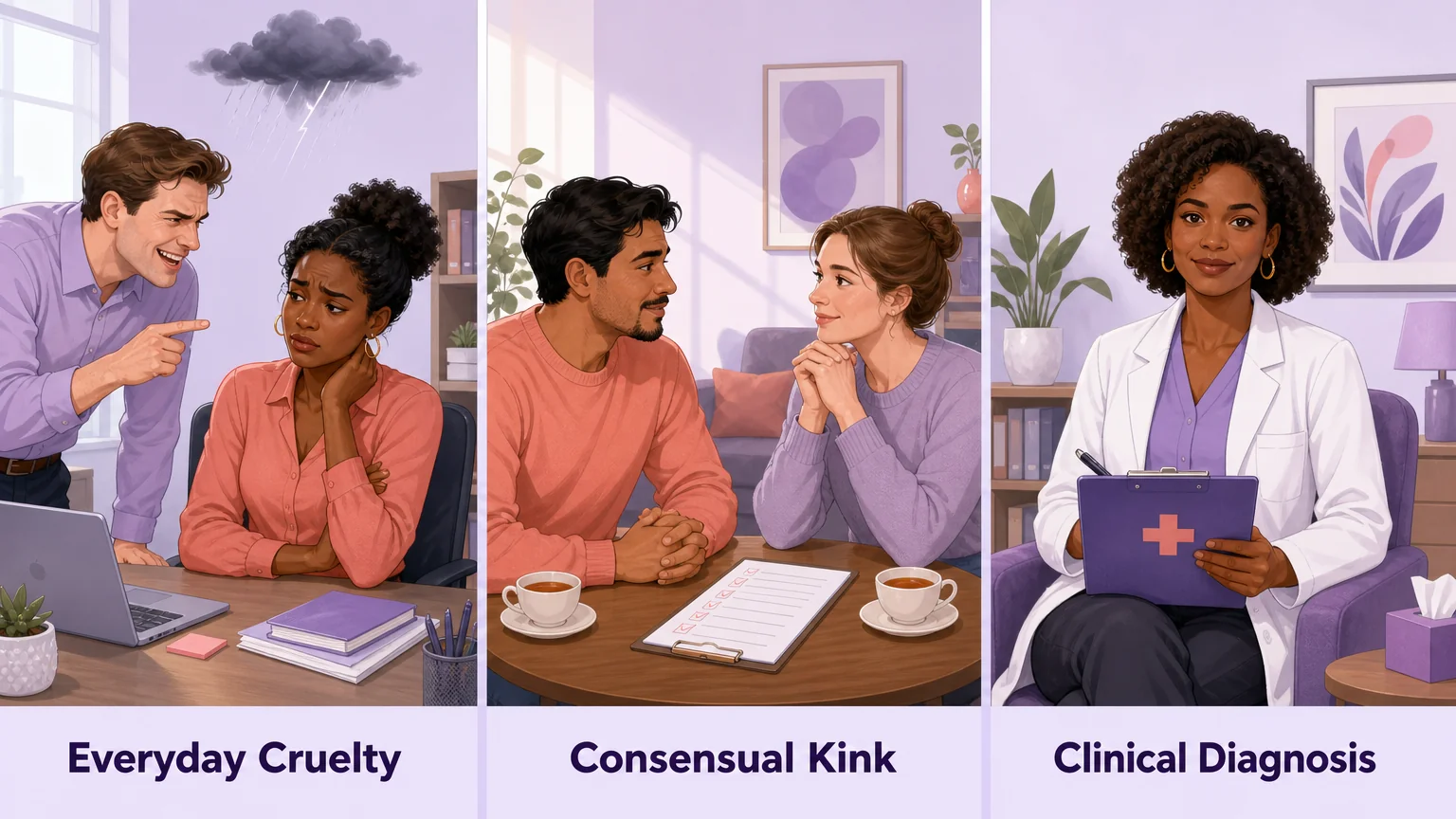
The word also names everyday cruelty, the kind with no sex and no consent in it. It names a clinical diagnosis too. That diagnosis is a separate category, and the Merck Manual sets its threshold at four conditions together, none of which consensual play meets. Most people with sadistic tendencies do not have the disorder, which is Merck’s own point. From here, the word means the consensual kind.
Consent is what separates the interest from harm. The same act with a willing partner and a working stop is play; without those, it is something else entirely.
Inside kink the word is narrow and specific: an appetite, a role, a set of negotiations. Outside it, the word is doing several jobs at once, and you can rule out two of them now.
Types of Sadist: Sensation, Suffering, and Humiliation Play
Two people can both call themselves sadists and want different things from a scene. The difference is not how hard they play.
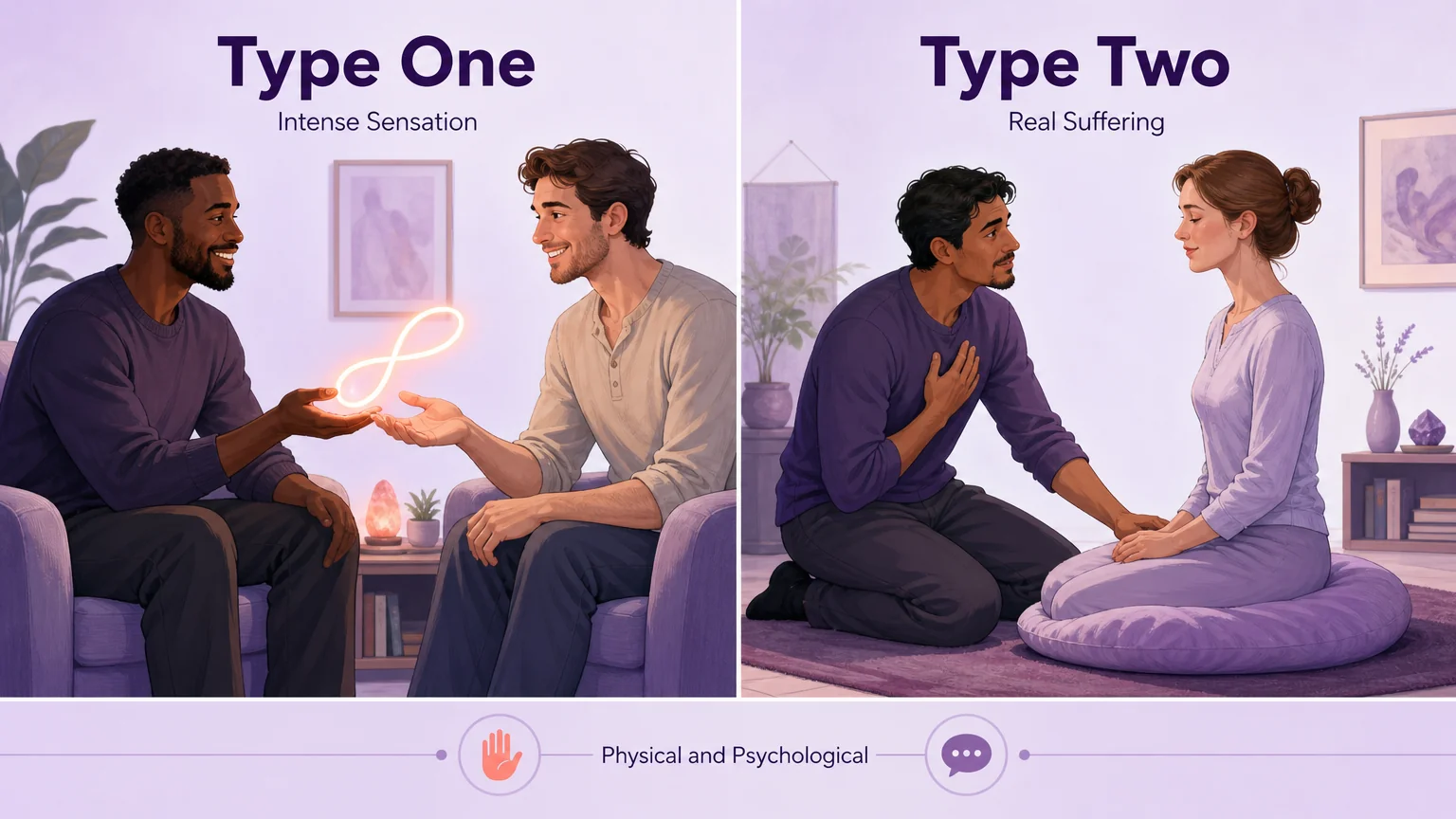
Evie Lupine, a kink educator, draws the split this way. A type-one sadist gives intense or painful sensation because the partner enjoys it; the pleasure is in the other person’s response to something good. A type-two sadist wants the partner’s genuine suffering in the moment, the not-liking-it while it happens. “It’s not about hurt. It’s not about harm,” she says of the first kind. Her point: it is about giving an intense experience the partner wants.
Neither type is a red flag by itself. Both are workable when consent holds, and the ethical test is identical: informed, free of coercion, a stop that works, and a plan if something goes wrong. Lupine notes that kink normalization often insists nobody is really suffering, which erases type-two sadists and leaves them no honest way to describe themselves.
Physical and psychological are separate channels that cut across the two types. A type-one sadist can work entirely through words. A type-two sadist can work through impact. The psychological channel includes humiliation, fear play, praise kink, and mind games, and a sadist can prefer it without roughness.
The split has a practical use: it is how people find each other. Type-one sadists tend to pair with brats, role-play fans, and light-to-medium impact players. Type-two sadists tend to pair with heavier bottoms, people who like limits pushed, and people who treat endurance as service. Same appetite, different settings.
Declining an act does not disqualify anyone. A top who will not do a particular thing is still a sadist; the label describes the appetite, not the menu. Bottoms do push, and the answer can be no. If making someone cry makes you uncomfortable, that may mean you do not want to play with crying, not that you are not a sadist.
Name the want rather than the label when you talk to someone. A label asks for everything at once, and almost nobody can answer a question that large.
Sadism Examples in Consensual Play, From Light Impact to CNC

Four sadism examples cover much of what play looks like. Each gets the same treatment: what happens, what gets agreed first, and what each person takes from it.
Impact play. Spanking, paddling, or flogging, starting light and building across a scene. What gets negotiated: implements, areas of the body, how hard and how fast, how a stop works, and how far marks may go. The person giving gets the reaction and the arousal of causing it. The person receiving gets intense sensation they asked for. It is the usual entry point because it needs no equipment beyond your body; Merck describes this as commonly play-acted in healthy sexual relationships.
Humiliation and fear play. Being talked down to, made to do something embarrassing, or scared on purpose, inside an agreed frame. What gets negotiated: exactly which words and topics are in bounds, because a real insecurity can get hit by accident. Merck’s line about sadists avoiding actual humiliation is the anchor. The play version is a performance of humiliation, not the real thing. The person giving gets the emotional reaction; the person receiving gets its intensity inside a container. This needs more negotiation than impact, because the limits are invisible.
Consensual non-consent. Role-play built on the fantasy of compelling someone through what they visibly do not want in the moment. What gets negotiated: the scene’s shape in advance, how far the resistance goes, and a stop that works even though “no” is part of the script. Safewords and hard stops come before the scene for that reason. The person giving gets the appearance of real resistance. The person receiving chose that position in advance, which makes the resistance a performance. It is legitimate negotiated kink that lines up with the type-two motivation without being typical.
Devotional masochism. A bottom who does not identify as a masochist takes intense pain as a gift, with the suffering framed as devotion. What gets negotiated: how much, for how long, and how the giver will know the difference between devotion and damage. The person giving gets the gift; the person taking the pain gives something costly, which is the point. A scene can be wanted without being enjoyed, and because the person taking it is not chasing pleasure, the usual signal that they are fine may be missing. Agreed stop conditions carry more weight here.
What moves a scene from play to harm is not how extreme it sounds but whether consent works.
Sadist vs. Dominant vs. Top: What Each Word Means
If someone says they are a sadist, are they saying they want to run the scene? Usually not, and the difference decides what they are asking for.
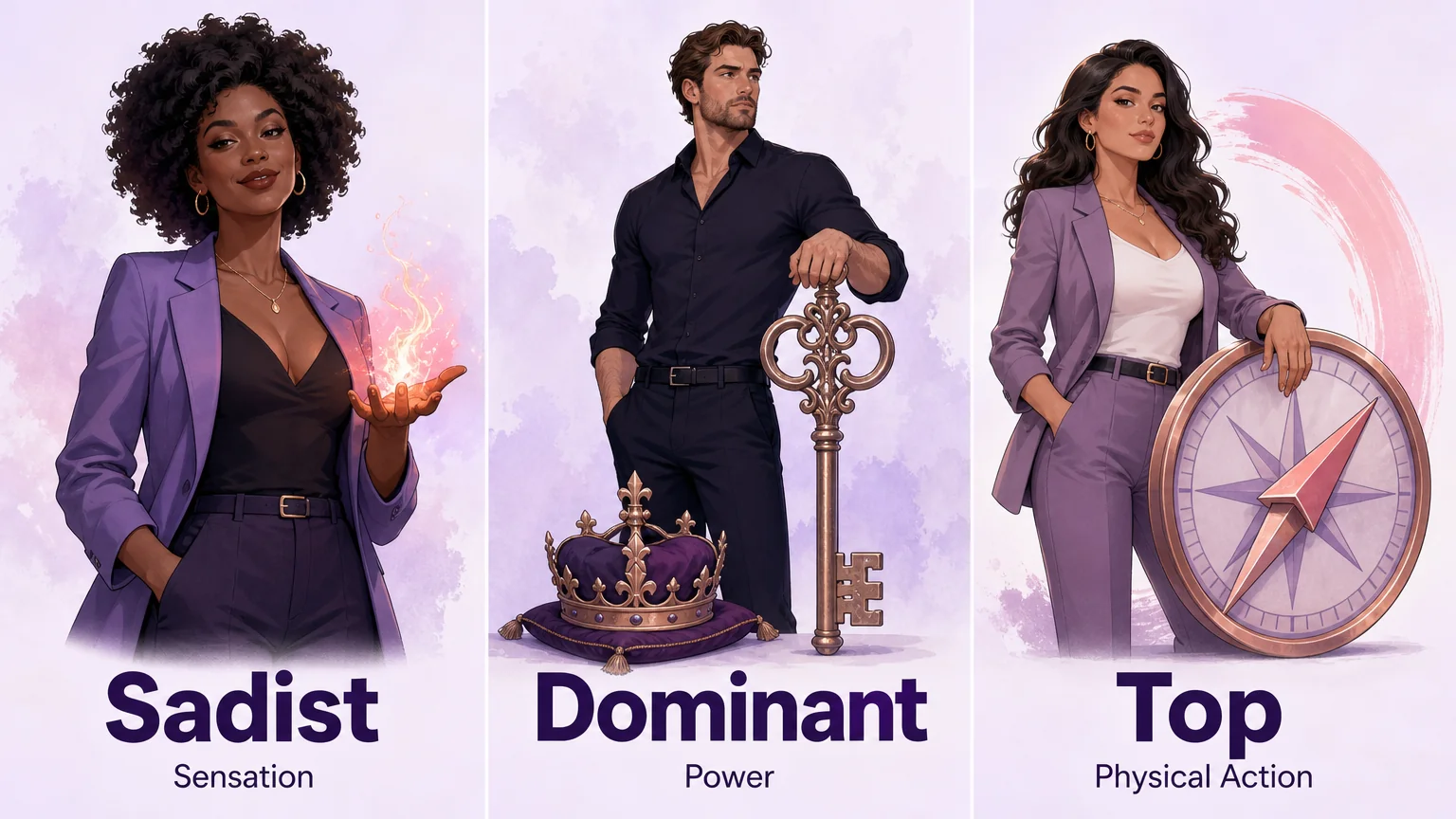
Each of these words answers a different question. What is a sadist? Someone who gets pleasure from giving pain or intense sensation. A dominant holds the power role in a D/s exchange. Top and bottom describe who physically does what. A switch moves between sides depending on who they are with. Kink communities usually put the split as physical action versus power and control, and the two run independently.
The combinations show why the words are separate. A dominant can run a dynamic with no pain in it at all. A sadist can have no interest in power exchange. A sadist can bottom. A switch can be neither dominant nor sadistic. Earning a collar and submitting to a dominant is a different commitment from being a sadist’s partner, because each asks something different of the other person, even when one person holds both.
Masochist is the other half most people sort out here. A masochist gets pleasure from receiving pain or intense sensation, which makes them a common match for a sadist and not a required one.
The vocabulary earns its place because naming the want accurately is how compatible people find each other. It also keeps a negotiation honest. A person can say yes to being hit and no to being owned, and those are different answers that one shared word for everything would hide.
The label describes what you want, not who you are to someone else.
Consent in Practice: Negotiation, Safewords, and Aftercare
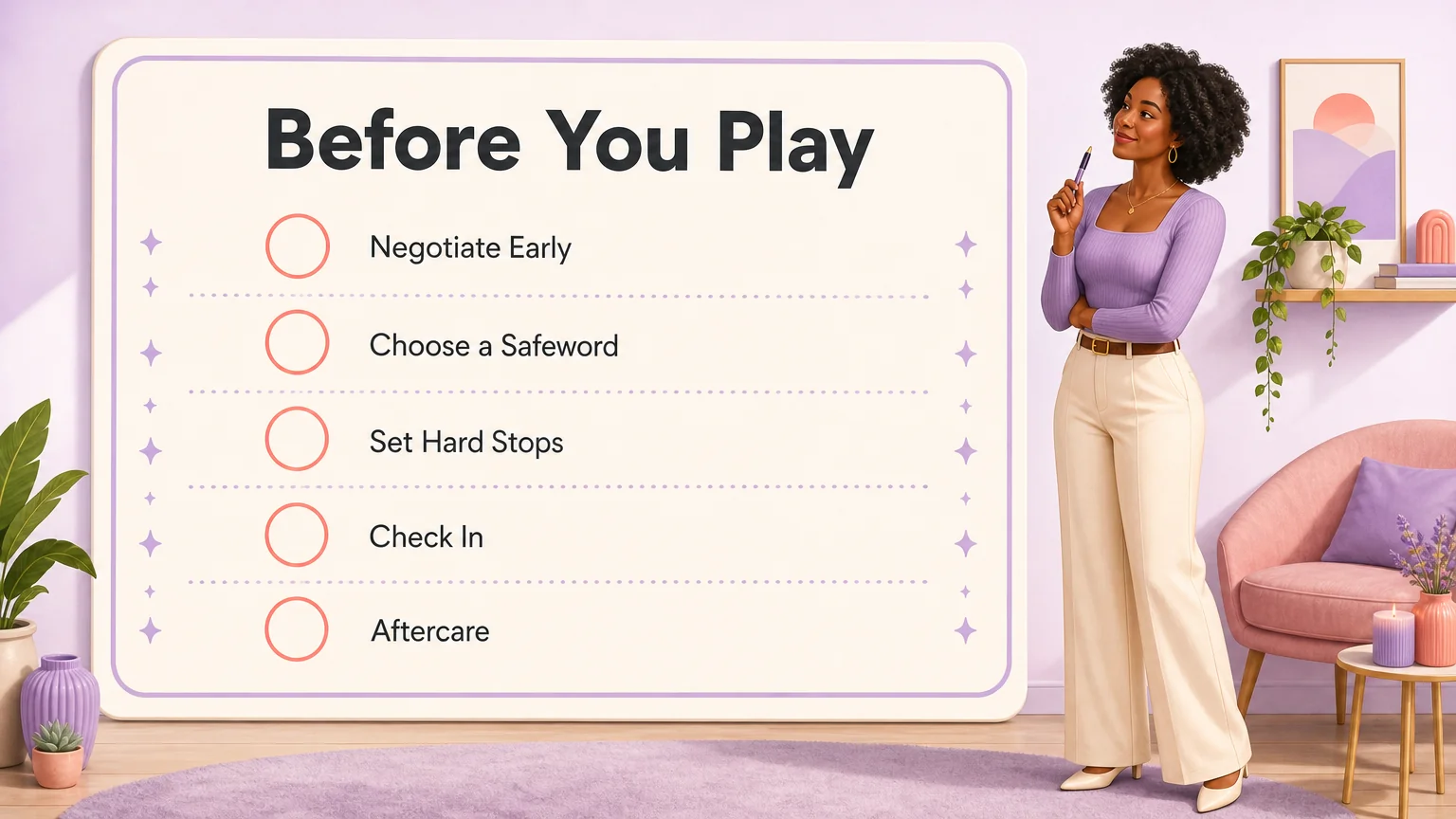
Jonny Ace, a kink educator with 11 years in the scene, puts the distinction in one line: “I like hurting people, but I don’t like harming people.” Everything below is how that gets enforced.
Negotiate weeks ahead, not the night of. Ace says his negotiations run at least two weeks, sometimes a month or more, and he never does pickup play. Run it in writing over several days, so answers can be reread rather than recalled under pressure. Cover four things with whoever you play with: what each person wants, what each never wants, existing boundaries, and untried fantasies. Read the off-limits list before a scene. If you cannot remember whether something was agreed, do not do it; that is the responsible default, not a failure. A written contract is not a legal instrument and settles nothing in court.
Agree a safeword that is not “stop.” Inside role-play, “no” and “stop” may be scripted, so the word has to be something that would not come up naturally. Add a nonverbal signal, a dropped object or a hand sign, for when someone cannot speak. A safeword works only if it was agreed and rehearsed, and it belongs to both people, not just the one receiving.
Set hard stops before anything starts. Name them out loud: the scene ends if a toy breaks, if skin breaks, if either person goes nonverbal, if a time limit is reached, or if the giver gets a bad feeling. The point is to remove the mid-scene judgment call, when arousal and adrenaline worsen judgment. Playing short of what could have been tolerated and building over successive scenes is the normal path, not a timid one.
Check in during. Repeatedly, and about how someone feels, not just what their body is doing. Ask in a way that invites a real answer, and treat a flat or absent response as a reason to slow down.
Do aftercare. People can be very vulnerable after a scene, emotionally and physically. Aftercare can look like company, water, warmth, quiet, and a conversation about how it went, which doubles as the start of the next negotiation.
The person giving can stop too. Say so when it happens, and tell the other person in advance that it might.
The abuse test. Dr. Laura Prescott, a clinical psychology professor, draws the line by apparatus, not by act: abuse has no negotiation, no boundaries, no check-ins, and no aftercare; consensual kink has all of them. One test travels with you: will the person causing pain stop when told no? S. Marc Breedlove, in a human sexuality course lecture, puts the test in terms of harm: between consenting adults, with nobody hurt and both people fine with it, there is nothing to see a psychiatrist about.
Consent is the whole apparatus, not the mood. Whether you want to be inside it is the next question.
Fantasy vs. Action: What to Do If You Think You Might Be a Sadist
The fear is not getting caught. It is being a bad person. That deserves a framework, not absolution.
A fantasy is not a scene. A scene is not harm. A private want meets none of the conditions that make sadism a clinical problem.
Jonny Ace spent years in the guilt loop, asking whether it made him a bad person. His answer to other sadists: consensual, properly negotiated play does not make you bad. Katrina Boots explains why shame lands on the word: kink is usually depicted from the bottom’s side, and sadists get written as villains. Shame pushes people to silence, and silence degrades the negotiation they most need.
Do the self-acceptance work first. Evie Lupine warns that entering the scene before you accept the interest can leave you needing more support than expected, or burning out faster. The work means describing the want without apology.
Make the ask specific. Sensation, suffering, humiliation, fear, and service are different requests. Name acts, not the label, which asks for everything at once.
Pick a moment that is not already charged, and lead with the specific thing you want, not the word. Expect an answer about acts; a partner declining to be hit is not rejecting you. Treat the reply as a negotiation: what each wants, what each never wants, and what would let either stop.
Keep the conversation running. Ace’s protect the problem rule obliges the receiving person to report when something is off, so the giver is not left guessing.
If the word is aimed at you, you are not obliged to accept it. If a partner used it about themselves, that is an opening for conversation. If it describes how someone treats you, go back to the apparatus: negotiation, a working stop, check-ins, aftercare.
A want is not a harm, and consent is what separates them.
Common Questions About Sadism in BDSM
Is sadism a mental illness?
No, not consensual sadism. The Merck Manual lists four conditions for the disorder: distress or impairment, extreme acts, nonconsenting partners, and at least six months. Consensual play meets none. The World Health Organization’s ICD-11, published in 2018, reportedly removed sadomasochism as a diagnosis, citing the rights of consenting people who are not harmed.
Where does the word sadism come from?
It comes from the Marquis de Sade’s writing, a literary reference older than psychiatry. Richard von Krafft-Ebing is credited with bringing it into clinical use in 1890, in Neue Forschungen auf dem Gebiet der Psychopathia sexualis. The name arrived through scandal and pathology.
Is consensual sadomasochism legal?
It depends on jurisdiction. In England and Wales, R v Brown in 1993 upheld convictions for consensual sadomasochism; the House of Lords reportedly held 3 to 2 that consent was no defense to actual bodily harm. The US has no single rule: courts have treated clamps, hot wax, and wooden-spoon spankings as serious injury.
How common is sadism?
No reliable population figure exists. Definitions vary so widely that any number measures the definition, not the people, so treat any figure you see as an assumption rather than a measurement.
What is the difference between a sadist and a masochist?
A sadist gets pleasure from giving pain or intense sensation, and a masochist gets pleasure from receiving it. They often pair but are not opposites, and either can exist without the other. A sadist’s partner need not be a masochist.
What is consensual non-consent, and why do people want it?
Consensual non-consent is role-play built on the appearance of resistance, with consent arranged in detail before the scene and a stop that works during it. It appeals to the type-two motivation in particular, because the appearance of genuine struggle is the point.
How do I bring up a sadistic interest with a partner?
Name the acts, not the label, and expect the answer to be about acts, not you. Treat it as negotiation. Consent can be withdrawn at any point, and a no to one act is not a no to the person.
Saying what you want is most of the work. 3Fun is a dating app for people who say it up front