
The rule is broken and the consequence is yours to deliver, the exact moment most new dynamics wobble. If you are newer to femdom punishments, you know why: the agreement was reached, your sub consented, and still something in you hesitates, because a lifetime of messaging tells you a dominant woman’s edge is cruelty.
Hold the spine before anything else. In femdom, punishment is never anger and never harm. It is a consequence the two of you chose in advance, for a rule the two of you agreed to, and the safeword always overrides. This is a consent architecture, not a cruelty license.
The map: agree the rules together first, then a consequence menu of eight rungs ordered from beginner-safe to advanced-with-flags, then how to read whether a consequence is working, and the aftercare that clears the slate. Along the way, the difference between funishment and punishment, and the safewords that keep every rung accountable.
You are not the villain of the scene. You are the keeper of the agreement.
Before Any Punishment: Agree the Rules and Consequences Together

A punishment is only fair when the expectation existed first. Without that, you are not correcting a rule-break, you are punishing a guess, and the result is resentment instead of change.
Take a real couple from the Dom Sub Living channel. She once got a punishment spanking for texting back slowly. The problem was they had never agreed how fast “fast” meant. Today they set it explicitly, in the open: ten minutes to reply, with a heads-up if a response will take longer. The rule came first. Only then could breaking it mean anything.
Treat negotiation the way professional dominatrix Mistress Tash Mia describes it, like setting a GPS before a trip. Boundaries, limits, activities, and enthusiastic consent all get agreed up front, because no one surrenders to someone they do not trust to hold their limits. And your sub cannot trust you to hold limits they never stated.
Build your safeword system the same way. The traffic-light version is a good default: green means good, yellow means slow down and check in, red means full stop. Add a non-verbal signal, a raised hand or a double tap, for the moments words are not available. Agree it before the scene, not during it.
Most rule-breaks also deserve a lighter first response. Borrow the escalation ladder that disciplined couples run: a first slip earns a correction, and it becomes a formal punishment only if the behavior repeats. Let your sub ask what they are “in for” and get a straight answer. Reserve formal punishment for willful disobedience, not honest mistakes, and never let punishment become the default teaching tool. A sub who cannot explain why a rule exists has exposed a communication gap, not a defiance problem.
Then draw the line where punishment stops and abuse begins, and let it be firm. Never from anger. Never to vent or to patch a relationship problem. Never outside the agreed rules. Never real harm. The safeword always overrides. Anything that touches another real person requires that person’s full, informed consent. Within those rails, your leadership and your sub’s negotiated consent are one architecture, the shared frame that makes every consequence below defensible.
Funishment vs Punishment: Decide Which One You’re Running
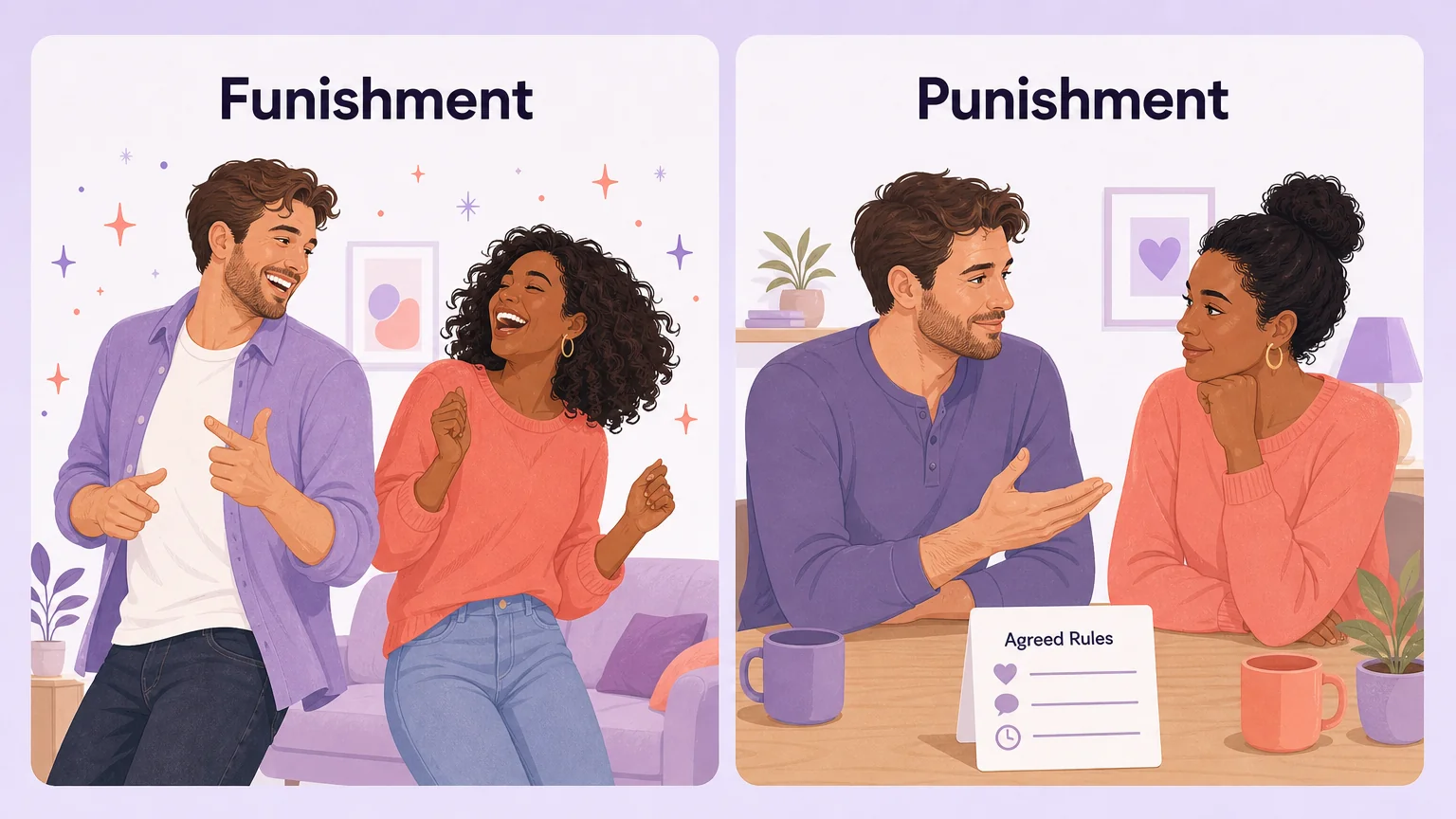
Many new dommes feel a discomfort they cannot name: some scenes you call punishment feel good to everyone involved. When that happens, you did not run a punishment. You ran a funishment, and telling the difference is the whole game.
Punishment is a genuine negative consequence for a real rule-break, meant to discourage the behavior and, when it works, to close the loop. Funishment is roleplay that borrows punishment’s costume, a pretext for a flavor of play you both enjoy. Sex educator Silken Claws puts the test in plain words: if there was no real rule-break, or if your sub is hoping for the consequence, it is funishment. Treating it as funishment is not a failure. It only matters that both of you know which one you are making.
Real punishment, when it earns the name, does one of four jobs. It enforces the dynamic. It changes behavior. It reasserts how much the dynamic matters to both of you. It provides closure by clearing the slate after a genuine wrong.
Before you lean hard on any single rung, one research note. Behavioral research suggests punishment used alone tends to create fear and hiding over the long run, and it can sour the very activities you punish with. But BDSM educator Evie Lupine points out that kinky people often react opposite to the standard model: what scares a vanilla partner can bring a kinky one closer. Treat the research as context and your own sub as the evidence.
Some dynamics run both modes, at different times, on purpose. Decide in advance which route tonight is taking. Knowing the mode is what makes you consistent, and consistency is what makes a consequence land as care rather than cruelty.
1. Gentle Accountability Rung: Corner Time and Kneeling

Why start here? Because this rung costs attention, not pain, and it hands your sub physical proof that a boundary exists. No implement, no ambiguity, no risk to the relationship. Just a quiet consequence that corrects, which is exactly what a newer domme needs to build delivery confidence at near-zero risk.
Corner time and kneeling belong to the same accountability family. Both place your sub in a still, unglamorous position with nothing to do but sit with what happened. That stillness is the point. Practitioners across femdom and domestic discipline call these the default “boring but effective” punishments.
The safety parameters keep this rung defensible. Beginners kneel comfortably in the five-to-ten-minute range, always on padding, never on a bare hard floor. There is no universal maximum, so set the clock by physical capacity and build slowly. Seiza-style kneeling, sitting back on the heels, produces pins and needles around the five-minute mark and turns genuinely uncomfortable past ten, so shift positions and pad anything beyond a few minutes.
Supervise the way you would any scene: allow position adjustments, let your sub signal distress without breaking protocol, stop on numbness or tingling, and never use kneeling punitively without prior consent. Against a known knee, ankle, or back injury, this rung is closed.
The run of play is simple. State the reason in one calm sentence. Set the timer out loud. Stay present or nearby, not glued to a phone. When it ends, one line: “Done. Come here.” A couple of knee cushions or a padded mat in your punishment kit keeps this rung safe for years.
Best for: first punishments, gentle dynamics, and subs who need a quiet reset. Skip it for anyone with knee, ankle, or back injuries, or who cannot hold still without real distress.
2. Writing Lines and Reflection Essays: Time Instead of Pain
A punishment should cost something your sub does not enjoy, and almost nobody enjoys sustained handwriting or honest self-reflection. That engine makes writing the rare femdom punishment that cannot be accidentally enjoyed.
Run it at two levels, matched to the slip. Short lines work for a first correction; they are mostly about ritual and time, a physical mark that something happened. A reflection essay is the formal-punishment version: write out what the rule was, why it exists, what broke, and how you will not repeat it.
Notice the frame. The essay is not a confession written for your entertainment. It is your sub re-stating the rule in their own words so the expectation finally lands. If they cannot explain why a rule exists, the exercise has surfaced a communication gap rather than a disobedience problem, and that is valuable information for both of you.
This rung also travels. In long-distance dynamics, community guidance consistently points to lines and essays as the recommended remote punishment precisely because they transfer cleanly into a text box or email, where a physical consequence cannot. Long essays explaining the behavior, with a real apology attached, are the standard. Habit-tracking apps like Obedience give you a delivery rail for assigning and collecting the task remotely, with reminders and proof of completion.
Keep it dignity-preserving. Do not mock the content. Do not re-litigate it in public. The point is that your sub thinks, not that they squirm.
The verdict: this is the best all-weather first consequence in the menu. Low risk, high clarity, zero enjoyment problem. It is also the natural escalation step when a lighter correction has already failed once.
3. Privilege and Structure Rung: Taking Something Away
Here is the line that anchors this rung: spanking is not a punishment to someone who likes it. The punishment is to take the spanking away.
Privilege removal is that idea applied to everyday life. Your sub loses access to the screens, games, outings, or small perks that genuinely matter to them, for a defined window, tied to the specific rule that was broken. The power of the rung depends on one inventory you should do together during negotiation: learn what your sub actually values, because that list is your consequence palette. Aim a consequence at something they do not care about and you are running theater.
Event denial and service reassignment use the same logic. Declining a planned outing is privilege removal in public clothing. It should not become humiliation, and it does not have to be dramatic. It is simply: that thing does not happen this time.
Two traps make this rung backfire, and both wound the relationship more than they correct the sub. First, the silent treatment. It reads as a strike on the relationship itself, and practitioners consistently name it the thing to avoid, pointing to denial, essays, or self-imposed alternatives that hold the line.
Second, rewards in a dynamic are gifts at your discretion, not rights your sub banks and cashes. Over-rewarding breeds scorekeeping entitlement that quietly poisons the dynamic, so keep appreciation steady, a warm “well done” that costs nothing, while big rewards stay discretionary.
When you run it: name the revoked privilege, the reason, and the exact end condition up front. Then hold the line. No exceptions, no nagging.
Direct recommendation: reach for this rung when the broken rule touched responsibility or respect, such as missed curfews, blown tasks, or a dismissive tone, and your sub needs to feel the consequence in their routine rather than their skin.
4. Release Rung: Orgasm Denial and Edging as a Consequence
Let us name the obstacle before the technique, because almost no one does: you were raised to believe a partner who does not finish is an unsatisfied partner. So withholding release feels like cruelty even when it was negotiated in daylight.
The reframe comes from Krystine’s FLR podcast, which coaches dominant women through exactly this knot. Control without care becomes cruelty, but care without control dissolves the dynamic. Many submissive partners are not fulfilled by orgasm. They are fulfilled by being led. Denial only works from the inside of that belief, so let it land before you enforce anything.
As a consequence, denial means release is withheld for a defined period or until you grant it. The corrective bite is precise: your sub’s own rule-breaking now stands between them and release. Edging is the sharper version, bringing them repeatedly to the edge and pulling back, which builds the frustrated, pliant headspace that makes the lesson stick. But edging is intensity play. Run it only with a sub who can hold yellow and red, and only when you are both regulated.
Three operating rules keep this rung from sliding into cruelty. Denial is a promise of later, not a withdrawal of interest. Pair it with attention, teasing, and touch so your sub stays connected while frustrated. Always state the earned way back: “release when you log your tasks three days running.” Never extend a denial punishment at the peak of your own frustration. That is punishment from anger wearing a costume.
One warning, flagged now and picked up later: do not make denial the default for a sub who is hardwired to please. For them it can tip into shame rather than correction.
Best for: rules around focus, punctuality, or respect for the dynamic. Skip it for any sub with a medical condition affected by prolonged arousal, and for a sub who is distressed rather than frustrated.
5. Chastity Rung: Chastity Extension and Its Hard Limits
Chastity is the rare punishment where the popular fantasy and the safety reality split hard. The fantasy says weeks locked. The guidance for beginners says three days to a week, and many experienced couples stay shorter.
So start small: one to two days, then build. The mechanic that makes it a consequence is the extension. When a rule breaks, an already-agreed lock-up window grows by a defined amount, so your sub experiences their own lapse as more time locked. That is the corrective logic, and it only works inside an agreement that already exists.
The safety spine is where most teaching goes quiet, so hold it here. A board-certified urologist cautions against continuous wear beyond four to six hours when a ring places significant compression on tissue, and overnight wear is the tricky case, because nocturnal erections are believed to keep erectile tissue healthy. There is no authoritative medical literature on chastity devices at all, which is its own warning to err conservative.
If you are a keyholder, a duty checklist comes with the device. Keep an emergency spare key always accessible. Plan hygiene breaks; many 24/7 wearers clean every other day. Use a properly fitted device. Unlock immediately on pinching, numbness, chafing, or pain. The whole practice should be challenging, never painful.
And the human rule: locking is not ignoring. A locked sub still needs attention and teasing, or the consequence reads as abandonment rather than discipline.
Direct recommendation: try the release rung before you buy hardware. Reach for chastity only when your sub has specifically consented to device play and you can commit to the checklist. It is a tool for couples who have built trust, not a first consequence.
6. Impact Rung: Punishment Spanking, Scaled for Beginners
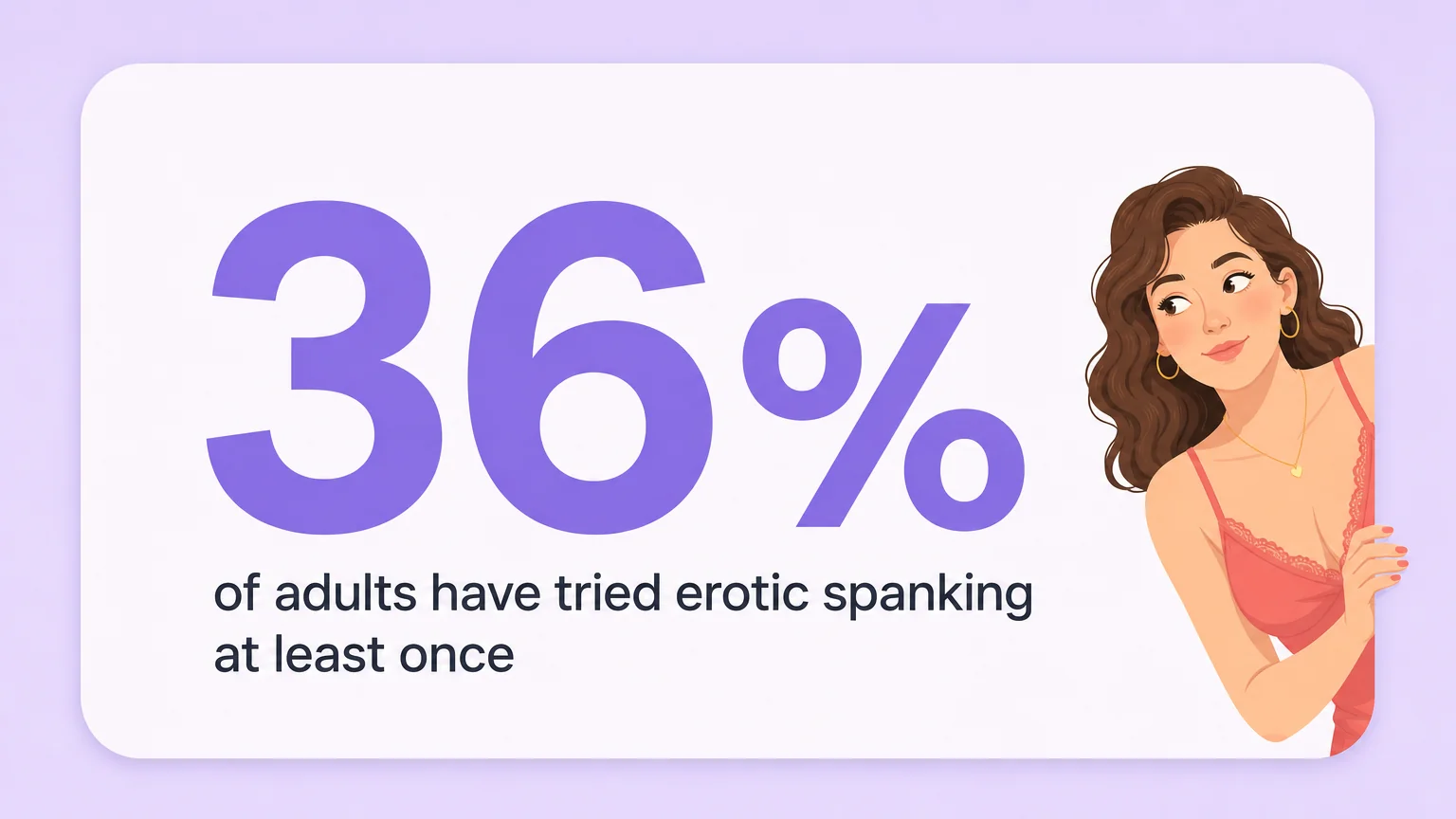
Normalize the act before the technique: roughly 36 percent of adults have tried erotic spanking at least once, a figure professional dominatrix Ms. Elle X cites in her impact-play guide. Impact is not fringe. It is simply under-taught.
Start with the distinction that sets the scene. A punishment spanking is its own flavor with its own rhythm. It is delivered for a named rule-break, it is not playfully sought, and the temperature is firm and businesslike rather than teasing. Choosing the flavor up front decides everything that follows.
Then scale the professional method to your skill level. Before anything happens, map the scene with your sub: what is a total no, what is a maybe that needs a check-in, what intensity levels exist, which implement if any, and what the emotional safewords are. Yellow means slow down and check in. Red means full stop.
Warm up gradually, hand before implement, and build intensity in rhythm rather than jumping to severity. Use verbal anchors that keep you leading, like “I want to hear you count.” Dominance is leadership, not mind-reading. You state the limits, and you play inside them, settled in the freedom that anything can be communicated.
The anatomy fits in a line. Fleshy buttocks and upper thighs are the target zones. Avoid the tailbone, the lower back, and the kidneys, and never strike anywhere without agreement.
One warning protects the pleasure you already share. If punishment spanking is also your only fun spanking, the association can turn a shared delight sour. Keep a clear flavor distinction between them, or vary your consequences.
And the anger rule, restated because it matters: a punishment spanking is never given hot. If you are angry, the scene waits.
The verdict: impact is the rung that most strongly teaches a newer domme her own authority. Move here once the earlier rungs have established your consent rhythm, when you want a consequence with real weight and your sub can safeword honestly.
7. Psychological Rung: The Disappointment Tier

Here is the inversion that explains this rung, and it may reframe everything you fear about your own edge. Subs report the most upsetting part of a real punishment is not the physical act. It is the rupture: knowing they disappointed the person whose approval they value.
That is why a woman’s calm authority lands with a specific weight no generic partner advice can copy. It is also why this tier exists as a consequence in its own right.
After the fact, in a quiet voice, state three things: the rule that was broken, the effect it had on the dynamic, and what happens next. No yelling. No contempt. No character attack.
The delivery that reads as authority rather than cruelty is calm and consistent, the same energy a skilled manager uses to hold a standard without humiliating anyone. If it helps to have words, borrow the shape of these: “I am not angry. I am disappointed, because we agreed on this, and you are better than your worst Tuesday.”
Consistency is what makes the words land. Accountability is accountability, the rule is the rule. Make no exception without a reason.
Now the counterweight you need to hear, because this lever cuts both ways. The same disappointment that corrects a secure sub can trigger a shame spiral in a perfectionist, a goody-two-shoes, or a self-critical one. Such subs may respond badly to punishment in any form, and that does not make them a bad sub or a fake sub. It makes them a different wiring. The skill is calibration: deliver the disappointment with your eyes on whether it is landing as correction or as collapse.
Best for: rule-breaks that eroded trust or respect, and subs who value your approval above all. Skip it or soften it for anyone prone to shame spirals, and pair the words with immediate reassurance and a clear path back.
8. Advanced Rung: High-Risk Consequences and the Flags That Go With Them
These consequences are not gated because they are dirty. They are gated because they are the ones most likely to injure real people, including people who never consented to anything. Run each with its flag visible.
Humiliation and degradation. Consensual humiliation is a legitimate but advanced appetite. The flag is scope. It must be negotiated to the word and confined to the scene, and it produces a real emotional comedown. Dominatrices who work with edgeplay describe needing genuine aftercare afterward just to get the sub regulated, and the crash is visible. Plan for it, or do not open the door.
Exposure-risk play. Public marking, forced public acts, anything that could be witnessed or recorded. The flags here are third-party consent and legal or doxxing exposure. No secret recordings, ever. Anyone who might see you did not sign up for your scene. Treat this as advanced edgeplay with negotiated scope and regulated aftercare.
Cuckolding with a real third person. Consent is the only line separating this from cheating. Every partner involved must communicate openly. The practice must be intentional, negotiated, and reversible, with boundaries and trigger discussion, a safeword, a controlled environment, and continuous check-ins. Aftercare reaffirms the primary bond, and the third person is a human to vet and respect, never a prop.
If consensual non-monogamy with a real third is ever on your horizon, 3Fun is built for finding a partner or couple who negotiates that openness as carefully as you do.
The meta-rule above all of them: advanced rungs require a track record. Months of honest safewording. Demonstrated trust. A dynamic that has already survived smaller consequences. If a partner pushes a new domme toward these before that foundation exists, the pressure itself is the flag to slow down.
The verdict: this rung is for experienced dynamics only. When you eventually open it, open it one carefully negotiated scene at a time, with every flag flying.
Reading Your Sub: Reward-Seekers, Shame Spirals and When to Ease Up
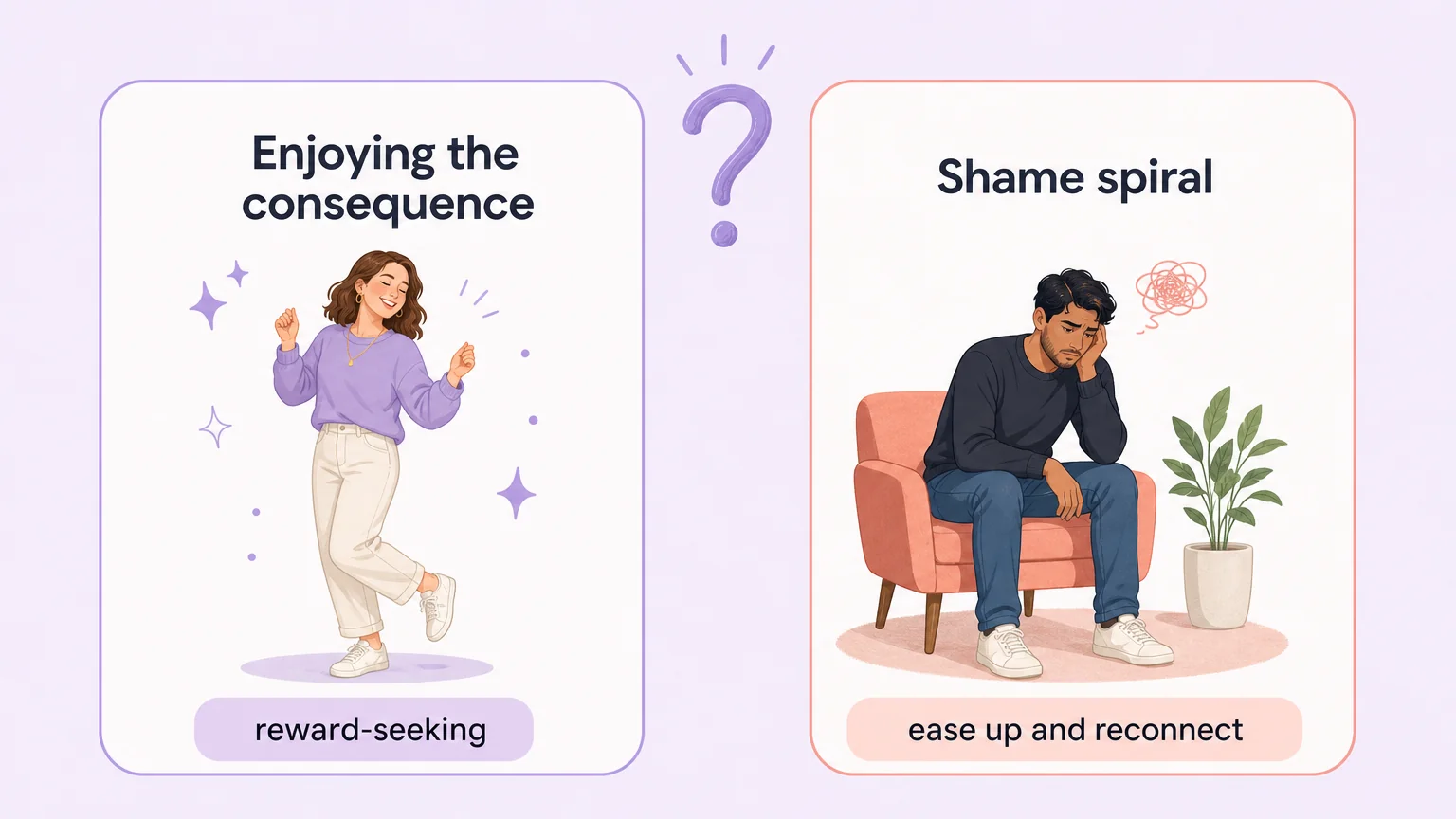
After the menu comes the feedback loop, because the same consequence that reforms one sub reinforces another. The diagnostic question is simple: is the behavior improving, staying the same, or is your sub secretly enjoying the consequence?
Watch the reward-seeking trap first. A brat escalates real misbehavior to provoke a funishment. A dominant playfully reacts, thinking she is being strict, and rewards it by accident. Then she grows frustrated and concludes she is not dominating hard enough, when the truth is closer to what Silken Claws tells new dommes: you cannot control someone who will not even attempt to control themselves.
The fix is clean. If your sub enjoys the consequence, it is a reward by definition. So either name it as funishment deliberately, or, for real correction, invert it. Take away the spanking they were hoping for and impose what they genuinely dislike: cold showers, lines, corner time, privilege removal. This is the same inversion that anchors the privilege rung, applied as a diagnostic instead of a menu choice.
Now the opposite pole. A sub who is hardwired to please, a perfectionist, a self-critical type, can have a genuinely negative response to punishment and spiral into shame rather than correction. If a consequence is doing that, drop it or change it. Do not double down. It does not make them a bad or fake sub.
Keep the research honesty in your back pocket: kinky people often react opposite to the standard model, so your own observation is the real instrument.
Build a check-in cadence. After a consequence lands, ask how it felt, whether the reason was clear, and what would have made it fair. Then actually adjust. Reading your sub well is what lets you deliver consequence after consequence without the dynamic curdling into resentment.
You’re Not Cruel: New-Domme Guilt, Aftercare and Clearing the Slate

Name the feeling you will almost certainly have after you deliver a real consequence: the guilt spike. It arrives within minutes, and it tells you nothing about whether you did wrong. Treat it as information, not verdict.
Dominant women are conditioned to believe a partner needs release to be satisfied, and that conditioning is what the guilt spike is made of. Guilt about enforcing an agreed rule is the old tape playing, not a verdict on what you did. The frame from the release rung holds here too: a dynamic needs care attached to control, or it curdles. You just led, and many subs are chasing exactly that, not the orgasm.
Then close the loop with a real aftercare sequence, because a punishment scene is still a scene.
Step one, the regulating pause. Do not try to resolve anything at the peak of arousal. Hydrate. Rest. Offer agreed-upon touch or respectful silence. Schedule the real conversation for when bodies have settled, and never debrief while the nervous system is still alert. Adrenaline clouds judgment and skews perceptions. Professional dominatrix Ms. Elle X deliberately skips the formal debrief during aftercare for exactly this reason.
Step two, the debrief, once you are both regulated. State what happened as fact, how it felt, what it meant, and what each of you needs now. Use open questions: what was best, what was hardest, how was the intensity. Keep the framing non-accusatory.
Step three, the forgiveness and clearing the slate. Closure is one of punishment’s legitimate jobs, so say the words. The apology is received. The debt is paid. The slate is clear. And make the scene’s end unmistakable, a clear signal that this is done, so your sub is not left waiting for the other shoe.
Step four, the next-day follow-up. A text or a quick check-in prevents subdrop and domdrop. Both of you can crash on the hormonal comedown, and dommes specifically worry they were too harsh. The follow-up is where you hear that the consequence actually landed as care.
A consequence delivered inside an agreement, followed by genuine repair, is one of the most intimate things a couple does. Discipline as devotion, not cruelty. Hold that.
If you are still building that partnership, start where the negotiation already is: find someone who treats consent as a shared architecture, not a formality. That is what 3Fun is for.
Femdom Punishment FAQ: Straight Answers for Newer Dommes
How do I tell funishment from punishment?
Punishment follows a real rule-break, is not meant to be enjoyed, and aims to discourage the behavior. Funishment is a pretext for play, often a staged violation. If your sub wants the consequence for doing the thing, it is funishment.
How long can a sub kneel or hold a position as punishment?
No universal maximum; set the clock by capacity. Beginners manage five to ten minutes kneeling. Pad hard floors, allow position changes, and stop on numbness, tingling, or sharp pain. Never use kneeling punitively without consent or against a known injury.
How long is chastity or denial safe when I extend it?
Start at one to two days and build. Most guidance suggests three days to a week for beginners, and there is little medical literature on devices. Keep an emergency key and hygiene breaks; unlock on pain, numbness, chafing, or pinching.
What if my sub breaks rules to get a punishment?
That is reward-seeking, and naming it fixes most of the problem. If your sub hopes for the consequence, you are running funishment, so say so. For real correction, invert it: take away what they enjoy and impose what they dislike.
Is public humiliation or cuckolding ever okay?
Only as fully negotiated, consent-first advanced play: boundaries and triggers discussed with every party, a safeword, no secret recordings, and planned aftercare. Consent is the line separating it from abuse. Any third person is a human to vet and respect.
Should I ever punish out of anger?
No. Never punish to vent or patch a relationship problem. Calm, consistent delivery reads as authority, not cruelty. If you are angry, resolve the issue first and let the scene wait. Punishment from anger is how a negotiated consequence becomes harm.
Do rules need to be written, or can they be verbal?
Either works, as long as the rules are explicit and mutually agreed, with a safeword or signal and regular review. A written agreement helps structure a new dynamic, but both partners supporting it matters more than the document ever will.
I feel guilty enforcing consequences. Is that normal?
Yes. Guilt is conditioning, not proof of cruelty. Dominant women are taught that a partner who skips release is unsatisfied, so enforcing an agreed rule can feel like a betrayal even when the dynamic calls for it. Many subs find being led more fulfilling than coming. The guilt is an old lesson talking, not your conscience.