About one in three American adults has spanked a partner or been spanked themselves. Roughly one in five has tried some form of bondage. The desires you’re sitting with are far more common than you think, and far less strange than the whispers suggest.
So is bdsm illegal? In most places, no. There is no US federal statute named “BDSM,” and no state outlaws private consensual play by name.
But consent is not a complete legal shield. Where an act causes or risks serious injury, the law stops caring that everyone agreed, and the rules vary sharply by jurisdiction.
Most people never run into trouble. Some do, usually because of injury, coercion, or a complaint long after the scene. This is general information, not legal advice.
Here’s the map we’ll walk together: how consent works in law, what actually gets prosecuted, the state-by-state and country-by-country picture, the real-world risks that rarely make the news, and a practical playbook for keeping your play low-risk. No jargon without an explanation, and nothing you can’t act on tonight.
Consent and the Law: Why ‘But We Both Agreed’ Isn’t a Legal Shield
It starts with a fair instinct: if we both agreed, it’s fine. Inside kink culture, that instinct is the whole religion. Scenes open with negotiation. Partners run through limits, fantasies, and absolute no-gos before anyone ties a knot.
The community’s oldest motto is SSC, safe, sane, and consensual. The newer framework, RACK, risk-aware consensual kink, admits you can’t eliminate all risk and asks you to name it openly together. Many couples use a yes/no/maybe list to map what’s on the table before anything happens.
Criminal law sees consent differently. In most US states, consent is not a defense to assault or battery, and the National Coalition for Sexual Freedom is blunt about it: consent is not a defense to assault.
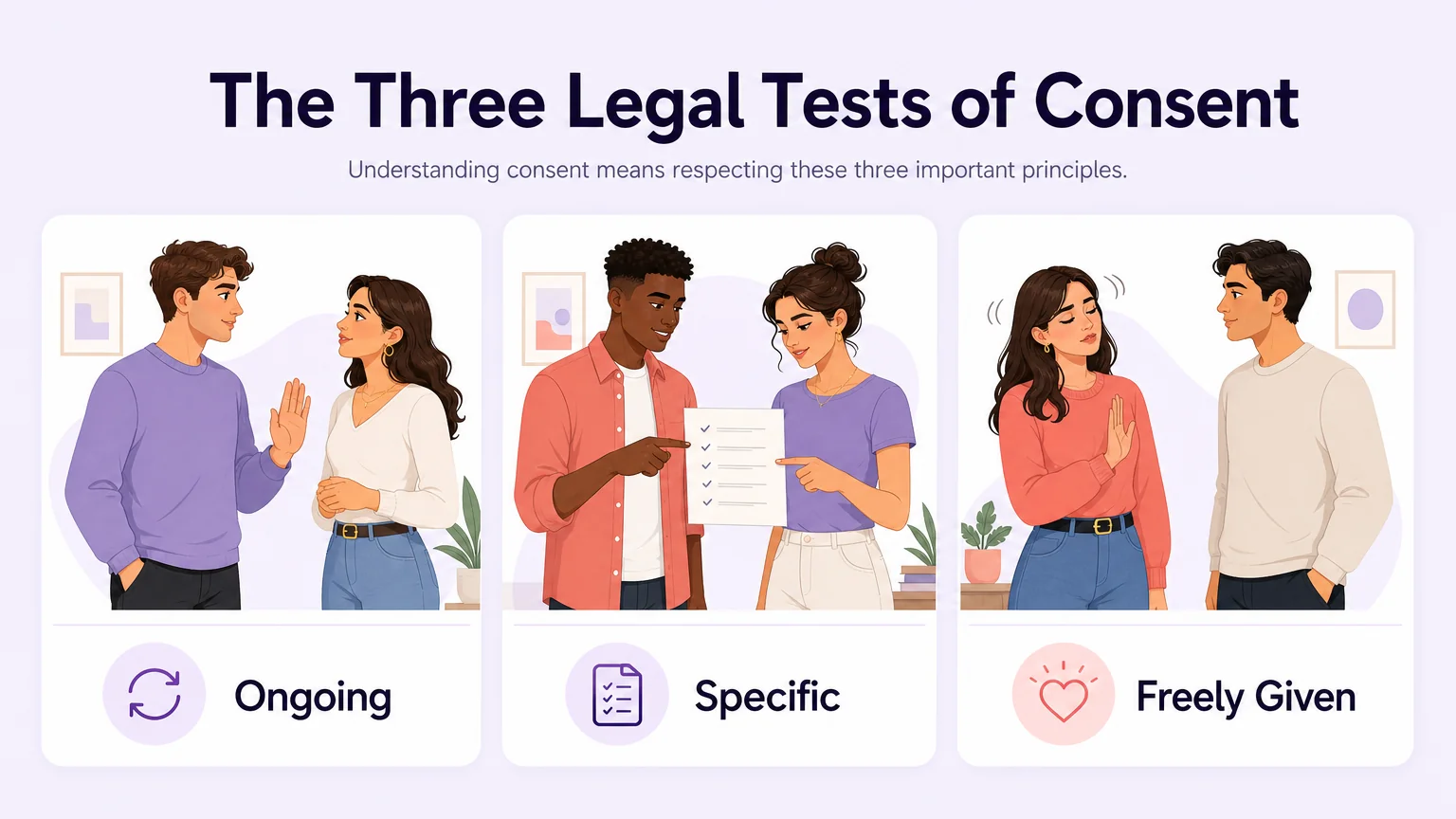
The law tests consent three ways. It must be ongoing, not granted once up front. It must be specific to each act. And it must be freely given.
Pressure, guilt trips, and sulking until someone gives in aren’t consent; they’re exactly what voids it. That’s why the answer to is bdsm illegal is never a flat yes: it turns on the act, the jurisdiction, and the moment.
The criminal lawyer Joseph Neuberger puts it in one line: “There’s not 50 shades of consent. There’s only one. You have consent or you don’t.” Here’s the strangest proof of the gap.
You can pay for a tattoo, a permanent mark on your body, and the law smiles. Inflict a similar mark in a sexualized scene, and it can be a crime. The difference isn’t the harm. It’s social sanction.
The law already lists the harms it permits: tattooing and piercing, surgery, regulated sports, public exhibitions. Private sexualized harm isn’t on that list. Consent is what protects most people in practice. It is not a shield against serious harm.
What Actually Gets Prosecuted (And What Rarely Does)
Statutes matter less than what actually lands people in court. Most BDSM-related criminal reports are complaint-driven, not proactive. The National Coalition for Sexual Freedom tracks these cases.
In 2014, 42 of 55 reported consent-violation incidents went to police. In the first quarter of 2023, it logged 69 reports, a 26% jump, including allegations of assault, choking, and blackmail. Someone involved files the report, or a doctor does.
The realistic triggers are two. A former or current partner reports. Or medical reporting: an ER doctor who sees marks can open a domestic-violence pathway that turns into an investigation.
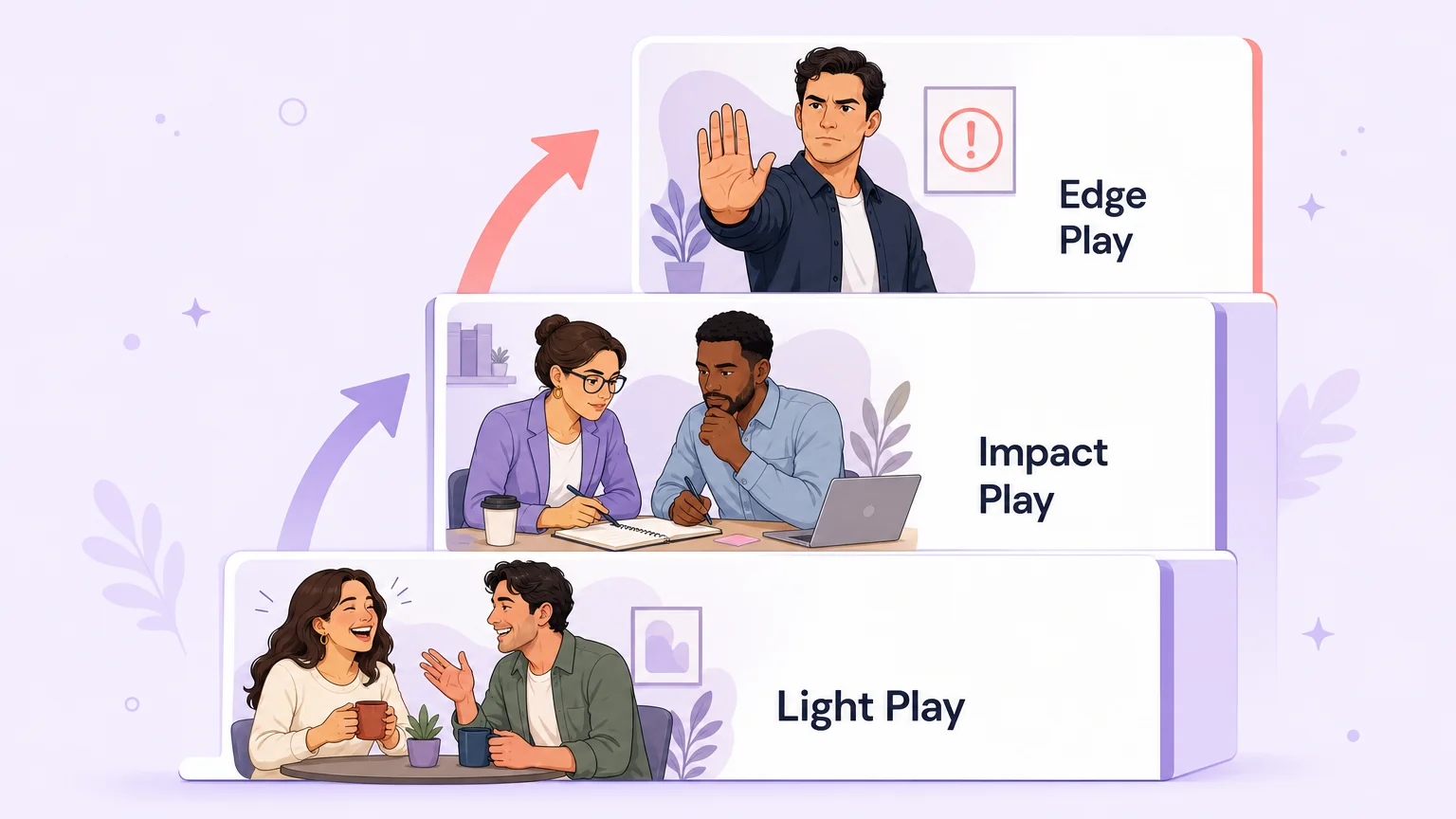
The real map is a risk ladder. Light play that leaves no marks and risks no injury is very low exposure. Impact play that marks or risks injury sits higher, because consent is no defense if injury results. At the top sit the acts most likely to be criminalized outright: breath play, choking, unconsciousness, blood, and captivity.
The UK created a named non-fatal strangulation offence in 2022. Western Australia criminalizes choking with consent deliberately left out of the offence. New South Wales criminalizes rendering someone unconscious regardless of consent. Fatalities happen too, from the death of Mhelody Bruno to the Victorian manslaughter prosecution in R v McIntosh.
There’s a public-interest reason behind the choking laws, not just prudishness. Strangulation predicts escalating domestic violence, and more than a quarter of intimate-partner homicide victims had previously been choked. That’s why the law treats it differently from a spanking.
So the practical answer to is bdsm illegal is: rarely, and usually because someone reported it. If you want the practical version of this ladder, it’s in the playbook near the end.
Is BDSM Illegal in the US? State-by-State Reality
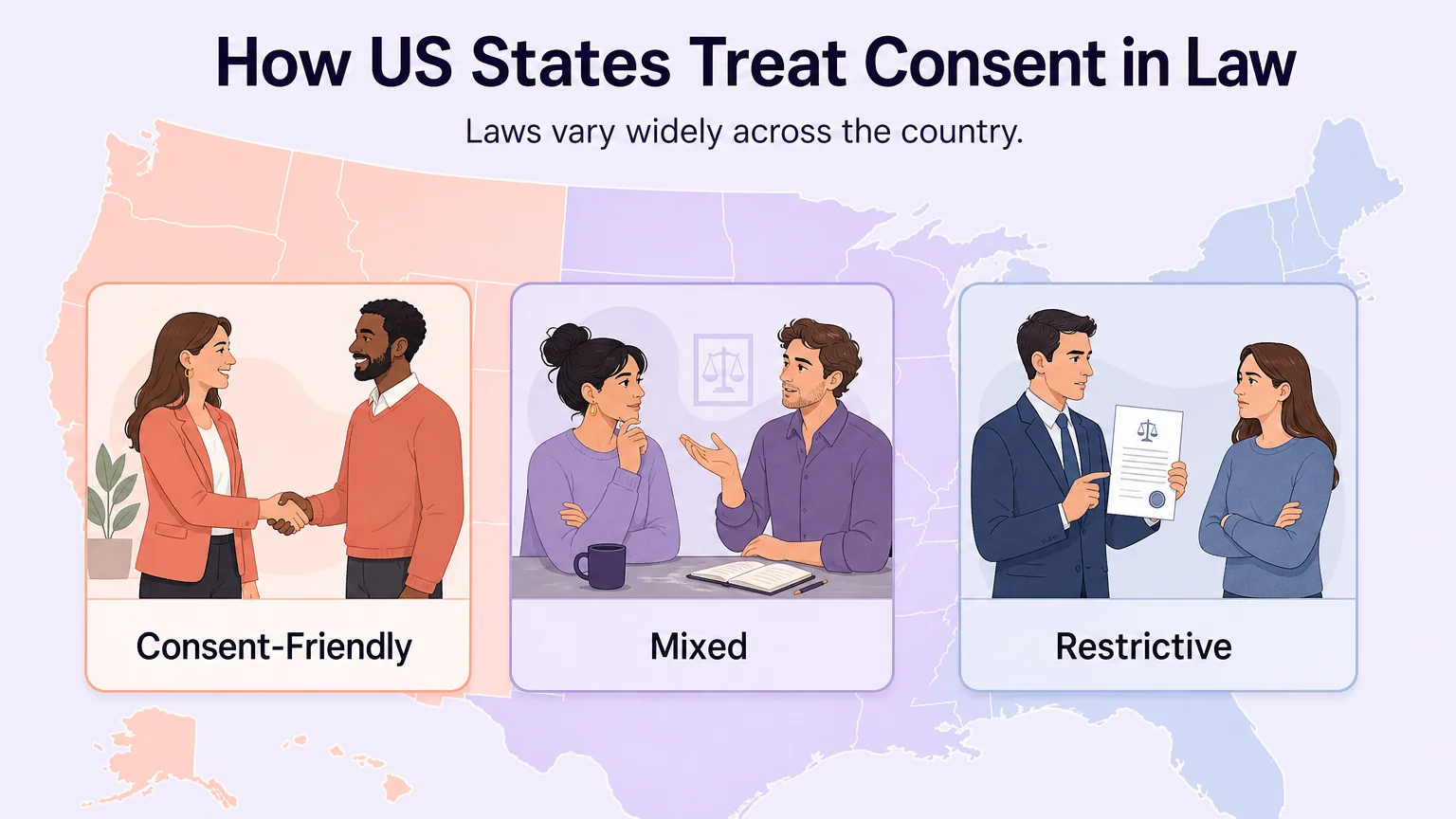
So is BDSM illegal in the US? Not by name. No federal crime called BDSM exists, and no state outlaws private, consensual play as a category. The exposure comes from generic laws applied to what happens in a scene.
Two charge vectors carry the weight. First, assault or battery where injury results or is risked. Second, obscenity or public-display where the activity happens in public.
The case canon that shaped US law is worth knowing in plain English. People v Samuels, a California case from 1967, set the core rule: a person cannot consent to force likely to produce great bodily injury. Massachusetts followed with Commonwealth v Appleby in 1980, where consent didn’t save a whipping from being assault with a dangerous weapon.
Nebraska’s State v Van added in 2004 that a person cannot consent to an unlawful assault, rejecting a constitutional challenge. California confirmed again in People v Davidson in 2015, holding that consent is no defense to torture or criminal threats.
The rest of the canon lands in the same place. New York’s People v Jovanovic reached it even while overturning a conviction because consent evidence was wrongly withheld. Indiana’s Golden v State upheld a battery conviction for branding a girlfriend. Massachusetts’ Commonwealth v Carey held that consent is immaterial where the activity involves the potential for bodily harm.
A few states do something different. New Jersey is the one most often called consent-friendly: its statute downgrades simple assault to a petty offense when it happens in a fight or scuffle entered into by mutual consent. The carve-out is narrow, and courts have noted you cannot consent to a wrong against the public peace.
Iowa has a sport, social, or other activity exception to assault, but in State v Collier the courts refused to extend it to sadomasochism. Texas, Tennessee, and New Hampshire let consent excuse only minor harm or the foreseeable hazards of lawful activities like athletic contests, and courts have declined to stretch those to kink.
The public-display route is real but narrow. Arkansas makes an obscene live public performance involving sadomasochistic abuse a Class C felony. Oregon’s public-indecency chapter is the parallel. Both target performances in public, not private play.
Two live notes. The Colorado Supreme Court is currently weighing People v Gerle, on whether prior BDSM negotiation can be shown to a jury as evidence of consent. And no court has recognized a fundamental constitutional right to BDSM, a point the federal court made in Doe v George Mason University in 2016. The law is genuinely judge-by-judge and state-by-state.
Practically: New Jersey is the most consent-recognizing posture, Colorado is where the live litigation sits right now, and Arkansas and Oregon carry public-display-only risk.
UK Law: R v Brown and the Domestic Abuse Act 2021
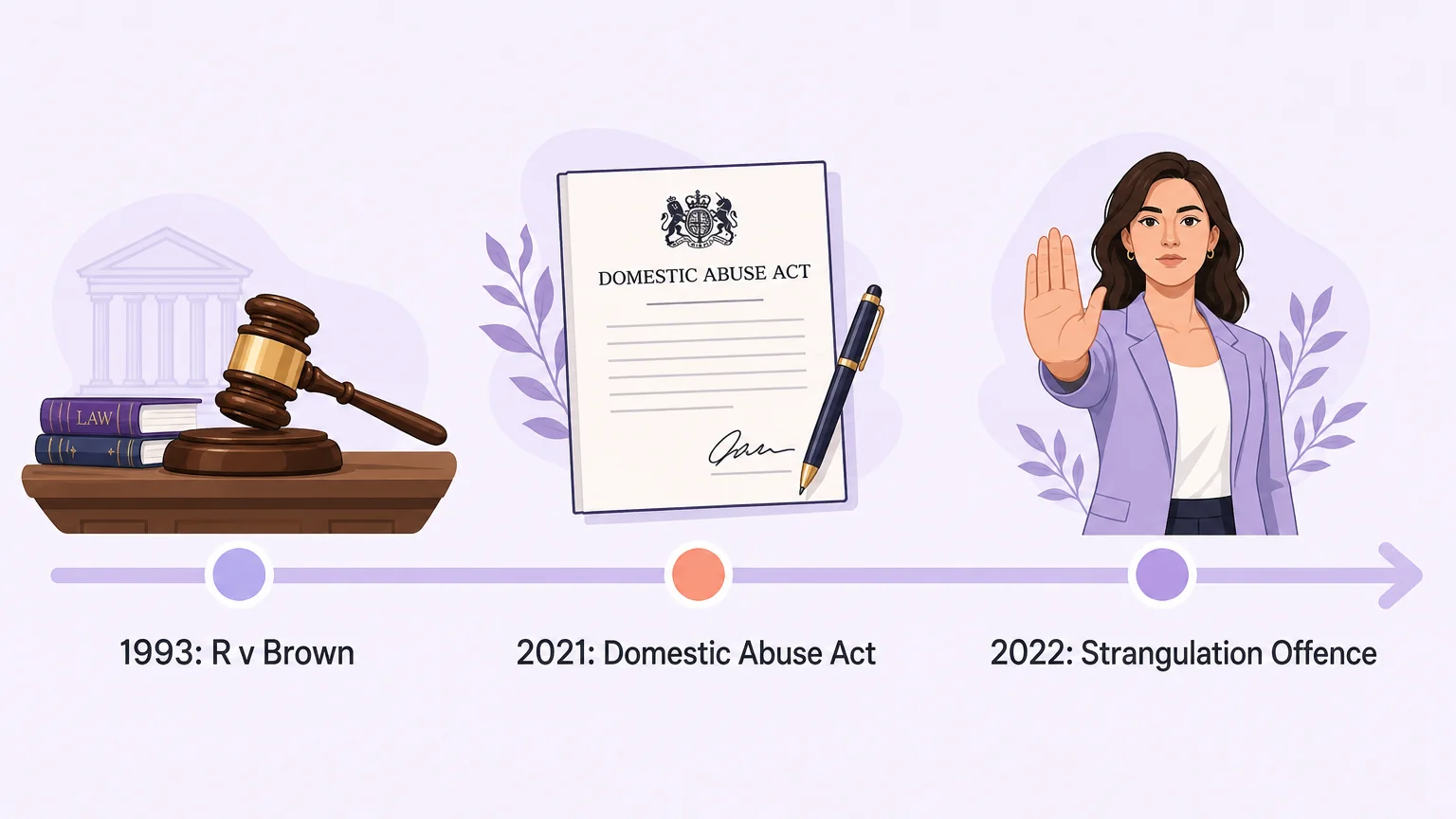
The UK’s landmark is R v Brown, the 1993 House of Lords ruling from the Operation Spanner case. A group of men were prosecuted after a consensual SM session was filmed. The Lords held that consent is no defense to actual bodily harm in sadomasochistic acts, calling the harm “violence injurious to the public interest.” That case shaped law across much of the Commonwealth.
Here’s the update most people don’t know. The Domestic Abuse Act 2021, section 71, made it statutory: consenting to the infliction of serious harm for the purpose of sexual gratification is not a defense. It names the so-called rough sex defense and invalidates it, with one narrow carve-out for consented-to STI transmission.
The law exists because of a genuine crisis. The We Can’t Consent to This campaign documented 60 UK women killed by men making rough-sex claims, and the defense succeeded in 7 of 17 killings that reached trial.
Criminologists Hannah Bows and Jonathan Herring have argued the reform conflates consensual BDSM with abuse and still leaves an intent-to-kill defense intact.
Since June 2022, England and Wales also have a named non-fatal strangulation offence under section 75A of the Serious Crime Act 2015, carrying up to five years. Practically, that makes choking in a scene a different legal proposition than light impact play.
Is BDSM illegal in the UK, then? For low-harm private play, rarely in practice. The legal risk concentrates in serious harm and choking.
Canada, Australia, and Europe: Where Kink Is Most Legally Safe
Canada first, because one ruling outweighs any statute. In R v J.A., the Supreme Court of Canada held in 2011 that a person cannot consent in advance to sexual activity that happens while they are unconscious. Consent must be active through every phase. The case grew out of a breath-play encounter, and it means unconscious sex is off the legal table in Canada even with prior agreement.
Canada also treats secret filming as consent destroyed by fraud, per R v Rockburn. Recording changes the analysis.
Australia is genuinely split. Most states follow R v Brown, but the Griffith Code states, Queensland and Western Australia, let consent act as a defense. Western Australia is the starkest example in the English-speaking world. Its choking law, in force since 2020, deliberately leaves consent out of the offence.
Attorney-General John Quigley was explicit that the law does not include as an element that the offence occurred without the victim’s consent. Critics note that roughly a quarter of the BDSM community engage in consensual strangulation, which makes the law’s reach enormous.
Queensland confines its strangulation offence to the domestic setting. New South Wales added a consent element for its lighter choking offence but still criminalizes rendering someone unconscious regardless of consent. The law isn’t absolute, though. A 2025 NSW court found a consensual caning in a private intimate relationship, with no foreseeable risk of serious injury, was not unlawful.
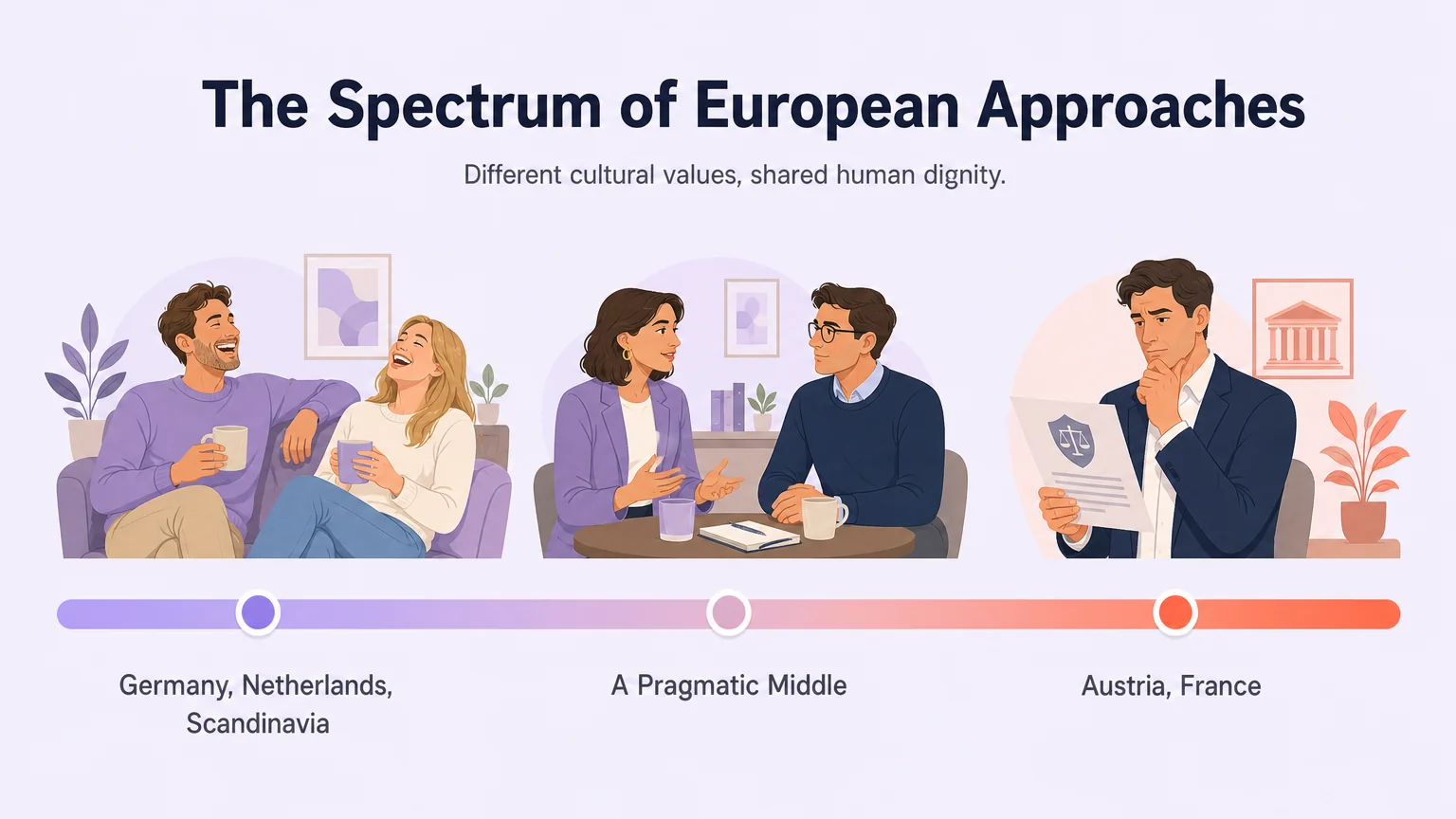
Now the reassuring contrast. Is BDSM illegal everywhere in Europe? No. There’s a genuine gradient.
Germany allows consent where the harm isn’t serious. The Netherlands and Scandinavia take a comparatively pragmatic, prosecution-restraint approach. Austria and France still criminalize similar conduct to the UK.
The fear runs far ahead of the law. In Belgium, 47% of people have done at least one BDSM-related activity, yet 86% of a general sample held stigmatizing beliefs.
One practical takeaway for anyone dating or traveling abroad. The rules travel with the people, not the destination. A scene that’s fine at home can be a different proposition across a border, so check the local law before you travel to play.
Real Risks Beyond the Courtroom: Outing, Image-Sharing, and Medical Reports

The courtroom is the headline, but most people who get hurt by a scene never see a judge. Whatever the law says about whether BDSM is illegal, three real risks sit outside the courtroom, in order of likelihood.
First, image-sharing. Non-consensual intimate image laws, the ones most people call revenge porn laws, exist in 49 states plus DC, Puerto Rico, and Guam. A 2022 federal law added a civil remedy of up to $150,000.
Kink imagery sits squarely inside these laws. Several statutes define “sexually explicit” to include sadistic or masochistic abuse in a sexual context, so a flogging video counts the same as anything else.
The rule to live by is simple: consent to be recorded is not consent to share. Canada treats secret recording as consent destroyed by fraud. India’s Karnataka police directive states the same principle outright: the consent given to capture a photo and the consent given to share it are entirely different things.
Second, being outed. Kink relationships are often more transient, and a former partner can report years later. Defense lawyers describe the vulnerability plainly: you never know what could happen later. The same pattern shows up in sleep-sex cases, where a spouse relies on the other partner not to go to the police, until a bitter divorce surfaces the allegation years on.
Third, medical reporting. A doctor, an ER nurse, or a social worker who sees marks can open a domestic-violence pathway. Not always a charge. Often an unwanted investigation that follows you for a while.
Event organizers know the darker version of this: witnesses in a criminal trial can be subpoenaed, which is itself an outing risk.
Most readers met their partner on an app, and that brings the online reality. Screenshots of chats and shared photos are permanent evidence. Sextortion is a real pattern. Someone can screenshot even public kink posts and use them against you.
Treat this whole section as privacy engineering: protect your identity, control your images, and remember that a digital trail exists. If your images do leak, the Cyber Civil Rights Initiative runs a hotline and legal referral for exactly this situation.
Can You Lose Custody of Your Kids Because of BDSM?
Direct answer: yes, historically, and it still happens. But the picture is improving. The question of whether BDSM is illegal is criminal law; this is family law, and the standard is different.
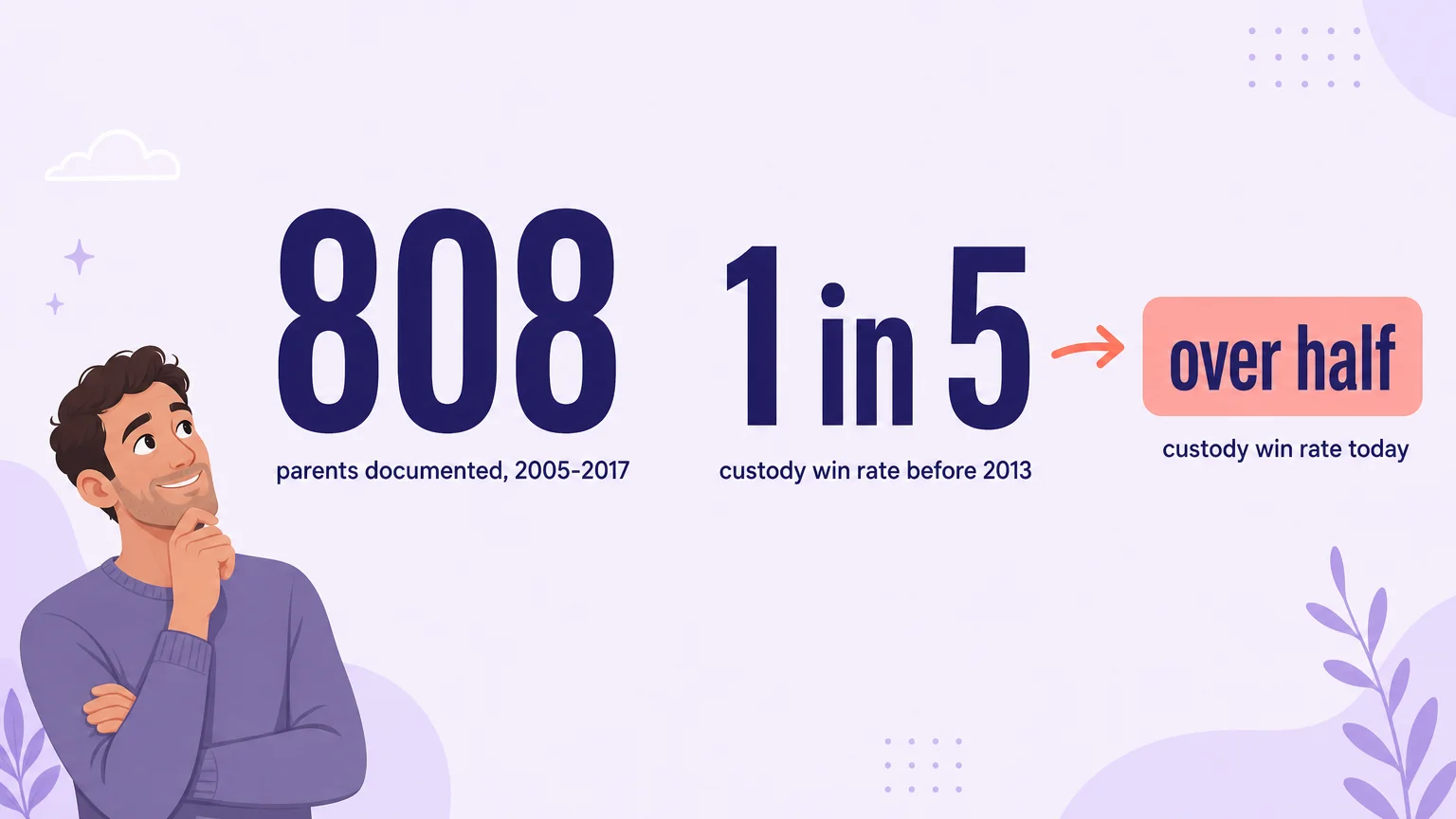
The scale is real. The National Coalition for Sexual Freedom documented 808 parents from 2005 to 2017 for whom BDSM, fetishism, or non-monogamy was a determining factor in custody hearings. Documented cases show the pattern: a mother whose custody and visitation were restricted even though investigators found no child abuse; a Kentucky father whose BDSM lifestyle and fetish-site recruitment of a younger woman drove a dependency finding in 2024; an Australian father whose lifestyle was ruled to make contact too risky, where the same court stressed that BDSM parents are not automatically incapable.
The mechanism is worth naming plainly. The best interests of the child is a vague standard left to subjective interpretation, so a judge’s personal view of kink can decide an outcome.
The good news is measurable. After the DSM-5 de-pathologized BDSM in 2013, parents seeking help with custody discrimination fell from 124 in 2008 to 15 in 2017, and custody win-rates reversed from about one in five to over half. Courts increasingly require a proven nexus between the lifestyle and harm to the child. Keeping kink entirely out of your child’s environment, and documenting that, is the strongest position.
BDSM Contracts: What Actually Protects You in a Dispute
The headline first: a signed BDSM contract is not legally binding consent, and it will not shield you from assault, torture, or trafficking charges. Notarized or not.
California’s People v Panighetti involved a notarized sexual agreement, and the assaults were still prosecuted. U.S. v Marcus reached the same place in federal court. Austin Chronister’s alleged BDSM contracts in the Milwaukee trafficking case did not stop a trial order.
Joseph Neuberger puts the contract point simply. Checking a box on a contract doesn’t mean you can’t revoke that consent. It is not a legal contract. Consent must be contemporaneous, relevant to the act, and ongoing.
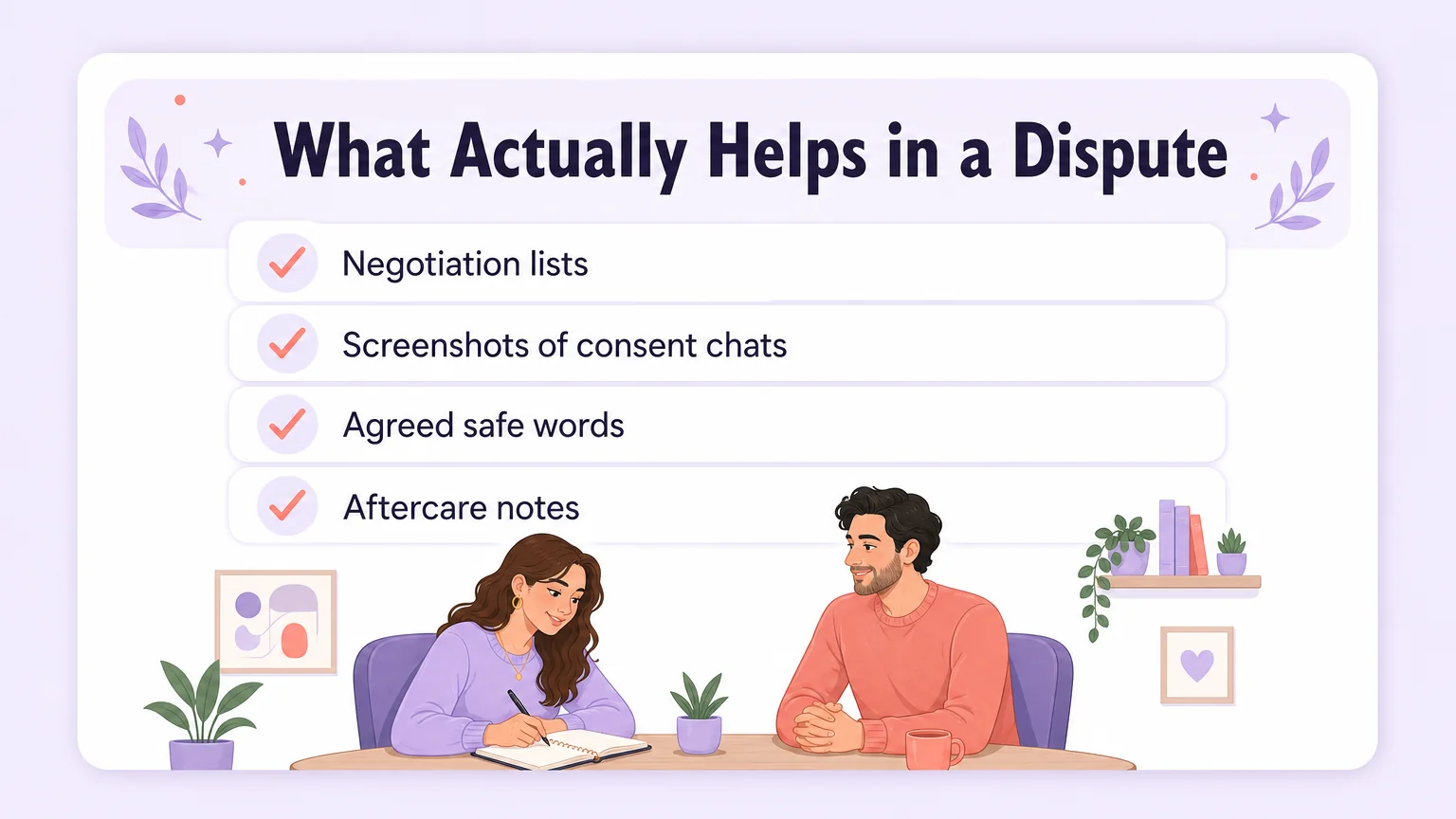
Do contracts change the answer to ‘is BDSM illegal’? No. But evidence of good-faith consent practice does help in a dispute: a written yes/no/maybe negotiation that records limits and hard lines, screenshots of the consent conversation (especially if you met online, because they timestamp the agreement), agreed safe words, and aftercare notes.
This evidence can rebut a claim that there was no consent or that limits were silently exceeded. It cannot authorize serious bodily harm. Think of it as documentation of communication, not a permission slip.
How to Keep Your Play Low-Risk: A Practical Playbook
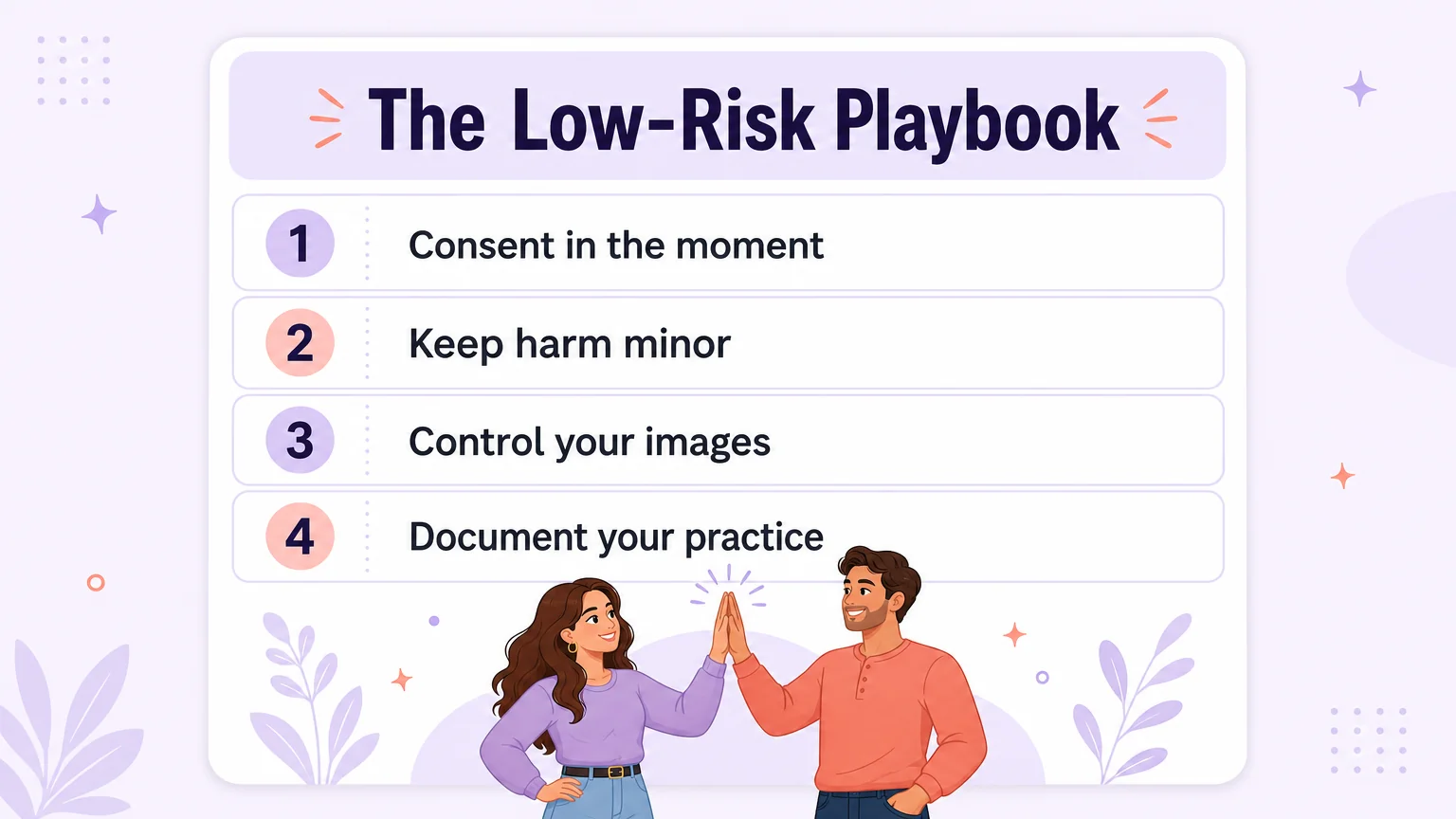
The whole article, compressed into nine moves you can act on tonight.
- Keep consent contemporaneous. It has to exist at the moment of each specific act, not in an agreement made last month. In the moment, ask plainly: is this still okay?
- Stay out of the yellow zone. Testing a boundary is not a yes. If your partner signals yellow, slow down and check in. Treat yellow as a conversation, never a go-ahead.
- Never play while a partner is unconscious. And never rely on advance consent for unconscious sex. Canadian law voids it, and the principle runs wider than one country.
- Keep harm minor. Recall the risk ladder: serious bodily harm cannot be consented to, full stop. Stay in low-injury territory and stop before marks.
- Skip breath play and choking. It’s the single highest-risk act across jurisdictions, with named offences in the UK and Western Australia and consent-excluded elements. The stakes are not worth it.
- Document your consent practice. A yes/no/maybe list before the scene, check-ins during it, and a safe word everyone agrees on and honors instantly. Red means stop, no questions. If a dispute ever arises, this is evidence of good faith.
- Control your images. Get explicit recording consent in a timestamped message, and know your state’s law on non-consensual intimate images. Assume anything filmed can surface.
- Be extra careful in new relationships. A former partner can complain later, and kink relationships are often transient. Move slower when you barely know someone.
- If you run events, follow the group guidance: written consent policies, trained dungeon monitors, records of known consent violators, and the knowledge that standard insurance often doesn’t cover consent-violation claims.
That’s the list. Most people who practice low-harm, consensual play never meet a courtroom. The risk concentrates where the law concentrates it, and this checklist steers exactly away from that.
The Bottom Line: Is BDSM Illegal?
Here’s the whole answer without the nuance getting in the way. Is BDSM illegal? It depends. Private consensual play between adults is not a crime in most places.
Consent is the ethical foundation and usually the practical protection, but it is not a legal shield against serious harm, and the rules vary by jurisdiction and by act. This is general information, not legal advice. If you face a real situation, get qualified advice from a local lawyer who understands kink and consent law in your area.
Frequently Asked Questions
Is BDSM illegal?
Not by itself. No federal or state statute criminalizes BDSM as a category, and most consensual play never meets a courtroom. What the law targets is harm: consent is not a full defense to assault when serious injury results, and the UK codified that rule in 2021.
Can I legally consent to being hit or hurt during sex?
Only to minor, non-serious harm. Since People v Samuels in 1967, you cannot consent to force likely to cause serious bodily injury, and the UK codified the same rule in 2021. Light impact that leaves no injury is a different question from harm that lands you in an ER.
Do BDSM contracts protect me legally?
No. A contract is evidence of communication, not binding consent. It doesn’t stop you from revoking, and consent must exist at the moment of each act. Real cases, including notarized agreements, show contracts failing to block prosecution. What helps is documented practice: negotiation lists, check-ins, safe words.
Is choking or strangulation during sex illegal?
Increasingly yes. The UK created a named non-fatal strangulation offence in 2022. Western Australia criminalizes choking with consent excluded from the offence, and New South Wales criminalizes rendering someone unconscious regardless of consent. Canada voids consent to sex while unconscious. It’s the single riskiest act in a scene.
Can I lose custody of my kids because of BDSM?
Historically yes, and it still happens. But it’s improving. Since the DSM-5 stopped treating BDSM as a disorder in 2013, custody outcomes have reversed, and courts increasingly require a direct link between the lifestyle and actual harm to the child. Keeping kink out of your child’s environment, documented, is your strongest position.
What’s the difference between BDSM and abuse in the eyes of the law?
Ongoing, informed, freely given consent within minor harm. Abuse is where consent was never truly given, was withdrawn, or was exceeded, or where coercion was involved. Prosecutions cluster around those failures: a safe word ignored, a limit crossed, an injury. If it’s not an enthusiastic yes from everyone, the law treats it as no.
If you and your partner are ready to explore together, there’s a space built around privacy and consent from the start: 3Fun.