You might have met the phrase “pain kink” recently and felt something catch. Curiosity, recognition, or a quiet “wait, is that me?” Whatever pulled you here, you’re in excellent company: nearly half of adults have tried some form of BDSM at some point in their lives. Whether you’re exploring alone, as a couple, or as a team, this guide is for you.
A pain kink is a consensual sexual preference where pain, by agreement and within play, produces arousal and pleasure. It’s often called pain play, and in more formal settings it’s known as masochism. It is not a diagnosis, and it is not a red flag about your character.
This isn’t a permission slip. It’s a map. We’ll cover what a pain kink is, why your brain finds it pleasurable, the vocabulary to name what you want, the safety systems that keep it consensual, how to raise it with a partner, how to find a partner who plays the way you do, and how to come down well afterward.
Is a Pain Kink Normal? What the Research Actually Says
Yes. That’s the short answer, and the data underneath it is more striking than you’d guess.
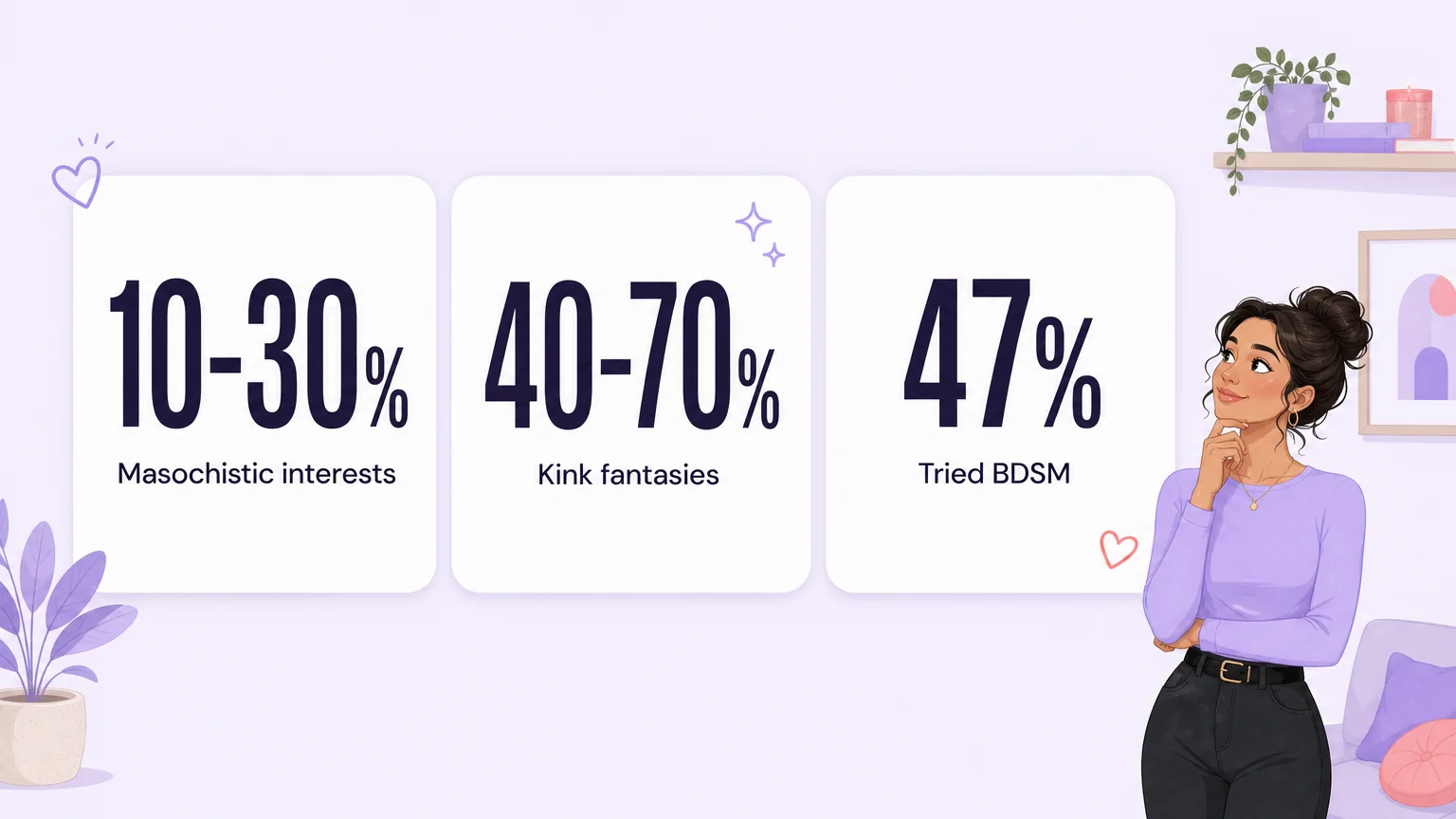
A pain kink sits inside a much larger umbrella, and the umbrella is enormous. Masochistic interests show up in roughly 10 to 30 percent of the population across a lifetime. Kink fantasies are reported in 40 to 70 percent of both men and women. A Belgian population study of more than a thousand adults found 26 percent interested in BDSM, 7.6 percent identifying as practitioners, and 47 percent who had tried at least one BDSM activity in their lives. Around 11 percent of people report having had a sadomasochistic experience. Whatever you’re feeling, you are far from a minority.
Here’s the part that explains the confusing numbers. Older figures, like the DSM’s 2.2 percent of men and 1.3 percent of women involved in BDSM in the past year, measure recent behavior. They don’t count the people who are curious, who fantasize, or who played once and never again. A 2018 study found that 51 percent of men and 41 percent of women had engaged in at least one sexual behavior considered “abnormal.” By that measure, “unusual” is the norm.
The distinction that matters lives at the very end of the funnel. Sexual masochism disorder, where the interest causes clinically significant distress or impairment, affects under 5 percent of people. Liking pain without distress is a preference, not a diagnosis.
So if you’ve been quietly carrying the worry that you’re alone in this, you can put it down. The relief you feel right now is information, and it’s true.
Does a Pain Kink Mean You Were Abused or ‘Broken’? Here’s the Science
If you’ve ever wondered whether this is a warning sign about your past, whether a pain kink points back at something you’d rather not revisit, here’s the answer, and it comes from the research: no.
Study after study finds no causal link between BDSM desires and childhood abuse. Practitioners show no elevated psychopathology, and some research shows better mental-health outcomes on a range of measures. Dr. Brad Sagarin, who runs a lab dedicated to the science of BDSM, argues plainly that it is a healthy form of intimacy, not a disorder. The old assumption that kink is a scar you’re acting out doesn’t survive contact with the data.
Now the second truth, because both can be real at once. Many survivors do experience kink as reclaiming. It can mean taking back power, setting boundaries, and touching painful history on your own terms. That is meaningful, and it deserves respect. But personal meaning is not proof of cause. The desire is not a symptom pointing backward at a wound.
A word about the label while we’re here. “Masochist” is a self-chosen word for a spectrum of taste, not a clinical verdict. And plenty of people discover this turn-on only by trying it, sometimes decades later. One masochist realized how much pain was a turn-on in their forties, after playing live for the first time. Discovery by experience is a normal path, not a sign of disorder.
Your interest in pain is not evidence against you. It’s evidence that you know what you like.
Why Does Pain Feel Good During Sex? The Neuroscience of Pleasure
Why would a body built to avoid pain turn it into pleasure? That question deserves an answer, and the answer starts with wiring.
Pain and pleasure run on overlapping neural systems. The same circuitry handles both, and sexual arousal is itself analgesic: it raises your pain tolerance before a single touch lands. Your body, already primed, treats intense sensation less like a threat and more like a signal worth amplifying. Neuroscientist Siri Leknes puts the core of it simply: pain perception is deeply context-dependent, and the same input can read as threat or reward depending on what surrounds it.
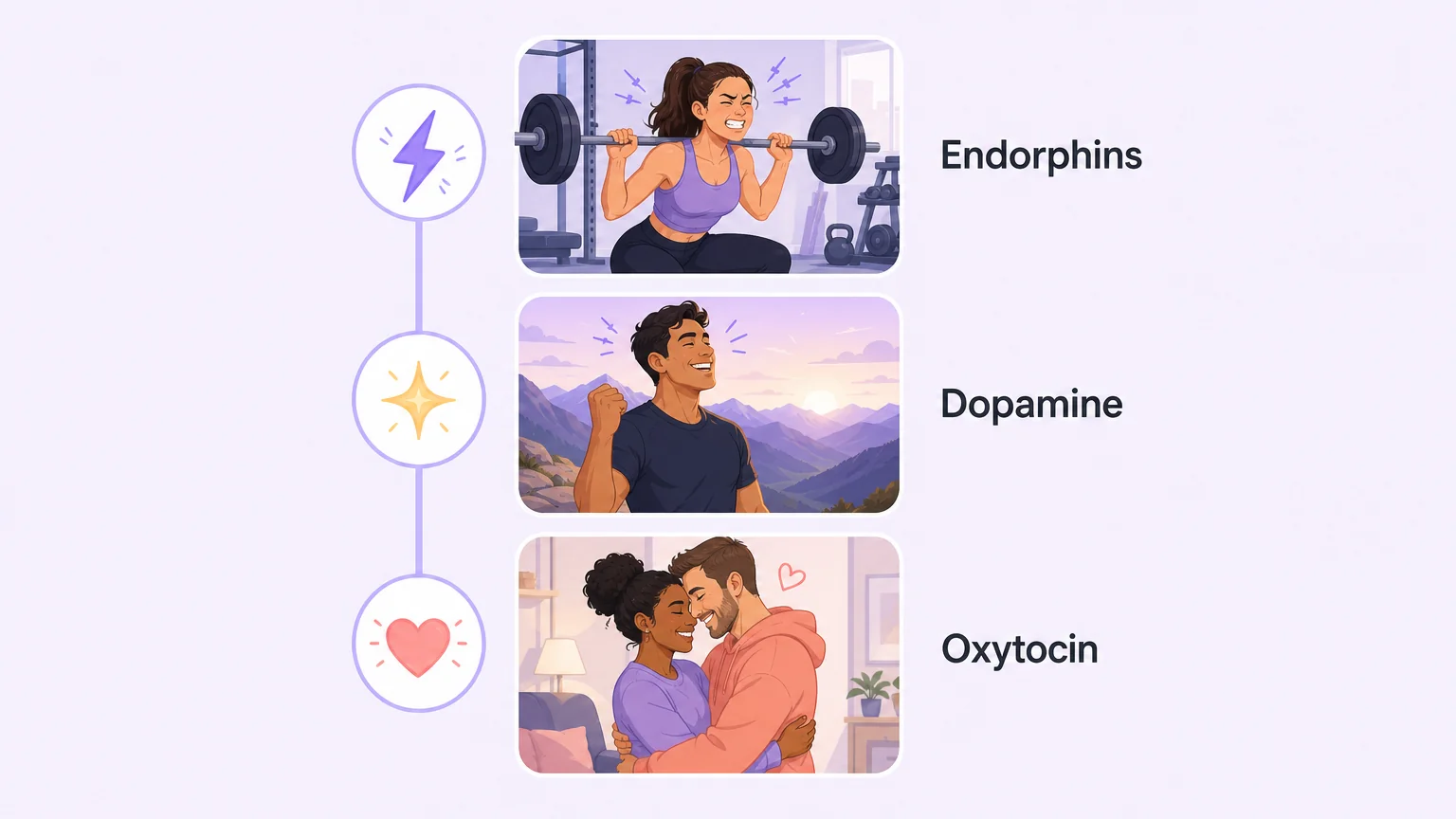
The chemistry is where it gets visceral. Pain releases endorphins, the brain’s own opioids, produced by the hypothalamus and pituitary. Those endorphins trigger dopamine in the nucleus accumbens, the exact reward pathway sex runs on. At a certain threshold, sometimes called the conversion point, the descending pain-modulation system floods the body with endogenous opioids that are simultaneously painkilling and euphoric. It’s the runner’s high chemistry, on purpose, in bed. Oxytocin, the bonding hormone, joins in, adding both pain relief and closeness.
Here’s the counterintuitive part: dopamine spikes hardest in people who rate the pain as most unpleasant. The brain deploys its maximum reward chemistry to counter intense but safe stimulation. The stronger the safe signal, the louder the reward.
Context is the switch that decides which reading you get. Safety, trust, and expectation tell the brain whether the input is danger or delight. Sagarin’s Science of BDSM lab has measured it: scenes shift cortisol, endocannabinoids, dopamine, and endogenous opioids, and practitioners show higher baseline pain tolerance that rises further in submissives during a scene.
For many with a pain kink, the pain isn’t even the point. A survey of 510 SM practitioners found most use pain as a tool for psychological release, and only 12 percent found no therapeutic value. The sensation opens a door. What walks through it, release, closeness, intensity, is up to you and your partner.
Sting vs Thud: The Vocabulary Every Pain Player Needs
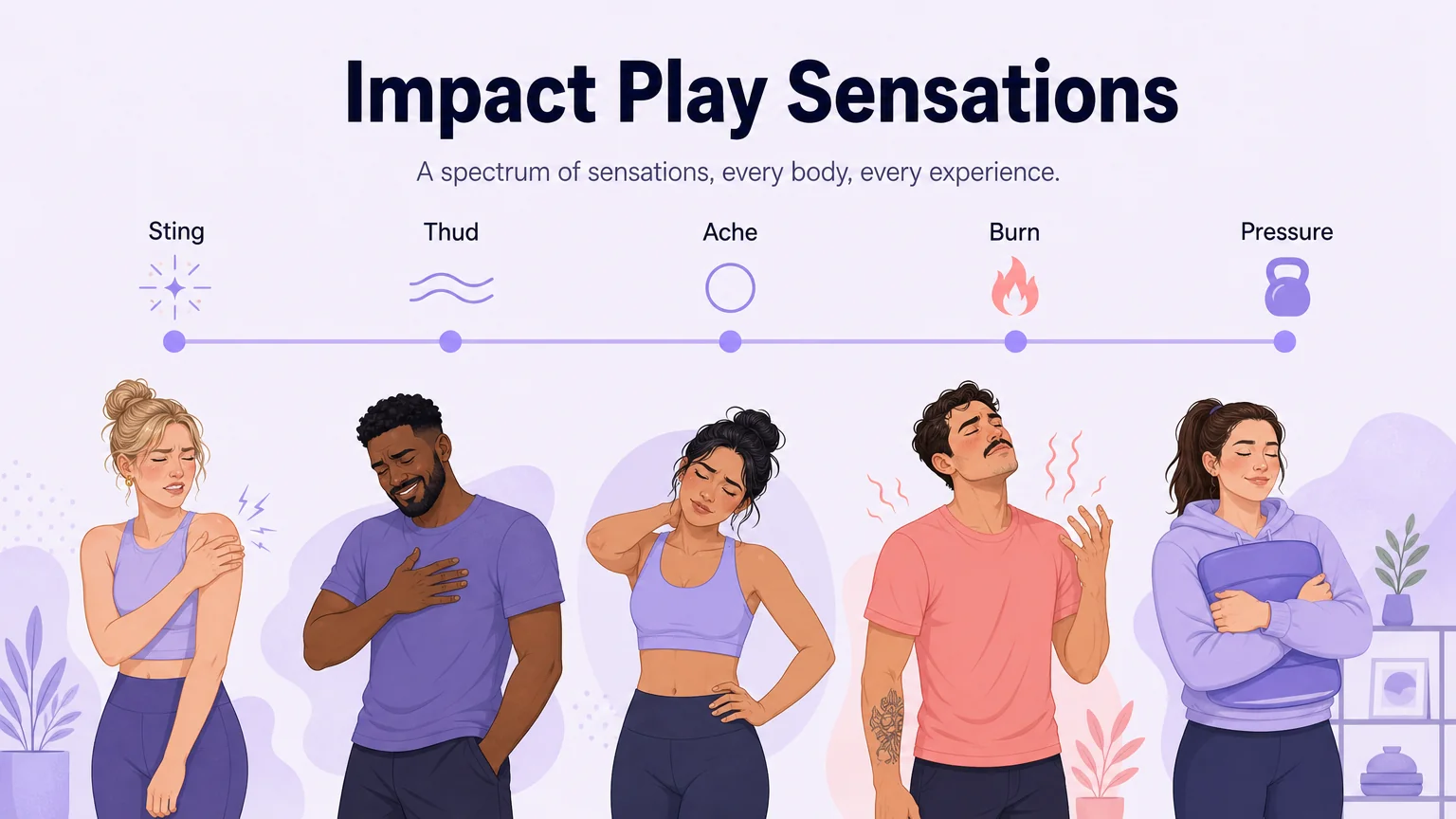
Two words change everything: sting and thud. Learn them and you’ll be able to ask for exactly what you want, out loud, without guessing or hoping.
Sting is sharp, quick, and surface-level. An open-handed slap. Thud is deep, heavy, and diffuse. A punch, or a deep-tissue massage that you asked for. And there’s more territory beyond them. Ache is deep and resonating, like sensation that vibrates through a muscle. Burn is its own category, and thin canes, especially slender Delrin rods, are famous for it. Practitioners joke that they burn like the fire of a thousand suns. Pressure rounds it out, the slow, grounding weight that sits and stays.
Now the practical translation. Sting comes from small, narrow, light, flexible implements: canes, crops, whips, thin floggers. Thud comes from large, heavy, rigid ones: leather paddles, wide straps, heavy floggers with thick falls. Material predicts feel before you ever touch skin. Wood runs from thuddy, like black locust or rosewood, to stingy, like ash, maple, or cherry. Acrylic, plastic, Kevlar, silicone, and rubber lean stingy. Leather-wrapped and heavier materials thud. And here’s a useful rule of physics: a thuddy toy can be made to sting, but a light toy can’t be made to thud.
Why does this matter so much? Because this is the vocabulary that makes a pain kink legible, to you and to anyone you play with. “Do you prefer thud or sting?” is literally how experienced partners open impact-play negotiation. It’s the shared language that turns “I like pain” into “I like this.” Say you want a deep, spreading impact, and a leather paddle reads as an invitation. Say you want sharp and quick, and a cane or crop does the talking.
You don’t need to know every toy on earth. You need to know which family of sensation you want. That’s the whole game.
How to Bring Up a Pain Kink With Your Partner (Without Making It Weird)
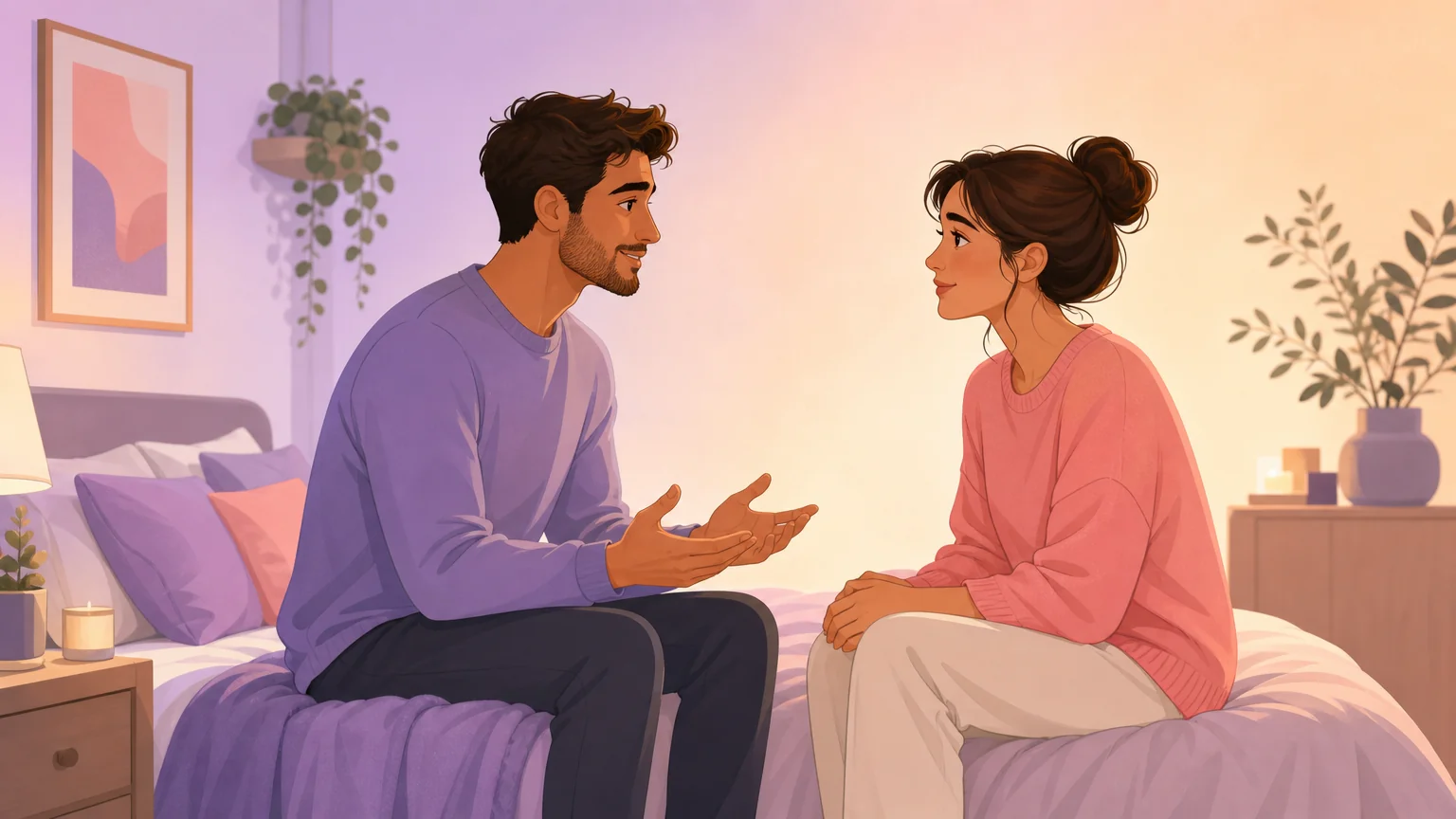
The moment is everything. So is the sentence you open with. Let’s make both land.
Timing first. Pick a calm, private, non-sexual moment. Never during an argument, and never in the hazy minutes right after sex, when your partner is vulnerable and you’re both reading the room on adrenaline. You want to be heard, so give them a moment where listening is easy.
With someone brand new, don’t raise it on the first or second date unless they’ve volunteered interest first. By the third or fourth, you usually have a sense of whether they’re open-minded enough to hear it, and you’ve built enough rapport for honesty to feel safe.
Now the opener. Skip the speech. Open with one low-pressure sentence: “Hey, I’ve been thinking about trying something new in the bedroom. What do you think about something kinky for a change?” If that feels too bare, anchor it to something you read or saw that sounded hot to you. You’re not confessing; you’re inviting.
Three moves make it land. Share your own limits first, so the other person feels safe reciprocating instead of defending. Use a yes/no/maybe list, like PlsPlsMe, to compare interests without either of you guessing. And never spring gear on anyone. A paddle that appears mid-conversation reads as pressure, not invitation.
It can help to say the words plainly: “I have a pain kink, and what I want is consensual intensity, not violence.” Reassure out loud that this doesn’t mean you love them less. Those are the two fears sitting in the room with you. Desire doesn’t require an apology, and neither does this conversation.
Then be ready for any answer. A “let me think” is not a verdict on your worth. Patience beats pressure every time, and the team that can talk about desire is already winning.
Negotiation and Safewords: Your First Pain Scene, Done Right
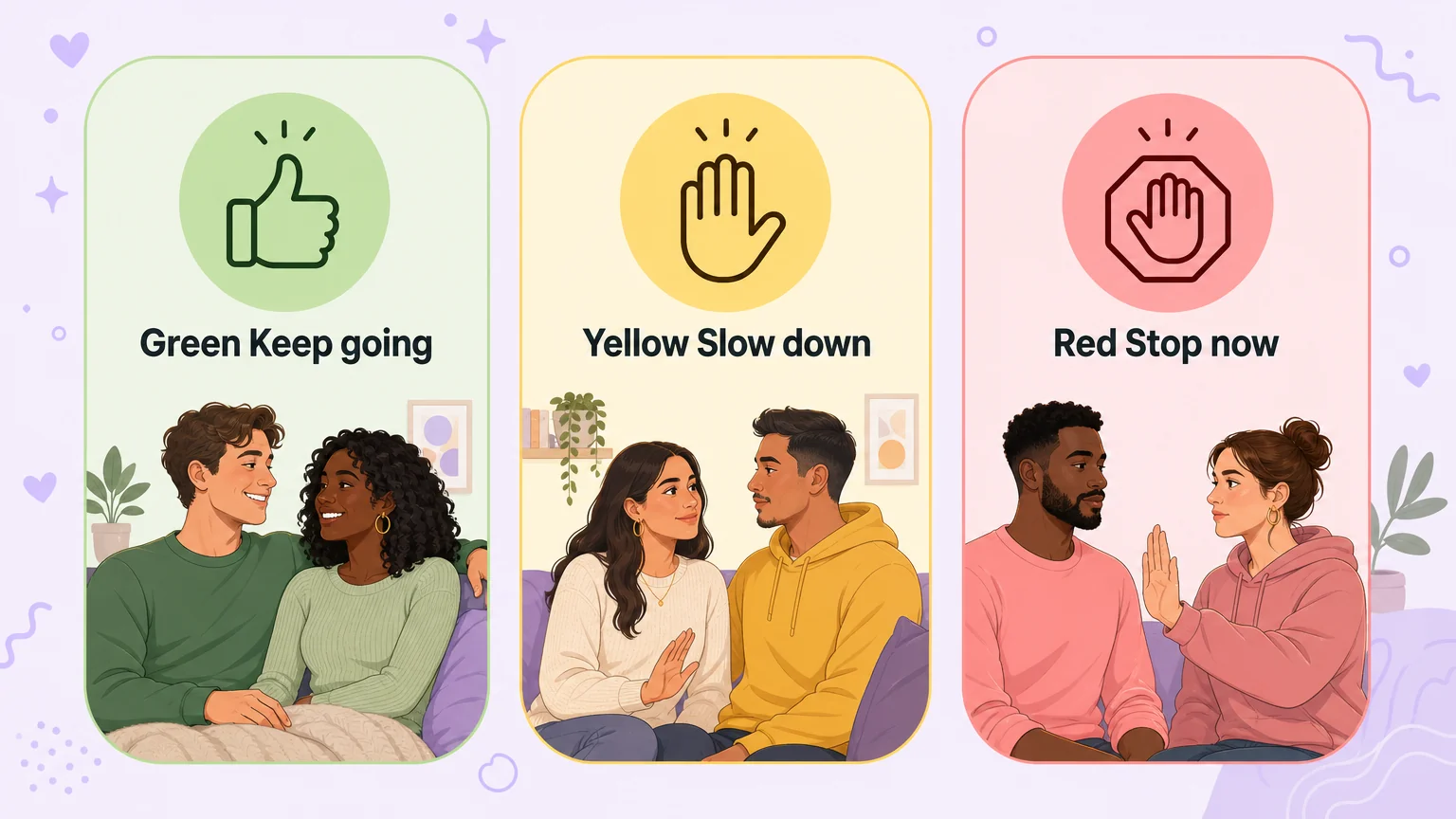
Consent is only as good as the system underneath it. Here’s the operating system for a first pain kink scene that feels safe instead of scary.
Start with a front-loaded negotiation, before any clothes come off. Exchange experience levels; a novice top can learn a huge amount from an experienced bottom, and the reverse is just as true. Build a needs and wants list for both of you. Separate hard limits, the never items, from soft limits, the maybe-with-conditions items. Agree on roles and how the scene will run.
Then plan the scene itself: activities, order, location, equipment, safety scissors for any bondage, a first-aid kit, and the nearest hospital. Yes, the hospital. Cover practicals too: condoms and lube, a photo and video policy, a silent alarm if one of you wants an outside contact, and on a first scene, an agreement to check in every ten strokes.
Then the safeword system, which is the heart of pain play. The traffic lights are the standard for a reason. Green means keep going, or more. Yellow or amber means slow down and check in; you’re approaching a limit without ending the scene. Red means stop immediately and move into aftercare. Red is absolute, and it is never questioned. A good top won’t pause to discuss it; they’ll stop.
Prefer numbers? The 1-to-10 intensity scale doubles as a dial. Agree your anchors first, one being barely noticeable and ten being your absolute limit, then aim for a six. It gives the top a number to target and the bottom a way to steer without narrating.
And plan the non-verbal backup. A gagged or nonverbal bottom needs a physically tested signal: dropping a pre-agreed object, a hand gesture, three distinct grunts, a bell held in the mouth. Test it before you need it. Your safeword should be memorable, unrelated to any scene dialogue, and never, ever used as roleplay lines. The signal has to stay unambiguous.
If you want a testable standard, name the consent frameworks out loud: SSC, safe, sane, consensual, or RACK, risk-aware consensual kink. A serious partner recognizes both. And if you use your safeword, you didn’t fail. The system worked, and the good partners will thank you for it.
Where It’s Safe to Hit (and Where It Isn’t): Pain Play Anatomy
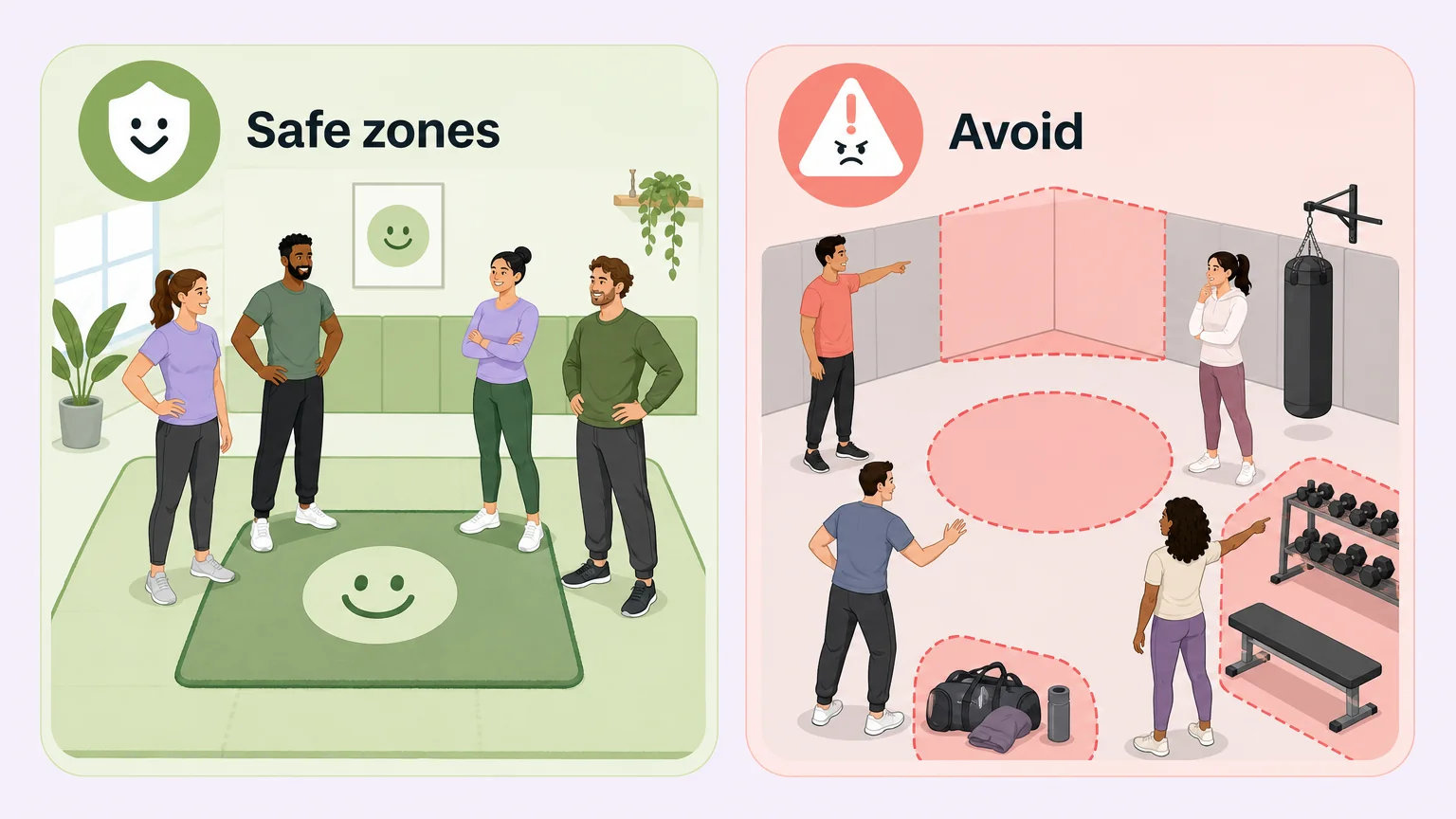
You want to try this without hurting anyone. Good. Pain kink safety is mostly geography, so here’s the map.
Fleshy, muscle-dense areas take impact best. The middle of the buttocks, the upper back below the shoulder blades, the rhomboids, trapezius, and delts, the thighs, and the backs of the calves. The chest can work, with care. Start your imagination there.
Now the no-go list, and it’s shorter than the map but worth memorizing. Kidneys, which risk internal damage and blood in urine. The spine. The tailbone and sacrum. Hip bones. The neck, front and back. Head and ears. Every joint, wrists, elbows, knees. Collarbones, the sides of the body, the abdomen, and the feet and Achilles tendons. A veteran educator’s warning is worth repeating: the back as a whole is not a beginner area, because between the spine, the kidneys, and the hip bones, there’s too much to track at once.
The finer points matter too. The inner thighs carry the femoral artery, so sensation there comes with elevated bruising risk. And hair pulling, done wrong, can cause permanent cervical spine damage. Learn the technique or leave it out.
Then the first-scene protocol. Warm up slowly and ramp in; never go from zero to hard. Start with your hand on the meatiest area. With whips and floggers, watch for “wrapping,” when the falls curl around the body and strike the ribs or hip bones instead. Check in during play. Practice on pillows or your own body first, and inspect every toy for sharp edges.
Name the risk without fear-mongering. Bruising and abrasions are common and part of the deal. The severe outcomes, nerve damage, lacerations, broken bones, come from ignoring the map, and from medical flags like blood-pressure medication, iron deficiency, or recent surgery. The map exists so the fun stays fun.
Finding a Safe Partner: Vetting, Kink Apps, and Group-Scene Etiquette
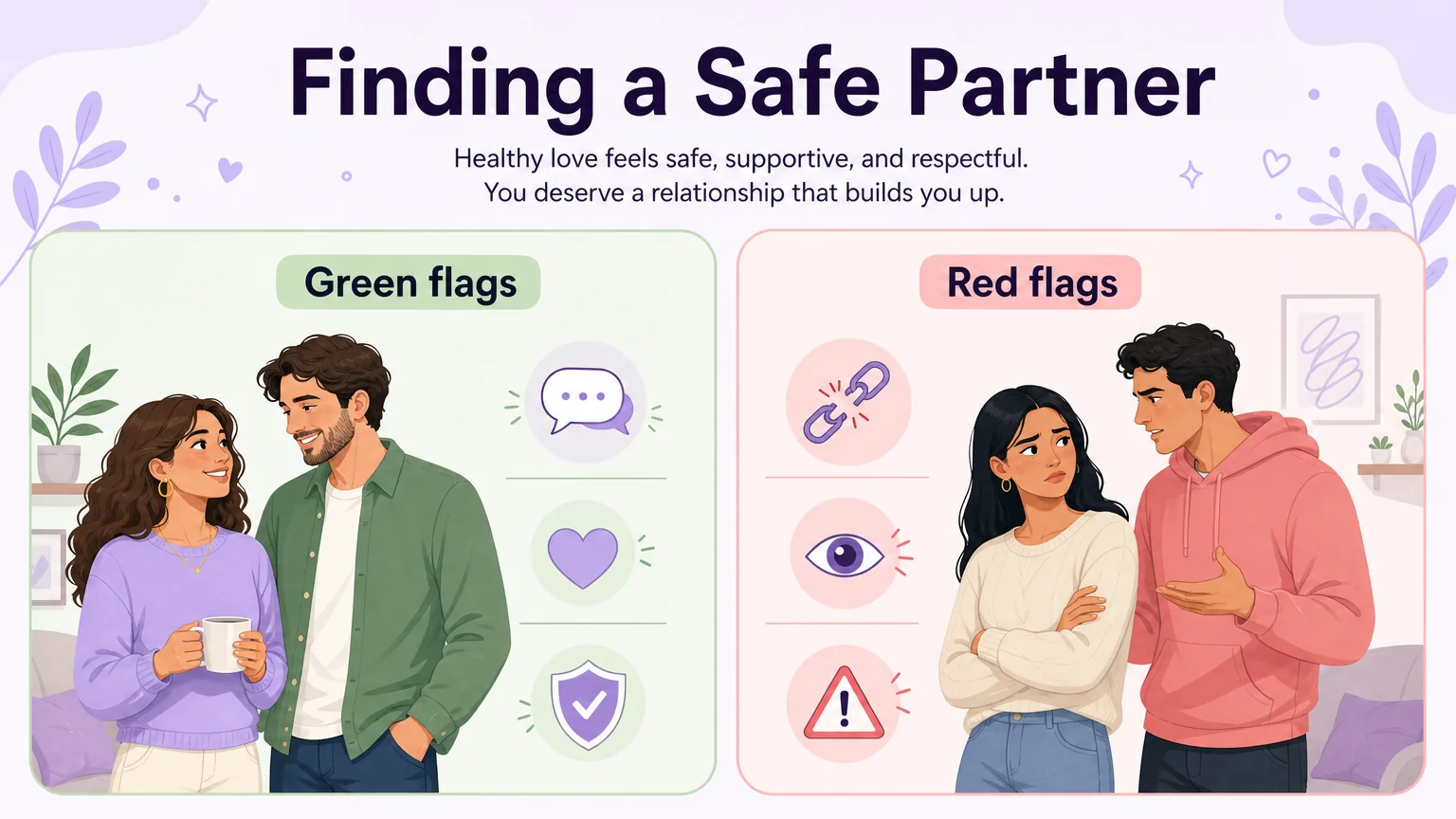
How do you find a partner who shares your pain kink and plays the way you do? Start with the split between vetting and negotiation. Vetting decides if you play with someone at all. It’s about competency, values, and reputation. Negotiation plans the scene once you’re fairly sure. Both are ongoing, and you can withdraw consent anytime, even mid-scene. That’s not a mark against the experience. It’s the system working.
Green flags are easy to spot. A partner who initiates detailed negotiation. Who establishes safewords and thanks you when you use one. Who treats aftercare as essential, checks in during a scene, and handles “no” with grace. Who speaks of past partners with respect and is transparent about their experience level. Those are the people who make pain play feel safe.
The red flags are just as clear. Rushing or skipping negotiation. Dismissing safewords. Pressuring consent. Skipping aftercare. Using gifts to coerce, isolating you from friends, blaming everyone else. The line where consensual pain becomes abuse is specific: consent pressured, safewords ignored, a partner afraid to say no, or injury beyond agreed limits. Any of these is a reason to walk.
For app and event partners, make it concrete. Ask for referrals from people they’ve played with. Check their community reputation. If you meet at a party, watch them run a scene before you agree to play. You’ll see their communication in action and what their aftercare looks like.
Group scenes run on the same rules with more people in the room. Clarify boundaries with all partners beforehand. Always ask before touching. Go in with curiosity, not expectation. If your boundaries aren’t respected, that’s a red flag about the space, not about you.
Sub Drop and Aftercare: How to Come Down Well After Pain Play
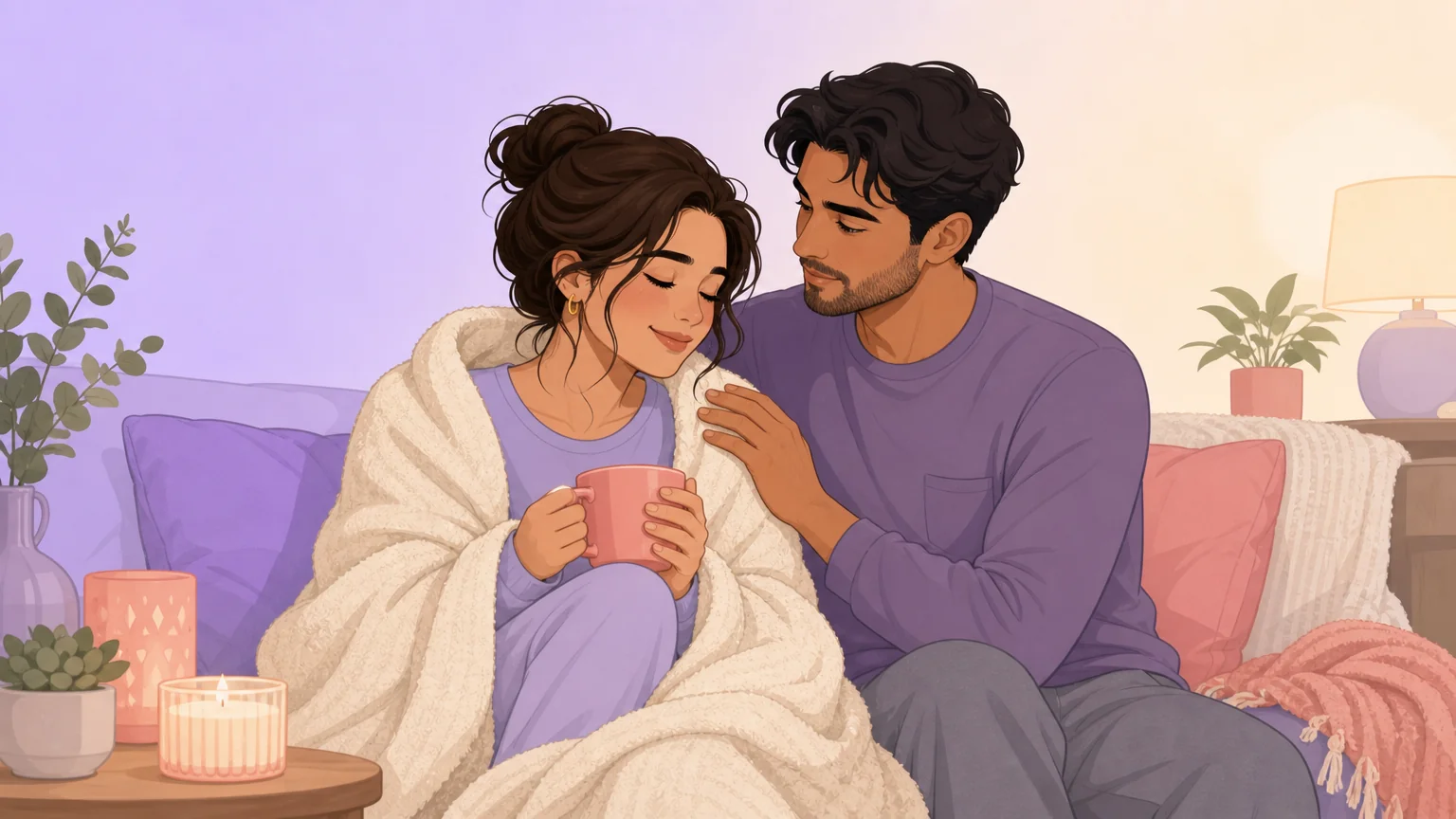
A pain kink scene isn’t over when the marks fade. Sometimes the hardest part arrives later, and if you’ve ever crashed days after play and wondered whether something was wrong with the relationship, here’s the name for it: drop.
Drop is the emotional and physical crash that follows an intense scene of pain play, the plummet of adrenaline, endorphins, cortisol, and dopamine once the flood recedes. It hits subs, tops, and switches alike, usually within 24 to 72 hours, lasting from half a day to a week with back-to-back scenes.
Recognize it in yourself or your partner. Physically: chills, exhaustion, nausea, aches. Emotionally: anxiety, tearfulness, irritability, guilt, that hollow emptiness, changes in sleep and appetite. None of it means the scene went wrong or the feelings were fake. It means the chemistry did exactly what chemistry does.
Now the protocol. Negotiate aftercare before the scene, not after. Then, immediately: keep them warm, body temperature drops, water with a straw if motor skills are shaky, gentle non-sensual touch on unused areas, soft reassurance, and something sweet. Stay until they’re alert, warm, and grounded. Don’t leave them abandoned on the comedown. Then do the after-aftercare: check in over the next one to three days, because drop surfaces that far out.
And someone has to say this about top drop: dominants crash too. Rarely is anyone asked who holds the holder. If you’re the top, arrange your own aftercare. Nobody gets to be exempt from being human.
If you’re the one dropping: hydrate, eat something sweet, get sunshine, journal, and reach for a partner or friend. When someone else is in drop, validate rather than problem-solve. And pace yourself, three to five scenes a week builds a drop debt, so take breaks. If symptoms push past seven days, bring in professional support. Drop is normal. Ignoring it isn’t.
FAQ: Your Pain Kink Questions, Answered
Is a pain kink normal?
Yes. Masochistic interests run roughly 10 to 30 percent of the population across a lifetime, and kink fantasies appear in 40 to 70 percent of people. It becomes a clinical disorder only when the interest causes real distress or impairment, which describes under 5 percent of people. Liking pain without distress is a preference, not a diagnosis.
What’s the difference between a pain kink and masochism?
They describe the same thing at different temperatures. A pain kink is the everyday word for deriving pleasure from consensual pain. Masochism is the more formal term for the same preference. “Masochist” is a self-chosen label for a spectrum of taste, from a faint pull toward sting to a deep love of thud, not a diagnosis.
Does having a pain kink mean I have trauma?
No. Research consistently finds no causal link between kink desires and childhood abuse, and practitioners show no elevated psychopathology, with some studies showing better mental-health outcomes. Many survivors do experience kink as reclaiming, which deserves respect, but that is personal meaning. Kink is also not a treatment for trauma.
How do I bring it up with my partner?
Pick a calm, private, non-sexual moment. Use a low-pressure opener, share your own limits first so they feel safe reciprocating, and try a yes/no/maybe list to compare interests without guessing. Reassure them it’s consensual and doesn’t mean you love them less, then be ready for any answer.
What does a safeword actually do?
It’s the off-switch that keeps intensity safe. In the traffic-light system, red means a full stop and a move into aftercare, never questioned or punished. Calling it isn’t failure. It means the system worked, the trust held, and good partners thank you for it.
Is pain play dangerous?
It’s managed risk. With negotiation, safe anatomy, tested safewords, and planned aftercare, it’s a practice millions of people enjoy. It becomes abuse, not play, when consent is pressured, safewords are ignored, boundaries are repeatedly crossed, or a partner is afraid to say no. The system keeps the difference clear.