
You heard the term in a video caption. Or a partner mentioned it over dinner. Or you fell down a search rabbit hole at 1 a.m., looking for a straight answer, not a lecture.
That curiosity is more common than you think.
What is stag and vixen? A consensual non-monogamous dynamic where a committed couple arranges for the female partner (the vixen) to have sexual encounters with other men, while the male partner (the stag) actively encourages, watches, or participates. Humiliation is entirely absent.
The stag and vixen meaning runs deeper than a definition. It is a specific emotional contract built on shared pride and compersion: joy in your partner’s pleasure.
Ahead: the animal names, how this differs from cuckolding and other relationship styles, the misconceptions, what each partner experiences, the emotional engine, whether this is right for you, how to start, and why you are hearing about this now.
Stag and Vixen Meaning: Defining the Dynamic in Plain Terms
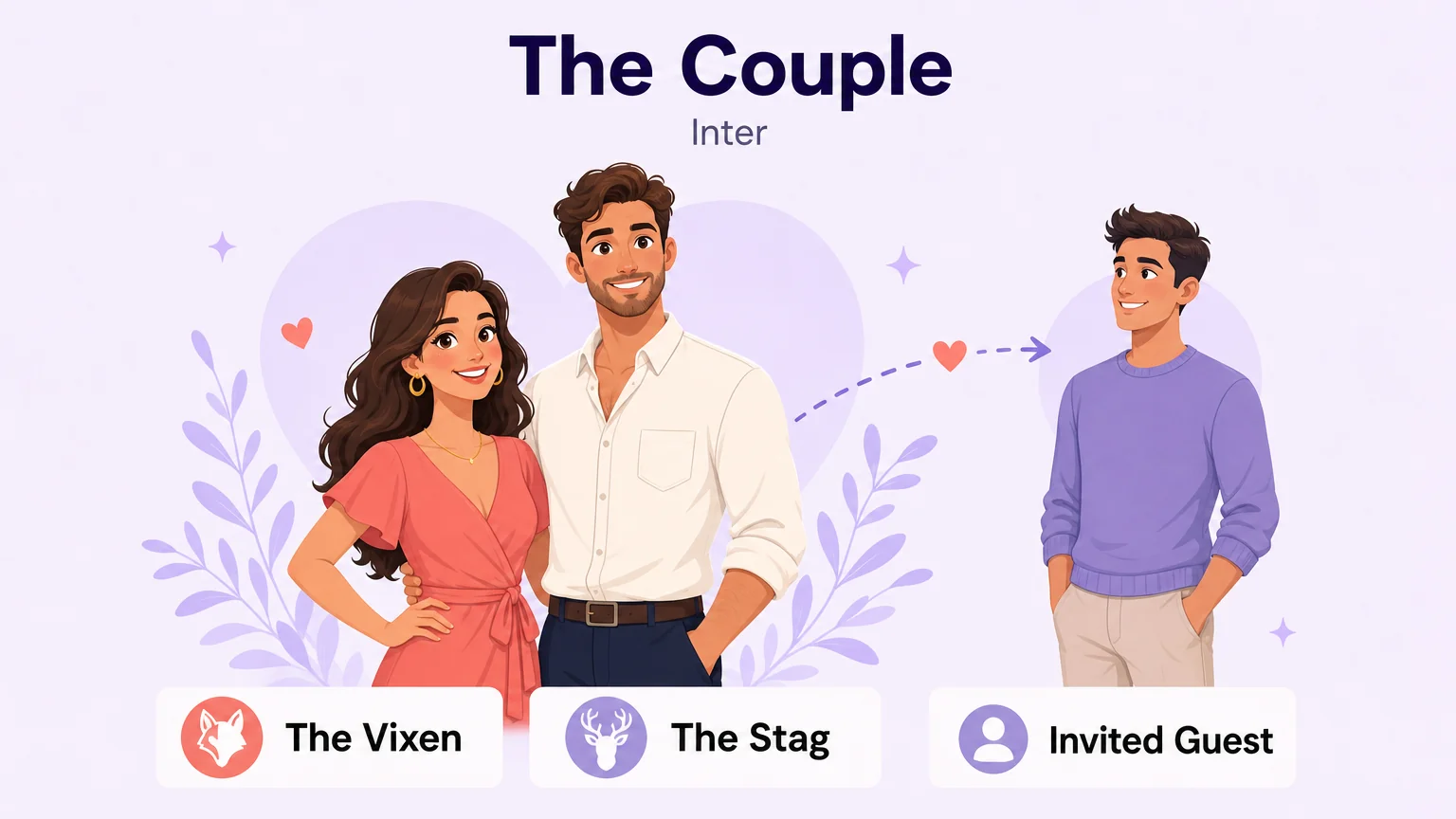
The one-sentence definition only gets you so far. To understand the structure underneath the label, build it piece by piece.
A stag and vixen dynamic is a consensual arrangement where a committed couple (typically heterosexual) agrees that the female partner will have sexual encounters with other men, while the male partner encourages, watches, or participates. Every word matters. “Consensual” means both partners have enthusiastically agreed, not reluctantly accepted. “Committed” means the primary relationship is the center, not an afterthought. “Arrangement” rather than “lifestyle” signals that this describes a pattern of relating, not an identity someone must adopt forever.
Here is what it looks like in practice. The most common scenario: the stag is present as observer and participant. The vixen has sex with another man, sometimes called a playmate or a third. The stag’s arousal comes from witnessing her pleasure as a shared experience, not from distance or exclusion. Afterward, the couple reconnects physically and emotionally. No one is excluded. No one is degraded. Their private world absorbs the experience and carries on.
That reconnection ritual is central. Every outside encounter is metabolized back into the primary relationship rather than cordoned off from it. The outside partner is an invited guest in a shared erotic script, not a replacement and not a rival. This is the structure that makes openness sustainable: the couple does not fracture. They incorporate.
The emotional core is what separates this from everything that looks like it. This dynamic runs on shared empowerment and compersion. The couple stays at the center. The stag’s pride is in his partner’s freedom, not despite it. The vixen’s pleasure is the point, not a concession.
Understanding this foundation makes the next question almost answer itself: where do those animal names come from, and why do they matter?
Why Stag and Vixen? The Animal Metaphor No One Explains
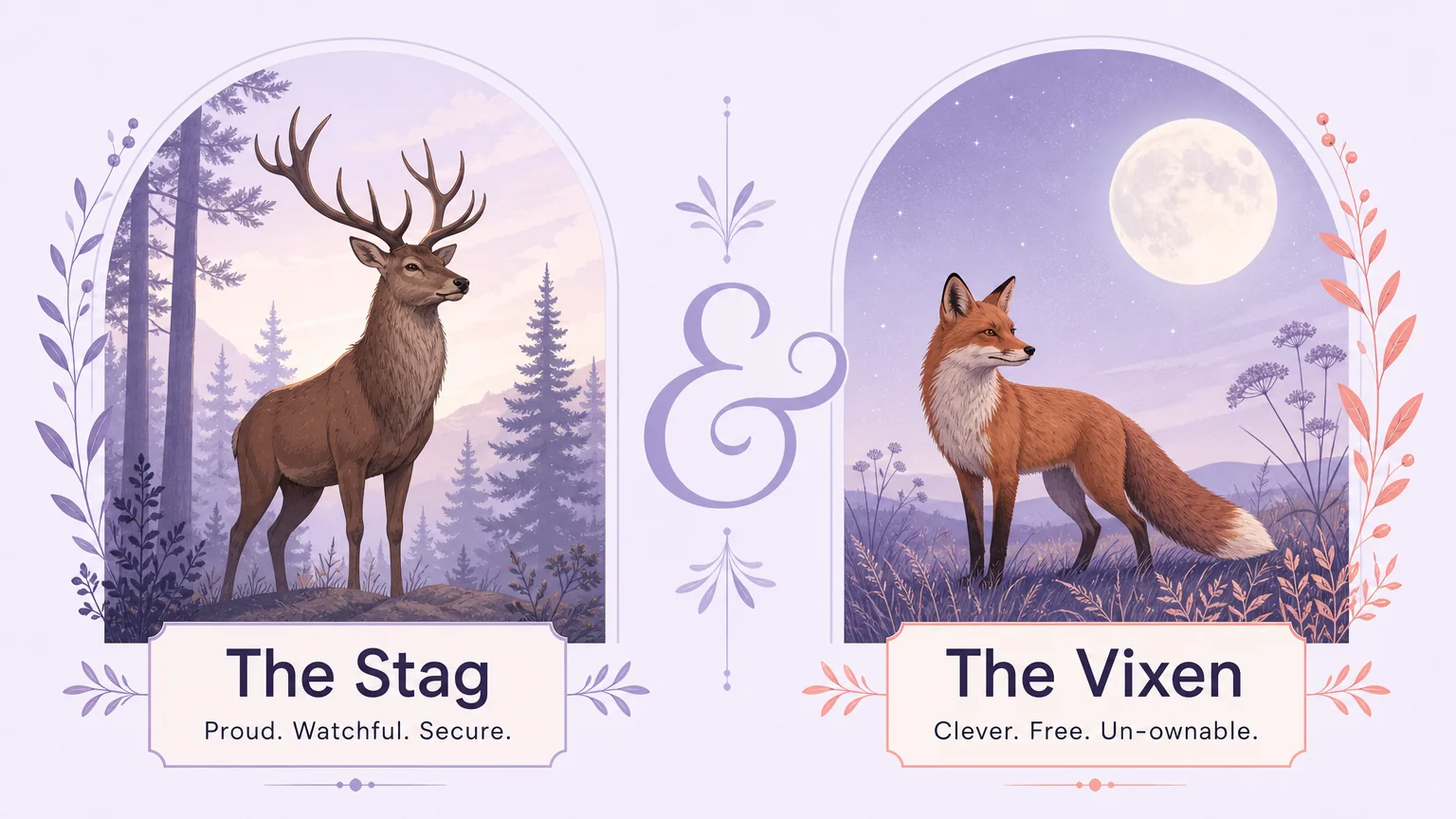
“Stag” and “vixen” are not arbitrary animal names. They are deliberate metaphors, rooted in Old English etymology, that encode the entire emotional logic of the dynamic in two words.
The stag. From Old English “stagga,” meaning male deer. In nature and mythology, the stag represents quiet confidence, vigilance, and strength without aggression. A stag does not compete through humiliation or submission. He watches over his domain with calm authority. Other males may challenge him, but his standing is not defined by how much he degrades them. It is defined by his presence. Applied to the dynamic: the stag’s security comes from within, not from controlling his partner. His pride is in her freedom. He is the architect and witness, not the gatekeeper.
The vixen. From Old English “fixen,” the feminine form of “fox.” In folklore across cultures, the fox is clever, desirable, autonomous, and fundamentally unownable. From Aesop to Japanese kitsune tales to Reynard the Fox in medieval Europe, the fox evades, seduces, and survives on its own terms. A vixen cannot be possessed. She chooses. Applied to the dynamic: the vixen’s sexual agency is the point, not a threat. She is the protagonist of her own desire, not a prop in someone else’s script.
The metaphors survive because they do what clinical language cannot. “Husband who watches” and “wife who plays” describe behavior. “Stag and vixen” describes an emotional architecture. Together, the names encode a specific contract: a proud, watchful partner who celebrates a clever, free partner’s pleasure. No predator-prey dynamic. No dominance-submission script.
Understanding the metaphor makes the next question, how is this different from cuckolding, almost answer itself.
Stag and Vixen vs Cuckolding: The One Difference That Changes Everything
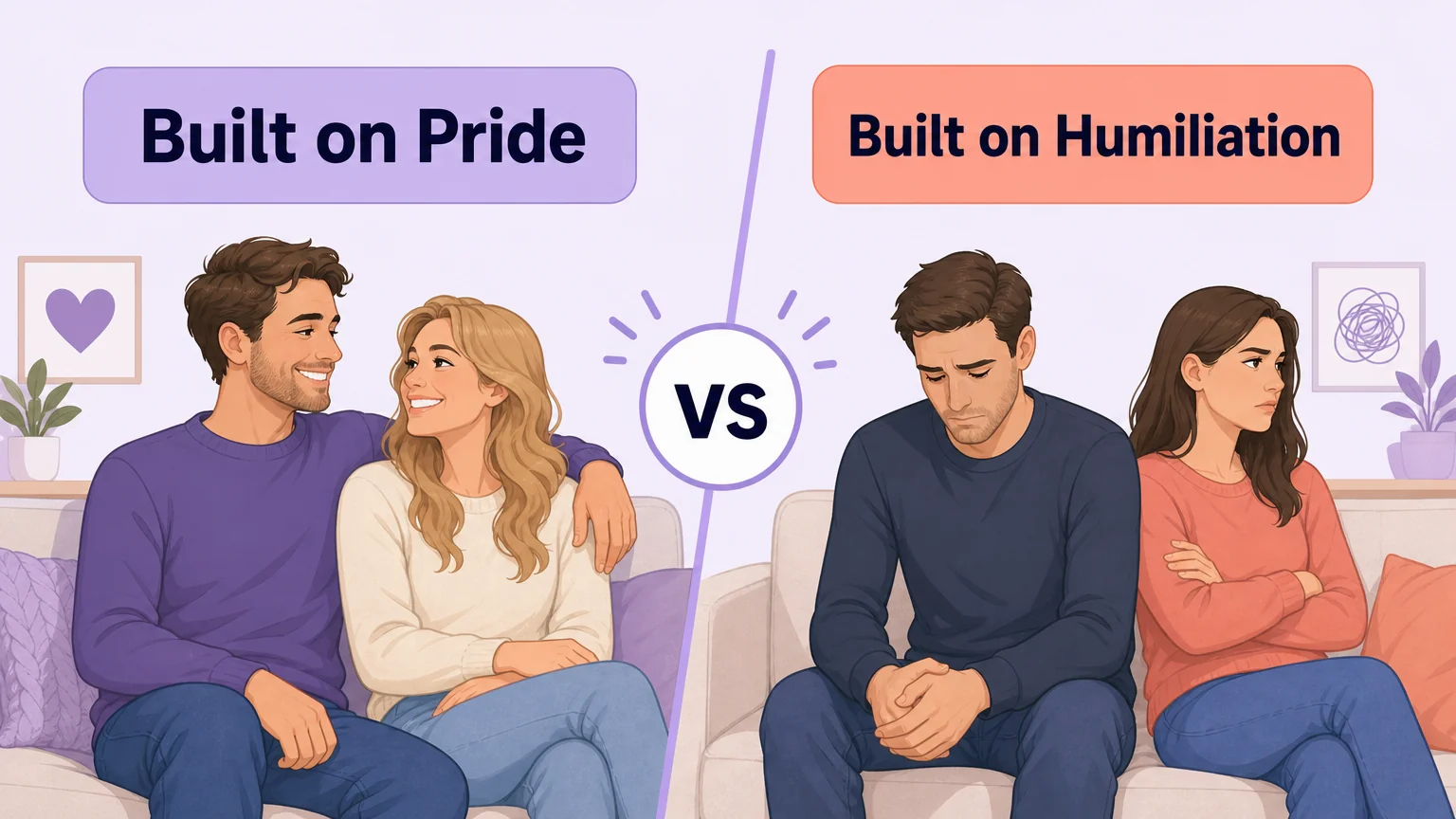
The most searched question about stag and vixen is also the most important one: “Is not this just cuckolding with a different name?”
The answer is no. And the difference comes down to a single word.
Humiliation is the bright line. In cuckolding, the male partner’s degradation, submission, or exclusion is central to the erotic charge. The cuckold is mocked, belittled, or shut out, and that power dynamic is the kink. In stag and vixen, humiliation is entirely absent. Not reduced. Not subtle. Absent. The stag’s arousal comes from pride and compersion. He is never the punchline.
But here is where it gets interesting: where does the sexual power reside? The Keys and Anklets Podcast (Episode 158) proposed a framework that cuts through the labeling confusion. In cuckolding, the majority of sexual power sits with the female partner. She holds the reins. In hotwifing, it splits evenly. In stag and vixen, power is shared equally or led by the stag. This is about who holds the emotional reins, not who is physically doing what.
A concrete way to see the difference: picture an MFM threesome. Under a cuckolding label, the husband might be verbally humiliated, reminded that the other man is bigger or better. Under a stag and vixen label, the same physical arrangement carries a completely different charge. The stag might say “look at her,” not “look at me.” He is co-authoring pleasure, not being stripped of status. Same bodies. Different script.
Some nuance is worth naming. Couples can perform the same physical acts under different labels. What distinguishes them is emotional context and intent. A stag watching his vixen feels pride. A cuckold watching feels a consensual, eroticized sting of degradation. Same action. Completely different emotional engine.
As one community member put it: “If no humiliation is involved, it does not meet the literal definition of being a cuckold.” If you take one distinction from this entire article: the stag is never the punchline.
Where Stag and Vixen Fits: Hotwifing, Swinging, and Polyamory
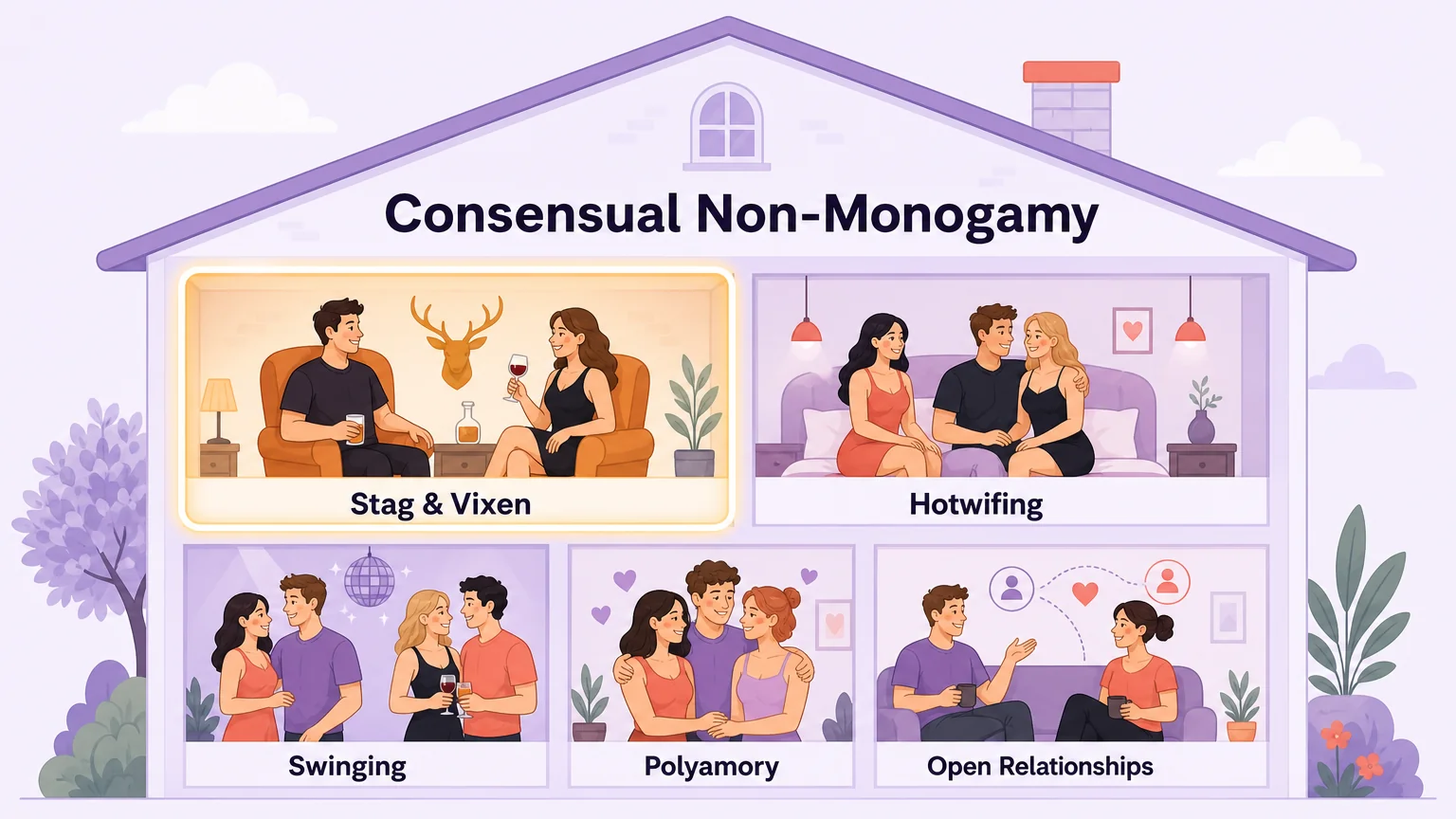
Terminology confusion is one of the biggest barriers for beginners. Once you separate stag and vixen from cuckolding, the next question is where it sits among the wider landscape of consensual non-monogamy.
Stag and vixen versus hotwifing. These terms overlap heavily, and some communities use them interchangeably. The most agreed-upon distinction: in hotwifing, the husband is typically monogamous. Only the wife plays with others. In stag and vixen, the stag often has the freedom to play as well. Stag and vixen also emphasizes the stag’s active role, orchestrating and participating, more than hotwifing does. The emotional framing is similar: both lack humiliation. But the scope of who gets to explore differs.
Stag and vixen versus swinging. Swinging is couple-based recreational sex. Both partners play, often at the same event or in the same room. Emotional connections are kept intentionally shallow. Stag and vixen is more structured around a specific script, vixen plays, stag watches or joins, and typically involves deeper emotional processing between the couple afterward. Swinging is a party. Stag and vixen is a production the couple directs together.
Stag and vixen versus polyamory. This is the distinction that confuses beginners most. Polyamory involves forming multiple loving, emotionally deep relationships. Most stag and vixen couples are romantically monogamous. They love only each other while sharing sexual experiences with others. The third party is a guest in the couple’s erotic life, not a romantic partner. Different container. Different expectations.
If consensual non-monogamy is a house, open relationships are the living room: the broadest category. Stag and vixen is one distinct chair in that room, defined by its specific script, couple-centric focus, and emotional tone of pride and compersion.
No two relationships use labels exactly the same way, and that is fine. What matters is that you and your partner share the same definition.
Common Misconceptions About Stag and Vixen, Answered Directly
You now know what stag and vixen is, and where it sits alongside cuckolding, hotwifing, swinging, and polyamory. But a few questions follow this dynamic everywhere it goes. The ones that make people hesitate, judge, or misunderstand.
These are the questions the autocomplete reveals when people search “stag and vixen.” Fair questions, every one.
“Isn’t this just cheating with permission?” No. Infidelity is defined by deception and violation of agreements. Stag and vixen is built on explicit consent, full disclosure, and negotiated boundaries. The stag celebrates, not tolerates. Esther Perel’s distinction between the secret and the lie applies directly: consensual non-monogamy removes the deception while preserving the erotic charge of novelty.
“Is the stag insecure or lacking self-respect?” The opposite. This dynamic demands more emotional confidence than conventional monogamy requires. The stag works through possessive instincts that most people never examine.
“Is the vixen being exploited?” In a healthy dynamic, no. Her agency drives every decision. Any relationship structure can be abused. The right question is whether power is genuinely shared and whether she feels free to say no without consequence.
“Isn’t this just cuckolding with better branding?” The humiliation line is bright and real. What distinguishes these dynamics is emotional intent, not physical choreography.
“Can you have a family life and do this?” Yes. CNM couples raise children, attend parent-teacher conferences, and live conventional lives in every other dimension. Privacy management is a learnable skill.
“Does this mean the relationship is failing?” Research from the 2024 meta-analysis of over 24,000 people says no. CNM couples report equal satisfaction to monogamous couples. Opening from strength deepens a bond. Opening to fix a broken relationship does the opposite.
Most misconceptions collapse when you replace the assumption with the definition. Stag and vixen is not a loophole for infidelity, a symptom of insecurity, or a sign of a dying relationship. It is a specific way of relating that works for couples who build it on honesty, consent, and mutual desire.
Inside the Stag’s Mind: Confidence, Compersion, and Reversing Jealous Masculinity

What kind of person wants this? And does it mean he is weak?
The answer is the opposite of what most people assume.
“It takes tremendous security to support your partner’s freedom.” That line from Gareth Redfern-Shaw, founder of Consent Culture, captures the paradox at the heart of the stag’s role. What looks like passivity from the outside is a deeply active form of confidence.
The stag’s primary experience is erotic compersion. He is aroused by witnessing his partner’s pleasure, not despite it involving another man, but precisely because he facilitated it. Marie Thouin’s research on compersion confirms this exists on a spectrum and can be cultivated as a skill rather than treated as a personality trait you either have or do not.
The stag is also the architect. He designs the scene: helping select the third, setting the environment, establishing boundaries. Then he witnesses the results. His role is active, not passive. The arousal is rooted in the ego’s reward for facilitating the partner’s sexual freedom within a defined script. He is the director, not an extra.
There is a subtler dimension worth naming: the stag also experiences relief from performance pressure. He does not need to be her sole source of pleasure. Her sexual fulfillment is a shared project rather than a solo obligation. For many men, this is a quiet liberation that conventional monogamy never offers.
This dynamic turns the conventional jealous-partner script inside out. The stag’s security is reinforced by his partner’s freedom, not threatened by it. Luke Brunning’s philosophical research supports this. Compersion requires tackling entitlement and actively unlearning the possessive model of love. This is not weakness. It is emotional strength that most people never develop.
Picture a stag watching his vixen with another man. What he experiences is not jealousy. It is a surge of pride and arousal. Because her pleasure, in that moment, belongs to their shared story, not to the other man.
The Vixen’s Experience: Agency, Desire, and Being Celebrated

If the stag is the architect, the vixen is the protagonist. And her experience is the most underexplored territory in writing about this dynamic.
“The vixen’s consent is the absolute, revocable source of all Stag power.” That framing from the YVEX community re-centers the conversation where it belongs: on her.
Agency is the non-negotiable foundation. The vixen does not perform a script written for her. She chooses who, when, and how she plays. Her autonomy is not granted by the stag. It is recognized by him. The dynamic is built on admiration, not possession.
What do vixens report feeling? From community testimony, the themes are consistent. Empowerment: sexual agency without shame. Freedom from the fear of jealousy: knowing her partner celebrates rather than punishes her desire. Emotional security: the primary relationship is the safe harbor, not the cage. And genuine fun: flirting, dressing up, being desired, the erotic charge of novelty. One vixen described it as “a love letter to sexual freedom and partnership.”
Now address the question that follows this dynamic around: is the vixen being exploited? In a healthy stag and vixen dynamic, no. Her pleasure is the point. The dynamic breaks when her agency becomes performative rather than real, when she feels pressure to perform rather than freedom to explore. The distinction is whether she drives the choices. Her veto power is absolute.
The vixen navigates real emotional complexity. She may feel compersion toward her stag if he plays too. She may navigate her own jealousy. She manages the intensity of being the center of erotic attention. She processes the transition between outside encounters and domestic life. This is not “just having fun.” It is emotionally rich territory.
Picture a vixen returning from a solo encounter, sharing details with her stag. The emotional intimacy of that ritual is the point. The experience flows back into the relationship rather than subtracting from it.
How Compersion, Jealousy, and Reclamation Work Together
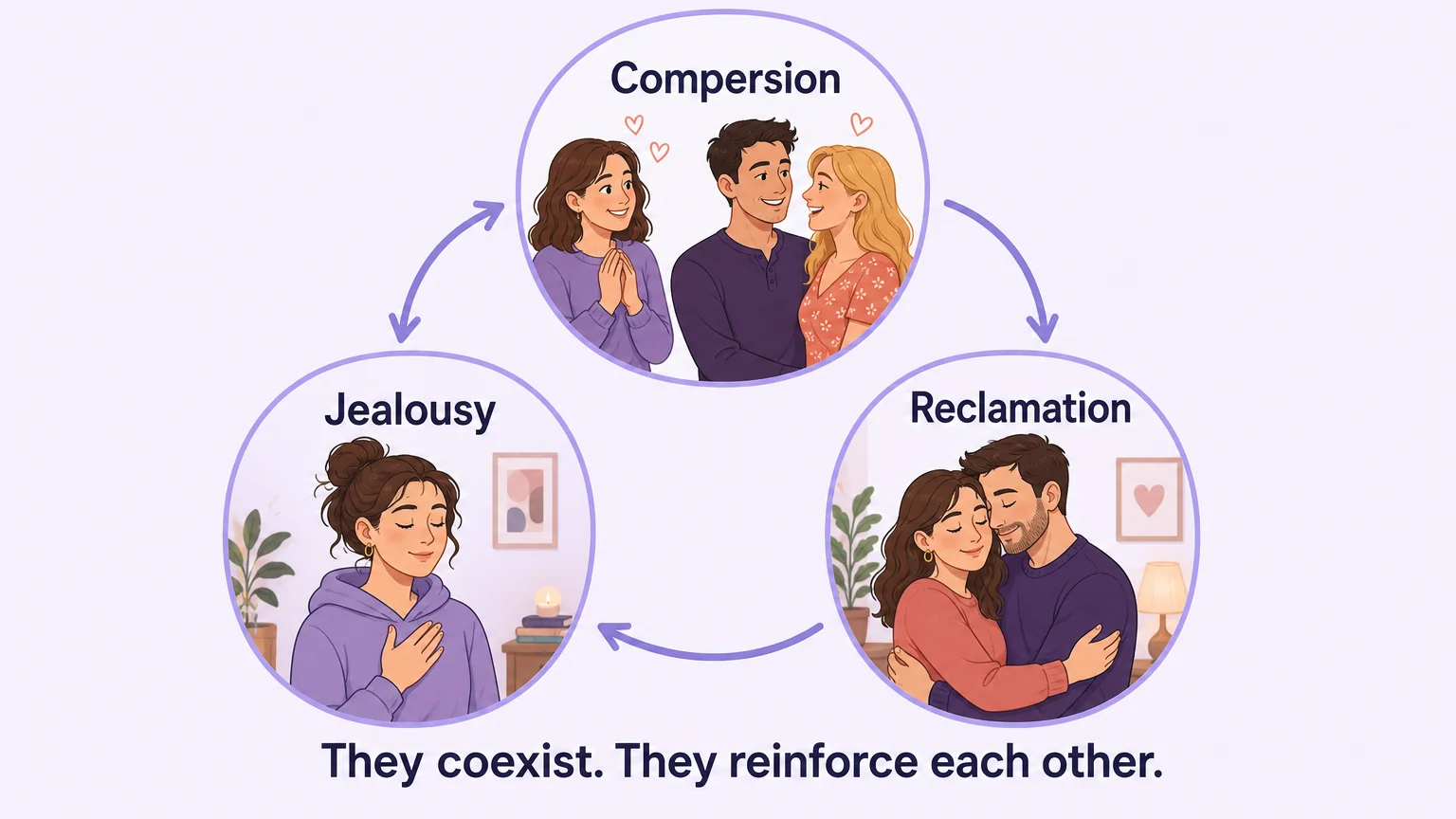
The stag feels pride. The vixen feels agency. But underneath both runs a shared emotional engine.
Compersion is often described as “the opposite of jealousy.” The truth is more interesting and far more useful: they frequently show up together, and successful couples learn to hold both.
Compersion, coined by the Kerista Commune in 1980s San Francisco, means experiencing joy in your partner’s joy, specifically their joy in connection with another person. Marie Thouin, the leading scholar on compersion, describes it as existing on a spectrum and influenced by context. Feeling secure in the primary relationship, knowing metamours personally, and dismantling internalized monogamous values all promote compersion.
Now the finding that surprises most newcomers: people frequently feel compersion and jealousy simultaneously. Research by Balzarini et al. (2021) confirms this. The experience is like “bittersweet.” Psychologist Joli Hamilton describes it as a gradual shift: “It is never like a hard switch. Slightly more compersion” accumulating over months and years. Treating jealousy as failure causes problems. Treating it as data works.
Luke Brunning’s philosophical work reframes compersion as an ethically valuable emotion that requires cultivation. It involves softening jealousy responses, attending to a partner’s flourishing, tackling possessive entitlement, and tempering vulnerability. Compersion is emotional skill-building, not magic.
Then comes reclamation, the emotional anchor. After an outside encounter, the couple reconnects physically and emotionally. Reclaiming sex is not just sex. It is a ritual that says “we are still us.” One community description calls it “a powerful and intensely passionate moment” that reinforces the primary bond. External encounters become shared intimacy that flows back into the couple, not something that subtracts from it.
Compersion is not the absence of jealousy. It is the capacity to hold jealousy and still choose celebration. Reclamation is the ritual that proves the choice was right.
Is Stag and Vixen Right for You? Questions to Ask Yourselves First
Before anyone opens a dating app or starts looking for a third, there is a more fundamental question. One that can save months of pain if asked directly.
Sex therapists have a blunt saying: opening a struggling relationship is like throwing fuel on a fire and expecting water. This is about giving you the self-check most couples skip.
The communication check. Can you discuss difficult topics without shutting down or exploding? If the answer is “not yet,” work on that foundation first. Rigid rules like “you can have sex but cannot develop feelings” backfire because emotions do not obey rules.
The motivation check. Are you opening from strength: genuine shared curiosity, a relationship that already works? Or from deficit: hoping this fixes something, one partner pushing while the other reluctantly agrees? The first path deepens a bond. The second amplifies existing cracks. Therapist Dr. Nicole Irving notes that many couples argue because “one partner imagines casual hookups while the other envisions emotional polyamory,” definitions they never aligned before starting.
The mutual-consent check. Do both partners genuinely want this, or is one reluctantly agreeing to avoid losing the other? Enthusiastic mutual consent is the minimum. Reluctant consent is not consent.
The emotional-capacity check. Can you sit with complex, contradictory emotions, compersion and jealousy side by side, without needing to resolve them immediately?
The logistics check. Do you have the time, energy, and privacy to add this layer to your lives? Time scarcity amplifies conflict: too many dates, neglected responsibilities, exhaustion. Not romantic, but real.
Answering “not right now” is not a failure. It is self-awareness. The dynamic will still exist when you are ready. What will not survive is a relationship pushed into it before the foundation can hold the weight.
How to Start a Stag and Vixen Dynamic: A Practical Roadmap
Understanding the dynamic intellectually is one thing. Knowing how to begin safely, slowly, and without damaging your relationship is another entirely.
There is a viral cautionary tale. A wife invited a third into their home. The husband watched briefly, then was told to sit in the bathroom with wine and his phone for nearly an hour. That is not stag and vixen. That is a boundary violation, and it is exactly what happens when couples skip the blueprint.
The first conversation. Have it outside the bedroom. Sober. Calm. No expectation of an immediate decision. A gentle opener: “I have been reading about different relationship styles and would love to hear your thoughts on stag and vixen. I have not decided anything. I just want to explore the idea together.” Expect curiosity, insecurity, shock, interest, in any order. Prioritize listening over persuading.
Define terms together before a single action. What does stag and vixen mean to each of you? Will the stag watch, participate, or hear about it afterward? Is the stag free to play with others? Misaligned definitions are the most common source of early pain.
Build the boundary framework. Physical boundaries: specific acts, locations, safer-sex protocols. Emotional boundaries: depth of connection allowed, rules about overnight stays. Disclosure agreements: how much detail to share afterward. Health agreements: condom use, STI testing every three to six months. Privacy agreements: who outside the relationship gets told.
Run the what-if exercise. What if jealousy hits harder than expected mid-scene? What if the third develops feelings? What if one of you wants to stop permanently? Create a safe word either partner can invoke at any moment, no questions asked.
Start small. A recommended first step: flirt at a bar while the stag watches from across the room, zero expectation of sex. Debrief thoroughly. How did each person feel? What surprised you? What needs adjusting?
Aftercare is non-negotiable. Physical reconnection, emotional check-in, and debriefing after every encounter. Schedule regular relationship check-ins separate from play sessions.
The couples who thrive in this dynamic are not the ones who never feel jealous or uncertain. They are the ones who planned for those feelings before they arrived.
Why Stag and Vixen Is Breaking Out Now
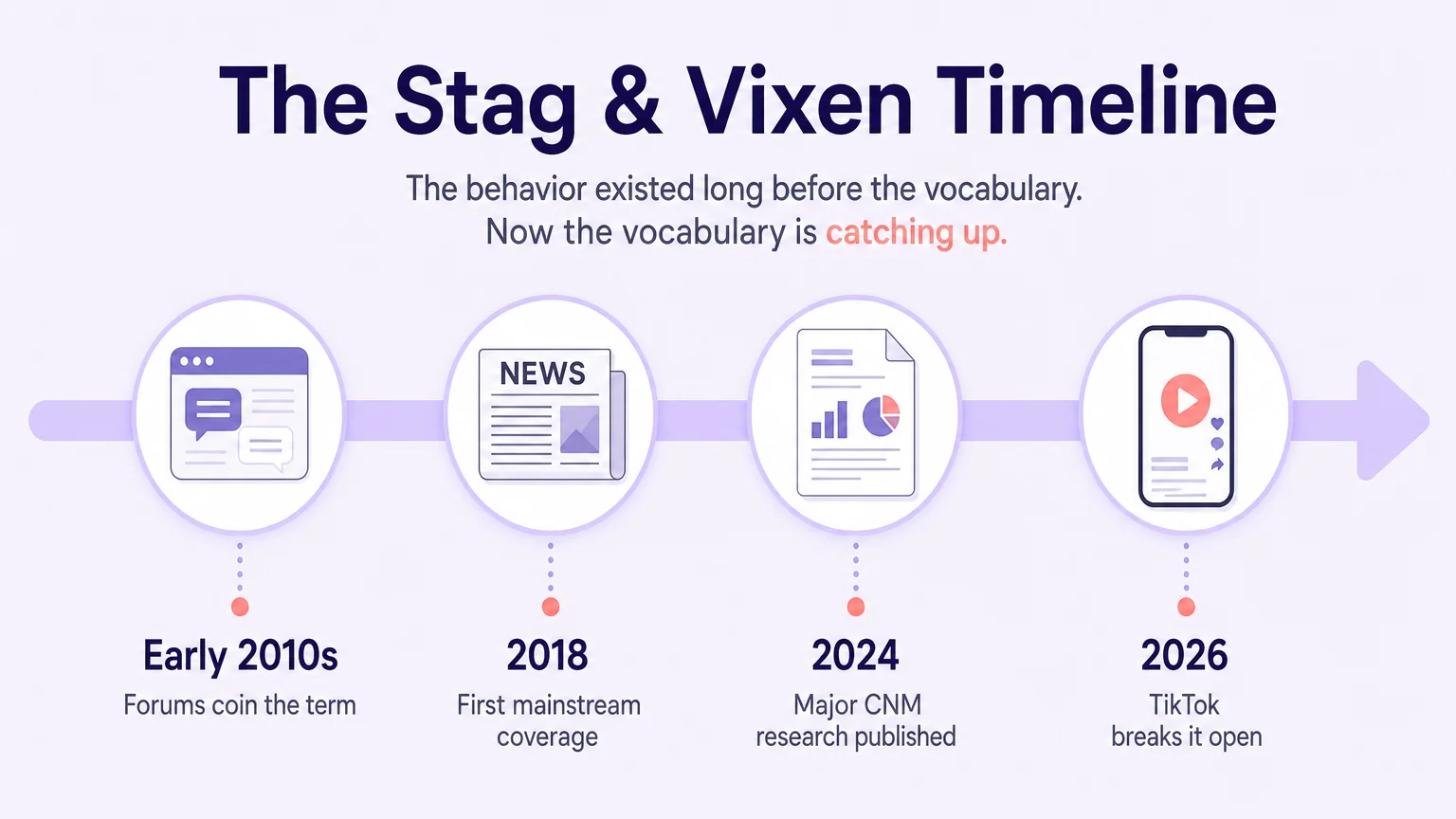
If you found this article, you are part of a wave. Searches for stag and vixen have been climbing for years. Not in the behavior. In the vocabulary.
In 2018, Metro UK noted that “stag and vixen” was already “super popular” as a search term. Eight years later, the term has crossed from niche forums into mainstream vocabulary. More people finally have words for what they want.
The data bears this out. Approximately one in five people have engaged in consensual non-monogamy. An estimated one to three percent of couples currently practice it. A 2024 meta-analysis of over 24,000 people found no significant difference in satisfaction between monogamous and CNM couples. The behavior has been here. The language is catching up.
Short educational videos about non-monogamy terminology reach audiences who would never pick up a lifestyle guidebook. Someone hears the term, searches it, and lands here. Vocabulary distribution, not a fad.
Precision is destigmatization. Terms like “ethical non-monogamy,” “compersion,” “metamour,” and “stag and vixen” name relationship configurations precisely rather than lumping everything under “open relationship.” When something has a name, it becomes discussable. When it becomes discussable, shame loses its grip.
The therapeutic establishment is catching up. The 2024 Clinician’s Guide to Ethical Non-Monogamous Relationships (Sigler) trains professionals to distinguish between pathology and valid CNM configurations instead of applying mononormative assumptions.
Esther Perel ties it together. Desire thrives on novelty, mystery, and distance, qualities long-term monogamy tends to extinguish. Consensual non-monogamy preserves the erotic spark by introducing the presence of a third without the betrayal of infidelity. Stag and vixen is one structured way of doing exactly that.
Stag and vixen is not new. What is new is that people finally have the words to describe what they want, and the cultural permission to say it out loud.
FAQ
What exactly is stag and vixen?
A consensual non-monogamous dynamic where a confident male partner (stag) encourages his female partner (vixen) to have sexual encounters with other men, with no humiliation involved. The stag may watch, participate, or hear about it afterward. The emotional core is compersion (joy in your partner’s pleasure) and shared pride.
How is stag and vixen different from cuckolding?
Humiliation is absent in stag and vixen. In cuckolding, the male partner’s degradation is central to the erotic charge. In stag and vixen, the stag experiences pride and compersion, never shame. Sexual power is shared or stag-led, not held exclusively by the female partner.
How is stag and vixen different from hotwifing?
The terms overlap. The most common distinction: in hotwifing, the husband is typically monogamous. In stag and vixen, the stag often has the freedom to play too, and his active role (orchestrating, participating) is more emphasized. Some communities use them interchangeably.
Is this just infidelity with permission?
No. Infidelity is defined by deception and violation of agreements. Stag and vixen is built on explicit consent, full disclosure, and enthusiastic participation from both partners. The stag celebrates, not tolerates.
Can you feel jealous and still do stag and vixen?
Yes. Research confirms jealousy and compersion frequently coexist. Compersion is a skill that develops over time, not a switch that eliminates jealousy. Successful couples treat jealousy as data about their needs, not as failure.
Does stag and vixen mean we are polyamorous?
Not necessarily. Most stag and vixen couples are romantically monogamous while sexually non-monogamous. They love only each other while sharing sexual experiences with others. Polyamory involves multiple loving relationships with emotional depth.
What are the most common beginner mistakes?
Opening a struggling relationship to fix it. Failing to define terms clearly so each partner imagines different things. Setting rigid emotion-control rules. Neglecting the primary relationship due to new relationship energy. Treating the third party as a prop without clear communication.
What is reclaiming sex?
The intense physical and emotional reconnection between the stag and vixen after an outside encounter. It is a ritual that reinforces the primary bond, reframing the external encounter as shared intimacy that flows back into the couple rather than subtracting from it.
Do stag and vixen couples still consider themselves monogamous?
Some identify as “monogamish,” mostly monogamous with negotiated exceptions. Others identify explicitly as ethically non-monogamous. The label is the couple’s choice. What matters is the shared understanding, not the vocabulary.
How common is consensual non-monogamy?
Approximately one in five people have tried some form of CNM. An estimated one to three percent of couples currently practice it. Research shows relationship satisfaction is predicted by communication quality and mutual consent, not exclusivity.